Jean Shrimpton: Miniskirted Maiden

Talent…
.
… These are the lovely ladies and gorgeous girls of eras gone by whose beauty, ability, electricity and all-round x-appeal deserve celebration and – ahem – salivation here at George’s Journal…
~~~
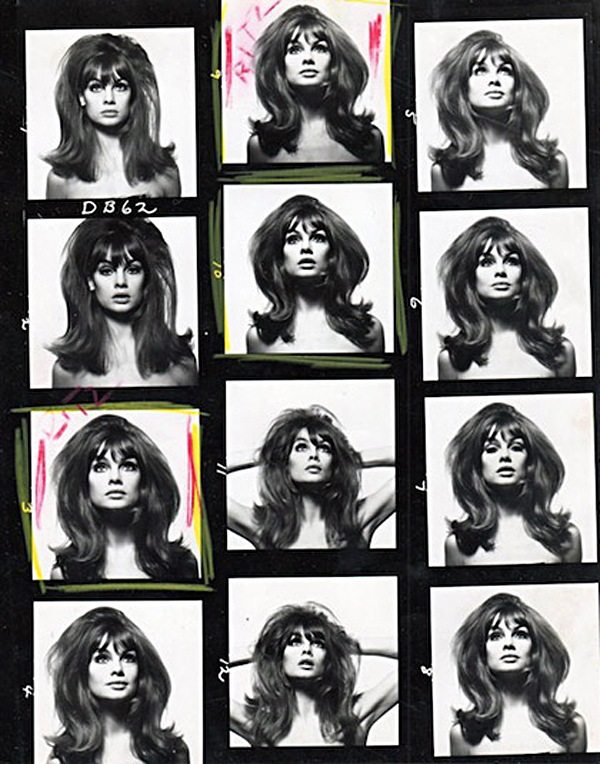
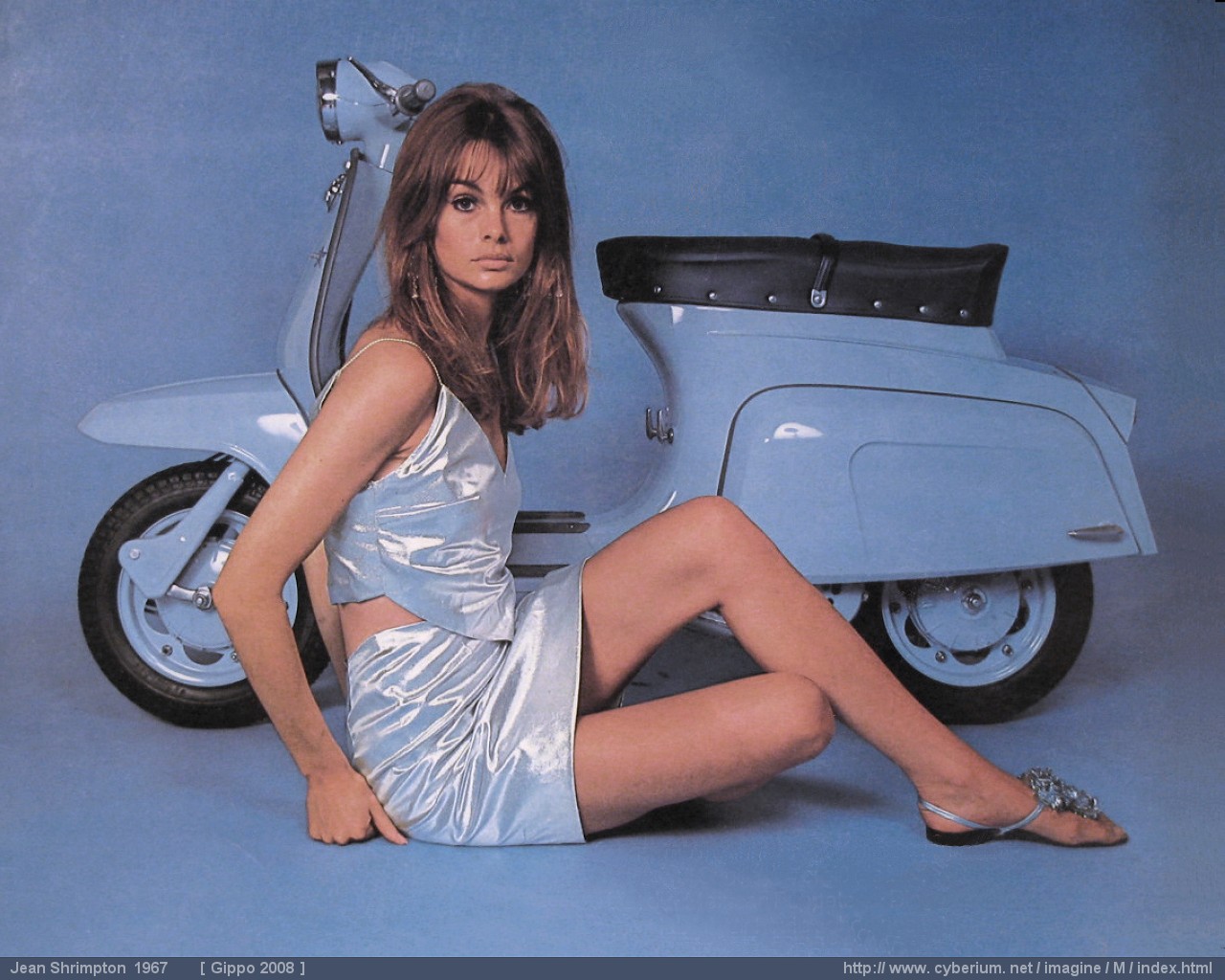
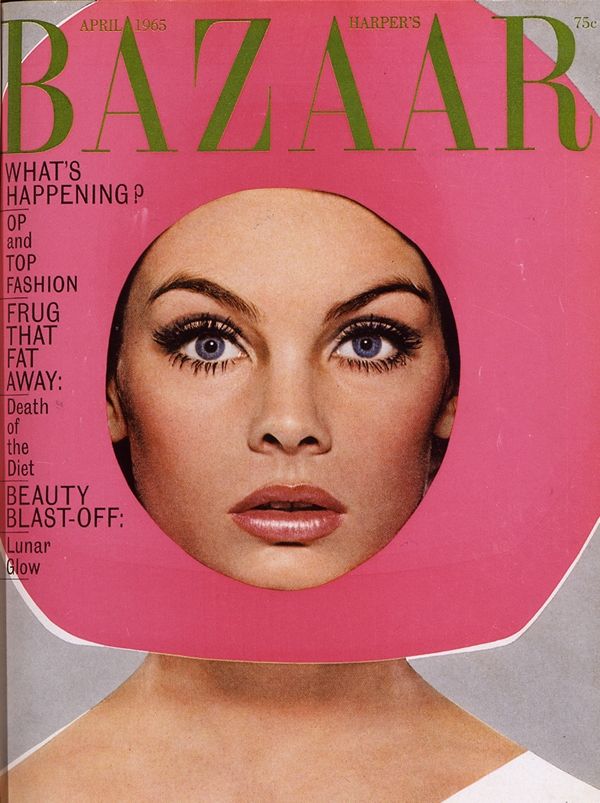
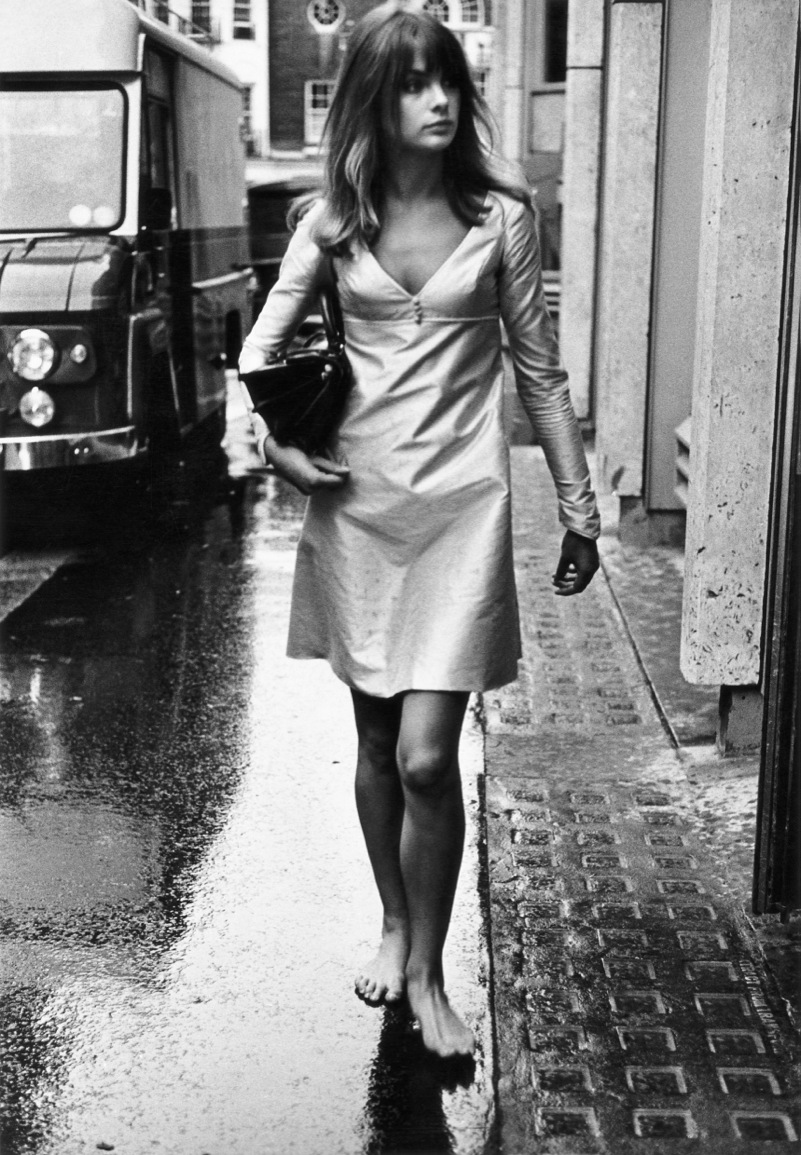
What better day on which to post a pictorial tribute to the role model for all models who followed her than today – when, yes, the Beeb’s screening a one-off drama (We’ll Take Manhattan) depicting how she got started with Doctor Who‘s Karen Gillan in the titular role? The subject of that drama and this post is, of course, Jean Shrimpton, the doe-eyed, plummy, utterly lovely, Mod-fashion-wearing-machine who lit up the mid-’60s just as much as The Fabs, The Stones and Michael Caine. Is she a worthy, latest addition to this blog’s Talent corner? I should coco…!
~~~
Profile
Name: Jean Rosemary Shrimpton
Nickname: ‘The Shrimp’
Nationality: English
Profession: Model, actress, antique dealer and hotelier
Born: 7 November 1942, High Wycombe, Buckinghamshire
Height: 5ft 7in
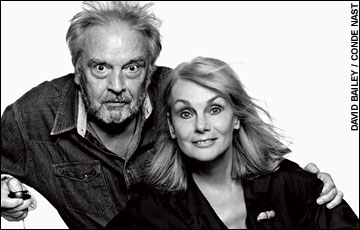
Known for: Becoming arguably the world’s first supermodel, after being discovered by photographer David Bailey for a shoot in New York for British Vogue magazine’s April 1962 issue. Following this meeting, she and Bailey were in a relationship for four years, during which her profile rose and she became an undeniable face – and star – of the Swinging Sixties; her waifish look and irresistible beauty perfect for the era’s Mod fashions, ensuring she played an instrumental role in launching the miniskirt. She moved from Bailey to Terence Stamp, making her half of one of the era’s most glamorous (if not one of its most happy) couples. Bailey referred to her as his muse, for which she may well have been too for those other legendary ’60s shooters Brian Duffy and Terry O’Neill.
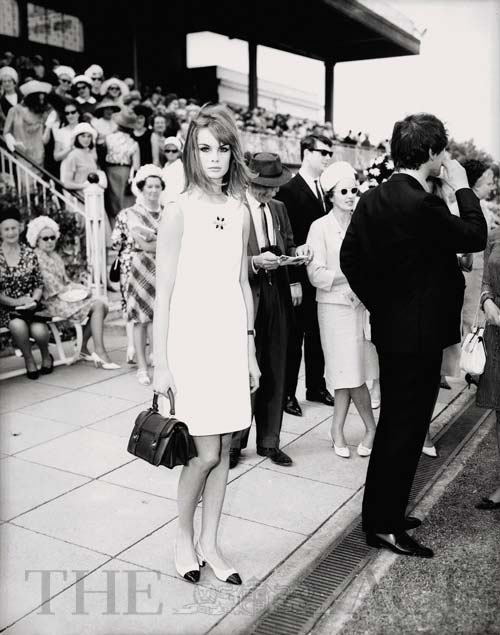
Strange but true: It’s said that Shrimpton helped launch the miniskirt worldwide by wearing one to the Victoria Derby in Melbourne, Australia, on October 30 1965 (see image below) – in actual fact, the reason her skirt was of the ‘mini’ variety was because the designer who accompanied her on the trip, Colin Rolfe, hadn’t brought with him enough material to make it any longer.
Peak of fitness: Pick any of her scenes from the avant-garde Brit flick Privilege (1967), in which she played the female lead opposite Paul Jones from band Manfred Mann (the first of only two films she ever made). Why? Because, unlike in a photograph, on-screen she actually moves, of course…
.
CLICK on images for full-size
.

.


.
.

.
.

.

.

.

.
.


.

.

.

.
.
Further reading:
http://www.guardian.co.uk/theguardian/2011/apr/30/saturday-interview-jean-shrimpton
.
We’ll Take Manhattan can be seen tonight at 9pm on BBC4 (UK and Ireland only)
.

Screen sirens and rock rebels: Terry O’Neill exhibition ~ Proud Chelsea (until Jan 22)

Golden morning: Terry O’Neill’s portrait of the newly crowned Queen of Hollywood, Faye Dunaway – at her home the morning after she won the Best Actress Oscar (shown) in 1977
To a retro enthusiast like myself, the free-admission photo exhibitions seemingly forever held at the two Proud galleries of London’s Camden and Chelsea – a recent one featuring rare images of The Beatles and a future one promising portraits of rock’s infamous ’27 Club’ – would be something of a must, you’d think. But, truth be told (and I’m not quite sure why), the latest one at Proud Chelsea focusing on the work of tog titan Terry O’Neill is the first I’ve had the pleasure to visit.
Terry O’Neill is, of course, a portrait photography legend. Like his working class contemporaries David Bailey, Brain Duffy and Terence Donovan, he broke through in the heady atmosphere of mid-’60s Swinging London, where he immediately came to prominence capturing the likes of The Fabs and The Rolling Stones in still-form, enjoying the sort of access to these fast-becoming icons the like of which their adulating fans could only dream. He had a brilliant eye for catching them not just in candid moments, but also for intuitively snapping them in unique, eye-catching and imaginative scenarios.
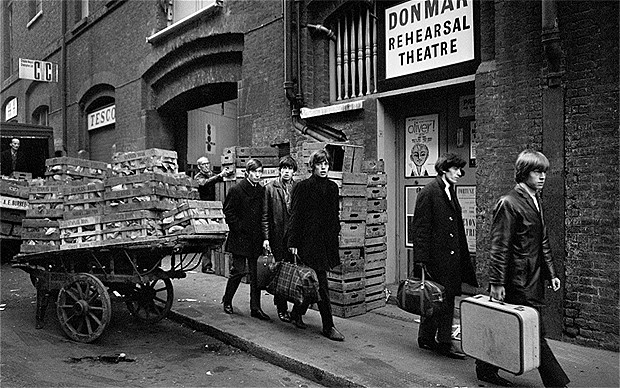
The clash of the old and the new: The Rolling Stones on the move in 1964 – leaders of a dynamic, new age passing an anachronistic, Victorian-esque vegetable cart in London’s West End
It was this talent he would go on to nurture and develop when he broadened his scope to other movers and shakers of the scene including model du jour Jean Shrimpton, her then boyfriend Terence Stamp and his one-time flatmate Michael Caine and, later still, when Hollywood came calling and he became a go-to-man for shooting the likes of Brigitte Bardot, Raquel Welch and Audrey Hepburn, all of whom became favourite subjects of his.
Despite its relatively slight exhibition space (just two high street shop-sized upstairs and downstairs rooms), the gallery crams in the canvasses on its walls. Upstairs focuses on the screen sirens; downstairs on the rock rebels. Highlights of the Hollywood crowd include O’Neill’s famed close-up of Shrimpton and Stamp; Shrimpton again posing with dolls in a London ‘doll hospital’ (many of whose faces somewhat resemble hers and vice versa, it must be said); Audrey Hepburn cavorting in a swimming pool while filming Two For The Road (1967); and Raquel Welch inexplicably posing in a Chelsea FC strip on location for Hannie Caulder (1971).

Quelle Raquelle!: Raquel Welch made the filmmakers of One Million Years B.C. (1966) cross by getting up on one at O’Neill’s suggestion – to symbolise her ‘crucifixion’ by the media of the time as merely a body without acting chops; the film’s publicists passed on using the image
Downstairs you’ll find Led Zeppelin’s Jimmy Page caught on-stage in 1977 playing his guitar with a bow, as well as an early ’70s Keith Richards posed wonderfully – and not a little ironically – next to a Seattle Airport sign calling for travellers to be patient while customs do their job and search for drugs. And, as a bonus, there’s the work of other photographers too who were also witness to some of rock’s great and good, including a behind-the-scenes pic or two of the shoot of the Sgt. Pepper’s Lonely Hearts Club Band (1967) album cover.
So, if you’re not the sort who usually takes time out of your busy life to view the visual arts on someone/ somewhere else’s wall – but, of course, you’re a retro enthusiast like myself – I’d urge you to take half-an-hour out of your day to give this exhibition a try. It’s maybe the most fun and stimulating 30 minutes you’ll have in the company of the Fabs, The Stones and Raquel Welch without watching Bedazzled (1967) while simultaneously listening to Revolver (1966) and Exile On Main St. (1972) on shuffle.
~~~
Further reading:
https://www.proudonline.co.uk/exhibition-Terry-O%E2%80%99Neill-Screen-Sirens-Rock-Rebels_82.aspx
Celebrity: The Photographs Of Terry O’Neill – coffee-table book available to buy here

.
“And I saw the sax line-up that he had behind him and I thought, I’m going to learn the saxophone. When I grow up, I’m going to play in his band. So I sort of persuaded my dad to get me a kind of a plastic saxophone on the hire purchase plan.” ~ David Bowie
.
.
“I’m always amazed that peole take what I say seriously. I don’t even take what I am seriously.” ~ David Bowie
.


.
“I always had a repulsive need to be something more than human. I felt very puny as a human. I thought: “F*ck that, I want to be a superhuman.” ~ David Bowie
.
.
“If it works, it’s out of date” ~ David Bowie
.
.
“I’m looking for backing for an unauthorized auto-biography that I am writing. Hopefully, this will sell in such huge numbers that I will be able to sue myself for an extraordinary amount of money and finance the film version in which I play everybody.” ~ David Bowie
.
.
“I once asked (John) Lennon what he thought of what I do. He said “it’s great, but its just rock and roll with lipstick on.” ~ David Bowie
.

.
“You would think that a rock star being married to a super-model would be one of the greatest things in the world. It is.” ~ David Bowie
.
.

Playlist: Listen, my friends! ~ January 2012



In the words of Moby Grape… listen, my friends! Yes, it’s the (hopefully) monthly playlist presented by George’s Journal just for you good people.
There may be one or two classics to be found here dotted in among different tunes you’re unfamiliar with or have never heard before – or, of course, you may’ve heard them all before. All the same, why not sit back, listen away and enjoy…
.
CLICK on the song titles to hear them
.
Jimi Hendrix ~ Auld Lang Syne¹
Marvin Gaye and Kim Weston ~ It Takes Two
Fairport Convention (Sandy Denny) ~ Who Knows Where The Time Goes?
Elton John ~ Border Song
Strawbs ~ Lay Down
Maureen McGovern ~ The Morning After²
Van McCoy & The Soul City Symphony ~ The Hustle³
Jasper Carrott ~ The Magic Roundabout⁴
Renaissance ~ Northern Lights
Sam Fonteyn ~ Pop Looks Bach⁵
ABBA ~ Happy New Year
Ph.D. ~ I Won’t Let You Down
The Stone Roses ~ I Am The Resurrection
.
¹ Performed live at New York City’s legendary Fillmore East venue on December 31 1969 for the recording of the album Band Of Gypsys (1970)
² The Oscar-winning song from the New Year-themed, legendary disaster movie The Poseidon Adventure (1972)
³ Accompanied in its video clip by dance troupe Pan’s People, in most fetching costumes, performing a routine for it on a 1975 edition of Top Of The Pops
⁴ The bawdy sketch-based B-side (banned by the BBC) to the 1975 comic single Funky Moped, which many believe was a hit actually because of the former
⁵ The iconic theme tune to the BBC’s weekly winter sports magazine show Ski Sunday (1978-present)

Retro Crimbo: Donna Reed/ Zooey Deschanel ~ Christmas Belles


Talent…
.
… These are the lovely ladies and gorgeous girls of eras gone by whose beauty, ability, electricity and all-round x-appeal deserve celebration and – ahem – salivation here at George’s Journal…
.
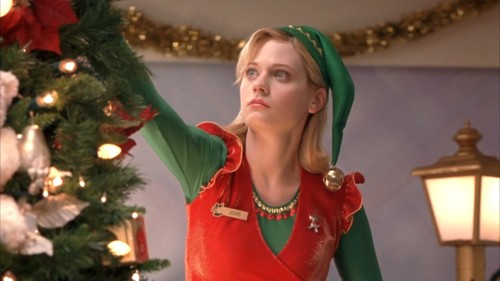
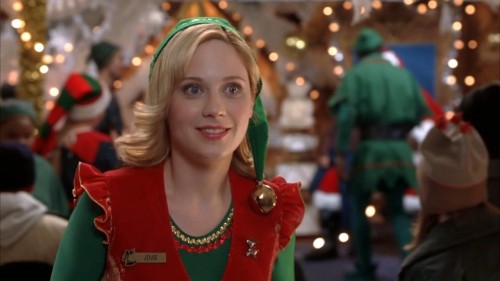
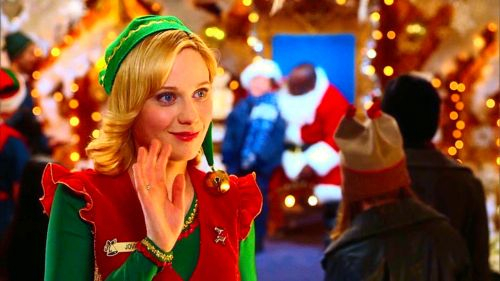
Ah, Christmas… a time for peace on Earth, goodwill to all men and, er, a couple of lovelies from back in the day. Now admittedly, one of these two is very much of today’s zeigeist, but she also always seems to be surrounded by a retro aura – which makes her appeal all the more infectious. She too, though, fits this blog’s thoroughly festive theme of present, being the star of a recent Crimbo cinema classic, while her companion in this post is the icon of a true cast-iron Hollywood Holidays classic. Yes, peeps, together, they’re Donna Reed and Zooey Deschanel, the seasonal – and very deserving – entrants of this blog’s Talent corner…
.
Profiles
Names: Donna Reed (real name: Donna Belle Mullenger) / Zooey Claire Deschanel
Nationalities: American
Professions: Donna – Actress/ Zooey – Actress, musician, singer-songwriter
Born: Donna – 27 January 1921, Denison, Iowa (died: 14 January 1986, Beverly Hills, California) / Zooey – 17 January 1980, Los Angeles, California
Known for: Donna – a Hollywood star back in Tinseltown’s heyday, unforgettably she brought her wholseome charms to perennial Christmas favourite It’s A Wonderful Life (1946), opposite James Stewart, and won a Best Supporting Actress Oscar for vamping it up as Montgomery Clift’s hooker love-interest in the all-time classic WWII drama From Here to Eternity (1953). Star of many more films, she later turned to TV, fronting family favourite sitcom The Donna Reed Show (1958-66) and played one of the lead characters in Dallas (1978-91), Miss Ellie, for a season in the mid-’80s/
Zooey – maybe the ultimate kooky girlfriend lead in indie cinema of the Noughties, her cinematic highlights number the unashamedly seasonal Elf (2003), the Hollywood remake of The Hitchhiker’s Guide To The Galaxy (2005), fine anti-romcom (500) Days Of Summer (2009) and the marvellous paean to early ’70s rock that is Almost Famous (2000). Also a musical performer, her efforts can be heard on the soundtrack to last year’s Disney effort Winnie The Pooh, as well as on records with M. Ward under the moniker She & Him (including the just released A Very She & Him Christmas). Her latest venture is as the protagonist in the sitcom New Girl (2011), for which this month she received a Golden Globe Award nomination, while famously her older sister is Emily Deschanel, star of crime drama Bones (2005 -present).
Strange but true: In 1945 (the year before It’s A Wonderful Life was made), Donna was bumped from one Texas-to-Los Angeles flight to another, which was just as well as the first one crashed killing everyone on board; Zooey’s unusual name was derived from the male protagonist of J D Salinger’s novella Franny & Zooey (1961).
Peak of fitness: Donna – making Montgomery Clift fall under her spell in From Here To Eternity/ Zooey – as Trillian at the start of The Hitchhiker’s Guide To The Galaxy, wearing boyfriend Zaphod Beeblebrox’s clothes, looking extremely fetching in shorts and sexy specs.
.
.


.


.


.


.

.

.

.

.

.

.
.
.
.

.

.

.

.

.

.

.

.

.

.
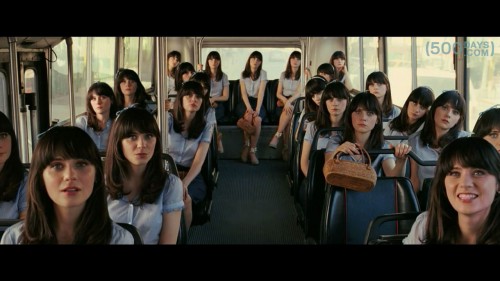
.
Retro Crimbo: Toys are us ~ the top 10 greatest Christmas presents


A long time ago in a galaxy in your bedroom: the original Kenner Star Wars toys not only enabled fans to recreate moments from the momentous film trilogy, but was also a backbone to a generation’s playthings
To be fair, when you cast your mind back, many Christmases merge into one. The most wonderful time of the year is, after all, defined by tradition: it’s usually about reuniting with family, overdosing on turkey, Christmas cake and yule log, pulling the odd cracker and avoiding Noel Edmonds on the telly. And, arguably, it wasn’t much different when we were wee nippers either; however, the prospect of the whole shebang seemed a lot more exciting back then – and there’s one very good reason why. Presents. Indeed, if anything made one Crimbo stand out from another it was probably the fact you received an ace present or two that year. It certainly was for yours truly, at least.
I can’t claim to be up with the toy trends nowadays (not having kids, why would I?), but I get the feeling there’s an over-reliance on video games in this modern age of ours, which must be most true of all at Crimbo. And that seems a damn shame to me. For how can it generate the same unadulterated delight that discovering a cool box of building bricks, a super-duper action figure playset or a sleek, new bike in your stocking always did? All right, perhaps none of those would actually have fitted in your stocking. Mind, I recall those things being damned stretchy…
Anyway, given the biggest present-related delight I tend to get at the yuletide now is considering the irony of finding a pair of socks in my stocking (which given its only a metaphorical stocking these days means there’s no irony anyway), do indulge me, peeps, as I look back on a classic list of Crimbo present toys; some personal, others universal. Rip that wrapping paper away…!
.
CLICK on the toy names for video clips – many of them ads from back in the day
.
10. Raleigh Chopper bike (1970-82)

So, what better toy to kick-off the countdown than this undisputed retro icon (after all, it features in the banner at the head of every page of this blog)? Indeed, of all UK children’s bikes there’s few more fondly recalled than the legendary Raleigh Chopper. Having said that, given it was far from the most reliable or easiest-to-ride two-wheeled mode of transportation, it’s a little perplexing its mention brings such a smile to those who remember it. Mind, so too does mention of its four-wheeled ’70s counterparts the Austin Allegro and Maxi and they really were craptastic. Influenced by the look of the ‘chopper’ motorbikes made oh-so familiar by Easy Rider (1969), Raleigh introduced the bike in 1970, the most popular model of which was the Mk2, available from ’72 onwards, which boasted five gears. Almost instantly, the Chopper was a big hit; not only (in a very ’70s way) did it look damn cool, but with its back wheel bigger than the front, it guaranteed kids up and down the country could pull wheelies easier than ever before, while its long seat allowed Chopper-less friends to enjoy lifts, ensuring they looked almost as cool as the bike’s rider. Despite its issues (its wide tyres caused ‘rolling resistance’, it would wobble worryingly at anything approaching speed and, if crashed, its gear-lever could contribute to injuries), in the days of bell-bottoms and parkas there was simply no cooler way to get around – well, until you grew up and could afford to buy an actual ‘chopper’, that is.
.
9. Rubik’s Cube (1977-present)

Not often in history has a specific toy been a hit with kids and adults alike, but throughout the ’80s the Rubik’s Cube seemed to bewitch, perplex and infuriate everyone from age five to 105. Like practically all the best toys, its premise was simple: solve the puzzle by finding the correct colour pattern; only the switch was the puzzle was a cube and the hook that it was eccerin’ impossible to solve. Many peeps are hardy sorts, though, to whom challenges appeal, especially those that others can’t meet. Maybe I’ll be able solve this puzzle when every single person I know can’t, one tends to think optimistically. But, with the Rubik’s Cube, it was a vain hope – nobody could ever solve one (ensuring it looked as it does in the image above rather than it does in the image in the banner at the top of the page). And if they could, they were declared a freak and driven out of their community by townsfolk bearing pitchforks. Well, they should have been anyway. The Rubik’s Cube (named after its boffin inventor, the Hungarian sculptor and architecture professor Ernő Rubik) was created in 1974 – as so often with such things – by accident, then mass-produced in Hungary in ’77 and exported from 1980 onwards. It sold like hotcakes and became a cultural phenomenon, making it on to TV shows and into movies and inspiring nifty artworks. Oh, and appearing at events worldwide, of course, where ‘Cube enthusiasts would race each other to solve the thing in record time. They still do. Ruddy freaks…
.
8. Space Hopper (1968-present)
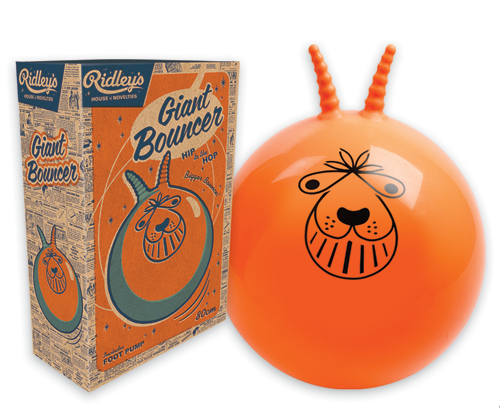
Far less intellectually taxing than the Rubik’s Cube and capturer of the imaginations of (almost) as many adults as children, yes, it’s the giant orange inflatable fun-machine, the Space Hopper. Designed by Italian Aquilino Cosani, it was patented in 1968 – but, with understandable lack of foresight, only in his native country. For who back then would have believed this overgrown rubber satsuma would still be bounced on by kids of all ages today? Originally named a Pon-Pon, Cosani’s toy made it Stateside in 1969, where it achieved moderate success (look out for several of ’em in the background in the original Star Trek series episode And The Children Will Lead – yes, really) and became known as a Hoppity Hop there. It found its spiritual home in the UK, though, where from 1968 the eccentric British took it to their hearts. Yep, back in the ’70s, while the cool kids were performing wheelies and skids on their Raleigh Choppers, the, well, less cool were bouncing their way to the sweet shop on a Space Hopper, the toy’s most popular name over here. Primarily manufactured in Britain by Mettoy-Corgi (the toy car company), it was 60-70cm in diameter, could be inflated via a bicycle pump and featured two knobbly handles – which were given the appearance of ears thanks to the happy/ scary (delete as appropriate) kangaroo-esque face painted on the front – that riders held on to for dear life once they’d started bouncing. For a ride on a Space Hopper often proved fruitless (you may’ve only gone up and down) or painful (falling off and grazing one’s knee was commonplace). But aren’t almost all the most fun pursuits in life pointless and sometimes bad for us? Indeed, like Crimbo itself, you might say.
.
7. Scalextric (1952-present)

Never were the pursuits of the different sexes more separately defined than back in the halcyon days of childhood. Girls had My Little Pony, Barbie and dolls that made irritating baby noises; boys had Action Man, Transformers and, yup… Scalextric. Ah yes, racing that miniature sportscar around a black rubber track and making it go faster by squeezing a trigger on an object that looked like a ray-gun from a sci-fi movie. Really, it got no more masculine than Scalextric. Well, when you were eight. Originally produced by UK clockwork toy car company Minimodels (and now owned by Hornby), Scalextric hit its stide in the ’60s when boys couldn’t get enough of it. And who could blame them? The thrill of racing a little vehicle against your friends’ as they whizzed around a – more often than not – figure-of-eight track (like in the above image) was the closest you ever got to participating in a real car race. For most of us it always will be. But, don’t doubt it, those cars really moved; it required skill to control them at speed, so spectacular crashes (like in real motrosport going back) were frequent. And for some reason the burning smell of the little metal brushes, which kept the cars on the track, as the electric current passed through them and made the cars go was eerily intoxicating. Like the smell of burning tyre rubber at a real race track. Erm, I imagine. Truth be told, I was never much of a car person (still aren’t), thus the Scalextric sets in our house were my brother’s, but some rainy afternoons it got no better than pretending we were Nigel Mansell and Ayrton Senna – and sounding as high pitched as Murray Walker as we pretend-commentated on our antics.
.
6. Playmobil pirate ship (1978-c.90)
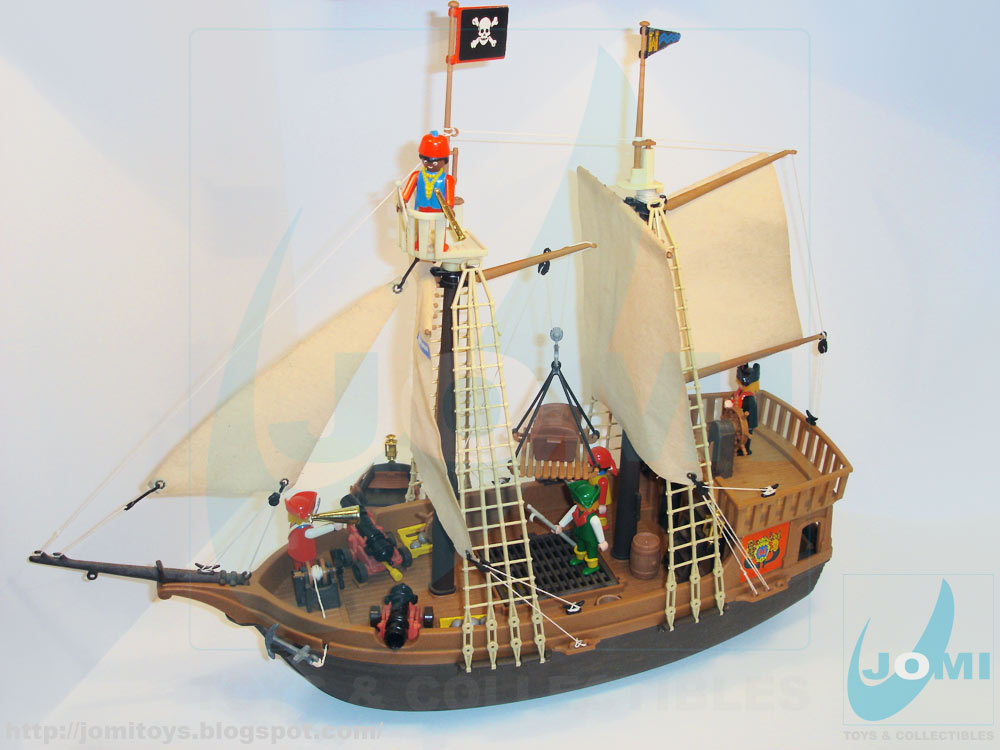
All kids loves pirates – just ask Johnny Depp’s accountant. As such, once again I must confess I feel sorry for today’s ankle-biters, for unlike their forebears they rely on viewings of the (generally) lacklustre Pirates Of The Caribbean movies to get their fill of hijinks on the high seas. Back in the ’80s, though, it was a different story. Why? Because of the Playmobil pirate ship – the classic version, that is (serial number: 3050). This item of toy lore was, dear readers, like manna from heaven for me. At about half-a-metre long, it featured not just a deck and a poop deck, but a captain’s cabin beneath the latter (the poop deck being cleverly removable to reveal the cabin). Other moving parts included a metal anchor that could be winched up and down and a crate that could winch a treasure chest (full of minature gold-painted coins) into and out of the hull. Of course, Playmobil figures were all present and correct too (in pirate costume, all with hats and one with a natty hook for a hand) and, best of all, there were also a couple of cannons that, yes, thanks to being spring-loaded could fire little cannon balls – of which there were many; just as well, as when you fired one from a cannon it’d invariably move at such speed you’d never see it again. Oh, and the ship was so designed – or should I say so well designed – that it would also float on water. Ideal one would think as a bath toy, but being as our bath was regular size it was a bit impractical in that scenario. Playmobil, owned by Germany’s Brandstätter Group, has been making toys featuring its inconic figures since 1975 in scores of different Lego-esque real-life and fantasy ‘themes’, but of all its efforts, the original pirate ship surely has to be the treasure at the centre of its plaything ocean – well, to this lan’lubber’s mind it certainly is, at least.
.
5. BMX bike (early 1970s-present)

In 1982, the British bicycle giant Raleigh called it a day manufacturing the Chopper bike. But it wasn’t the constant complaints from grow-ups about its safety issues that did it in, it was that Raleigh weren’t shifting enough of them anymore. How so? Well, there was a cool new two-wheeler on the block – the BMX. Also in 1982, Steven Spielberg’s E.T.: The Extra-Terrestrial was released, which – as a flick that would quickly become the biggest money-spinner in cinema history – contained a seminal sequence featuring kids on BMX bikes. A coincidence? Hardly. If you were a child/ teenager in ’82 and beyond, you weren’t anyone unless you owned a BMX. It was even more important than being au fait with Star Wars. ‘BMX’ is, of course, an acronym – for ‘bicycle motocross’; the pedal-tastic toy having started out as an engine-less children’s version of the dirt bike used for motocross racing in early ’70s California. Over the years its popularity grew and, with the help of the likes of E.T., became world conquering – or at least universal on both sides of the Atlantic. Mind you, even for those who didn’t use theirs to race on muddy hillsides it was more than just a mode of transportation. Unlike the Chopper, most BMXs were sturdily made, which was handy given they were as much designed for being thrown about and used to perform tricks as they were for speeding round to your mate’s house after school. Many came with extra-long wheel-nuts so you could stand on them as opposed to sit on the saddle as you risked your life hopping about to impress your friends. Yes, in the ’80s, we were all BMX bandits (Australian filmmakers even made a movie by that two-word term); today we sport the discoloured skin from fomer scabs to prove it – and it was all totally worth it.
.
4. Lego King’s Castle (1984-c.90)
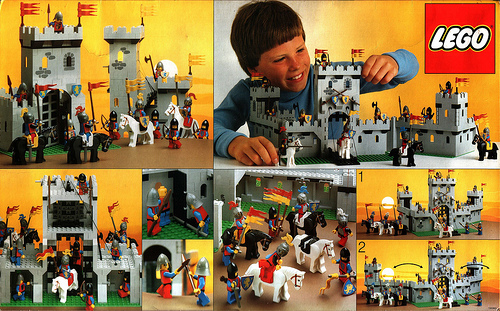
It was December 25 1987, or maybe ’88 (but definitely not ’89), and the main present from my parents I opened that day was the Lego King’s Castle – a king among Christmas presents and no mistake. Lego, the Danish giant of brick-building-based toys, has been the purveyor of many great Crimbo presents since the company’s inception way back in 1949, but none of ’em have outdone this effort. Indeed, this medieval-influenced playset (serial number: 6080) is perfectly summed up by Lego’s official motto: Det bedste er ikke for godt (‘Only the best is good enough’). Beyond fitting together brilliantly – the secret behind Lego’s outrageous success; ‘creative play’ is always what the business has striven to achieve in kids around the world and it always seems to have achieved that aim with bells on – the awesomeness of the King’s Castle was two-fold. One, when built, not only did it form a fortress-like square, but also could be opened out, as hinges were cleverly included in its design, thus ensuring one could properly play inside as well as outside the castle. And, two (and arguably most importantly), like almost all Lego playthings, it looked terrific. Elegant, sleek and oh-so cool. For a 10 year-old it was simply impossible not to fall in love with this toy. Not least because it also came with a drawbridge and portcullis, both of which could be raised and lowered, and the requisite collection of Lego little people – some dressed as soldiers in a fine-looking read and blue livery of a make-believe lord and others dressed as knights who could mount steeds. And, yes, they all came with natty helmets, spears, swords, shields and bows and arrows. Truth be told, actually, this particular toy took on a whole new meaning for yours truly when Lego introduced a glorious Robin Hood range about a year or so later – put this castle together with Lego’s Robin Hood hideout, as I did, and you were on to an absolute winner. No question then, the King’s Castle was truly magisterial.
.
3. Corgi Aston Martin DB5 (1965- present)

For many, Corgi has always had a midas touch when it comes to model vehicles, but in its 55-year history surely the toy company’s produced no more golden – or legendary – a nugget than this (ahem) dinky version of James Bond’s Aston Martin DB5. Based on the motor that Sean Connery drove in the sensationally popular Goldfinger (1964), it originally hit shelves in October ’65 and was surely the first example of a toy that UK stores ran out of in the run up to Christmas – no surprise it was easily the biggest selling plaything that Crimbo. Although this first version was actually made from Corgi’s pre-existing model cast for an Aston Martin DB4 not a DB5, it was regally painted gold (unlike its film forebear). But just like its big screen counterpart it also came laden with gadgets, all of ’em operated by clever switches protruding from under the chassis. Yup, there were the machine guns that popped out from under the headlights, the rams that jutted out from the sides of the radiator, the bullet-proof screen that rose up from the boot to protect the rear window and, yes, most unforgettable of all, the ejector seat. Why was the latter so awesome? Because, like in the movie, it was perfectly realised. At the push of its switch, not only did a powerful spring force up the passenger seat and open up a section of the roof, but the force of that launched a plastic passenger up and out of the car faster than you could say Pussy Galore. Put simply, probably the coolest gadget in any Bond film had become definitely the coolest gadget built into any model car. The first version of the toy (serial number: #261) was swiftly followed by another (#270), painted an ‘authentic’ grey and adding tyre slashers and revolving number plates to the gadgetry. This, in turn, was followed in 1978 by another (#271) which is still manufactured to this day, ensuring that Corgi has now shifted a staggering seven million units of them. In fact, so popular are they that not only are many incredibly collectable, but restorers can order replacement parts and effectively build clients new ones – like Q, you can bet all the gold in Fort Knox they never joke about that lucrative work.
.
2. Subbuteo (1947 -present)

It was the 1990 World Cup that did it. Lineker, Gascoigne, Platt, Schillaci, Matthäus, Klinnsman and Valderrama. What 10-year-old boy couldn’t have fallen in love with football thanks to that tournament, especially with England defying the odds and actually making it to the last four? Unfortunately, though, despite my new found delight in the sport, this 10-year-old wasn’t very good at it – I’m not really the most outdoorsy person in the world. So, if I couldn’t get my, er, kicks pretending to be my heroes by playing football, what could I turn to? One word (and a very cool one): Subbuteo. Invented and named by Peter Adolph (after Falco Subbuteo, the Latin scientific term for the bird of prey the Eurasian Hobby, which he went for when informed his finger-flick-based game couldn’t be trademarked with the simple name ‘Hobby’), it was first available in 1947 and merely comprised two teams of 11 one-dimensional cardbord-and-base figures (one in red, the other blue), a ball and instructions of how to mark out a pitch on an old blanket. With its popularity ever rising, it arguably hit its stride in the ’60s when not only did it kick into touch its fierce rival, the similar table-top replica football game Newfooty (which went bust in ’61 after over-investment in TV advertising), but also launched its iconic three-dimensional moulded team figures. In the decades that followed, Subbuteo became a true household name; not only was it possible to buy teams from every conceivable real football league, you could also get your mits on throw-in figures, corner-kick-takers, stadia and crowds and Her Maj herself to present the FA Cup. Oh, and even streakers. Growing to become a global giant, Subbuteo has enjoyed international championships for years now and has even campaigned for Olympic sport status. For little old me, though, it was the saviour of many a rainy holiday afternoon. Like Lego it was a toy that wonderfully fuelled my imagination, inviting me to set up knockout tournaments between all the teams I collected. I may be sharing too much here, but I remember a mammoth 16-team one ended up with the semi-finalists England, Italy, Tottenham Hotspur and Nottingham Forest. Only in Subbuteo. It was like football from a parallel universe and, often, a better one than the real football universe – especially today’s.
.
1. Kenner Star Wars toys (1978-85)

There are only two objects I can think of that I’ve owned since a child and can instantly lay my hands on at home today. The first is a Christmas cactus (so called since it flowers around Christmas every year), whose seeds I sowed in a used yoghurt pot at school in spring 1986. The second is the Kenner Star Wars figure of Yoda that Father Christmas deposited in my stocking the Christmas before that spring. Both have accompanied me through every home move, both have experienced their downs as well as ups (the cactus, because it’s a cactus, survived about two years in a dark garage without water; Yoda no longer possesses his snake and the end of one of his ears mysteriously disappeared years ago) and both are arguably as dear to me as my right arm. Well, almost. The reason why I love the cactus is fairly obvious (it’s a living thing I’ve nurtured and sustained since I was a young ‘un); the reason why I love that Yoda figure is maybe a little more complicated. All right, I love Yoda (who doesn’t?) and that particular figure, like the film character himself, is very damn cute, but it’s also got something to do with the action figure range it comes from – something unique and thoroughly wonderful that millions of kids of the ’80s will appreciate and no doubt identify with.
For many, there is simply no toy – or, to be specific, no toy range – like the original Star Wars action figures and their additional paraphernalia. The line actually started with a bit of a goof by the once all-conquering US action figure manufacturer Kenner (now owned by and merged into Hasbro), in that after the phenomenal success of the first Star Wars flick in the summer of 1977, the company didn’t manage to get the toy range out in time for that year’s Christmas – the first batch of the action figures, mostly of the film’s principal characters, were available from winter ’78 onwards. But when it came to these oh-so special Star Wars spin-offs, Kenner certainly didn’t goof again. Undoubtedly due to the immense, almost cult-like (nowadays quasi-religious) popularity of the movies, the figures sold faster than it took the Death Star’s big laser to blow up Alderaan. And yet, perhaps because there was an agonising three-year wait between each of the original trilogy’s films, the devotion of children everywhere to these near 4-inch tall figurines became something separate from the films themselves; something magical, something so wonderful it was simply unquestioned. Not to overstate it, but if you were a child in the ’70s and/ or ’80s, owning a Raleigh Chopper made you trendy; owning a Rubik’s Cube proved you were clever; owning Star Wars toys confirmed you were a child.
Truth be told, I never owned that many of the things (in addition to Yoda, figures of Luke, Han, R2D2, C3P0, Vader and one or two randoms, as well as an X-Wing), but I still own them all – I didn’t exchange any of them, blow any up or (sacriledge!) sell any. Did I know how dear they’d remain to the adult me? Doubtful. But the magic that seemed to surround them, the same that still does today, probably had something to do with me holding on to them so long and so carefully. Surely most of all because of Kenner’s success with this toy range, there was a figurative action figure explosion in the ’80s. Competitors to The ‘Wars’ plastic replicas were Mattel’s Masters Of The Universe range (1982-88), Hasbro’s Transformers range (1984-93) and Kenner’s own The Real Ghostbusters range (1986-91), but while these three toy lines were unquestionably huge in their own right, they were never as beloved or frankly as special as the leader of the plastic-tastic pack. Indeed, so ubiquitous were these toys that your ownership of certain ones indicated your level of cool. You had to have the main character figures (naturally), but if you possessed a replica of Han Solo’s hamburger-shaped spaceship the Millennium Falcon you were cool (I so wanted one) and if you owned a Boba Fett (the only character figure who did more than stand or bend limbs; missiles could be propelled from his jet-pack) you were almost as cool as Boba Fett himself. Actually, so cool was this figure that as something of a preview it was actually released the year before his debut in the film series, The Empire Strikes Back (1980), appeared in cinemas.
As mentioned, though, my collection was rather on the small side. But, you know, that didn’t matter a jot. The fact I had a collection, the fact I was part of the original Kenner Star Wars action figure kids’ collective was what mattered. And, as said, the jewel in the crown of my collection was and always will be that Yoda figure I discovered in my stocking on Christmas morning 1985. For, yes, that little green chap with silly big ears and eyes like Albert Einstein was as special as my Christmas cactus and as magical as Christmas itself. And, don’t doubt it for that single second it takes to jump to hyperspace, he always will be.
.
Further reading:
For more retro toys (and to buy them) visit:
Thanks to ratherchildish.wordpress.com for the brilliantly arty Star Wars toy images


In the words of Moby Grape… listen, my friends! Yes, it’s the (hopefully) monthly playlist presented by George’s Journal just for you good people.
There may be one or two classics to be found here dotted in among different tunes you’re unfamiliar with or never heard before – or, of course, you may’ve heard them all before. All the same, why not sit back, listen away and enjoy; for in the words of Noddy Holder, ittttttt’s… well, I’m sure you know what comes next…
.
CLICK on the song titles to hear them
.
Bing Crosby and Frank Sinatra ~ Jingle Bells¹
Doris Day ~ Have Yourself A Merry Little Christmas
The Ventures ~ Sleigh Ride
Burt Bacharach ~ The Bell That Couldn’t Jingle
Kenneth More and Albert Finney ~ I Like Life²
Tom Jones ~ Winter Wonderland³
Julie Andrews ~ In The Bleak Midwinter4
Keith Richards ~ Run Rudolph Run
Eela Craig ~ A Spaceman Came Travelling
Jethro Tull ~ Ring Out, Solstice Bells
Paul McCartney ~ Pipes Of Peace
Henry Mancini/ Aled Jones ~ Every Christmas Eve/ Santa’s Theme5
Annie Lennox & Al Green ~ Put A Little Love In Your Heart6
Whitney Houston ~ Do You Hear What I Hear?
Jerry Nelson ~ It Feels Like Christmas7
Zooey Deschanel and Will Ferrell ~ Baby It’s Cold Outside8
The Beatles ~ Pantomime: Everywhere It’s Christmas9
.
¹ As featured in the 1957 Christmas special of ABC TV’s The Frank Sinatra Show
² From Scrooge (1970), the original musical film adaptation of A Christmas Carol
³ This awesome rendition dates from 1972 and may have originally featured on the BBC’s Top Of The Pops
4 As featured in ABC TV’s Julie’s Christmas Special, broadcast in 1973
5 From the film Santa Claus: The Movie (1985)
6 Originally sung and co-written by Jackie De Shannon – this version features in the film Scrooged (1988)
7 From the marvellous The Muppet Christmas Carol (1992)
8 From Elf (2003)… ahhh, Zooey – Santa, I know what I want for Christmas…!
9 A collection of short songs and Goon-esque skits that made up The Beatles’ Fourth Christmas Album, sent out as the 1966 seasonal gift to their Fan Club members

Retro Crimbo: Santa Claus is coming to town…
~~~~~~~~~~~~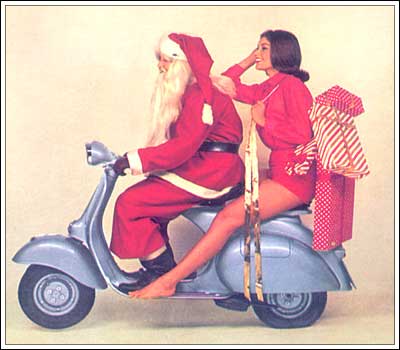
Special delivery: Santa’s on his retro way to George’s Journal this December, peepsters, and there may even be a lovely lady or two – if you’ve been nice (rather than naughty)…!
So then, chaps, it’s finally December 1, the first day of advent and – like it or not – we’re now properly counting down to Crimbo. And, in the spirit of the season, here’s an offer from me to you all… yes, like Tom Cruise was Cuba Gooding Jr.’s ‘ambassador of quorn’, why not let me be your ambassador of, yes, Christmas corn and cheese?
For, my merry mates, I can officially declare that this very blog has now – like it did exactly one year ago today – entered its ‘Christmas Zone’, which means there’s several seasonal highlights to look forward to right here over the next three-and-a-bit weeks.
How’s about a playlist of tinsel-tinged tunes, one or two of which will be very recognisable, most of which will be rare treats? How’s about a vey merry, festive-themed addition to the blog’s Talent corner? How’s about a countdown of yours truly’s ultimate top 10 Christmas presents from back in the day? And, finally and maybe best of all, how’s about a tribute to surely modern Crimbo’s ‘Legend‘ (two clues: it’s neither Bruce Forsyth nor Simon Cowell)? Yes, how’s about all that? How’s about all that, indeed! – as Jimmy Saville may once have said in a 1970s Top Of The Pops Christmas show.
In which case (hopefully), see you all seasonably – and, oh yes, seasonally – soon for the first proper festive post…!
.

.
“The Beatles saved the world from boredom”~ George Harrison
.

.
“I think we shared a lot of tastes; cars and clothes – and women, obviously” ~ Eric Clapton on George Harrison
.

.
“I remember thinking I just want more. This isn’t it. Fame is not the goal. Money is not the goal. To be able to know how to get peace of mind, how to be happy, is something you don’t just stumble across. You’ve got to search for it.” ~ George Harrison
.
.
“He’d mortgaged his house to put up the money for this movie because he wanted to see it, which is still the most anyone’s paid for a cinema ticket” ~ Eric Idle on George’s financing Monty Python And The Holy Grail
.

.
“I think people who truly can live a life in music are telling the world, ‘You can have my love, you can have my smiles. Forget the bad parts, you don’t need them. Just take the music, the goodness, because it’s the very best, and it’s the part I give most willingly” ~ George Harrison
.
.
“It’s being here now that’s important. There’s no past and there’s no future. Time is a very misleading thing. All there is ever, is the now. We can gain experience from the past, but we can’t relive it; and we can hope for the future, but we don’t know if there is one.” ~ George Harrison
.
.
Playlist: George’s Golden Dozen
CLICK on the song titles to hear them
Taxman (Album: Revolver, 1966)
Love You To (Album: Revolver, 1966)
While My Guitar Gently Weeps (Album: ‘The White Album’, 1968)
Something (Album: Abbey Road, 1969)
Here Comes The Sun (Album: Abbey Road, 1969)
I Me Mine (Album: Let It Be, 1970)
My Sweet Lord (Album: All Things Must Pass, 1970)
Wah-Wah (Album: All Things Must Pass, 1970)
Isn’t It A Pity (Album: All Things Must Pass, 1970)
What Is Life (Album: All Things Must Pass, 1970)
Got My Mind Set On You (Album: Cloud Nine, 1987)
Handle With Care (Album: The Traveling Wilburys Vol.1, 1988)
.
.
(Le) Carré on spying: Tinker Tailor Soldier Spy (2011) ~ Review
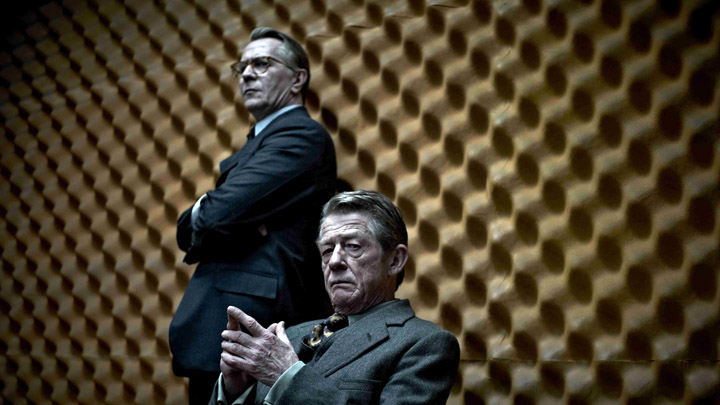
Directed by: Tomas Alfredson
Starring: Gary Oldman, Colin Firth, Toby Jones, Benedict Cumberbatch, John Hurt, Tom Hardy, Ciarán Hinds, Mark Strong, David Dencik, Roger Lloyd Pack, Kathy Burke
Screenplay by: Bridget O’Connor and Peter Straughan
UK/ France; 127 minutes; Colour; Certificate: 15
.
Seeing as Tinker Tailor Soldier Spy‘s been on release for weeks and thus received its wave of hype and publicity, well, weeks ago, in only now catching up and seeing it I’ll admit I’ve been behind the curve. Just like, cynics may suggest, the folks who made this flick have been in making it at all, given the seemingly universally adored 1979 BBC TV version of John Le Carré’s classic espionage novel, published five years before, most certainly got there first. So are the cynics right, was there any point making this movie? Well, peeps, given it’s bloomin’ marvellous, I’d answer a resounding yes.
All right, granted, I’m still to get around to viewing the Alec Guinness-starring telly version and reading the book – I’m a Fleming man, truth be told; I’ve always most enjoyed my fictional espionage as glamorous fantasy. The novel, though, by Le Carré (who receives an executive producer credit on this film and appears in a party scene cameo) is famed for being nothing like Bond. It’s Cold War spy-craft as near reality; dark, wordy, tactical, even depressing. His is the world of spooks that carry on their shoulders the burden of preventing World War Three like Atlas carrying his oh-so heavy globe. They keep a lifetime’s worth of secrets and/ or regrets in their hearts. Many are cold, ruthless, but decent people who thoroughly believe in Britain. Some of them are misled Reds. Others are just plain bastards. And the trick that Tinker Tailor Soldier Spy the movie pulls off so successfully is in bringing this world to the screen. It arguably doesn’t do it vividly or dynamically; it does it subtlely and quietly. And it’s brilliant for it.
Its universe is that of men with bad haircuts in bad suits and bad ties, grey skies and grey concrete, cheap Christmas decorations and cheaper cars, crap caravans and peeling paint on window panes. It’s the sort of world in which George Formby is still played on the radio, causing peeps to tap their feet infectiously. In short, it’s the 1970s and the sense of oppressive decay that pervades everything mirrors the atmosphere inside British Intelligence that the flick’s story is all about.
After a bungled job in Hungary goes badly wrong, British Intelligence – or MI6 – chief ‘Control’ (Hurt) and his fellow ageing and most trusted operative George Smiley (Oldman) are forced out. ‘Control’ (who is endearingly referred to as nothing else throughout the flick) quickly kicks the bucket, but Smiley is brought out of retirement by the politicos to investigate his former boss’s concern that a ‘mole’, who’s been working for the Soviets for decades, is embedded at ‘The Circus’, the affectionate term for MI6’s London HQ. Calling on the aid of a young spook (Cumberbatch with, actually, an ace haircut) and a former Special Branch police officer (Roger Lloyd Pack aka Only Fools And Horses‘ Trigger – yes, really), Smiley focuses his investigation on what seems to be a clue left by ‘Control’, which points to the ‘mole’ either being among the cabal that’s seized control of ‘The Circus’ (Jones, Firth, Hinds and Dencik) or Smiley himself…
At the heart of Tinker Tailor Soldier Spy then is George Smiley. In the hands of Gary Oldman, Smiley is an oustanding character, if a curious cinematic hero; all intellectual rigour but emotional restraint – rather like a former winner on University Challenge who wonders whether his life’s endeavours and sacrifices have all been worth it. Yet he – and the rest of the fine ensemble cast all on tip-top form, especially Cumberbatch, Hardy and Strong who together get considerable screen-time (even if, a little disappointingly, Hinds does not) – are indebted to their screenwriters and director. The latter is the Swede Tomas Alfredson who, having already greatly impressed with the also previously-decade-set, but unusual and moving vampire horror Låt Den Rätte Komma In (Let The Right One In) (2008), takes the formers’ script – which (one assumes) is an excellent exercise in condensing the plot-heavy, detailed text of Le Carré’s novel – and ensures its story unravels if not at a snail’s pace, then at a tortoise’s. And, frankly, there’s absolutely nothing wrong with that.
For this movie, telling an old-school story in an old-school setting, is filmed in an old-school style; it’s a slow-burner. Which means the plot and the characters are given room to breathe, to grow. The drama unfolds gradually, but becomes more and more engaging, ensuring it’s positively, skilfully gripping come its conclusion. Alfredson, as noted, resists using visual gimmicks or flashy editing to help tell his tale (it isn’t a Life On Mars-style ‘look at me!’ ’70s feel, more a dreary ’70s look that aims for a sort of anti-nostalgia). And yet, having said that, both the montages that open and close the movie are ones to cherish, while the sets are delightfully rich in detail: a bureaucratic poster on an MI6 wall warns that using a telephone risks one being overheard as a character is experiencing just that; graffiti on a London brick wall declares the feminist mantra ‘the future is female’ (the present being a totally masculine-led, fading Britain).
This is a film whose themes, characters and appearance are all about things going wrong, falling into disrepute and being past their best, but it leaves the viewer feeling anything but – it reeks of strong storytelling, excellent acting, spot-on observation of time and place; put simply, undeniable quality. This viewer was so drawn into Smiley and co.’s world that, come the end, he found himself spying his fellow cinemagoing strangers leaving their seats and, for a childish second, fantasising whether they might be, could be nefarious double-agents just like those who were up on the screen seconds before. Why? Because the concoction he’d just witnessed, anti-nostalgia it may’ve been, was also an irresistible, heady, old-school brew.

















 George's Journal