Listen, my friends! Playlist: Autumn 2025

.
In the words of Moby Grape… listen, my friends!
Yes, it’s back (again) – the occasional playlist presented by George’s Journal just for you good people.
There may be one or two classics to be found here dotted in among different tunes you’re unfamiliar with or have never heard before – or, of course, you may’ve heard them all before. All the same, why not sit back, listen away and enjoy…
.
CLICK on the song titles to hear them
.
Marty McFly with The Starlighters ~ Johnny B. Goode (1955?)¹
Edith Piaf ~ Les Feuilles Mortes/ Autumn Leaves (Live) (1957)
John Coltrane and Johnny Hartman ~ Autumn Serenade (1963)
The Kinks ~ Autumn Almanac (1967)
Keith Mansfield ~ Grandstand (1975)²
Justin Hayward and Richard Burton ~ Forever Autumn (1978)³
Earth, Wind & Fire ~ September (1978)
Frances Ruffelle ~ On My Own (1985)4
The Dream Academy ~ Power To Believe (1987)5
Guns N’ Roses ~ November Rain (Live) (1992)
Tina Turner ~ GoldenEye (1995)6
The Beatles ~ Free As A Bird (1995)7
Alan Silvestri and the Outatime Orchestra ~ Overture from Back To The Future (1985)¹
.
¹ Back To The Future may have celebrated its 40th anniversary this summer (it was originally released in US cinemas on July 3rd 1985) but its fantabulous time-travel trilogy is a decidedly autumnal affair; Marty McFly first traveled to/ arrived in 1955 on October 26th, arrived in 2015 on October 21st and arrived in 1885 on September 2nd
² This absolutely stonking track by library music supremo Keith Mansfield debuted as the iconic title theme of BBC1’s equally iconic Saturday afternoon sports magazine show Grandstand (1958-2007) 50 years ago on October 11th
³ From Jeff Wayne’s incomparable, classic concept album adaptation of H. G. Wells’ sci-fi novel par excellence The War Of The Worlds (1898)
4 As featured on the first English-language cast album of revolutionary France-set mega musical Les Misèrables, which opened at London’s Barbican Centre 40 years ago on October 8th and in the West End on December 4th 1985 at the Palace Theatre, its London home for the next 19 years
5 From the soundtrack of the pre-eminent Thanksgiving-themed film, John Hughes’ Steve Martin-John Candy comedy starrer Planes, Trains And Automobiles (1987)
6 The beginning of the Pierce Brosnan era of Eon’s James Bond celebrates its 30th anniversary on November 17th, the date in 1995 when the glorious GoldenEye opened in US cinemas
7 Conceived as a part of the awesome Anthology project, which ensured Beatlemania swept Britain all over again in autumn 1995 and so is currently celebrating its 30th anniversary, this really rather wonderful effort was the Fabs’ first reunion single, hitting a high of #2/ #6 on the UK/ US charts (indeed, it’s also received a swish, new, just-released 2025 mix)
.

George’s Journal’s pick of the flicks and top of the pops ~ 1990-94

.
Like me, does it feel to you that, in a blink of an eye, the 1990s have gone from being a heartbeat away to more than two or three eras ago? If so, that’s because it’s now – unbelievably – 30 years since the middle of that very decade.
Yes, 30 years since the emergence of ‘New Europe’ and the Internet, the rise of the home PC and the Premier League, and boomer Bill Clinton in the White House and ‘Call me Tony’ Blair in Number 10.
But not so fast! Just how much of all that took place in the first half of the ’90s, the time period this blog post is all about? Well, more than you might think; for as they raced their way to the Millennium (as they always had a wont to), the ’90s actually hit their stride pretty quickly.
Indeed, in this penultimate post in a very long (and, er, very interrupted) series of posts, my little nook of the ’Net is tasking itself with re-examining the culture of the early to mid-’90s.
A time when the Anglo-American greed of the ’80s gave way to the, well, slightly reduced greed of the 20th Century’s last decade. When high street fashion may have calmed down in the wake of ’80s excess, yet modern art bamboozled everyone, music charts and cinema releases became an utter free-for-all, and The Simpsons and (somehow) Mr Blobby evolved into inescapable small-screen icons.
So, following on from my cinematic and musical picks for 1950-54, 1955-59, 1960-64, 1965-69, 1970-74, 1975-79, 1980-84 and 1985-89, just what are my pick of the flicks and my ‘top of the pops’ for each year of the half-decade that was 1990-94?
Well, let’s find out, shall we, as we ditch those leggings and pick up that bucket hat, call off that D&D night to tackle that latest Gameboy, er, game, and throw out that worn VHS of Working Girl and throw on that shiny, new LaserDisc of Last Of The Mohicans… for the 1990s have arrived and they’re here to stay – well, for the length of this blog post, at least…
.
.
CLICK
on the film and song titles for video clips…
.
.
.
1990
.
Maggie out of No. 10, Major in; Germany reunified; Nelson Mandela walks to freedom;
Gazza’s tears at Italia 90; Saddam seizes Kuwait’s oil; Teenage Mutant Ninja Turtles;
Hubble Telescope take-off; Hammertime; Vanilla Ice; McDonald’s opens in Moscow
.
Film:
.
.
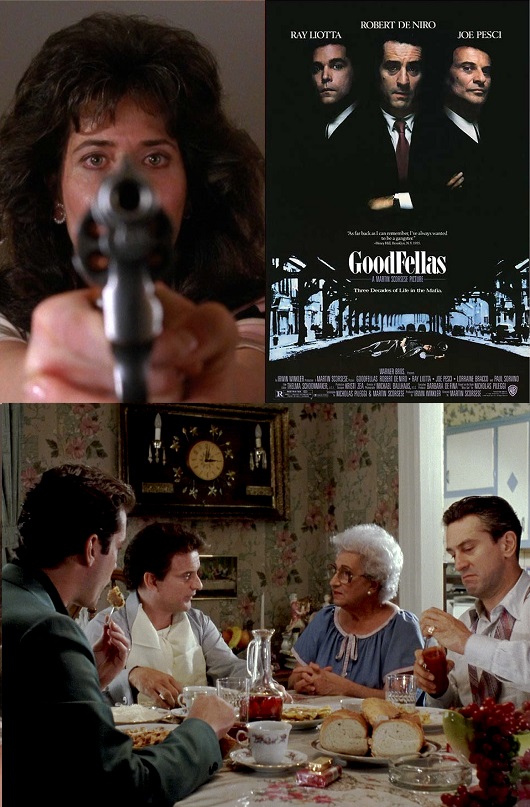
Directed by: Martin Scorsese/ Starring: Ray Liotta, Robert De Niro,
Joe Pesci, Lorraine Bracco and Paul Sorvino/ Country: USA/
Running time: 145 minutes (Crime-period drama)
What George says: While many say Scorsese’s Raging Bull (1980) is the ’80s’ best film, others claim the same of GoodFellas for the ’90s. Charting the rise and fall of Liotta’s mobster, it updated the Mafia epic for the MTV generation and became a true gamechanger; marrying pinpoint characterisation and violence with inventive plotting, punkish visual verve, profanity, humour, and tip-top rock and pop – everything from And Then He Kissed Me to Layla soundtrack the antics of Liotta and his cronies (De Niro’s gangster ‘gent’ and Pesci’s wild ‘wise guy’), as they navigate New York’s postwar underworld.
What the critics say: “No finer film has ever been made about organized crime – not even The Godfather.” ~ Roger Ebert
Oscar count: 1 (also won the BAFTA awards for Best Film and Best Director)
Oscar’s Best Picture pick this year: Dances With Wolves
The public’s pick this year: Ghost (global box-office #1)
.
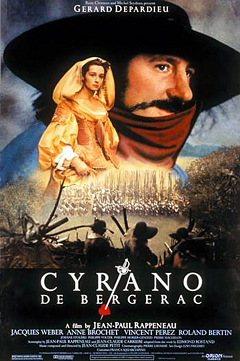
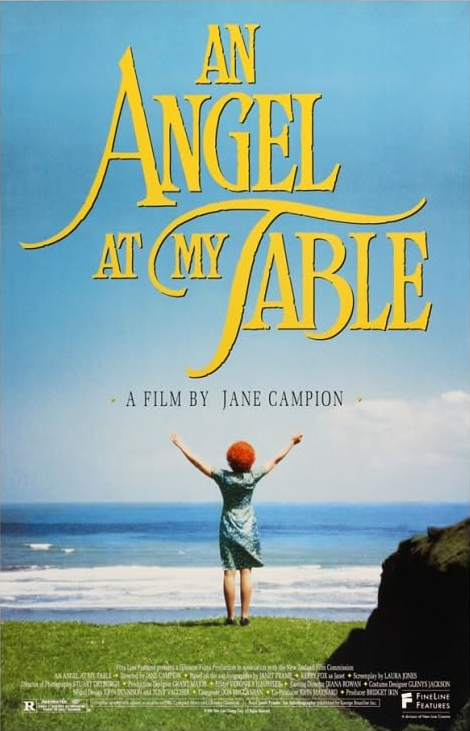
George’s runners-up: 2. Cyrano de Bergerac;
3. An Angel At My Table; 4. Edward Scissorhands; 5. Longtime Companion


.
And the rest: ¡Átame! (Tie Me Up! Tie Me Down!); Back To The Future Part III;
Dances With Wolves; Dick Tracy; Die Hard 2; Ghost; The Grifters; The Hunt For Red October;
The Krays; Miller’s Crossing; Pretty Woman; Reversal Of Fortune; Tremors; Wild At Heart;
The Witches
.
.
.
Song:
There She Goes ~ The La’s
.

.
Writer: Lee Mavers/ Released: October 1990 (re-issue)
What George says: If The Stone Roses wanting to be adored in ’89 was Britpop’s harbinger, then this incredible one-hit wonder courtesy of a Liverpool quartet that split up before grunge had even left Seattle was its (early) opening salvo. Indeed, so utter are this tune’s retro bona fides that, first hearing it in the mid-’90s, I genuinely assumed it came out of the ’60s. What fooled me wasn’t its quality but the nature of its quality; its just-right jangly guitars, how clean its close harmonies were and, most of all, the purity of its melodic simplicity. There She Goes is just a perfect song – whichever decade it hails from.
What the critics say: “[It] defines the perfectly written pop song: an instantaneously recognisable melody and lyric set to simple, economic musical structure. It is such a simple song that it boggles the mind that someone hadn’t already written it.” ~ Ben Gibbard
Chart record: UK #13/ US #49
Recognition: Ranked #2 for 1990, #16 for the 1990s and #188 for ‘all-time’ on acclaimedmusic.net’s cumulatively ranked ‘top songs’ lists
.
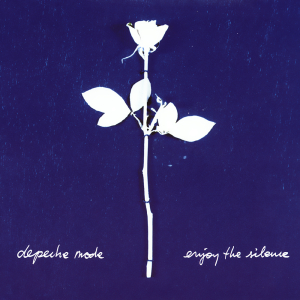
George’s runners-up:
2. Enjoy The Silence (Depeche Mode)/ 3. A Little Time (The Beautiful South)/
4. The Only One I Know (The Charlatans)/ 5. (We Want) The Same Thing (Belinda Carlisle)


.
And the rest: Advice For The Young At Heart (Tears For Fears)/ All I Wanna Do Is Make Love To You (Heart)/ All Together Now; Groovy Train (The Farm)/ And So It Goes (Billy Joel)/ Bad Love; No Alibis (Eric Clapton)/ Better Than A Dream (Mike Batt)/ Better The Devil You Know; Step Back In Time (Kylie Minogue)/ Black Velvet (Alannah Myles)/ Can I Kick It? (A Tribe Called Quest)/ Crying In The Rain (a-ha)/ Cuts Both Ways (Gloria Estefan)/ Doubleback (ZZ Top)/ Downtown Train (Rod Stewart)/ Groove Is In The Heart (Deee-Light)/ Hanky Panky; Justify My Love; More; Sooner Or Later; Vogue (Madonna)/ Heal The Pain (George Michael)/ Here’s Where The Story Ends (The Sundays)/ Hold On (Wilson Phillips)/ How Can We Be Lovers? (Michael Bolton)/ I Wish It Would Rain Down; Something Happened On The Way To Heaven (Phil Collins)/ I’m Free (The Soup Dragons)/ Ice Ice Baby (Vanilla Ice)/ It Must Have Been Love (Roxette)/ John Dunbar Theme (John Barry and London Philharmonic Orchestra)/ Killer (Adamski and Seal)/ King Of Wishful Thinking (Go West)/ Kinky Afro; Step On (Happy Mondays)/ Let Love Speak Up Itself; My Book (The Beautiful South)/ Lily Was Here (David A. Stewart featuring Candy Dulfer)/ Little Fluffy Clouds (The Orb)/ Loaded (Primal Scream)/ Love Theme From Twin Peaks (Angelo Badalamenti)/ Nessun Dorma (Luciano Pavarotti)/ Nothing Compares 2 U (Sinéad O’Connor)/ Nothing Ever Happens (Del Amitri)/ Opposites Attract (Paula Abdul)/ Pictures Of You (The Cure)/ The Power (Snap!)/ Preacher Man (Bananarama)/ Put The Message In The Box (World Party)/ Real Real Real (Jesus Jones)/ Sacrifice (Elton John)/ Sadeness (Part 1) (Enigma)/ Serious (Duran Duran)/ Show Me Heaven (Maria McKee)/ Suicide Blonde (INXS)/ This Is How It Feels (Inspiral Carpets)/ Thunderstruck (AC/DC)/ Tom’s Diner (DNA featuring Suzanne Vega)/ U Can’t Touch This (MC Hammer)/ Unbelieveable (EMF)/ What Can You Lose (Madonna and Mandy Patinkin)/ World In Motion (Englandneworder)
.
.
.
.
1991
.
USSR collapses, Yeltsin gives Gorbachev a way out; war in the Gulf;
Japan’s economy goes pop; Yugoslavia disintegrates; AIDS claims Freddie;
Arnie in Terminator 2; (Everything I Do) I Do It For You is UK #1 for 16 weeks
.
Film:
(Raise The Red Lantern)
.

.
Directed by: Zhang Yimou/ Starring: Gong Li,
He Saifei, Cao Cuifen, Kong Lin, Jin Shuyuan and Ma Jingwu/ Country: China/
British Hong Kong/ Running time: 125 minutes (Period-psychological drama)
What George says: Surely the most beautiful meditation you’ll see on the psychological power that fuels sex slavery (and the horrendous harm it causes), this elegiacal, immersive, lustrously colour-coded costume drama of sparse dialogue plays out as a sort of Chinese take on Cries And Whispers. Indeed, both Bergman and Kurosawa may well have been big influences on helmer Yimou, as he filmed his tragic yet feminist tale that pivots around the naïvete and mental state of its protagonist, a never more luminous, never better Gong Li. Come the end, you’ll be left devastated – but in the best way possible.
What the critics say: “Yimou shot the film so that its rich colours and claustrophobic atmosphere matched the story perfectly, and it can also be viewed as a parable about the patriarchal, semi-feudal society of late 20th-century China … It is perhaps [his] most lavish and stately film … [and] his most resonant. You have only to watch Gong Li being prepared for the marital bed to see how well the film captures the scent of sex, jealousy and impending disaster.” ~ Derek Malcolm
Oscar count: 0 (but won the 1991/ 92 BAFTA, David di Donatello and National Board of Review awards for Best Foreign Language Film)
Oscar’s Best Picture pick this year: The Silence Of The Lambs
The public’s pick this year: Terminator 2: Judgment Day (global box-office #1)
.
George’s runners-up: 2. The Silence Of The Lambs;
3. La Double Vie de Véronique (The Double Life Of Veronique);
4. Beauty And The Beast; 5. Hitlerjunge Salomon (Europa Europa)
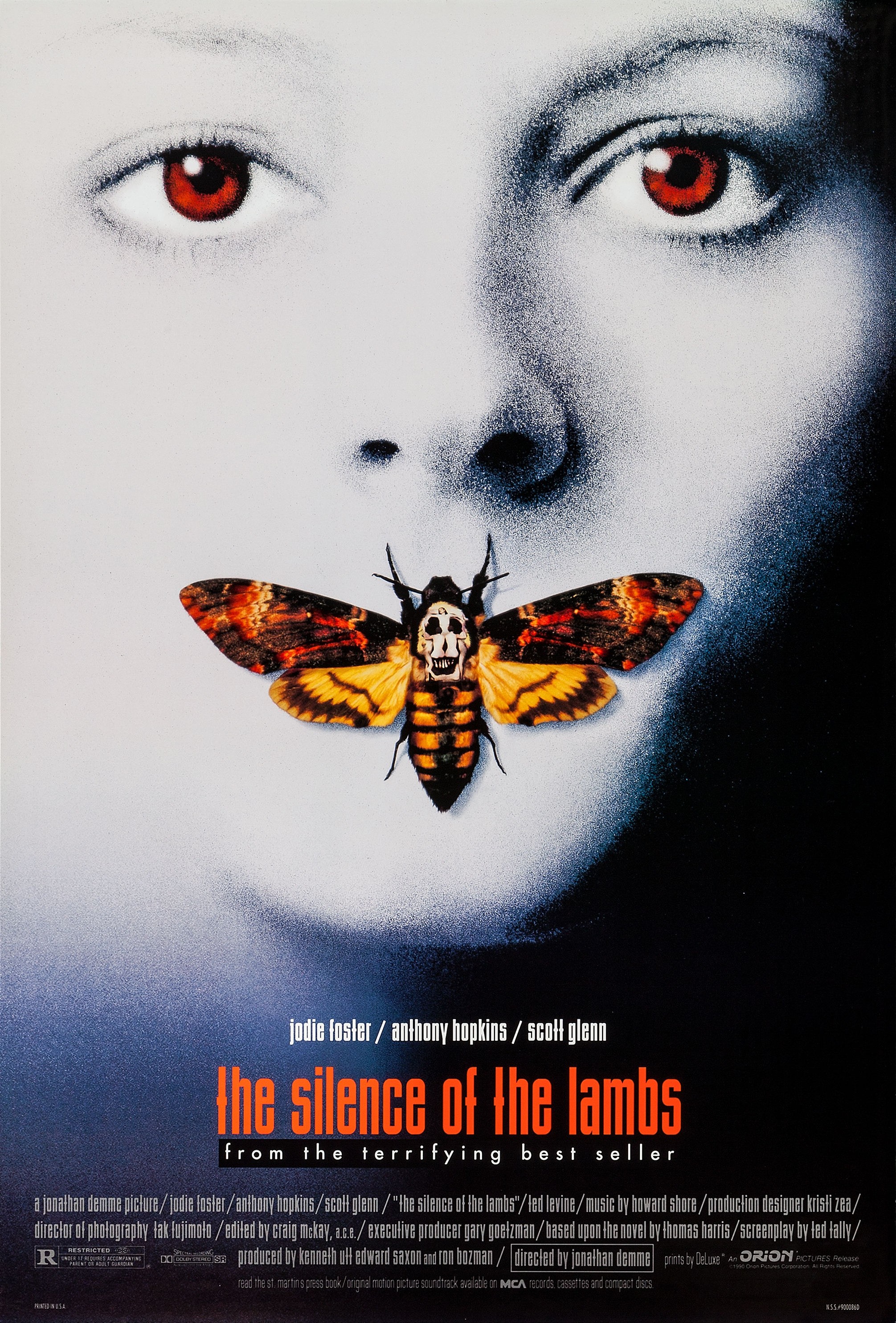

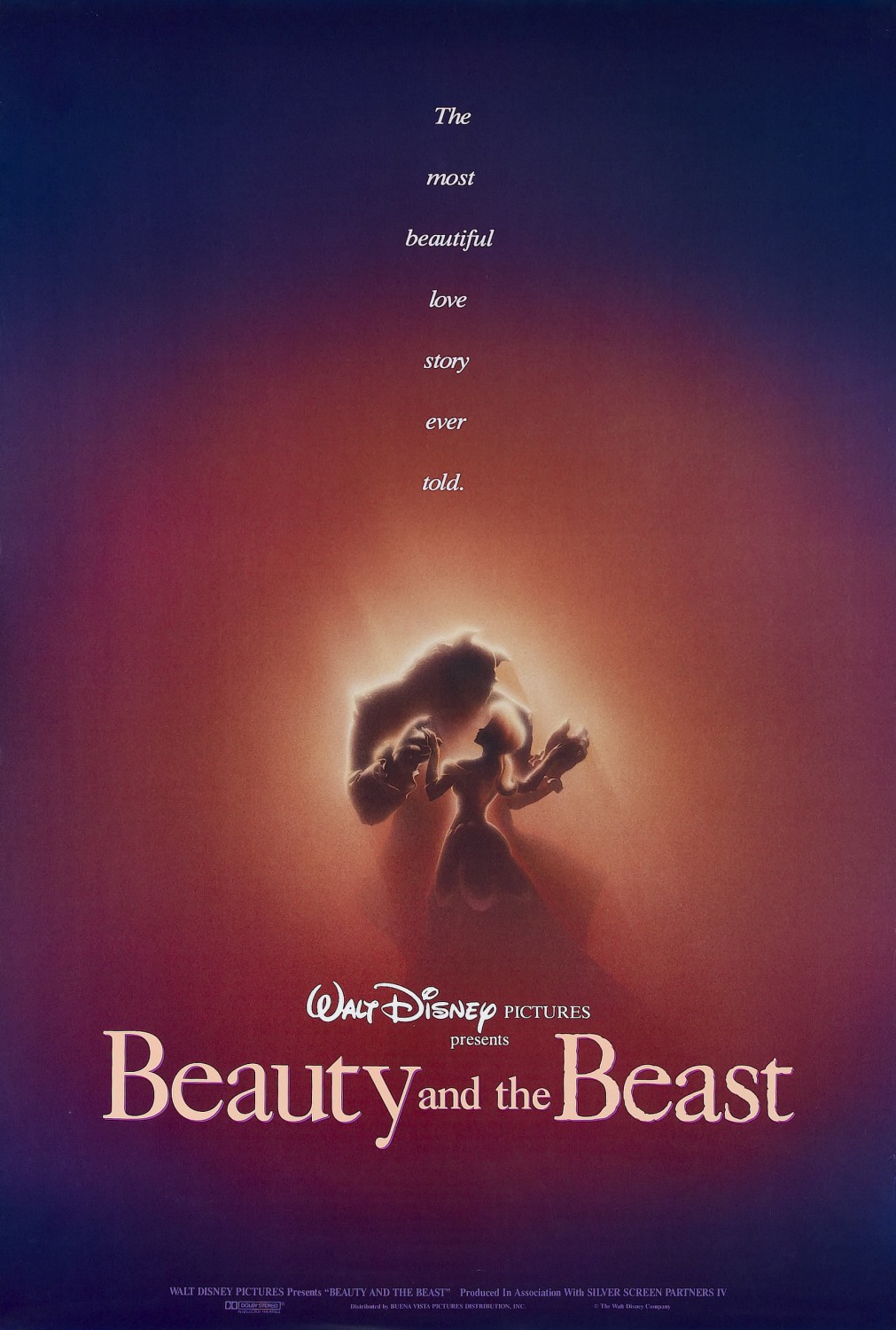

.
And the rest: Barton Fink; La Belle Noiseuse (The Beautiful Troublemaker);
Boyz N The Hood; Cape Fear; Close My Eyes; Delicatessen; Doc Hollywood;
The Fisher King; JFK; Life Is Sweet; Point Break; Robin Hood: Prince Of Thieves;
Terminator 2: Judgment Day; Thelma & Louise; Truly, Madly, Deeply
.
.
.
Song:
The Whole Of The Moon ~ The Waterboys
.

.
Writer: Mike Scott/ Released: March 1991 (re-issue)
What George says: First released in 1985, this barnstorming anthem of delicious musical dexterity, building one piano-pounding verse and one soaring chorus after another, defies easy interpretation. My take on what the masterly Mike Scott, beguiled by Romanticism as a literature-loving teen, delivers here is a mesmerising, trumpet-blaring, synth-soaked paean to the glory of the creative spirit in the face of the mundane (“I saw the rain-dirty valley, you saw Brigadoon / I saw the crescent, you saw the whole of the moon”). Honestly, how could any daydreamer who’s ever dared to dream a little deeper resist it?
What the artist says: “It’s about how amazing it is to live in a world where so much is available, where a human being can grow and learn like that. It’s a dramatic, celebratory song with a real big climax. And that’s because it’s describing something wonderful.” ~
Mike Scott (interviewed in 2024)
Chart record: UK #3
Recognition: Ranked #25 for 1985, #276 for the 1980s and #1,884 for ‘all-time’ on acclaimedmusic.net’s cumulatively ranked ‘top songs’ lists/
won the Ivor Novello Award for ‘Best Song Musically and Lyrically’ (1991)
.
George’s runners-up: 2. One (U2)/ 3. Stars (Simply Red)/
4. Fall At Your Feet (Crowded House)/ 5. I Touch Myself (Divinyls)
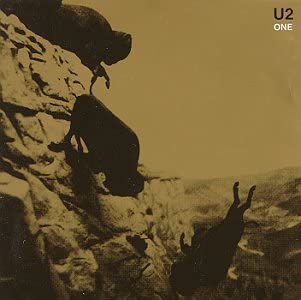

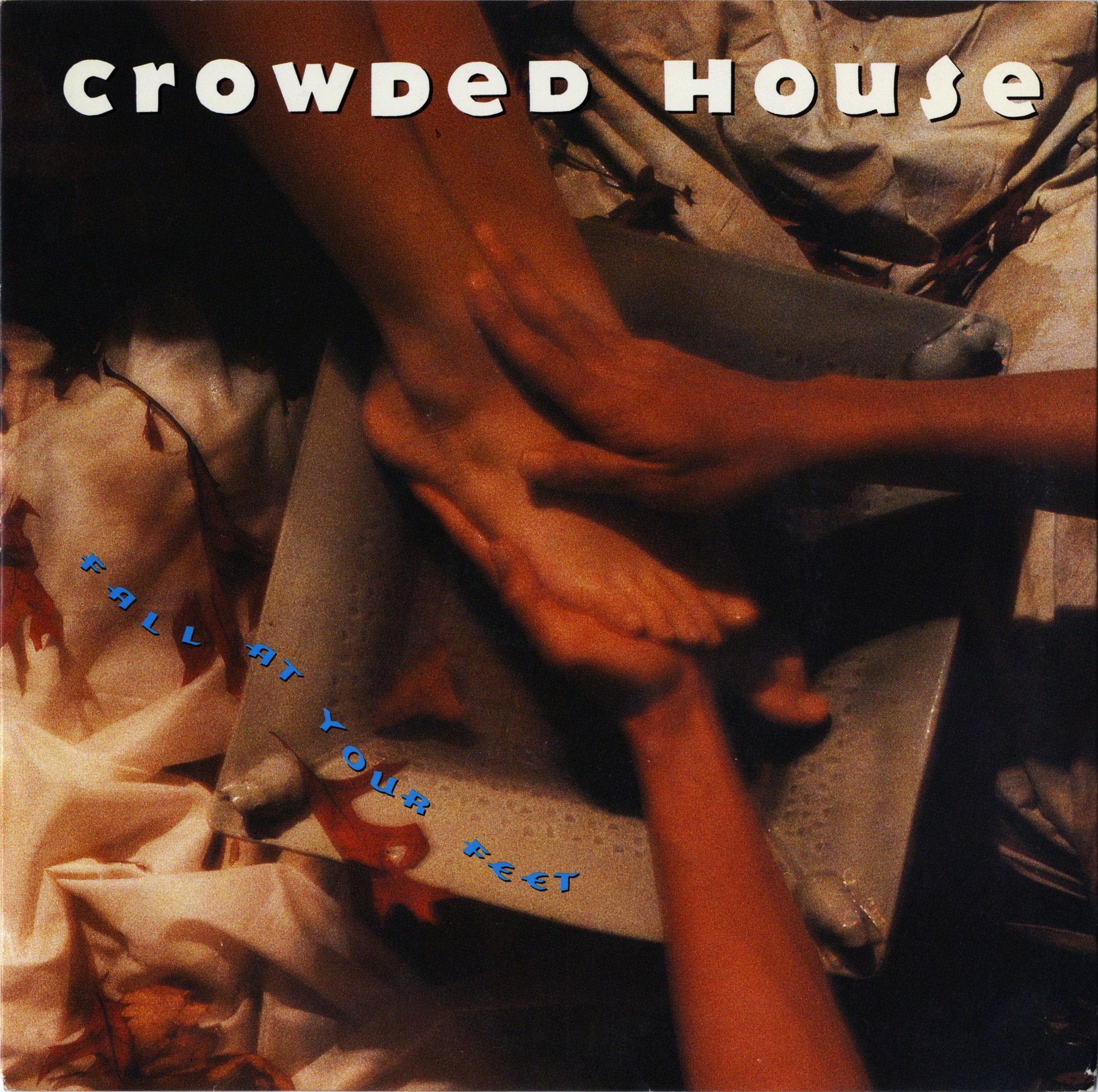

.
And the rest: All This Time (Sting)/ All Woman (Lisa Stansfield)/ Apparently Nothin’ (Young Disciples)/ Auberge; Looking For The Summer (Chris Rea)/ Baby Baby (Amy Grant)/ Back To The Interstate, Ben Stone (Carter Burwell)/ Be Our Guest (Jerry Orbach and Angela Lansbury)/ Beauty And The Beast (Angela Lansbury)/ Black Or White (Michael Jackson)/ Calling Elvis; Heavy Fuel (Dire Straits)/ Can You Dig It? (The Mock Turtles)/ Can’t Stop This Thing We Started; (Everything I Do) I Do It For You (Bryan Adams)/ Come Home; Sit Down; Sound (James)/ Coming Out Of The Dark (Gloria Estefan)/ Countdown; My Legendary Girlfriend (Pulp)/ Crazy (Seal)/ Cream; Diamonds And Pearls (Prince)/ Dizzy (Vic Reeves and The Wonder Stuff)/ Everybody’s Free (To Feel Good) (Rozalla)/ Fields Of Joy; It Ain’t Over ’Til It’s Over (Lenny Kravitz)/ The Fly; Mysterious Ways (U2)/ From A Distance (Bette Midler)/ Get Here (Oleta Adams)/ Get The Message (Electronic)/ Go (Moby)/ Gonna Make You Sweat (Everybody Dance Now); Things That Make You Go Hmmm… (C+C Music Factory)/ Holding On; Promise Me; Woman To Woman (Beverley Craven)/ I Believe (EMF)/ (I Wanna Give You) Devotion (Nomad featuring MC Mikee Freedom)/ International Bright Young Thing; Right Here, Right Now (Jesus Jones)/ Joyride (Roxette)/ Justified And Ancient; Last Train To Trancentral; 3 a.m. Eternal (The KLF)/ Learning To Fly (Tom Petty and the Heartbreakers)/ Let’s Talk About Sex (Salt-N-Pepa)/ Live Your Life Be Free (Belinda Carlisle)/ Long Train Running (Bananarama)/ Losing My Religion; Shiny Happy People (R.E.M.)/ Love And Understanding; The Shoop Shoop Song (It’s In His Kiss) (Cher)/ Love… Thy Will Be Done; Martika’s Kitchen (Martika)/ More Than Words (Extreme)/ Move Any Mountain (The Shamen)/ No Son Of Mine (Genesis)/ The One And Only (Chesney Hawkes)/ Overture from Robin Hood: Prince Of Thieves (Michael Kamen)/ Radio Wall Of Sound (Slade)/ Rescue Me (Madonna)/ Rocket Man (Kate Bush)/ Sailing On The Seven Seas (Orchestral Manoeuvres in the Dark)/ Saltwater (Julian Lennon)/ Sheriff Fatman (Carter the Unstoppable Sex Machine)/ The Show Must Go On; These Are The Days Of Our Lives (Queen)/ The Size Of A Cow (The Wonder Stuff)/ Smells Like Teen Spirit (Nirvana)/ Something Got Me Started; Wonderland (Simply Red)/ Sunshine On A Rainy Day (Zoë)/ There’s No Other Way (Blur)/ Too Many Walls; Touch Me (All Night Long) (Cathy Dennis)/ Unfinished Sympathy (Massive Attack)/ Walking Down Madison (Kirsty MacColl)/ Walking In Memphis (Marc Cohn)/ Wicked Game (Chris Isaak)/ Wind Of Change (Scorpions)/ World In Union (Kiri Te Kanawa)/ You Got The Love (The Source featuring Candi Staton)
.
.
.
.
1992
.
‘Baby Boomer’ Bill Clinton elected US President; Tories re-elected in UK;
Queen’s ‘annus horribilis’; Black Wednesday; L.A. riots; Damien Hirst’s shark;
Nirvana; Basic Instinct; ‘The Dream Team’ at the Olympics; Denmark win Euro 92
.
Film:
.
.
Directed by: John Musker and Ron Clements/ Starring: (the voices of) Robin Williams,
Scott Weinger, Linda Larkin, Jonathan Freeman and Gilbert Gottfried/
Country: USA/ Running time: 87 minutes
(Animated musical-adventure)
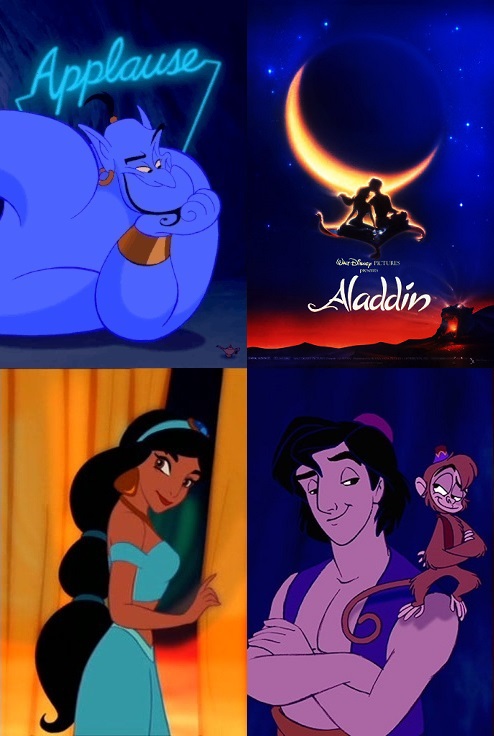
What George says: This, Disney’s stylish, swaggering Arabian Nights adaptation, has to be the high watermark of its second ‘Golden Age’ of animation. It soars like a magic carpet ride because, like Beauty and the Beast and The Lion King, its script and irresistible tunes seem smartly written as if for a hit Broadway musical (much unlike comparable ’90s cartoon fare), while the freewheeling improv of Robin Williams’ ebullient Genie inspires and reinforces a feisty, flip, postmodern tone, with jokes fit for any superior sitcom of the era; perfectly paving the way for all those Pixar classics just around the corner.
What the critics say: “Pixar’s sparkling output may not have come along as soon had Aladdin not primed an adult audience to look at animation as a genre as exciting as any other, and shown that Simpsonian sophistication could work when stretched to feature length.” ~ Olly Richards
Oscar count: 2
Oscar’s Best Picture pick this year: Unforgiven
The public’s pick this year: Aladdin (global box-office #1)
.
George’s runners-up: 2. Reservoir Dogs; 3. Glengarry Glen Ross;
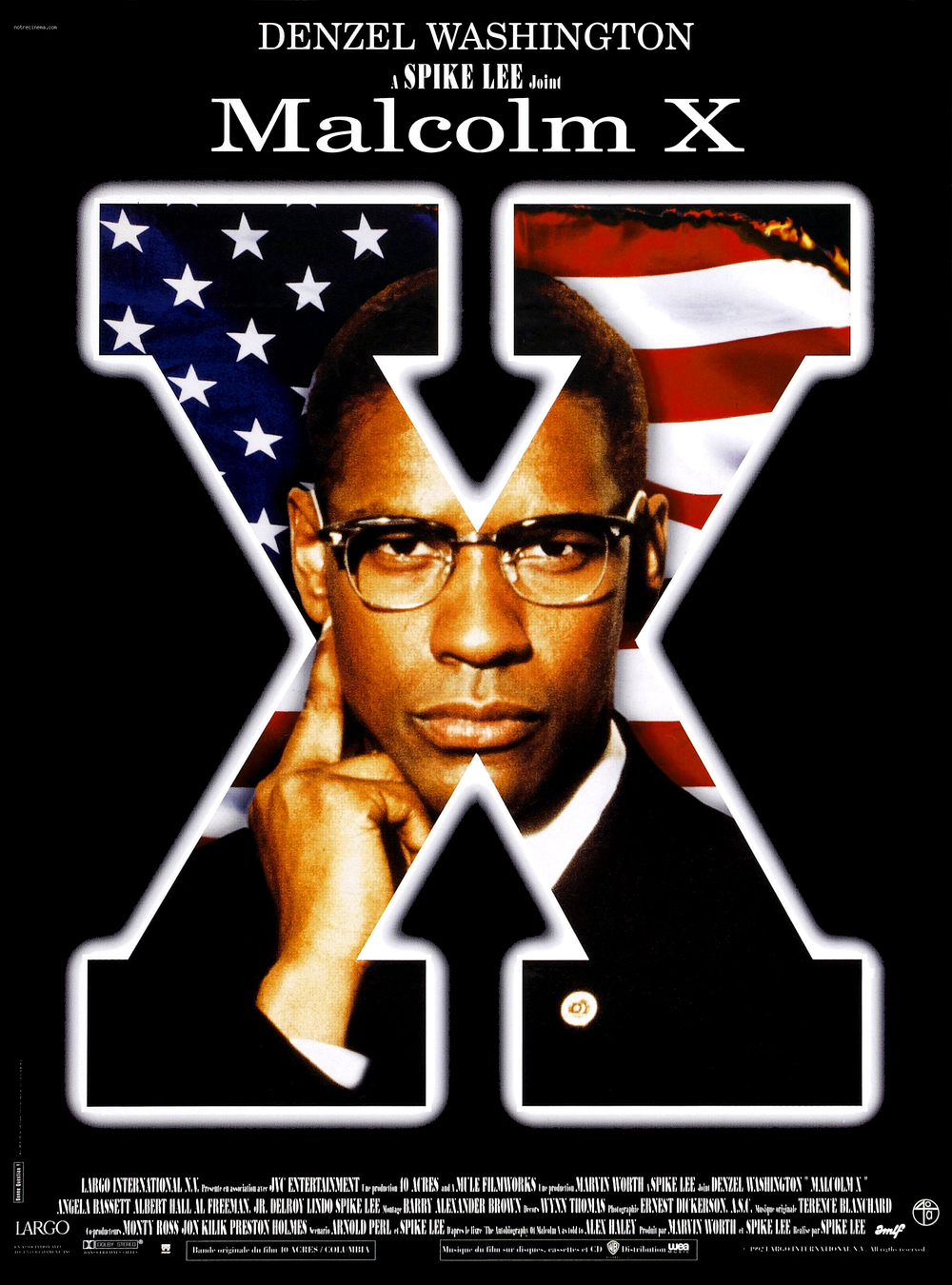
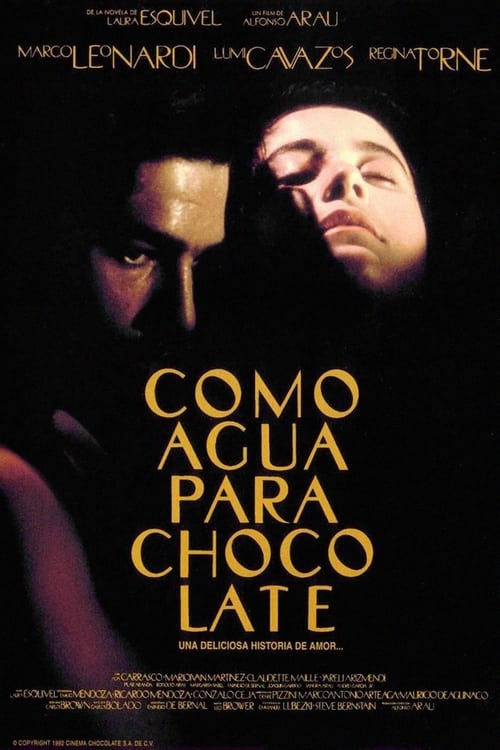
4. Malcolm X; 5. Como Agua Para Chocolate (Like Water For Chocolate)


.
And the rest: Alien³; A Few Good Men; Bram Stoker’s Dracula;
Chaplin; The Crying Game; Howard’s End; The Last Of The Mohicans;
Memoirs Of An Invisible Man; The Muppet Christmas Carol; The Player;
Scent Of A Woman; Sneakers; Strictly Ballroom; Unforgiven; Wayne’s World
.
.
.
Song:
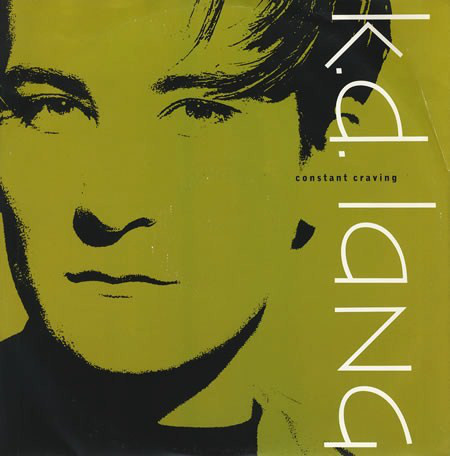
Constant Craving ~ k.d. lang
.
.
Writers: k.d. lang and Ben Mink/ Released: March 1992
What George says: The genius move k.d. lang pulled to ensure a big, fat slice of gay longing went wonderfully mainstream back in the early ’90s was to deploy the oldest trick in the book: produce a fine work of art of mass appeal. With a country-tinged sound, lyrics delivered in perfect plaintive tone and a mild-rock radio-friendly smoothness, this instant classic’s instant-replay appeal lies in those driving, melodious hooks, heightened by the Canuck songstress supreme’s studio-honed, yearning harmonies. For a time, you heard Constant Craving everywhere – and its greatness always left you craving more.
What the critics say: “There is no denying the rootsy, down-home quality of this wonderfully produced tune. Lang’s distinctive voice is woven into spiraling multitracked harmonies, wafting over a base of acoustic guitar strumming and subtle accordion and xylophone interludes.” ~ Larry Flick
Chart record: US #38/ UK #15 (1993)
Recognition: Ranked #33 for 1992, #312 for the 1990s and #2,487 for ‘all-time’ on acclaimedmusic.net’s cumulatively ranked ‘top songs’ lists/
won the Grammy Award for Best Female Pop Vocal Performance (1993)
.
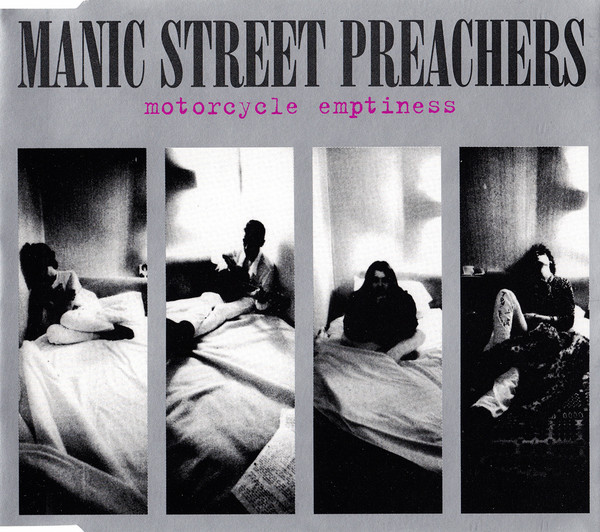
George’s runners-up: 2. Motorcycle Emptiness (Manic Street Preachers)/
3. Bell Bottomed Tear (The Beautiful South)/ 4. Why (Annie Lennox)/
5. Sense (The Lightning Seeds)


.
And the rest: Ain’t No Doubt (Jimmy Nail)/ Am I The Same Girl (Swing Out Sister)/ Arabian Nights (Bruce Adler)/ Barcelona (Freddie Mercury and Montserrat Caballe)/ Book Of Days (Enya)/ Born Of Frustration (James)/ Come As You Are; Lithium (Nirvana)/ Connected; Step It Up (Stereo MCs)/ Damn I Wish I Was Your Lover (Sophie B. Hawkins)/ Deeply Dippy (Right Said Fred)/ Ebeneezer Goode (The Shamen)/ End Of The Road (Boyz II Men)/ Even Better Than The Real Thing; Who’s Gonna Ride Your Wild Horses (U2)/ Finally (CeCe Peniston)/ For Your Babies; Thrill Me; Your Mirror (Simply Red)/ Four Seasons In One Day; It’s Only Natural; Weather With You (Crowded House)/ Friday I’m In Love (The Cure)/ Friend Like Me (Robin Williams)/ Goodnight Girl (Wet Wet Wet)/ Hazard (Richard Marx)/ Hit (The Sugarcubes)/ Human Touch (Bruce Springsteen)/ I Can’t Dance; Jesus He Knows Me (Genesis)/ I Drove All Night (Roy Orbison)/ I Love Your Smile (Shanice)/ I Will Always Love You (Whitney Houston)/ I Wonder Why; You’re All That Matters To Me (Curtis Stigers)/ If You Don’t Love Me; The Sound Of Crying (Prefab Sprout)/ I’m Stronger Now (Ben Chapman and Steve DuBerry)/ It Feels Like Christmas (Jerry Nelson)/ It’s My Life (Dr. Alban)/ Just Another Day (Jon Secada)/ Keep The Faith (Bon Jovi)/ Laid So Low (Tears Roll Down) (Tears For Fears)/ The Life Of Riley (The Lightning Seeds)/ Man On The Moon (R.E.M.)/ Metal Mickey; The Drowners (Suede)/ No Ordinary Love (Sade)/ November Rain (Guns ’N Roses)/ Old Red Eyes Is Back; 36D; We Are Each Other (The Beautiful South)/ The One (Elton John)/ Save The Best For Last (Vanessa Williams)/ Sentinel (Mike Oldfield)/ Sexy MF (Prince and The New Power Generation)/ Sleeping Satellite (Tasmin Archer)/ Stay (Shakespeare’s Sister)/ Tears In Heaven (Eric Clapton)/ This Used To Be My Playground (Madonna)/ Walking On Broken Glass (Annie Lennox)/ Welcome To The Cheap Seats (The Wonder Stuff)/ A Whole New World (Brad Kane and Lea Salonga)/ Would I Lie To You? (Charles and Eddie)/ You Love Us (Manic Street Preachers)
.
.
.
.
1993
.
EU launched via Maastricht Treaty; Stephen Lawrence and Jamie Bulger murders;
Waco siege; UKIP forms; CGI dinosaurs in Jurassic Park; Grand National no go;
Man Utd win inaugural Premier League; The X-Files; Mr Blobby vs. Take That
.
Film:
Trois Couleurs Bleu (Three Colours Blue)
.

.
Directed by: Krzysztof Kieślowski/ Starring: Juliette Binoche, Benoît Régent,
Florence Pernal, Charlotte Véry, Yann Trégouët and Emmanuelle Riva/
Country: France/ Poland/ Switzerland/ Running time: 94 minutes
(Human-psychological drama)
What George says: If what defines a film as great is that it terrifically tells its story as much through moving images as traditional narrative, then Bleu (the opening act in Kieślowski’s ‘New Europe’-themed Three Colours trilogy) is undoubtedly a great film. Ostensibly a character study of a grieving woman (a never-better Binoche), it’s really a precociously smart meditation on the virtue of personal freedom. It’s utterly compelling from its brutally raw opening right through to its emotionally satisfying climax and, yes, the everyday-beautiful imagery it uses to propel you through its rich tale will stay with you forever.
What the critics say: “Kieślowski is the master of the telling detail … what his imitators’ work often seems to lack is the lyrical intensity we see in Blue’s mise-en-scène, and the adroit use of images suggestive of inner life … The film … seems to examine the feminist rallying cry ‘the personal is political’ with greater scope and sensitivity than any other. And its rich ambiguities leave enough room for us to see that the price of freedom depends on what kind of freedom you want.” ~ Nick James
Oscar count: 0 (but did win the Golden Lion, the Volpi Cup – for Juliette Binoche – and the
Golden Osella – for cinematographer Sławomir Idziak – at the 1993 Venice Film Festival)
Oscar’s Best Picture pick this year: Schindler’s List
The public’s pick this year: Jurassic Park (global box-office #1)
.
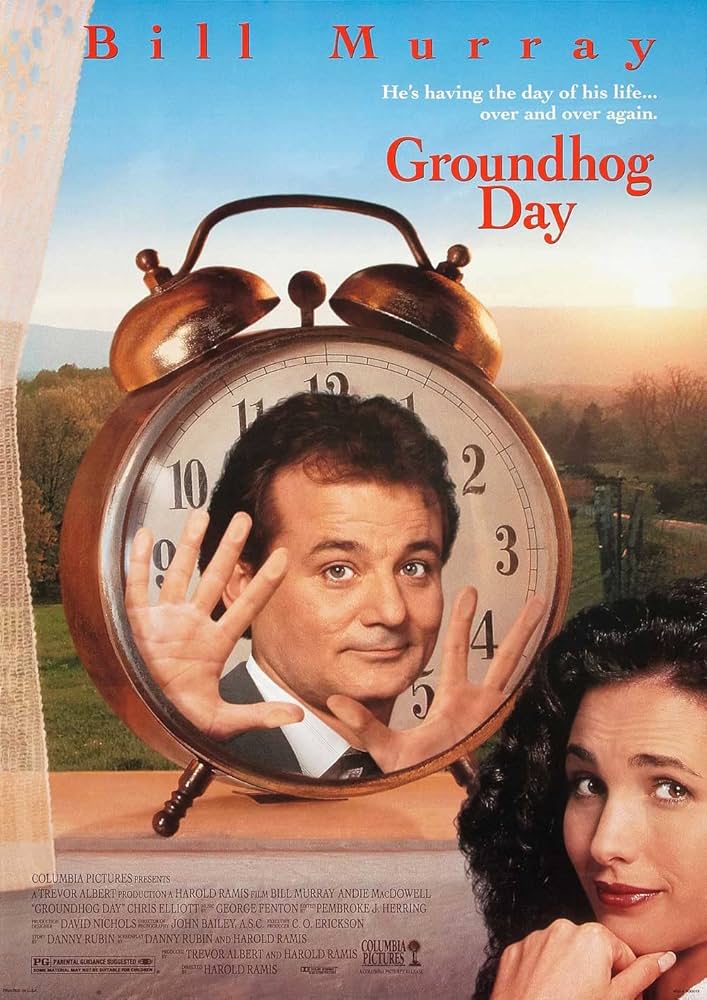
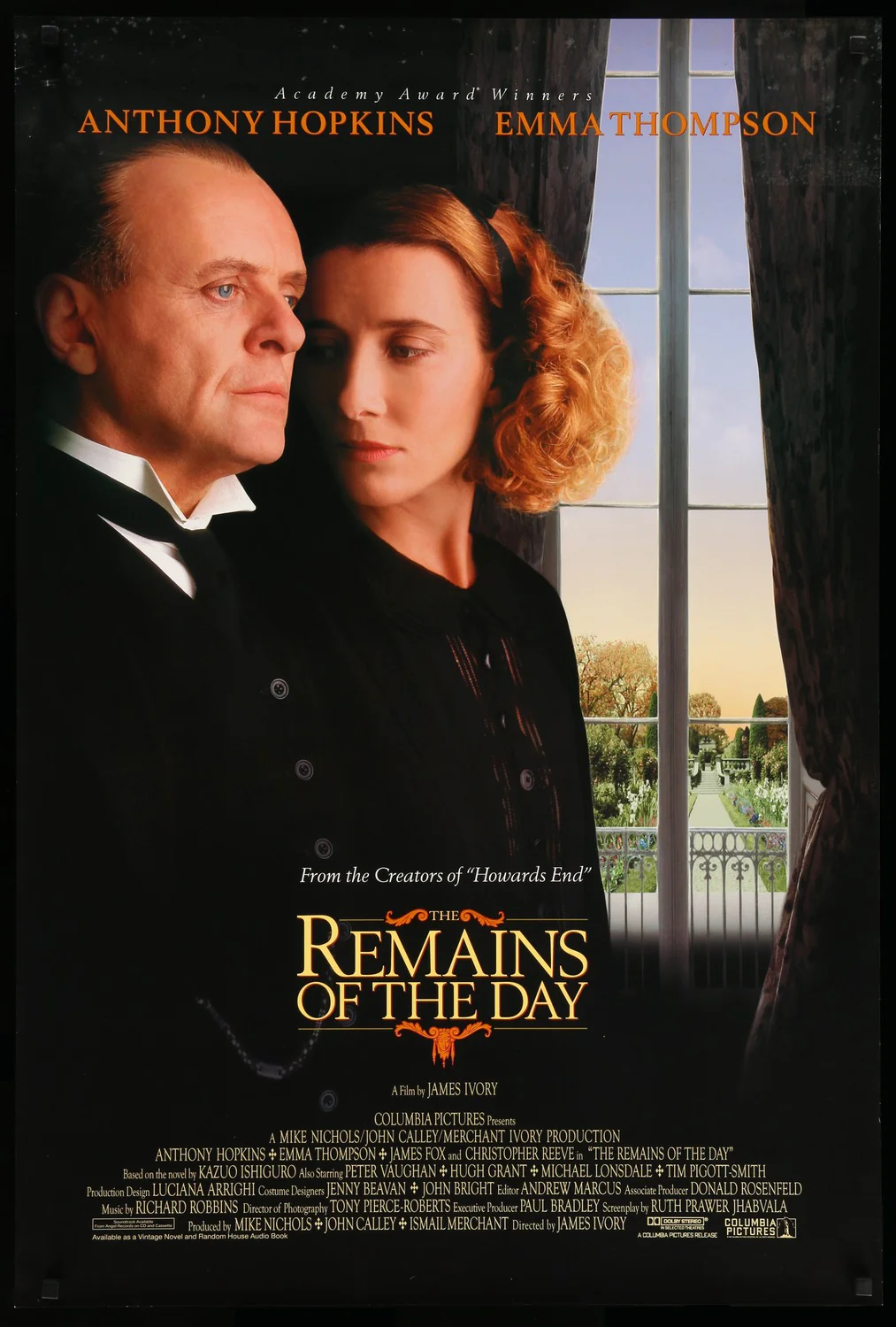
George’s runners-up: 2. Schindler’s List; 3. Dazed And Confused;
4. Groundhog Day; 5. The Remains Of The Day


.
And the rest: The Age Of Innocence; 霸王别姬 (Farewell My Concubine); The Firm;
The Fugitive; In The Name Of The Father; Jurassic Park; Much Ado About Nothing;
Naked; The Nightmare Before Christmas; Philadelphia; The Piano; Short Cuts;
Sleepless In Seattle; 喜宴 (The Wedding Banquet); What’s Eating Gilbert Grape
.
.
.
Song:
Ordinary World ~ Duran Duran
.

.
Writers: Simon Le Bon, John Taylor, Nick Rhodes and Warren Cuccurullo/ Released: January 1993
What George says: Almost 10 years on from their peak, Brum’s Best Ever Band were back with this belter of a ballad. Sure, its lyrics alternate between bombastic and indecipherable but who cares when Le Bon’s voice soars in that chorus and – especially – when we crash into that guitar solo? Yet, what’s truly irresistible here is the air of cool melancholia; one that feels more sophisticated than in Duran Duran’s best ’80s ballads. This is a song us ’90s teens may well have fantasised soundtracking our in-and-out-of-love adult lives. It’s the sound of aspiration and heartbreak, then – a combo far too seductive to resist.
What the critics say: “[This] excellently crafted [song demonstrates Duran Duran are] capable of delivering the goods. And as an added irony for a band that was introduced [to the US] by MTV when radio wouldn’t touch it, this particular song exploded across radio’s many formats before a video was even made.” ~ Tony Fletcher
Chart record: US #3/ UK #6
Recognition: Ranked #36 for 1993, #438 for the 1990s and #3,283 for ‘all-time’ on acclaimedmusic.net’s cumulatively ranked ‘top songs’ lists
.
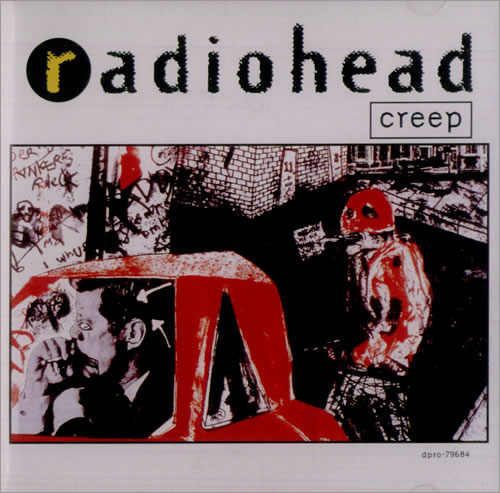
George’s runners-up: 2. Creep (Radiohead)/ 3. Regret (New Order)/
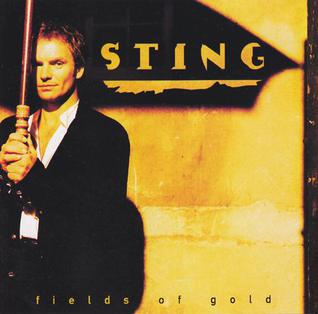
4. Fields Of Gold (Sting)/ 5. Harvest Moon (Neil Young)


.
And the rest: Ain’t No Love (Ain’t No Use) (Sub Sub)/ All That She Wants (Ace Of Base)/ Animal Nitrate; So Young (Suede)/ Are You Gonna Go My Way; Believe; Heaven Help (Lenny Kravitz)/ As If We Never Said Goodbye; With One Look (Patti LuPone)/ The Bell (Mike Oldfield featuring Alan Rickman)/ Boom Shak-A-Lak (Apache Indian)/ Boom! Shake The Room (DJ Jazzy Jeff & The Fresh Prince)/ Breathe Again (Toni Braxton)/ Break It Down Again (Tears For Fears)/ Come Undone (Duran Duran)/ Distant Sun (Crowded House)/ Don’t Be A Stranger; The Perfect Year (Dina Carroll)/ Dreamlover; Hero (Mariah Carey)/ Eat The Music; Moments Of Pleasure; The Red Shoes; Rubberband Girl (Kate Bush)/ Eat The Rich (Aerosmith)/ Everybody Hurts; Nightswimming; The Sidewinder Sleeps Tonite (R.E.M.)/ For Tomorrow (Blur)/ From Despair To Where (Manic Street Preachers)/ The Heart Asks Pleasure First/ The Promise (Michael Nyman)/ Hey Jealousy (Gin Blossoms)/ I Can See Clearly Now (Jimmy Cliff)/ I Don’t Wanna Fight (Tina Turner)/ I Wouldn’t Normally Do This Kind Of Thing (Pet Shop Boys)/ If I Ever Lose My Faith In You; Seven Days (Sting)/ In All The Right Places; Someday (I’m Coming Back) (Lisa Stansfield)/ Insane In The Brain (Cypress Hill)/ Laid; Sometimes (James)/ Linger (The Cranberries)/ Little Bird (Annie Lennox)/ Love Scenes; Mollie’s Song (Beverly Craven)/ Lullabye (Goodnight, My Angel); The River Of Dreams (Billy Joel)/ Main Theme from Jurassic Park; Main Theme from Schindler’s List (John Williams)/ Moving On Up; One Night In Heaven; Renaissance (M People)/ Open Up (Leftfield)/ Play Dead (Björk featuring David Arnold)/ The Return Of Pan (The Waterboys)/ Return to Innocence (Enigma)/ Run To You (Whitney Houston)/ Slide Away (The Verve)/ Somewhere Over The Rainbow/What A Wonderful World (Israel Kamakawiwoʻole)/ Steam (Peter Gabriel)/ Sunflower (Paul Weller)/ Two Princes (Spin Doctors)/ What Is Love? (Haddaway)/ What’s This? (Danny Elfman)/ What’s Up? (4 Non Blondes)/ When I Fall In Love (Celine Dion and Clive Griffin)/ Where I Find My Heaven (Gigolo Aunts)/ You’re In A Bad Way (Saint Etienne)
.
.
.
.
1994
.
Nelson Mandela elected President of South Africa; genocide in Rwanda; O.J. on the run;
Tony Blair ‘New Labour’ leader; Channel Tunnel opens; Tonya Harding vs. Nancy Kerrigan;
Brazil wins fourth World Cup; Brookside’s lesbian kiss; Liz Hurley’s dress; Tarantino-mania
.
Film:
.

.
Directed by: Quentin Tarantino/ Starring: John Travolta, Samuel L. Jackson,
Uma Thurman, Bruce Willis, Ving Rhames and Harvey Keitel/ Country: USA/
Running time: 154 minutes (Crime drama-black comedy)
What George says: Arriving to cinemas on a wave of unprecedented hype and controversy, this film was a rare beast of a Royale with cheese – it met or perhaps even exceeded its insane expectations. Just the second effort Tarantino helmed, it’s a hugely confident affair; blending ‘f-bombs’ and unapologetic splatters of violence with an old-new ‘B-movie’-nostalgia, a dynamic narrative structure, killer dialogue and off-kilter characters that will live forever. Like A New Hope, Pulp Fiction was a one-off cinematic experience that seemed to define and spearhead a cultural era; one in which retro-cool reigned supreme.
What the critics say: “It towers over the year’s other movies as majestically and menacingly as a gang lord at a preschool. It dares Hollywood films to be this smart about going this far. If good directors accept Tarantino’s implicit challenge, the movie theater could again be a great place to live in.” ~ Richard Corliss
Oscar count: 1 (also won the Palme d’Or at the 1994 Cannes Film Festival)
Oscar’s Best Picture pick this year: Forrest Gump
The public’s pick this year: The Lion King (global box-office #1)
.
George’s runners-up:
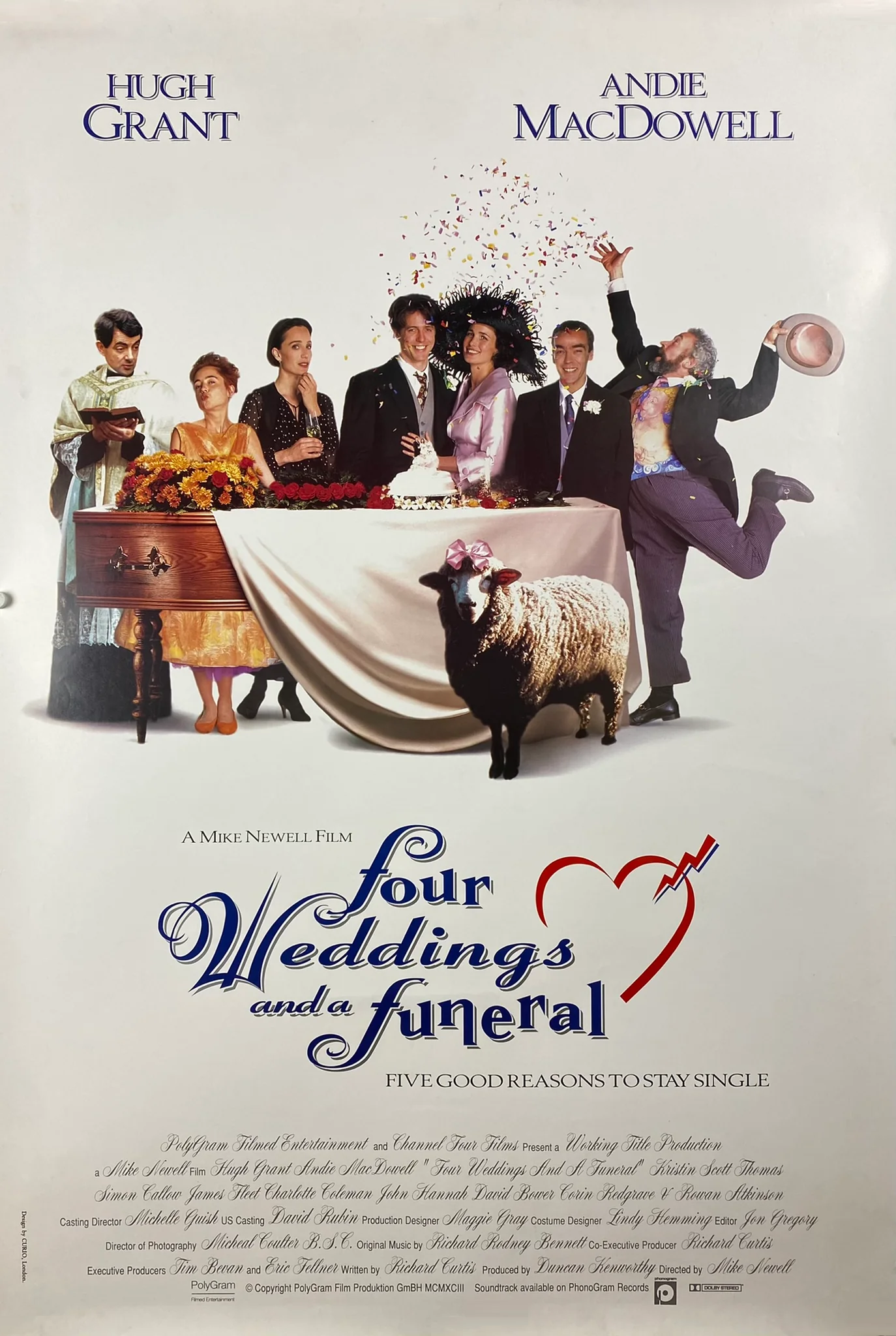
2. Four Weddings And A Funeral; 3. Trois Couleurs Rouge (Three Colours Red);
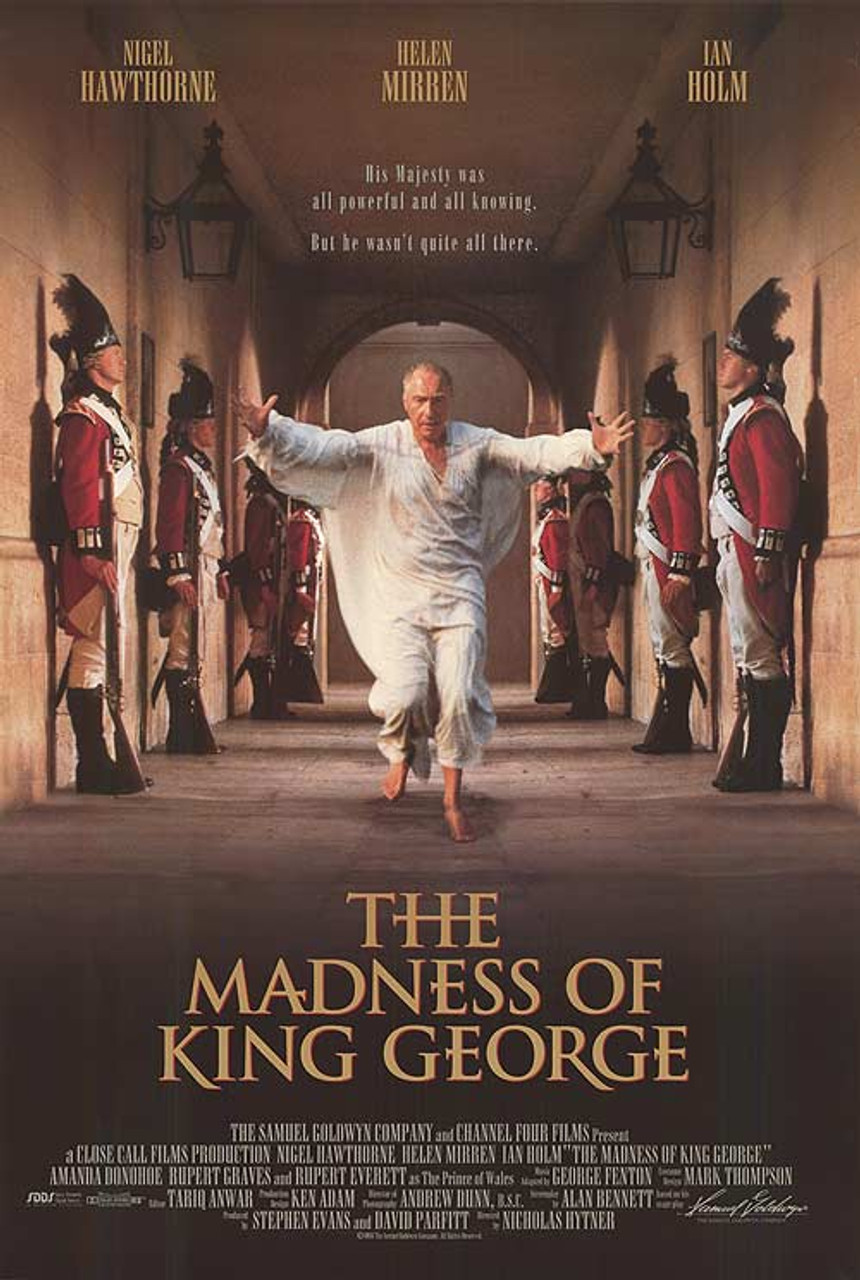
4. The Madness Of King George; 5 Trois Couleurs Blanc (Three Colours White)


.
And the rest: The Adventures Of Priscilla, Queen Of The Desert; Backbeat;
饮食男女 (Eat Drink Man Woman); Ed Wood; Forrest Gump; Heavenly Creatures;
Hoop Dreams; The Hudsucker Proxy; The Last Seduction; The Lion King; Maverick;
Quiz Show; The Shawshank Redemption; Speed; 活着 (To Live) .
.
.
.
Song:
Live Forever ~ Oasis
.

.
Writer: Noel Gallagher/ Released: August 1994
What George says: Despite Britpop’s reputation for repackaging ’60s sounds for the ’90s, Oasis weren’t the ’90s’ Beatles; after all, the two decades were very different. So, while this absolute stonker of an indie anthem eulogises ’60s-ish rebellious freedom with a hooky melody built on fabulous Fabs-eque chord shifts, it’s driven along by a pulverising bassline, which combines with Liam Gallagher’s Manc lout-angel vocals to deliver a tune of unmistakeable masculinity. It’s in-yer-face laddishness bolted to deceptively nuanced musicianship – and, back in ’94, it was nothing short of a musical manifesto.
What the critics say: “This ain’t a song, Mr Gallagher, it’s a meditation, a moan, a mantra – with a grinding, tarmac-digging, mind-cutter of a melody.” ~ Dominic King
Chart record: UK #10
Recognition: Ranked #1 for 1994, #13 for the 1990s and #152 for ‘all-time’ on acclaimedmusic.net’s cumulatively ranked ‘top songs’ lists
.
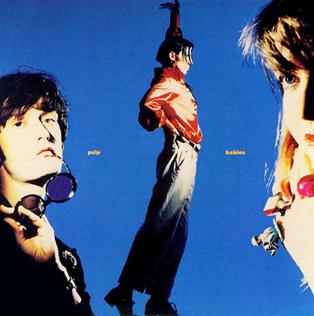
George’s runners-up: 2. To The End (Blur)/ 3. Babies (Pulp)/
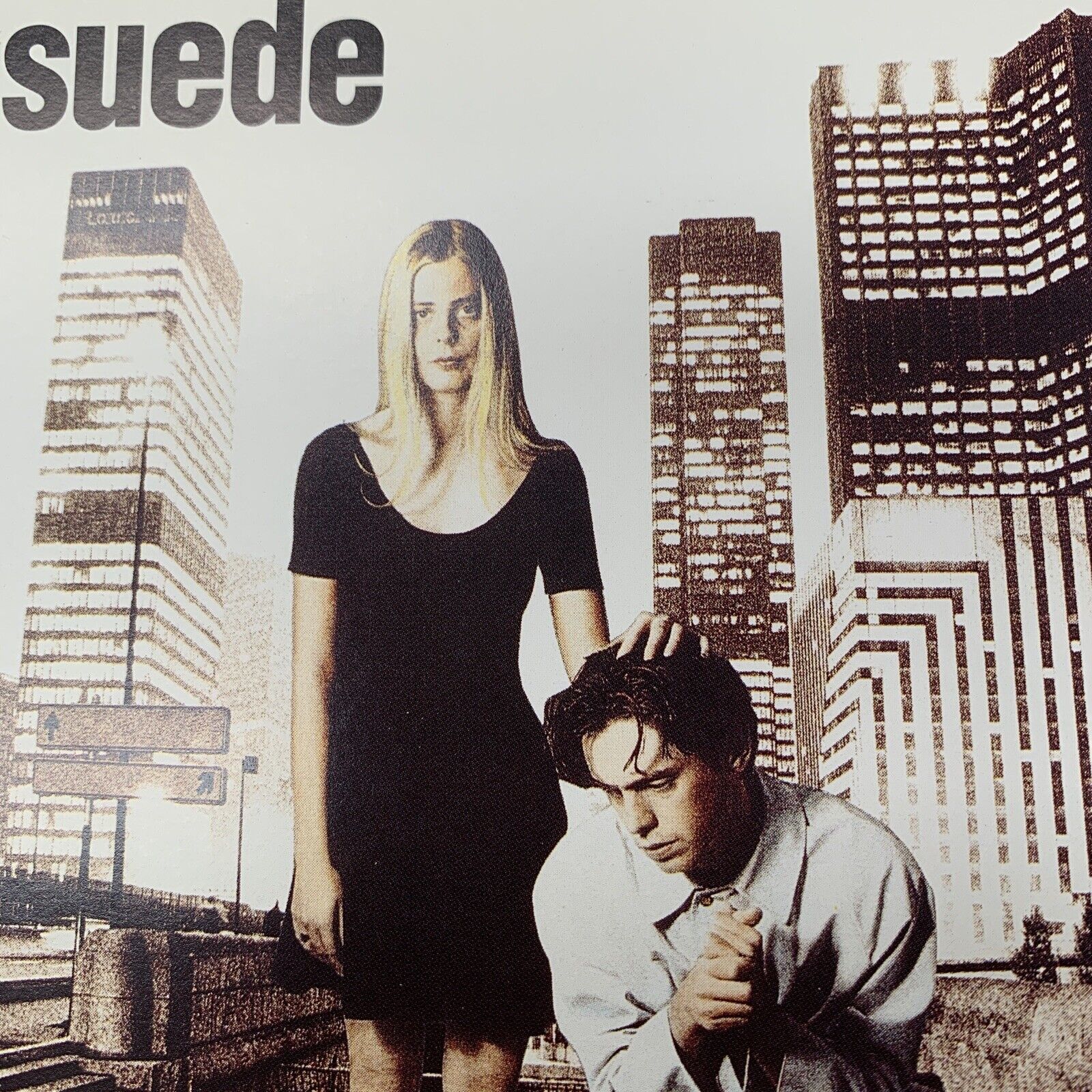
4. Stay Together (Suede)/ 5. Lucky You (The Lightning Seeds)


.
And the rest: Afternoons & Coffeespoons; The Ballad Of Peter Pumpkinhead; God Shuffled His Feet; Mmm Mmm Mmm Mmm; Superman’s Song (Crash Test Dummies)/ All I Wanna Do; I Shall Believe; Leaving Las Vegas; Run Baby Run; Strong Enough (Sheryl Crow)/ All I Want For Christmas Is You; Any Time You Need A Friend (Mariah Carey)/ Black Hole Sun (Soundgarden)/ But Not For Me; Can You Feel The Love Tonight; Chapel Of Love; Circle Of Life (Elton John)/ Change; Marvellous; My Best Day; Open Goals; Perfect; Why Why Why (The Lightning Seeds)/ Cigarettes & Alcohol; Half The World Away; Rock ‘n’ Roll Star; Shakermaker; Slide Away; Supersonic; Whatever (Oasis)/ Come In Out Of The Rain (Wendy Moten)/ Common As Muck (The Other Two)/ Confide In Me (Kylie Minogue)/ Connection (Elastica)/ Cornflake Girl (Tori Amos)/ Crash! Boom! Bang! (Roxette)/ David’s Last Summer; Do You Remember The First Time?; Lipgloss (Pulp)/ Dreams; Zombie (The Cranberries)/ Due South Theme (Jay Semko)/ End Of A Century; Girls & Boys; Parklife; This Is A Low; Tracy Jacks (Blur)/ ER (Main Theme) (James Newton Howard)/ Everybody’s Talkin’; Good as Gold; Prettiest Eyes (The Beautiful South)/ Fade Into You (Mazzy Star)/ Hallelujah (Jeff Buckley)/ Hold Me, Thrill Me, Kiss Me (Gloria Estefan)/ I Don’t Wanna Talk About It (Indigo Girls)/ If I Could (Seal and Joni Mitchell)/ I’ll Remember; Take A Bow (Madonna)/ I’ll Stand By You (The Pretenders)/ I’ll Take You There (General Public)/ Kiss From A Rose (Seal)/ La La La (Means I Love You) (Swing Out Sister)/ Love Is All Around (Wet Wet Wet)/ Love Spreads (The Stone Roses)/ The Most Beautiful Girl In The World (Prince)/ Patience Of Angels (Eddi Reader)/ Pineapple Head; Private Universe (Crowded House)/ Right Beside You (Sophie B. Hawkins)/ Rocks (Primal Scream)/ Sabotage (Beastie Boys)/ Saturday Night (Whigfield)/ 7 Seconds (Youssou N’Dour featuring Neneh Cherry)/ Space Cowboy (Jamiroquai)/ Stay Another Day (East 17)/ Stay (I Missed You) (Lisa Loeb and Nine Stories)/ Streets Of Philadelphia (Bruce Springsteen)/ Suite from Forrest Gump (Alan Silvestri)/ Sweetness (Michelle Gayle)/ Things Can Only Get Better (D:Ream)/ When We Dance (Sting)/ The Wild Ones (Suede)/ What’s The Frequency, Kenneth? (R.E.M.)/ You And Me Song (The Wannadies)
.
.
.
And coming up…
George’s pick of the flicks
and top of the pops ~ 1995-99
.


Raising the stakes: casting Daniel Craig as a lugubrious 007 and Eva Green as an ambiguous leading lady in the Fleming-faithful Casino Royale made for a risky yet triumphant Noughties reset for Bond
Once upon a time in the year 2010 and for a good few years after, this blog spewed out posts like there was no tomorrow. And yet, there was always a tomorrow – because that was then, this is now, time marches on, life’s got in the way with yours truly and the blog posts have, like it or not, dried up. But they haven’t dried up completely. Oh no, because George’s Journal is back!
Now, dear reader, before you get too excited (I know, I know, but do try to contain your excitement), this brand-spanking new post is, I think it’s fair to say, highly unlikely to precipitate a glut of more of its ilk from this very nook of the Internet. So why, after so long and out of the blue, this new post now?
Well, as mentioned, this blog started out in 2010 – a full 15 years ago – and given its predilection for celebrating anniversaries (not least in exactly this sort of way), methought it fitting to mark this particular milestone with just what you’re perusing right now. As Aleksandr the Meercat would say (and has done for at least the last 15 years), simples.
But why the ‘Legends’ and ‘Talent’ of the Noughties hook? Well, this blog has been elevating ‘legendary‘ and ‘talented’ figures of past cultural significance (into sort of halls of fame) since the very beginning – especially in such anniversary posts.
Nay, it’s even done so for ‘legendary’ fellers and ‘talented’ fillies for each year from 1950 right through to 1999 (in fact, it’s very nearly done it twice; God knows why, but still).
So, what better way, then, to bring the blog roaring back from the dead with a pictorial post celebrating its existence since 2010 with one celebrating the ‘legends’ and ‘talents’ it’s yet to celebrate – that is, those from the 10 years up to 2010? See, what I did there?
Now, since when has this blog concerned itself with the Noughties, you may ask? Well, not often, but time does march on and has (even for a blog concerning itself with things past), so maybe it’s, er, time to loosen our temporal constraints a little?
You’ll notice, too, the gender of the following ‘legends’ isn’t as limited as it once was – times change, progress happens and, indeed, the idea that only men can be legendary was always tosh. In short, if this blog’s gone woke, then it’s about, yes, time.
So, here we go then… let’s – each and every one of us – wend our way back to the Millennium Dome, crack open an alcopop or two, throw on that Moby CD and party like it’s 2000, as together we celebrate 15 fantastic(?) years of George’s Journal…
.
.
.
CLICK
on the images for full-size
.
.
.
2000
.
Legend:
Steve Redgrave
.
Making this year his by: at the age of 38 and with type 2 diabetes, winning
his fifth successive rowing gold medal at his fifth successive Olympic Games –
a feat still to be matched by any other male in an Olympics endurance event
.

.
.
.
.
.Talent:
Kylie Minogue
.
Making waves this year by: confirming her status as the all-time Pop Pixie
with a masterful Millennium comeback, as she releases the unforgettable
UK #1 single Spinning Around (and stars in its unforgettable video)
.

.
.
.
.
2001
.
Legend:
Peter Jackson
.
Making this year his by: gifting the world the exceptional cinematic adaptation of
The Fellowship Of The Ring, ahead of the equally exceptional other two films in the Lord Of
The Rings trilogy – still the thinking person’s answer to both Star Wars *and* Game Of Thrones
.

.
.
.
.
.Talent:
Sophie Ellis-Bextor
Making waves this year by: after doing everyone a favour the year before by killing off Victoria Beckham’s solo singing career before it started (via the chart battle-winning UK #1 Groovejet), releasing her first album, featuring, of course, the impossible-to-resist Murder On The Dancefloor
.

.
.
.
.
2002
.
Legend:
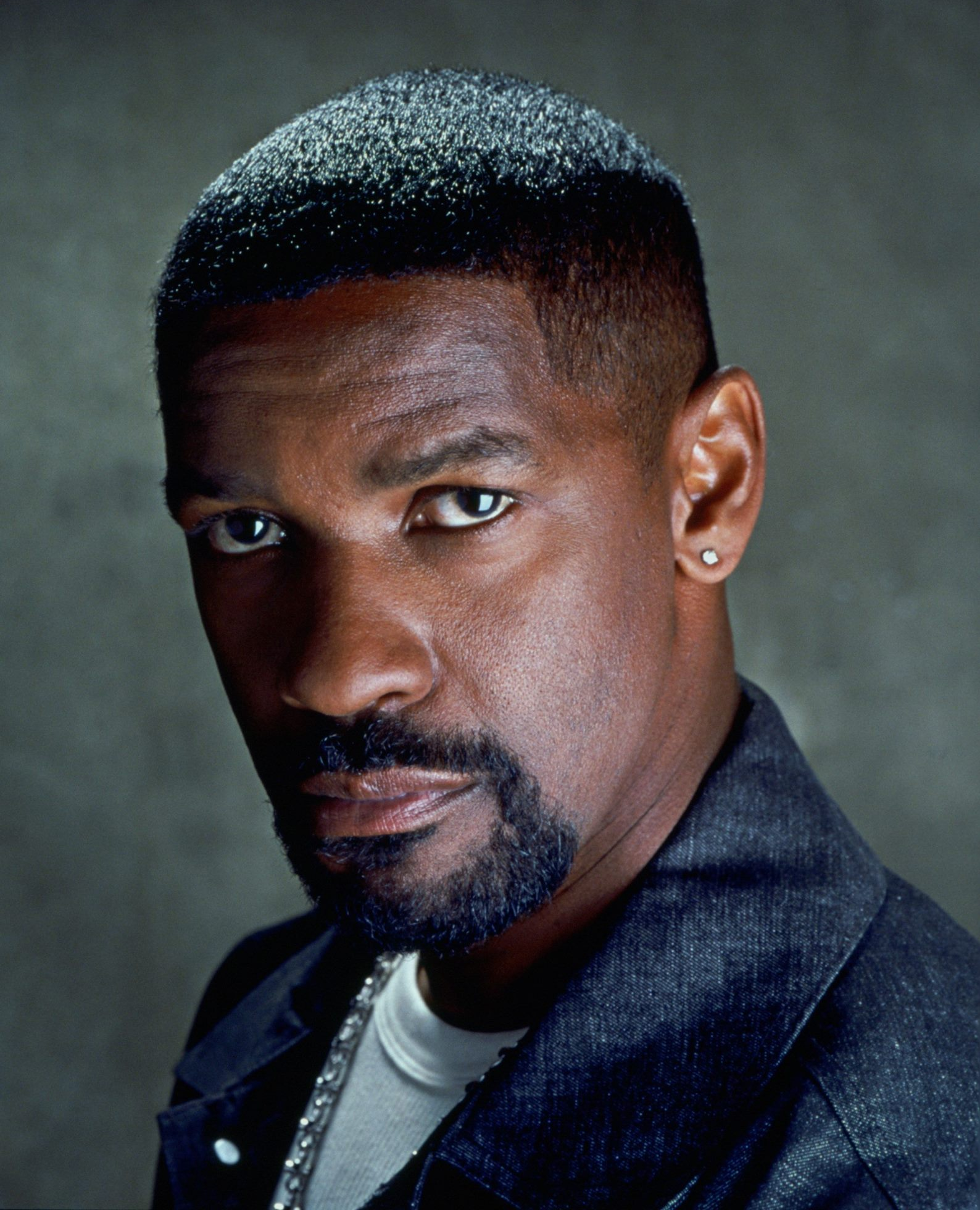
Denzel Washington
.
Making this year his by: becoming the first black man to win a Best Actor Oscar in 38 years
for his can’t-take-your-eyes-off-it villainous turn in Training Day (2001) – the least of all
he, one of the best and best-loved Hollywood actor-stars of his generation, deserves
.
.
.
.
.
Talent:
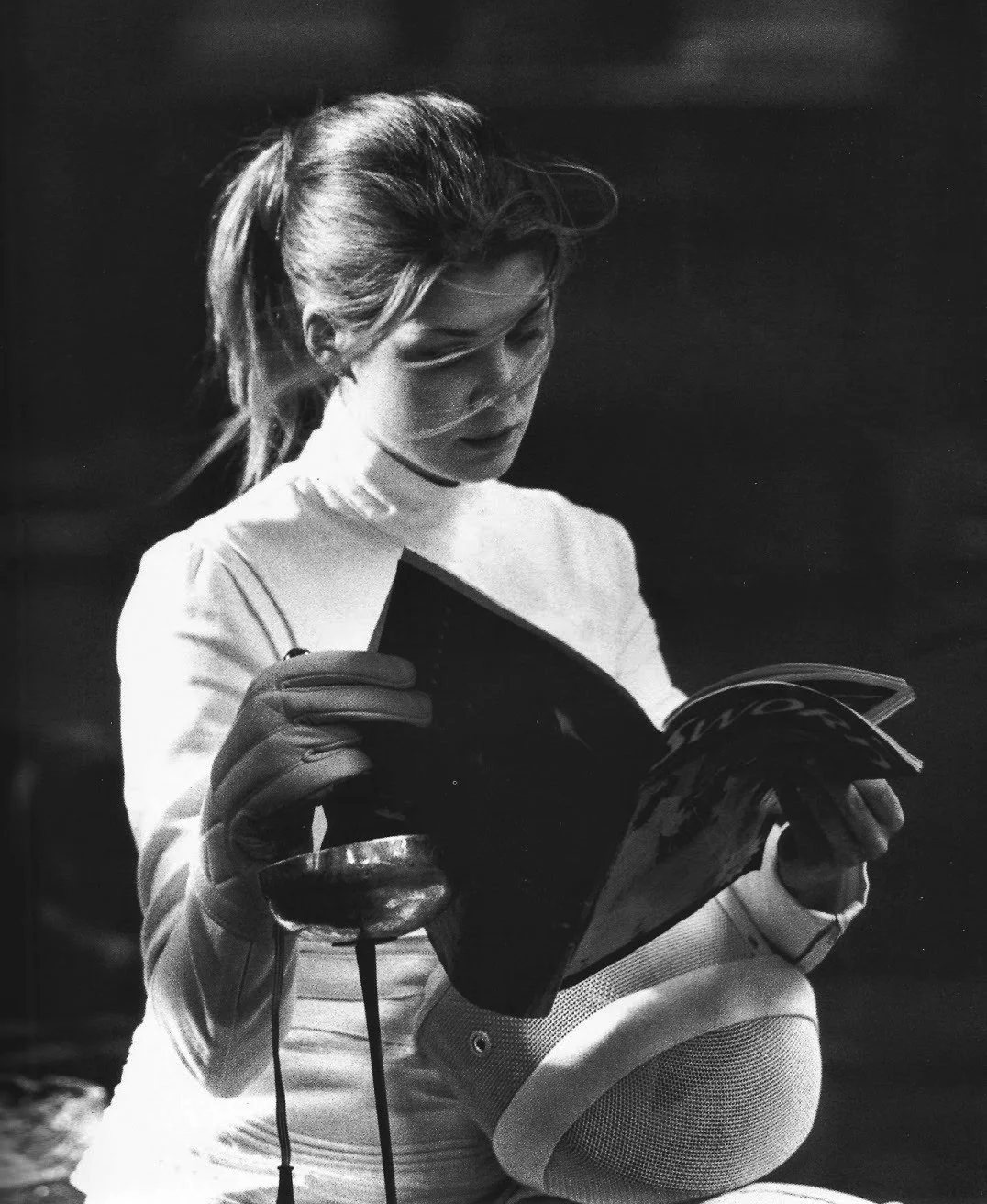
Rosamund Pike
.
Making waves this year by: ruffling Brozzer-Bond’s feathers as ice-cold fencer-cum
double agent extrarodinaire Miranda Frost in her big-screen debut Die Another Day (2002)
.
.
.
.
.
2003
.
Legend:
Bill Nighy
.
Making this year his by: honing his loveable, awkwardly mannered, middle-aged mockney gent persona, while going fully mainstream via star-making turns in the escapable Love, Actually and TV’s superior The Lost Prince and State Of Play – the latter will garner him a BAFTA award next year
.

.
.
.
.
Talent:
Beyoncé
.
Making waves this year by: leaving her girl group past behind and taking a big step towards
world domination with the release of her debut album, for which everybody falls Crazy In Love
.

.
.
.
.
2004
.
Legend:
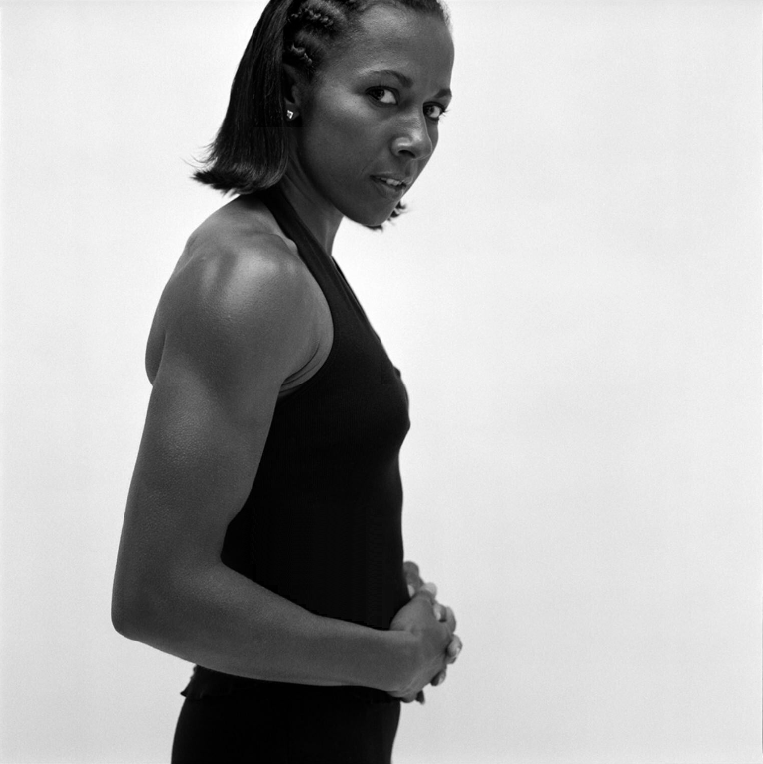
Kelly Holmes
.
Making this year hers by: rocking the athletics world, delightedly shocking her homeland and becoming a British national institution when she wins the Women’s 800m and 1,500m at the Athens Olympics – eventually, she’ll use her public platform as an LGBTQ+ and mental health advocate
.
.
.
.
.
Talent:
Alicia Keys
.
Making waves this year by: continuing to fuse NYC-flavoured R&B with tumbling piano melody-driven pop on her sophomore album and going global with the ’70s soul-throwback, monster hit single You Don’t Know My Name
.

.
.
.
.
2005
.
Legend:
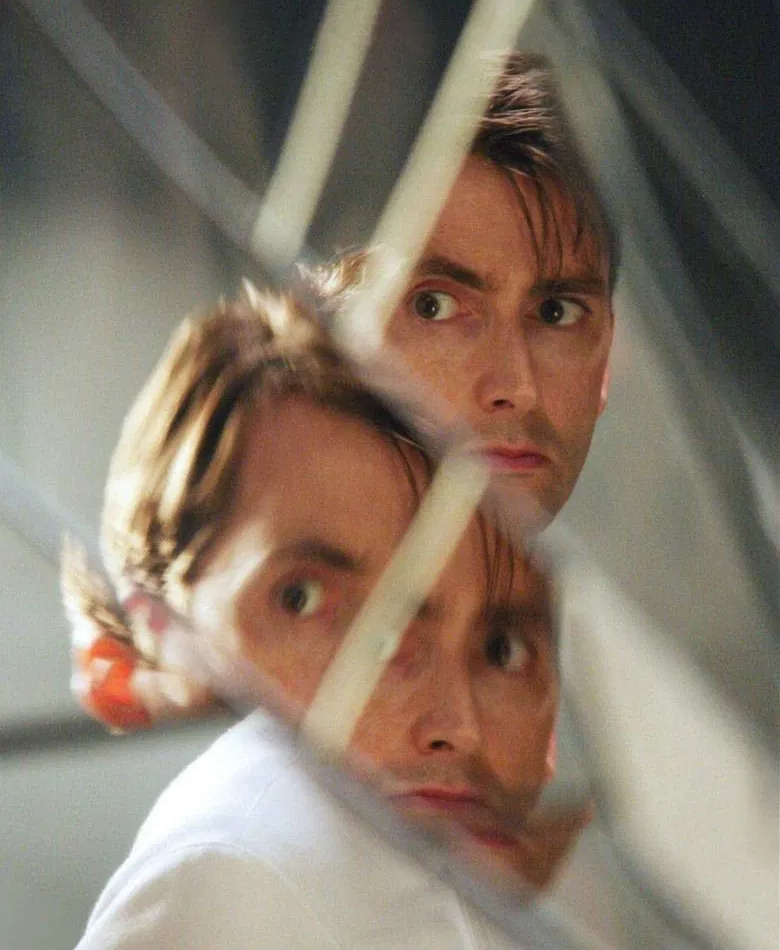
David Tennant
.
Making this year his by: following up eye-catching turns in Harry Potter And The Goblet Of
Fire and TV’s Casanova with a corking Christmas Day debut as The Tenth Doctor – he’ll go on to
become a global pop culture icon thanks to his hugely successful stint in the TARDIS (2005-10)
.
.
.
.
.
Talent:
Billie Piper
.
Making waves this year by: bridging the Eccleston-led first series and Tennant-headlined second of ‘NuWho’ (and so playing a critical role in Doctor Who’s hugely successful relaunch) by killing it as Rose Tyler, one of the best drawn and most important of the Gallifreyan’s companions
.

.
.
.
.
2006
.
Legend:
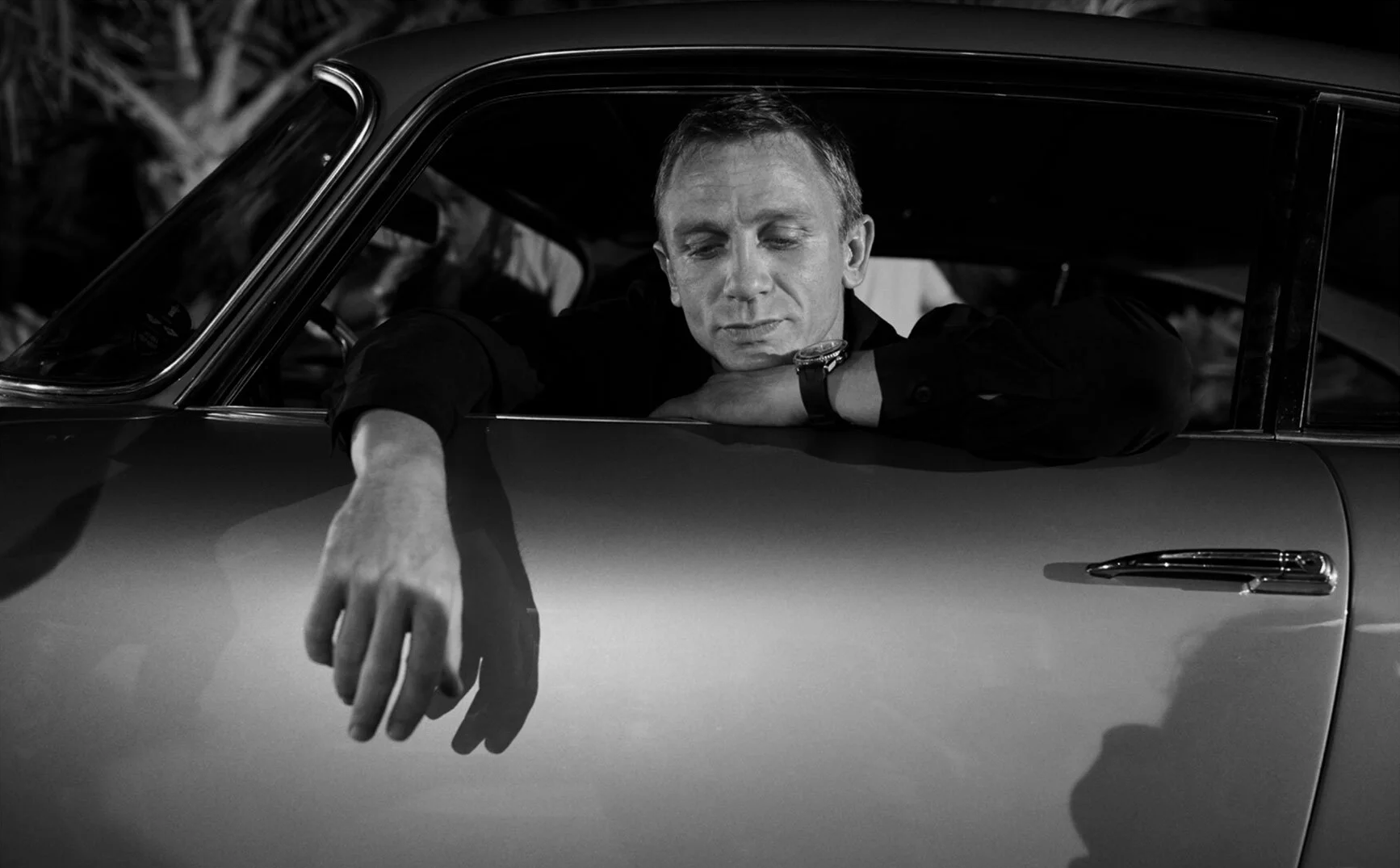
Daniel Craig
.
Making this year his by: redefining 007 for the 21st Century (while delightfully silencing obtuse naysayers) with his rough-and-ready, psychologically satisfying portrayal of Bond in the box-office boffing Casino Royale – which instantly transformed him into a Hollywood heavyweight
.
.
.
.
.
Talent:
Eva Green
.
Making waves this year by: after an, ahem, very revealing debut in The Dreamers (2003), catapulting herself into the silver screen’s ‘white hot’ category with her scintillating yet subtle take
on Bond’s original tragic love, Vesper Lynd – a linchpin of Casino Royale’s popular and critical success
.

.
.
.
.
2007
.
Legend:
Helen Mirren
.
Making this year hers by: receiving the Best Actress Oscar for portraying an empathetic yet flawed
and thoroughly believable version of an ageing Queen Elizabeth II in the The Queen (2006) –
the, yes, crowing glory of a singularly bold, diverse and superior thesping career
.

.
.
.
.
Talent:
Keira Knightley
.
Making waves this year by: following an Oscar-nommed turn in 2005’s Pride And Prejudice
with lead duties in awards-friendly epic WWII romance Atonement, thereby completing her
evolution from sexy Brit ingénue to top period-piece-actress-of-note of the Noughties
.

.
.
.
.
2008
.
Legend:
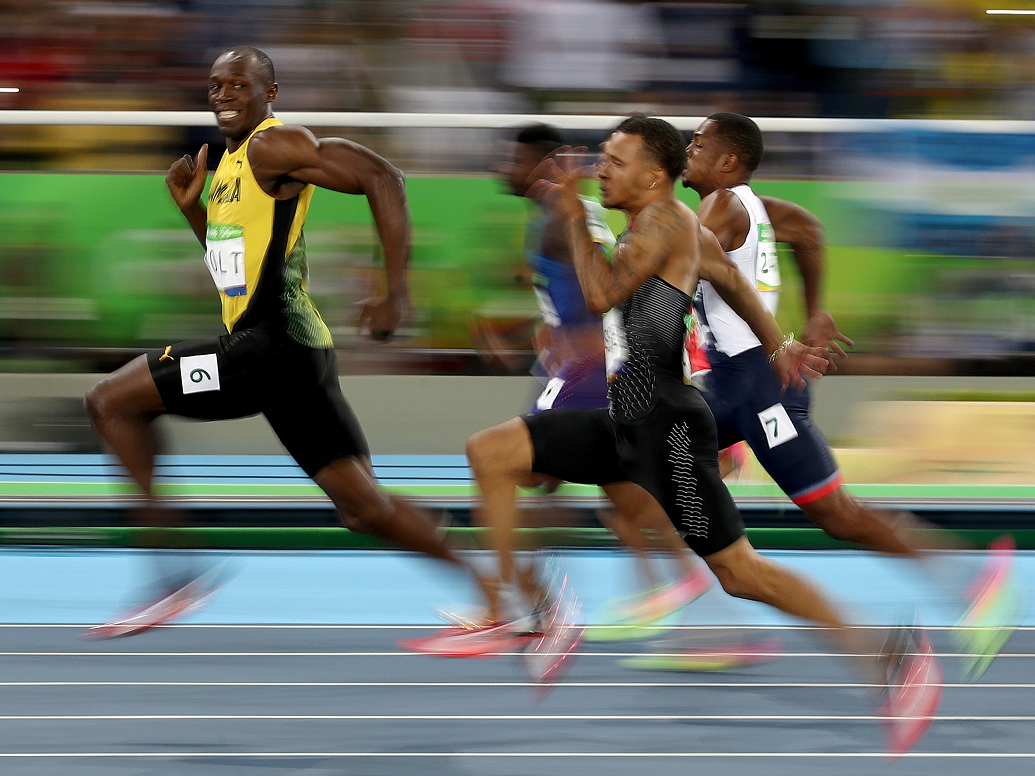
Usain Bolt
.
Making this year his by: running faster than anyone else before or since at 100 and 200 metres
and, in so doing, wowing the world by winning both Beijing Olympics finals by an unreal country mile
.
.
.
.
.
Talent:
Amy Adams
.
Making waves this year by: while basking in the popular glow of becoming a live-action Disney Princess in Enchanted (2007), delivering a (second) Oscar-nominated supporting turn in Doubt,
which will fast-track her on to Hollywood’s ‘A List’ of high-calibre, audience-friendly talent
.

.
.
.
.
2009
.
Legend:
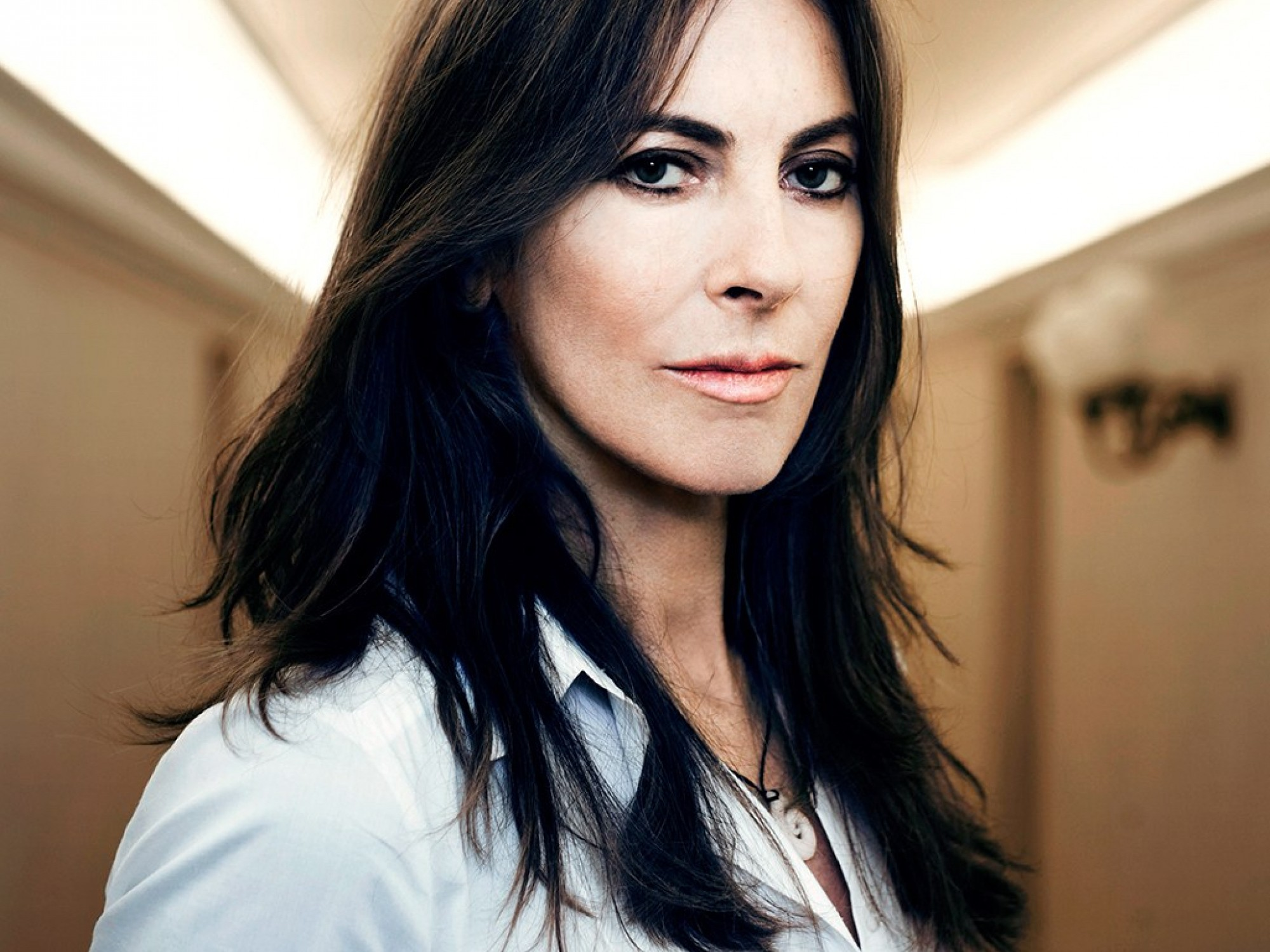
Kathryn Bigelow
.
Making this year hers by: helming immersive, watch-through-your-fingers Iraq War drama The Hurt Locker, whose through-the-year transformation from indie outsider to Oscars favourite will eventually see her become the first woman to win the Academy Award for Best Director
.
.
.
.
.
Talent:
Adele
.
Making waves this year by: releasing her sophomore and, eventually, world-conquering
album 21, brimming, as it is, with marvellously mature Brit-soul ballads and the huge singles
Someone Like You, Rumour Has It, Set Fire To The Rain and Rolling In The Deep
.

.
.
.
.
.

.
Listen, my friends! Playlist: Summer 2025

.
In the words of Moby Grape… listen, my friends!
Yes, it’s back! It’s the occasional playlist presented by George’s Journal just for you good people.
There may be one or two classics to be found here dotted in among different tunes you’re unfamiliar with or have never heard before – or, of course, you may’ve heard them all before. All the same, why not sit back, listen away and enjoy…
.
CLICK on the song titles to hear them
.
Tony Bennett ~ Stranger In Paradise (1953)¹
Julie London ~ Theme From A Summer Place (1965)
The Sandpipers ~ Guantanamera (1966)
Love ~ Bummer in the Summer (1967)
Michel Legrand ~ Thème de La Piscine (1969)²
Quincy Jones ~ Summer In The City (1973)
John Williams ~ Main Theme from Jaws (1975)³
Donna Summer ~ I Feel Love (1977)4
Kiri Te Kanawa ~ Chants d’Auvergne: Baïlèro (1983)
Queen ~ Radio Ga Ga (1985)5
Soul II Soul ~ Back To Life (1989)
Oasis ~ Cum On Feel The Noize (1996)6
Dr. Teeth and the Electric Mayhem ~ Mr Blue Sky (2021)
.
¹ This irresistible Tony Bennett version may have ensured Robert Wright and George Forrest’s tune became an American standard, but it originated as a love duet from the 1953 Arabian folk tale-themed musical Kismet, the music and songs of which were themselves lifted from the works of Russian classical composer Alexander Borodin – in Stranger In Paradise’s case, the Gliding Dance Of The Maidens melody from the 1890 opera Prince Igor
² The main theme from the score of Jacques Deray’s scintillating Côte d’Azur-set psychological drama La Piscine (1969), forever recalled for the iconoclasm of its scantily-clad stars Alain Delon, Romy Schneider and Jane Birkin
³ The utterly iconic main theme from Steven Spielberg’s Jaws, courtesy of movie musical maestro extraordinaire John Williams (at first, when the latter pitched a minimalist arrangement of such few notes as the theme, the former thought he was joking; in fact, the theme is heavily influenced by the opening to the finale of Dvořák’s New World Symphony); Jaws, which for two short years until the release of Star Wars (1977) was the global box-office champ, single-handedly introduced the concept of the Hollywood summer blockbuster following its US opening 50 years ago on June 20th
4 Featuring a performance of dance troupe Legs & Co. from an end-of-year review episode of Top Of The Pops, broadcast on Boxing Day 1977; the proto-dance music mega-hit that’s I Feel Love had taken the UK charts by storm the previous summer
5 Queen’s performance of this 1984 hit, an ode to radio in the face of the onslaught of TV, was, of course, the opening salvo of their Live Aid set, considered by many to be the greatest live performance in the history of popular music (you only need watch it to understand why); Live Aid celebrated its 40th anniversary on July 13th
6 The B-side to Oasis’s glorious 1996 hit Don’t Look Back In Anger, this track sees them pay rightful tribute to Wolverhampton and glam rock’s finest, the one and only Slade; this summer not only sees Oasis reunite for the first time since they split-up in the Noughties but also marks 30 years since their zenith and that of the mid-’90s UK music phenomenon that was Britpop.
.
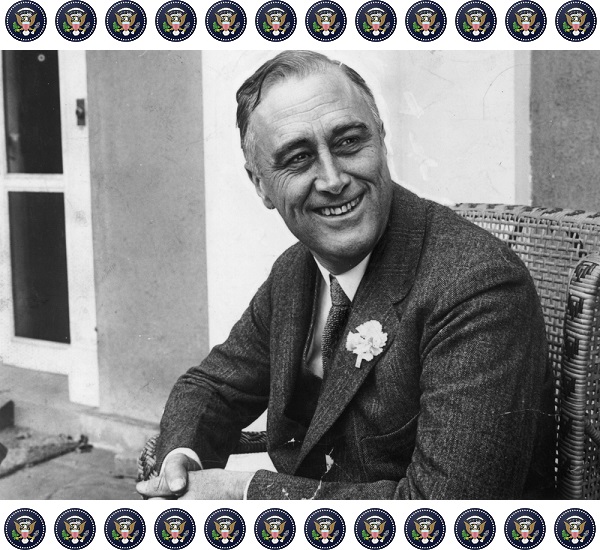
Happy times are here again? Caught in an economic maelstrom, the US turned to amiable patrician Franklin D. Roosevelt to lead it through one of its most turbulent eras – was he up to the titanic task?
Unless you’ve been hiding under a rock these past few months – and who could blame you, given the state of the world, right now – it won’t have escaped your notice this summer and autumn look set to deliver potentially era-defining elections in the UK and the United States.
In which case, this blog, albeit much neglected of late, is marking the fact with a series of politically-themed posts (hey, why not, given it has a wee bit of form in this area), focusing, as they will, on the good, the bad and, yes, the ugly of post-war Anglo-American leaders, right up to the end of the 20th Century.
Well, that’s the theory anyway. But, hopefully, we will indeed make it all the way to the millennium via these US President/ UK Prime Minister profiles – each of them packed full of facts and pics and a tinsy bit of expert and personal opinion.
Because, down through the decades in question, from FDR to Slick Willy and Churchill to Teflon Tony, we’ve been offered up a coterie of curious, nay fascinating Cabinet chiefs.
Variously, they’ve been driven by ambition, fuelled by good, flawed or plain bad intentions, and defined by their reactions to events. And, of course, they were defined, too, by the simple fact they were the right/ wrong person to scale the greasy pole at the right/ wrong time.
So, let’s kick things off, then, with the oh-so charismatic chap who was in the Oval Office as the US successfully emerged from the Great Depression and World War Two – yes, the triple-initial trend-setter himself, Franklin D. ‘FDR’ Roosevelt…
.
.
The details
.
Born: Franklin Delano Roosevelt (January 18th 1882)
Birthplace: Hyde Park, New York, United States
Died: April 12th 1945; Warm Springs, Georgia, United States (Resting place: Hyde Park, New York)
Political party: Democrat
Presidential terms: 3 full 4-year terms (March 4th 1933-April 12th 1945; died in office)
Education: Groton School, Massachusetts; Harvard University; Columbia Law School
Occupation prior to politics: Lawyer
Political roles prior to Presidency: Representative in New York State Senate (26th District; 1911-13); Assistant Secretary of the Navy (Wilson administration; 1913-20); Democrat nominee for Vice President of the United States (1920 Presidential election); Governor of New York (1929-32)
Spouse: Eleanor Roosevelt (married: March 17th 1905; First Lady)
Notable nicknames: ‘FDR’; ‘Sphinx’; ‘That Man in the White House’; ‘Feather Duster’ (childhood nickname)
Strange but true: Belonging to the elite Roosevelt family of New York, FDR and wife Eleanor were first cousins, while her uncle, Theodore ‘Teddy’ Roosevelt, had served as both Governor of New York and as the hugely successful, liberalising 26th President of the United States (1901-09).
FDR suffered from poliomyelitis to such an extent that during the 1920s he lost the ability to walk. Having withdrawn from public life, he eventually returned with renewed zeal and was elected and served as Governor of New York and US President despite considerable physical challenges (including occasional facial paralysis, fevers, and bowel and bladder dysfunction) and by hiding his condition from the public, in part thanks to a complicit media.
.

United front: the union of Franklin and Eleanor Roosevelt (together here with pet dog Meggy) may have evolved into a marriage of convenience but it was a partnership that suited both of them; the latter used it to become the most crusading and acclaimed of all First Ladies – a great humanitarian in her own right, Eleanor Roosevelt is simply one of the greatest Americans to have ever lived
.
The pros
.
♦ In his first term, FDR forced through fundamental ‘New Deal’ legislation that delivered economic aid to America’s unemployed citizens, struggling farmers and impoverished elderly in the wake of the Great Depression; the deep, unrelenting recession that swept through the world following the 1929 US stock market crash.
♦ To be exact, there were two New Deal Acts (1933-34 and 1935-36), which included programs that reformed the US banking system, delivered economic relief, introduced protections for labor organizing (trade unions) and pushed through employment-boosting make-work projects. The latter helped deliver more than 39,000 new schools, 2,500 new hospitals, 8,000 national parks, 300 airports and notable construction projects like the Hoover Dam, the Lincoln Tunnel and the Tennessee Valley Authority.
♦ Roosevelt recognised that ambivalence to the ever-growing threat of fascism and eventual war in Europe and South East Asia was incompatible to ongoing US economic and social (and arguably democratic) recovery. Realistically, then, there was no alternative than for the US to enter the conflict. Following Japan’s attack on Pearl Harbor in December 1941, the issue was forced; Roosevelt faced down opponents to entering the fray and mobilised US forces, providing the Allies with a critical boost in military numbers, weapons and hardware, and tactical options and leadership (not least his own as US Commander-in-Chief). This eventually paved the way to victory shortly after his death in spring/ summer 1945.
.
.
♦ Via the supercharging of US industry to produce all the weaponry and hardware required for the war effort, securing victory also indirectly pulled around the nation’s economy, ending the Great Depression and ensuring America’s status as the world’s only remaining democratic superpower, leading to its socio-economic, military and cultural dominance in the decades to come.
♦ Elected on less a wave than a tremble of optimism in the face of the onerous Great Depression, Roosevelt’s unbridled charisma and optimism was, nonetheless, a direct contrast to the seemingly uncaring businessman persona of his doomed predecessor, Herbert Hoover. It was, indeed, FDR’s reaching out to the public via his (albeit relatively infrequent) radio broadcasts – quickly referred to as ‘fireside chats’ – which helped endear him to them as an avuncular first among equals, and build and keep their trust during the dark, challenging days of the 1930s and ’40s. It revolutionised the personality of the Presidency, too – none of his successors could afford to come off as standoffish and stiff lest they lose support or not get elected in the first place.
♦ FDR won four consecutive, greatly lopsided Presidential election victories, ensuring he not only served 12 straight years in the top job (far longer than anyone before or since) but bestrode US politics throughout the 1930s and the first half of the 1940s. This established an era of American liberalism, which was sustained by his ‘New Deal coalition’ of voters – not just labor union members, urbanites, liberal intellectuals and blacks and other minority voters, but also Southern (usually conservative-minded) Democrats. As a result of which the so-called ‘Fifth Party System’ began, running until at least the early 1950s or, depending on your viewpoint, longer.
.
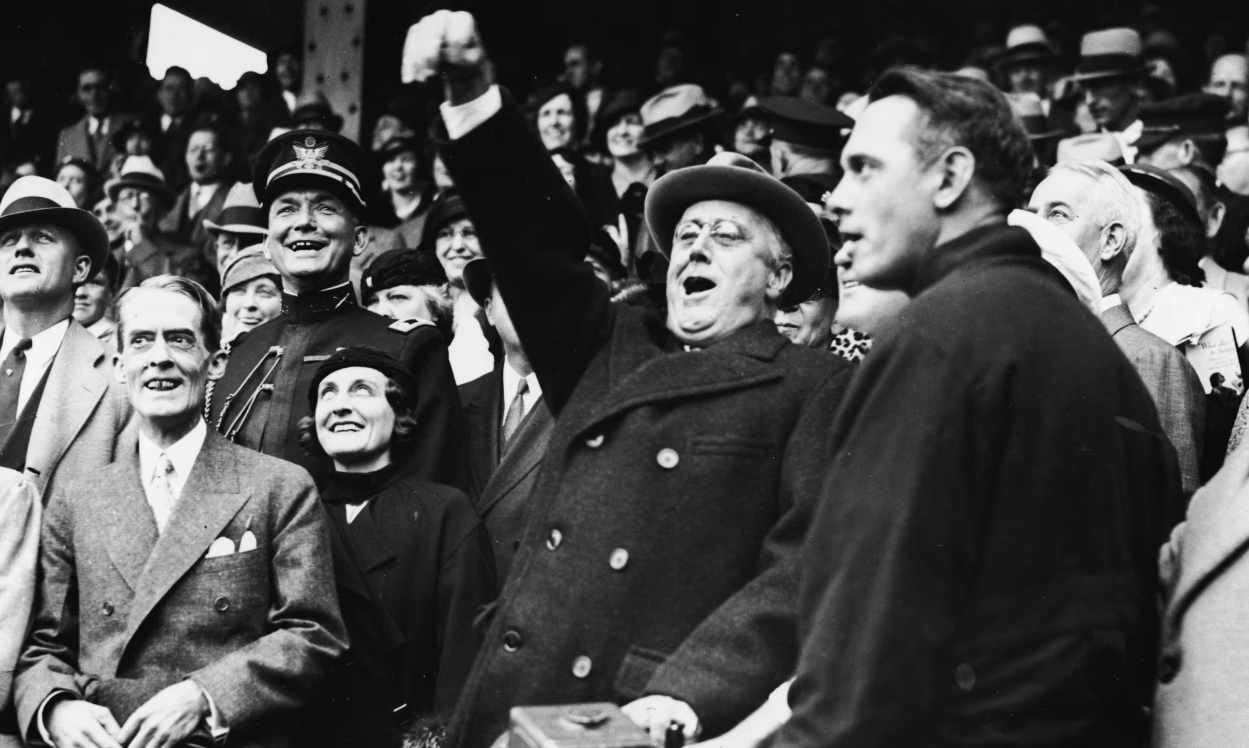
Pitch perfect? FDR throws out the ceremonial first pitch of Major League Baseball’s 1933 World Series (contested by New York Giants and Washington Senators) at Griffith Park, Washington, D.C.
.
The cons
.
♦ Perhaps inevitably, FDR endured a sticky second term, thanks to a backlash to his eye-wateringly high public spending and unprecedented expansion of the federal government. Not just from small-government, low-spending Republicans either; his relationship with the relatively conservative Vice President John Nance Garner had soured; so the latter was ditched for deeply liberal Henry Wallace. All this ensured resurgent Republicans were able to stymie some New Deal objectives, while the US entered recession again in 1937. As noted above, it’s widely believed the necessary transfer to a war-economy ultimately reversed the country’s financial fortunes, as opposed to Roosevelt’s domestic policies.
♦ Although being good at leading, Roosevelt wasn’t good at sharing. With VP Wallace proving just too liberal for the then very ‘big tent’ Democratic party, it was little-known Harry Truman who was forced on FDR as a compromise running mate for the final fourth election in 1944. No problem, right, given Roosevelt was all over everything like a rash? Wrong. When time caught up with him and he died in April 1945, the war was yet to be won and the untested Truman was thrust into power, facing the ultimate test. FDR hadn’t even told him an atomic bomb was being built.
♦ Every President has a genuine black spot on their record, Roosevelt’s must be the decision, during the war years, to intern 110,000 Japanese-Americans (and, to a greatly lesser extent, some of German or Italian ancestry). In general, his was an administration largely on the side of minorities, what with its generous economic relief programs for the desperately poor and frail, and increased government employment for black and Native Americans. Yet, certainly by today’s standards, the internment policy seems unnecessary and cruel.
♦ Despite being re-elected three times by the people, FDR’s holding on to the Presidency for 12 years was, at the time, likened by some to the dominance of a dictator, albeit a benevolent one. Indeed, in the wake of these three terms, the nation’s politicos eventually concluded anyone holding that much power for that long again probably wasn’t the best idea and introduced a two-term limit for the Presidency via 1951’s Twenty-Second Amendment.
.
.
The elections
.
1932 US Presidential Election
(November 8th 1932)
Electoral College vote ~ Roosevelt: 472 votes/ Hoover (Republican; incumbent): 59 votes
States won ~ Roosevelt: 42/ Hoover: 6
Popular vote ~ Roosevelt: 22.8 million votes/ Hoover: 15.7 million votes
Popular vote percentage ~ Roosevelt: 57.4%/ Hoover: 39.6%
Result: Roosevelt elected by landslide
.
1936 US Presidential Election
(November 3rd 1936)
Electoral College vote ~ Roosevelt: 523 votes/ Landon (Republican): 8 votes
States won ~ Roosevelt: 46/ Landon: 2
Popular vote ~ Roosevelt: 27.7 million votes/ Landon: 16.7 million votes
Popular vote percentage ~ Roosevelt: 60.8%/ Landon: 36.5%
Result: Roosevelt re-elected by landslide
.
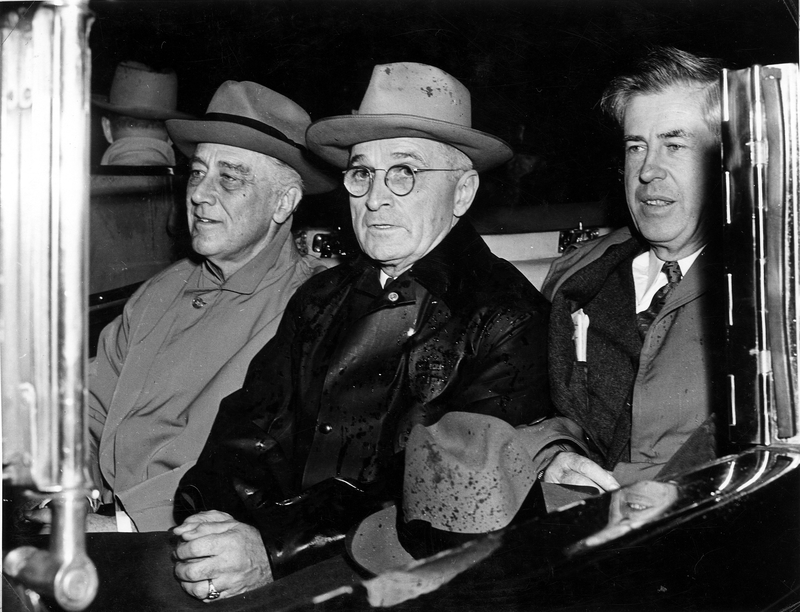
Two into three won’t go: FDR and his long-standing, two-term Vice President Henry Wallace (right) are joined by the man who replaced the latter on the Democrats’ 1944 election ticket, Vice-President Elect Harry Truman (centre), for maybe not the most carefree car journey in November 1944
.
1940 US Presidential Election
(November 5th 1940)
Electoral College vote ~ Roosevelt: 449 votes/ Wilkie (Republican): 82 votes
States won ~ Roosevelt: 38/ Wilkie: 10
Popular vote ~ Roosevelt: 27.3 million votes/ Wilkie: 22.3 million votes
Popular vote percentage ~ Roosevelt: 54.7%/ Wilkie: 44.8%
Result: Roosevelt re-elected by landslide
.
1944 US Presidential Election
(November 7th 1944)
Electoral College vote ~ Roosevelt: 432 votes/ Dewey (Republican): 99 votes
States won ~ Roosevelt: 36/ Dewey: 12
Popular vote ~ Roosevelt: 25.6 million votes/ Dewey: 22.0 million votes
Popular vote percentage ~ Roosevelt: 53.4%/ Dewey: 45.9%
Result: Roosevelt re-elected by landslide
.
.
The experts’ view
.
“FDR’s legacy, his ‘shadow’, established the bulk of today’s US domestic institutions and largely defined the structure of postwar international relations we have lived with since his death … Right or wrong, good or bad, successful or unsuccessful – we are still in Franklin Delano Roosevelt’s world.” ~ Warren F. Kimball¹
“FDR was only one man, surrounded by able and ambitious advisers (many with different agendas). He usually hedged his bets because he did not have a master plan, only assumptions and guiding principles. The man whom Frances Perkins [US Secretary of Labor, 1933-45] called the worst administrator she ever knew had to rely on others to carry out his hopeful schemes. Although determined to make final decisions himself, he often waited for outside events, as in the case of Pearl Harbor, to assert his leadership.” ~ John Garry Clifford¹
“What is remembered [of him best] is the image FDR cultivated of jaunty optimism, complete with smile and cigarette holder. His effervescent leadership style may have special appeal when counterposed to contemporary events that can deprive Americans of a cherished self-image as a virtuous nation. We can remember FDR as representing the best in ourselves, when we rose to our ideals of ‘liberty and justice for all’ in a crisis.
This confidence in our principles and aspirations, and in FDR’s contribution to an American capacity to overcome crises, surely has an element of nostalgia, but it helps explain why politicians of all stripes have continued to invoke FDR.” ~ Mark Leff¹
.
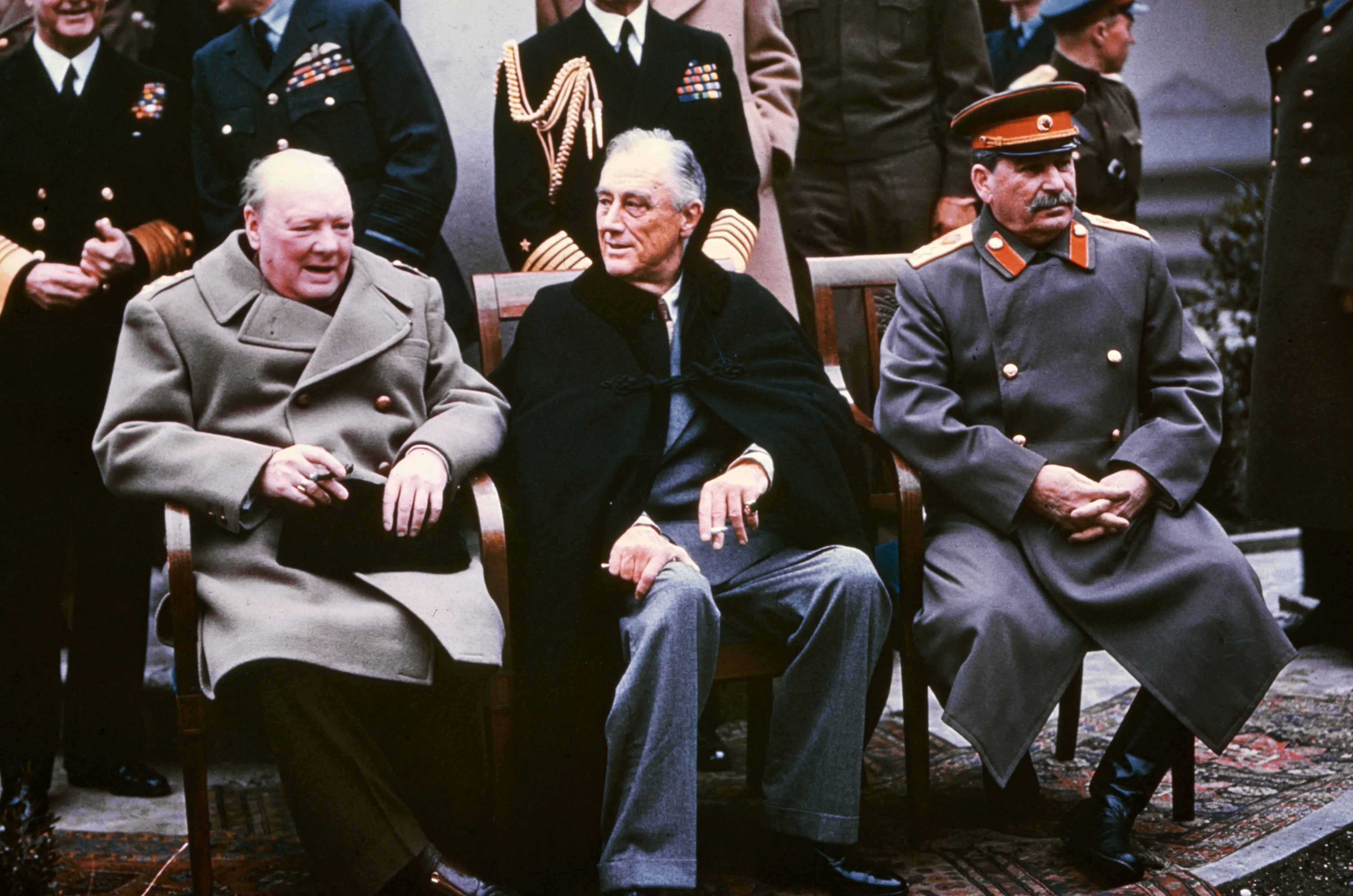
The big three: UK Prime Minister Winston Churchill (l), FDR and Soviet premier Joseph Stalin (r) pose for pictures in iconic pose during February 1945’s legendary Yalta Conference of the WWII allies
.
George’s view
.
The idea of blithely stating so-and-so is your favourite leader of a country strikes me, I must admit, a tad twee, even infantile, and doing so here isn’t a precedent I’m exactly comfortable setting for this (intended) series of posts. But, dang it, FDR *is* my favourite American President. To my mind, he stands head and shoulders above others of the 20th and 21st Centuries and he’s surely up there with the all-time greatest, alongside Washington, Lincoln and his cousin Teddy.
At the point in history he took on the role, around the middle of the 20th Century, he was basically the identikit ideal American President. Patrician and (despite the illness he was concealing) well-groomed, he was also possessed of genuine confidence in thought and deed, and resolute in speech – and in wit.
Yet, perhaps in contrast to his easygoing, good-living and twinkle-eyed public persona (and, indeed, his old-fashioned ‘acceptable’ philandering), the illness he endured and its cruelty had, it seems, burnished a kindness in him, which undoubtedly guided his progressive principles and that simple desire to do what’s right.
And, naturally, what he managed to do can’t be understated. The stakes for his country were immeasurably high when he was in office, yet he took the bull by the horns and guided the United States through and out of both the Great Depression and the Second World War. So much so that, by VJ Day in August ’45, the US had emerged from economic bedlam and total war not just less bedraggled than others of the world’s powers, but as the Free World’s richest and its undisputed leader.
Now, of course, Roosevelt didn’t do all this alone. He wasn’t WWII’s sum-total US military contribution nor did he turn the US into the West’s sole superpower – it was the men and women of America who did that.
However, he was the man who called the shots, made the ultimate decisions, appointed (and fired) the experts and military commanders, cajoled, arm-twisted, pivoted and stood firm, and inspired and reassured the US public through it all, more intimately than any other President had before. And he did all of that for 12 years. With polio, without being able to walk and in a body that was giving up on him.
So, to sum up Franklin D. Roosevelt’s Presidential pre-eminence, consider this. On April 12th 1945, Harry Truman might well have paused in the Oval Office, for a second or two, and reflected he’d just become the most powerful man on Planet Earth. No man who’d preceded FDR as US President could have ever thought, let alone, said the same.
.
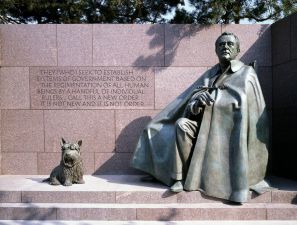
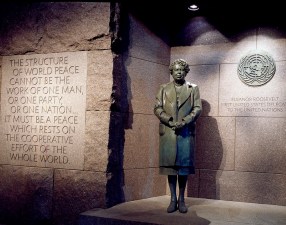
Etched in stone: the memorials of Eleanor Roosevelt (right) and FDR (along with faithful friend Fala, left) located in Washington, D.C. and featuring some of the wisest words either of them ever uttered
.
The quotes
.
♦ “The only thing we have to fear is fear itself.” (March 4th 1933)
♦ “Among American citizens, there should be no forgotten men and no forgotten races.” (October 26th 1936)
♦ “In these days of difficultly, Americans everywhere must and shall choose the path of social justice … the path of faith, the path of hope, and the path of love toward our fellow man.” (October 2nd 1932)
♦ “The test of our progress is not whether we add more to the abundance of those who have most; it is whether we provide enough for those who have too little.” (January 20th 1937)
♦ “No country, however rich, can afford the waste of its human resources. Demoralization caused by vast unemployment is our greatest extravagance. Morally, it is the greatest menace to our social order.” (September 30th 1934)
♦ “They [who] seek to establish systems of government based on the regimentation of human beings by a handful of individual rulers … call this a new order. It is not new and it is not order.” (March 15th 1941)
♦ “We have faith that future generations will know that here, in the middle of the 20th Century, there came a time when men of good will found a way to unite, and produce, and to fight the forces of ignorance, and intolerance, and slavery, and war.” (February 12th 1943)
♦ “More than an end to war, we want an end to the beginnings of all wars.” (from a speech intended to be delivered on April 12th 1945)
.
.
Reference:
¹ Koch, C. M. (2006). ‘A New FDR Emerges: Historians, Teachers, Authors Take a Fresh, Sometimes Critical, Look at Roosevelt’. National Archives. https://www.archives.gov/publications/prologue/2006/winter/fdr-emerges.html (Accessed 27 May 2024).
.
Retro Crimbo 2023: George’s gigantic festive photo archive

So this is Christmas, and what have you done? Plastering NYC – and other global metropolises – with billboards carrying an unfettered pro-peace message was what John and Yoko did in December ’69
Christmas may come but once a year, yet it’s rather a regular occurrence on this blog – must get back to some less itinerant blogging in 2024 (you might even call it a New Year’s resolution!).
Anyhoo, what better way to see out this year than with a truly bumper-bumper pictorial celebration of seasonal goodwill, featuring the great and the glamorous, the funny and the dramatic, the melodic and the pugilistic, the beautiful and the brilliant, and the cute and the cuddly of yesteryear?
All the very best of what remains of the season and a very happy and peaceful new year to all of you out there in Internetland…!
.
RIGHT-CLICK on images and open them in a new tab to enlarge them (on Desktop)
.


Gimme some peace: as with the posters and billboards erected in other global cities (including Berlin, Tokyo and Toronto), those in NYC went up on December 15th 1969, as part of John Lennon and Yoko Ono’s ‘Peace Movement’ response to the ongoing Vietnam War, which would also include that year’s infamous ‘bed in’ and the 1971 single (Happy Christmas) War Is Over, and would rope in the support of famous friends like George Harrison, Eric Clapton and Keith Moon (tl), and Mary Hopkin (br)
.
.
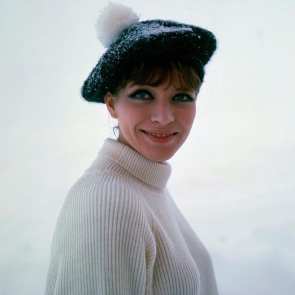
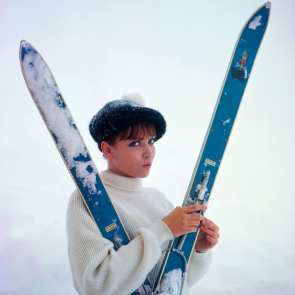


Snow angels: Audrey Hepburn and Marilyn Monroe enjoy lots of winter fun in the white stuff (middle), while Anna Karina beams with pride as she proudly shows off her skies (top and bottom)
.
.


Toys for girls and boys: the now both too-soon-departed Kirsty MacColl and Shane MacGowan promote the original release of The Pogues’ greatly loved Christmas hit Fairytale of New York in 1987
.
.


Bows, wreaths and trimmed trees: Much-loved Hollywood starlets of yesteryear – original ‘It Girl’ Clara Bow (top left), King Kong’s Fay Wray (top right), Mildred Pierce’s Ann Blyth (bottom left) and triple threat-and-a-half Ann-Margret (bottom right) – pose in some seasonal cheesecake shots
.
.


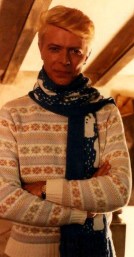
Laughs and scarfs: legends of British festive TV – Morecambe and Wise in a portrait from a Radio Times article, Ann and Vicki Michelle delighting Ronnie Barker in a promotional shot for a Porridge Christmas special and David Bowie in an on-set snap while filming his intro for The Snowman
.
.
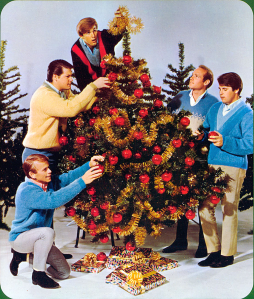

Melody makers: The Beach Boys (l) and Blondie’s Chris Stein and Debbie Harry (r) pose with pines
.
.

Back to the Christmas future: before they were famous, Lea Thompson, Elisabeth Shue and a pint-sized Sarah Michelle Gellar feature in an ad for Burger King, which screened on US TV in 1982
.
.


Winter warmer: Claudia Cardinale puts on a brave face (and a glorious smile) in three snowy snaps
.
.


Hosts of Christmas presents: Terry Wogan bearing gifts (left) and Ted Rogers, Dusty Bin and Caroline Munro promoting a Christmas special of unfathomable game show 3-2-1 in TV Times magazine (right)
.
.


Mills and balloons: Hayley Mills promoting the 1966 film Sky West And Crooked (top), a 1969 stage production of Peter Pan (middle) and volunteering in a charity Christmas card shop in 1967 (bottom)
.
.


Delightful duos: a Santa-suited pairing of Danny Kaye and Nat King Cole, Kermit and Miss Piggy in The Muppet Christmas Carol and a very merry then-husband-and-wife Tony Curtis and Janet Leigh
.
.


Tree-mendous: a 1970s Dick Van Dyke posing for a TV special in front of a Christmas tree on then permanent display at Harold Lloyd’s Beverly Hills mansion (left), Lloyd himself touching up the tree, which featured thousands of ornaments sourced from across globe (middle), and Cynthia Myers literally lit-up like a Christmas tree on the cover of the Playboy December 1968 issue (right)
.
.


Fur-ly well wrapped-up: Mick Jagger, Pattie Boyd and Boney M. opt for furry outerwear to stave off the winter cold, the latter while promoting their single Rasputin in Moscow’s Red Square in 1978
.
.


Santa’s leggy helpers: film noir’s Jane Greer pens a letter to St. Nick, Joan Collins greets the gift-giver, Elizabeth Montgomery does a spot of Santa Claus-ing and Debbie Reynolds flirts with a snowman
.
.


Simply having a wonderful Christmastime: Paul McCartney films the video for his 1979 festive hit
.
.


Especially for yule: Kylie Minogue proves nobody holds a candle to her in the Crimbo cuteness stakes
.
.
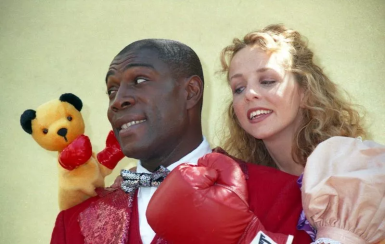


Who’s behind you! Frank Bruno, Stephanie Lawrence and Sooty promote their early ’90s pantomime in Woking (top left), as do Britt Ekland and Gladiators’ Wolf for 1993’s Aladdin at the Birmingham Hippodrome (top right), while in the mid-’80s, then-husband-and-wife Peter Davison and Sandra Dickinson publicise their production of Cinderella (middle), and Colin Baker, Nicola Bryant and Mary Tamm do likewise for their John Nathan-Turner-produced pantomime in Southampton (bottom)
.
.


North Pole stars: Roger Moore is snapped as he dresses up as Santa (rosy cheeks and all), while Colonel Tom Parker dons the coat, boots and beard for Elvis Presley’s 1965 Christmas card to fans
.
.


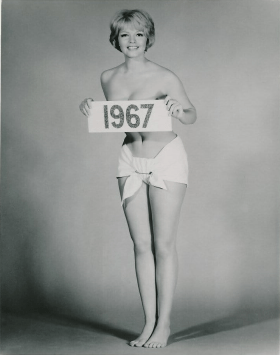
New year cheerleaders: Buster Keaton and Debbie Reynolds (top ), Judy Garland and Olivia de Havilland (middle), and model Karen Jensen (bottom) ring out the old and ring in the new
.
.

.
.
.

.
That’s right, the blog post directly preceding this one, which claimed to be this year’s Christmas playlist, was telling a tiny-weeny festive fib – because it wasn’t the only one. As a bit of a bonus, this one’s an awesome seasonal playlist, too.
Indeed, what better way to follow up a post celebrating the best ever UK Christmas Number 1 singles than with one chock-full of more merry-tasting treats – specifically, the finest tunes ever to hit Blighty’s Number 2 slot come Christmas Day?
And, although, none of these 17 ditties managed to make it to the top of the, er, Christmas tree in their original year of release, collectively they maybe make for a more diverse and even better combo of British chart classics than those listed here 48 short hours ago.
So, with just one more sleep to go until the big day, why not drift away into Crimbo dreamland by giving a listen to a few of the following tracks? You’re bound to be humming one, two, three, four or more of them tomorrow. Cue Bill Haley’s talking clock…!
.
CLICK on the track titles to hear them
.
Bill Haley & The Comets ~ Rock Around The Clock (1955)¹
Lord Rockingham’s XI ~ Hoots Mon (1958)¹
The Beatles ~ She Loves You (1963)¹²
Petula Clark ~ Downtown (1964)
The Foundations ~ Build Me Up Buttercup (1968)
Kenny Rogers and The First Edition ~ Ruby, Don’t Take Your Love To Town (1969)
Bachman-Turner Overdrive ~ You Ain’t Seen Nothing Yet (1974)
Greg Lake ~ I Believe In Father Christmas (1975)
The Village People ~ Y.M.C.A. (1978)¹
ABBA ~ I Have A Dream (1979)
John Lennon ~ (Just Like) Starting Over (1980)¹
The Housemartins ~ Caravan Of Love (1986)¹
Kylie Minogue featuring Jason Donovan ~ Especially For You (1988)¹
Vanilla Ice ~ Ice Ice Baby (1990)¹
Mariah Carey ~ All I Want For Christmas (1994/ 2020)
Mark Ronson featuring Bruno Mars ~ Uptown Funk (2014)¹
The Pogues featuring Kirsty MacColl ~ Fairytale Of New York (1987)³
.
¹ Managed to chart at Number 1 on the UK singles charts either in the run up to or after Christmas in the year of its release, but not actually over the yuletide itself
² Along with the top-spot-hitting I Want To Hold Your Hand, this absolutely Fab-tastic Beatles hit ensured the latter secured both the UK Christmas Number 1 and 2 in 1963; a feat that’s been repeated three times since (by The Beatles again in 1967, George Michael in 1984, and Ed Sheeran and Elton John in 2021)
³ Following the terribly untimely loss of Kirsty MacColl just prior to Christmas 2000, The Pogues’ brilliantly bibulous frontman Shane MacGowan passed away in late November this year.
Rest in peace, indeed – and a very merry Christmas to everybody out there in Internetland…!
.
.
.
.

.
Yes, believe it or not, it’s the welcome (?) return of this blog’s annual seasonal playlist, only it’s looking and, especially, sounding a little different this year.
For what follows isn’t a stocking stuffed full of festive-themed tunes but the finest songs to have achieved one of the finest honours in UK music – making it to the summit of the British singles charts in time for Christmas Day.
So, why not sit back, sip a glass of mulled wine, munch on a mince pie and listen away? Oh, and if you enjoy what you hear here, keep your, er, mince pies peeled for another, nay, very similar blog post wending your way very, very soon…
.
CLICK on the track titles to hear them (number of weeks each single spent at Number 1 is in brackets)
.
Al Martino ~ Here In My Heart (1952)¹ (9 weeks)
The Beatles ~ Day Tripper/ We Can Work It Out (1965)² (5 weeks)
Tom Jones ~ Green, Green Grass Of Home (1966) (7 weeks)
The Scaffold ~ Lily The Pink (1968)³ (4 weeks)
Benny Hill ~ Ernie (The Fastest Milkman In The West) (1971) (4 weeks)
Queen ~ Bohemian Rhapsody (1975/ 1991)4 (9 weeks/ 5 weeks)
Boney M. ~ Mary’s Boy Child – Oh My Lord (1978)5 (4 weeks)
Pink Floyd ~ Another Brick In The Wall (Part 2) (1979) (5 weeks)
The Human League ~ Don’t You Want Me (1981) (5 weeks)
The Flying Pickets ~ Only You (1983) (5 weeks)
Band Aid ~ Do They Know It’s Christmas? (1984/ 1989/ 2004) (5 weeks/ 3 weeks/ 4 weeks)
Jackie Wilson ~ Reet Petite (1986)6 (4 weeks)
Whitney Houston ~ I Will Always Love You (1992) (10 weeks)
East 17 ~ Stay Another Day (1994) (5 weeks)
Spice Girls ~ Too Much (1997)7 (2 weeks)
Wham! ~ Last Christmas (2023)8 (2 weeks?)
Slade ~ Merry Xmas Everybody (1973)9 (5 weeks)
.
¹ Not only was this too-little-recalled hit ballad the first ever UK Christmas Number 1 single, it was also the first ever UK Number 1 single, hitting the top spot (for the first time) on November 14th 1952
² Before Trussell-Trust-backing LadBaby achieved the feat of five consecutive Christmas Number 1s in 2022, the Fabs held the record of most festive top spot finishes with four; three of them consecutive, including I Want To Hold Your Hand in 1963 and I Feel Fine in 1964, before Hello, Goodbye in 1967
³ This novelty hit wasn’t entirely the dreamed-up-on-the-spot late ’60s nonsense it may sound, being an updated version of old folk tune The Ballad Of Lydia Pinkham; the Liverpudian-derived Scaffold’s members included celebrated children’s poet-to-be Roger McGough and one Mike McCartney, younger brother of Paul, while backing vocalists on the record were Graham Nash, Tim Rice and Reg Dwight (very soon to become Elton John), and bass guitar was played by Cream’s Jack Bruce
4 Queen’s mock-opera opus that wowed the world back in ’75 topped the UK Crimbo charts again when it was re-released 16 years later (as a double A-side with These Are The Days Of Our Lives), following the untimely loss of Freddie Mercury to AIDS in November 1991; proceeds from the re-release went to the Terrence Higgins Trust
5 Featuring the voices of Marcia Bennett, Liz Mitchell and Maizie Williams (along with Bobby Farrell), this disco-tastic take on the Harry Belafonte-sung 1956 original holds the distinction of being the first UK Christmas Number 1 to feature one or more women on lead vocals
6 Originally released way back in 1957, when it hit Number 6 on the UK charts and its financial success helped fund the setting up of Berry Gordy’s legendary Motown Records, Wilson’s signature song topped the Crimbo charts almost three decades later following its use as the backing to a claymation video from an edition of the BBC Arena documentary series
7 This was the second of the ‘Girl Power’-promoting five-piece’s three consecutive UK Christmas 1s, the other two being 2 Become 1 (1996) and Goodbye (1998)
8 Yes, finally, the Whamsters have done it and surely the ‘Whameggedon’ game is over for everyone for another year (at least, here in the UK), because the near-unavoidable bittersweet seasonal ballad has at last scaled the summit of Blighty’s yuletide charts; on original release in 1984 (as a double A-side with Everything She Wants), it finished runner-up to Band Aid and then did so again just, er, last Christmas – so, after four decades, it’s finally third time lucky, eh?
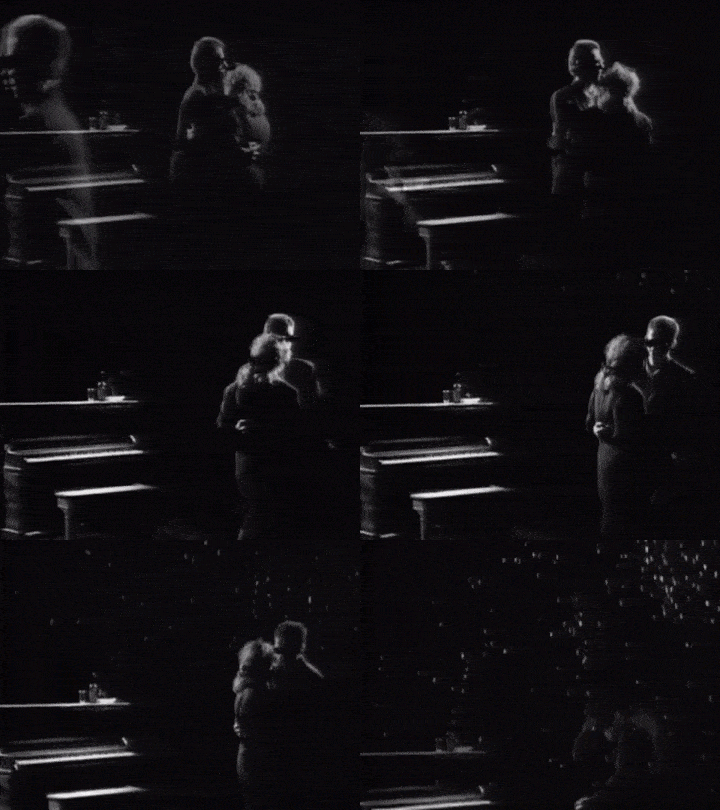
9 With Wulv’r’amptun’s Finest – and, indeed, all their fans – celebrating the 50th anniversary of the original, chart-topping release of the forever festive-foot-stomper, here’s a very special video tribute to the tune, featuring the talents and charms of the Top Of The Pops dance troupes that were Pan’s People and Leg’s & Co.
Plus, as a seasonal bonus, check out Noddy Holder and the lads perform the tune on 1973’s Top Of The Pops (or at least in a video edited together from two separate performances that holiday season), complete with a gonk, a camera rig laden with Christmas lights and a cream pie in Noddy’s face, here.
.

.
.
Retro Crimbo: Attaboy, Clarence! It’s A Wonderful Life hits 75


You want the moon? It’s A Wonderful Life has been delivering its marvellous movie magic to generations of film fans for 75 years – all with an irresistible sprinkling of festive goodwill and joy
As, for many of us, this year’s festive season draws to a close, we’re left to reflect on another twelve months that, while compromised for many millions of us, may well, too, have featured many highs and many lows. At times like this, then, and at any time of the year, frankly, during this unsettling, pandemic-wracked era, it’s definitely good for us all to seek some solace and comfort.
And how better to do that than with an utterly heartwarming, undeniably brilliant flick? It’s A Wonderful Life, every single time you give it a watch, ticks all those boxes. And has done so now for 75 years. Yes, Frank Capra’s much-loved festive-fest of frothily-fun-cum-dark-cum-cheery genius has been around for three-quarters of a century. Reason, indeed, methinks for a celebratory post on this blog – featuring behind-the-scenes facts and pics. I can’t say giving it a read will ensure an angel gets its wings, but who knows? It just might… so, go on, why not give it a go…
.
CLICK on the images for full size
.
It’s A Wonderful Life is based on a 1943 short story, The Greatest Gift, written by Philip Van Doren. Curiously, Van Doren struggled to interest publishers in his story, so instead printed 200 copies of it and, as a Christmas gift, gave them to friends, to relatives and – in a genius move – to his Hollywood agent.
Impressed, the agent sold the story’s rights to the RKO film studio, where a producer was impressed enough to share it with Cary Grant, whom, in turn, was impressed enough to want to make it and play the lead character, George Bailey.
.

Perfect pairing: Capra and Stewart shooting the breeze on set (l & r); the latter checking his script (m)
Eventually, the story was discovered by top-tier producer-director Frank Capra, whom bought the rights from RKO for his then new studio, Liberty Films. Obviously, Cary Grant didn’t end up as George Bailey; James Stewart did (whom had previously collaborated with Capra on 1938’s You Can’t Take It with You and 1939’s Mr. Smith Goes to Washington). But why?
In his autobiography, Capra wrote: “Of all actors’ roles, I believe the most difficult is the role of a Good Sam who doesn’t know that he is a Good Sam. I knew one man who could play it … James Stewart. … I spoke to Lew Wasserman, the MCA agent who handled Jimmy, told him I wanted to tell Jimmy the story. Wasserman said Stewart would gladly play the part without hearing the story”.
Cast as Mary Hatch, George Bailey’s irresistibly lovely love-interest and eventual wife, was the irresistibly lovely Donna Reed. Now, through her Hollywood roles, Reed had nurtured a girl-next-door persona, but had actually grown up on an Iowa farm. Apparently, thesping great Lionel Barrymore (cast as the Scrooge-like local tycoon-cum-villain Mr Potter) found the juxtaposition of Reed’s image and background unlikely, so in a $50-bet he challenged her to milk a cow.
Reed would go on to claim that, in her long, distinguished career, it was the easiest $50 she ever earned.
.
.
Talking of Potter appearing to be a thinly veiled version of Dickens’ most famous creation, an FBI memo dated May 26th 1947 actually suggests the Feds were concerned about the film’s supposed ‘Communist’ content. The memo read: “It’s A Wonderful Life represented rather obvious attempts to discredit bankers by casting Lionel Barrymore as a ‘Scrooge-type’ so that he would be the most hated man in the picture. This … is a common trick used by Communists”.
Crazy as the Feds’ fears may seem today, perhaps they were on to something because Dalton Trumbo (whom, years later, famously ended up blacklisted because he wouldn’t ‘name names’ to the House on Un-American Activities Committee) was one of several uncredited writers whom Capra collaborated with on the script. Another of the uncredited scribes was Dorothy Parker.
.

Marriage and wonderful strife: the movie’s two stars posing together in a colour publicity shot
Constructed in eight weeks in Encino, California, the movie’s exterior sets (for the fictitious upstate New York town Bedford Falls) were among the largest built by Hollywood up until that point. They featured more than 75 buildings scattered across four acres and included the now iconic 300-yard-long main street and 20 fully-grown oak trees.
Elsewhere, one of the movie’s biggest interior locations, the high school gym, was actually Beverly Hills High School. Its retractable floor, under which lies a 75-foot-long swimming pool, made for an unforgettable sequence, of course, when the floor’s opened by a revenge-seeking would-be paramour of Mary; his attentions having been thwarted by George. The facility exists to this day – it’s affectionately referred to as the ‘Swim Gym’.
.

Strictly gym dancing: Stewart and Reed learning and rehearsing their dance steps for the gym scene
Despite its decades-and-decades-long association with Christmas (owing to the time of year when its conclusion takes place), It’s A Wonderful Life was shot during a scorching hot Californian summer. Indeed, conditions got so hot and sticky that production had to be halted more than once. In fact, that’s not melted snowflakes on Stewart’s face during the legendary bridge scene; it’s sweat – temperatures exceeded 30°C on that day of filming.
When it did come to the on-screen snow, though, It’s A Wonderful Life broke new ground. Artificial (of course!), what features in the movie was a brand new, more authentic-looking creation; a mixture of sugar, shaved ice, soapy water and Foamite (which is commonly used in fire extinguishers). As much as 6,000 gallons of the stuff was blown about to blanket the Bedford Falls set.
.

Groundbreaking snow and sweat-covered pros: surprisingly filmed at the height of summer, It’s A Wonderful Life’s shoot generated several unexpected challenges for Capra, his cast and his crew
During filming – and maybe surprisingly – the wholesomeness that Reed imbued Mary with rather threw Stewart, whom hadn’t felt she was right for the role. So much so that shooting the passionate kissing scene between the two characters was put off for two weeks.
When asked later, Stewart claimed of the scene’s eventual filming: “I was so nervous. There was real electricity in the air. I asked Donna if she wanted to rehearse and she said, ‘Why don’t we just do it?’ and Capra, knowing what was going on, agreed. So there we were, cheek to cheek, no rehearsals, hormones out of control, and Capra says: ‘Action!’ Well, we did it in one take. One of the best things I’ve ever done”.
.
.
Legendary comic actor, W.C. Fields was initially considered for the role of George’s loveable but forgetful Uncle Billy, whose critical mistake of misplacing the bank’s envelope of money sets in motion the events of the movie’s third act (including, of course, the intervention of Clarence the trainee angel and the George-less alternate, dystopian reality). Cast in the part instead was Thomas Mitchell, famous for playing the father of Scarlett O’Hara in Gone With The Wind (1939).
Meanwhile, for Bedford Falls’ good-time girl Violet Bick, Capra had wanted an actress who could play ‘a good bad girl’. Gloria Grahame won the role and, like Donna Reed, would eventually go on to win a Best Supporting Actress Oscar (for 1952’s The Bad And The Beautiful; Reed won hers a year later for her performance in From Here To Eternity).
.


Classic cast and golden Grahame: the movie’s thesps in a full-cast, in-character group-shot (right) and the glorious Gloria Grahame in action as irrepressible but good-hearted Violet Bick (left)
Returning to that iconic-for-all-times scene on the bridge, George recognises he’s alive and back in his own reality again when he feels and extracts from his pocket Zuzu’s petals – the petals that had fallen off Zuzu’s flower, to her disappointment, so he’d pretended to reattach them but slyly put them in his pocket. Today, both a flower shop in NYC’s Brooklyn and a Minneapolis rock band go by the name ‘Zuzu’s Petals’.
Inexplicably, though, the one-time child actor Karolyn Grimes, whom played Zuzu, had to wait until 1979 to first see the film, later explaining: “I never saw movies I was in because my mom told me that would be prideful, being stuck on yourself”.
Another influence on pop culture the movie can proudly claim involves, yes, Muppets – or at least their very near cousins. To wit, the much-adored Sesame Street ‘couple’ that’s Bert and Ernie were named after George Bailey’s friends, Bert the policeman (Ward Bond) and Ernie the taxi driver (Frank Faylen).
.

From Bedford Falls to Sesame Street: sb1991 on devianart’s brilliant Bert and Ernie fan art mash-up
However, in one of oh-so many cases of Oscar getting it wrong, It’s a Wonderful Life was nominated for six Academy Awards (including Best Picture, Director and Actor) but didn’t win any. In a year that also saw the release of the awesome Bogart-Bacall film noir The Big Sleep, the Best Picture Oscar went to WWII-era drama The Best Years Of Our Lives. Its director (William Wyler) and lead actor (Frederic March) won in their respective Oscar categories, too.
In fact, despite its enormous popularity in recent decades, It’s A Wonderful Life wasn’t even a convincing hit following its release (December 20th 1946). With a budget of $2.3 million, expensive for its time, it required bumper business to be deemed successful, but by raking in just $3.3 million from its theatrical run, Liberty Films managed to lose $525,000 on the film.
All that’s long forgotten today, though. Indeed, following its emergence as the pre-eminent classic Christmas flick, it’s now made in excess of $70 million in DVD sales, as well as generating ever-growing profits from modern-day merchandise. Not that any of that’s compensation for Liberty Films – the company was sold to Paramount Pictures in 1947.
.


George Bailey goes global: the movie’s original French, Italian and Spanish posters (left to right)
Yet, the film wasn’t actually intended to be released in time for Christmas, let alone become regarded as a ‘Christmas movie’ (if such a notion existed back in 1946). Initially, its release was scheduled for January 1947 but was pushed forward due to buzz around its obvious quality so it might qualify for the 1946 Oscars.
In the final analysis, though, if It’s A Wonderful Life is about and encompasses anything then it’s surely the ideals of doing good, putting things right and, ultimately, destiny. Just like Clarence getting his wings, the film was destined to and eventually did become an all-time Hollywod Holidays classic – not least because that basically happened due to a mistake.
In 1974, nearly 30 years after its theatrical release, the film’s copyright wasn’t renewed, which meant that, over the next two decades, It’s A Wonderful Life wasn’t owned by anyone and happily drifted about in the public domain, meaning TV channels across the United States (and overseas) could freely broadcast it as much as they wanted, every December – and ensure the whole world embraced it and claimed it for themselves.
That’s a Hollywood fairy tale ending, right there. Attaboy, Clarence!
.

Playlist: Listen, my eager-eared Ebenezers! Christmas 2021

.
In the words of Moby Grape… listen, my friends! Yes, it’s the (hopefully) monthly playlist presented by George’s Journal just for you good people.
There may be one or two classics to be found here dotted in among different tunes you’re unfamiliar with or never heard before – or, of course, you may’ve heard them all before. All the same, why not sit back, sip a glass of mulled wine, munch on a mince pie and listen away; for in the words of Noddy Holder, ittttttt’s… well, I’m sure you know what comes next…
.
CLICK on the track titles to hear them
.
James Stewart ~ I Want To Live Again! (1946)1
Leonard Bernstein, the Mormon Tabernacle Choir and the New York Philharmonic Orchestra ~ The Twelve Days of Christmas (1963)
Doris Day ~ Snowfall (1964)
John Lennon and Peter Cook ~ London’s Most Fashionable Lavatory Spot (1966)2
Laura Nyro ~ Christmas Is In My Soul (1970)
Elton John ~ Ho! Ho! Ho! (Who’d Be A Turkey At Christmas?) (1973)3
Donna Summer ~ Winter Melody (1976)
Kiri Te Kanawa ~ Have Yourself A Merry Little Christmas (1986)
Electric Mayhem ~ Jingle Bell Rock (1987)4
Sarah Vaughan ~ Happy Holidays/ White Christmas (1988)
Sarah Brightman ~ Make Believe (1989)5
David Jason and Nicholas Lyndhurst ~ Del Boy Goes Jet-Skiing (1991)6
Simon Callow ~ The Cratchit’s Dinner (from A Christmas Carol) (2018)
Felicity Kendal ~ ‘Twas The Night Before Christmas (2020)
Nat King Cole ~ The Christmas Song (Merry Christmas To You) (1961)7
.
¹ Hollywood’s Christmas classic for all-time, It’s A Wonderful Life, celebrates its 75th anniversary this year
² A sketch featuring the then mop-topped Beatle from the Christmas special of Peter Cook and Dudley Moore’s BBC comedy show Not Only… But Also (1964-70), originally broadcast on December 26th 1966
³ The little known, even rarer played-on-radio, B-side to Elton’s iconic festive glamrock hit Step Into Christmas (1973)
4 As featured in the wonderful seasonal TV special A Muppet Family Christmas (1987)
5 The closing theme from UK TV Channel 4’s animated special Granpa (originally broadcast on December 31st 1989) and made by the team behind the legendary The Snowman (1982) and Father Christmas (1991)
6 From ‘Miami Twice’, the feature-length (and audience-laughter-free) 1991 Christmas special of Only Fools And Horses
7 This version of the classic Robert Wells and Mel Tormé Christmas tune – its most-played and so most iconic recording – celebrates its 60th anniversary this festive season.
.

.
.












 George's Journal