
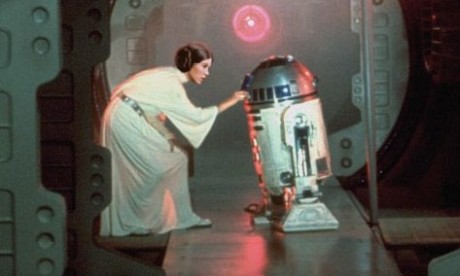

(A New Hope) Directed by: George Lucas; Starring: Mark Hamill, Harrison Ford, Carrie Fisher, Alec Guinness, Peter Cushing, Peter Mayhew, Kenny Baker, Anthony Daniels, David Prowse, James Earl Jones (voice); Screenplay by: George Lucas; US; 121 minutes; Colour; Certificate: U
I was six or seven years old and it was the first time I’d visited a big, proper shopping mall. I’ll never forget that first visit. Why? Because it left an indelible impression that came back in my childhood whenever I visited both that and similarly large malls. And the reason for that is two-fold – not only, as soon as I’d arrived, did John Williams’ goose-pimple inducing Main Theme blare out over the mall’s speakers, but also to my very young imagination, walking around the pristine, shiny, high-ceilinged and imposing interior of that mall felt just like walking around the Death Star. I wasn’t an ankle-biter out for a Bank Holiday shopping trip with my folks; no, I was Luke Skywalker, accompanied by a pirate, a princess and a walking carpet on a mission to take down the evil Empire. Or something like that.
I wasn’t the only one, though. Quite simply, millions of kids of my generation were bewitched and their little existences embellished by Star Wars Episode IV: A New Hope (which forever after in this review will be referred to by its original and proper title: plain old Star Wars). No question, for that we were a very lucky generation. And no question, Star Wars was – and still is – a very special film.
It’s not the finest film ever made (far from it, it has several flaws) and it’s not even the best in its series; however, it’s still one heck of an entertaining two-hour ride of cinematic hokum after 35 long, transformative years. Over those years, its conception by eagle-eyed movie-making magpie George Lucas has garnered the lion’s share of praise: the borrowing of aspects from Akira Kurosawa’s 1954 classic The Seven Samurai (opening the adventure unconventionally by focusing on two servants and the emphasis on an ancient tradition of noble knights), the pilfering of Hollywood Western and war movie clichés (the baddest dude wearing black and the air-bound bombing raid) and the inspiration of fairytale and Greek myth (the peasant hero rescuing the princess from the enemy’s lair and the ‘tragic hero’ and ‘f*cked up family’ motifs that would underlie the rest of the saga). But arguably Lucas’s real achievement is the execution of his conception.
.
Despite the writer-director coming off the back of early-’60s set nostalgia hit American Graffiti (1973), it was far from written in the annals of the Jedi Temple that his space fantasy would seduce the Western world’s youth, become the biggest money-spinner of all-time and (for right or wrong) change cinema forever – to quote Lawrence Of Arabia (1962), nothing is written. In fact, to start with, so bizarre a project and weird a filmmaking experience was Star Wars that many involved thought it was doomed (Harrison Ford famously remarked to Lucas that ‘you can write this sh*t [the sci-fi gobbledeegook-heavy dialogue in the script], but you can’t say it’). And yet, despite these difficulties – including a challenging shoot in Tunisia for the Tatooine sequences – Lucas brilliantly realised his ambitious vision. And too often that’s easily overlooked.
His screenplay is slight and tight; there’s no flab whatsoever, ensuring that with fine editing, good pacing and more-than-engaging performances from leads Hamill, Fisher and Ford (who together possess impressive chemistry) and supporting players Guinness, Cushing, Williams and Baker (no mean feat for the latter two given their robot-costume constraints), the story whips along and is given room to breathe and grow – ensuring facets such as the Star Wars galaxy, the Rebel and Empire dynamic and, of course, the Jedis and The Force intrigue and engage the viewer, instead of merely coming off as dappy sci-fi movie prosaicisms.
More obviously perhaps are the coups pulled off by composer John Williams and those beardy boffins of Industrial, Light & Magic, both of whom have rightly been heralded for decades. Williams’ score is simply awesome; there’s little to say about it that hasn’t been before – it’s truly one of cinema’s all-time greats. Meanwhile, the ILM team that was more or less assembled by Lucas to achieve this very flick’s visual effects pull off a Herculean achievement in realising a world of wonder and detail in a way never seen before – allied with production designer John Barry’s shopping mall-like Death Star sets, of course. In short, everyone involved in the movie’s making deserve a medal come the throne room finale – and a growling cheer from Chewbacca.
Just one more thing, as nowadays it’s nigh impossible not to, the version I watched in order to write this review was the 20th anniversary re-release containing the handful of digitally added and touched-up moments (Han-meets-Jabba and Death-Star-going-properly-kaboom among them). And, must say, I think the tinkering Lucas indulged in here pretty much works and adds to his career-defining triumph (in exactly the way Spielberg’s digitised interfering with E.T. tragically does not). Yes, Han may no longer shoot first – but, just like Star Wars itself, he most certainly still shoots from the hip and scores every single time.
Best bit: The title card and the opening crawl right at the beginning as John Williams’ Main Theme kicks-off – still spine-tingling after 35 years
Best line: “May the force be with you” (various)
.
.
(Empire) Directed by: Irvin Kershner; Starring: Mark Hamill, Harrison Ford, Carrie Fisher, Billy Dee Williams, Alec Guinness, Peter Mayhew, Kenny Baker, Anthony Daniels, David Prowse, James Earl Jones (voice), Frank Oz (performer and voice: Yoda); Screenplay by: Lawrence Kasdan and Leigh Brackett; US; 129 minutes; Colour; Certificate: U
So which is it? The series’ biggest reveal when Vader finally fesses up? The Skywalkers’ long awaited lightsaber duel? Luke meeting and being trained by Yoda? The burgeoning Han-Leia romance? The fast and furious climax in the oh-so-cool Cloud City? The asteroid field chase? Luke eerily facing Darth/ himself in the cave? Vader hiring Boba Fett and the motley band of bounty hunters? The Millennium Falcon’s continual inability to jump to hyperspace? Or that closing shot of Luke and Leia and the droids?
Yes, which bit is it that elevates The Empire Strikes Back to utter, unadulterated awesomeness? The answer’s easy: it’s every single one of ’em – all those bits and more marvellously meld together not only to make Empire easily the best of the six Star Wars movies, but also (got to admit) one of my all-time favourite films.
And yet, the irony of why Empire hits Luke Skywalker’s errant hand out of the ball-park is that it’s effectively the complete negative of why its forerunner, the pretty much universally adored A New Hope, was such a success. Realising he’d done a superb job on the latter movie, George Lucas took a step back during the next three years of Empire‘s pre-production and filming (maybe because he was burnt out?) and surprisingly it proved to be something of a masterstroke. Lucas – father of the Star Wars universe; the story of the entire six-flick saga was ensconced in his bonce for years before even the first film – both wrote and directed A New Hope, but with Empire he gave up the screenwriting and directing duties, retaining creative input as an ‘executive producer’ only. But his picks for replacement screenwriters and director were utterly spot on.
No surprise that fact, though, when one looks at the scribes he hired. Lawrence Kasdan had already collaborated with Lucas in creating Indiana Jones and then went on to solo-script Raiders Of The Lost Ark (1981), while Leigh Brackett was a Hollywood heavyweight, having co-written the all-time Bogie/ Bacall noir classic The Big Sleep (1946). But surely it was something of a surprise that Irvin Kershner, who’d spent his career on the arty fringes of Tinseltown, proved such a good fit for helmer – yet he surely was.
.
Empire‘s screenplay is outstanding, truly. While A New Hope‘s script was simple-as-beans and tight-as-you-like, this one had to deepen the Star Wars universe, further its three leads’ adventures (two of ’em falling in love; the other trying to become a spiritual knight), rattle the action along and – perhaps trickiest of all – push The Force into the foreground (Obi-Wan’s ghost and Yoda and all) and not alienate the audience as it did so. And, hand-in-hand with Kershner’s direction, Kadsdan and Brackett’s smart, smooth screenplay does all this with bells on.
For his part, Kersh was chosen by Lucas for his commitment to characterisation. And many of Empire‘s greatest moments, when you think about it, have his hands all over them. For example, the sassy-byplay-cum-falling-in-love of Han and Leia, while on their Homeric Odyssey-like misadventures through asteroid fields and as Star Destroyer garbage, is wonderful (funny one second, moving the next and almost tragic come the carbon-freezing). Meanwhile, Yoda’s training of Luke should be the flick’s wordy, downbeat, pace-sapping segment, but it’s anything but. In the hands of Kersh, the Dagobah-set scenes are arguably the film’s most captivating; the mystical, magisterial possibilities of The Force evoked terrifically thanks in no small part to maybe the movie’s most engaging performance – which only comes from the (more or less) Muppet that’s the Frank Oz-operated and -voiced Yoda. Now that’s what you call directing.
However, it would be churlish to give the impression Empire‘s greatness derives from just three or four contributors, because it most certainly doesn’t. As he was for its predecessor, composer John Williams is at the peak of his powers. Not content with repeating A New Hope’s iconic Main Theme and wistful Burning Homestead, he ups the ante and matches the visuals toe-for-toe with the likes of Yoda’s Theme, Han Solo And The Princess and, of course, Darth Vader’s legendary leit-motif The Imperial March.
And, not to be left in the shade, the SFX wizzes of Industrial, Light & Magic likewise better their efforts of A New Hope – witness, in particular, the pumped-up opening conflict on the snowy planet of Hoth, packing, as it does, AT-AT Walkers and Snowspeeders seamlessly and breathlessly set against the starkly beautiful Norwegian locales, as well as the movie’s closing shot – a pull-away from a humongous Rebel ship containing two of our heroes wondering just how the flick’s cliffhanger ending (how they’ll save the third) will be resolved.
Few movies that make up the middle of trilogies outshine both the first and third entrants in their series (it’s not the case with, say, either The Lord Of The Rings: The Two Towers or Back To The Future Part II), but The Empire Strikes Back is quite simply the ruby-red jewel set deep at the heart of the original Star Wars flicks. It’s a slice of adventure cinema that’s as close to heaven as it gets – to paraphrase the awesome Lando Calrissian, it truly belongs there among the clouds.
Best bit and best line: “I love you/ I know” (Leia and Han before the latter goes a bit frosty in the Cloud City carbon-freeze chamber)

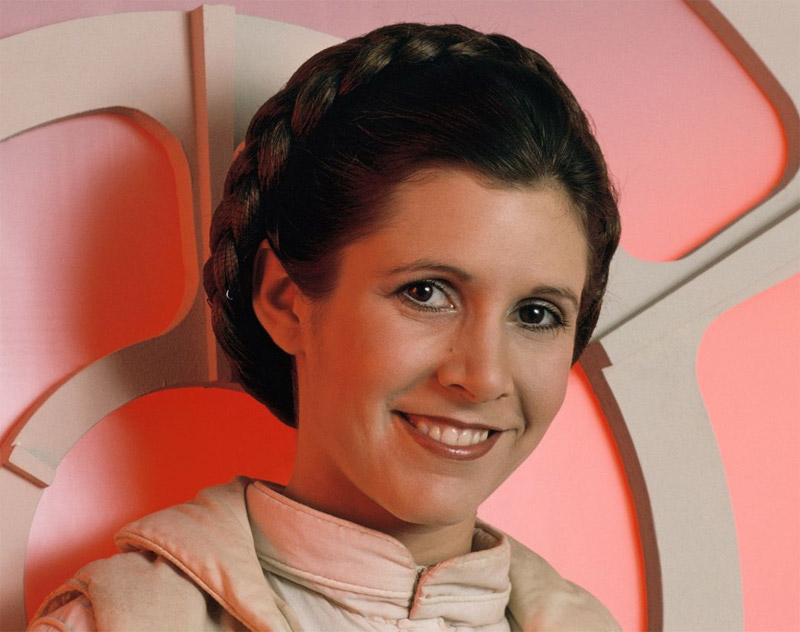

Talent…
.
… These are the lovely ladies and gorgeous girls of eras gone by whose beauty, ability, electricity and all-round x-appeal deserve celebration and – ahem – salivation here at George’s Journal…
.
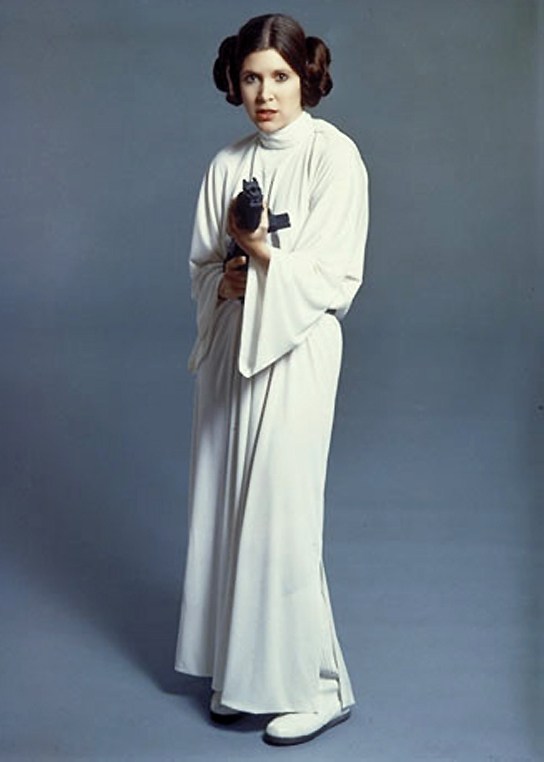
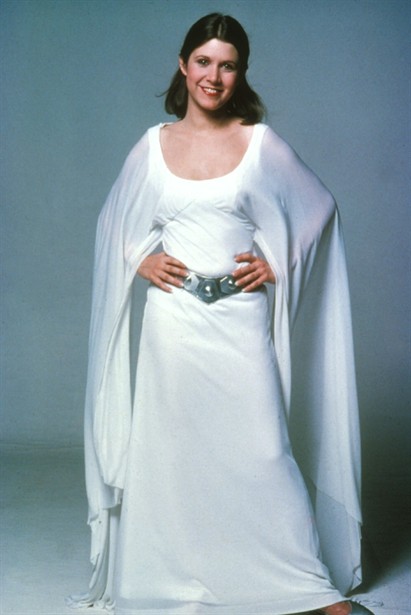
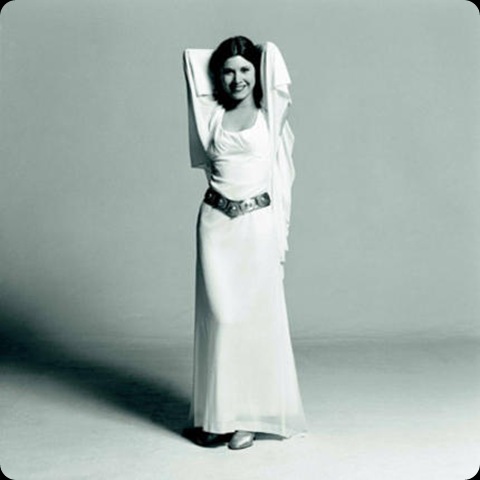
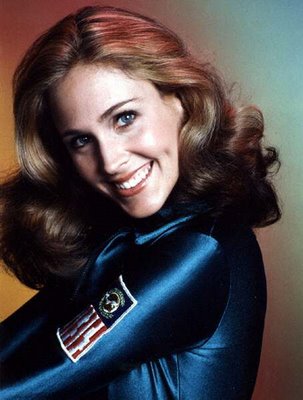
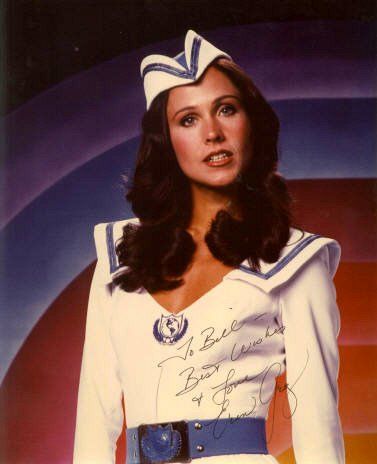
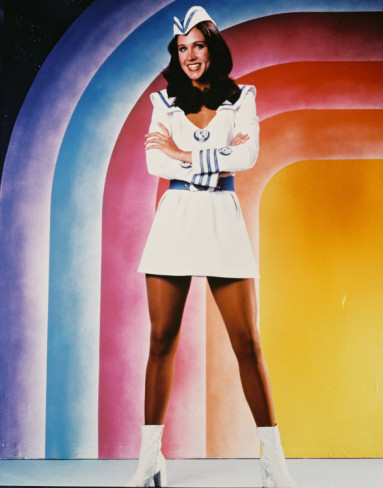
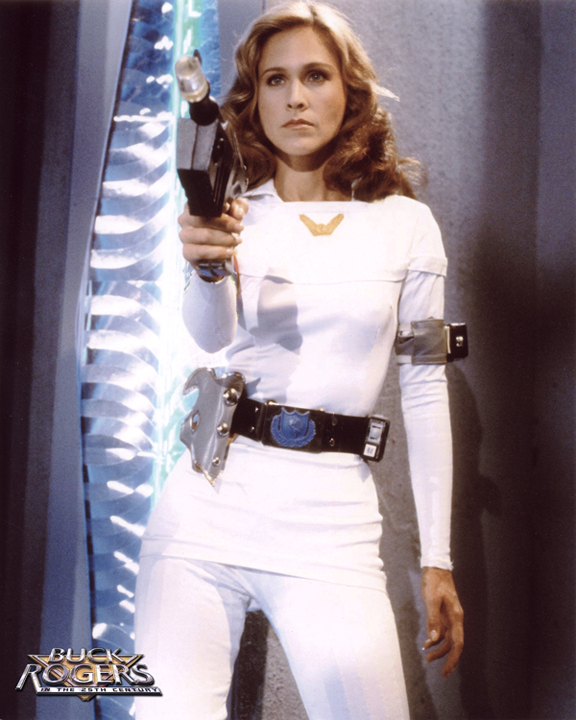
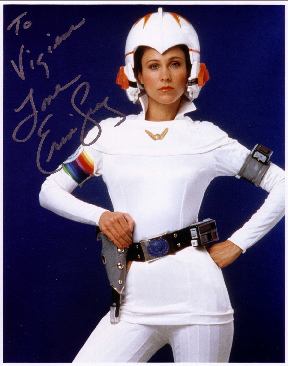
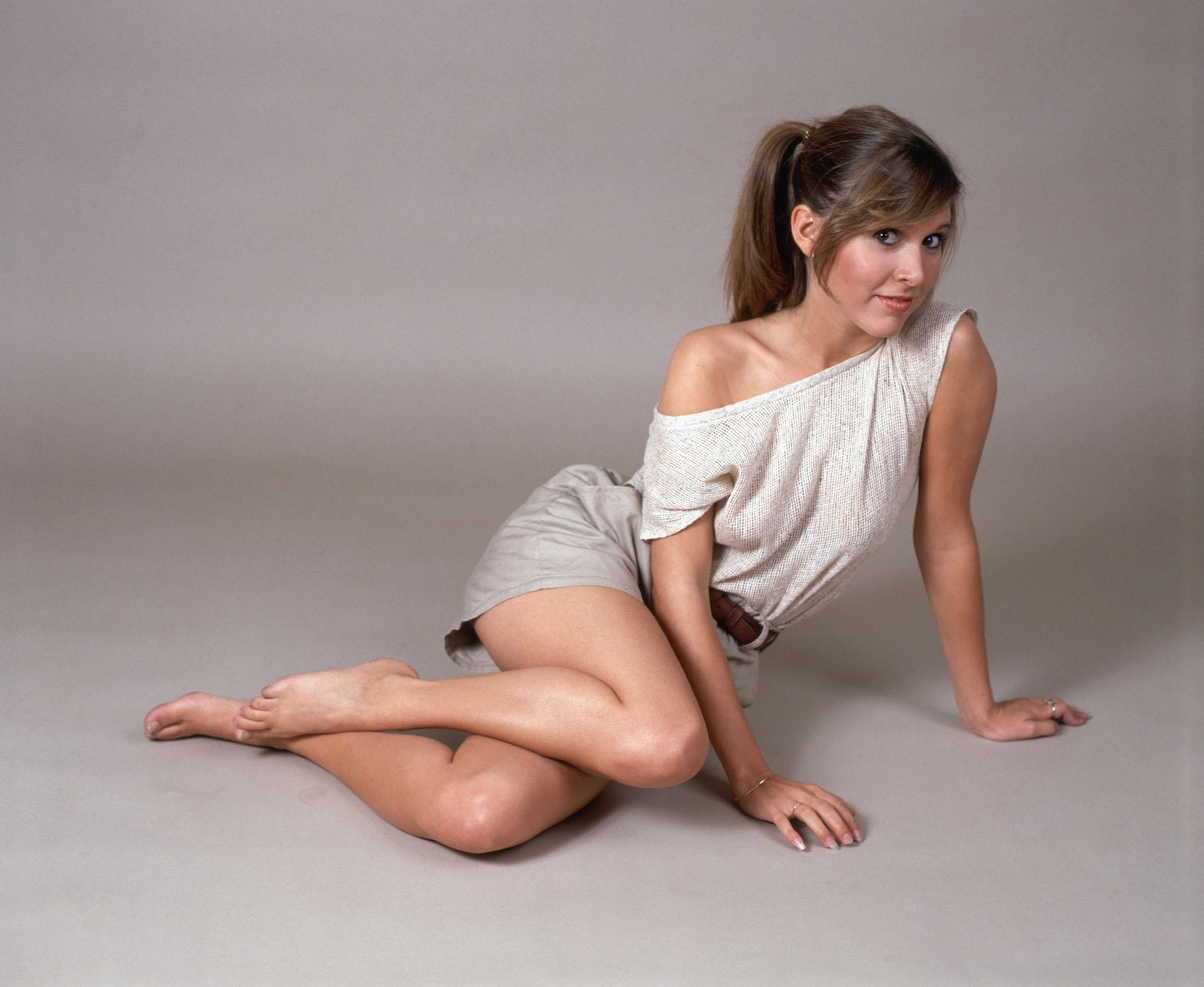
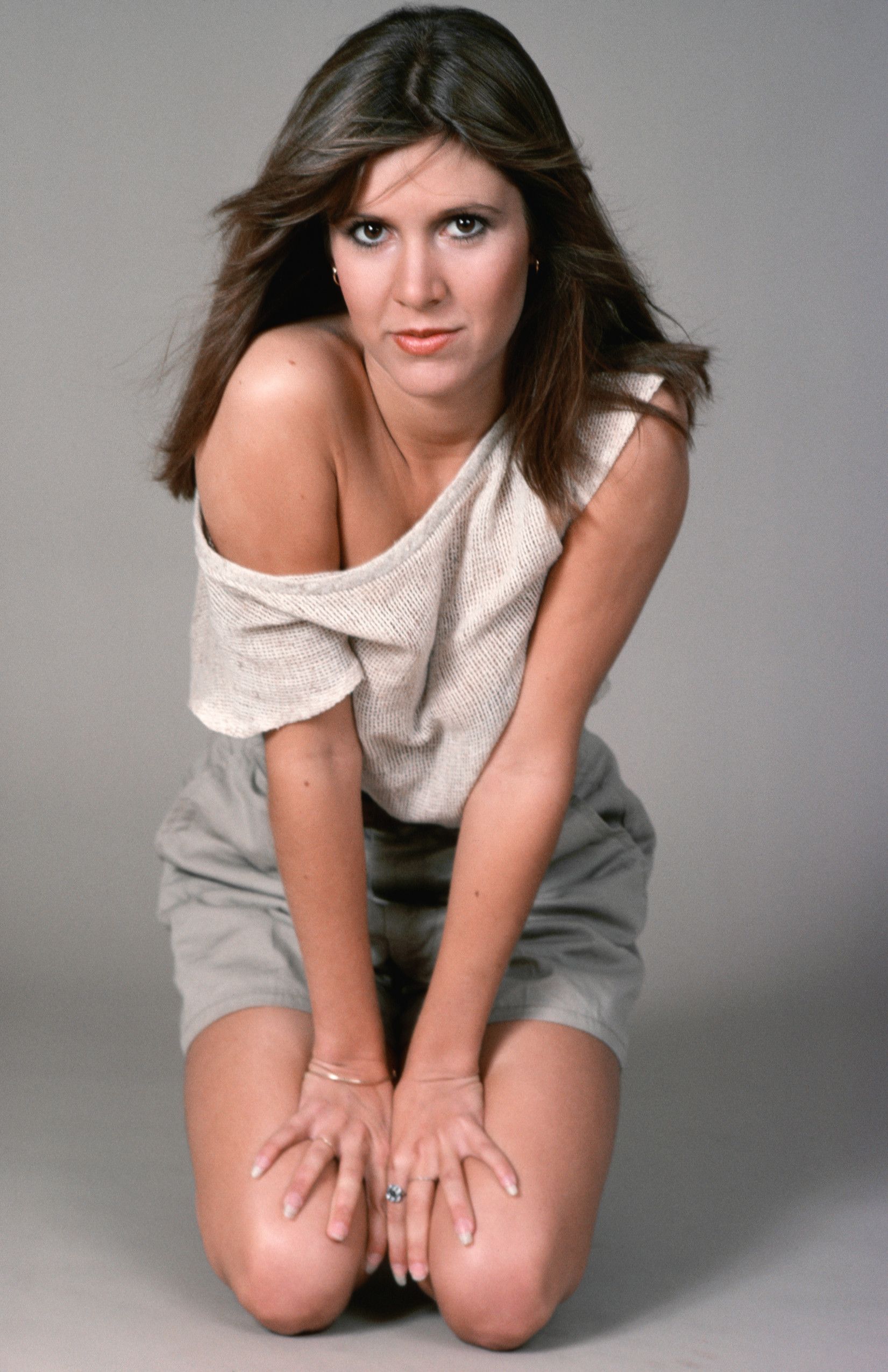
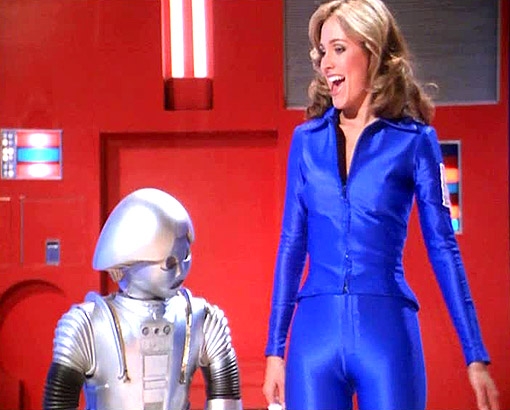
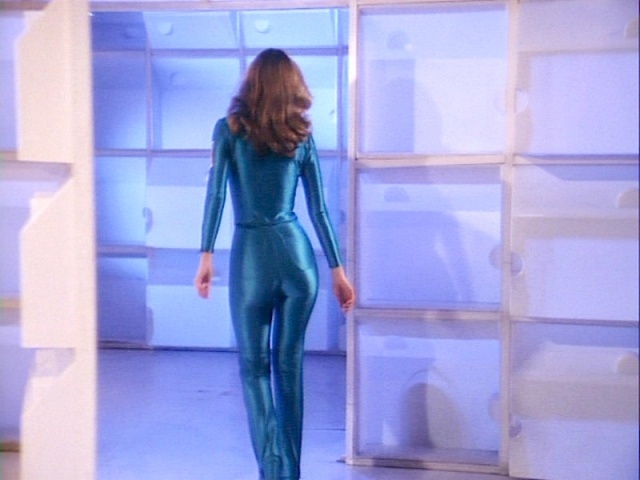
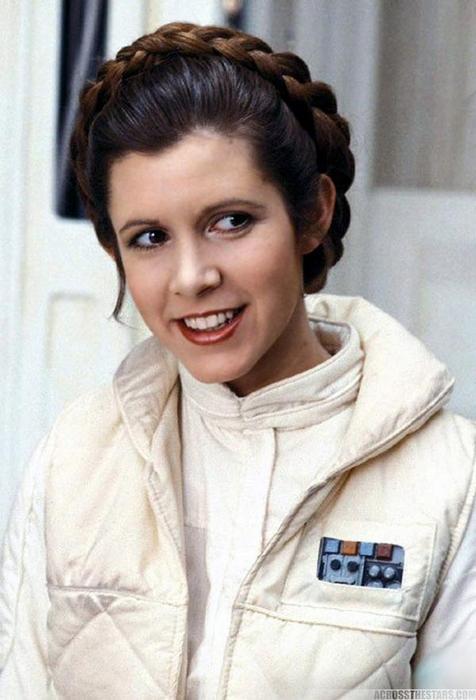
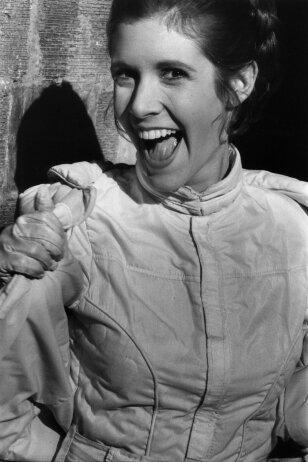
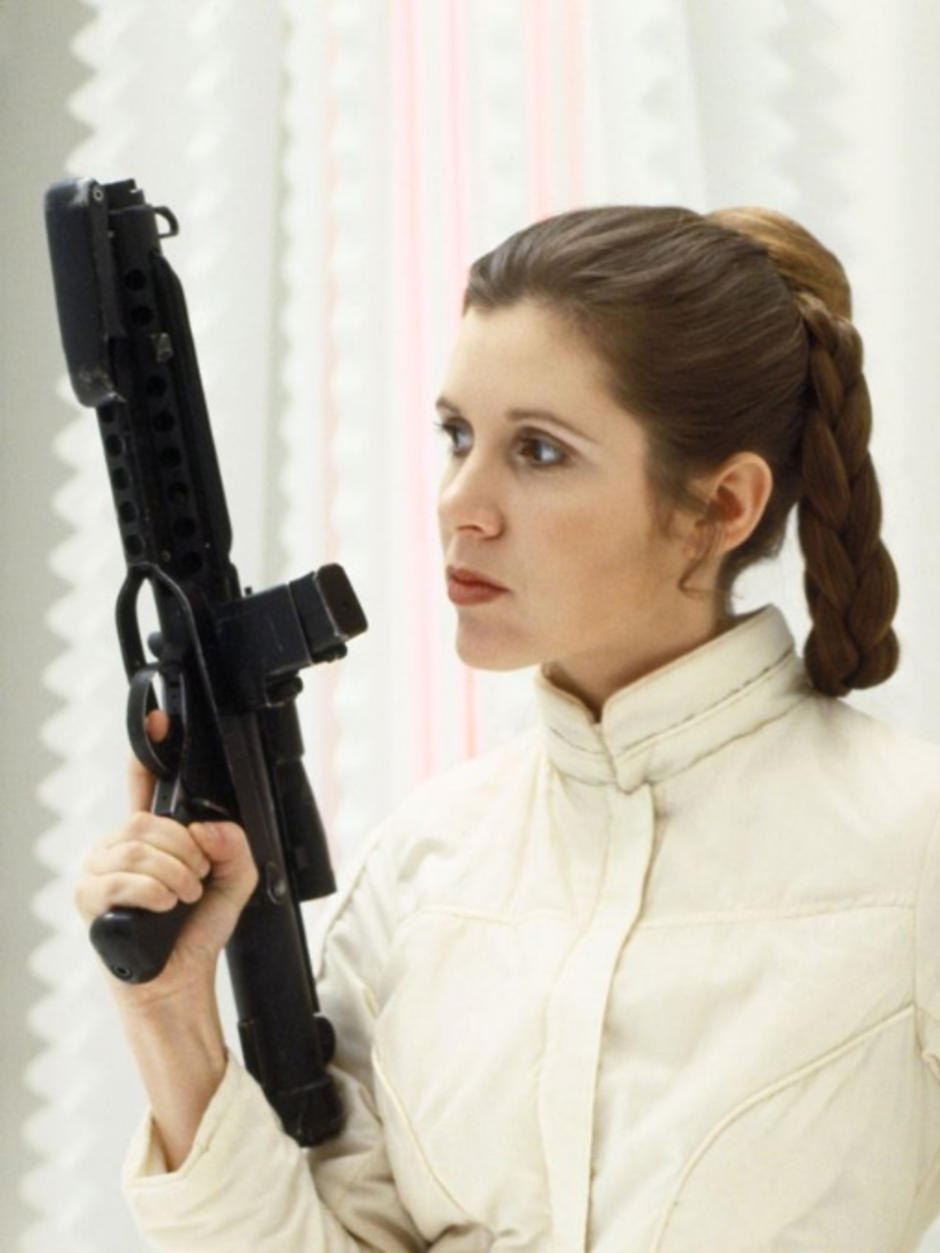
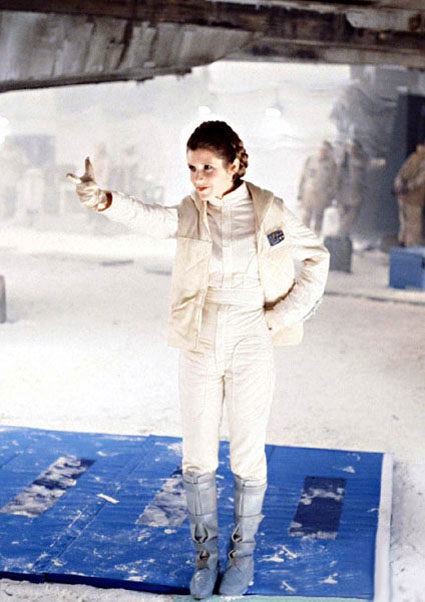
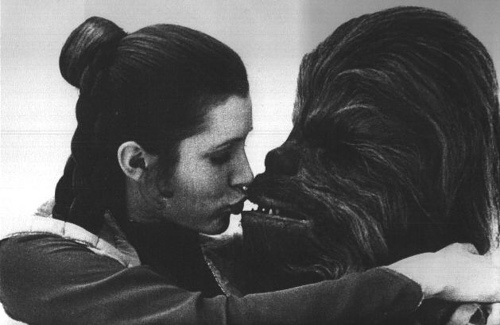
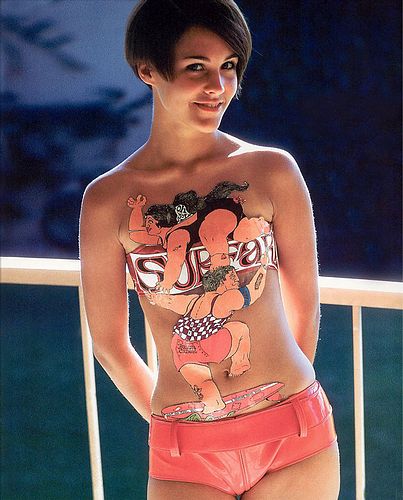
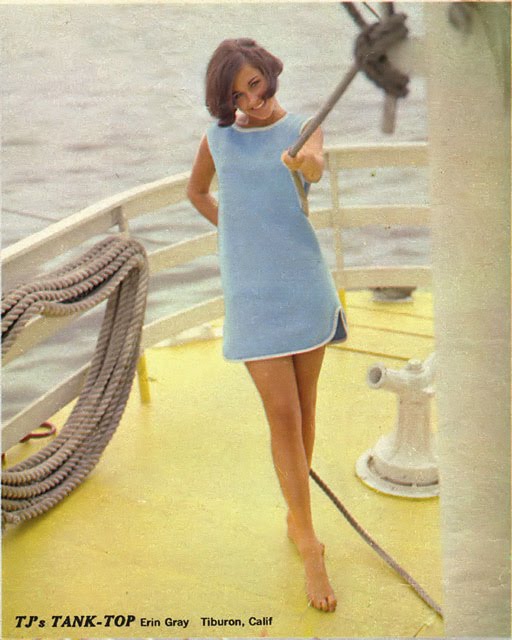
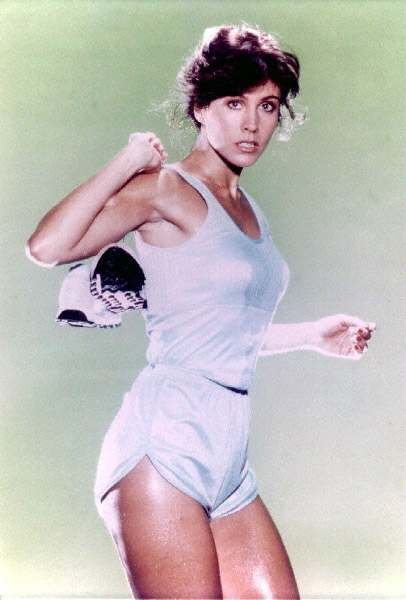
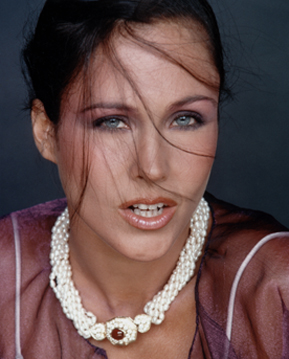
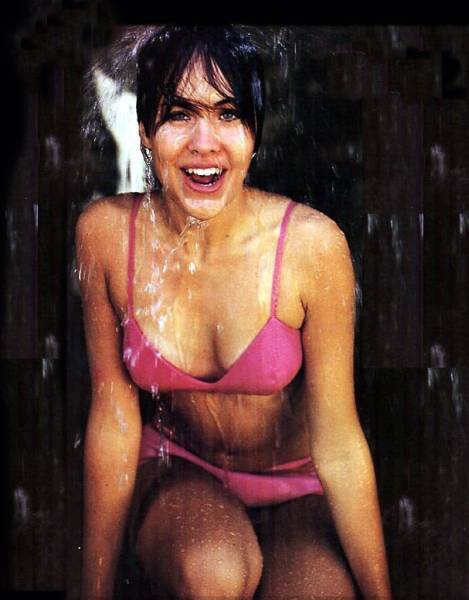
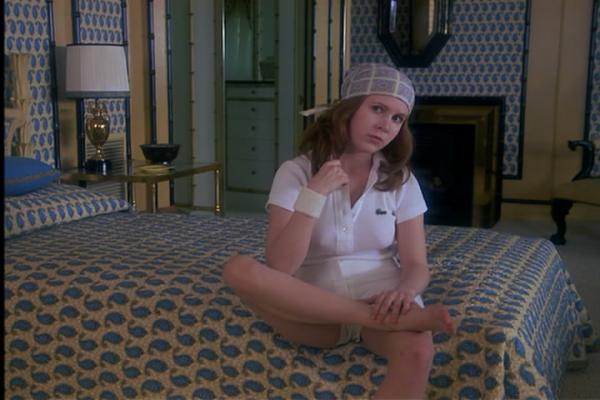
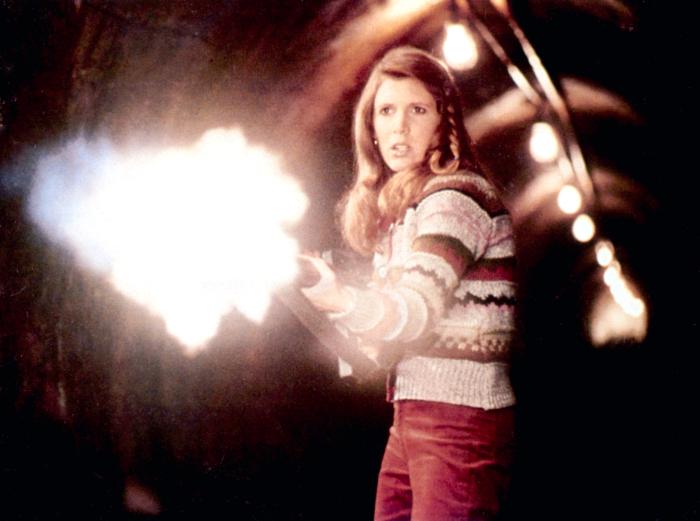
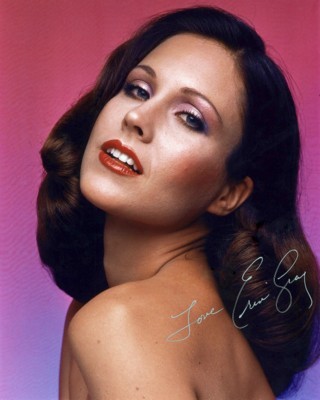
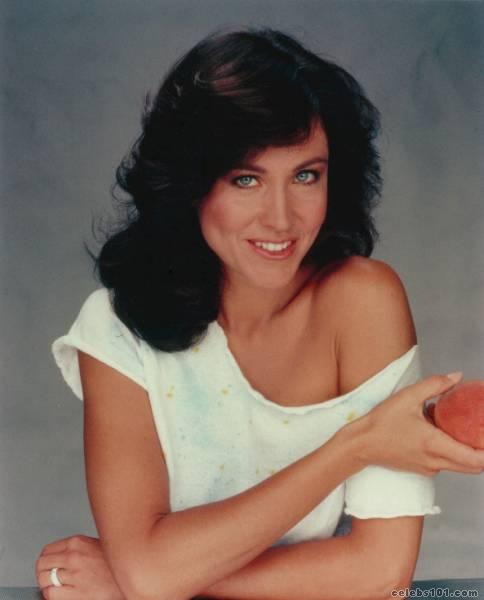
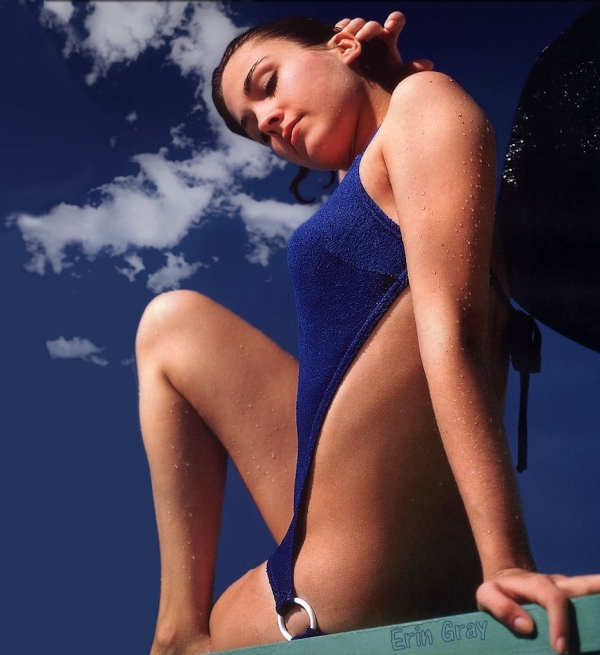
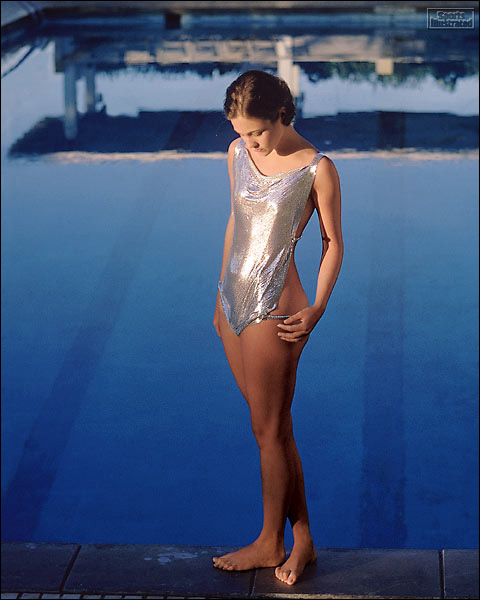
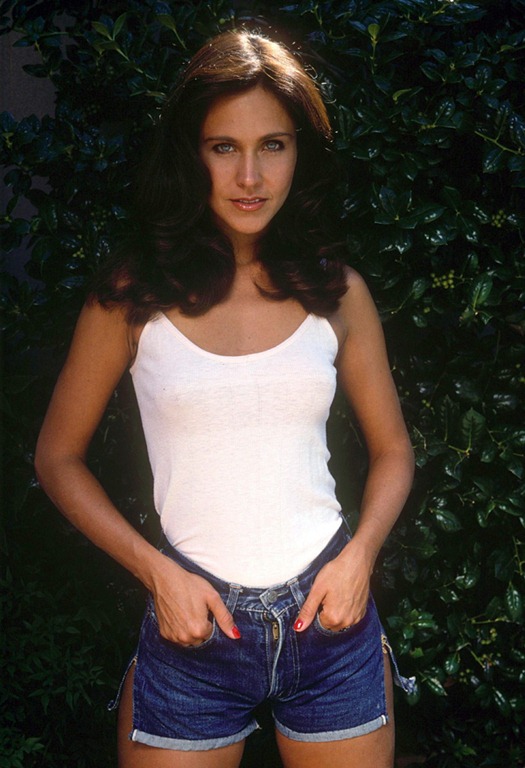
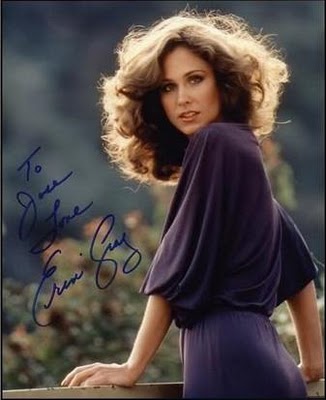
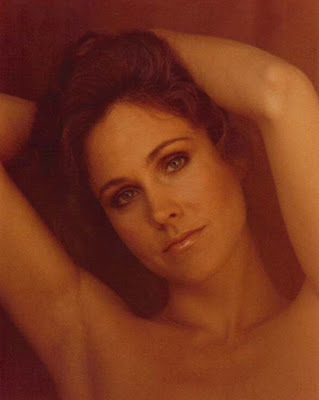
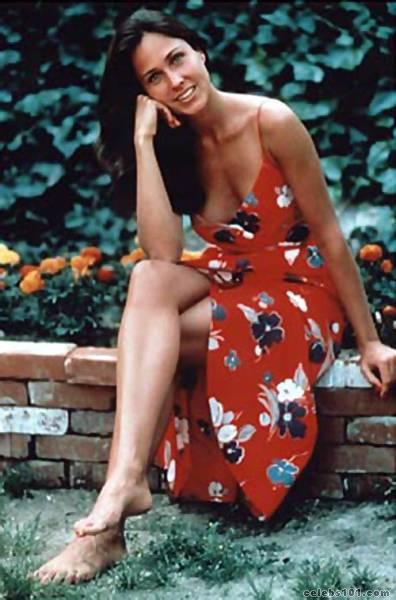
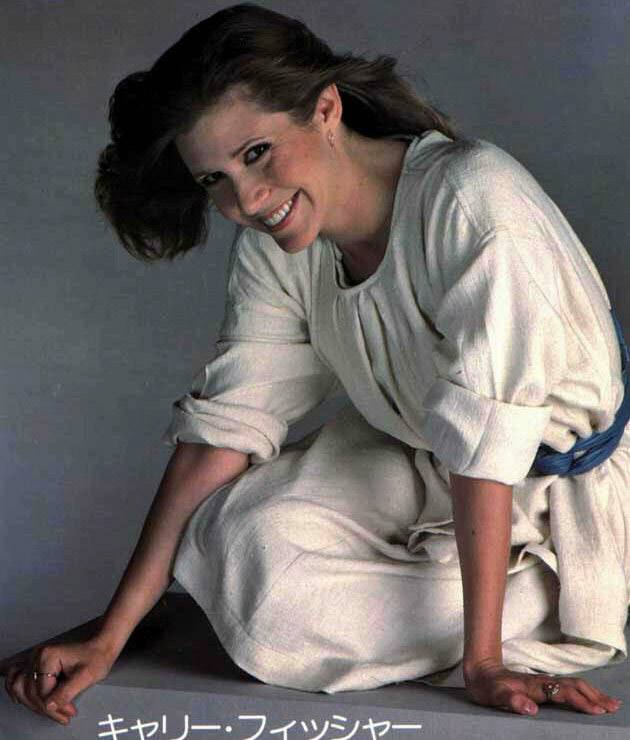
Some time ago in a galaxy very much like our own, two actresses set the pulses of young men racing like the Millennium Falcon (successfully) jumping to hyperspace. They were the fittest, feistiest premier of the Rebel Alliance, Princess Leia (aka Carrie Fisher), and the 25th Century hot-to-trot colonel to Buck Rogers, Wilma Deering (or Erin Gray) – and they most definitely are, in this third Star Wars celebratory post, the latest pair to grace this blog’s Talent corner…
.
Profiles
Names: Carrie Frances Fisher/ Erin Gray
Nationalities: American
Professions: Actress, screenwriter and author/ Actress and model
Born: 21 October 1956, Beverly Hills, California/ 17 January 1950, Honolulu, Hawaii
Height: 5ft 1in/ 5ft 7in
Known for: Carrie – basically, for being Princess Leia. After debuting in her first film, the California-of-the-late-’60s satire Shampoo (1975), alongside Warren Beatty, Goldie Hawn and Julie Christie, Fisher was cast as the titular heroine in 1977’s Star Wars (now Star Wars Episode IV: A New Hope). She played Leia twice more in the sequels The Empire Strikes Back (1980) and Return Of The Jedi (1983), took supporting roles in the Tom Hanks comedies The Man With One Red Shoe (1986) and The ‘burbs (1989), Woody Allen’s Hannah And Her Sisters (1986) and classic rom-com When Harry Met Sally… (1989), as well as cameos in The Blues Brothers (1980) and Austin Powers: International Man Of Mystery (1997), the former of which starred her then boyfriend Dan Aykroyd. She was married once (for definite) to singer-songwriter Paul Simon. Having authored Postcards From The Edge (1987), a semi-autobiographical novel about her troubles with drug addiction and her difficult relationship with her mother (Singin’ In The Rain star Debbie Reynolds), she adapted it into a 1990 film starring Meryl Streep and Shirley MacLaine, and would go on to become a screenwriter and novelist. In recent years she has been outspoken about her struggles with drugs and living with bipolar disorder/
Erin – steaming up the screen as the smoking Colonel Wilma Deering in the classic, camp, space-based TV adventure drama Buck Rogers In The 25th Century (1979-81) and the feature-length pilot that preceded it. However, Erin had established herself as one of America’s foremost models in the ’60s and ’70s long before she drifted towards acting, having become both a major model and spokeswoman for companies including L’Oréal, Max Factor and Bloomingdale’s and, by 1975, reputedly earning $100,000 a year. Following her stint in latex in the 25th Century, she went on to star in a first season-episode of Magnum, P.I. (1980-88) and in a major role in the popular sitcom Silver Spoons (1982-86). Recently, she’s launched a casting agency for sci-fi and fantasy star appearances and appeared in the pilot of a 2010 Buck Rogers web-series.
Strange but true: Alongside writing three novels, four screenplays and two plays, Carrie worked as a script-doctor on the films Hook, Sister Act (both1992) and The Wedding Singer (1996) and episodes of TV’s The Young Indiana Jones Chronicles (1992-93)/ owing to how tight they were, Erin apparently had to be sewn into the jumpsuits she wore in Buck Rogers.
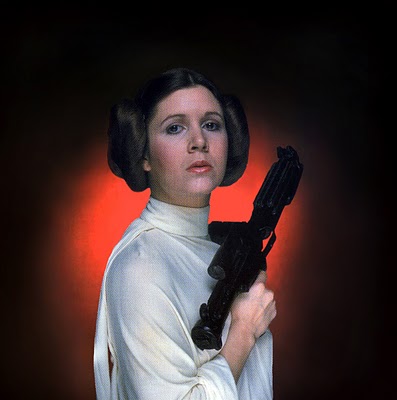
Peak of fitness: Carrie – I’ll defy conventional wisdom and not say her appearance in the ‘slave girl bikini’ at the start of Jedi, but instead in her cool, sexy-as-hell white fatigues (with that big blaster) during Empire‘s Cloud City climax/ Erin – no controversy here, though, it’s got to be as the incredibly sexy Wilma Deering in those incredibly sexy jumpsuits. Bidi-bidi-bidi!
.
.
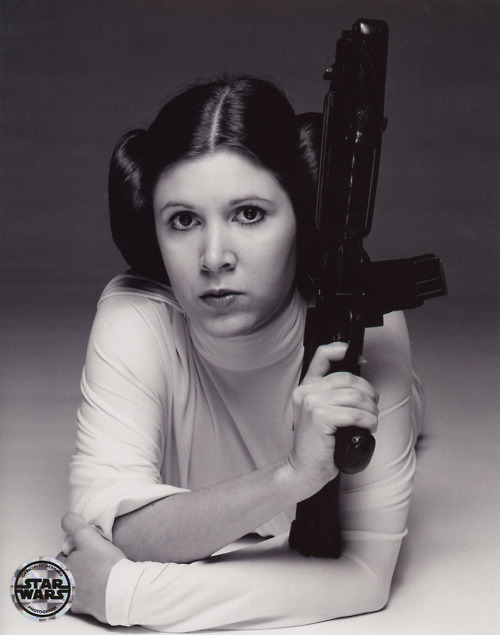
CLICK on images for full-size
.
.
.
.

.
.
.
.
.
.
.
.
.
.
.

.
.
.
.
.
.
.


.


.


.
.
.
In the words of Moby Grape… listen, my friends! Yes, it’s the (hopefully) monthly playlist presented by George’s Journal just for you good people – and this month, as part of the blog’s Star Wars anniversary celebration, there’s a strong (and wilfully playful) sci-fi theme.
There may be one or two classics to be found here dotted in among different tunes you’re unfamiliar with or never heard before – or, of course, you may’ve heard them all before. All the same, why not sit back, listen away and enjoy – after you’ve jumped to hyperspace, of course…
.
CLICK on the track titles to hear them
.
John Williams ~ Main Theme from Star Wars Episode IV: A New Hope
The Tornados ~ Telstar
The Byrds ~ Mr. Spaceman
Ron Grainer ~ Theme from Doctor Who (1967-80)
Leonard Nimoy ~ The Ballad Of Bilbo Baggins¹
Hawkwind ~ Master Of The Universe
Klaatu ~ Calling Occupants Of Interplanetary Craft (The Recognized Anthem Of World Contact Day)²
William Shatner ~ Rocket Man³
Queen ~ Flash’s Theme4
Marty McFly ~ Johnny B Goode5
The Firm ~ Star Trekkin’6
Jenna Russell ~ It’s Cold Outside (Closing Theme from Red Dwarf)
Meco ~ Star Wars/ Cantina Band7
.
¹ Inspired by J R R Tolkein’s The Hobbit (1937), of course, and featured here on a July ’67 edition of the variety show Malibu U; this über-camp ditty was included on Star Trek (1966-69) star Nimoy’s 1968 album Two Sides Of Leonard Nimoy
² This, the original version of the tune later and famously released by The Carpenters, wasn’t written for an actual designated ‘World Contact Day’, but given its awesomeness arguably should have been
³ A rather extraordinary performance of Elton John and Bernie Taupin’s hit from 1972 delivered at the 1978 Science Fiction Awards in Hollywood, which was hosted by The Shat himself
4 The unforgettable opening theme from the 1980 sci-fi cult classic flick Flash Gordon, featuring the voices of actors Max Von Sydow, Peter Wyngarde, Melody Anderson and Topol
5 From the 1985 multi-million-dollar-spinner movie Back To The Future; performed not by Michael J Fox (as the film itself would certainly suggest), but actually by Mark Campbell (vocals) and Tim May (guitar)
6 The love-it-or-hate-it, Star Trek-parodying novelty song that topped the UK Charts for two weeks in June 1987, thanks in large part to this terrific claymation video
7 Record producer and musician Meco’s (real name: Domenico Monardo) legendary – and timeless? – Disco-ified take on John Williams’ all-time classic score and, of course, the music played by the alien band in the background of Star Wars’ Mos Eisley Cantina scene; both this 1977 single and the album on which it featured (Star Wars And Other Galactic Funk) went platinum in the United States


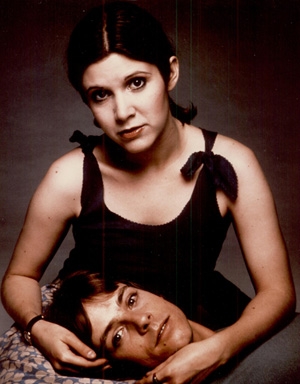
It’s a brother-sister thing: Mark Hamill (with lightsaber prop and in a natty black shirt) and Carrie Fisher (replete with bagel buns) pose for Terry O’Neill in this little seen publicity shot
Today – yes, today – is exactly 35 years since the world changed forever. How so? Well, 4 May 1977 was the first day on which crowds of kids queued around the block to see a strange, little outer-space-set sci-fi flick that would go on to alter the direction of Hollywood and worldwide cinema, make Luke Skywalker, Darth Vader, Han Solo and Chewbacca household names and ensure a girl in white with a bagel-bun hairdo signalled the sexual awakening of an entire generation of boys. In short, 4 May 1977 was the day on which Star Wars (or Star Wars Episode IV: A New Hope, if you were born in the ’90s) was unleashed on an unsuspecting Planet Earth.
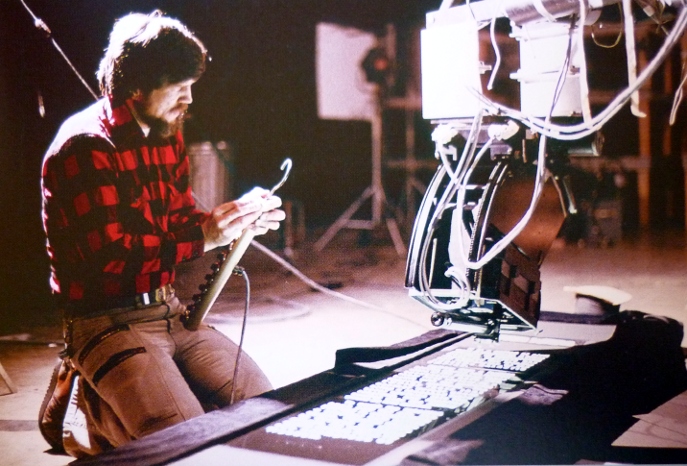
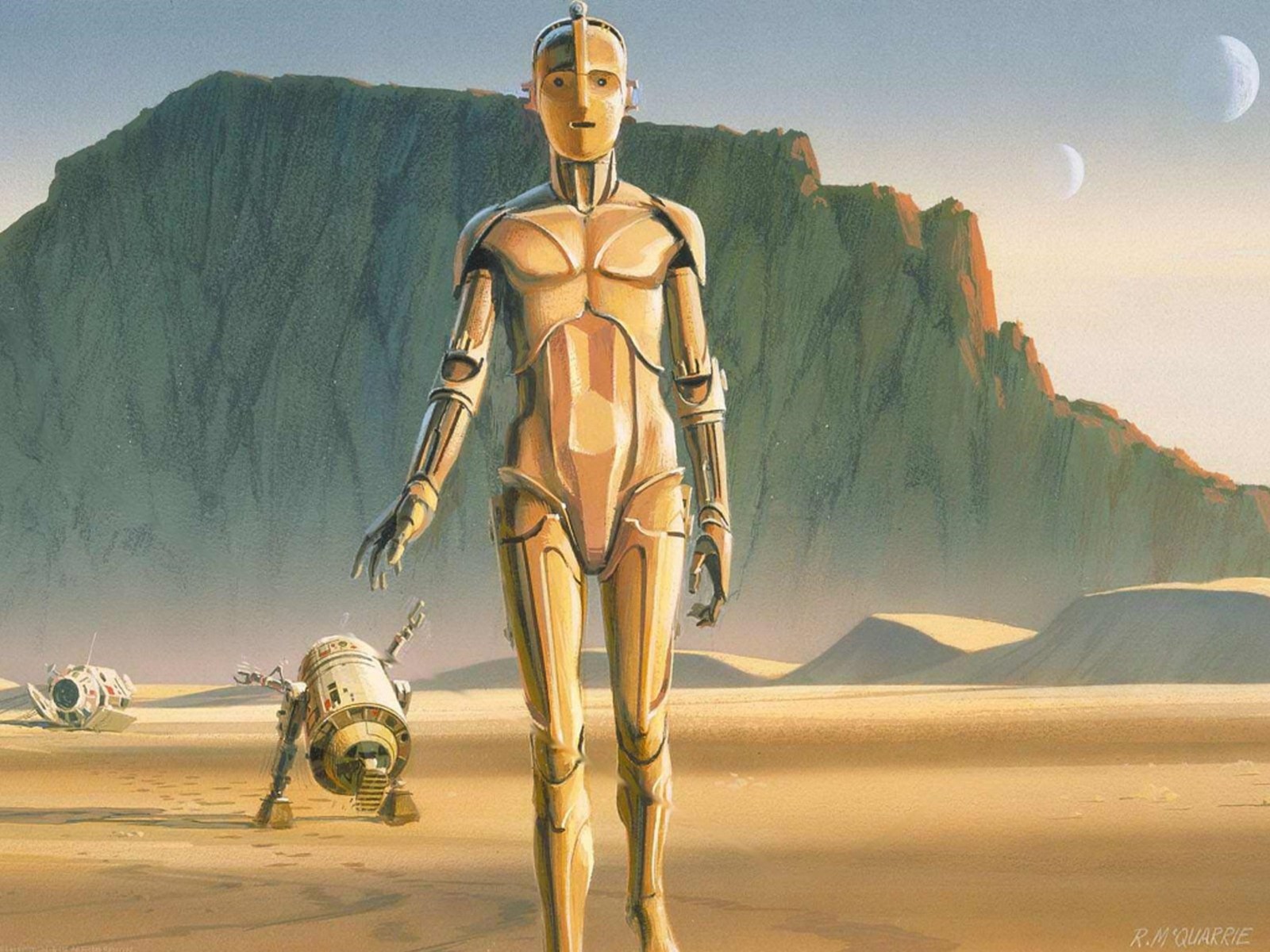
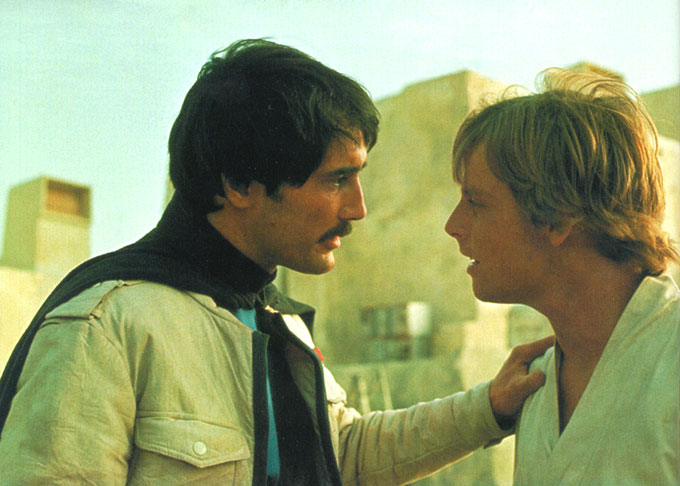
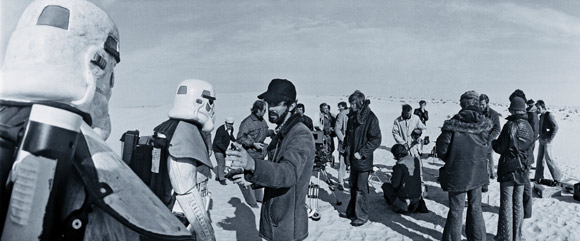
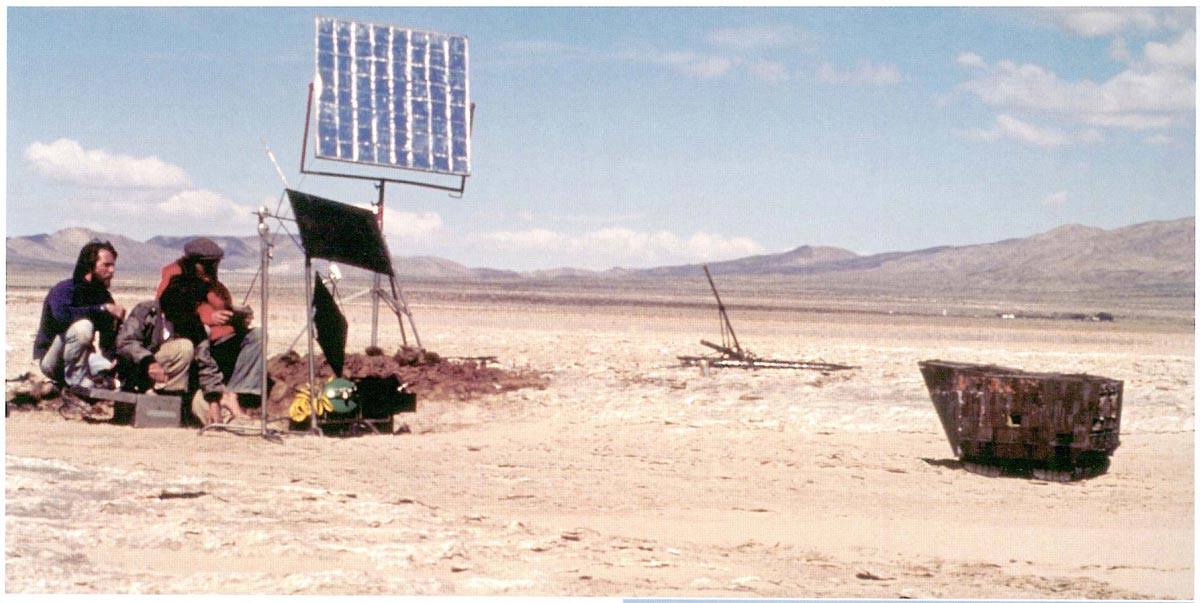
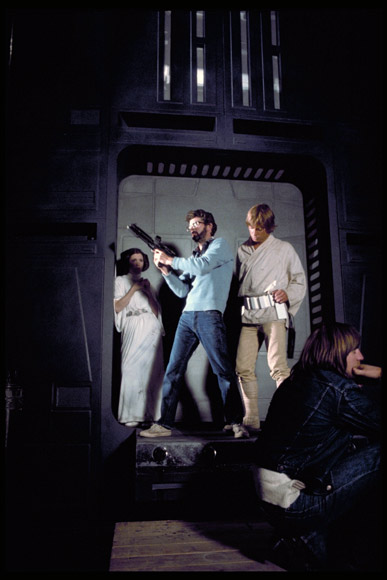
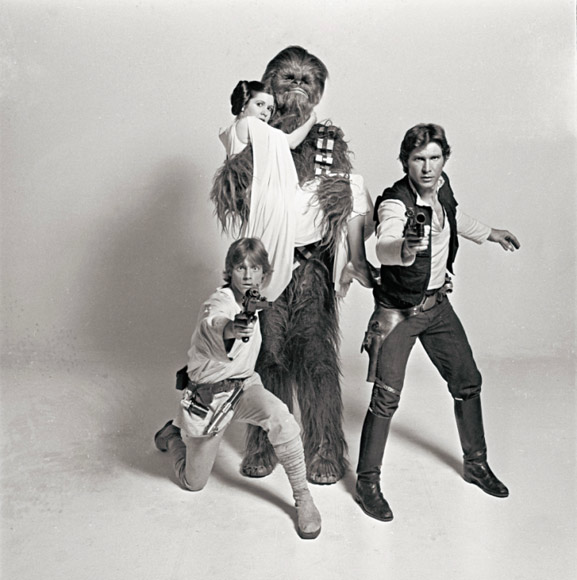
And to mark this milestone, this very blog will be dedicating the entire month of May to that very flick – and to a lesser extent its sequels and, yes, prequels. Indeed, to kick-off the interstellar love-in is this post itself – an overly affectionate tribute, I’m afraid, to the well of awe-inspiring wonder and magical marvellousness that is Star Wars, featuring, as it does, oh-so familiar quotes from the movie scattered among little-seen behind-the-scenes pics of its making. May the Jedi delight begin – oh, and the force be with you, of course…
.
PASS MOUSE over images for more information/ CLICK on images for full size
.
.
.
.
“Help me, Obi-Wan Kenobi, you’re my only hope…”
~ the best home-movie Luke Skywalker’s ever seen
.
.
.
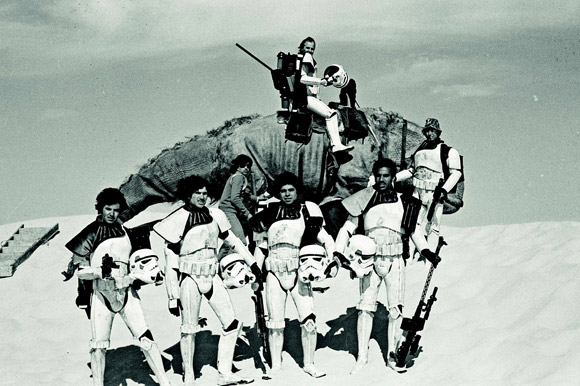
.
“These aren’t the droids you’re looking for…”
~ Ben Kenobi pulls a fast one on weak-minded stormtroopers
.

.

.

.
“I suggest a new strategy, R2: let the Wookie win”
~ C3P0 offers sensible advice on hearing how bad a loser at intergalactic chess Chewie may be
.
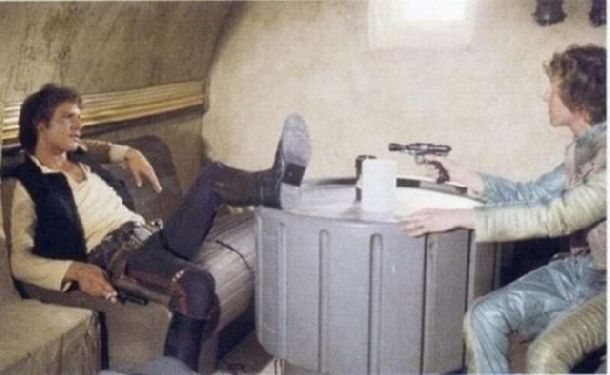
.


.
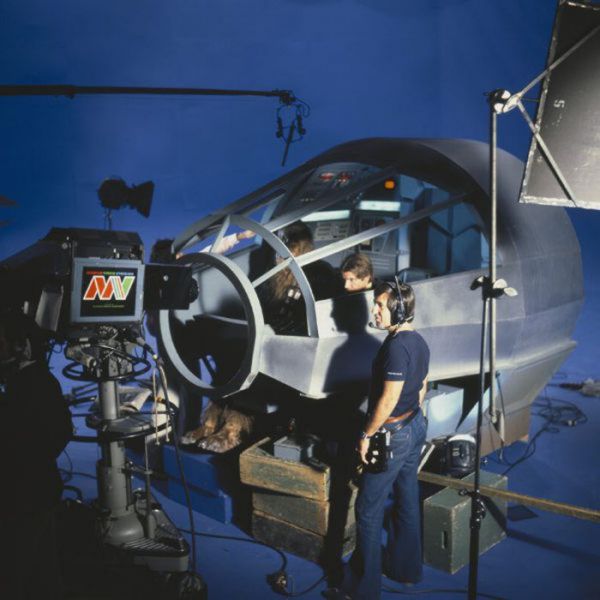
.
“That’s no moon…”
~ Ben Kenobi realises the Empire’s pulling a fast one on a planetary scale
.
.

.
.
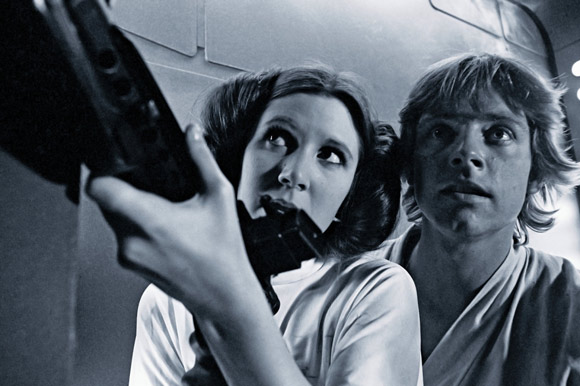
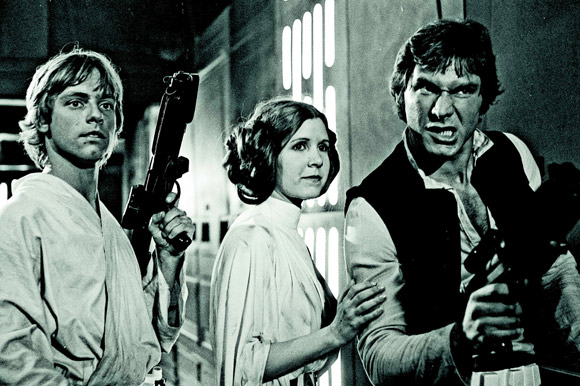
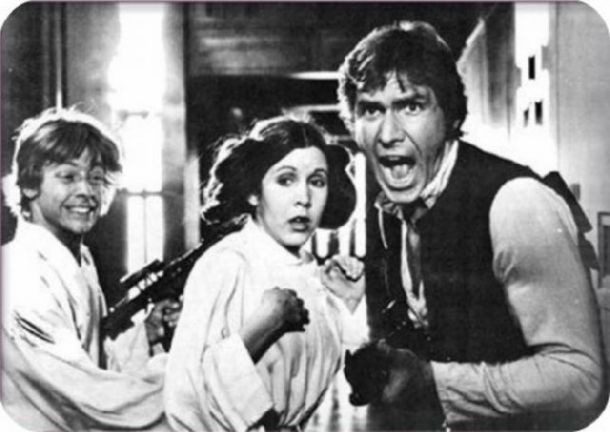
“Aren’t you a little short for a stormtrooper?”
“I’m Luke Skywalker – I’m here to rescue you!”
~ a brother and sister are finally reunited
.
.
.

.
“The circle is now complete: when I left you I was but the learner, now I am the master”
“Only a master of evil, Darth”
~ two old friends exchange pleasantries
.

.

.
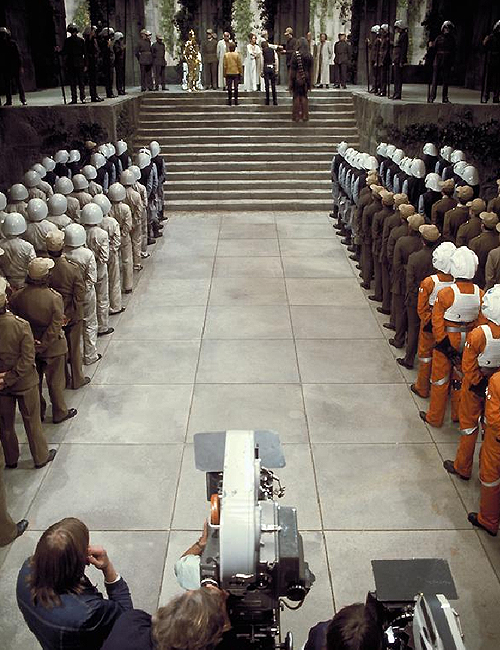
.
“Remember, the force be with you. Always”
~ and so an entire generation goes a wee bit Buddhist. Sort of...
.
Thanks to The Making of Star Wars by J.W. Rinzler for many of the images
.
Further reading:

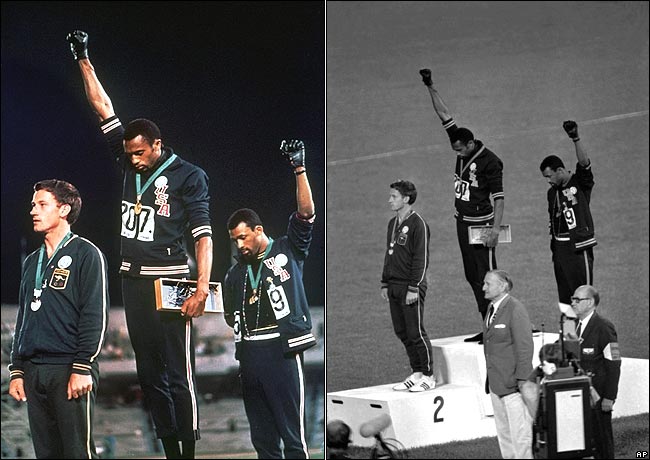
Moot salute: Tommie Smith and John Carlos make a precociously potent point on the podium
The great thing about the Olympics is that if you didn’t go on the last one, you only have to wait four years for the next. Well, in a similar vein, following up the first in my series of Olympic-year blog posts, peeps, here – just five days after the first – is the second. And its subject? Why, the Summer Games of 1968 (12-27 October), of course. Ah, ’68… a year of student protest seemingly everywhere, war in Vietnam, hippie idealism and two dreadfully tragic assassinations of admirably progressive figures in America. Surely, coming in such an already dramatic year, a mere Olympics Games couldn’t offer yet more major incident, could it? Could it eccers like…
.
The Magic
After the great success that was Tokyo ’64 (the first Games to be broadcast throughout the world thanks to burgeoning – and, at the time, mind-blowing – satellite technology), expectation for the Mexico City event in ’68 were high. After all, it would boast an important first itself, being the first Games to be held in a developing country. It would also prove to be the first broadcast, at least in the United States, in colour.
.
The Mascot
El Jaguar Rojo de Chichen-Itzá ~ yes, this, the first ever Olympic mascot was, er, a throne from an ancient temple. Yup, few images of him exist (which makes him a somewhat elusive cool cat), but based on this rare photographic evidence, it may be fair to assume he was a cuddly pink representation of a feline-esque throne at El Castillo pyramid in Mexico’s Chichen-Itzá. Nice.
.
The Moment
In a Games bulging with great moments (more of them below), one perhaps surprisingly stands tall above all. And that’s because it was the first time politics patently entered the post-war Olympics and, in doing so, truly resonated around the world. It happened when the Men’s 200m medalists took to the podium – American Tommie Smith (gold), Australian Peter Norman (silver) and American John Carlos (bronze). As the US national anthem the Star Spangled Banner played, both Smith and Carlos, who were already wearing civil rights badges (as was Norman) and black socks without trainers, raised their black glove-clad fists and performed the ‘Black Power’ salute, which at the time wasn’t just associated with support for improved civil rights for African-Americans but with the militant Black Panther Party.
The moment proved a sensation; unsurprisingly surely, as it occurred in a year that was itself a particularly politically highly charged one of the politically highly charged 1960s. In a controversial move, the International Olympic Committee (IOC) felt the act had demeaned the Games and immediately banned Smith and Carlos from the Olympics for life, while Norman’s support of them saw him left off his nation’s team at the next Games. Many at the time, though, and surely the majority today look on Smith and Carlos for bravely – and smartly – using such a global forum to make a stand on an issue they believed in so strongly, as did so many others.
.

One giant leap for mankind?: it may still have been a year before Neil Armstrong would walk on the moon, but Bob Beamon pulled off a truly earth shattering achievement in the Long Jump
.
The Main Man
Bob Beamon ~ owing to the particularly high elevation at which Mexico City stands and, thus, at which the Games were held (2,240m above sea level), there was a good chance several records would be broken in different events. And so was sensationally proved in the Men’s Long Jump (see video clip below). The event was won by American Beamon with a leap of 8.9m, a staggering 55cm improvement on the previous world record. Indeed, his effort remained the world record for the next 23 years until broken (twice in one night) by his compatriot Mike Powell.
.
The Main Woman
Věra Čáslavská ~ the most successful athlete at the ’68 Games, this cheery Czech gymnast won four gold medals (Individual All-Around, Vault, Uneven Bars and Floor Exercise), as well as two silvers for the Balance Beam and team event – to this day, she remains the only male or female gymnast ever to have won every event (individual) at a single Olympics. Like Tommie Smith and John Carlos, though, she was also politically vocal at the ’68 Games – against Soviet Communism and the USSR’s invasion of her country bringing to an end the ‘Prague Spring’ it enjoyed earlier that year. Moreover, in a further sign of protest, she turned her head down and away during the playing of the Soviet anthem during two of her medal ceremonies. Her actions had consequences, as she wasn’t allowed to travel away from and compete outside of her homeland for several years, effectively forcing her to retire. Happily, though, today she is rightly revered as an all-time great gymnast and Olympian both at home and throughout the world.
.
.
Mentioned in dispatches
- This was the Olympics when notoriously the ‘Fosbury Flop‘ first featured (see bottom video clip) – becoming arguably as big a sensation as Bob Beamon’s Long Jump-winning leap. Inevitably named after the man who first adopted it, Dick Fosbury, it saw him sail over the High Jump bar on his back, as opposed to jumping over the bar in a scissor-kick motion. Given it won Fosbury the event, it immediately became the standard High Jump technique
- For the first time at the Olympics, East and West Germany competed as separate nations, having been forced to do so as one team by the IOC at the previous three Summer Games
- In another Olympic first, these Games saw the (now utterly standard) all-weather red synthetic ‘Tartan’ surface used for the first time for track and field events, replacing cinders. The surface had originally been intended for horse racing
- As mentioned above, Mexico City’s high elevation marked out these Olympics in the Long Jump, but also helped ensure long-standing world records were set in the Men’s 100m and Men’s 400m by US competitors Jim Hines and Lee Evans respectively, as well as in other events. Actually, the ’68 Games were promoted in the media with the aid of a small box containing Aire de México that correctly was claimed would prove to be especial para batir records (special for breaking records)
- Although not having as good a games as it did four years before, Britain enjoyed a genuine highlight when David Hemery won the Men’s 400m Hurdles, setting yet another world record as he did so (see video clip below). In fact, his margin of victory was the largest in the event’s history since the 1924 Games. He would go on not only to be crowned the BBC’s Sport Personality of the Year, but also the first ever champion of the broadcaster’s popular multi-sport-challenge show Superstars (1973-85) – he won it again three years later
- A major player in Olympics of the future, drug testing was introduced at this Games and claimed its first ‘victim’, Swedish pentathlete Hans-Gunnar Liljenwall, who was disqualified for, er, drinking beer
.
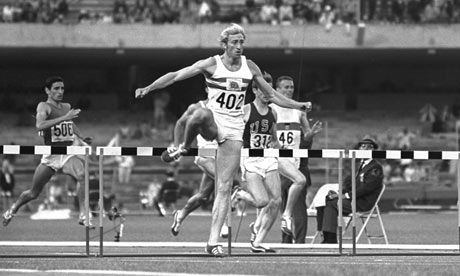
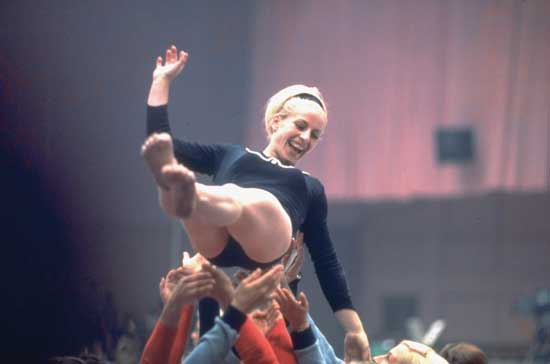
For he and she are jolly good fellows: Brit David Hemery races towards a gold medal and a world record-time (left); genius gymnast Věra Čáslavská is heralded by her teammates (right)
.
The Memory
Thanks to the plethora of world records it saw broken and its Marmite-like love-it-or-hate-it political dimension, Mexico City ’68 has to be one of the most memorable ever Olympics. For the most part, its memories are certainly positive (the terrific achievements of Beamon, Čáslavská and Fosbury, and Smith and Carlos’s bold but progressive act) and its legacy too was positive, not least because Mexico as a nation would successfully host surely the greatest ever football World Cup just two years later. However, some of its memories are certainly mixed if not negative: Smith and Carlos’s fist-wielding salute, Čáslavská’s protests and especially the ‘Tlatelolco massacre’ (a brutally fatal crackdown on student protest against Mexican government repression that led to 40 civilian deaths just 10 days before the Games and whose media coverage became mixed up with that of the Games) undeniably proved that, for good or bad, the wonderful bearer of global goodwill that was the Olympics was no longer immune from the ugliness of the outside world.
.
.
The Medal Table
| Gold | Silver | Bronze | Total | ||
|---|---|---|---|---|---|
| 1 |  United States United States |
45 | 28 | 34 | 107 |
| 2 |  Soviet Union Soviet Union |
29 | 32 | 30 | 91 |
| 3 |  Japan Japan |
11 | 7 | 7 | 25 |
| 4 |  Hungary Hungary |
10 | 10 | 12 | 32 |
| 5 |  East Germany East Germany |
9 | 9 | 7 | 25 |
| 6 |  France France |
7 | 3 | 5 | 15 |
| 7 |  Czechoslovakia Czechoslovakia |
7 | 2 | 4 | 13 |
| 8 | West Germany |
5 | 11 | 10 | 26 |
| 9 |  Australia Australia |
5 | 7 | 5 | 17 |
| 10 |  Great Britain & NI Great Britain & NI |
5 | 5 | 3 | 13 |
| 15 |  Mexico Mexico |
3 | 3 | 3 | 9 |
.
.
.
Olympic lore: Turning Japanese ~ the 1964 Tokyo Games
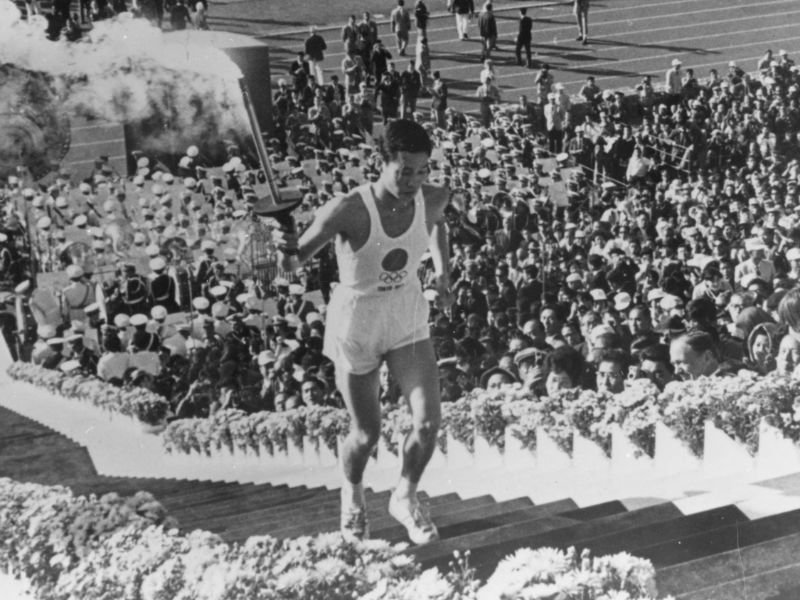
The land of the rising sun rises again: the ’64 Summer Games in Tokyo – a statement of Japan’s return from the wilderness – begins as torchbearer Yoshinori Sakai reaches the cauldron
Ah, the mi-’60s, eh? Not only was London swinging, San Francisco adopting all things ‘hippie’ and Berlin going groovy too, but the Western world was moving ahead technologically – the jet engine was the transport triumph of the age, the Space Race was in its prime and British PM Harold Wilson was boasting of the UK’s white heat of revolution forged in a factory’s coal stove (or some such political cobblers that sounded good at the time). But in the first of seven – yes, seven – posts on this blog tipping their hat to the Olympics coming to The Big Smoke itself on July 27, here’s evidence that in its first venture to Asia, the 1964 Summer Games (10-24 October), the Olympics proved that the real industrial innovator of the time was a nation quickly going from zero to hero: Japan. So, yup, let me saké it to you, folks (sorry)…
.
The Magic
For many, Tokyo ’64 will forever be one of the most magical of Olympic Games. Why? For the simple reason that these were the first to be telecast internationally, thanks to the ground-breaking use of satellites to beam black-and-white images from the various venues on to TV screens throughout the world. In which case, the modern romance of the Olympics could be said truly to start with Tokyo ’64.
.
The Moment
Many would point to Bob Hayes’ terrific victories (see below), but methinks the real moment of these games has to be by far the most poignant – and perhaps the moment when Japan underlined the fact that it was back on the world stage and ready to move on peacefully from its recent, tumultuous past. It occurred during the opening ceremony when a chap by the name of Yoshinori Sakai ran into the stadium as the final torchbearer; he had been born in Hiroshima the day the city was destroyed by an atomic bomb during the Second World War (6 August 1945) and would later win gold and silver medals at the 1966 Asian Games, after which he became a successful journalist.
.

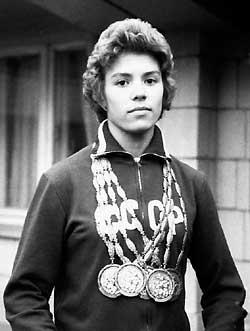
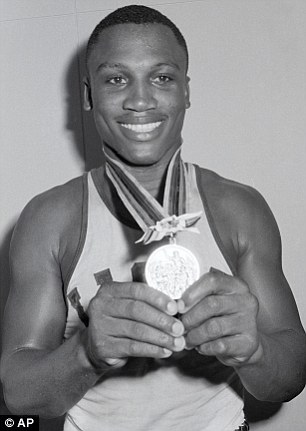
Bullet Bob, bonanza Larisa and bruiser Joe: Bob Hayes (far left and middle left), Larissa Latynina (middle right) and Joe Frazier (far right) – amazing athletes in and out of the Olympics
.
The Main Man
Bob Hayes ~ a truly legendary US athlete who at the ’64 Games not only won the 100m (see video clip below) and 4x100m Relay, but also broke the world record in the finals of both (10.06 seconds/ 39.06 seconds). He won the first event in unlikely circumstances, given he was forced to run in borrowed spikes and had drawn Lane 1, whose cinders had been churned up the day before by the 10km Walk. The Relay final was his last ever sprint as he gave up athletics for an American Football career, during which he won the Superbowl with Dallas Cowboys in 1971.
.
The Main Woman
Larisa Latynina ~ across the ’56 (Melbourne), ’60 (Rome) and ’64 Olympics, this Soviet – to be precise, Ukranian – gymnast won 18 (9 gold, 5 silver, 4 bronze) medals, more than anyone has managed before or since. She also holds the record for the most individual medals (outside of those won in a team): 14 of those 18.
.
.
Mentioned in dispatches
- Great Britain enjoyed one of its greatest ever Olympics on the track – both Long Jump events were won by Brits (Wales’ Lynn Davies in the Men’s event and Mary Rand in the Women’s, who also won a silver medal in the Pentathlon and a bronze in the 4x100m Relay), while Ann Packer won and broke the world record in the 800m, after gaining a silver in the 400m
- Future World Heavyweight Champion Joe Frazier – who famously fought Muhammad Ali three times and George Foreman twice in the ’70s – emulated Ali’s (then Cassius Clay) achievement in the 1960 Olympics by winning the Heavyweight Boxing gold for the USA – he was a late replacement in the US team and fought through the final with a broken thumb
- About nine months before the Summer Games, the ’64 Winter Games were held at Innsbruck in Austria where to the utter delight – and complete surprise – of the UK, the two-man bobsleigh team of Tony Nash and Robin Dixon won gold in their event. A curve at the St. Moritz-Celerina Olympic Bobrun is named after the pair.
- But there was a downer to these Games – they were overshadowed somewhat by the major international events that were Nikita Kruschev’s demise as Soviet premier and China’s subsequent decision to stage its first nuclear weapons test (codenamed 596), which occurred on 14 and 16 October respectively
.
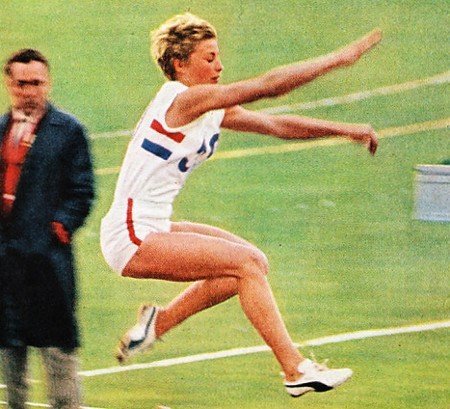
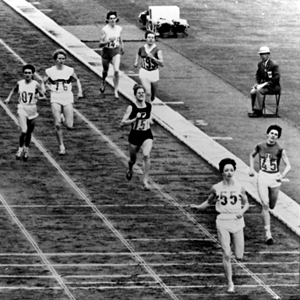
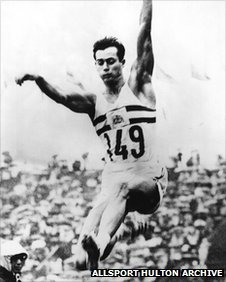

Brilliant Brits: (clockwise from top r) Ann Packer, Nash and Dixon, Lynn Davies and Mary Rand
.
The Memory
No question, the ’64 Games were an unmitigated triumph for the host country. Just 20 short years after the Second World War, Japan successfully used the Olympics to show it was now a peaceful, benign and positive nation eager to welcome and interact with the rest of the world, as well as a technological power once more. Work leading up to the Games included not only ensuring they’d be the first broadcast by satellite to the US, Canada and 21 European countries, but also the building of a high-speed train line, a new highway and multiple train and subway lines, the modernising of airports and the Port of Tokyo, and the introduction at the Games themselves of revolutionary electronic devices to aid the judging of events.
Moreover, in a display of warm openness, the organisers allowed the Cary Grant-starring Hollywood comedy Walk, Don’t Run (1966) (see video clip below) to be filmed at these Olympics. And the Japanese populace were just as – if not more – impressed by these Games as the watching world: 80 percent of the nation viewed the opening ceremony on TV, while 70 percent witnessed their team win the Women’s Volleyball event. Ureshii tsukihi, indeed.
.
The Medal Table
| Gold | Silver | Bronze | Total | ||
|---|---|---|---|---|---|
| 1 | United States |
36 | 26 | 28 | 90 |
| 2 | Soviet Union |
30 | 31 | 35 | 96 |
| 3 | Japan |
16 | 5 | 8 | 29 |
| 4 | Germany |
10 | 22 | 18 | 50 |
| 5 |  Italy Italy |
10 | 10 | 7 | 27 |
| 6 | Hungary |
10 | 7 | 5 | 22 |
| 7 |  Poland Poland |
7 | 6 | 10 | 23 |
| 8 | Australia |
6 | 2 | 10 | 18 |
| 9 | Czechoslovakia |
5 | 6 | 3 | 14 |
| 10 | Great Britain & NI |
4 | 12 | 2 | 18 |
.
.
.

Gallifreyan gallivanter: Tom Baker attempts to escape from those pesky Daleks in Doctor Who, the show that nobody could take their eyes off – even if they were hiding behind the sofa
So, just over a couple of months ago, this very blog wallowed in the wonderfulness of 1960s TV… and, with this post, peeps, it’s finally time – like it or not – to take in the following decade’s best offerings of television magic, for, yup, here’s the 10 greatest exponents of gogglebox goodness from the era of garish wallpaper, Raleigh choppers, the Bay City Rollers, clackers and Brian Clough – according to yours truly that is, at least…
~~~
CLICK on the TV show titles for video clips
.
Doctor Who (1963-89)

The legend: The universe’s – or at least Earth’s – longest-running sci-fi TV show and one of the longest of any type ever to have graced UK telly screens, this early Saturday evening BBC giant featured a space- and time-travelling alien protagonist who regenerates every few years, has an eye for the ladies when selecting his companions and calls a bigger-on-the-inside police phone box home.
The lowdown: Launched way back in the early ’60s, Doctor Who is, of course, an international televisual institution. However, despite proving very popular from its launch thanks in part to those over-sized pepper pots responsible for ‘Dalekmania’, it really hit its stride when it went colour in the eras of two hugely memorable leads: dandyish patrician Jon Pertwee (1970-74) and playfully/ crazily boho Tom Baker (1974-81). Moreover, in the ’70s the show offered up horror-like, detective-esque and caper-ish adventures, introduced villains/ monsters of the calibre of evil Time Lord The Master and the subterranean Silurians, and boasted companions including the unforgettable Sarah-Jane Smith, as well as Leela, the two Romanas and Jo Grant and the rest of the U.N.I.T. gang. Oh, and, of course, K-9 – affirmative, master.
The lines: “Reverse the neutron flow!”/ “Would you like a jelly-baby?”
The unlikely but true: Although ostensibly a kids’ show, Doctor Who achieved an incredible audience of 16.1 million viewers for the final part of the barmy but brilliant 1979 story City Of Death, partly owing to a strike putting ITV off the air for the night.
The legacy: Where to start – and end? An indubitably influential TV drama, Doctor Who is a cornerstone of sci-fi culture, having spawned novelisations, audio and comic books, movies and from, 2005 onwards, a rejuvenated and hugely successful series.
Read more about the ’70s – and other – eras of Doctor Who here
~~~
Top Of The Pops (1964-2006)
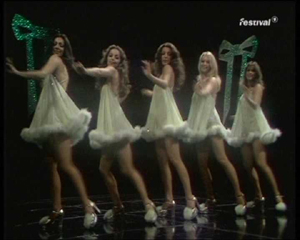
The legend: For much of its five decades, the BBC’s Top Of The Pops was essential viewing for the youth of Britain, allowing them to put faces to the stars they listened to on the singles they bought. And, during the ’70s at least, was for their dads too thanks to the presence of marvellously easy-on-the-eye dance troupe Pan’s People (see above image).
The lowdown: Following in the wake of ITV’s breakthrough ‘Beat music’ showcase Ready Steady Go! (1963-66), Top Of The Pops debuted on New Year’s Day 1964, hosted by the irrepressible Jimmy Savile, and never looked back. Like Doctor Who, it really found its feet in its second decade, when the desire of rock acts such as David Bowie, T-Rex and Slade to get ahead of each other by dressing in ever more outrageous garb whenever they appeared ensured the programme helped launch an entire music genre: glam rock. Later in the decade it became arguably too safe, ignoring the rise of the provocative punk movement until it became unavoidable, but its popularity never dimmed through either the ’80s or the ’90s, proving a major platform for New Wave, Dance, R ‘n’ B, Britpop and all the biggest names in pop and rock – and the one-hit-wonders.
The line: “It’s number one – it’s Top Of The Pops!”
The unlikely but true: Because the Beeb wiped the tapes of all but 20 of the first 500 episodes of the show, the only surviving footage of The Beatles on Top Of The Pops can be seen in the first part of the 1965 Doctor Who story The Chase.
The legacy: Clearly the world’s first – and, in its heyday, best – music chart TV show, it eventually provoked more earnest rivals in the shape of ITV’s anarchic Peter Cook-fronted Revolver (1978), Channel 4’s more successful The Tube (1982-87) and, of course, the BBC’s own The Old Grey Whistle Test (1971-87). In fact, in the ’90s the BBC sold the show’s format abroad, ensuring it was broadcast in nearly 100 different countries.
Read more on – and view an unmissable image collection of – Pan’s People here
.
Match Of The Day (1964-present)

The legend: The UK’s first and greatest top division football highlights programme, famed not only for showing edited versions of Saturday’s matches in order of excitement, but also for its irresistible brassy theme tune, unchanged during its entire broadcasting history.
The lowdown: The third and final of this list’s offerings to have originated in the ’60s, but which became inescapable and indispensable telly the following decade, Match Of The Day – despite its genius concept – has only ever been as good as the football matches it features. And in the ’70s, English First Division football rocked – or, to be precise, English First Division football matches rocked. This was the era of Brian Clough’s Derby County (and then Notts Forest) and Don Revie’s Leeds Utd (those perennial underachievers), Liverpool’s red wave of success and swaying hordes in the Kop, as well as flamboyant characters like the perma-permed Kevin Keegan, the mouthy Franny Lee (later a toilet roll manufacturer) and Man City’s irrepressible manager Malcolm Allison. And, of course, it was also the era of Jimmy Hill presenting the show itself – unforgettable for the inexplicable beard that only made more obvious his Forsyth-esque jutting chin.
The lines: “1-0!” (commentator Bob Coleman)/ “Look at his face – just look at his face!” (commentator Barry Davies about a scorer after a particularly impressive goal)
The unlikely but true: After the show’s first season, several football clubs attempted to block a renewal deal with the BBC, fearful that broadcasting further highlights on TV would result in a drop in match attendances.
The legacy: Quite simply, all subsequent sport coverage owes an inestimable debt to Match Of The Day‘s early days. The filming, editing and showing of match highlights was honed on the show, as were groundbreaking techniques such as the slow-mo replay, public votes (‘Goal Of The Month’/ ‘Goal of The Season’) and general sport TV presenting and commentating. Oh, and without Match Of The Day, Des Lynam would never have become a national institution, which clearly would have been a travesty equal to Maradona’s ‘Hand of God’.
~~~
Parkinson (1971-82)

The legend: According to a recent BBC4 season, the ’50s through to the ’70s was the golden age of ‘Talk’ on British TV; well, for the most part, the ’70s surely owes its place in this era thanks to one programme in particular, Michael Parkinson’s unforgettable and essential Saturday night chatshow, on which he was joined by the cream of celebrity, past and present, making for compelling viewing on almost every occasion.
The lowdown: The son of a miner from Barnsley and previously a print journalist, Parky plunged into primetime telly and proved an instant hit, the British public lapping up his intimate yet accessible interviews with star names. Always professional, if sometimes a little Yorkshire-prickly, his relaxed, attentive, but no-nonsense approach opened up everyone from George Best to Kenneth Williams and Jacob Bronowski to Peter Sellers – in a manner peeps had never before seen. The show is best remembered for its host’s highly entertaining encounters with the legend that is Muhammad Ali and making an overnight star of comedian Billy Connolly (who was barely known outside of Glasgow before his first appearance). Oh, and for the wonderful moment when for once a guest got the better of Parky – namely Rod Hull’s Emu (see image and linked clip above).
The line: “I think you’re a great flirt” (Shirley MacLaine to Parkinson, in a very overt display of flirtation herself)
The unlikely but true: Parkinson appeared on the cover of the Paul McCartney And Wings album Band On The Run, on the understanding that McCartney would then appear on this show; this wasn’t to take place until 1999.
The legacy: Every UK chatshow host worth their salt nowadays admits that Parky was the best ever, ensuring his influence on the TV genre is inestimable. Indeed, he eventually came back with a new series (1998-2004), whose run was spread across both the Beeb and ITV and, although lacking much of the former’s bite, was still hugely popular with the viewing public.
~~~
Kojak (1973-78)
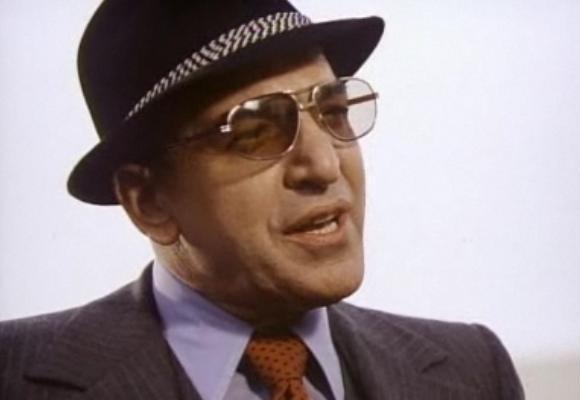
The legend: A king among the slew of oft daft but always entertaining detective dramas that swamped American TV in the ’70s, Kojak was the hard-hitting, cool-as-hell hit that made baldy Telly Savalas a star – and unlikely sex symbol.
The lowdown: First appearing in a TV movie based on a real-life miscarriage-of-justice crime story that changed US law, the character of Kojak was a street-wise, hip, lollypop-sucking cat that also happened to be an ace Manhattan detective and the series that featured him – a neo-realist, gritty police drama – an immediate ratings winner when it debuted on the CBS network in October ’73. Its lead actor, Telly Savalas, had made a name for himself as heavies on the big screen in both The Dirty Dozen (1967) and the Bond flick On Her Majesty’s Secret Service (1969), but it was as the rough-tough ‘tec with a heart Kojak that he became an international institution, starring in five original series in the ’70s and seven TV movies in the ’80s.
The line: “Who loves ya, baby?”
The unlikely but true: Telly’s brother George Savalas appeared in every one of the drama’s original episodes as one of Kojak’s squad, yet he was billed in the credits as ‘(George) Demosthenes’.
The legacy: Owing to its worldwide popularity, Kojak boasts a huge cultural impact that continues to this day – in the US, the type of emergency light that Kojak (like real US cops) slung atop his unmarked car whenever in pursuit became known as a ‘Kojak light’ among police. In Brazil (where Kojak is enormously popular), the protagonist’s name became widespread slang for a bald man, while the phrase ‘I won’t give a chance to Kojak [i.e. ‘I won’t make any mistakes for the police]’ became popular among Rio criminals and, later in a non-crime-and-police-related connotation, among the ordinary populace.
~~~
Tiswas (1974-82)

The legend: The original – and for many still the greatest – Saturday morning magazine show for kids, Tiswas became cult-viewing and then a mainstream phenomenon for ankle-biters, students and parents up and down the British Isles.
The lowdown: From the start, a cheap and cheerful – and achingly ’70s-looking – attempt to fill its Saturday morning schedules in the Midlands by ITV franchise ATV, Tiswas (or This Is Saturday So Watch And Smile) was an immediate hit among its children-targeted demographic, in addition to hungover students, thanks to its commitment to crazy games and anarchic antics over the soberer, even ‘middle class’ format offered by the BBC’s answer to its growing success, Multi-Coloured Swap Shop (1976-82). With its highly childish and louche tone that relied heavily on throwing at guests custard pies and all things messy (thanks to black-masked villain The Phantom Flan Flinger), poking fun at established media and stars (Lenny Henry as ‘Trevor McDoughnut’ aka Trevor McDonald) and – perhaps most important of all – strong kids-based audience participation, Tiswas was frankly always destined to be a hit, especially as it developed moralising critics who believed it encouraged bad behaviour.
The line: “This is the song we love as a four to sing/ We can’t go wrong, we’re happy as a king/ We beat the drum as we march along, we clap a cymbal and bang the gong/ We sing our song, The Bucket Of Water Song”
The unlikely but true: For at least part of its run, Tiswas was produced and directed by actor Glyn Edwards, who would go on to play Dave, owner of the Winchester Club bar in Minder (1979-94); underlining the word-of-mouth sensation the show was, it actually didn’t go nationwide across all ITV regions until its sixth season in November 1979.
The legacy: Tiswas established a hugely successful formula that, to varying degrees, Saturday morning kids’ shows have replicated for decades since. As mentioned, the Beeb’s Swap Shop – itself a big hit – was conceived to counter its success and the mainstream impact of this rivalry was confirmed by football fans of the era shouting ‘Tiswas’ and ‘Swap Shop’ across at each other on the terraces. In addition, its runaway appeal established the TV careers of not just main hosts Chris Tarrant and the sexy Sally James, but also contributors Lenny Henry, Bob Carolgees (and his puppet Spit The Dog), Jasper Carrott and 1980s Doctor Who star Sylvester McCoy.
~~~
The Sweeney (1975-78)

The legend: American TV may have got there first with Kojak, but UK telly quickly caught up with The Sweeney, a wildly popular police drama that showcased the work and life of cop crime-fighters in a manner so hard-hitting and brutally honest, it’s surely never been topped.
The lowdown: Made by Thames Television’s Euston Films for ITV, it grew out of a successful one-off drama Regan, named after its lead character, the uncompromising, law-bending, womanising, but ultimately heroic DI Jack Regan (John Thaw) of the London Metropolitan Police’s armed robbery/ violent crime branch, the Flying Squad. Almost immediately, though, The Sweeney (whose title was derived from Cockney rhyming slang: ‘Flying Squad/ Sweeney Todd’) developed into a two-hander, with Regan’s loyal lieutenant and fellow womaniser DS George Carter (Dennis Waterman) sharing almost as much screen-time. No question, this was revolutionary TV for the time: not only did it depict the violence and genuine danger of this line of police work (turning up its on-location action factor to 11), but it didn’t hold back in a dramatic sense either, being only too happy to regularly show-up the foibles and flaws of its lead characters (in doing so, at times arguably presenting Regan as something of an anti-hero).
The lines: “We’re The Sweeney, son, and we haven’t had any dinner”/ “You’re nicked!”
The unlikely but true: At the time the series was airing (to audiences as high as 19 million), the real Flying Squad was found to be involved in major criminal corruption – its chief superintendent was convicted of five counts of corruption and jailed for eight years in 1977, while 12 more officers were convicted and others resigned.
The legacy: The Sweeney was hugely influential; British TV police drama would never be the same after it – the days of Dixon Of Dock Green (1955-76) and Z-Cars (1962-78) were very soon over. Not only was it followed by similarly hard-edged (if more fantastical) fare like The Professionals (1977-83), it also spawned two spin-off cinema releases Sweeney! (1977) and Sweeney 2 (1978). In popular culture, the car that Regan and Carter bombed around in (the Ford Consul) became almost as big a star as Thaw and Waterman, while the series itself was mentioned in the pop hits Wow by Kate Bush (1979) and Cool For Cats by Squeeze (1978). And, as if that’s not enough, anyone who’s seen the brilliant Life On Mars (2006-07) will instantly recognise its entire premise as a thinly veiled tribute to The Sweeney.
Read more about The Sweeney, Kojak and other classic detective shows from yesteryear here
~~~
The Good Life (1975-78)

The legend: Easily one of the best recalled – partly owing to the fact it’s always being repeated – and surely one of the very best of ’70s UK sitcoms, this is the irresistible comedy concoction that put self-sufficiency on the map and made the delectable Felicity Kendal the decade’s thinking man’s crumpet.
The lowdown: Remembered, albeit affectionately, but nonetheless as the epitome of the comfortable, middle-class British sitcom (from the golden age of the comfortable, middle-class British sitcom), writers Bob Larbey and John Esmonde’s The Good Life in fact subtlely, smartly and very wittily deconstructed the South-East England, suburban existence by having its two protagonists, Tom and Barbara Good, give up on the rat-race and social-climbing that defines their next-door neighbours and best friends, Jerry and Margo Leadbetter, by attempting to live on only the vegetables they produce from their garden and the livestock with which they fill it (Pinky and Perky the pigs, Geraldine the goat and Lenin the cockerel). At first conceived as a BBC vehicle for actor Richard Briers, it made stars of the rest of the quartet that made up the two couples, Felicity Kendal (whose pert jeans-clad posterior became almost as famous as its owner), Paul Eddington and, perhaps most of all, Penelope Keith, whose perfectly realised Surbiton snob Margo became regarded as an all-time classic TV character – not just in the UK but arguably in the US too, where the show’s still re-run today under the title Good Neighbors.
The lines: Tom: “Come on, Margo, get your [party] hat on”/ Margo: “This is the Daily Mirror“/ Tom: “I’m terribly sorry – please, have the The Daily Telegraph“
The unlikely but true: As if underlining its popularity with Middle England and those who defined British status quo in the ’70s, whom ironically it satirised each week, the show’s final one-off episode When I’m Sixty-Five was recorded before The Queen and The Duke Of Edinburgh.
The legacy: The comedy’s huge success in its own era (as well as all its subsequent repeats) not only ensured it firmly remains in the British psyche today, but after the show’s finish also rewarded its stars with BBC comedy vehicles of their own: Briers in Ever Decreasing Circles (1984-89), Kendal in Solo (1981-82), Eddington in Yes Minister (1980-84) and Yes Prime Minister (1986-88) and, maybe most notable of all, Keith in the even more popular To The Manor Born (1979-81). Moreover, in a sign that the series was both culturally influential and ahead of its time, over the decades many observers have pointed to it as being instrumental in the rise of self-sufficiency habits and the hobby farm.
Read more on – and view an unrivalled image collection of – Felicity Kendal here
~~~
Saturday Night Live (1975-present)
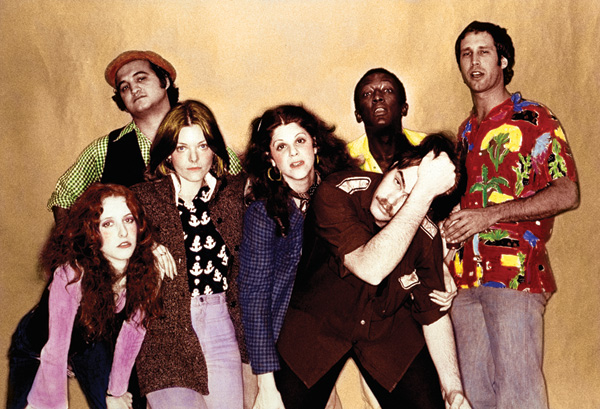
The legend: The ground-breaking, trend-setting and impossible-to-ignore satirical, skit-based weekend comedy showcase that’s been entertaining America non-stop for more than 35 years.
The lowdown: NBC’s Saturday Night Live – or SNL, as the media likes to refer to it – is indelible proof that in the second half of the ’70s it was the States and not Britain that was pushing the envelope when it came to TV comedy. The UK may’ve revolutionised humour on the box the previous decade and into the ’70s with That Was The Week That Was (1962-63), Till Death Us Do Part (1965-68), Monty Python’s Flying Circus (1968-74) and Fawlty Towers (1975 and ’79), but the white-hot new kid on the block came from the US – and it quickly grew into a giant. The brainchild of producer Lorne Michaels (still its head-honcho today), SNL was first broadcast in September 1975, featuring a cast of performers including John Belushi, Dan Aykroyd, Chevy Chase, Gilda Radner and Jane Curtin delivering sketches that mocked American culture and politics, as well as a guest host and a live musical guest. A hugely successful formula right from the off, it’s one from which SNL has never wavered. To date, the show has won 21 Emmys.
The line: “Live from New York, it’s Saturday night!”
The unlikely but true: Despite merely being weekend TV entertainment, a recent poll suggested SNL influences US voters when it comes to politics – 10 percent of those who responded claimed it had made a difference to the way they’d voted in the 2008 US Presidential Election.
The legacy: Although an unarguable game-changer for American telly in the ’70s, SNL‘s biggest impact is surely the fact it’s served as an unrivalled talent pool for Hollywood. As such, given it gave big breaks to Belushi, Aykroyd and Chase (and later Bill Murray and Eddie Murphy), it could be said the most telling legacy of the show’s ’70s period is the monster hits National Lampoon’s Animal House (1978), 48 Hours (1982), Trading Places (1983), Ghostbusters (1984), Beverly Hills Cop (1984) and Fletch (1985) – in each of which at least one of those five stars appeared. Moreover, both The Blues Brothers (1980) and Wayne’s World (1992) were based on SNL sketches, while in more recent years the show has gone on to establish the careers of Mike Myers, Adam Sandler, Chris Rock, Will Ferrell, Jimmy Fallon, Tina Fey, Amy Poehler and Kristen Wiig.
~~~
I, Claudius (1976)
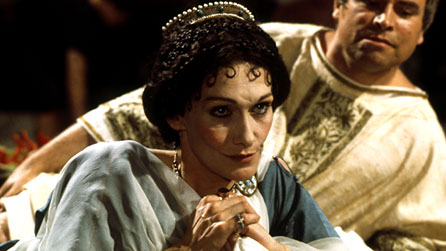
The legend: The unforgettable costume drama with lashings of sex, violence and soricide that brought to modern masses the gruesome dysfunction at the head of the early Roman Empire.
The lowdown: Ever since the Colin Firth-fuelled phenomenon that was the BBC’s 1995 adaptation of Pride And Prejudice, serialised costume dramas have been a mainstay of Sunday nights on UK telly, but the modern day certainly isn’t their first era – in fact, it isn’t even their golden age. For that surely must’ve been the ’60s, through the ’70s and into the early ’80s. It was this era in which millions lapped up the timeless likes of The Forsyte Saga (1967), Upstairs, Downstairs (1971-75) and Brideshead Revisited (1981). But the most impressive and memorable of ’em all, for me at least, has to be the Beeb’s 13-part 1976 adaptation of Robert Graves’ novels I, Claudius and Claudius The God (both 1934). Named after the first of the two novels, I, Claudius wasn’t just brilliant in making utterly compelling drama out of scenes filmed in studios with creaky cardboard sets, but also in transforming an already must-see Sunday night time slot for Middle England into an unmissable one for everyone. This was because I, Claudius was also stuffed full of murder and nudity, telling the tale of the first Roman Emperor Augustus’s dynasty in refreshing no-holds-barred fashion, thus delighting a mellowing mainstream audience and shocking conservative critics with its graphic and morally dubious content. The protagonist of this list’s first entry Doctor Who once claimed he doesn’t visit anywhere on a Sunday because Sundays are boring, well, they certainly weren’t when I, Claudius was on the box.
The line: “I, Tiberius Claudius Drusus Nero Germanicus… this, that and the other, who was once, and not so long ago, better known to my friends and relatives as Claudius the Idiot, or That Fool Claudius, or Claudius the Stammerer, am now about to write the strange history of my life.”
The unlikely but true: According to Brian Blessed (who played Augustus), he and his fellow thesps found it difficult to get a grip on their characters until it was suggested they thought of them in the manner of an Italian mafia family – always smiling on the surface as they greeted each other, only likely to stab each other in the back (quite literally) moments later.
The legacy: What was permissible as Sunday night telly changed forever following I, Claudius – not long later the Beeb got tongues wagging again with the even more explicit but crap The Borgias (1981) and then the similar The Cleopatras (1983), while eventually the slot was taken by Dennis Potter’s critically acclaimed but no less punch-pulling The Singing Detective (1986). The series’ biggest boon, though, was surely enjoyed by its young-ish cast, with Brian Blessed, Derek Jacobi (Claudius), John Hurt (Caligula), Patrick Stewart (Sejanus) and even Christopher Biggins (Nero) – yes, that Christopher Biggins – going on to have stellar small screen careers.
~~~
Five more to check out…
Monty Python’s Flying Circus (1969-74)
The legendary surrealistic and absurdist comedy series that spawned a million catchphrases
The Sonny & Cher Comedy Hour (1971-74)
Back in the days they were a loveable couple, Mr and Mrs Bono conquered American variety TV with their irresistible comedy-cum-musical showcase
Fawlty Towers (1975 and ’79)
Post-Python, John Cleese hit the critical stratosphere with the excruiatingly funny Torquay-set hotel sitcom of which, believe it or not, only 12 episodes were ever made
The Muppet Show (1976-81)
The all-time classic puppet- and special guest-featuring variety show that made Kermit and pals international megastars – read more here
Roots (1977)
The classic US miniseries, adapted from the novel by Alex Haley, that traces the story of slave Kunta Kinte and his American-born descendants – to this day, its finale remains the third most watched programme in US TV history
~~~
… And five great TV shows about the ’70s
The Wonder Years (1988-93)
Nostalgic dramedy set in the late ’60s and early ’70s focusing on the growing pains of everyday American kid Kevin Arnold
Our Friends In The North (1996)
Excellently observed, epic drama serial following the lives of a quartet from Newcastle, whose mid-section takes in place the ’70s
That ’70s Show (1998-2006)
Popular sitcom that used an irresistible mythologised ’70s era as backdrop to the antics of its mostly adolescent cast of characters
The Rotters’ Club (2005)
Dick Clement and Ian La Frenais’ adaptation of the Jonathan Coe Midlands-set novel that details a trio of grammar school boys’ lives during a prog rock- then punk-soundtracked glum ’70s
Life On Mars (2006-07)
Mentioned above, the hugely popular and rightly acclaimed sci-fi drama that made Gene Hunt an icon – 40 years after he really should have been on television screens
Playlist: Listen, my friends! ~ April 2012



In the words of Moby Grape… listen, my friends! Yes, it’s the (hopefully) monthly playlist presented by George’s Journal just for you good people.
There may be one or two classics to be found here dotted in among different tunes you’re unfamiliar with or have never heard before – or, of course, you may’ve heard them all before. All the same, why not sit back, listen away and enjoy…
.
CLICK on the song titles to hear them
.
Dave Berry ~ The Crying Game
Cliff Richard And The Shadows ~ In The Country
Johnny Hallyday ~ Noir C’est Noir
The Small Faces ~ I’m Only Dreaming
Julie London ~ Yummy Yummy Yummy
The Guess Who ~ American Woman
Carl Anderson ~ Superstar¹
The Andrea True Connection ~ More, More, More²
Jean Michel Jarre ~ Oxygène IV
Dexys Midnight Runners ~ Jackie Wilson Said (I’m In Heaven When You Smile)³
Fiction Factory ~ Feels Like Heaven
Genesis ~ Land Of Confusion⁴
Bruce Hornsby And The Range ~ The Way It Is5
.
¹ From the 1973 cinematic adaptation of the rock musical Jesus Christ Superstar
² Andrea True was an adult performer before and during her short singing career; this disco hit features a musical interlude sampled in the 1998 Len tune Steal My Sunshine
³ Performed here on the anarchic BBC sitcom The Young Ones in 1982; the band also appeared performing this hit on Top Of The Pops the same year with, on the screen behind them, the face not of Jackie Wilson, but of 1982’s World Darts Champion Jocky Wilson, who sadly died last month (see here)
⁴ This classic video features puppet interpretations of both the band and famous figures that appeared in the classic ITV satire Spitting Image (1984-96)
5 The socially conscious US hit that was used as backing music as football results and tables were revealed on the BBC’s Saturday afternoon sports magazine Grandstand (1958-2007)
007/ 50: birthday Bonding #4 ~ rare but brilliant pics of Blighty’s finest (’90s/ ’00s)


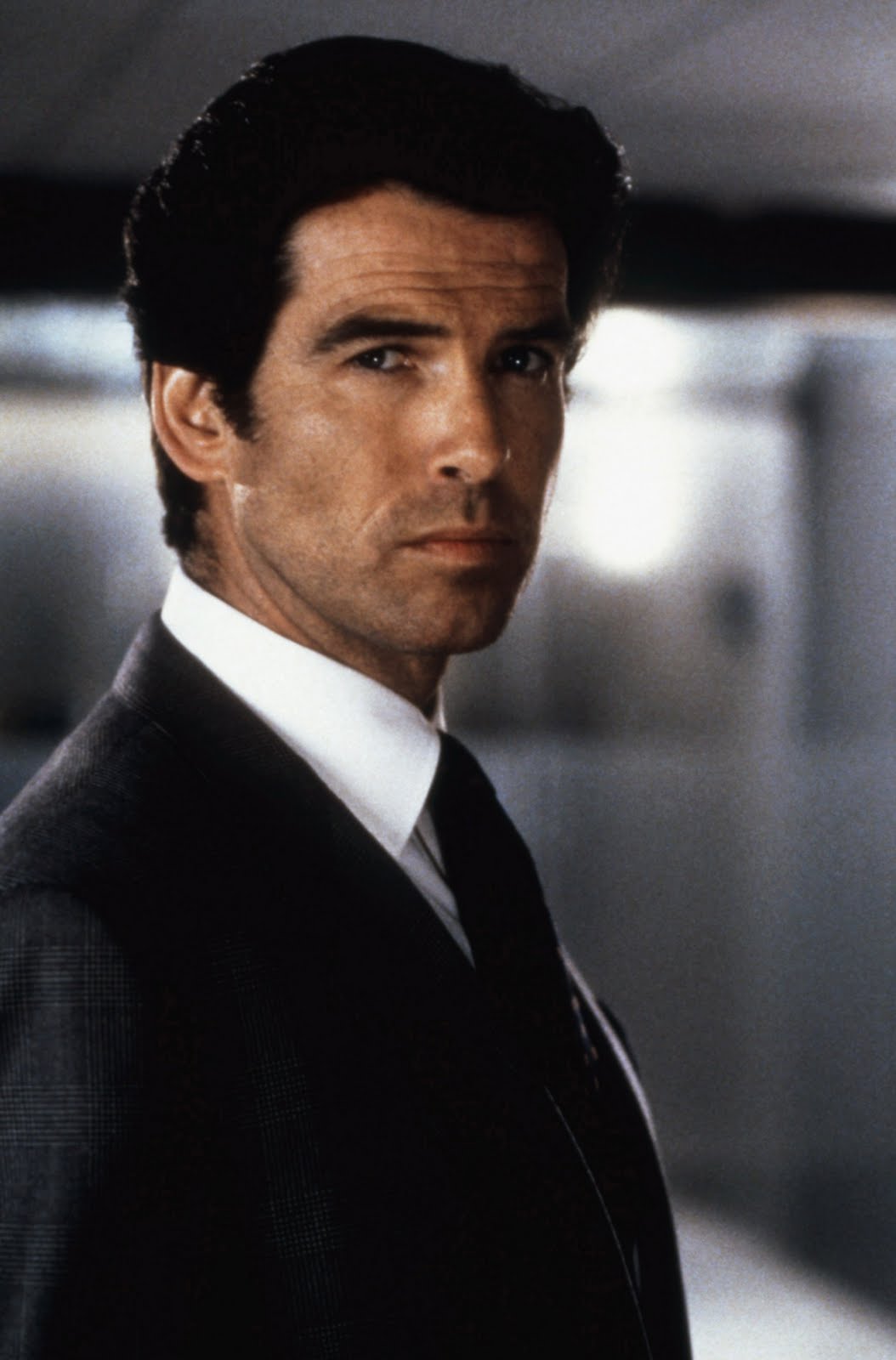
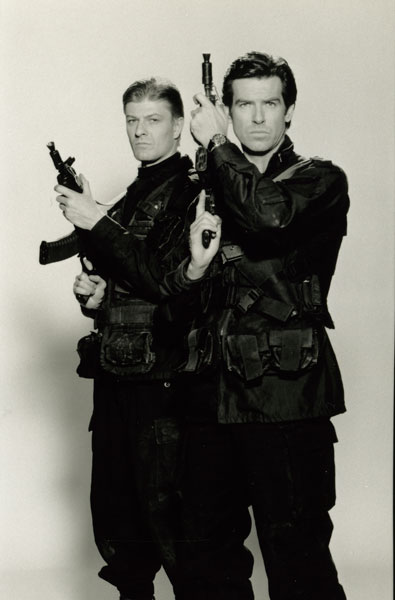
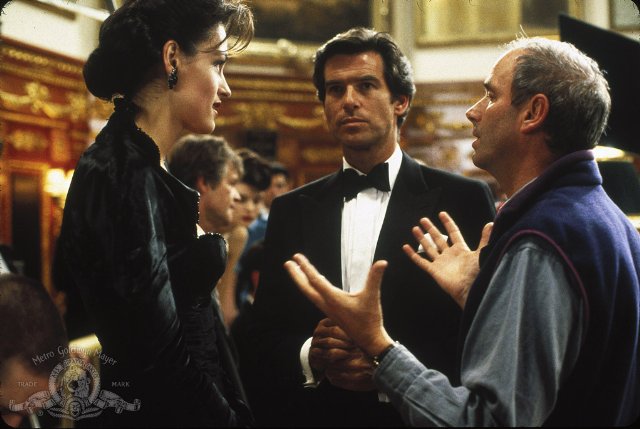
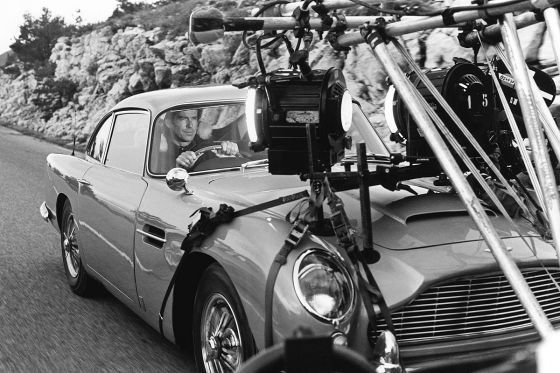
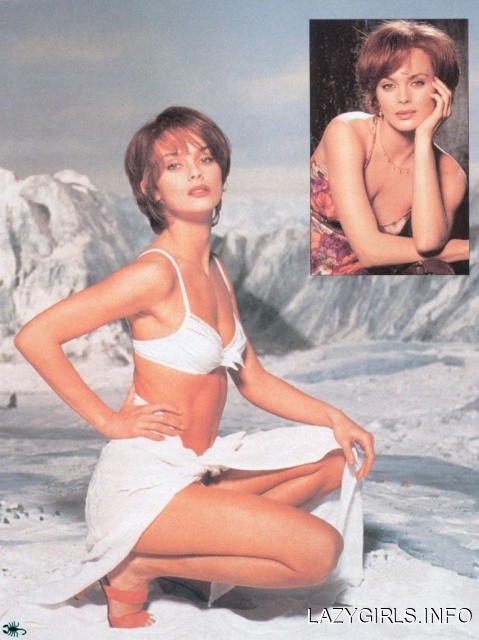
Get the picture?: Bond was back after six years away in 1995 with GoldenEye – a retro-friendly box-office blockbuster that, in the shape of Pierce Brosnan as 007 and co-stars Famke Janssen and Izabella Scorupco, returned the playfulness, sexiness and cool to the series in a big way
And here it is, peeps – the fourth and final post that celebrates not just this blog’s second birthday, but as a tribute containing rarely seen yet rather wonderful images, also celebrates the 50th anniversary of that man Bond on the silver screen.
So, the ’90s and the ’00s, eh? The Playstation and the Gameboy, Richard and Judy, Blair versus Brown, Blur versus Oasis and the return of the cinematic Bond? Wait a minute, the return of the cinematic Bond? When has Bond not been around? Well, it maybe hadn’t felt like it before and it certainly doesn’t now, but the 007 of the big-screen had been on a forced hiatus after the box-office disappointment that was Licence To Kill (1989) for six whole years. Legal disputes involving the Bond producers’ company Eon Productions/ Danjaq LLC and the Hollywood giant MGM/UA ensured the career of Blighty’s finest was put on hold while the Soviet Union crumbled and the likes of the Lethal Weapons and Die Hards revolutionised the movie actioner.
By 1995, though, Bond was back and, in the guise of the smooth, slick, male model-handsome Pierce Brosnan (gloomy Timothy Dalton had left Bond-age in ’92), he looked, well, every inch the 1990s icon-in-waiting. His first effort out of the blocks was the near-classic of the genre GoldenEye, which smartly balanced post-Soviet insecurities with ’60s-throwback Bondian sensitivities (a bombastic theme tune, natty gadgets, sexy girls with innuenduous names and a huge villain’s lair). GoldeneEye‘s box-office take was the biggest ever for a Bond flick (breaking the record set by 1979’s Moonraker) and it was swiftly followed by the just as retro-flavoured, if very formulaic Tomorrow Never Dies and The World Is Not Enough, the latter of which offered up a terrific cast if a soap factory’s worth of melodrama. Fittingly for an era that wallowed in retrospective, the ’90s-into-the-millennium couldn’t get enough of 007 (he’d surely never been more popular since his ’60s/ ’70s high) and the joyride came to something of a juddering halt with the incredibly silly Die Another Day, Brosnan’s last. If The Brozzer’s flicks had got increasingly dafter, his 007 had ironically got subtler and more nuanced each time he’d slipped on the shoulder-holster.
But the cinematic Bond himself didn’t die with Brosnan’s departure; instead in the darker, less sure and arguably more real post-9/11 world he became… er, blond. More pertinently, he also became more dangerous, intense and internalised than ever with the casting of ace TV actor Daniel Craig. And when he returned in 2006 in (at last) an adaptation of Ian Fleming‘s very first 007 novel Casino Royale, the public absolutely couldn’t get enough of him. This Bond flick was surely the most critically acclaimed of all and was, frankly, bloody brilliant. Its sequel (and, for the first time in the series, it genuinely was a sequel) Quantum Of Solace may not have quite hit its heady heights but was a more than intriguing, arty and worthwhile venture. And, what with the latest effort that’s filming right now, SkyFall, looking not just gritty and interesting, but exciting and compelling, now in his 50th year the cinematic 007 is imply as unmissable and essential as ever. Good work, Bond…
PASS MOUSE over images for more information/ CLICK on them for full size
.
GoldenEye (1995)
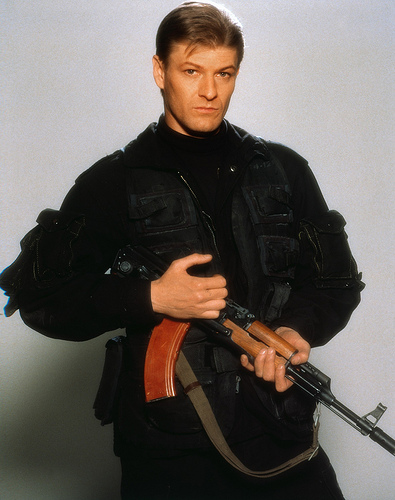
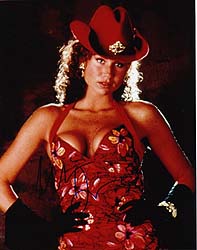
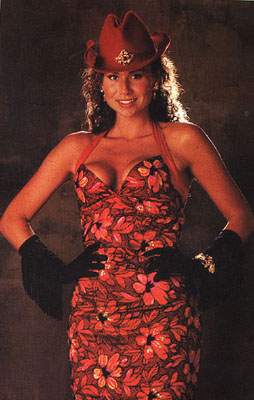
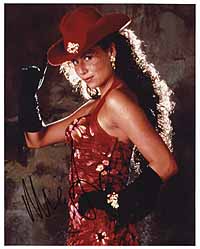
Directed by: Martin Campbell; Produced by: Barbara Broccoli and Michael G Wilson; Screenplay by: Jeffrey Caine, Bruce Fierstein and Michael France – title taken from Ian Fleming’s Jamaican home where he wrote the Bond books/Visual effects supervised by: Derek Meddings/ Locations: Verzasca Dam, Switzerland (for pre-title sequence bungee jump stunt); Monte Carlo, Monaco; Alpes-Maritimes and Bouche-du-Rhône, France; St. Petersburg, Russia; Puerto Rico (for Cuba); London, Nene Valley Railway and Leavesden Studios, UK/ Cast includes: Pierce Brosnan (James Bond); Sean Bean (Alec Trevelyan); Izabella Scorupco (Natalya Simonova); Famke Janssen (Xenia Onatopp); Alan Cumming (Boris Grishenko); Desmond Llewelyn (Q); Minnie Driver (Irina)
.
.

.

.

.

.


.
.


.


.
.
.
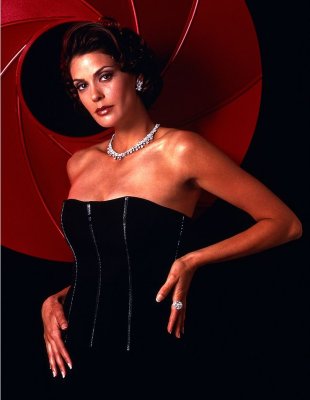
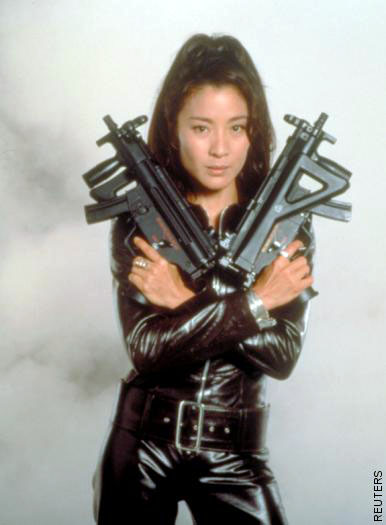
Tomorrow Never Dies (1997)
Directed by: Roger Spottiswoode; Produced by: Barbara Broccoli and Michael G Wilson; Screenplay by: Bruce Fierstein/ Locations: The Pyrénées, France (for the Khyber Pass in pre-title sequence); Hamburg, Germany; Bangkok and Phuket, Thailand (for Vietnam); London, Oxford, Eon Frogmore Studios and Pinewood Studios, UK/ Cast includes: Pierce Brosnan (James Bond); Jonathan Pryce (Elliot Carver); Michelle Yeoh (Wai Lin); Teri Hatcher (Paris Carver); Cecilie Thomsen (Professor Inga Bergstrom)
.


.


.


.

.
.


.


.


.

.
.
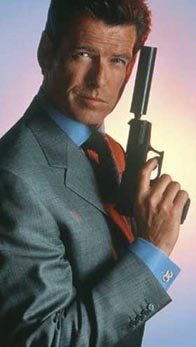
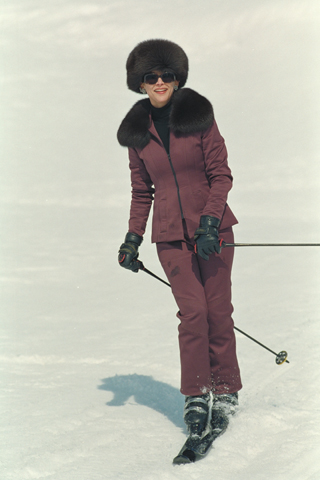
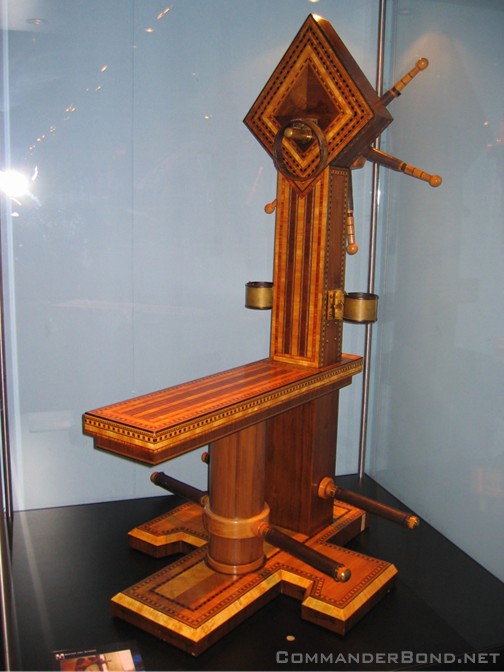
The World Is Not Enough (1999)
Directed by: Michael Apted; Produced by: Barbara Broccoli and Michael G Wilson; Screenplay by: Neal Purvis, Robert Wade and Bruce Fierstein – title taken from a passage in the Ian Fleming novel On Her Majesty’s Secret Service (1963)/ Locations: Bilbao, Navarra and Cuenca, Spain; Baku and Bibi-Heybot Region, Azerbaijan; Chamonix, France; Istanbul, Turkey; The Bahamas (underwater sequences); London, Eileen Donan Castle, Halton House and Pinewood Studios, UK/ Cast includes: Pierce Brosnan (James Bond); Sophie Marceau (Elektra King); Robert Carlyle (Renard); Robbie Coltrane (Valentin Zukovsky); Maria Grazia Cucinotta (The Cigar Girl); Desmond Llewelyn (Q); Samantha Bond (Miss Moneypenny); Goldie (Mr ‘The Bull’ Bullion)
.

.

.


.


.

.


.


.


.

.


.
.
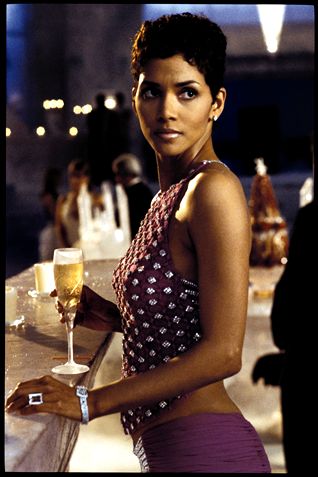
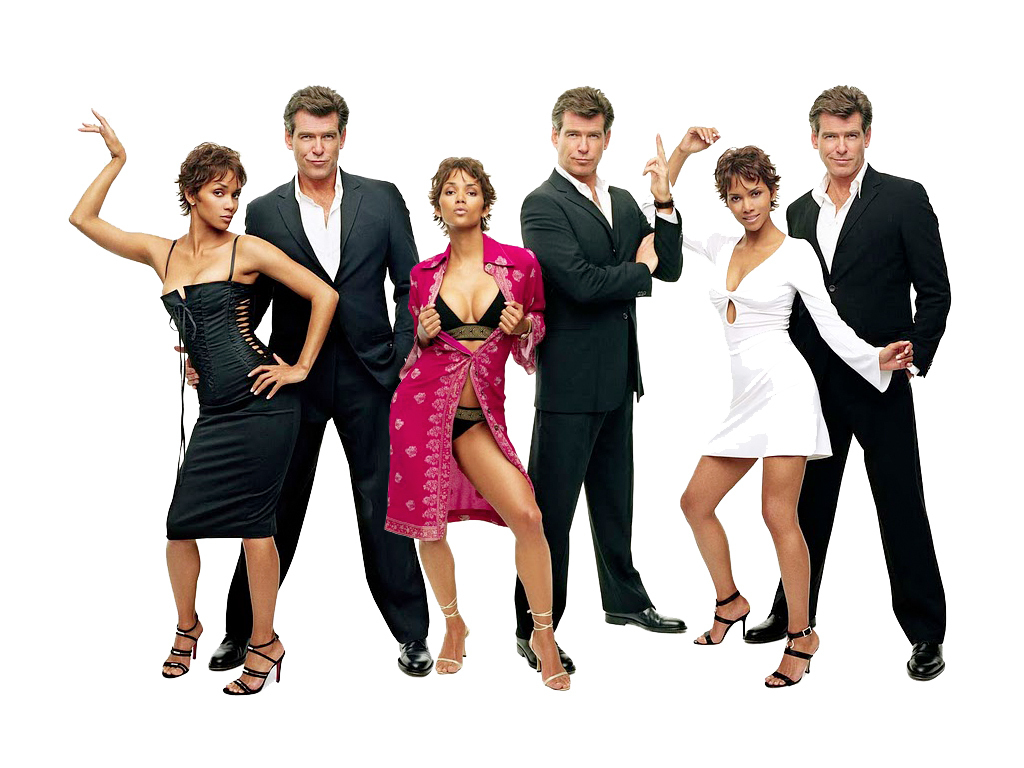
Die Another Day (2002)
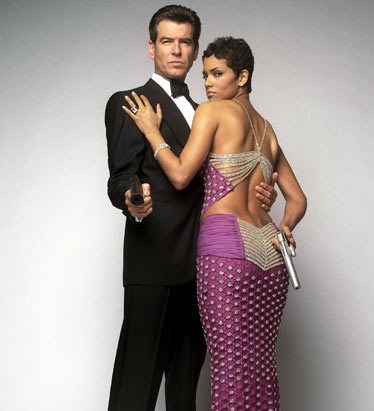
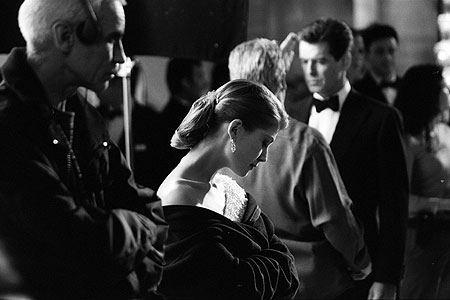
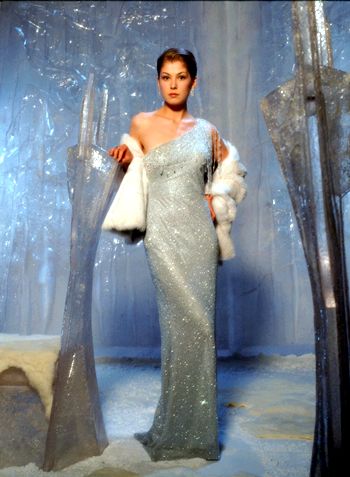
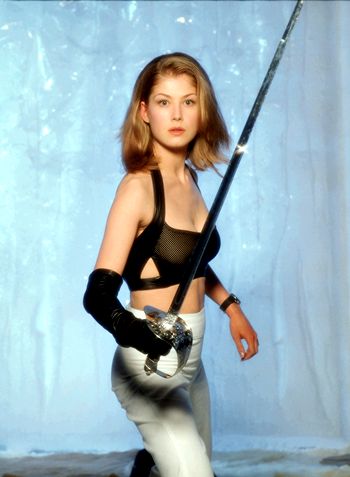
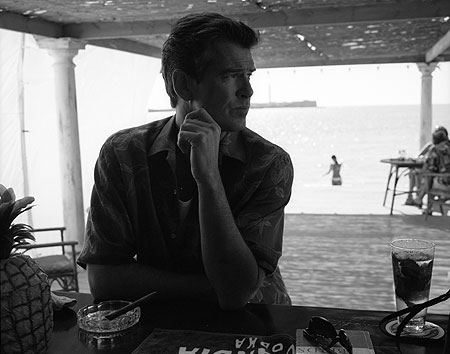
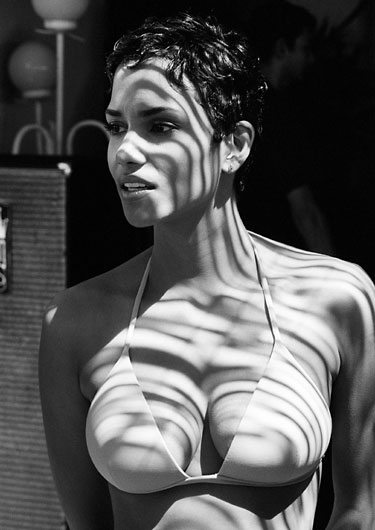
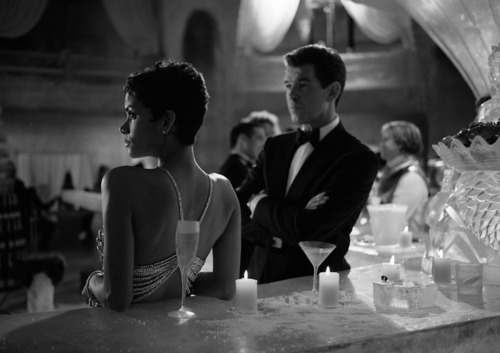
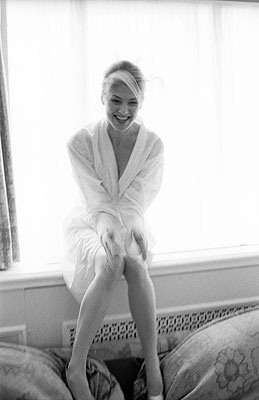
Directed by: Lee Tamahori; Produced by: Barbara Broccoli and Michael G Wilson; Screenplay by: Neal Purvis and Robert Wade – influenced by the Ian Fleming novel Moonraker (1955) and the Kingsley Amis Bond novel Colonel Sun (1968)/ Locations: Peahi Beach, Hawaii (surfing in pre-title sequence); Andalucia, Spain (for Cuba); Vatnajökull, Iceland; Sogn og Fjordane, Norway (for Iceland); London, Aldershot and Deepdale Burnham (for North and South Korea), Penbryn, St. Austell and Pinewood Studios, UK/ Cast includes: Pierce Brosnan (James Bond); Halle Berry (Jinx); Toby Stephens (Gustav Graves); Rosamund Pike (Miranda Frost); Rick Yune (Zao)
.


.

.
.


.
.


.
.

.

.
.
.
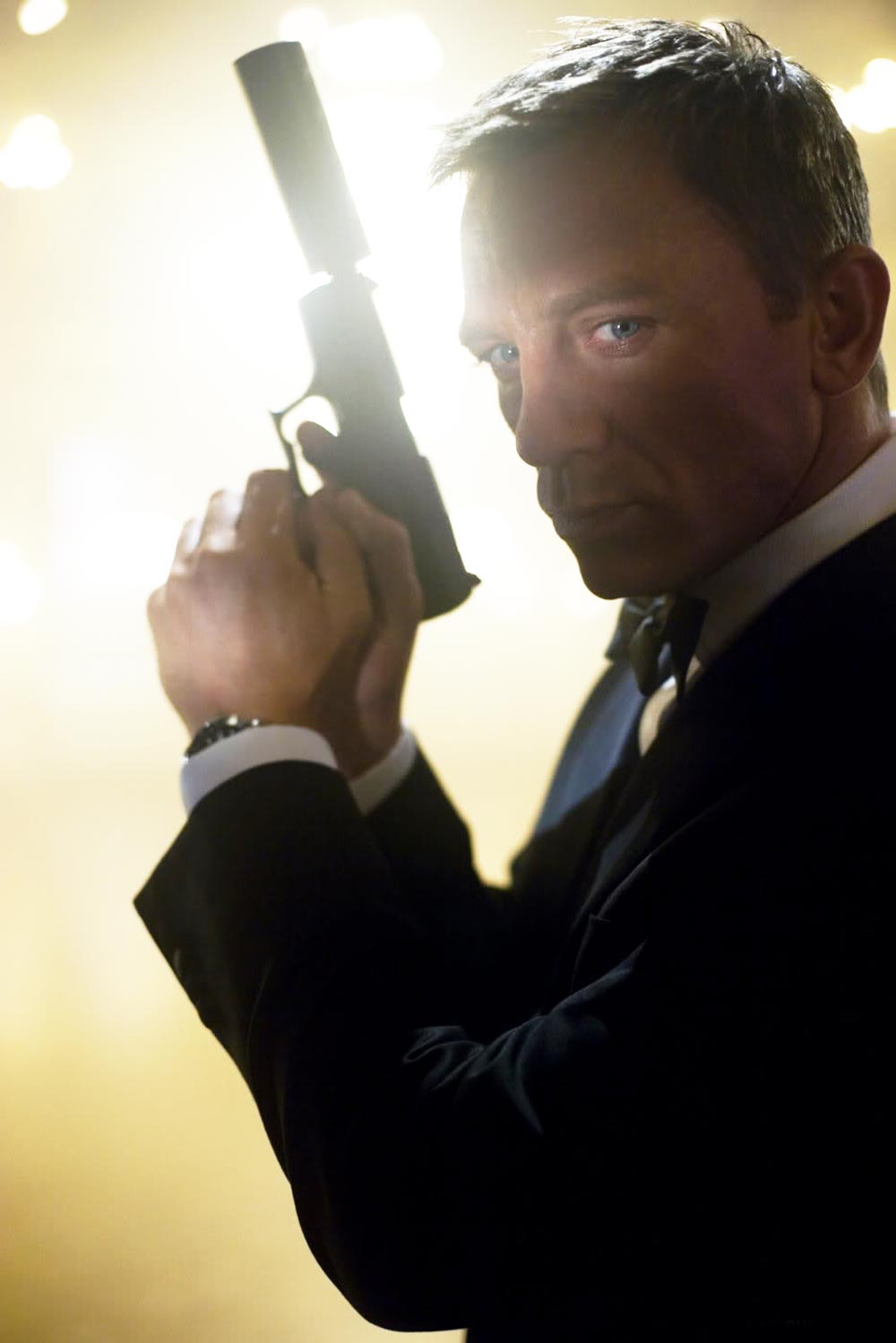
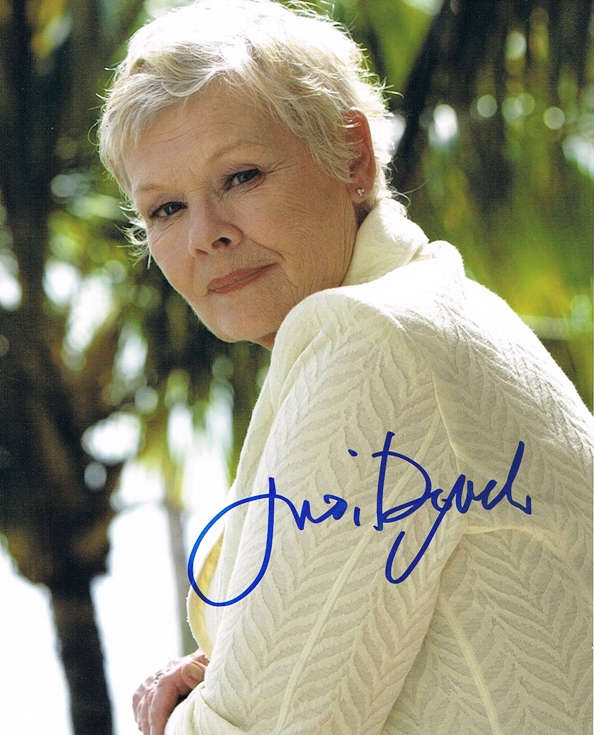
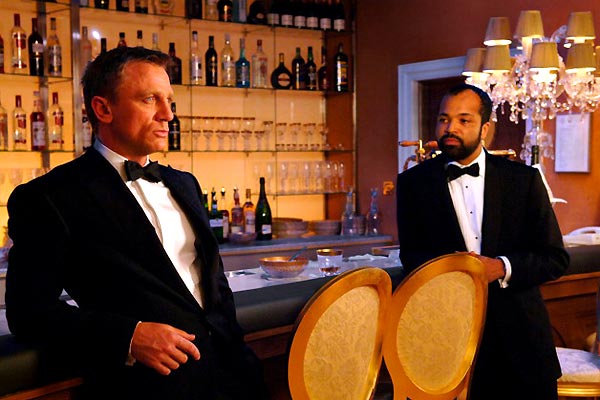
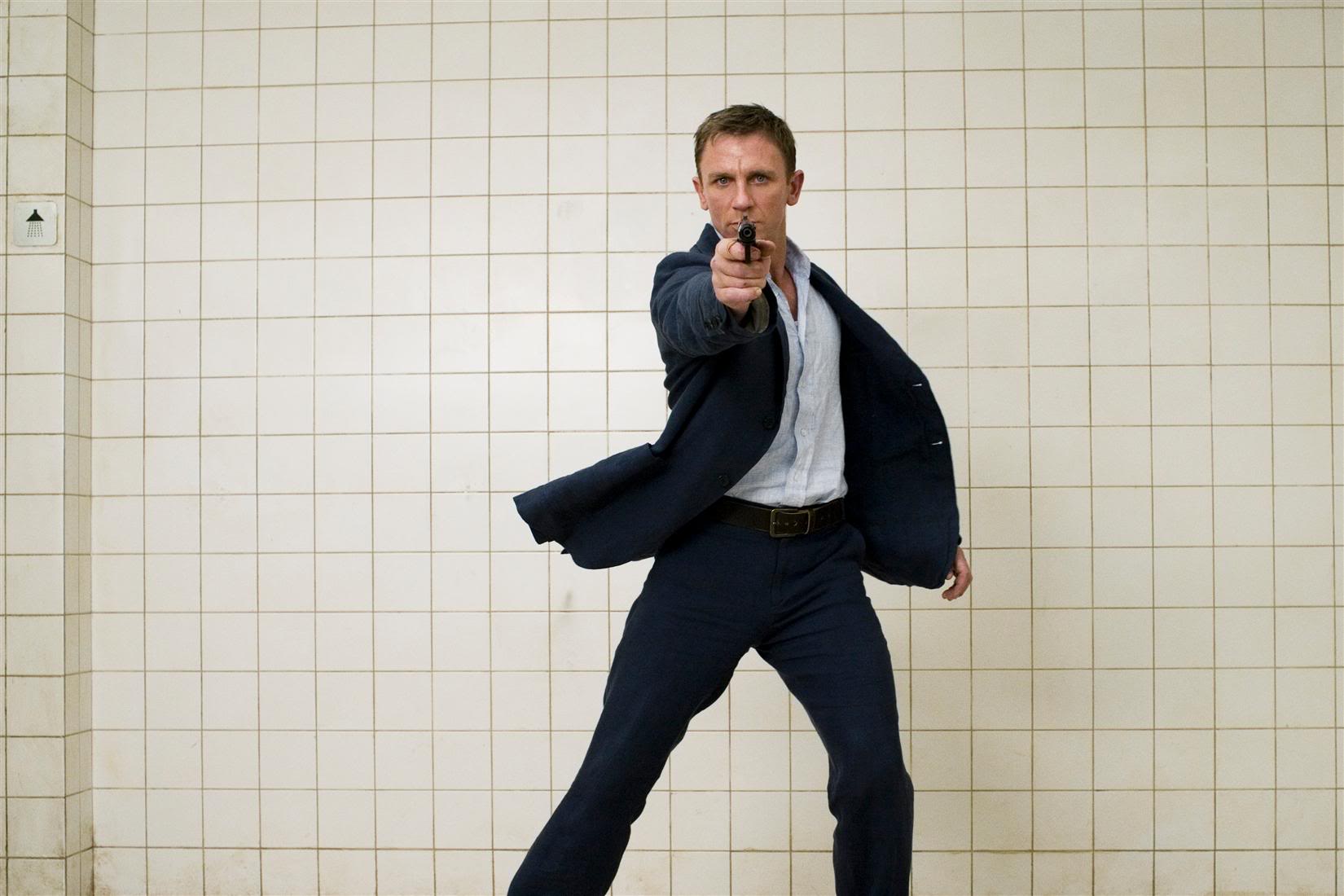
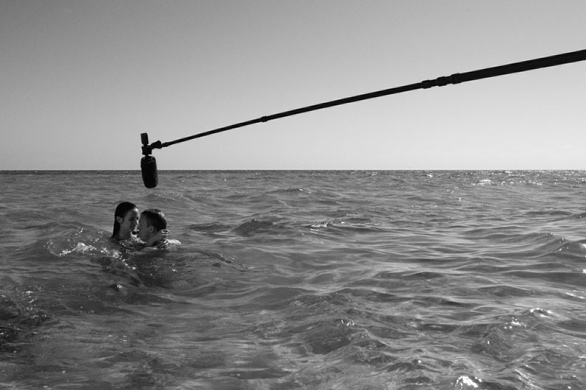
Casino Royale (2006)
Directed by: Martin Campbell; Produced by: Barbara Broccoli and Michael G Wilson; Screenplay by: Neal Purvis, Robert Wade and Paul Haggis – adapted from the Ian Fleming novel (1953)/ Locations: New Providence Island and Paradise Island, The Bahamas (also for Madagascar); Karlovy Vary, Locket and Prague (for Montenegro), Barrandov Studios and Modrany Studios, Prague, Czech Republic; Lake Como and Venice, Italy; London and Pinewood Studios, UK/ Cast includes: Daniel Craig (James Bond); Eva Green (Vesper Lynd); Mads Mikkelsen (Le Chiffre); Judi Dench (M); Jeffrey Wright (Felix Leiter); Caterina Murino (Solange); Sébastien Foucan (Mollaka)
.

.

.


.

.
.


.

.


.


.

.
.
Quantum Of Solace (2008)
Directed by: Marc Forster; Produced by: Barbara Broccoli and Michael G Wilson; Screenplay by: Paul Haggis, Neal Purvis and Robert Wade – title taken from the Ian Fleming short story Quantum Of Solace from For Your Eyes Only (1960)/ Locations: Siena, Lake Garda/ Talamone, Carrara, Malcesene and Maratea, Italy; Colón and Panama City, Panama (for Port-au-Prince, Haiti, and La Paz, Bolivia); Bregenz, Austria; Antofagasta Region and Atacama Desert, Chile (for Bolivia); London, Aldershot and Pinewood Studios, UK/ Cast includes: Daniel Craig (James Bond); Olga Kurylenko (Camille); Mathieu Amalric (Dominic Greene); Giancarlo Giannini (René Mathis); Jeffrey Wright (Felix Leiter);Gemma Arterton (Strawberry Fields)
.


.


.

.
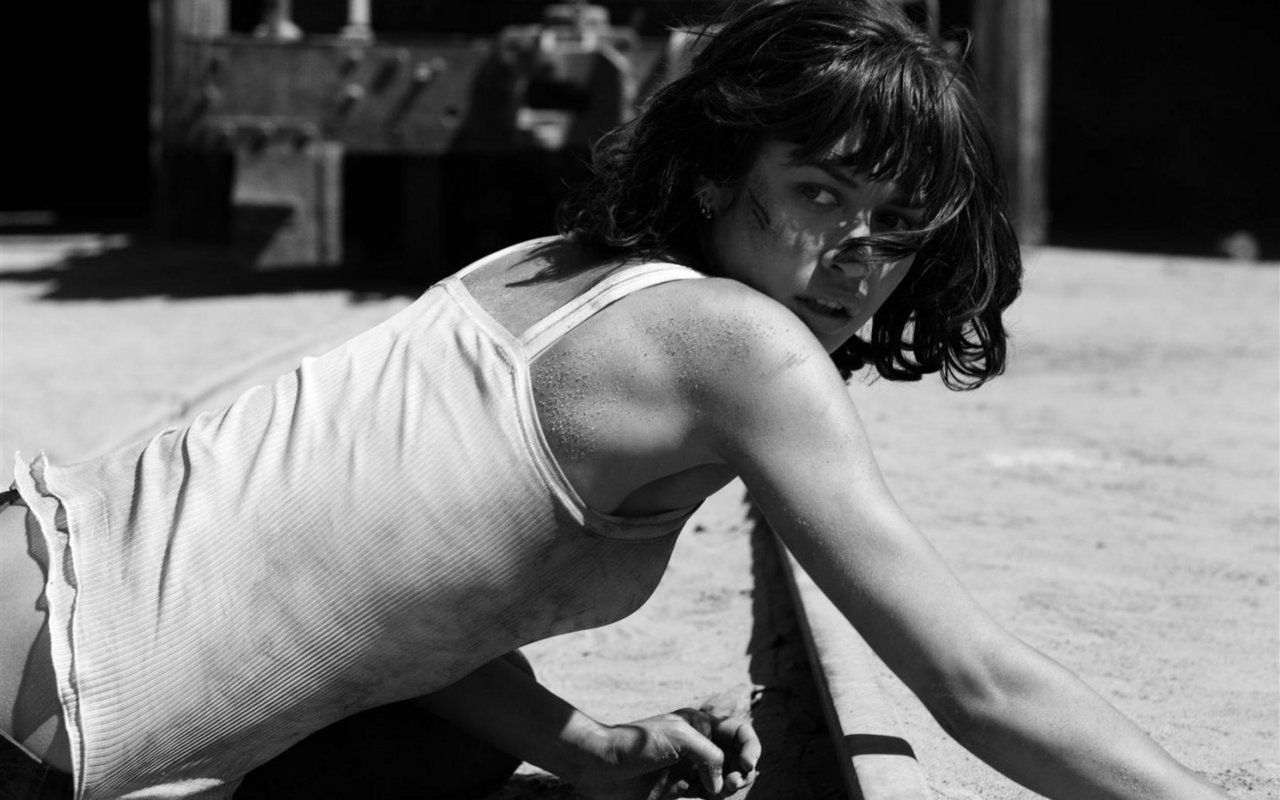
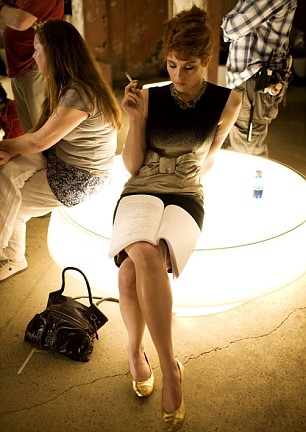
.

.


.


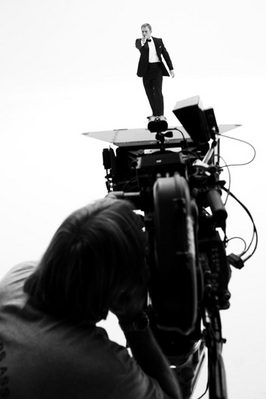
.
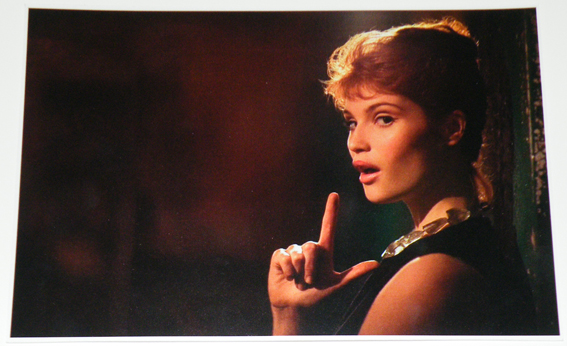

.

.
.
And finally…
.

.
Ian Fleming (1908-64)
Harry Saltzman (1915-94)
Albert R Broccoli (1909-96)
without whom…
.

Oh, the things he does for England: new Bond Timothy Dalton poses with a gaggle of very ’80s-looking girls for publicity for The Living Daylights – ironically, though, his 007 (unlike previous incarnations) would be far less the winking playboy, more the serious ‘New Man’
A cynic may suggest that the ’80s weren’t the cinematic James Bond’s happiest decade – after all, not only did the 007 epics come under serious pressure from the hugely popular fantasy adventures of Lucas and Spielberg and the high octance actioners of Sly, Arnie, Bruce Willis and Mel Gibson, but also Bond himself eventually became far from a happy bunny in the guise of mean and moody Timothy Dalton.
However, in this post – the penultimate pictorial tribute to Bond’s 50 years on the big screen and image-driven special celebration of this very blog’s second birthday – methinks there’s more than enough proof to suggest that the ’80s were no less an exciting, diverse, boundary-breaking (especially in terms of thrilling stunts) and, yes, happy a decade than any other in the history of British cinema’s greatest hero.
It kicked off with Bond bouncing back down to earth after the space-bound exploits of Moonraker (1979) – frankly, the only place he could go after that. With an emphasis on more earnest but no less engaging espionage antics, For Your Eyes Only harked back to Bond’s literary roots in Ian Fleming‘s novels. This theme was continued, at least to some extent, in Octopussy, which while admittedly lightening the tone also added into the mix the bizarre yet groovy triple-location-combo of India, West Berlin and, er, a circus big-top. A View To A Kill upped the fantasy further with a proper megalomaniac for a villain (an unforgettable Christopher Walken with a peroxide barnet) and an atmosphere that was unmistakeably mid-’80s. This proved to be the legendary Roger Moore‘s swansong in the role (a great servant for Bond, no question, but he was arguably beginning to resemble Bond’s dad).
Slipping on the shoulder-holster in The Living Daylights then was Shakespearian thesp Timothy Dalton. His take on the role – Fleming-esque world-weary – ultimately proved a little too dour for the casual fan, but nowadays is seen as a forerunner for Daniel Craig’s 007. Was Dalts ahead of his time then? Possibly. He was also very ’80s ‘New Man’ – the Timbo Bond respected his ladies like no incarnation before and was immersed in a more violent world in his second effort Licence To Kill than the filmmakers had dreamed of presenting cinemagoers in either the ’60s or the ’70s. By the end of the ’80s then, no mistake, the times had a-changed indeed for Blighty’s finest…
PASS MOUSE over images for more information/ CLICK on them for full size
.
For Your Eyes Only (1981)
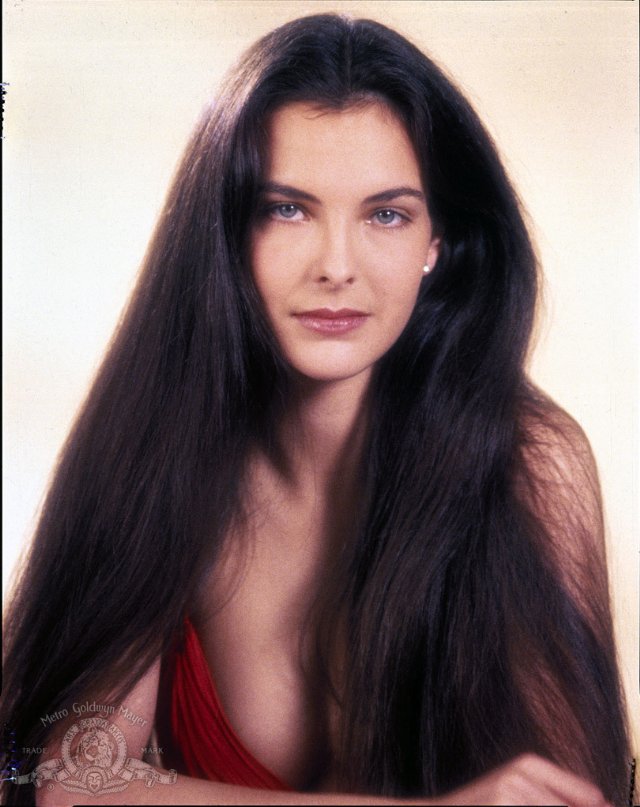
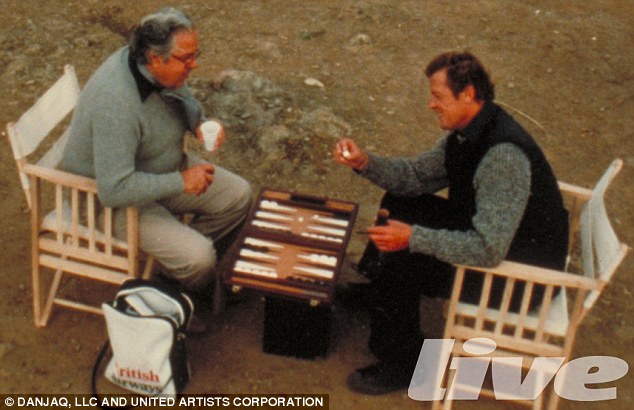
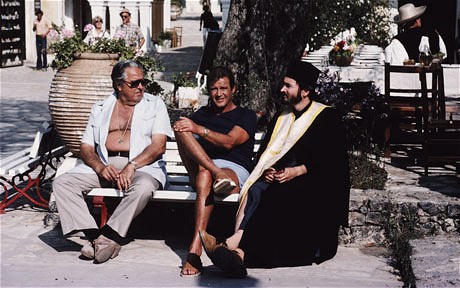
Directed by: John Glen; Produced by: Albert R Broccoli; Screenplay by: Richard Maibaum and Michael G Wilson – containing elements from the Ian Fleming short stories For Your Eyes Only and Risico, both from For Your Eyes Only (1960)/ Title song performed by: Sheena Easton/ Ski stunts photographed by: Willy Bognor/ Locations: Corfu and Meteora, Greece; Cortina d’Ampezzo, Italy; The Bahamas (underwater sequences); Pinewood Studios, UK/ Cast includes: Roger Moore (James Bond); Carole Bouquet (Melina); Topol (Columbo); Lynn-Holly Johnson (Bibi); Julian Glover (Kristatos); Cassandra Harris (Lisl)
.


.


.


.

.


.


.
.


.

.
.
Octopussy (1983)
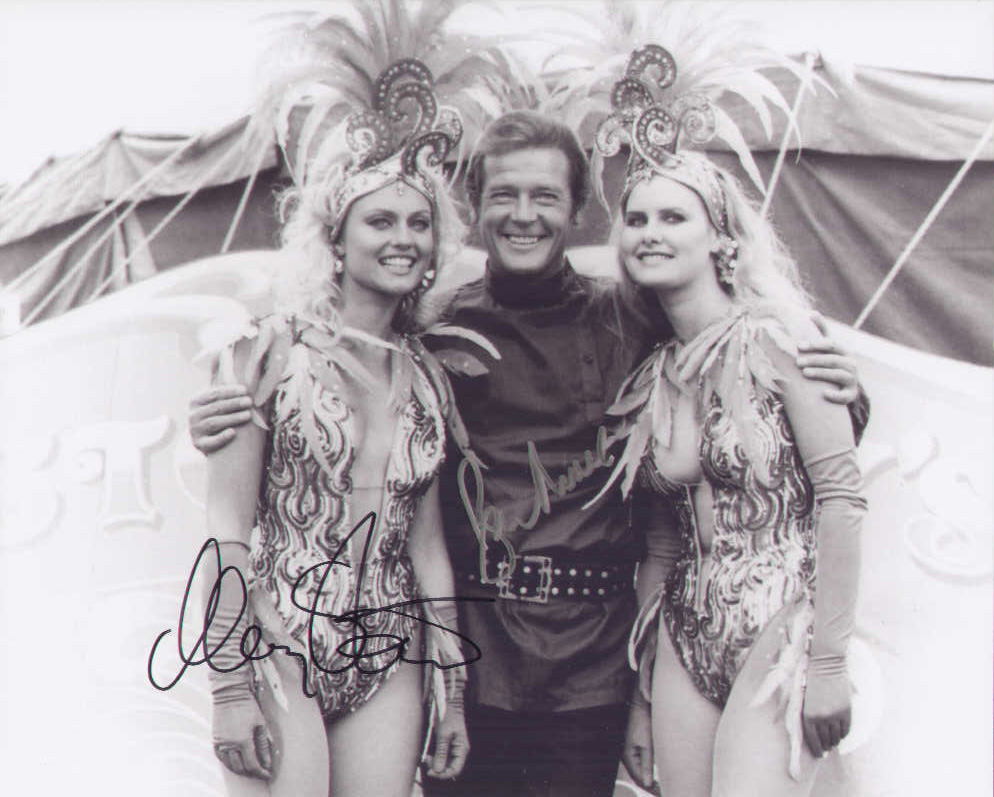
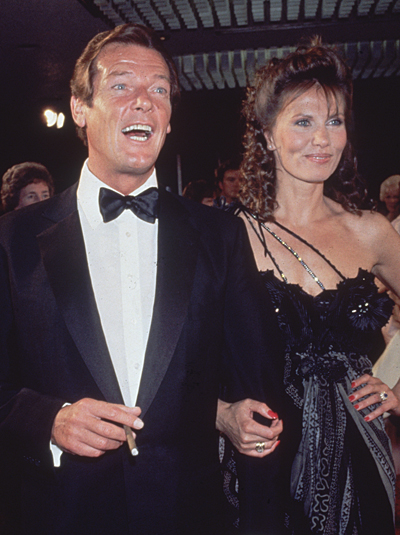
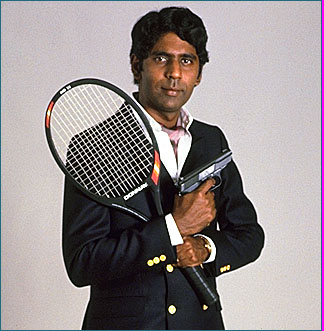
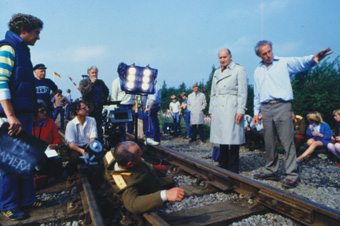
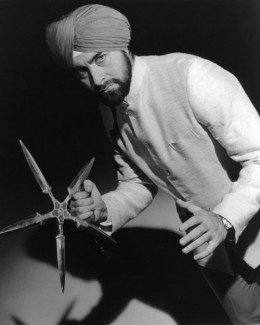
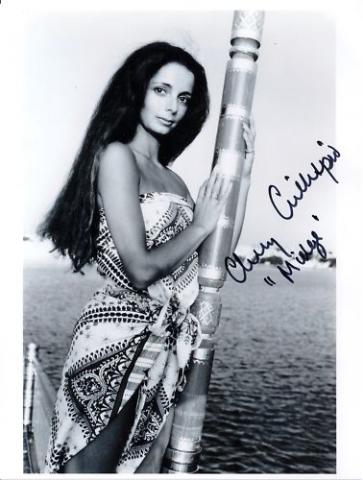
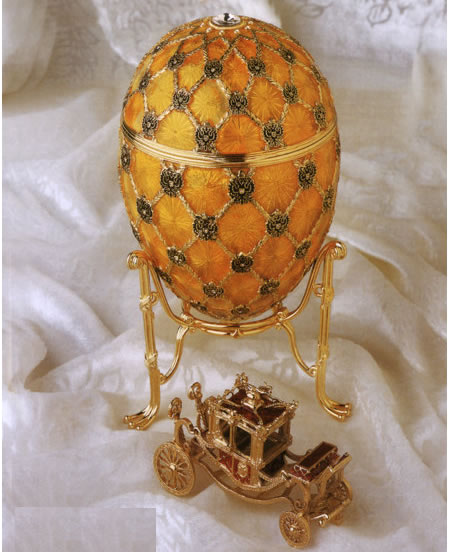
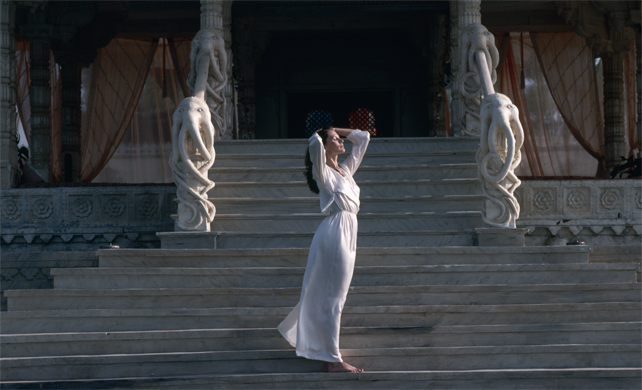
Directed by: John Glen; Produced by: Albert R Broccoli; Screenplay by: Richard Maibaum, Michael G Wilson and George MacDonald Fraser – containing elements from the Ian Fleming short stories Octopussy and The Property Of A Lady, both from Octopussy And The Living Daylights (1966)/ Locations: Udaipur, India; West Berlin, West Germany; Nene Valley Railway, London and Pinewood Studios, UK/ Cast includes: Roger Moore (James Bond); Maud Adams (Octopussy); Louis Jourdan (Kamal Khan); Kristina Wayborn (Magda); Kabir Bedi (Gobinda); Steven Berkoff (Orlov); Walter Gotell (General Gogol); Cherry Gillespie (Midge); Mary Stavin and Suzanne Jerome (Octopussy Girls)
.


.
.

.

.

.


.


.
.

.
.
.
A View To A Kill (1985)
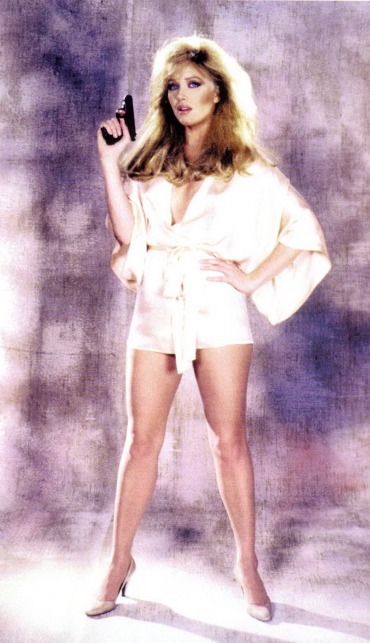
Directed by: John Glen; Produced by: Albert R Broccoli and Michael G Wilson; Screenplay by: Richard Maibaum and Michael G Wilson – title taken from the Ian Fleming short story From A View To A Kill from For Your Eyes Only (1960)/ Title song performed by: Duran Duran/ Stunt performers include: Martin Grace/ Locations: Höfn, Switzerland and Vadretti de Scerscen, Switzerland (both for pre-title sequence); Paris and Chateau Chantilly, France; San Francisco, USA; Ascot Racecourse, Amberly Working Museum and Pinewood Studios, UK/ Cast includes: Roger Moore (James Bond); Christopher Walken (Max Zorin); Tanya Roberts (Stacey Sutton); Grace Jones (May Day); Patrick MacNee (Sir Godfrey Tibbet); Alison Doody (Jenny Flex); Papillon Soo Soo (Pan Ho); Mary Stavin (Kimberley Jones); Dolph Lundgren (Venz)
.


.


.


.

.


.


.


.

.
.
The Living Daylights (1987)
Directed by: John Glen; Produced by: Albert R Broccoli and Michael G Wilson; Screenplay by: Richard Maibaum and Michael G Wilson – adapted from the Ian Fleming short story The Living Daylights from Octopussy And The Living Daylights (1966)/ Title song performed by: a-ha/ Locations: Gibraltar; Vienna, Austria (also for Bratislava, Slovakia); Tangier and Atlas Mountains (for Afghanistan), Morocco; Mojave Desert, USA (also for Afghanistan); Henley-On-Thames and Pinewood Studios, UK/ Cast includes: Timothy Dalton (James Bond); Maryam d’Abo (Kara Milovy); Jeroen Krabbé (General Koskov); John Rhys-Davies (General Pushkin); Art Malik (Kamran Shah); Caroline Bliss (Miss Moneypenny); Kell Tyler (Linda)
.
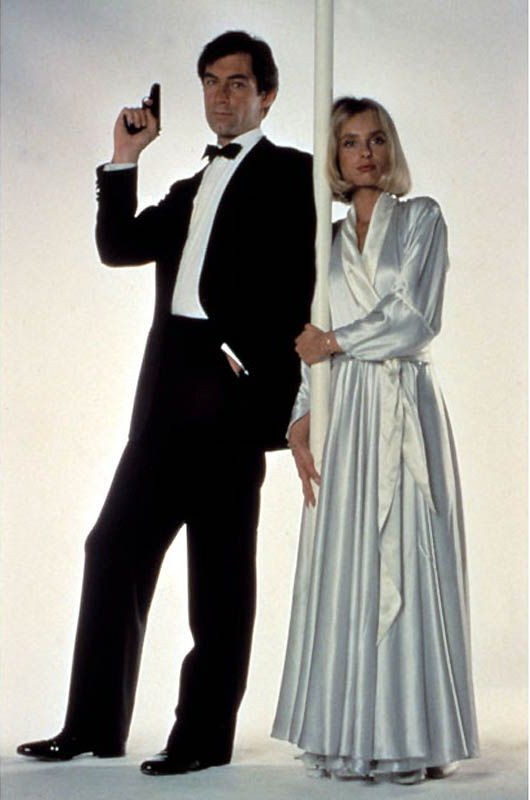

.
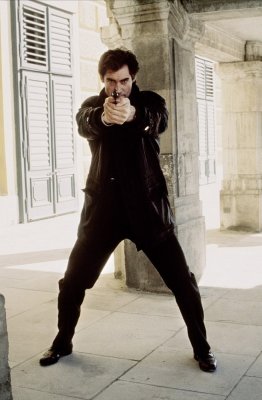

.
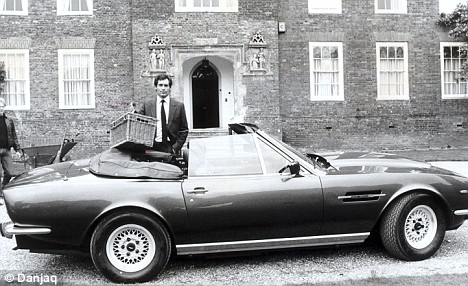

.

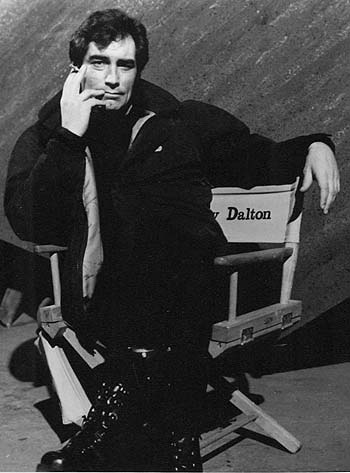
.
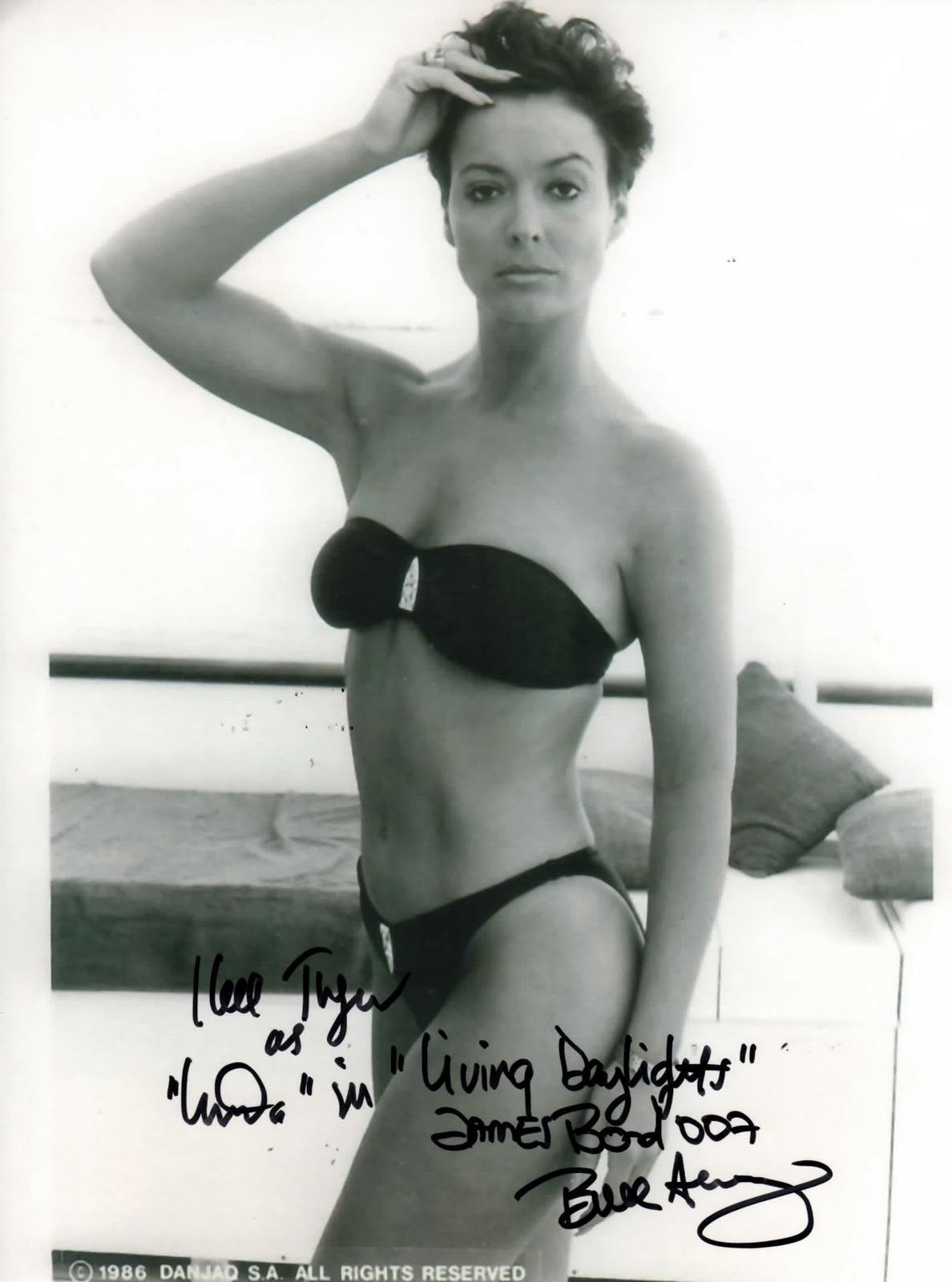
.


.
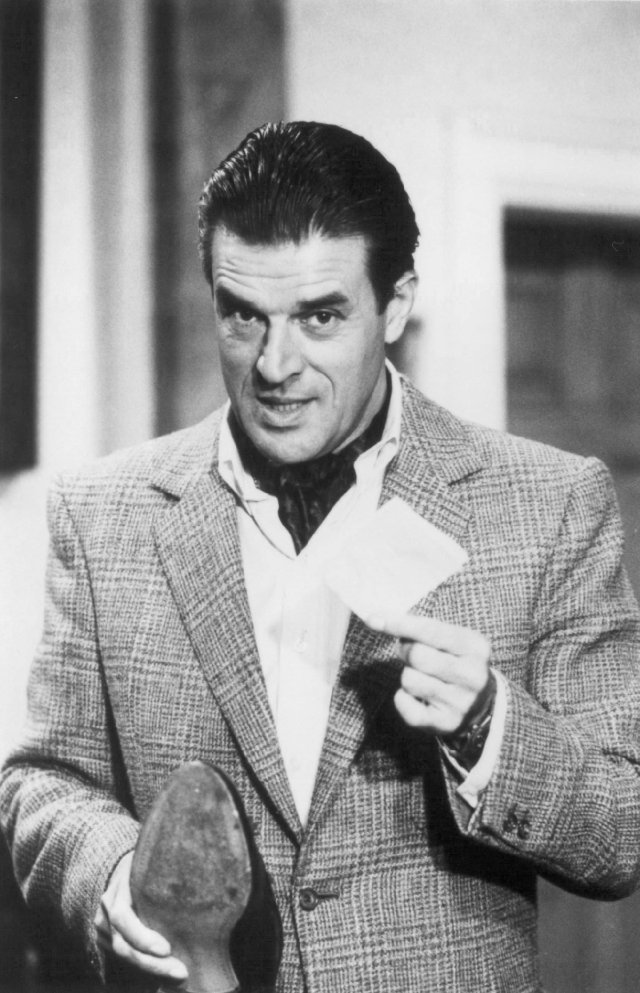

.

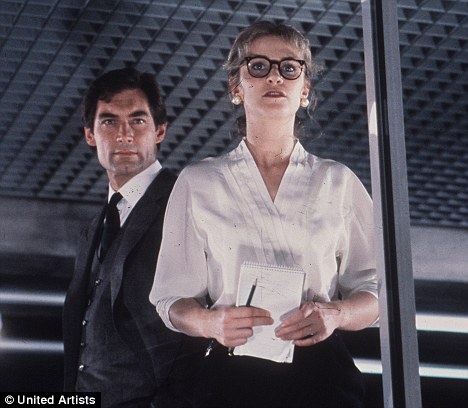
.
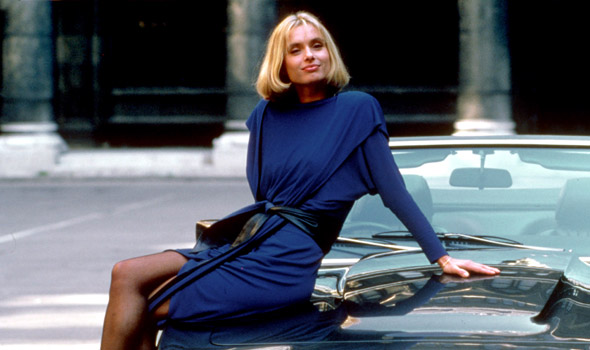
.
.
Licence To Kill (1989)
Directed by: John Glen; Produced by: Albert R Broccoli and Michael G Wilson; Screenplay by: Richard Maibaum and Michael G Wilson – contains an element from the Ian Fleming novel Live And Let Die (1954)/ Stunts co-ordinated by: Paul Weston/ Locations: Florida Keys, USA; Acapulco, Mexico City, Mexicali, Toluca and Etudios Churubusco Azteca, Mexico/ Cast includes: Timothy Dalton (James Bond); Carey Lowell (Pam Bouvier); Robert Davi (Franz Sanchez); Talisa Soto (Lupe Lamora); Benicio Del Toro (Dario)
.
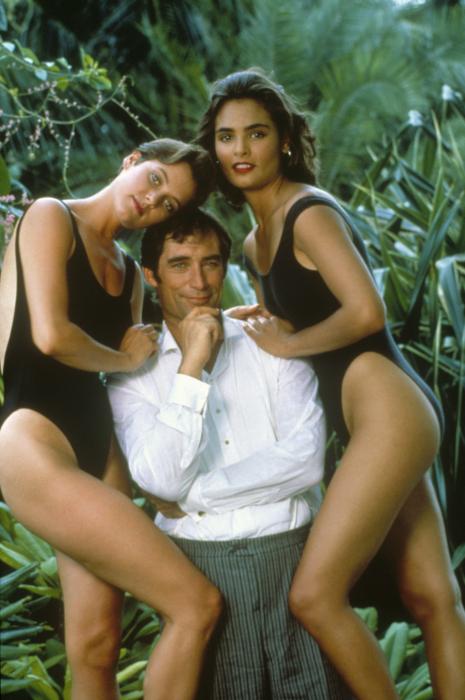

.


.
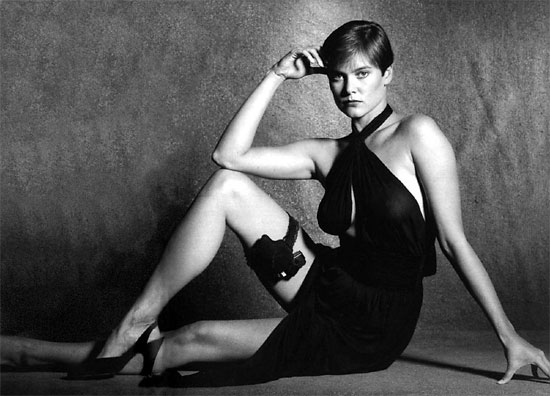
.
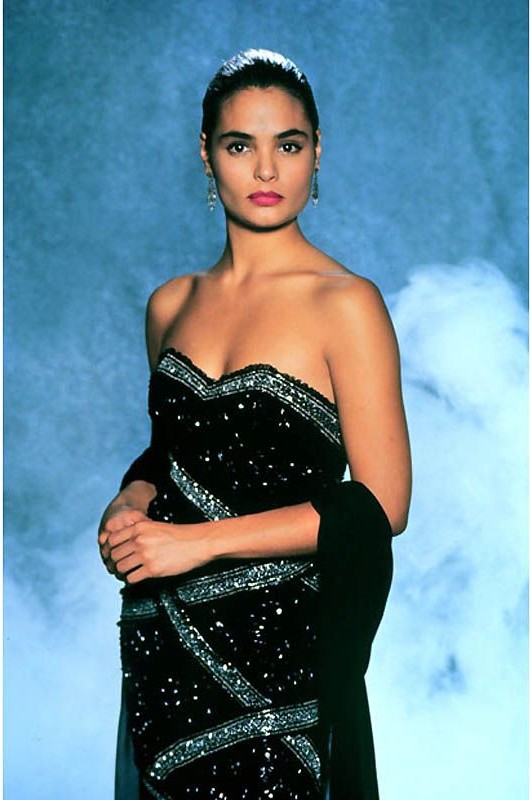

.
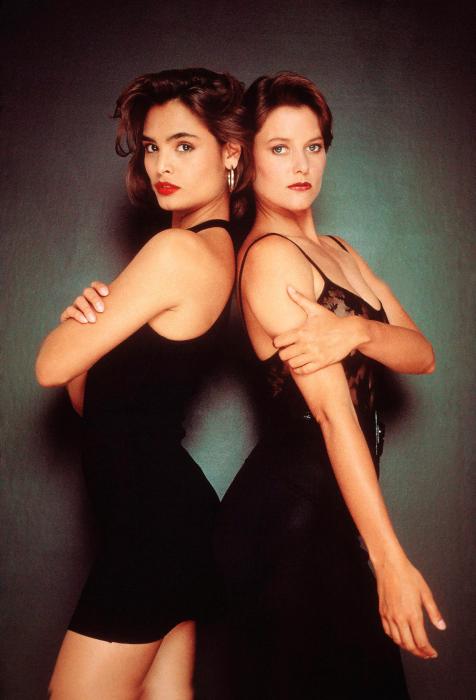

.


.
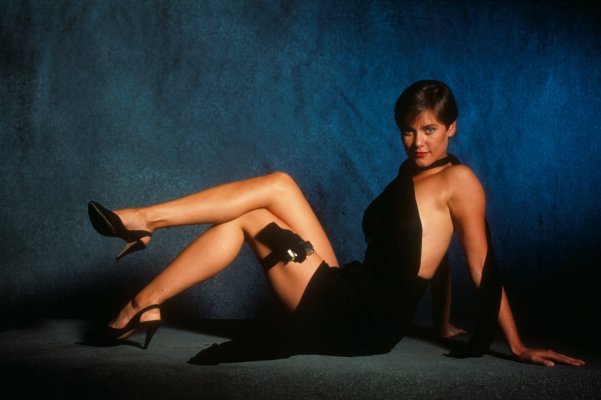
.












 George's Journal