Motorcycle emptiness: Dennis Hopper, RIP

Cool runnings: Dennis Hopper and Peter Fonda ride their hogs into history in Easy Rider
He was a maverick, a one-off, a seemingly indestructible hell-raiser, but on Saturday he proved to be just as fallible as everyone else. Dennis Hopper, an iconic figure who co-created a classic slice of counter-culture cinema and continued to cut his self-styled swathe through Hollywood for a further four decades has died from prostate cancer, aged 74.
He was born on May 17 1936 in Dodge City, Kansas, USA, his father having served in the US Government’s Office of Strategic Services (OSS), the forerunner to the CIA. Growing up in San Diego, the young Dennis developed an interest in acting and studied at the Old Globe Theatre, then, as a young man, moved to New York City and enrolled at the Actors Studio under the legendary Lee Strasbourg, whom he studied under for five years. While there he befriended British actor Vincent Price, whose interest in art rubbed off on Hopper too.
His acting career took off in the ’50s with appearances in TV dramas – among them Bonanza, Gunsmoke and The Twilight Zone – and he successfully moved into film, appearing most notably in Rebel Without A Cause (1955), Giant (1956), Gunfight At The OK Corral (1957), The Sons Of Katie Elder (1965), Cool Hand Luke (1967), Hang ‘Em High (1968) and True Grit (1969). Even at this early stage of this career, he had already developed a reputation for being difficult and, in later years, would credit John Wayne for revitilising his career by ensuring he was cast in The Sons Of Katie Elder owing to his mother-in-law being a friend of the Hollywood giant.
In 1967, Hopper starred in cult film The Trip. Directed by low-budget filmmaker supremo Roger Corman, the lead role was taken by Peter Fonda – son of Henry and brother of Jane – and it was written by relative unknown Jack Nicholson. Featuring a hallucinogenic sequence (hence its title), the movie made great use of psychedelic effects; this and its subject matter and tone made it something of a precursor for what would come next for Hopper. It was, of course, Easy Rider.
Co-scripted by Hopper, Fonda and legendary ’60s writer Terry Southern, and directed by Hopper and produced by Fonda, the production was beset by disagreements between the latter two, but somehow they managed to make a film that had a staggering effect on moviegoers of the time and is rightly considered an all-time classic and an era-defining piece of US and Western culture. Its disenfanchised, confusing and ultimately undefined representation of American youth rang a chord with – and rang true about – a generation that was unhappy with the Vietnam War, experimenting with drugs and looking for something more than their country seemed to be offering them. The two lead characters – played by Hopper and Fonda – go looking for America, but in the end find nothing.
The film was also notable for giving Nicholson his big break, as he played a disillusioned lawyer who shares pot with the two protagonists around a campfire (a scene in which the three actors famously smoked real marijuana) and travels with them someway. Nicholson was nominated for an Oscar for his acting; Hopper, meanwhile was nominated for the Best Original Screenplay Oscar, along with Fonda and Southern, and was nominated for the Cannes Film Festival’s Palme d’Or award for his direction.
Hopper followed up Easy Rider by making The Last Movie, in which he starred alongside Fonda again. Released in 1971, the film won the Critics Prize at the Venice Film Festival, but its heavily existential plot proved too much for audiences and it bombed at the box-office. This perceived failure helped bring about an exile from Hollywood, which was aided by Hopper’s growing drug addiction problems. Around this time too he divorced his first wife, actress Brooke Hayward, and married Michelle Phillips, singer with the folk-rock group The Mamas And The Papas. It was not a successful second marriage – lasting only nine days, as it did.
By the end of the ’70s, Hopper’s film career hadn’t recovered, even though he’d reminded the filmgoing public of his charismatic, individual presence by playing the manic, perhaps insane, ‘American Photojournalist’ in Francis Ford Coppola’s outstanding comment on the Vietnam War Apocalypse Now (1979). Indeed, in his book Easy Riders, Raging Bulls, author Peter Biskind alleges that during this period Hopper was consuming up to three grams of cocaine and 30 beers, as well as marijuana and Cuba Libre cigars, everyday. He even staged a truly surreal stunt – supposedly an effort at performance art – that saw him lie in a coffin hooked up to dynamite, which was followed by him disappearing into the Mexican desert while on a bender. Perhaps unsurprisingly, this episode led to him entering drug rehabilitation. Nonetheless, at this time he also managed to turn in well-recieved performances in Coppola’s gritty urban drama Rumble Fish (1983) and Sam Peckinpah’s thriller The Osterman Weekend (1983).
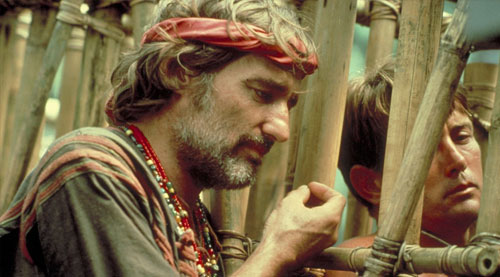
Into the heart of darkness: Hopper with Martin Sheen in Apocalypse Now – the former claimed making this film (difficult and traumatic for many) was one of the great experiences of his life
It was thanks to eccentric genius or bizarro (depending on your viewpoint) director David Lynch, though, that Hopper’s career finally turned around, as the former cast him in the dark psychological thriller Blue Velvet (1986), opposite Isabella Rosselini and Kyle Maclachan. Hopper played the mentally unhinged Frank Booth, whose gas-mask wearing, unabated swearing and generally frightening demeanour made for an unforgettable, if disturbing, cinematic creation. A highly acclaimed performance, he followed it up with an Oscar-nominated supporting role in Hoosiers (1987), a basketball drama starring Gene Hackman, and his career turnaround seemed complete. Indeed, he then directed the noted police drama Colors (1988), starring Sean Penn and Robert Duvall.
In the ’90s, Hopper made hay out of playing colourful cartoonish villains in high-profile action and adventure movies, first the ill-conceived Super Mario Brothers (1993), then the hugely popular Speed (1994) and finally the notorious, but ultimately successful, Waterworld (1995). Then in the ’00s he memorably played villain Victor Drazen in the first season of hit espionage TV drama 24. His final film was 2008’s Elegy, in which he starred opposite Ben Kingsley, Penelope Cruz and former Blondie frontwoman Debbie Harry, and he received a star on the Hollywood Walk of Fame on March 26 this year.
Less well known about Hopper is that his interest in art saw him dabble in painting, poetry writing and photography. His efforts at the latter saw him establish himself as a respected photographer; in fact, his work included the cover art for the Ike and Tina Turner single River Deep, Mountain High, released in 1966. Also, at one stage in the ’60s, he owned an early print of Andy Warhol’s Campbell’s Soup Cans – he’d bought it for just $75.
In an ironic twist, the once counter-culture outsider publically supported the Republican Party in his later years, donating money to the Republican National Committee. In spite of this, he supported Barack Obama in the 2008 Presidential Election, apparently owing to John McCain’s selection of Sarah Palin as running-mate. Just goes to show then that, even prety much at the end, the five-times-married, rebellious anti-hero of Hollywood truly was as unpredictably non-conformist as he ever was. As Easy Rider’s Billy said: “What the hell is wrong with freedom? That’s what it’s all about”… 

Dutch courage: The Oranje look nervous before the ’74 final – would they hold their nerve and win their nation’s first ever World Cup with the hippy-esque ‘Total Football’ philosophy…?
1974. For many across the UK and the USA, it’s a year that generally doesn’t conjure up fond memories. Strikes. The three-day week. Watergate. The Birmingham pub bombings. The Middle East oil crisis. Israel and Palestine at each other’s throats. Even the Bond film that came out that year, The Man With The Golden Gun, was a rare mis-step for the cool superspy – it’s arguably the artistic nadir of the hugely popular cinematic series. What was needed was something to cheer everybody up. How about a World Cup in the summer? That’d do the trick, wouldn’t it?
For this, the third World Cup special here at George’s Journal in the run up to next month’s much anticipated football-athon in South Africa, we’re looking at the ’74 tournament and easily the most remembered match from it – the final. Of all World Cups this was a particularly interesting one and that final an intriguing match, to say the least. And, together, yes, they probably did go some way to cheering up most folks that summer. Well, unless you were English, that is.
For the times, they had ‘a-changed. Charlton, Hurst and Moore (more or less) had gone and Sir Alf Ramsey himself was now on the brink. Why was the once messiah-like manager about to lose his job? The answer lies behind the reason why Englishmen weren’t looking forward to this World Cup – you see, for the first time, England hadn’t made it. Not that it had been for want of trying. Well, in one match in the qualifying campaign, at least.


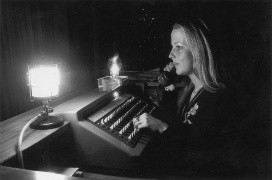
Into the light, back to the dark: The bright, bold and stylish logo and poster for West Germany’s World Cup of 1974 ; a secretary forced to work by candelight during Britain’s three-day-week in the winter of the same year
The notion that England wouldn’t reach the World Cup was unthinkable – in England, that is. But following a drab qualifying campaign, that was the prospect facing the team that lined up next to Poland on October 17 1973 at Wembley, and the entire nation as it sat in front of its TV sets to watch this final World Cup qualifier live – a very rare occurence at the time. Unfortunately, none of them would end up wallowing in what they saw. The men in white lay seige in the Polish half and a fair amount of the game was made up of continual attacks on the opposition goal. All the shots were either missed or saved by the outstanding keeper Jan Tomaszewski, whom before the match young Nottingham Forest manager and rising star of the domestic game Brian Clough, in the comfort of a TV studio, had branded a ‘clown’; the man clearly, most assuredly wasn’t.
Then, in a moment of madness, Bobby Moore’s replacement for the fixture, Leeds centre-back Norman Hunter, inexplicably pulled out of a tackle and the impressive Grzegorz Lato raced away in a counter-attack and passed to teammate Jan Domarski who put the Poles – unthinkably – 1-0 up. England managed to draw level before the end thanks to an Allan Clarke penalty, but that wasn’t enough, just like all their efforts that hadn’t gone in the net. They had needed the win and hadn’t got it and, thus, wouldn’t qualify for the World Cup. In their place, Poland would.
Perhaps one saving grace though, come the World Cup itself, was that oddly three other big-time European football forces hadn’t qualified either, namely Spain, France and Hungary (the latter having had a legendary side in the ’50s). In fact, this development had ensured there were places for some unusual first-time entrants to the competition proper – making their debut then were the exotic-sounding quartet of Zaire (the first ever African qualifiers), Australia, Haiti and East Germany.
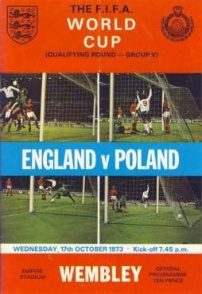

It couldn’t happen, could it?: the programme for a fateful match at Wembley; and Grzegorz Lato, the Pole who made hay while England crumbled – watch out the World Cup…!
Indeed, the East Germans’ presence gave the contest a fair degree of spice, not only because it was being held by their fast globally-developing West German neighbours, but also because the two nations had been drawn in the same opening group and would meet each other. This match, one of the real early highlights of the tournament, to much surprise resulted in a 1-0 win for the Eastern half of Germany thanks to a goal from midfielder Jürgen Sparwasser, who 14 years later was to defect while playing in a veterans’ tournament in West Germany.
To say the West Germans – with the talent at their disposal including 1970 survivors captain Franz Beckenbauer and striker extraordinaire Gerd Müller – were disappointed would be an understatement; to say they were emabarrassed would be very fair too – especially given the fact that at this time, of course, the Cold War was very much still raging and the political and cultural division between the Soviet-driven East and the US-led West was defined in this carved-in-two-country like nowhere else on earth. Indeed, this defeat for West Germany made them take a long, hard look at their approach to this competition and the changes that yielded would pay them unquestioned dividends.
While they were the hosts and, as the tournament progressed, proved to be one of its strongest sides, West Germany, however, weren’t the star turn at this World Cup. If the yellow of Brazil had been the colour of the ’70 tournament, then the orange of Holland was very much the colour of this one. Like the Brazilians of four years before, the Dutch brought a style, a brand, a philosophy of football that was radically new and a complete break from what had gone before – it was called ‘Total Football’, and it was totally brilliant.


Grudge match: West German captain Franz Beckenbauer and East German captain Bernd Bransch shake hands before their sides’ group game; later, East Germany take a shock lead
Make no mistake, Holland had never been a football power (the last time they’d qualified for a World Cup was way back in 1938), yet their emergence this year wasn’t entirely a bolt from the blue – or, rather, amber – either. Using this radical tactical revolution, the Dutch champions Ajax had won the European Cup a highly impressive three years in a row in the early ’70s, and the Dutch national team of ’74 was almost exclusively made up of the best from Ajax’s ranks. Chief among these was the incredibly talented Johan Cruyff – a player who, by the end of the decade if not earlier, would be spoken of by many in the same breath as the extraordinary Pelé. And not just because of his natty trademark move – coined the ‘Cruyff turn’ – which was debuted in this tournament’s Holland-Sweden match, and saw him feign to play the ball one way and then drag it behind his standing leg and, turning 180 degrees to perfect the deception, move off in the other direction, leaving an opposing, facing player looking like a right charlie.
Cruyff ostensibly lined up as a centre-forward, ostensibly being the operative word. For the notion behind ‘Total Football’ was that each of the ten outfield players of a team – Cruyff and everybody else – would essentially be able to play in any role on the pitch (attacker, midfielder or defender) depending on where they found themselves at any one moment and as circumstance dictated. The philosophy was all about space; a player would fill the space of another who had received the ball and was now attacking the opposition with it, therefore the player would need to be talented enough to play anywhere on the field. It sounds simple and the Dutch, amazingly, made it look simple.
In their opening group they brushed aside Uruguay 2-0, thanks to two goals from ‘forward’ Johnny Rep, and took Bulgaria apart to the tune of 4-1, with another goal from Rep and two from Johan Neeskens (both of which were penalties), and finally they drew 0-0 with Sweden. Their form was easily good enough to see them through to the next round as group winners. Joining them there were Brazil – perhaps predictably, but with nothing like the side of four years before – and Yugoslavia, who both qualified from the same group at the expense of Scotland and Zaire.
Yes, that’s right, in England’s absence, the plucky Scots were flying the flag for the home nations, and they were plucky too. But ultimately unlucky. Somehow, they, Brazil and the Yugoslavs all managed to accrue exactly the same points tallies from playing each other, meaning the two sides that would go through would be the two who beat Zaire by the most goals – Yugoslavia put a whomping nine past them, Brazil three and Scotland could only manage two. So the Scots went home without losing a match and after holding the once mighty Brazil to a 0-0 draw. At least, when they got home, they’d have the bragging rights over them down south.
Elsewhere, East Germany qualified for the next round above West Germany from the same group (thanks to their win over them), while, their unexpected draw against the English seemingly a sign of things to come, Poland also made it through, shocking both Italy and Argentina on the way, beating them as they did. The Argentines squeaked through with them; the Italians, shamefaced, went out.
Now, what followed was a peculiar, and often forgotten thing in football lore, yes, the second round of this and the next two World Cups was a second group stage. Why there weren’t just quarter finals and then semi-finals instead, as there had been in the ’60s tournaments, frankly is anyone’s guess – it would have been far more sensible and simpler. But, rather like Claudio Rainieri, FIFA decided to tinker substantially in the ’70s, so the eight remaining teams now found themselves split into another two groups of four, the winners of which would go on to play each other in the final.
“Rumor had it I was richly rewarded for the goal, with a car, a house and a cash premium. But that is not true.” ~ East German Jürgen Sparwasser on his crucial contribution to the politically charged 1-0 defeat over West Germany in the ’74 World Cup
The first of the two new groups pitted the increasingly irresistible Holland against the South Americans, and the Dutch didn’t disappoint – they beat Argentina 4-0, with two goals from Cruyff, and Brazil 2-0, in which Neeskens grabbed another. Easily the class act of the group, Holland went through to the final; Brazil finished runners-up. The second group saw a revitalised West Germany storm through with three wins out of three – Müller grabbing a goal each against Yugoslavia and Poland. Yet, for their part, the Poles didn’t give up. Indeed, they managed to win their other two games (Lato scoring in them both), which meant they finished second in the group, setting up a play-off against the Brazilians.
Believe it or not, their fine form didn’t end there either, thanks to yet another strike from the goal machine that was Lato, they defeated Brazil, ensuring they amazingly ended the tournament in third place. Lato himself won the Golden Boot award with seven goals, and would go on to play in the next two World Cups for his country. Some football fans, given his exploits, believe the feller to be one of the sport’s great underrated players – quite frankly, you can see where they’re coming from.
And so to the big one – the final. The competition’s class acts versus the hosts. The cultured Dutch versus the efficient Germans. Undeniably, as they were beginning to make a habit of doing (and, of course, would carry on doing for decade upon decade), the Germans had done well to pull themselves together and, like a well-oiled BMW engine, motor their way through to the last two. But the men from The Netherlands were more than a well-oiled machine, they were like an oil painting on a football pitch – with big, beautiful brushstrokes of orange paint. Surely the final was there for the taking for Cruyff and co. Wasn’t it? Perhaps they thought so themselves.

Genius at work: Johan Cruyff pulls off the move he gave his name to against Sweden
You see, for all their talent and promise, the Dutch had a weakness in this World Cup – one which only surfaced in this final tie. Namely, they knew how good they were. Many great sides are aware of how good they are, of course, but the trick is not to get carried away with it, to keep a level head, have some humility. Sure, Holland weren’t exactly strutting about like arrogant troubadours, but for the same token they weren’t exactly shy and retiring like little mice hiding in clogs either. It’s probably fair to say they were guilty of a fair bit of football hubris going into the final.
However, if that were the case, it’s very understandable. The extraordinary notion-made-practice that was ‘Total Football’ had already been proved (remember Dutch giants Ajax had triumphed in the European Cup three seasons in a row coming into this World Cup), so the national team had enormous belief they could repeat the trick, despite their virtually non-existent record in the competition’s history. And putting this liberated, free-flowing, fantasy-like football philosophy in place had forged an interesting collective personality in this Ajax/ Holland group of players, which rather mirrored ‘Total Football’ itself. In short, the Dutch team were, well, rather hippy-ish.
Many footballers of this era – like a lot of blokes – had long hair, of course, but Cruyff and his teammates seemed to have something more; they acted cooller, more aloof, more ‘above it all’ than other teams; almost as if, like their sixth sense on the pitch, there was some higher or spiritual understanding at work among them. Over the years since, there have even been rumours the players and their wives dabbled in ‘free love’ – substantiating those rumours, though, would be nigh-on impossible, I’d imagine. Still, when it came down to this final 90 minutes of football, all that added up to a weakness for the Dutch, and one which – in their resilient, resourceful way – the West Germans exploited.

Goal machine: Gerd Müller takes his World Cup tally to a record-breaking 14 goals – across just two tournaments – as he scores in the final
Not that it started out that way, mind. The Dutch kicked off at Munich’s Olympiastadion (home of Bayern Munich football club) and, thirteen passes later, Cruyff went on a short solo run, beating defender – and, later, Germany national coach – Berti Vogts and was brought down by Uli Hoeneß centimetres outside the penalty area. Nevertheless, in his infinite wisdom, English referee Jack Taylor awarded a penalty, which Neeskens put away. The Dutch had scored inside a minute (from a penalty, the first ever scored in a World Cup final) and before the Germans had even touched the ball. Shocking stuff. The Dutch, then, were on their way and looked to be cruising for the next 25 minutes until Bernd Hölzenbein fell in the Dutch penalty area and Taylor awarded another controversial pernalty, which full-back Paul Brietner tucked away. This, unquestionably, was the turning point.
Holland seemed, rather oddly, stunned – yet it wasn’t the first time they’d conceded a goal in the tournament – and the Germans’ belief and endeavour increased. They began to push and in the 43rd minute, just before half-time, Müller characteristically scored an opportune goal (his 14th and final World Cup goal – a record he held for 32 years until Brazil’s Ronaldo broke it) giving his side a lead they were never to relinquish. Both the Germans and the Dutch had chances in the second half – the former having a goal disallowed and a penalty appeal waved away – but victory, surprisingly, was the host’s. ‘Total Football’ had been defeated and the Dutch dream was over.
So what can you make of that final and the ’74 World Cup in general? Well, yes, the exciting yet cool Netherlands and their fancy fantasy playing style had failed – and it’s easy to suggest that this group of players with their hippy-esque football conceit proved unsuccessful rather like how hippies themselves and the counter-culture itself faded and went out of fashion by the middle of this decade. Yet, maybe it would be too neat to come to that conclusion, and perhaps it’s more pertinent to look at the victors and what this competition meant for them. For, surely without doubt, both physically and psychologically the winner of this World Cup was West Germany, not just because they won the thing, but also because they hosted it. Yes, after the colourful sunniness of 1970, this one is often remembered as the one that seemed to be constantly beset by rain and lacking two or three major nations, but it was a huge advert for West Germany – indeed, a country that by this point could no longer be ignored on the world stage.
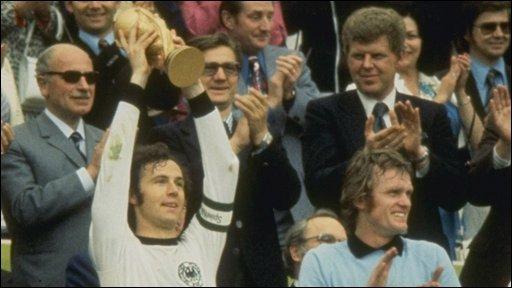
Kaiser chief: Beckenbauer lifts the new World Cup trophy high as Adrian Chiles successfully lurks in the background
Thanks to the bolstering of its economy by the United States and the other Allied powers immediately following the Second World War (in order to ensure both West Berlin and the western half of Germany in general didn’t fall to Communism and the USSR), the country achieved what is commonly referred to as the West German Wirtschaftswunder (economic miracle). So much so that, in 1973, just one year earlier than the World Cup, it could boast the world’s fourth largest gross domestic product (GDP), 5.9 percent of the world’s total. While the likes of the UK suffered economic turmoil in the ’70s, seemingly lurching from one crisis to the next, there’s no doubt that the nation England had defeated in the ’66 final was well and truly on the up. And winning the World Cup on home soil, with all its glittering, impressive stadia, was surely the icing on the cake. After all, they’d won the European Championships in 1972 and, thus, now held the two most coveted trophies in football at the same time.
Yes, there was no doubt about it, West Germany was now the top dog in Europe and – in football, at least – across the entire world. But what would happen in four years’ time in 1978 when the competition would head back to South America? Could Die Nationalelf hold on to their trophy? And what would this World Cup as the ’70s headed towards their end bring? Well, there’s only one way to find out, folks, yes, you’ll have to read all about it in the next World Cup special here at George’s Journal – until then, like an opponent having just been done by a ‘Cruyff turn’, watch this space… 
Yellow fever: World Cup ’70 ~ Brazil v Italy
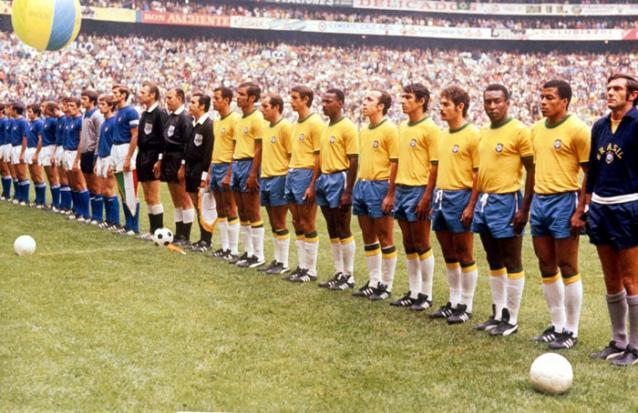
The beautiful game: the yellow-jerseyed Brazil line up next to Italy before one of the greatest World Cup matches ever played – the talismanic Pelé fittingly standing out, looking towards us
So, following the first World Cup special here at George’s Journal focusing on the ’66 event, the second inevitably looks at the next tournament (an absolute cracker) as well as, rightly so, the best remembered match from the World Cup of… 1970.
As this year began, many in Britain and elsewhere could have been forgiven for probably thinking the values, ideals and ethos of the previous decade would continue. Sure, the UK economy had endured a dodgy time of it towards the end of the ’60s, but a generally optimistic ten years that had given rise to modern consumerism, progressive civil legislation, real disposable income for young people and ‘free love’ could only bring a bright future, right? Well, as we know, that’s not exactly what happened.
The trials and tribulations of the ’70s were yet to come, of course, but by the time the ninth World Cup kicked off in Mexico on May 31, there were signs that this new decade certainly wasn’t going to be an automatic continuation of the previous one. January brought the break-up of two of the cultural cornerstones of the ’60s, both of them music groups – Diana Ross and The Supremes and The Beatles. The folk-rock duo that had provided the soundtrack to the film The Graduate, Simon And Garfunkel, would soon throw in the towel as well. And then, in April, less than eight months after the worldwide jubilation and wonder brought about by Apollo 11’s Moon landing, NASA would face disaster like it never had before with the extraordinary yet unsettling epsiode of Apollo 13, which thankfully, of course, resulted in a daring rescue of three astronauts from certain death.


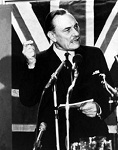
Signs of the times: (left to right) Mexico ’70’s colourful logo and mascot, Juanito; BBC 2 launches colour TV in Britain; and Enoch Powell stirs up a hornet’s nest
Once underway, the World Cup itself underlined a couple of breaks from the past too – this time though, both of them positive. In 1968, Tory MP Enoch Powell had delivered a deliberately provocative speech about British immigration. Forever after referred to as the ‘Rivers of Blood’ speech, it stirred up a great deal of ill-feeling towards migrants newly arriving in Britain and those who had arrived in the last ten or so years, many of them afro-Caribbean. Indeed, so powerful was the effect of this speech that it has been speculated whether it helped swing the 1970 UK General Election the Tories’ way when this was held on June 18 – others speculated that the sitting Labour government’s defeat in the election was due to England’s fate in the World Cup itself; but more on that later.
So what has ‘Rivers of Blood’ got to do with the 1970 World Cup? Well, it so happened that, in Britian and around Europe, this was the tournament that properly introduced football fans to a nation, nay, a footballing philosophy, that they immediately fell in love with… Brazil. And, indeed, many of the Brazilian players on show were either black or of tanned skin. If that wasn’t a positive thing following ‘Rivers of Blood’ two years before and all it stoked up, then I’ll be damned.
And the second positive break from the past this World Cup brought? Well, that too played a big role in the sudden appeal of the sensational Brazilians, because it was the arrival of colour television. TV in Britain had only gone colour in 1967 (and only to help break in the new BBC2 channel), so the liberation from monochrome viewing was brand, spanking new and it paid dividends for this World Cup. Suddenly, football pitches were actually green, fans in the stands looked multi-coloured, teams wore kits that were no longer either white, black or different shades of grey, and right in the middle of it all were the Brazilians, incandescent in bright yellow jerseys and blue shorts – their football and their appearance were an absolute feast for the eyes.

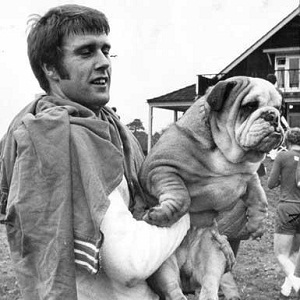
England expects: Bobby Moore on the cover of Radio Times; Geoff Hurst has the bulldog spirit
If you were English, though, as Mexico ’70 kicked off, it was only about one thing – England going over there and defending their crown, retaining the Jules Rimet trophy. Hopes were high; England actually flew out to Central America with an improved side on the one that had won the whole shebang four years previously. But, before the thing itself had even begun, tragedy struck. The team were based in Colombia in order to play a few warm-up matches and, while there, captain Bobby Moore – the biggest hero of ’66 – and Bobby Charlton walked into a jewellery shop to buy a present for the latter’s wife, only for Moore to end up bizarrely accused of theft by the shopkeeper and getting arrested.
Unsurprisingly, this caused an almighty rumpus on this side of the pond and, once it became pretty obvious our Bobby had been set up, resulted in then Prime Minister Harold Wilson making himself clear through the Foreign Office to the Colombian government that the matter be cleared up as quickly as possible, otherwise a diplomatic incident may occur. Moore was duly bailed allowing him to play in the World Cup and exonerated later in the summer.
As if that wasn’t challenging enough, England also had the prospect of having to play the much fancied Brazil in the opening group stage of the tournament, in addition to the decent European sides Romania and Czechoslovakia. Brazil recorded solid wins over the supposedly lesser sides in the group – 4-1 against Czechoslovakia and 3-2 against Romania – and England beat them both 1-0. This meant it all came down the England-Brazil clash to decide who would top the group. In spite of being played in the torrid heat of Guadalajara, it turned out to be an absolute classic; probably one of the best ever remembered World Cup matches.
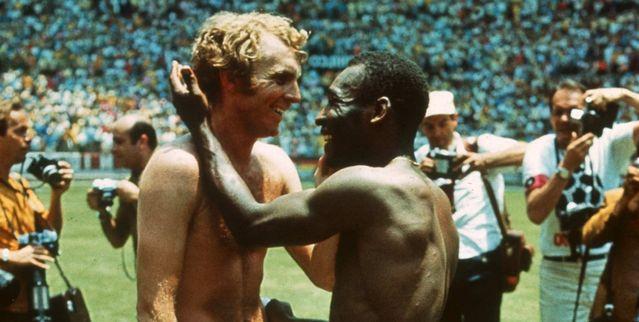
Friends and foes: Bobby Moore and Pelé swap shirts at the end of the England-Brazil game
The most recalled – and reshown – moment was an outrageous save by illustrious England goalkeeper Gordon Banks from an ace downward header from Brazilian genius Pelé. Frankly, the save was so good it defied belief. The match was eventually won by Brazil thanks to a single goal by the glorious striker Jairzinho, thanks to a magnificent second of cushioned-ball control from Pelé, on 59 minutes. Thus, Brazil topped the group, England finished second and both progressed to the quarter finals.
Another moment from the match, forever captured in time thanks to a photo reproduced the world over, was when Bobby Moore and Pelé shook hands and exchanged shirts at the end of the match – there was utter respect and, more, true joy between the two; surely the best defender and the best forward, respectively, of their era. They were to become firm friends in future.
Had England beaten Brazil, they would have faced Peru in the quarter final (in an open, attacking game, the men in yellow went on to beat their fellow South Americans 4-2 to go through to the semis), but by taking second place in their group, they instead set up a date with destiny… in a repeat of the final four years before, they played, yes, West Germany. It could only have been really, couldn’t it? However, as it happened, it appeared this twist of fate wasn’t such a bad thing. Indeed, despite Banks going down to food poisoning immediately prior to the match and his understudy Peter Bonetti filling in between the sticks, by the 49th minute England had a very healthy 2-0 lead, thanks to goals from Alan Mullery and Martin Peters. But nothing’s ever simple when it comes to England.
Never out of the game, the Germans got a goal back in the 68th minute through terrific midfielder Franz Beckenbauer, and this changed the match completely. Or, at least, England’s manager Sir Alf Ramsey’s reaction to it did. In a surprising and unprecedented move, Ramsey substituted the string-pulling veteran midfielder Bobby Charlton and, without him, England found they could no longer control the pace of the game. West Germany began to mount fast attack after fast attack and, eventually, turned around a 2-0 scoreline against them into a 3-2 win thanks to goals from Uwe Seeler and, in extra time, Gerd Müller – both of which resulted from mistakes by Bonetti in the English goal. So, England were out and had failed in their bid to defend the World Cup. The Germans had their unlikely revenge and wouldn’t be beaten by England again competitively for another 30 years until the European Championships in 2000. The nation was disappointed, unquestionably, but so disappointed as a nation as to unseat the current government in a General Election a few days later? Hardly. And, after all, plucky old England, of course, wasn’t to know what its international team’s future would be like from this point on…
The semi-finals produced two more fine matches, contested, as they were, between four previous World Cup winners. In the first, Brazil played Uruguay. The latter team managed to take the lead after 20 minutes, but after conceding an equaliser right on half-time, by the time the game entered its last 20 minutes, inevitably the Uruguayans couldn’t stem the Brazilian attack any longer and lost 3-1, thanks to goals from Jairzinho and ace young winger Roberto Rivelino.
The second semi-final was unforgettable. It was West Germany versus Italy (the latter having qualified sluggishly from their group, but improving dramatically in their quarter final match) and, from the 8th minute onwards the Italians led… all the way until stoppage time when the Germans hit back with a late, late equaliser. Into extra-time it went and, extraordinarily, there were a further five goals, including two from the sensational Gerd Müller. TV replays were still showing the latter’s second goal when, unmarked in the penalty box, Gianni Rivera scored for the Italians – and that’s how it stayed, Italy winning 4-3. During the match Beckenbauer even broke his arm, but was forced to play on until the end wearing a sling because the Germans had already brought on their maximum two substitutes. Perhaps fittingly, the match quickly became known as the ‘Game of the Century’ – especially in Italy and Germany – and a plaque at the Estadio Azteca in Mexico City where it took place commerorates it as such. Müller finished the tournament as top scorer with a stunning ten goals, six of which came as back-to-back hat-tricks across two groups games. Rivera is currently serving as a Member of the European Parliament.
And so to the final itself, Brazil versus Italy; and what a final. It was former who took the initiative. In the 18th minute, and from a throw-in, Rivelino volleyed the ball across the penalty area and Pelé rose to score from a lovely header. Fittingly, given who scored it, this was Brazil’s 100th goal in the World Cup. However, just as they were beginning to get into their rhythm of beautiful football against a more defensive-looking Italian side from the previous two matches, come the 37th minute they got complacent in defence and the Azurri forwards took full advantage, Boninsegna getting the final touch to equalise. In truth, though, Italy look tired and weary in the Mexican sun after their heroics in the semi-final. Yet, the Italian defence was also mean as beans and, discounting the three they’d conceded in the seven-goal semi thriller, they had only allowed in two goals all tournament. It would be impressive indeed for Brazil to breach ther goal again, especially as this was a World Cup final. But that’s exactly what the Brazilians did, and more.
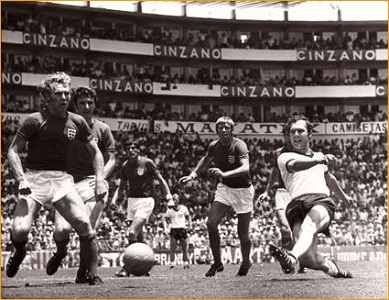
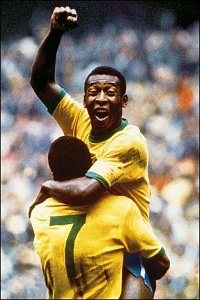
The Kaiser and the king: Franz Beckenbauer scores against England and Pelé celebrates Brazil’s 100th World Cup goal
The breakthrough came on 66 minutes when midfielder Gérson hit a long range effort past Italian keeper Enrico Albertosi. A stunning strike; Brazil now looked like they’d probably score more and only had to wait three minutes for the next one to arrive. Gérson sent a free kick up towards Pelé and the latter nodded it down into the path of Jairzinho who, with the defender on him, just did enough to beat the onrushing Albertosi and the ball rolled into the corner. Now two goals clear, the Brazilians surely couldn’t be caught, could they? They couldn’t; Italy had gone. And in the 86th minute the yellow-shirted ones delivered the showstopper, the coup de grace.
What follwed has not just over time proved to be the greatest goal scored in a World Cup final, but also surely the best goal scored in any World Cup. It involved eight players and was a moment of fantasy football. The move started just outside the Brazilian penalty area with striker Tostão, who, having started it ran all the way to the Italian penalty area in case he were needed. Meanwhile, in his absence, Clodoaldo beat four Italian players in his own half, then passed to Rivelino who arrowed a pass down the left-wing to Jairzinho. Moving inside, the latter passed to Pelé in the middle, who, with wonderful deftness, held up the ball and touched it on to the captain Carlos Alberto, arriving late all the way from right-back, who smashed his shot past Albertosi and into the bottom corner. The crowd went absolutely wild and rightly so – Brazil had topped off a 4-1 hammering of Italy in the World Cup final with a wonder goal.
And so that was that. The South Americans were World Cup champions for a record third time, which meant they got to keep the elegant Jules Rimet trophy (the present World Cup trophy would be awarded for the first time at the next tournament). Not just that, though. The manner in which they won the thing would never be seen again in a World Cup or any serious football competition. This Brazilian side was easily the most attacking, free-flowing and magical ever to win the Cup – watching them compared to the top international sides of today is like watching the Harlem Globetrotters transferred to football; the difference being of course the Brazil of 1970 weren’t an exhibition side, they competed and won the top prize. Their blend of skill, grace, power and pace was simply stunning.


Take that!: Carlos Alberto’s wonder goal seen from two different angles
In qualifying for the finals, they played six matches, won them all, scoring 23 goals and conceding just two. Once there, they played another six matches and again won them all, scoring 42 goals and conceding 8. This truly was a side that, not being frugal at the back like Italy mostly were, really did play to the maxim ‘don’t worry about defence, we’ll just score one – or most likely – two or more than you’. And, needless to say, they were brilliant at it. There was an ebullient innocence in the way they played and won the World Cup, which along with their colourful, exciting appearance on newly launched colour television, made them an instant sensation the world over. Plus, of course, to the average Anglo-Saxon ear, their names were wonderfully exotic too – Carlos Alberto, Jairzinho, Rivelino, Tostão and Pelé. Ah, Pelé, perhaps the final word on Brazil in ’70 should go to him.
Having played in three previous World Cups, this would be the great man’s last – and obviously he’d bowed out in the best possible way. For me, there’s no question he’s the best player there’s ever been. In the ’58 World Cup held in Sweden, he played an astonishing star role that included a second half hat-trick in the final against the host nation to gave Brazil their first title. And back then he was only 17. Four years later in Chile, he was again decisive, even though he was injured before the final (Brazil won again, though, thanks to two goals in the final from the legendary Garincha). In ’66 he had less fun, though, when he was fouled out of a group match against Portugal; Brazil followed him out of the competition. Owing to that overly harsh treatment and disappointment, he vowed never to play in a World Cup again. Obviously he changed his mind, and thank goodness he did.
Indeed, perhaps his two most memorable moments in the ’70 tournament were two chances he missed. The first was in a group match against Czechoslovakia when he tried to beat the keeper from inside his own half and saw the ball bounce just wide of the goal, and the second was in the semi-final against Uruguay when he sprinted after the ball into the penalty area and, terrifically dummying the oncoming goalkeeper, shot just wide. He finished his career having scored over 1,000 goals – in fact, the 1,000th had come from the penalty spot in 1969, immediately after which fans invaded the pitch in celebration.
So, away from football, sport and entertainment in general, much crap was to come in the ’70s, of course, but in addition to the year’s infamous Isle Of Wight music festival, held in August and attended by a staggering 600,000 people (one of the biggest human gatherings of the time), the efforts of Pelé and co, and the sunniness, vibrancy and sheer joty of World Cup ’70 helped ensure that this summer, in Britain at least, went some way towards feeling like another ‘summer of love’. Yes, he future could wait, for the time being… 
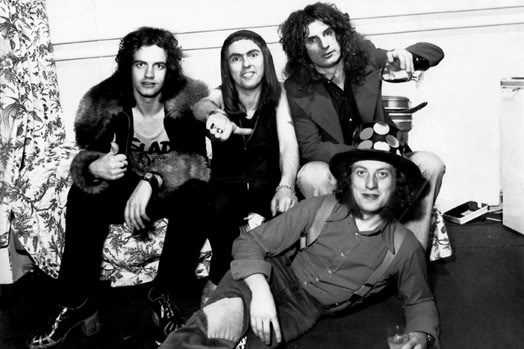
Glam champions: the legendary Slade, regulars from the golden era of Top Of The Pops, in an image on show at the V&A exhibition
If you go down to the V&A today, you’ll be sure of something of a surprise. For the world famous London museum, known for its huge collection of decorative art objects from times past, is currently playing host to a free exhibition of photos taken especially for the Beeb’s classic midweek chart music-themed magaine show Top Of The Pops.
Specifically displaying the work of Harry Goodwin, the programme’s resident photographer from its very first show broadcast on New Year’s Day 1964 right through to 1973, the exhibition features images of the major figures from the Merseybeat, ‘British invasion’, psychedelic rock, Motown and glam rock eras; among them The Fabs, The Stones, The Kinks, Ike and Tina Turner, Pink Floyd, Elton John and Marc Bolan.
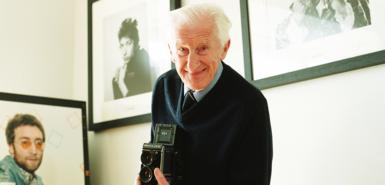
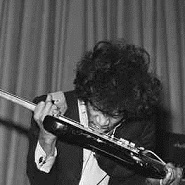
Snap happy: Harry Goodwin (left), TOTP’s resident photographer for the first nine years of the show’s existence; and his image of Jimi Hendrix from 1967 (right), simulating the star playing his guitar with his teeth, as he would go on to do on that night’s show
Admittedly, this isn’t a huge exhibit, covering three walls of just one room of the enormous museum’s Theatre and Performance collection, and the majorty of the images are familiar, face-on portrait-style snaps. Yet, accompanied by top ’60s and ’70s pop/ rock tunes as it is, the display makes for a cosy and diverting way to spend half-an-hour or 45 minutes, as well as throwing up one or two interesting tid-bits (TOTP effectively invented glam rock thanks to early ’70s guests wearing increasingly outrageous costumes to stand out from each other).
It’ll surely bringing a smile to almost any visitor’s face too. This is British TV history in front of you – very accessible TV that had no agenda aside from providing universal entertainment and dads with the occasional eye-candy that was delectable dance troupe Pan’s People (they too get a look-in here with a satisfyingly big image).
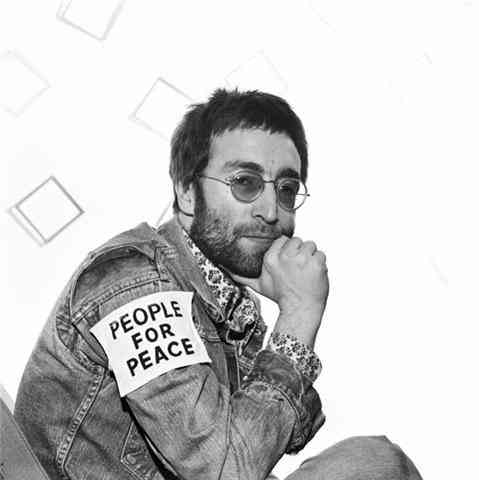
One man arm-band: a post-Beatles John Lennon snapped on his own from the 1970s
For his part, Manchester-born Goodwin started out as a photographer following the Second World War and, thanks to his success as Top Of The Pops‘ in-house snapper, became a freelance shooter for major bands as well as football and boxing stars. Now 85, more of his images can be poured over in the coffee table book My Generation: The Glory Years of British Rock – Photographs by Harry Goodwin, on sale both in the V&A shop and here.
All in all then, I certainly recommend this exhibition; it’s ideal if you happen to find yourself in the Smoke and are in a whimsical, nostalgic mood. Plus, on the way out you can examine the remains of a guitar owned by The Who‘s Pete Townshend, broken on stage during a performance as he had a wont to do – talk about my generation; well, the generation before mine, if you’re being precise. 
‘Harry Goodwin: The Glory Years of British Rock 1964-73’ runs free of charge at the V&A Museum until August 30 and will then transfer to the Grundy Art Gallery, Blackpool, from November 20 – January 8 2011
Listen, my friends! ~ May/ June



In the words of Moby Grape… listen, my friends! Yes, it’s the (hopefully) monthly playlist presented by George’s Journal just for you good people.
There may be one or two classics to be found here dotted in among different tunes you’re unfamiliar with or never heard before – or, of course, you may’ve heard them all before. All the same, why not sit back, listen away and enjoy…
Click on the song titles to hear them
~~~
Barry McGuire ~ Eve Of Destruction
P P Arnold ~ Angel Of The Morning
David McWilliams ~ Days Of Pearly Spencer
The Zombies ~ Time Of The Season
Jethro Tull ~ Livin’ In The Past
Joe Cocker ~ Delta Lady
Derek And The Dominos ~ Why Does Love Got To Be So Bad
Roxy Music ~ If There Is Something
Aerosmith ~ Sweet Emotion
Electric Light Orchestra ~ Evil Woman
Yvonne Elliman ~ If I Can’t Have You
Harold Faltermeyer ~ Axel F
Carly Simon ~ Let The River Run

Red-letter day: Not Roger, but Bobby Moore and his men become saints, winning England’s – so far – only World Cup in the year when their country was envied as the hippest place on earth
The Bobbies Moore and Chalton; Hurst’s hat-trick; Kenneth Wolstenholme; Nobby’s dancing; the dodgy third goal; the Russian linesman; Pickles the dog… is there anything to say about the 1966 World Cup final that hasn’t been said already? Maybe not. But then again, maybe it depends how you look at it.
With us now officially less than a month away from the 19th World Cup in South Africa, here at George’s Journal we’re kicking off a series of seven looks-back at previous World Cups – and, specifically, at the most memorable and iconic match from each of them. But more than that. Over the next 25 days, each of these footie friendly pieces’ll focus on not just the matches in question and the tournaments to which they belong, but also the culture and events that surrounded them. So then, indeed, much has been said, read and heard about the ’66 final, but most often out of context – that’s not what we’re going to do here.
It was Saturday July 30, and at London’s Wembley Stadium England’s football team were about to go out to battle to become world champions of the biggest sport on the planet. Yet, lest we forget, that’s far from all that was going on. The Big Smoke – especially its West End – was on top of the world already. Nowadays, in the UK as much as in Italy or Spain, football stars are the new rock ‘n’ roll/ movie stars; back then the rock ‘n’ roll/ movie stars were the rock ‘n’ roll/ movie stars. The Beatles, The Stones, Michael Caine, Marianne Faithful, Twiggy, Terence Stamp, Julie Christie, David Hemmings, Vanessa Redgrave, Cathy McGowan, Sandy Shaw… the list goes on and on, and on and on and on. It was the Swinging Sixties and in this summer in this city, it was in absolute full-swing.


Mascot and hero: World Cup Willie, the little lion in a Union Jack outfit (left); Pickles the dog, the canny canine who found the stolen Jules Rimet trophy dumped in a garden (right)
In the charts were The Kinks’ exceptional elegy on the downside of pop stardom Sunny Afternoon; The Stones’ wilfully lugubrious, sitar-featuring Paint It Black; and The Fabs’ precursor single to the magnificent Revolver album, Paperback Writer. At the cinema Audrey Hepburn ditched Givenchy chic for mini-skirts as she and fellow icon-of-the-age Peter O’ Toole taught audiences How To Steal A Million. Down on the King’s Road in Chelsea, the trendiest boutique going, Granny Takes A Trip, was doing booming business; Cockney snappers Bailey, Donovan and Duffy were capturing models Jean Shrimpton, Penelope Tree and Verushka in Mary Quant (the Bailey-inspired flick Blowup was just around the corner); and on TV the Edwardian adventurer hero in the one week-old series Adam Adamant Lives! woke up from suspended animation to be told: “this is London, 1966 – the swinging city”.
Now, let’s not kid ourselves, it wasn’t like this all over the country, of course not. It was only in London; only in a few venues across the centre, in fact, and, even then, it was like a rarefied bubble accessible only to a select few. However, its tentacles were forever stretching out throughout 1966 and touching teenagers, hipsters and the average joe and jodie throughout Britain – and further afield. And it was into this marvellous maelstrom of classless celebration, artistic diversity and exciting, colourful, vibrant joie de vivre that eleven relatively ordinary men in red jersies with three lions on their chests were about to leap as at 3pm they stepped on to Wembley’s green turf this Saturday afternoon. They weren’t to know that, though; they were here to win a football match and capture the ultimate prize in their sport. And they did that with bells on.


Dirty tricks and top pick: An incensed Alf Ramsey won’t let Bobby Charlton fratenise with the Argentines (left); Portugal’s nine-goal player of the tournament, Eusébio (right)
Their route to the final hadn’t been the stuff of dreams, however. The ’66 World Cup featured 16 teams, divided up into four groups of four in the first round, in which each team played the other in each group. In their group, England faced Uruguay (twice previous World Cup winners), Mexico and France. They drew 0-0 with Uruguay in their first match, the tournament’s opening game and far from a statement of intent from the host nation, but then beat Mexico 2-0 and France 2-0. Finishing top of the group, having scored four goals and conceding none, they qualified for the quarter finals. There they faced Argentina in what would become a very memorable match, but sadly not for the best of reasons.
Yes, the English got through it, and that’s maybe the best way of putting it; the football on show was of negligible quality thanks to the Argeninians’ hard-tackling and spoiling tactics. Eventually, the referee had had enough and sent off their captain Antonio Rattín for dissent. The player was so disgusted, however, he refused to leave and had to be escorted off the field by two policeman, wrinkling a British pendant as he left. To this day the Argentines, believing they were unfairly treated, refer to the match as el robo del siglo (the robbery of the century) and thus began the football feud between the two nations that arguaby still exists today. Striker Geoff Hurst scored the match’s only goal in the 78th minute and, at the final whistle, England’s manager Alf Ramsey stopped his players from shaking hands with their opponents and engaging in the customary swapping of shirts, indeed grabbing swapped shirts from their hands in some instances. In the following days he would refer to the Argentine side as ‘animals’. Rather an exaggeration, perhaps.
If legendary Manchester United midfielder Bobby Charlton was a mercurial figure for this side, then Alf Ramsey was its Zeus-like figure. He had been appointed in 1963 and immediately set about planning to win the World Cup in three years’ time. He was a firm, abrupt man who didn’t get on with the press enormously well, but he was fair and loyal with his players. His breakthrough decision was, radically, to transform the team’s formation by removing wing-based midfielders, which England and many other sides had played with for decades, giving rise to the side later being referred to as Ramsey’s ‘wingless wonders’. There’s no question the move served them well in the tournament, as with advanced-minded midfielders who could drop back and defend if necessary, England attacked through the middle as opposed to on the flanks.
Now through to the semi-finals, England faced Portugal – one of the true form teams of the tournament. The skillful Iberians were riding the crest of a wave in the ’66 tournament. They’d never qualified before and wouldn’t get anywhere near these dizzy heights again until 2006 with Cristiano Ronaldo. Their star this time around – arguably the star player of the entire competition – was the frighteningly useful Eusébio (who, upon completing his football career, had managed to score an amazing 727 goals in 715 games). When this tournament was completed, Eusébio finished top scorer with a highly impressive total of nine goals, four of which, in fact, had come in Portugal’s quarter final clash against North Korea. Yes, you read that right, North Korea.
The fact this particular team, another debut qualifier, had got this far was a true wonder and, perhaps even more remarkably they led this match 3-0 at one stage, before an incredible comeback from Eusébio and co. saw them eventually turned over 5-3. The main man scored again in the semi-final against England, an 82nd-minute penalty awarded against Bobby Charlton’s younger brother, centre-back Jack, but by that time it was too late – Charlton the elder had unleashed two trademark long-range, slide-rule strikes, giving England a 2-1 victory. They were through to the final.

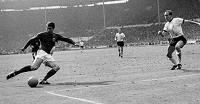
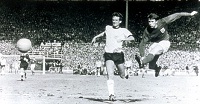
1… 2… 3: Geoff Hurst’s World Cup final hat-trick – an achievement still yet to be equalled
And there, of course, they faced West Germany. England lost the coin toss deciding which of the two teams would play in their home kit (the West Germans also wore white shirts and dark shorts), which ensured the host nation would wear their away strip. And the superstitious may have seen this minor defeat as an omen for what was to come as, in the 12th minute, the Germans took the lead through striker Helmut Haller, following a mistake in England’s defence. English fears were availed just six minutes later, however, when assured, young captain Booby Moore launched a free-kick into the penalty area and England’s Number 10 Geoff Hurst headed the ball into the back of the net. 1-1. Famously, of course, Hurst was selected for the final ahead of the public’s first choice, Jimmy Greaves, who had been a high-profile high-scoring striker for fashionable London clubs for some years. Yet, in another savvy move, Ramsey had decided to give Hurst the nod after he had replaced the injured Greaves earlier in the tournament.
There are probably few better known football matches than this World Cup final – not just in the UK but around the world – and yet much of the conventional knowledge concerns only what happened in extra-time. There were two more goals in ordinary time and both were dramatic. England thought they had won the match and the whole thing in the 77th minute when midfielder Martin Peters put away an Alan Ball cross – how different history and nostalgia could have been if the score had remained like this; Peters would have been iconic hero for all-time, surely? But it’s funny how things go – England only had to hang on for 13 minutes, but couldn’t. In the final minute – yes, the final minute – Wolfgang Weber scored for West Germany, sending the match into extra-time. Indeed, it’s little recalled now, but the ball appeared to strike a German hand before it went in, making this the match’s most controversial moment. So far.
And then extra-time. Hurst’s pivot in the Germany penalty area, the ball hitting the crossbar and bouncing off the ground and out. The Russian linesman (actually from Azerbaijan) declaring it a goal – on his deathbed he claimed he was sure it crossed the line because of ‘Stalingrad’. The Germans pushing up-field for an equaliser. Moore finding Hurst in acres of space, Hurst running towards goal and hoofing it – cue Kenneth Wolstenholme: “Some people are on the pitch, they think it’s all over – it is now”. And Moore wiping his muddy hands on his shorts before receiving the World Cup itself, the Jules Rimet trophy, from The Queen in the royal box.
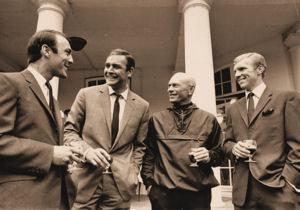
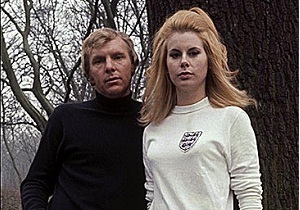
Living it up: Jimmy Greaves and Bobby Moore meet Sean Connery and Yul Brynner during an England team visit to Pinewood studios (left); Moore and wife Tina – the originial WAG (right)
England winning the World Cup, and the manner in which they did so in extra-time, was the perfect cultural high of 1966 – out of many British cultural highs that year. It was the ideal topper-off for Swinging Sixties Britain or, England, if you’re being picky. For instance, as a symbol of the country’s cultural relevance in this period and its ease and pride with this, the Union Jack flag was constantly popping up among the exciting new fashions emerging from London. Following England’s football success, though, national pride positively pushed the Union Jack into becoming the Swinging Sixties’ foremost trademark.
The England players themselves, if neither being regarded as utterly normal working class men before the triumph or on a par with Lennon or Jagger after it, did find themselves somewhat pulled into the fashionable glitterati for a brief period. And none more so than the boyishly handsome, 25 year-old Bobby Moore – the proto David Beckham. Soon his image was everywhere, as was that of his trendy and attractive wife Tina. If he’d have run for PM he’d have probably won. A public vote he definitely did win was the BBC’s Sports Personality of the Year award that December, with Geoff Hurst coming third.
And for as long as London remained an arts, fashion and counter-culture capital, the England team retained its cool kudos. Take a gander at the classic 1969 Michael Caine-starring comedy The Italian Job. The caper at the centre of the plot relies on a minibus supposedly full of football fans being driven through the city of Turin on the eve of an England-Italy match. Thus, the oh-so recognisable names of the England team are graffittied all over the vehicle, pitching them alongside the other hip British icons of the period to appear in the film: the Union Jack, Mini Coopers, the Aston Martin DB5, TV host-cum-actor Simon Dee and, yes, Michael Caine.

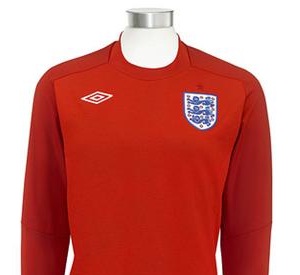
Spot the difference: England’s away jerseys for the 1966 (left) and 2010 (right) World Cups
And let’s not forget that jersey in which the team won the World Cup. To say it became iconic is almost to do it a disservice. Nowadays, it feels like its strikingly stark bright red with the three lions badge on the left chest, hoop collar and long sleeves almost sums up the cool yet often so simple fashion of the Swinging Sixties. It’s become acceptable male dress in general – especially at England football matches where not only does it seem appealingly retro, but also elegantly sartorial. As if to underline this point, its influence is utterly clear behind the latest England away shirt, heralded – along with the simple new home shirt – as perhaps the trendiest England togs ever.
In the end though, what was the most important thing about this match? Well, that it ensured England had won the World Cup, stupid. Forget cultural significance and its place in the Swinging Sixties story. For folks up and down England then this trumped – and continues to trump now – everything else about the ’66 World Cup. And following their triumph, the most important thing for the team was to try and repeat the feat four years later. Could they do it? Well, you won’t have to wait four years to find out – more like three or four days – as all will be revealed right here, folks, in the second offering of my World Cup specials series… 
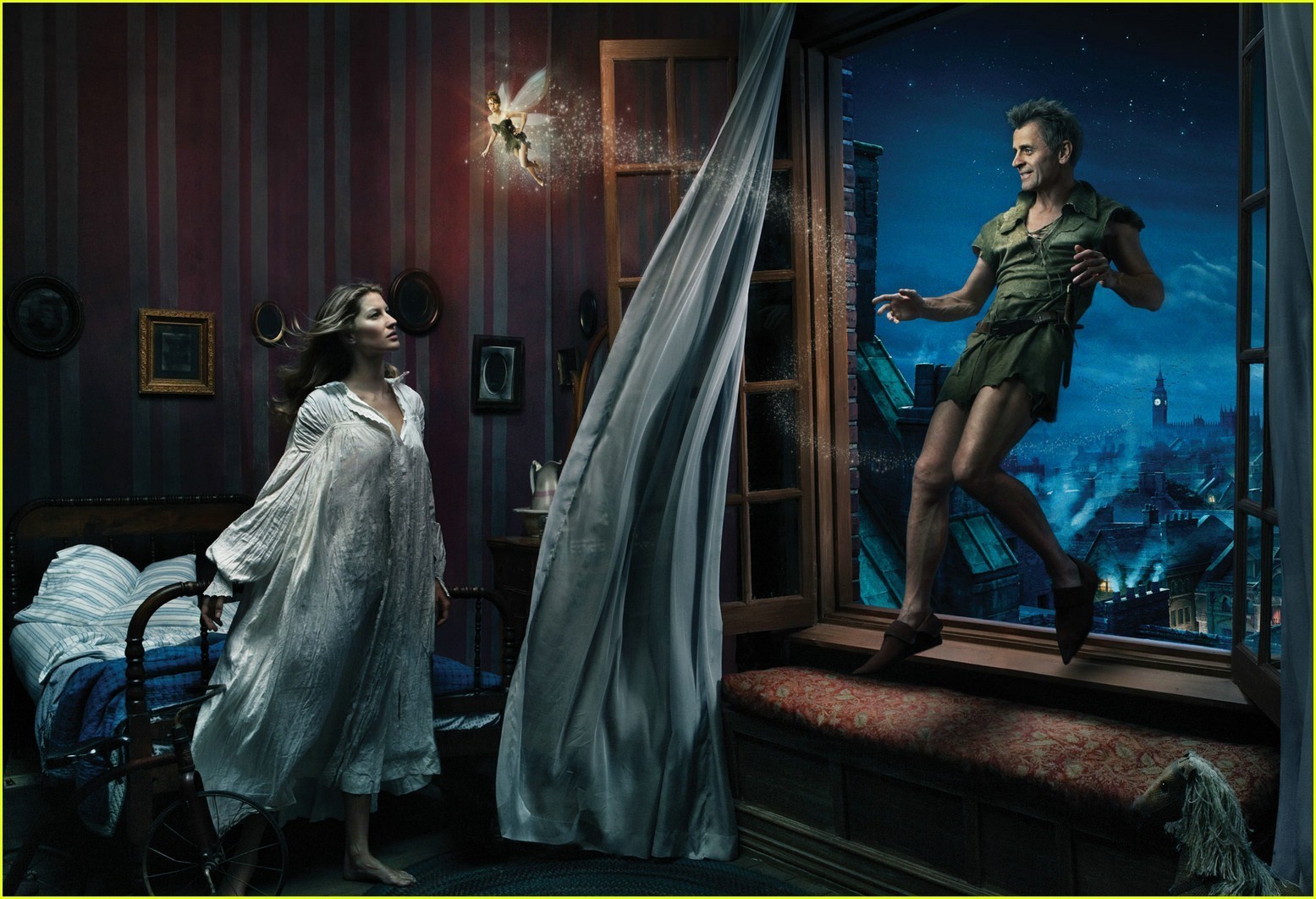
Where you never have to grow up: Annie Leibowitz’s 2008 shoot of ballet star Mikhail Baryshnikov as Peter Pan, supermodel Gisele Budchen as Wendy and comedian Tina Fey as Tinkerbell for Disney Parks’ ‘Year Of A Million Dreams’ promotion
~~~
If you were browsing on google yesterday, you may well have noticed this very image in place of the old trusty search engine’s usual logo…
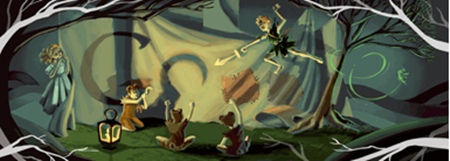
What is it? And what was it doing there? Well, if you’d have passed your mouse over it – or if you’re particularly keen of mind – you’d have discovered/ realised it’s a neat, fun little picture inspired by Peter Pan, and had pride of place on google’s homepage owing to yesterday being the 150th anniversary of the birth of his creator, J M Barrie.
If you’re at all like me, you may well have a fond place in your heart for Peter Pan – and, in turn, J M Barrie. When I was a child, like many children, I suppose, I found the character, the Neverland fantasy world he inhabits and the truly marvellous idea he can transport ordinary children from our reality to his dream-like island paradise seductive to say the least. And, in many ways, my admiration for Barrie’s hero and the primary conceit behind it hasn’t diminished over the years; if anything, it’s grown. I find the whole Peter Pan thing fascinating, in its way.
Perhaps I should put this all into context, in addition to blogging about retro stuff from the ’60s, ’70s and ’80s, I’m also a budding (would be) childen’s author and, around the time I started writing my novel, I decided it might be a good idea to re-read a handful of children’s classics – The Wind In The Willows, The Lion, The Witch And The Wardrobe, Charlie And The Chocolate Factory, The BFG and… Peter Pan. And upon picking up the latter classic as an adult, it struck me just how smart, acerbic and humorous Barrie’s prose was and just how genuinely the legendary tale on the page drips with pathos and sadness. This is the boy who never grows up – for all his childish abandon and liberation, remaining a child is a gig he’s stuck with for life. It’s a genius concept.
Anyway, to mark the great writer’s 150th, I felt it might be somewhat fitting to record a double-digit list of things you may not know about him and his creation…
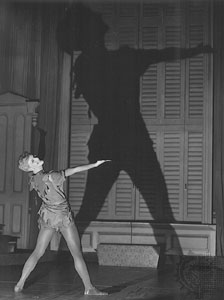
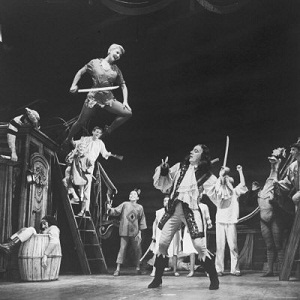
Principal boy: Mary Martin as Neverland’s most famous son in the 1950s musical version of Barrie’s tale
~ Born in Kirriemuir, Scotland, Barrie went on to become a relatively unsuccessful author and dramatist in London, until one day he met the Llewelyn Davies boys (John, Michael, Peter and Nicholas) with their nanny in Kensington Gardens, while out walking his St Bernard dog Porthos. He later met their mother Sylvia and father Arthur. This encounter and his subsequent relationship with the family inspired him to write the hugely successful stage play Peter Pan, Or The Boy Who Wouldn’t Grow Up.
~ This real-life story is told in the Oscar-nominated 2004 film Finding Neverland, starring Jonny Depp as Barrie and Kate Winslet as Sylvia. Liberties are taken with factual accuracy, however, such as Arthur dying before Barrie became acquainted with the family and the youngest boy Nicholas not included (presumably to neaten up the ‘casting’ of the three remaining boys as the three main boy protagonists in Barrie’s story – Sylvia then fits as Wendy and Porthos as ‘Nanny’ the dog).
~ The Peter Pan character was debuted by Barrie in his fairytale fantasy novel The Little White Bird, published in the UK in 1901. The section of the novel featuring Peter, dealing with his origins, was later published in 1906 as Peter Pan In Kensington Gardens. The stage play Peter Pan, Or The Boy Who Wouldn’t Grow Up was first performed on 27 December 1904, and was developed by its author into the 1911 novel Peter And Wendy.
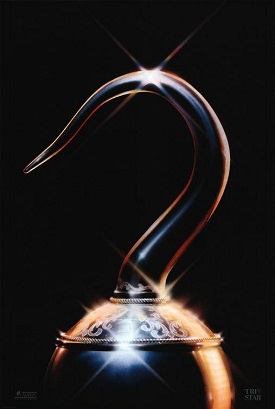
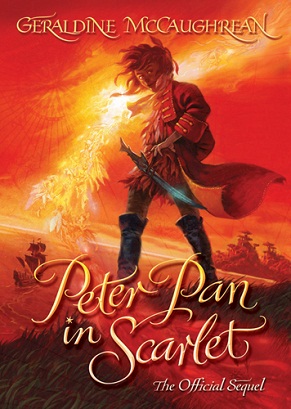
By hook or by crook: the hip poster for Spielberg’s 1991 sequel film Hook (left) and the ‘official’ 2006 sequel novel, in which Peter – erk! – takes on Hook’s mantle (right)
~ Barrie was friends and/ or acquaintances with many of the literary elite of his day, such as Robert Louis Stevenson, George Bernard Shaw, H G Wells, Thomas Hardy, P G Wodehouse, G K Chesterton, Jerome K Jerome and A A Milne – some of whom even played on a cricket team he set up. He also knew Robert Falcon Scott (‘Scott of the Antarctic’).
~ Another good friend was American theatre producer Charles Frohman, who, having got the Peter Pan play on to the stage, is supposed to have paraphrased a line from the work when turning down a lifeboat seat as RMS Lusitania was sunk by a German U-Boat: “To die will be an awfully big adventure/ Why fear death? It is the most beautiful adventure in life”. He did indeed die in the incident.
~ The Peter Pan stage play, novels and films (including, of course, Disney’s much loved 1953 animated effort) popularised the name ‘Wendy’, which before their creation was merely a rare 19th Century name in the United States.
~ Before his death in 1937, Barrie gave the rights to his Peter Pan works and characters to the Great Ormond Street Hospital in London.

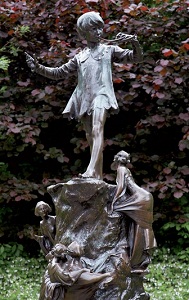
Garden feature: Peter playing his pipes in London’s Kensington Gardens
~ The iconic Peter Pan statue that stands in Kensington Gardens was produced by sculptor Sir George Frampton, who was also responsible for the lion figures outside The British Museum in London. Six further casts of the original Peter Pan statue can be found in Liverpool; Brussels; Toronto; Perth, Australia; Camden, New Jersey, USA; and St John’s, Newfoundland, Canada.
~ In the early 1960s, Cuban children were sent to Miami to escape – for better or worse – the Castro regime in an initiative called ‘Operation Peter Pan’ and, in the 1980s, the term ‘Peter Pan syndrome’ began to become popular in describing male underdeveloped maturity
~ And finally, a real retro fact… in 1954 a hugely successful musical version of Peter Pan was staged on Broadway. Running for 152 performances, its two stars Mary Martin (as Peter) and Cyril Ritchard (as Captain Hook/ Mr Darling) both won Tony awards. NBC broadcast the production as telecasts in 1955, 1956 and 1960. The musical was revived in 1979 and 1990 and won Tonys for Best Musical Revival on both occasions. Another revival was rumoured to be in the offing in 2007, but so far hasn’t appeared – however, like he does through Wendy’s bedroom window, you can be assured Peter Pan will always come back… 
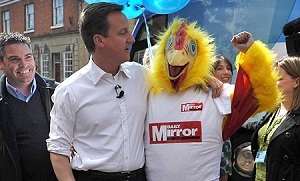

Avian: David Cameron with his feathered nemesis from The Daily Mirror (left); available: Nick Clegg (right) open for business – but with whom?
My name’s George, and I’m a political junkie. There, I’ve admitted it. Truth be told, though, I tend to oscillate between finding the whole Westminster farago fascinating and finding it a pathetic nonsense that’s merely all about power-play. And, let’s face the facts, the seeming failure of Gordon Brown’s tenure as Chancellor under Blair and his time as PM at the head of a knackered government, the little difference, when you boil down to it, there seems to be between Labour and David Cameron’s Tories, and the expenses crisis that seems to have eroded trust among the electorate in politicians all combined and pointed to a fairly unwelcome, rather dull and uneventful election campaign. And now, with just hours to go until the big vote, is that what we’ve had?
Is it eccers like. This general election campaign has been the most interesting and unpredictable since 1997 when smiley Tony’s New Labour made mincemeat of Major’s Tories on a daily basis and swept to a sensational victory. Since then we’ve had two non-event elections that saw Blair easily returned and now we’re left where we are in 2010. It’s a choice between Big Gord and his reddish troops, Cameron the toff and his blue charlies or Nick Clegg’s yellow Lib Dems. Wait a tick, Nick Clegg, who he?
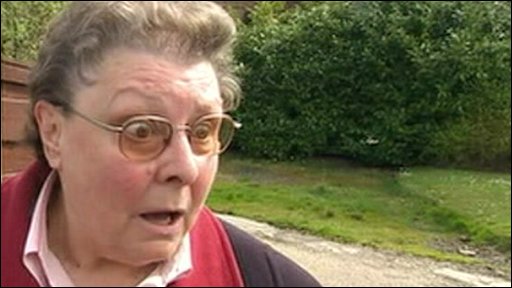
Shock horror: the moment Gillian Duffy discovered Gordon Brown’s slip of the tongue really has been this campaign’s second biggest talking point
Yes, that would have been a reasonable question for many folks a month ago, but now The Cleggster is more instantly recognisable to students than the cast members of Glee and a more discussed figure in Middle-England than either Jonathan Ross or Russell Brand. It was, of course, the first leadership debate what done it (which was branded in capitals by broadcaster ITV as The First Leadership Debate, just in case you weren’t sure whether Alistair Stewart and co. had got there first). Standing on a set that oddly but rather comfortingly looked like it belonged to a 1980s sports show, Clegg appeared less nervous than his two foes and spoke clearly, politely and emitted doses of charm and charisma. And, literally overnight, he was a national superstar (frankly, the fact he wasn’t already, given he’s the leader of the ‘third party’, must say something about this country). His approval ratings following his hour-and-a-half in the primetime telly limelight soared – some say it proved he was the most popular leader since Churchill (impressive considering he’s not even Prime Minister) – and the Lib Dems spread their wings and set flight like liberated liberal free-birds.
It’s a good question, though, whether ‘Cleggmania’ has actually been real or whether he’ll be remembered, reminsicent of winter 1988, as an Eddie ‘The Eagle’ Edwards-style comfortable curiosity but ultimately glorious loser. Yup, he’s likeable, sort of handsome, a bit like a cuddly bank manager, so he’s clearly not Barack Obama – he’s as British as a cup of tea. However, for us over here at least, he’s stolen Cameron’s thunder by seeming to represent genuine political change. At least, among some. Or many. The truth is that with this election nobody really knows.
The Lib Dems’ surge in the polls has been so surprising, it’s incredibly difficult to predict what will happen on Friday – or perhaps even in the days following that. Now, 12 days after the first debate – a long, long time in politics; an eternity in an election campaign – the third party’s position in the polls is standing pretty firm. Are we heading for a hung parliament then? Or a minority government? Or a Lab-Lib coalition? Or even a Con-Lib coalition? I have my own thoughts, but considering I could be completely wrong don’t want to set myself up for a fall – or tempt fate – by predicting anything. Talk about excitement, this is genuinely the power of democracy at work here – or at least it’s potential power. Because what actually matters, of course, is what happens at the polling stations up and down the country today.

Has the balloon gone up?: Big Gord looks down in the mouth, but after the last three years amazingly he may not yet be down and out
Mind you, as is always the case when it comes to politics, this campaign hasn’t been without its distasteful moments. Nobody will forget – the right-wing press certainly won’t allow you to – Brown’s blunder in branding a lifelong Labour voter from Rochdale a ‘bigot’. Frankly, methinks he was really searching for an appropriate word with which to describe her and found the worst possible one instead. I mean, let’s be grown up about it, politicians make the same unseemly mistakes we all make; the real big mistake he made was forgetting he was still wearing a radio mic. Talking of being grown up, or rather being the opposite, there’s also the scrap going on down in Barking between Labour, the Lib Dems and those genuine bigots the BNP. Indeed, the scrap became real today as the London campaign manager of the country’s most xenophobic, nay most racist, party was caught on film in fisticuffs with a group of Asian youths. The BNP’s popularity in that particular constituency makes me genuinely uneasy and whoever gets in – or back in – to Downing Street surely, with the rest of society, has to address the worrying flirtation with right-wing extreme politics some of us seem happy dabbling with.
And, on a lighter yet unquestionably unseemly note, this election has also made us endure the sight of Peter Mandelson ballroom dancing with a pensioner. Didn’t see it? Trust me, you lucked out there. All the same though, for me, it’s been a campaign that’s felt, for a change, like it’s flown by, rather than gone on week after week. And it’s strange that, given that unlike the last US Presidential election, the ‘Net hasn’t played a very big role in events, and probably thanks to the domination of the three debates it’s felt far more telly-dependent, retro and a bit end-of-the-pier-like tacky than modern and swish.
Yup, I’ve enjoyed it, but I appreciate few of you out there may be with me on that one. In which case, maybe the best sign-off I can give here is to reaffirm the point that, despite whatever you think of ’em, in the end it’s all about strolling down to the polling station today and putting an ‘x’ next to one of the politicians’ names. After all, having to endure/ enjoy the campaign as we all have for the last month or so, if we don’t do that, what’s been the point of any of it…? 
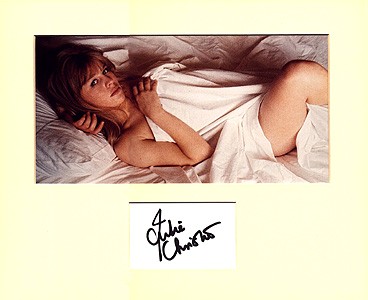
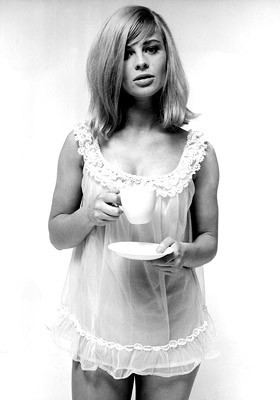
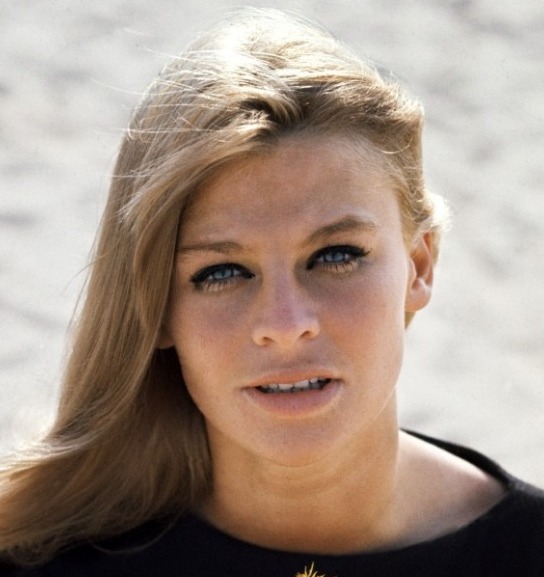
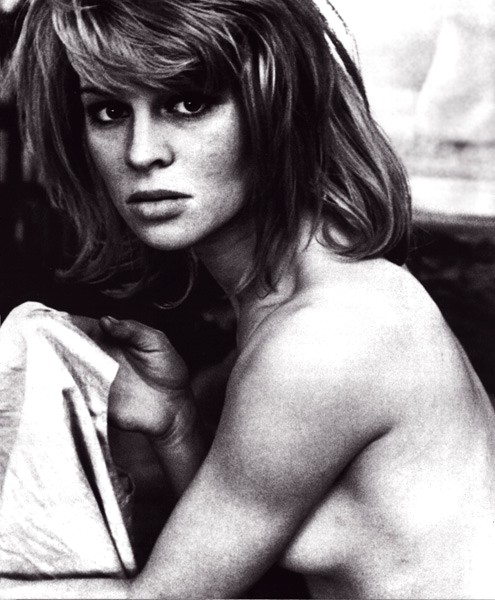
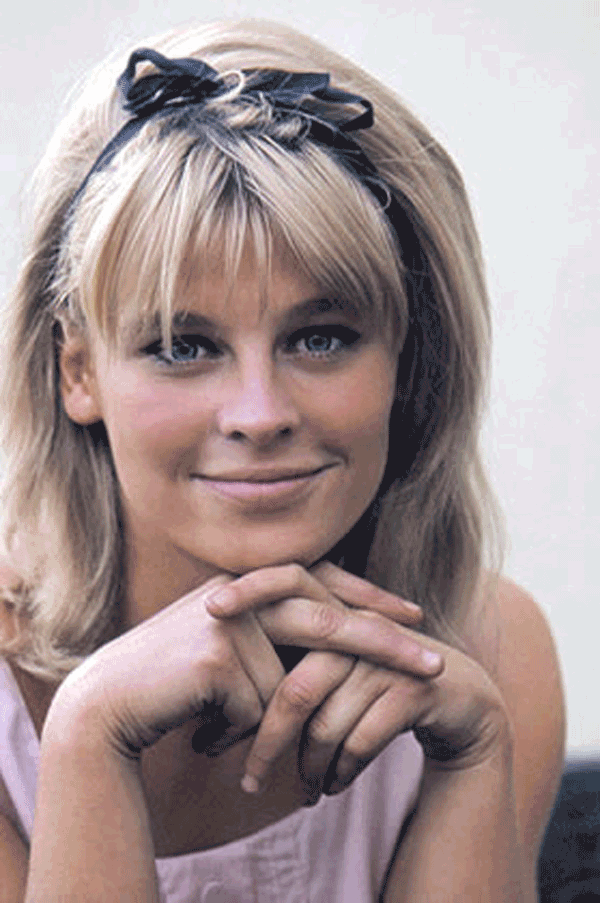
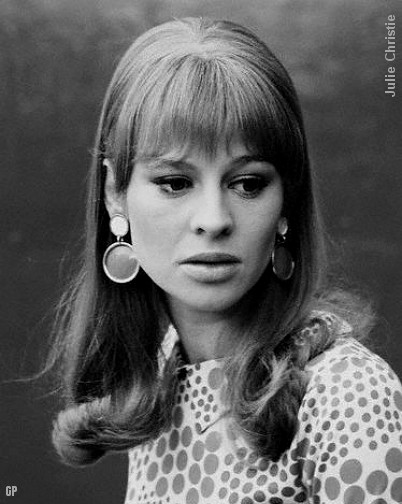
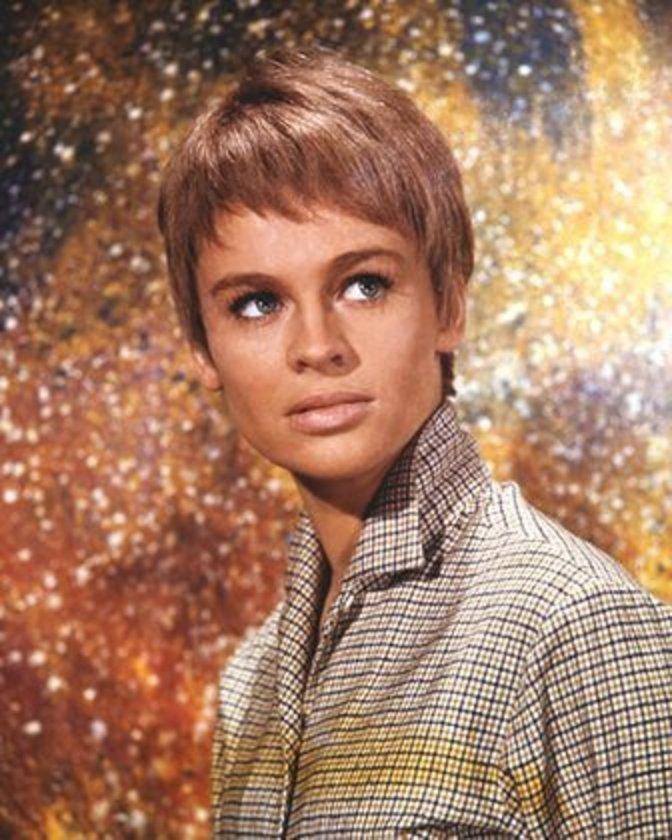
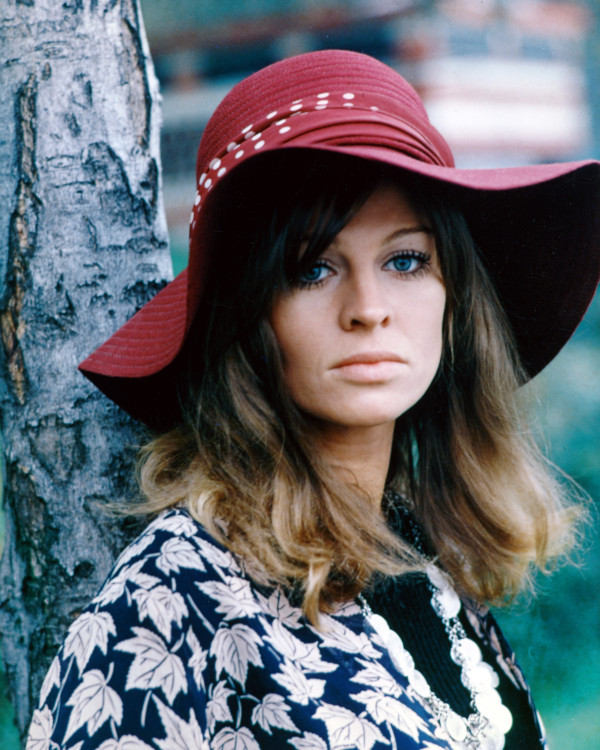
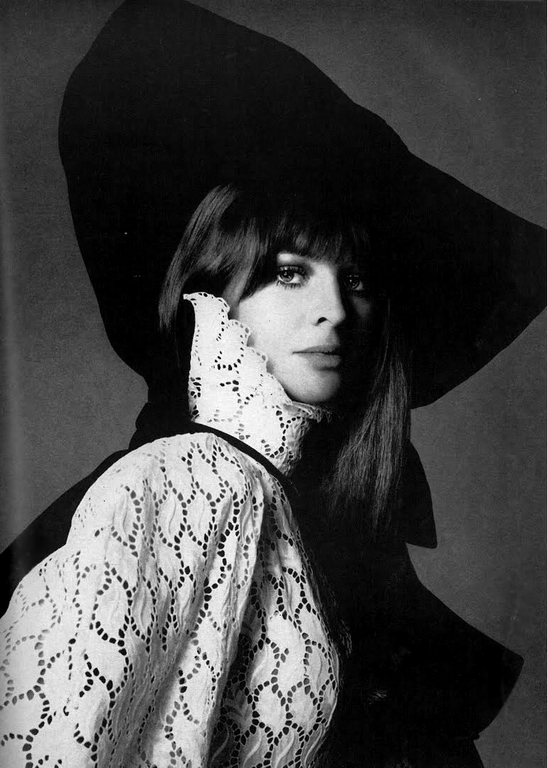
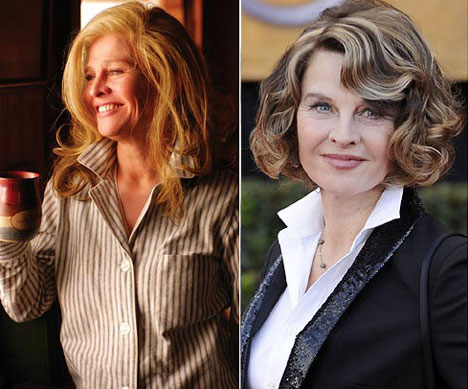
Julie Christie: Swingin’ Out Sister
.
Talent…
.
… These are the lovely ladies and gorgeous girls of eras gone by whose beauty, ability, electricity and all-round x-appeal deserve celebration and – ahem – salivation here at George’s Journal…
~~~
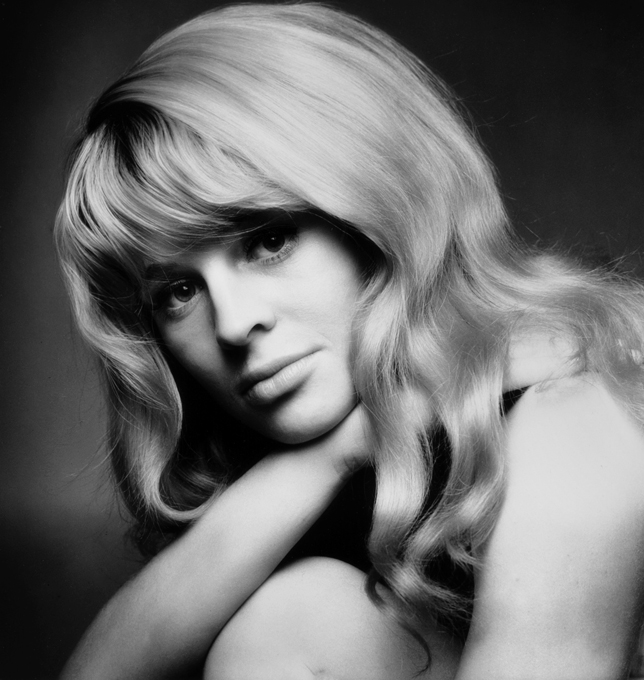
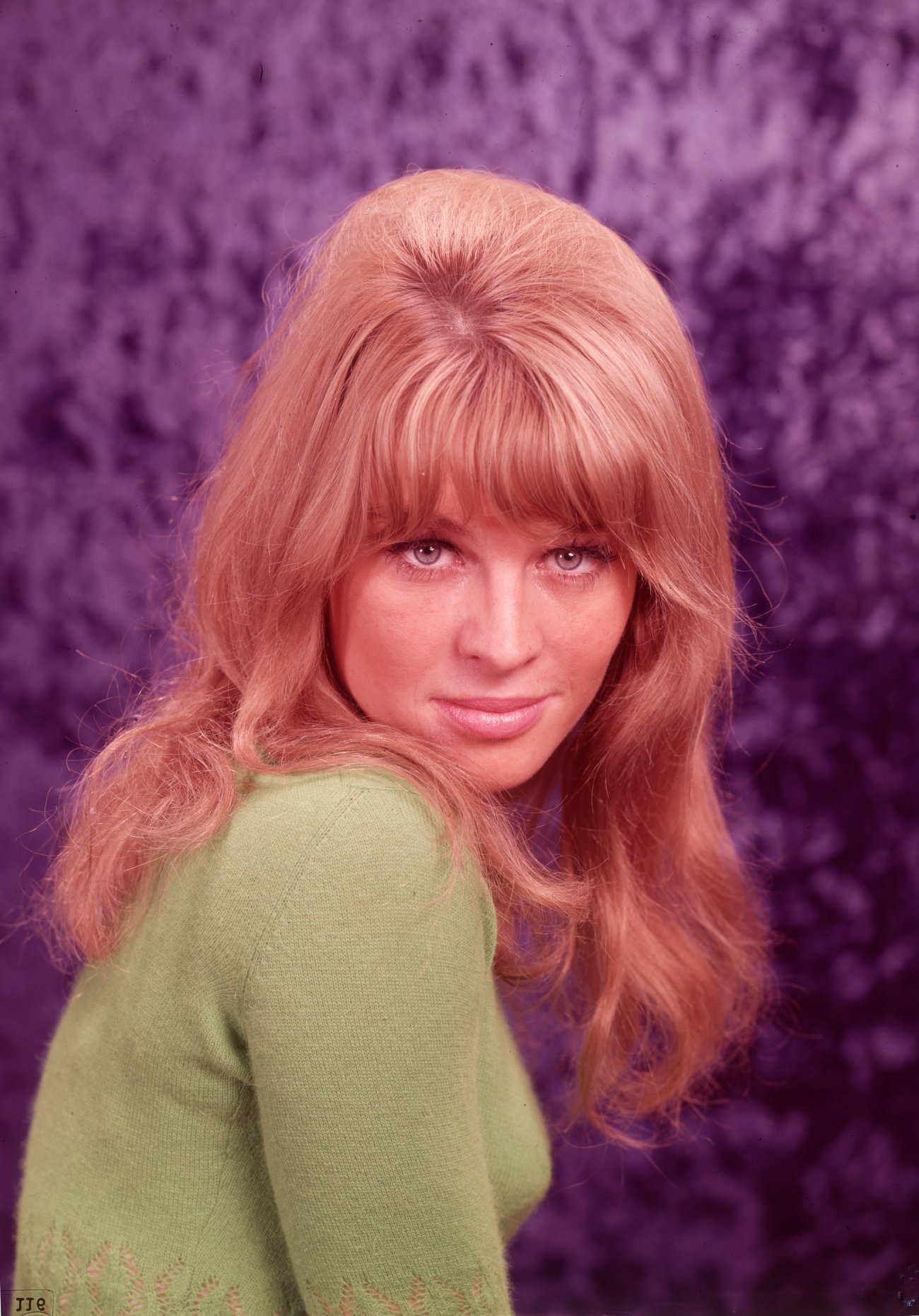
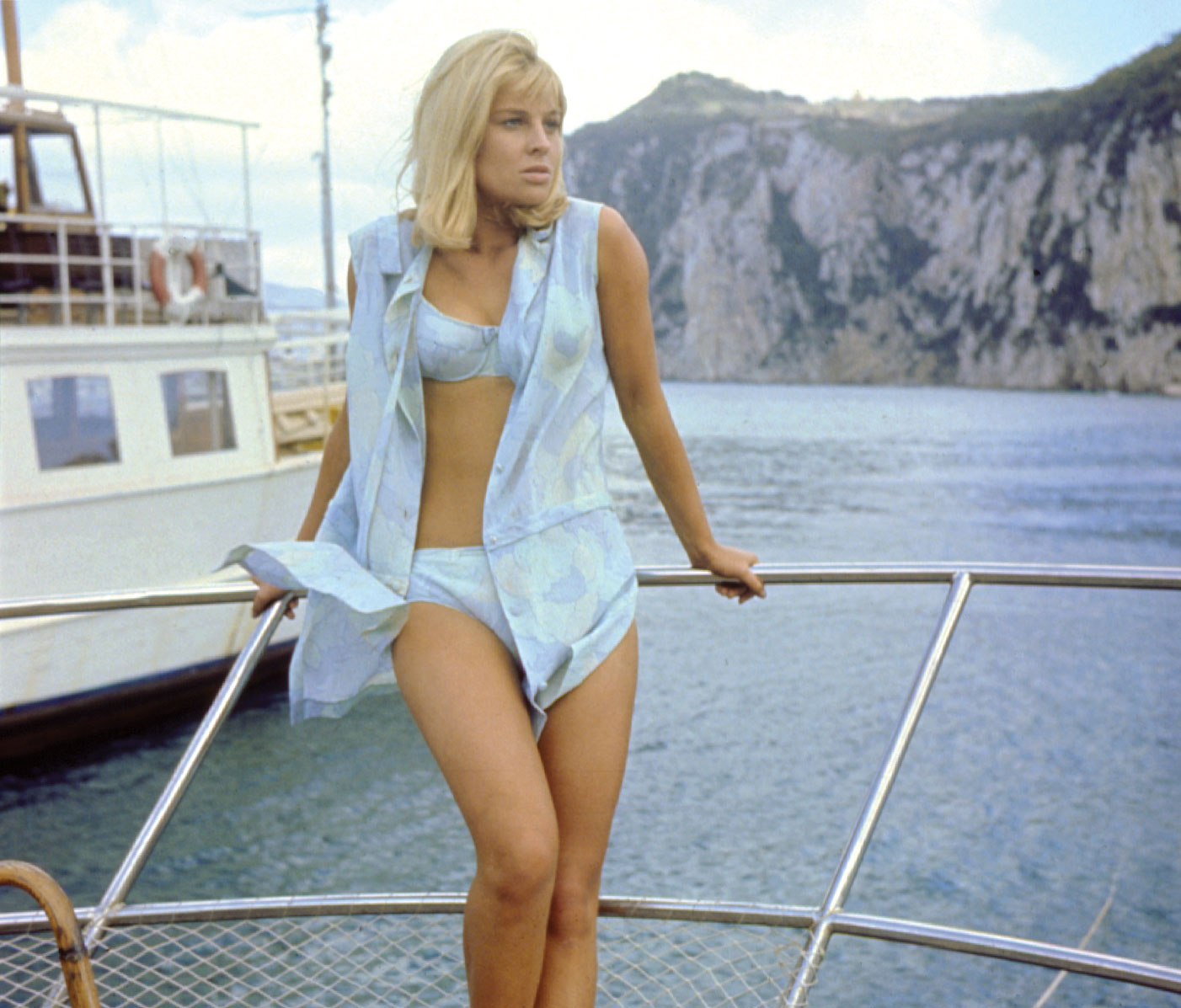
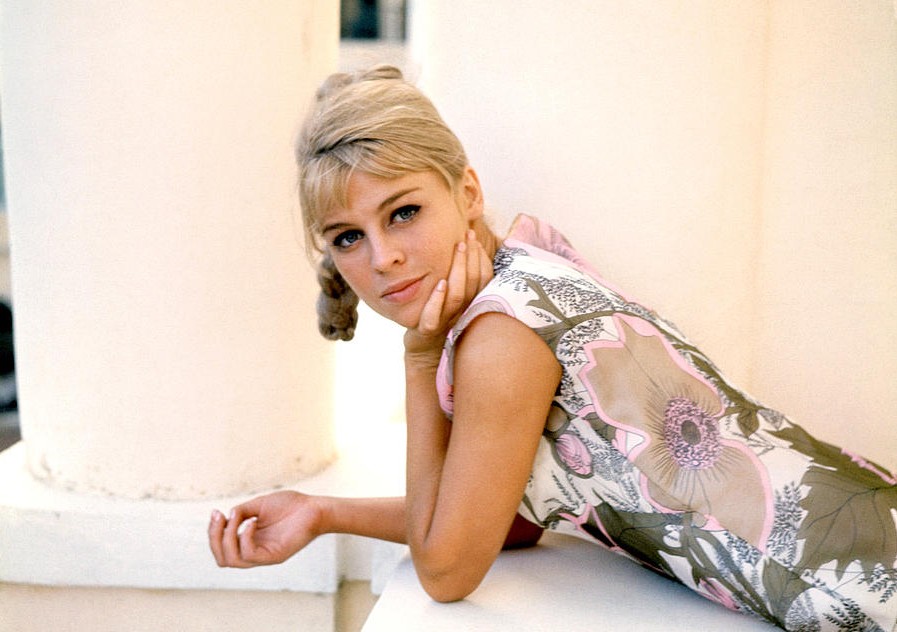
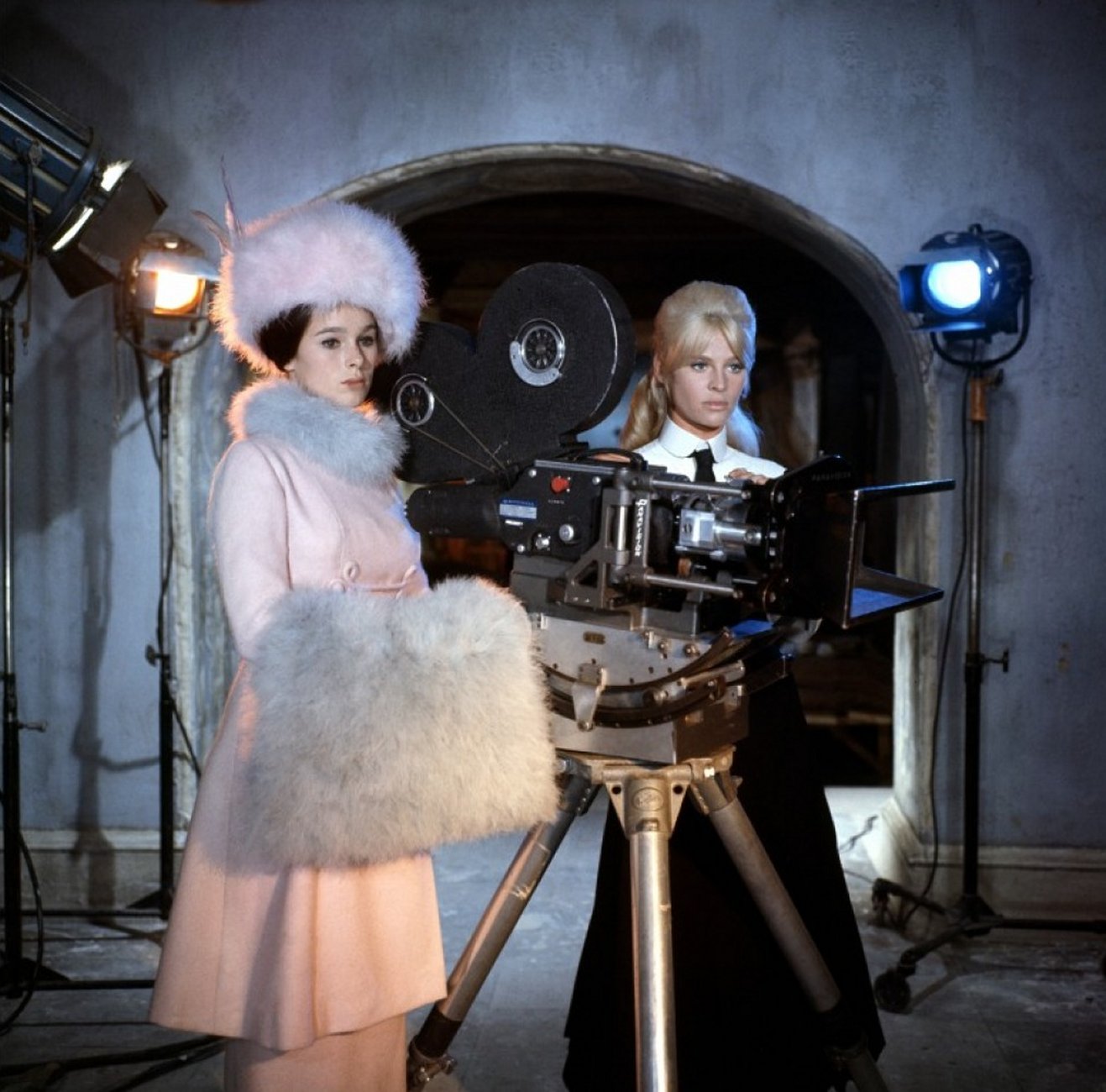
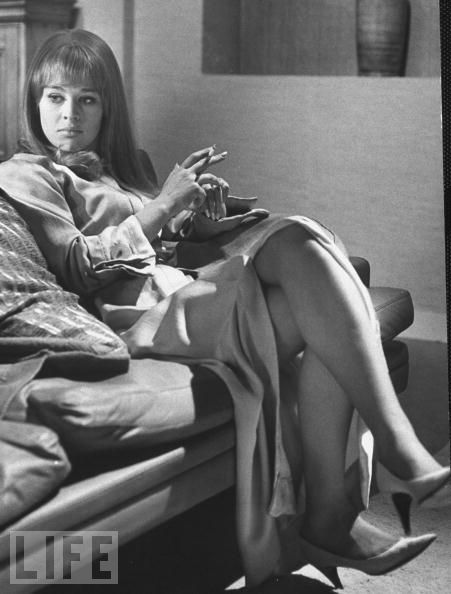
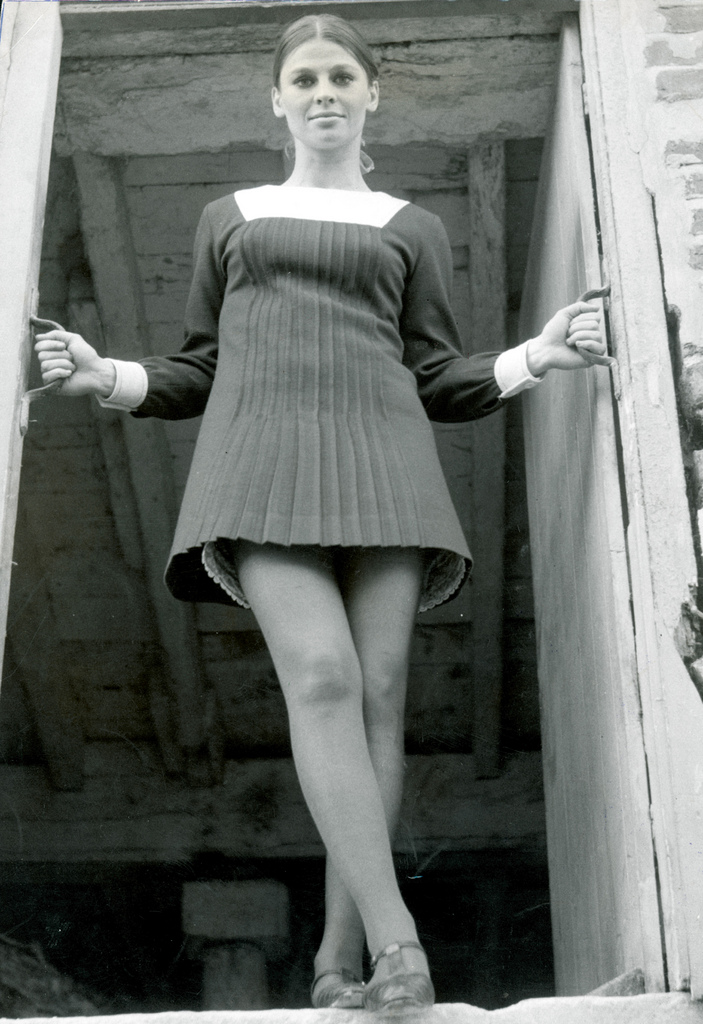
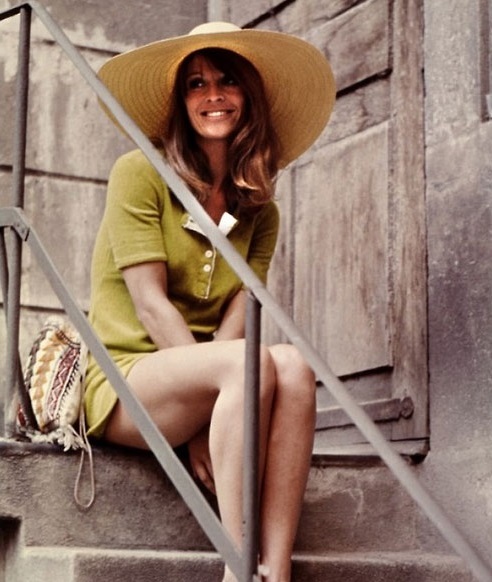
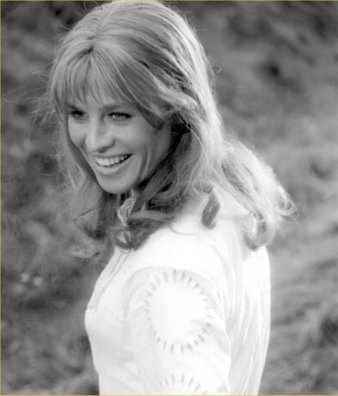
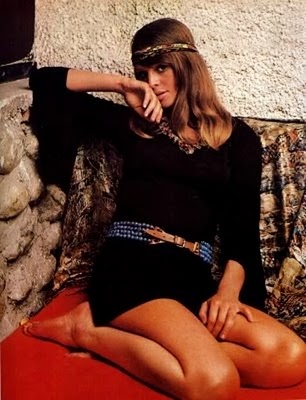
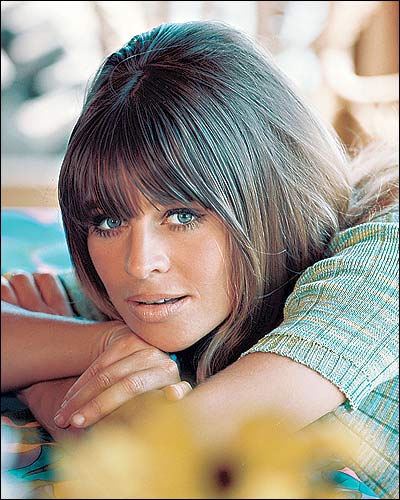
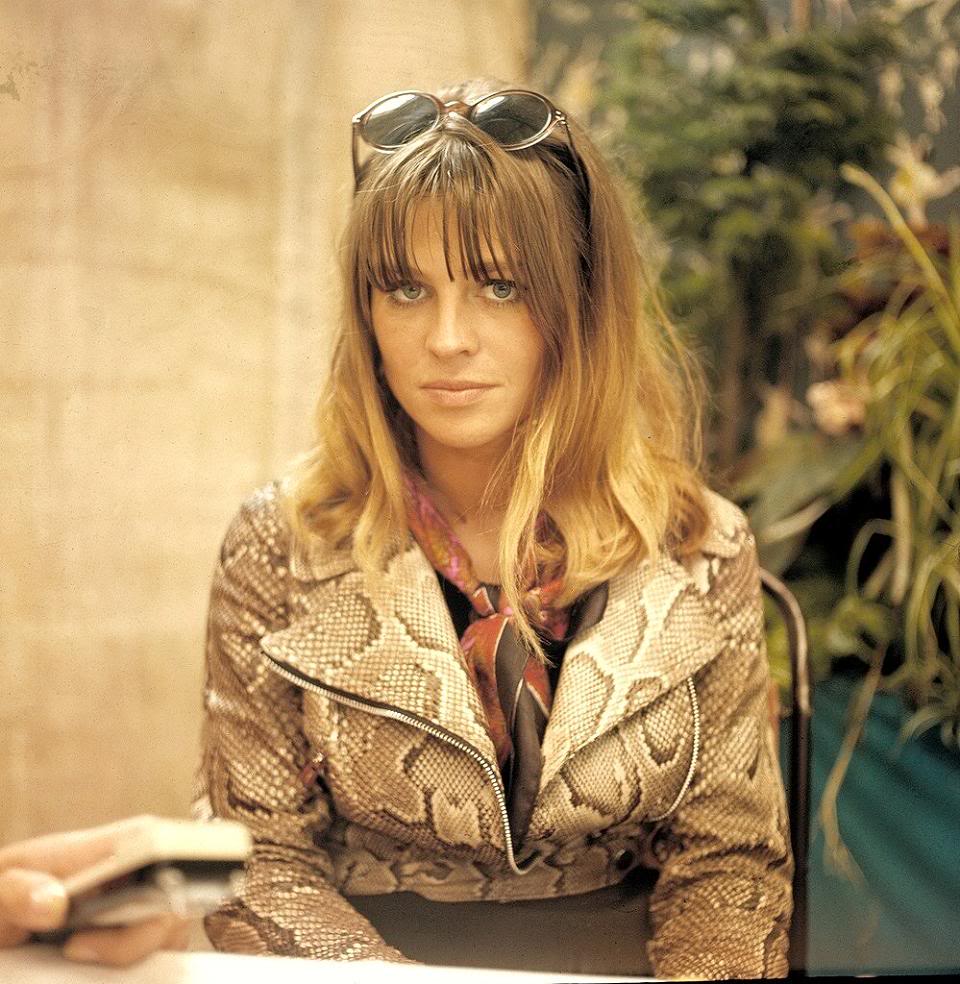
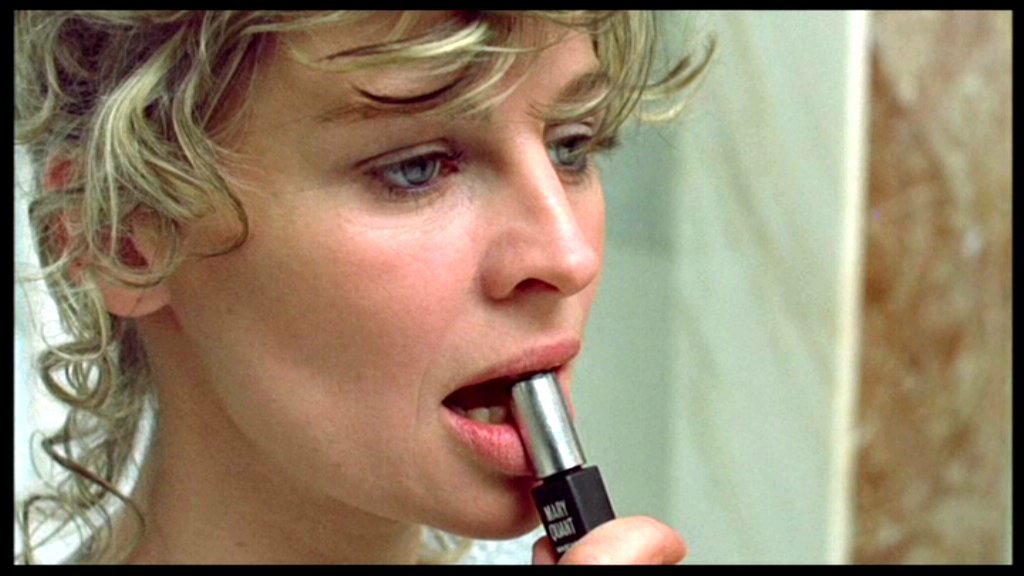
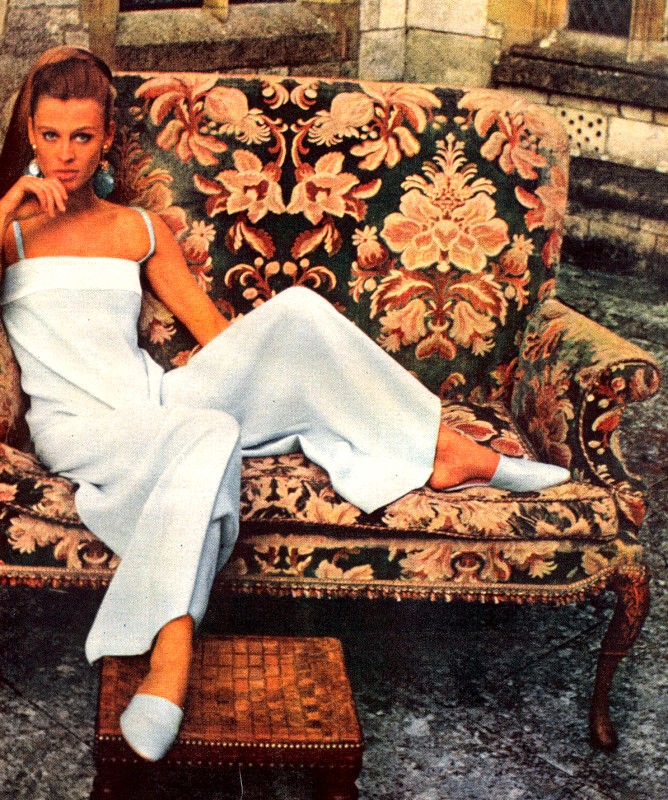
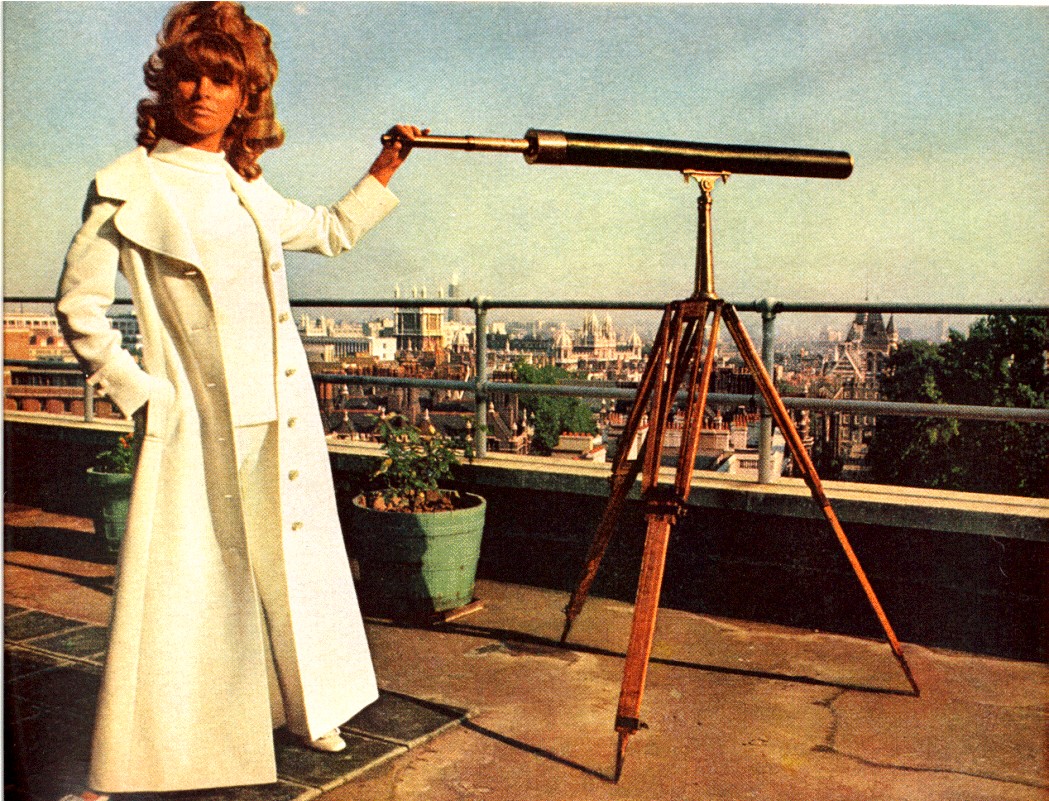
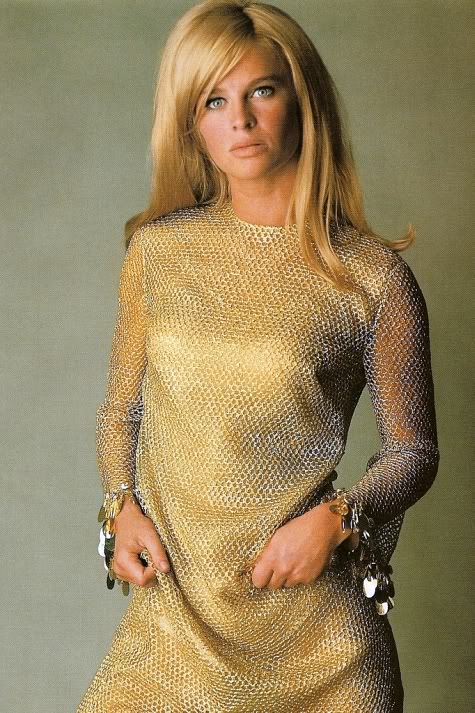
Free-spirited. Electric. Iconic. Enigmatic. Utterly irresistible. Julie Christie is probably the ultimate – and original – ‘it girl’ (she will be forever associated with the liberated Swinging ’60s London scene), but she’s also one of the greatest cinematic actresses this little island has ever produced. She’s Zhivago’s muse, Donald Sutherland’s on-screen wife, Tel and Warren’s former squeeze – in short, a completely delicious Darling. And she’s my deserved, third Talent offering…
~~~
Profile
Name: Julie Frances Christie
Nationality: English
Profession: Actress
Born: 14 April 1941, Chukua, Assam, India
Height: 5ft 2in
Known for: Roles in the films Billy Liar (1963); Darling (1965) – Oscar win; Doctor Zhivago (1965); Farenheit 451 (1966); Far From The Madding Crowd (1967); Petulia (1968); The Go-Between (1970); McCabe And Mrs Miller (1971) – Oscar nomination; Don’t Look Now (1973); Shampoo (1975); Heaven Can Wait (1978); Hamlet (1996); Afterglow (1997) – Oscar nomination; Finding Neverland (2004) and Away From Her (2007) – Oscar nomination.
Strange but true: Following two infamous affairs to fellow cinematic and ’60s icons Terence Stamp and Warren Beatty, she announced she would never marry – only to go back on this vow when she quietly married her long-time partner of the past 30 years in January 2008.
Peak of fitness: It has to be in psychological thriller-cum-horror Don’t Look Now – yes, the one with that scene. Rarely has marriage been presented onscreen as tenderly, carnally or passionately.
~~~
CLICK on images for full-size
.
.
.
.
.
.
.
.

.
.
.
.
.
.
.

.
.
.
.
.
.
.
,

.
.
.
.

.
.

.

Snooker loopy: Taylor versus Davis ~ April 28 1985
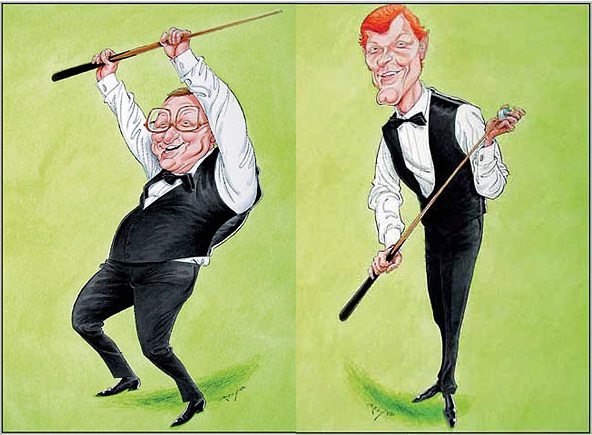
Frame, set and match: everyday heroes Dennis Taylor and Steve Davis – 1985’s gladiators of the green beize
There are several things you could have enjoyed immensely after midnight in 1985. Aside from the bedroom-based obvious, you could have been at a late-night showing of Back To The Future, you could have dipped into Gabriel Garcia Marquez’s or Margaret Atwood’s respective new novels Love In The Time Of Cholera or The Handmaiden’s Tale, or you could even have been listening to Kate Bush’s Hounds Of Love album (through big, chunky earphones, of course – you wouldn’t want to wake up the neighbours, surely). But could you have enjoyed any of them as much as the black-ball decider of the 1985 World Snooker Championsip Final on April 28th?
Doubtful, I’d suggest. Was this glorious moment of green beize action really better than those – or actually better than sex? Maybe. Just maybe.
What can’t be denied was that it was momentous. As we come around to this year’s World Snooker final that will conclude on Monday (I’m rooting for Robertson), this extraordinary event at Sheffield’s famous Crucible Theatre – celebrating its 25th anniversary this week – still holds the record for the highest UK television audience after midnight: 18 million. 18 million! That’s a bigger telly audience than most shows over here achieve all year nowadays. Yup, Snooker ruled the absolute roost that year, if for one night only.

Interesting moment: he may’ve been known for being boring, but Steve was also a winner – was he in ’85, though?
Having said that, good old Snooker was very much in the midst of its Golden Age in the ’80s. While, at present, it struggles to engage the public (last year’s World Championships final only achieved a TV audience of 2 million) and is looking to rejuvenate itself through crowd-pleasing modernisation, back in the day the grandmaster of all billiards games was so popular that it seemed nearly every boy had a miniature snooker table in the garage, Chas & Dave’s so-bad-it’s-good Snooker Loopy hit was permanently lodged in people’s minds and the sport’s masters were even more recognisable than Hollywood stars.
Indeed, Snooker’s popularity in the ’80s may have owed more than anything else to its top players. In the age of the seemingly ordinary, likeable Frank Bruno, Ian ‘Beefy’ Botham and Gary Lineker, all the Snooker stars too were chaps you not only loved to watch on the box, but who you’d happily have in your living room watching it with you. There was the cool, moustachioed Canadian Cliff Thorburn; the bald-headed mate of the aforementioned Lineker, the pretty useless Willy Thorne; the Canuck whose weight was more famous than his cue prowess ‘Big’ Bill Werbenuik; the South London whirlwind Jimmy White; the wily Welsh wizard Terry Griffiths; the potter from Penny Lane John Parrot; and the flawed Northern Irish genius that was Alex Higgins (yes, Ronnie O’ Sullivan, someone else got there first). And, of course, there was Steve Davis and Dennis Taylor too.
Davis and Taylor. You couldn’t get two more different personalities. Davis, ‘The Nugget’, a very lean, mean, ginger potting machine from Essex who, up to this point, had won three World titles in four years (and would go on to win another three), and Taylor, an extremely affable, bizarrely upside-down glasses-wearing, roly poly Northern Irishman who had never won one. And it was these two that contested the ’85 final. As ever, it looked like it would be Davis’s title, racing as he did into a 8-0 frames lead (out of a ‘best of 35 frames’ total). But, gradually, Taylor got back into it. The player who had lost to Davis in the previous year’s contest at the semi-final stage was not going down without a fight. At the end of the match’s second session he trailed 9-7 and, then, at the end of the third, 17-15. Then, in the fourth and last session, he managed to level the match – 17-17. A wonderful comeback. And then it really began.
Deep into this final frame, Davis had the lead. All the red balls and the yellow and the green had been potted; Taylor needed all the remaining colours. And he got them (brown, blue and pink); all of them, except one, that is – the black. For the first time in its decades-long history, the World Championships final had amazingly come down to its last ball. Frankly, both players’ attempts to pot it – or put it safe – were, well, awful; they’d both pretty much lost their nerve and ability to play by now, the stakes were so high and the atmosphere so electrified. Then Taylor made a mistake and Davis had a relatively easy cut into the bottom left pocket to win the frame, match and title. The one thing, he claimed afterwards, he had to make sure he didn’t do was hit the black ball too thickly. What he did, though, was strangely hit it too thin. An unforgettable exclamation of ‘No-ooo‘ came from legendary (and sadly now departed) commentator ‘Whispering’ Ted Lowe, and Taylor was back in. And, this time, Dennis made no mistake – he sunk the black and realised eternal glory.

Specs-tacular: older, greyer and wiser now, perhaps, (right), but sadly Dennis’s trademark glasses have gone
The frame, the penultimate shot, the final shot and Taylor’s celebrations (raising his cue above his head like a weightlifter’s weights, shaking his head in disbelief and wagging his finger at the head of ITV Sport who had, apparently, told him he’d never be World Champion) have truly gone down in television history and are now iconic. These two sportsmen and the sport itself (especially back then, and maybe still now, which may account for its supposed lack of popularity nowadays) are of a different era. They were both hopelessly accessible sporting heroes, for whom glory, fair play and the sport itself seemed to matter much more than the money. After all, the winner only received £60,000, the runner-up £35,000, when BBC host David Vine gathered them together afterwards for ‘wages’ time’ as he forever referred to it.
The truth, though, is that this event somewhat paradoxically comes from a decade dominated by money, social climbing and greed. But then, like the sport to which it belongs, that maybe explains why it was so popular with and fixated the nation in that decade – like a caravan holiday in New York, it was comfortable and thrilling at the same time. Who really knows? One thing is for sure, though, it was magical, magnetic, unforgettable and very special.
After it was all over (and referring to the black-ball finish, in particular), Davis said the match had all been there ‘in black and white’. No, Steve, you were wrong – it was in colour, on TV and finished at 12:25am… I know, because at the age of five, it was the first time, and one of the very best times, I stayed up after midnight.