Playlist: Listen, my Valentined friends! ~ February 2013



.
In the words of Moby Grape… listen, my friends! Yes, it’s the (hopefully) monthly playlist presented by George’s Journal just for you good people.
There may be one or two classics to be found here dotted in among different tunes you’re unfamiliar with or have never heard before – or, of course, you may’ve heard them all before. All the same, whether you’re loved up or unloved come this Valentine’s Day, why not sit back, listen away and enjoy…
.
CLICK on the song titles to hear them
.
Jimmy Durante ~ Make Someone Happy1
Sylvie Vartan ~ Nostalgia2
Badfinger ~ Without You3
Roxy Music ~ If There Is Something4
Terry Callier ~ What Color Is Love
Slade ~ Everyday
Joe Cocker ~ You Are So Beautiful
Linda Ronstadt and The Muppets ~ Blue Bayou5
ABC ~ All Of My Heart
Paul Nicholas ~ Just Good Friends6
Frances Ruffelle ~ On My Own7
Patrick Swayze ~ She’s Like The Wind8
Kevin Kline ~ La Mer9
.
1 As featured over the closing credits of the movie Sleepless In Seattle (1993) – and in many a TV commercial
2 The legendary French chanteuse’s 1969 version of Dream A Little Dream Of Me, a major chart hit in Italy; she also covered the tune in French under the title ‘Les Yeux Ouverts’
3 The original version of the Harry Nilsson classic as written and performed by The Beatles’ favourite band
4 As heard on the soundtrack of the ’70s-set nostalgia fest flick Flashbacks Of A Fool (2008)
5 La Ronstadt’s performance of her chart classic (backed by The Electric Mayhem and a chorus of swamp frogs) on a May 1980 episode of The Muppet Show (1976-81)
6 The opening and closing credits theme from John ‘Only Fools And Horses’ Sullivan’s other hit ’80s sitcom
7 From the 1985 cast recording of the original West End production of mega-musical Les Misérables; Ruffelle originated the role of Éponine and is the mother of British pop star Eliza Doolittle
8 Written by Swayze himself and as featured in his signature film Dirty Dancing (1987)
9 Kline’s semi-mocking, French-language take of the ballad standard from the film French Kiss (1996)
.

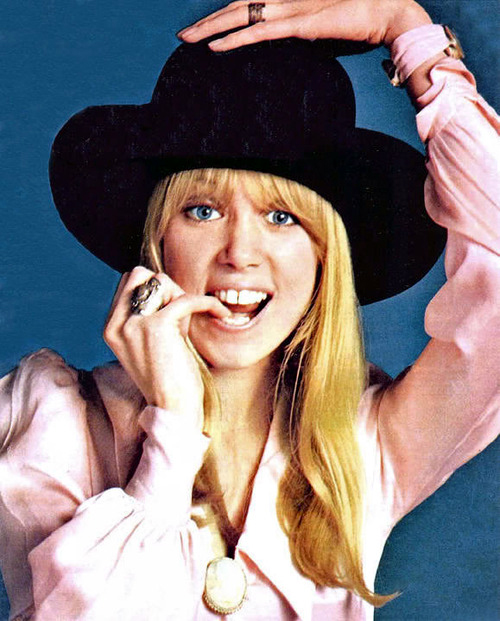
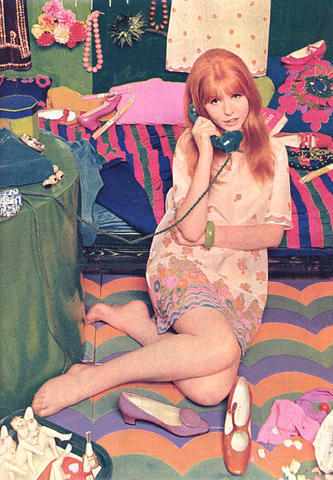
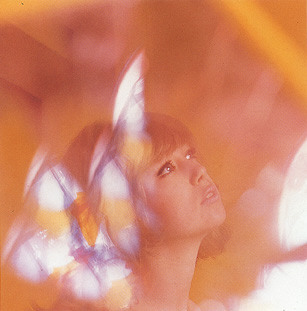
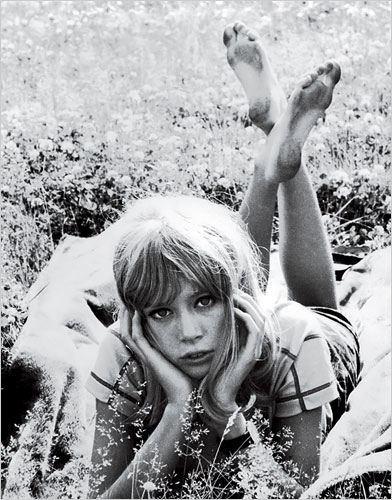
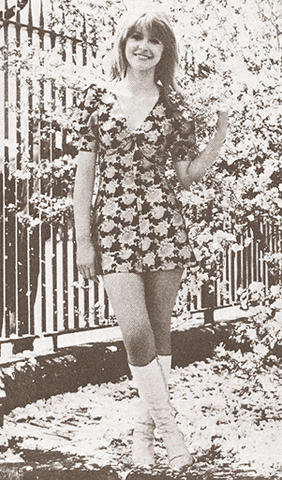
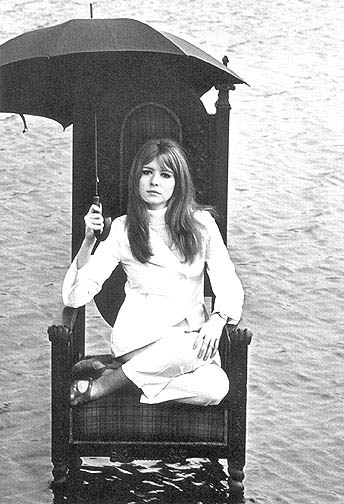
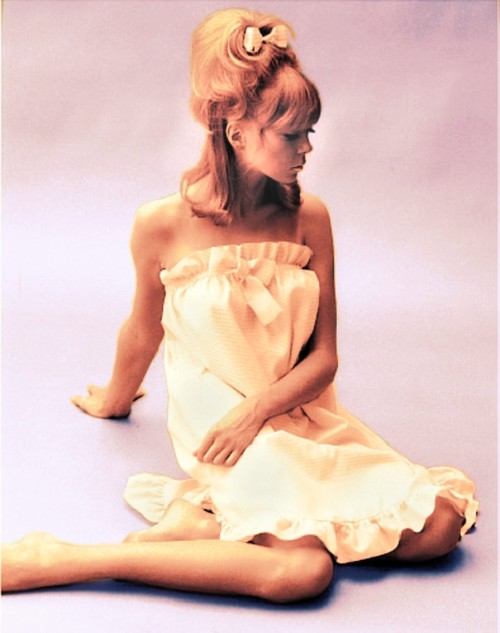
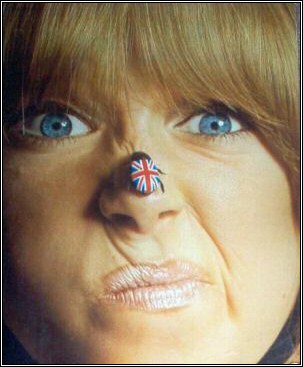
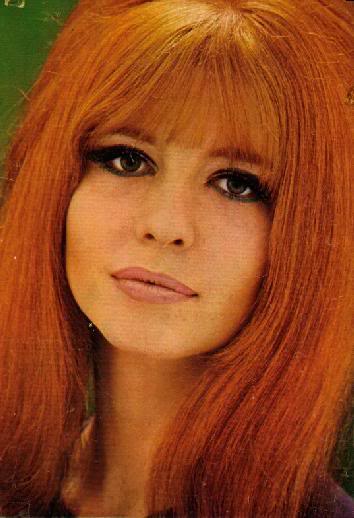
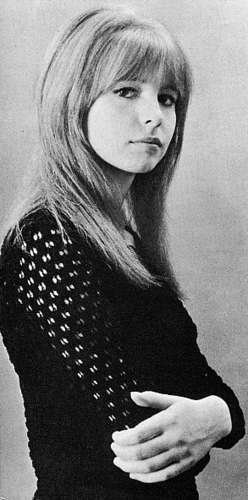
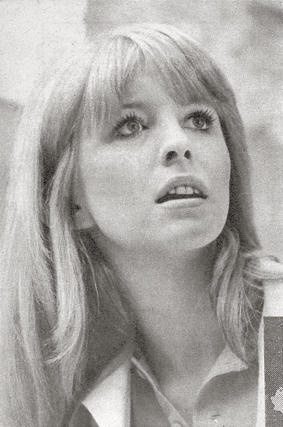
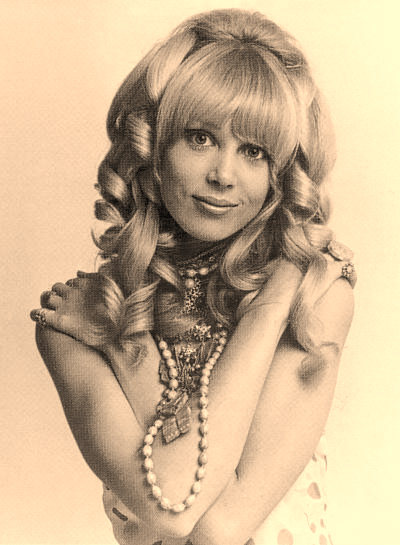
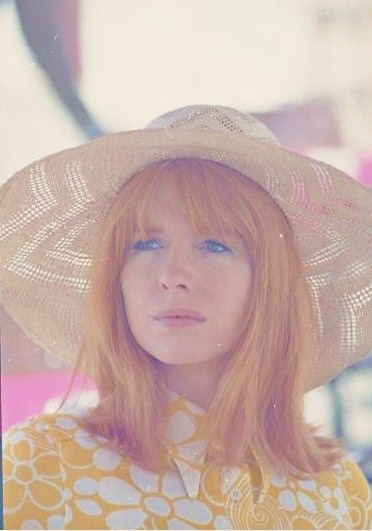
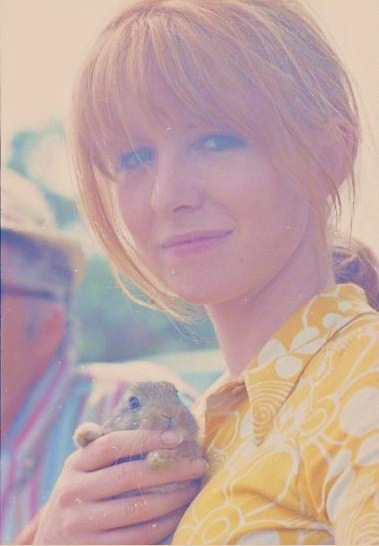
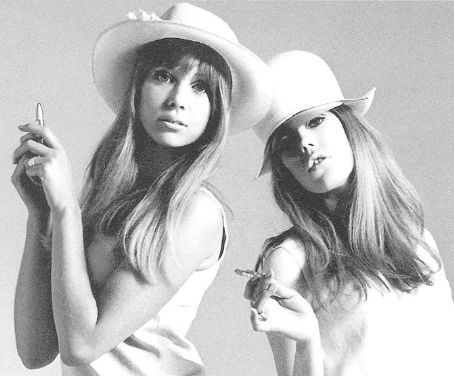
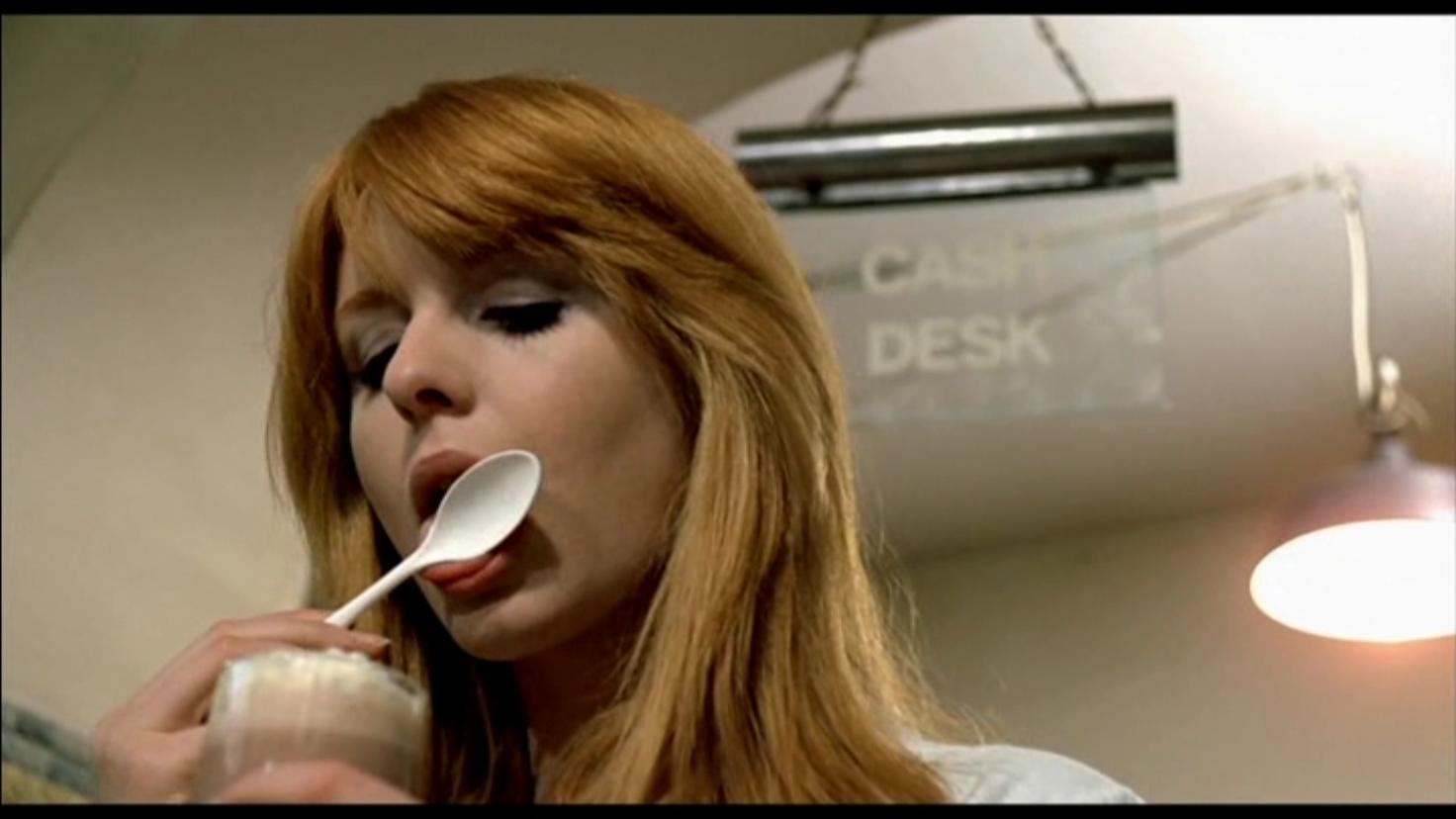
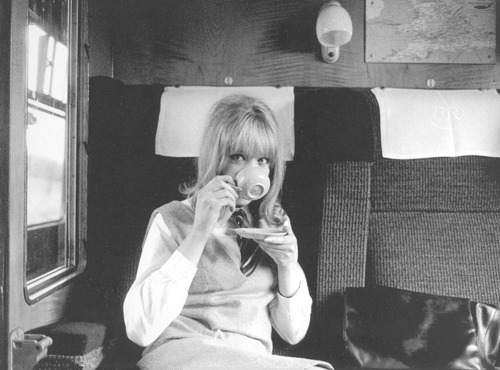
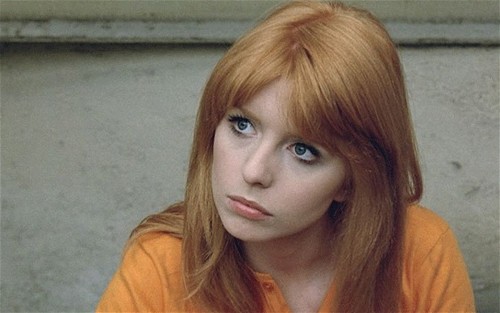
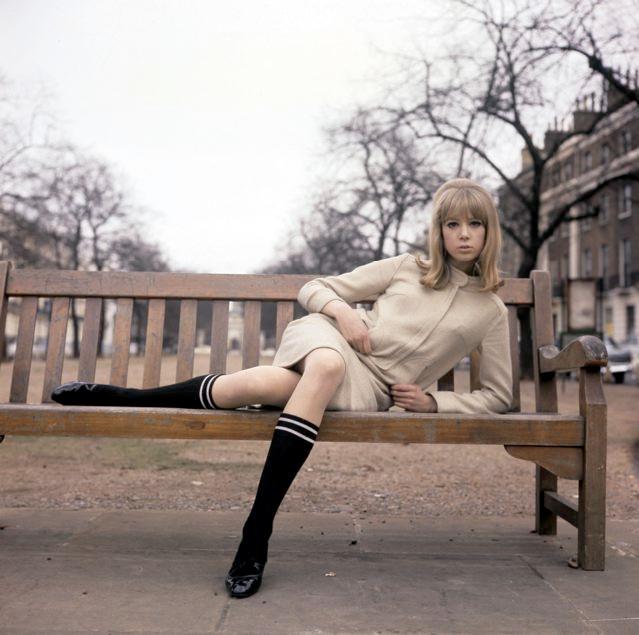
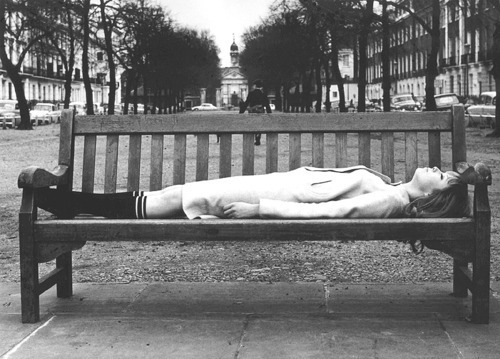
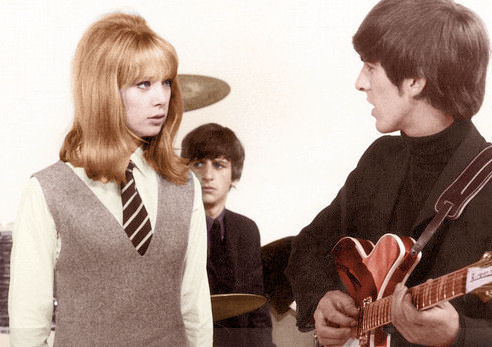
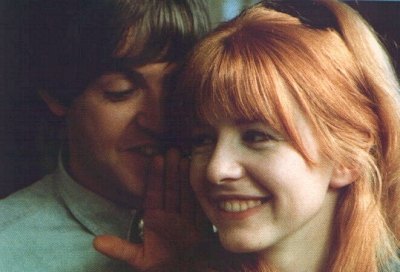
Jane Asher/ Pattie Boyd: Fab Fancies

Talent…
.
… These are the lovely ladies and gorgeous girls of eras gone by whose beauty, ability, electricity and all-round x-appeal deserve celebration and – ahem – salivation here at George’s Journal…
.
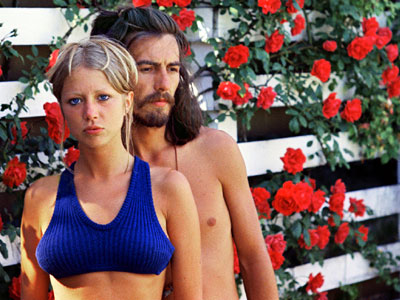
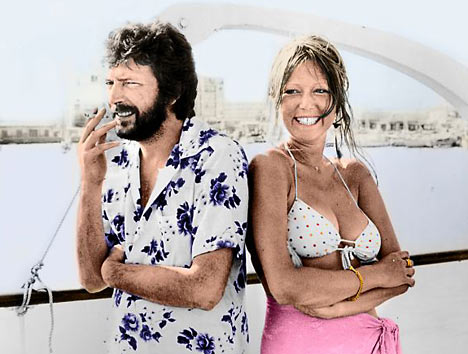
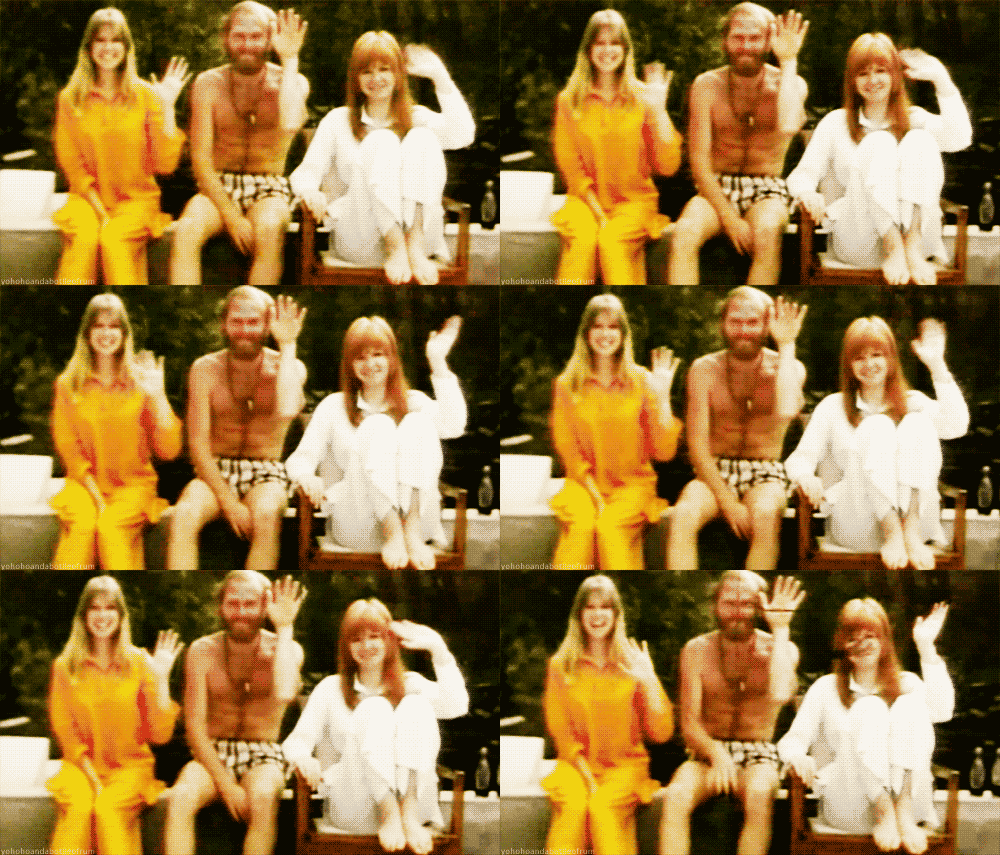
The Beatles, in their infinite genius, brought to us masses many things: beautiful music, fashionable togs, Eastern mysticism-trendiness and dodgy beards. They also brought to us (whether they liked it or not) their other halves, all of whom were intelligent, inspired and artistic souls themselves – and many of them were also, well, pretty tasty. Not least these two. One was a hot-to-trot actress of the age; the other a major fashion model of the era – in short, Jane Asher and Pattie Boyd. Here comes the sun then, indeed, as together they’re the latest fab pair to enter this blog’s Talent corner, peeps…
.
Profiles
Names: Jane Asher/ Patricia Anne ‘Pattie’ Boyd
Nationalities: English
Professions: Actress, author and cake-maker/ Model, photographer and author
Born: April 5 1946, Willesden, London/ March 17 1944, Taunton, Somerset
Height: 5′ 6″/ 5′ 7″
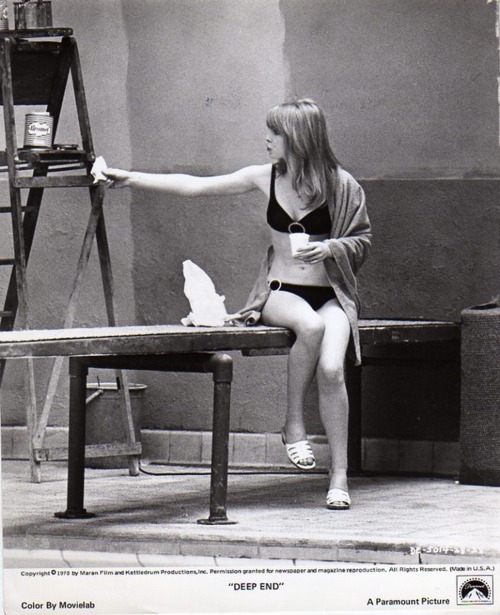
Known for: Jane – an established actress of stage and screen for nearly fifty years, her most famous role is playing one of Michael Caine’s bits-of-all-right in Alfie (1966). She also appeared in the incest-themed drama The Buttercup Chain and the art-house curio Deep End (both 1970), played Jane Seymour in Henry VIII And His Six Wives (1972), starred in ITV’s acclaimed adaptation of Brideshead Revisited (1981) and the Beeb’s female WWII spy drama Wish Me Luck (1987-89) and more recently took TV parts in the resurrected Crossroads (2003) and Holby City (1999-present). She’s perhaps most famous, though, as Paul McCartney’s girlfriend in the ’60s, for whom she was the muse for his songs You Won’t See Me, I’m Looking Through You (both 1965) and For No One (1966) and with whom she and the other Beatles and their squeezes travelled to India for transcendental meditation with the Maharishi Mahesh Yogi in February 1968. Later she met cartoonist Gerald Scarfe, whom she married in 1981. She’s also penned several books, including three novels, and notoriously owns a cake-making business.
Pattie – a leading fashion model in the ’60s and ’70s in London, New York and Paris, she wore Mary Quant and was snapped by the likes of David Bailey and Terence Donovan and on whose appearance the legendary Twiggy has claimed she based her own. Even more so than Asher, though, she’s most famous for being the girlfriend then wife of a Beatle, George Harrison (whom she met on the set of the 1964 film A Hard Day’s Night, in which she appeared), and then of Harrison’s close friend Eric Clapton. Indeed, almost as well known is the fact that the former’s classic song Something (1970) is reputed to be inspired by her, as are the latter’s much-loved tunes Layla (1970) and Wonderful Tonight (1977). She also had an affair with Rolling Stone Ronnie Wood in the early ’70s. Recently she published an autobiography and has displayed photographs she took during the rock ‘n’ roll era of her life at exhibitions throughout the world.
Strange but true: Jane’s father was an eminent medical professional whom was responsible for the first published description and naming of Münchausen syndrome, while through her mother she can trace her lineage back through centuries of English aristocracy; Pattie’s sister Helen (whom she nicknamed ‘Jenny’, the name by which she became known) was also a ’60s fashion model and the inspiration for a classic song of the era – Jennifer Juniper (1968) by Donovan, with whom she had a relationship.
Peak of fitness: Jane – flirting and then cavorting in the nuddy with the hormonally-charged teen lead in Deep End/ Pattie – an abstract choice this, but I’d say as Harrison and Clapton saw her in both Something and Layla; after all, as the former maintained in Yellow Submarine (1968), ‘it’s all in the mind’…
.
.
CLICK on images for full-size
.
.
.
.
.

.


.

.

.
.

.

.
.
.
.
.
.

.
.

.
.
.

.
.
.


.
.
Going (London) Underground: happy 150th birthday to The Tube
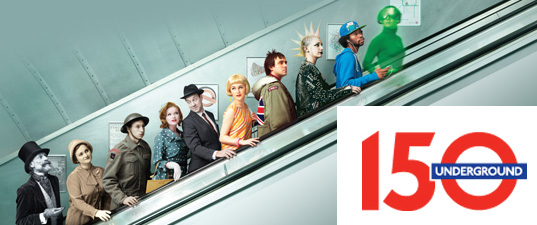
Time travellers: from Victorian times, through WWII, the Swinging Sixties and punk, right up to the present, the great and the good, the bold and the bad (read: everyone) has enjoyed/ endured The Tube
In a previous life I used to write for a magazine for the employees of one of the (now disbanded) London Underground contractors. While penning pieces on said publication, one always had to bear in mind its style-guide was quite adamant on the fact that in referring to London’s underground railway by its colloquial, affectionate moniker the ‘Tube’, one always had to write the proper noun as ‘The Tube’; the upper-casing of the first letter of its preceding article all important. But, thought I whenever I mused on it, that was quite a fitting stipulation, because The Tube is such an awesome form of public transport (when it’s working properly) it deserves not to be referred to as the Tube, but definitely as The Tube.
I mention this, of course, because today the world’s first metropolitan underground railway (are there any underground railways outside of metropolitan areas? Whatever) celebrates its 150th birthday. Yes, The Tube opened on 9 January 1863. No, there were no electronic trains back then (presumably it was a very stuffy, smoke-filled environment), no buskers and no tourists with incredibly bulky luggage whom inexplicably stand right in front of platform entrances and exits. For better or worse. But that’s when the world’s first, oldest and surely most famous underground railway network began.
Since then it’s seen everything from serving as a haven for sheltering Londoners during WWII’s Blitz to a central location for the most recent Bond film Skyfall (2012). It is one of my favourite cornerstones of my favourite city – when there aren’t any delays, which admittedly there often are (what can you do?). And for that reason, today George’s Journal is saluting the terrific and very tubular Tube by presenting to you this blogger’s five favourite stations. So commute away, peeps – and remember to mind the gap…
.
5. St. John’s Wood

Opened: 1939
Tube Line: Jubilee
Location and distinction: To be fair, there’s nothing remarkable about this station – although it’s a fine example of the rounded-themed, tiled, Modernist 1930s style of many – it’s all about its location (er, location, location). Yes, the brilliant thing about this stop on The Smoke’s superior subterranean transport network is its delightful proximity to one of the city’s all-time classic landmarks, namely that pedestrian crossing outside Abbey Road Studios across which The Beatles strolled in order to capture that utterly iconic image for their penultimate and near-perfect album Abbey Road (1969). Seriously, although it’s located on the corner of Acacia Road and Finchley Road, you need only take a seconds-long very pleasant, very suburban stroll down Grove End Road, turn right and, yes, you’re right there. Fab-tastic, to say the least.
You’ll know it from: That’d be that time you visited the Abbey Road crossing then
Coolest bit: Stepping out of the station and realising exactly where you are…
.
4. Piccadilly Circus
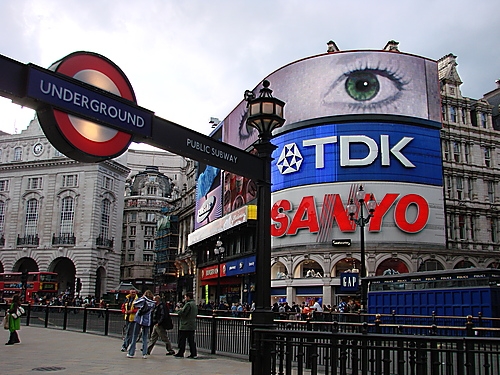
Opened: 1906
Tube Lines: Piccadilly and Bakerloo
Location: Literally underneath Piccadilly Circus
Distinction: This one features an entirely (and fittingly for The Tube) circular ticket hall. And its a stonker of a ticket hall. With confusing exits leading you up to different sides of different streets peeling off the world famous road junction above and public telephone booths, public toilets, Tube ticket machines, cash machines and (at first oddly) a below-ground entrance to the entertainment venue The Trocadero, it’s a tourist-teeming, dizzying, Central London hub that’s practically as busy as the more notorious street-level site above. But given its location in the heart of the West End, it’s filled with and fuelled by an excited buzz of chatter and air of expectation – especially in the evening.
You’ll know it from: That New Year’s Eve when you headed home with the inebriated – but invariably happy – throng after seeing out the old annus on the town
Coolest bit: The ‘world clock’ artwork near the escalators in the centre of the ticket hall that old-school-style attempts to display the world’s time zones (a band runs across its map of the world at the same speed as the sun crosses the globe)…
.
3. Angel
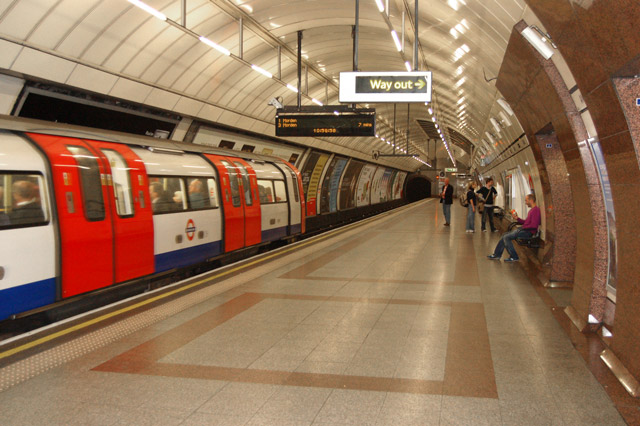
Opened: 1901
Tube Line: Northern (Bank branch)
Location: Underneath ‘The Angel’ district of London on the southern tip of the borough of Islington
Distinction: Angel station has a very modern, nay, hip (for The Tube at least) feel to it. It owes this not least to where in The Smoke it resides – the bottom of the fashionable Upper Street with all its boutiques, bars and restaurants; the King’s Road of North London, if you will. It also comes from its two distinguishing features. The first is the uniquely wide, highly polished and frankly rather cool southbound platform, which owes its unusual width to the fact it was once an ‘island platform’ serving tracks on either side, one of which has obviously been removed. The other is the higher of its two escalators (which transports travellers to street-level), whose length of 60 metres and vertical rise of 27 metres makes it the third longest in Europe behind one on the Stockholm Metro and another on the Helsinki Metro.
You’ll know it from: The video for the trendy (and very Islington) singer-songwriter Ed Sheeran’s single The A-Team (2011)
Coolest bit: The level between the two escalators at which you’ll often find a busker or two. Once this very blogger witnessed there an amateur songster performing Oasis’s Don’t Look Back In Anger (1995) while spontaneously and joyously joined by a chorus of 20+ thigh-slapping, quite impressively in-tune students. A sight – and sound – to behold, let me tell you…
.
2. Westminster

Opened: 1868
Tube Lines: Circle, District and Jubilee
Location: The corner of Bridge Street and Embankment – literally underneath the MPs’ offices building opposite the Houses of Parliament
Distinction: Westminster Tube station is all about the internal architecture – basically, to walk around in it is for us mere mortals the closest we’ll get to being inside a Bond villain’s lair. Seriously, it’s just like one. Sleek, shiny, tubular, with deep, open, appealingly lit industrial-like chasms, this is a Blofeld-esque space to say the least. Thanks to its deep-level construction work to connect it to the Jubilee line (completed in 1999), it’s modern, smart and easily the coolest Tube station there is. And even has a central control room near the barriers where chaps in hi-viz jackets sit looking at monitors like minions working for some deluded megalomaniac’s world domination-seeking operation.
You’ll know it from: Er, visiting the Houses of Parliament, Downing Street or Westminster Abbey. Like, obviously.
Coolest bit: Going down the escalators and pretending you’re 007…
.
1. Bank
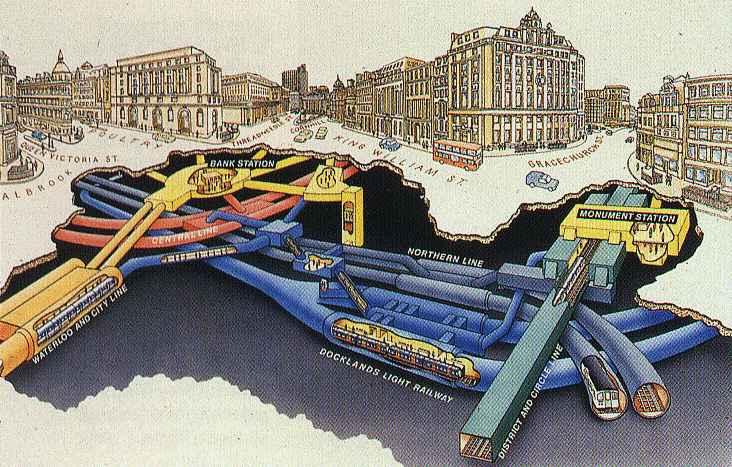
Opened: 1900
Tube Lines: Central, Circle, District, Northern, Waterloo and City and Docklands Light Railway
Location: Bank junction – the intersection of Threadneedle Street, Cornhill, Lombard Street, Mansion House Street, Poultry and Princes Street in the heart of the City of London
Distinction: The daddy of all Tube stations, Bank-Monument (to give it its full name) is a monster. You could walk around in it for an hour. Easily. Especially in, er, rush-hour. Multi-levelled, labyrinthine and seemingly endless, this effort is so impressive it’s technically two stations in one, as it lumps Monument (Circle and District Lines) in with the tri-Tube Line serving and ice-cool named Bank (after the above-ground Bank of England, of course). The ninth busiest station within the Tube network, it can be an absolute bugger to get around in when populated by peeps, not least because it’s usually filled by besuited banker and City-working bods, yet its epicness is unquestioned. It even boasts a direct Tube Line straight to Waterloo Tube/ railway station, which is not least handy but also proves just how essential a stop Bank is.
You’ll know it from: Those times you’ve got lost within its never-ending tunnels when you feel like you’re miles away from where you want to get to – and, indeed, above-ground civilisation (mind you, directly above Bank is the City, so it’s hardly civilisation, fnarrr!)
Coolest bit: Getting on a train at the Waterloo and City platform for the first time and realising you really are about to whizz right beneath the capital, not stopping once until you reach the legendary Waterloo station. It sort of feels like getting on your own private, dinky underground train. Sort of…
.
Further reading:
georgesjournal.wordpress.com/2011/03/27/mapping-the-stars-the-great-bear-1992-simon-patterson
tfl.gov.uk – the official Tube website
themanwhofellasleep.com/tubegossip.html
.
Playlist: Listen, my friends! ~ January 2013
.
In the words of Moby Grape… listen, my friends! Yes, it’s the (hopefully) monthly playlist presented by George’s Journal just for you good people.
There may be one or two classics to be found here dotted in among different tunes you’re unfamiliar with or have never heard before – or, of course, you may’ve heard them all before. All the same, why not sit back, listen away and enjoy…
.
CLICK on the song titles to hear them
.
The Glenn Miller Orchestra ~ Auld Lang Syne
Jackie Brenston And His Delta Cats ~ Rocket 881
Michel Legrand ~ The Boston Wrangler2
Serge Gainsbourg ~ La Horse3
Crosby, Stills, Nash & Young ~ Our House4
Buddy Rich ~ Norwegian Wood5
Brotherhood Of Man ~ Angelo
Shirley Bassey ~ I Was Born To Be Bad6
Cheap Trick ~ I Want You To Want Me
Peter Howell ~ Theme from The Shock Of The New7
Rod Stewart ~ Young Turks
Su Pollard ~ Back In The USSR
Billy Crystal and Meg Ryan ~ New Year’s Eve party from 1989’s When Harry Met Sally… (backed by Auld Lang Syne)
.
1 Recorded in 1951 and considered by many to be the very first rock ‘n’ roll song, its performers’ name was actually a pseudonym for Ike Turner and his backing band Kings Of Rhythm; months later it was covered by rock ‘n’ roll legend-to-be Bill Haley
2 From the Oscar-nominated score to The Thomas Crown Affair (1968)
3 From the Gainsbourg-written and -performed score to the film La Horse (1970)
4 Memorably featured in both a 1990s advert for UK building society Halifax and ‘Time On Our Hands’ (1996), the record audience-achieving episode of classic sitcom Only Fools And Horses
5 As performed on a 1973 edition of the Beeb’s legendary Parkinson (1971-82) chat show
6 As featured on a 1979 edition of the BBC’s The Shirley Bassey Show (1976 and ’79)
7 Composed by original BBC Radiophonic Workshop member and Doctor Who scorer Peter Howell, this was the title theme to Robert Hughes’ classic BBC series on the history of modern art The Shock Of The New (1979-80)
.
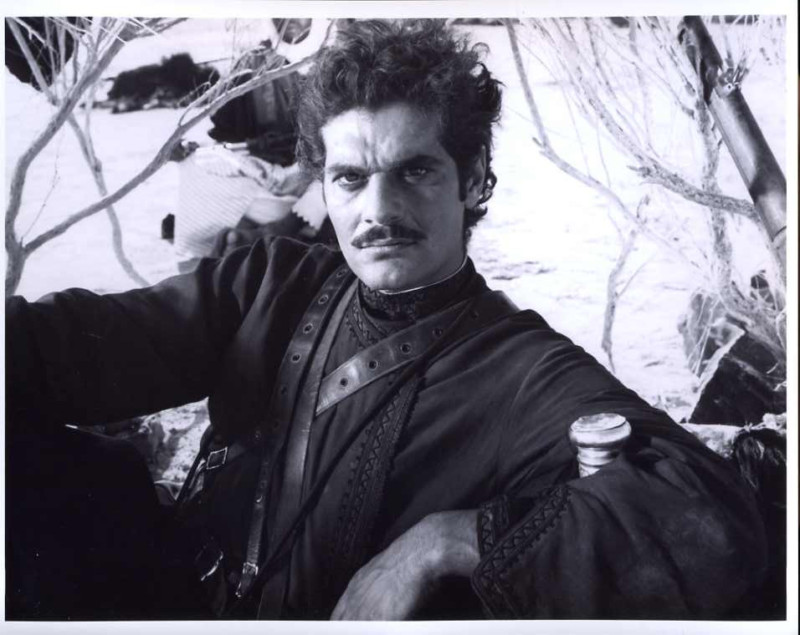
Golden sands: Lawrence Of Arabia ~ fifty years of the movie masterpiece

Darling of the desert: impossibly blue-eyed and indubitably brilliant, Peter O’Toole’s Lawrence was just one genius ingredient of David Lean’s multi-Oscar-winning movie masterpiece
Well, went the year well? Yes, if you were a British Olympian, Her Maj, a blond secret agent employed by Her Maj or, erm, a rain-lover. If you were any of them then you had much to celebrate, indeed. Yup, there were more than one several-year anniversaries in there. And here’s another. For, as 2012 just ducks out of sight, George’s Journal is seeing out the old and ringing in the new by celebrating the golden anniversary of one of the greatest films this very blogger’s ever seen – if not the greatest he’s ever seen. Peeps, I give you a tribute, (still just about) in its fiftieth year, to the seven-time Oscar-winning, 20-minutes-shy-of-four-hours-long, utterly awesome Lawrence Of Arabia (1962). Happy New Year…!
.
PASS MOUSE over the images for more detail about their contents
.
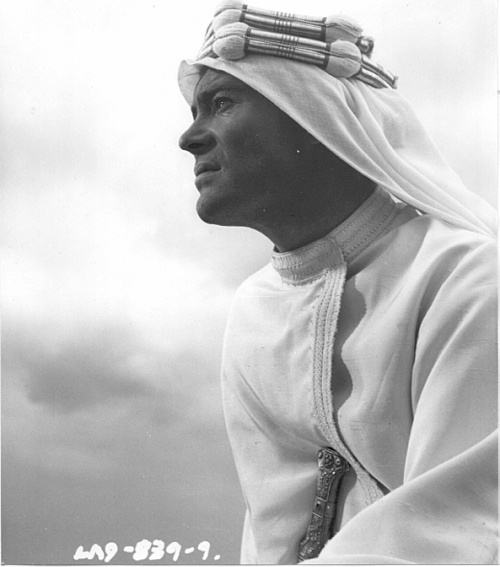
.
Lawrence: “No prisoners! No prisoners!”
.


.
Did you know?
Marlon Brando, Montgomery Clift and Anthony Perkins were all considered for the role of Lawrence and Albert Finney even turned it down before Peter O’Toole was cast after acing his screen-test
.
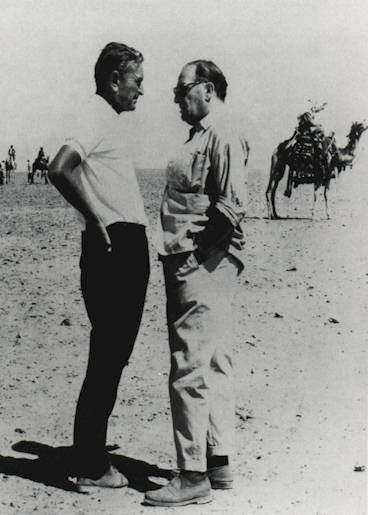
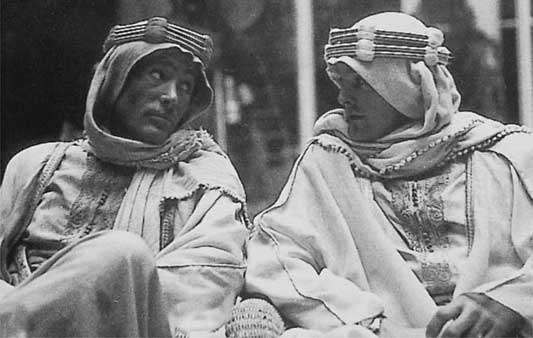
.
Lawrence: “I killed two people. One was… yesterday? He was just a boy and I led him into quicksand. The other was… well, before Aqaba. I had to execute him with my pistol, and there was something about it that I didn’t like”
Allenby: “That’s to be expected”
Lawrence: “No, something else”
Allenby: “Well, then let it be a lesson”
Lawrence: “No… something else”
Allenby: “What then?”
Lawrence: “I enjoyed it”
.


.
Dryden: “If we’ve been telling lies, you’ve been telling half-lies. A man who tells lies, like me, merely hides the truth. But a man who tells half-lies has forgotten where he put it”
.


.
Did you know?
Boasting a bladder-challenging running time of 220 minutes, Lawrence is by just one, single minute the longest Best Picture Oscar winner ever made. Gone With The Wind (1939) lays claim to the #2 spot
.
.
Did you know?
Omar Sharif’s role, Sherif Ali (Lawrence’s closest Arab ally), is a fictional composite of two real-life figures, as is Claude Rains’ slippery politician Dryden. Sharif was originally cast in the tiny role of Lawrence’s guide Tafas, before being upgraded to playing Ali
.
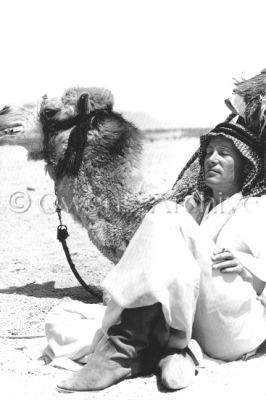
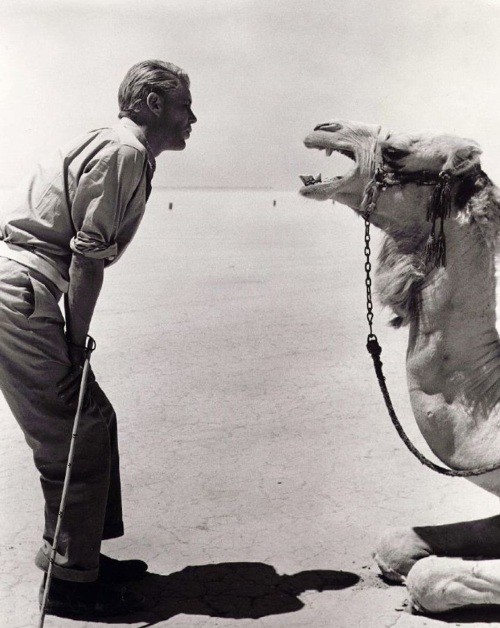
.
Allenby: “You acted without orders, you know”
Lawrence: “Shouldn’t officers use their initiative at all times?”
Allenby: “Not really. It’s awfully dangerous”
.


.
Colonel Brighton: “Are you badly hurt?” Lawrence: “I’m not hurt at all. Didn’t you know? They can only kill me with a golden bullet”
.

.
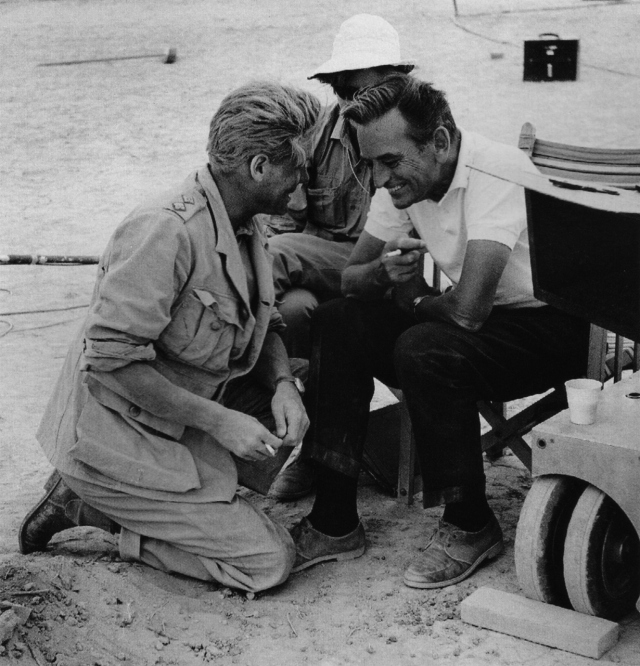
Did you know?
The film’s copious desert scenes were shot in Jordan, Morocco and Almería and Doñana in Spain. The shooting schedule was notoriously long, partly because its third screenwriter Robert Bolt was arrested for an anti-nuclear weapons demonstration and producer Sam Speigel had to broker his release from jail
.

.
Dryden: “Well. It seems we’re to have a British waterworks with an Arab flag on it. Do you think it was worth it?”
Allenby: “Not my business. Thank God I’m a soldier”
Dryden: “Yes, sir. So you keep saying”


.
Lawrence: “Nothing is written”
.
.

Retro Crimbo 2012/ Legends: Father Christmas ~ Saint or Santa?

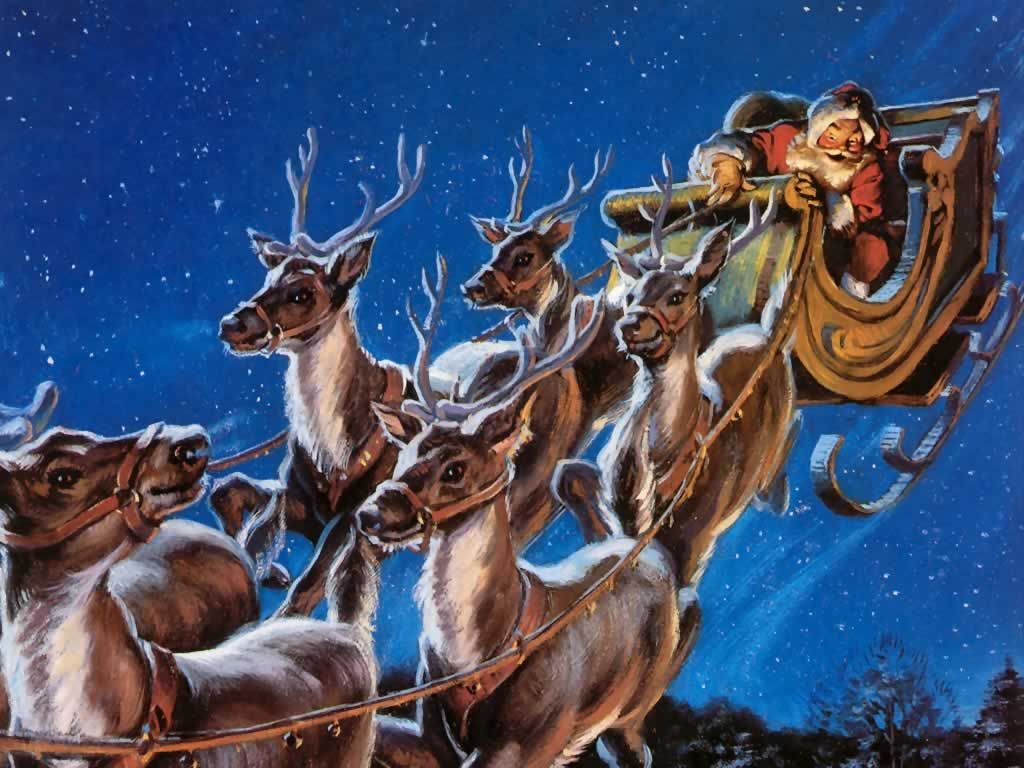
‘Twas the night before Christmas: a visual interpretation of the classic 1823 poem that’s the inspiration for Santa Claus (and his reindeer transport), yet the roots of Crimbo’s modern hero go back much farther
Time for a confession, folks – and not the I’ve-been-naughty-or-nice-this-year sort – rather the fact that, despite the cynicism and ill-feeling some feel towards the yuletide and its central player, the tubby, jolly chap with the long white beard, that – yes – that very merry icon has always been something of a must with me. Why else for the past few years would I have been – another confession here – writing a festive children’s novel in which he plays a critical role? Yes, for me, the sensational St. Nick certainly deserves a big, comfy armchair in front of the roaring fireplace in the ‘Legends‘ corner here at George’s Journal – and especially at this time of year.
What really underlines his legendary status for me, mind, is that, looking beyond him balancing an ankle-biter on his knee in a carboard grotto in a department store, he’s actually a universal, historical figure. You see, if my once-completed novel – and I – were ever lucky enough, it would be adapted into a movie (oh, well, of course, it would!), but who would play the stocking-filling feller himself? Well, I always envisaged Donald Sinden, but now that he’s seriously getting on, methinks (and because it would ideally be a big-budget Hollywood effort, naturally) Dick Van Dyke would be a fine substitute.
And that brings me to the nub of the matter. At almost any point or in almost any place in the last millennium you care to imagine, the subject of this post would have meant something to someone. And something different too. Whether he’s called Father Christmas (Britain), Santa Claus (America), Père Noël (France) or Saint Nicholas (his primary origin), or whether we see him as Donald Sinden or Dick Van Dyke or indeed anyone else, he’s always been around as Crimbo’s (more or less) human trademark – well, second only to that bloke Jesus, of course.
Conventional wisdom has it that the red coat-wearer’s introduction in his modern (or, today’s ‘traditional’) guise to boys and girls of all ages came in 1823, when the poem A Visit From St. Nicholas – or ‘Twas The Night Before Christmas – was anonymously published in the American town of Troy, New York (listen to a recently recorded version of it read by, yes, Dick Van Dyke by clicking on the bottom video clip below). It was later attributed to writer Clement Clarke Moore, although some claim it to have been composed by poet Major Henry Livingston Jr. (and that either drew great inspiration for the poem’s hero from a passage from 1809’s A History Of New York by celebrated scribe Washington Irving). Whoever wrote it, though, the poem quickly became enormously popular across the US – and as the 19th Century progressed the notion of ‘Santa Claus’ spread across the pond to both Blighty and Continental Europe.
.


Saint nicked?: an icon of St. Nicholas from Lipnya Church, Novgorod, Russia, c. 1294 (top l); ‘Woden The Wanderer’ by Georg von Rosen, 1886 (top r); Thomas Nast’s ‘Merry Old Santa Claus’ from Harper’s Weekly, January 1 1881 (btm l); Father Christmas in green from a Christmas card, 1890-1910 (btm r)
Indeed, the name ‘Santa Claus’ actually predates ‘Twas The Night Before Christmas, first appearing as it did in a New York-published book A New-Year’s Present, To The Little Ones From Five To Twelve (1821) as ‘Old Santeclaus’, a man on a reindeer-drawn sleigh delivering presents to children. But it was Clement Clarke Moore’s aforementioned poem that seems first to have suggested Santa and St. Nicholas are one and the same and introduced/ popularised his familiar paraphernalia: an utterly jolly demeanour, a pipe, a red coat and black boots, a team of reindeer with Germanic-sounding names, a penchant for entering homes by descending chimneys and, most important of all, delivering gifts to kids during the night of Christmas Eve.
And key too to spreading Santa/ St. Nick far and wide was the artist Thomas Nast. His cartoon Merry Old Santa Claus, which appeared in the New York-produced magazine Harper’s Weekly over the 1880/81 festive season immortalised the chap according to the then near 60-year-old poem’s description. Furthermore, an 1866 work by Nast may have given rise to the notion Santa resides at the North Pole. Yet, Nast’s very first image depicting our man appeared in Harper’s Weekly way back in 1863 (at the height of the American Civil War), in which he was draped in a Stars and Stripes flag and held court surrounded by Yankee soldiers. Hmmm, good to know he’d grow in future not to discriminate against sides in wars – in short, he’d become an obvious pacifist, peace-loving emblem of Christmas.
But just why does our jolly hero specifically represent Christmas? Where’s the original Christian connection? This, dear readers, is where St. Nicholas comes in. Originally a 4th Century Greek bishop, Nicholas was beatified after his death and, over the centuries, became patron saint (with a feast day celebrated usually in early December) to nations and cities throughout the Balkans and Western Europe, as well as to groupings of people such as sailors, merchants, pawnbrokers, archers and, er, students and even thieves. Oh, and to children, of course.
The last one’s important here, as is the legend that became attributed to him that he’d leave coins in shoes that peeps would leave out for him – making him then, a secret gift-giver (similar to Santa then whom fills not shoes, but stockings that peeps leave out for him). Indeed, one legend has it that Nicholas saved three poor – and, thus, dowry-less – girls from a future of prostitution by dropping sacks of gold coins down their home’s chimney the night before each of them came of age. Hmmm, (taking the sexual overtones out of the myth), sound familiar?
.
.
However, the notion of an old man gift-giver as a central figure during mid-winter festivals far pre-dates the Christianisation of Europe. The tradition can be traced back through European folklore to Odin (Old English: Wōden), one of the major Norse gods, whom would lead the ‘wild hunt’ during the mid-winter Yule festival of the pre-Christian German peoples (Yule also being the festival from which the warming ‘yule log’ was borrowed for Crimbo). Good old Odin also possessed an eight-legged horse named Sleipnir (a precursor to Santa’s eight-strong team of reindeer perhaps?).
Other European pre- ( and contemperaneous of) St. Nick winter festival gift-givers include the Central European Christkind (‘Christ Child’, whom was promoted by Martin Luther to lessen the Catholic/ Orthodox St. Nicholas’s popularity), the Norwegian Julenissen and Swedish Jultomten (elderly men/ dwarves/ gnomes, whom perhaps gave rise to Santa’s dwarfish physicality in ‘Twas The Night Before Christmas), the Danish Julemanden (the ‘Christmas Man’ who hails from Greenland – maybe why Santa comes from the North Pole?), the Finnish Jolupukki (er, a goat) and, of course, the British Father Christmas.
Aha, Father Christmas! Nowadays the oh-so Anglo-Saxon sounding chap is generally accepted as Blighty’s equivalent to Santa, or essentially the name us Brits use for him. Yet that most certainly wasn’t always so. Check out the fact the French gift-giver’s name (Père Noël) is an exact Gaulish version. And that ain’t all. A similar name is used for equivalent figures in cultures throughout Eastern Europe (including Bosnia, Serbia, Latvia, Lithuania and Romania) as well as Spain and Latin America (Argentina, Brazil and Chile) and among Christian communities in Africa and the Middle East (Egypt, Iran and Syria). Although, traditionally in Wales he’s ‘Siôn Corn’ (Chimney John). Ah, the Welsh, eh?
All this isn’t a coincidence, mind you. For Father Christmas, traditionally speaking, is effectively a personification of Christmas itself, rather like, if you will, the personifications in literature, art and music of nations (for example, ‘John Bull’ for Britain/ England and ‘Marianne’ for France). Indeed, in past centuries his English version was alternatively known as Old Father Christmas and even Sir Christmas and Lord Christmas. As such then, the ‘English’ Father Christmas was never actually a gift-giver.
.


Politically incorrect?: an old-school Coca-Cola ad (l) and the Dutch Sinterklaas and his Zwarte Piets (r)
He was merely a jolly, bearded and elderly chap whose spirit reflected, well, the spirit of the festival with which he was associated and he was old to reflect the fact Christmas had been celebrated for centuries. Plus, he had much more a link to adult feasting than he was a St. Nick-esque benefactor for children, developing in the mid- to late 16th Century as a focal figure of opposition to the Puritan movement (which had its zenith when Oliver Cromwell became Lord Protector following the English Civil War and, yes, the celebration of Christmas was outlawed).
His earliest mentions in English literature seem to date from a pair of 15th Century carols, while he also appears (very much as his festival’s personification) in Ben Johnson’s play Christmas His Masque (1616). Actually, to get a real hold on who he was, check out the classic seasonal novella A Christmas Carol (1843) and/ or its subsequent movie adaptations. For Charles Dickens‘ Ghost of Christmas Present is basically the old-fashioned Father Christmas – right down to the green (not red) trimmed coat he wears, which was the figure’s traditional garb until late Victorian times.
Inevitably then, as the late Victorian era gave way to the 20th Century and Santa became better and better known to the wider Western world, Father Christmas and Santa Claus slowly merged into one in the minds of millions of Crimbo revellers and gift-receiving, stocking-hanging and mince pie- and glass of sherry-leaving-out children. But all of that assumes that Santa Claus (and/ or later Father Christmas) naturally inherited his mantle from St. Nicholas. How did that happen? After all, Santa Claus doesn’t exactly sound like St. Nicholas, does it? Well, no, but both sound a lot like Sinterklaas (or more formally ‘Sint Nikolaas’), which is the Dutch for St. Nicholas.
Standing out from the crowd somewhat when it comes to the modern take on the St. Nick/ Santa/ Father Christmas tradition, the Netherlands and Benelux countries still make a big deal out of celebrating Sinterklaas on his feast day (December 5), when his arrival in towns, dressed in red like a Christian bishop and with a staff, to give out presents to deserving children is often televised. Curiously, at least on the surface, Sinterklaas is accompanied not by pre-Christian, Northern European folklore-derived elves, but by blacked-up companions named Zwarte Piets (Black Petes).
.
.
Nowadays this practice may seem rather inappropriate, even xenophobic or racist, but the origin of the Zwarte Piets is worthy of divulging. The tradition of the Sinterklaas feast, in an anticipating-the-birth-of-Jesus sort of way, is all about good (light, represented by his white beard) overcoming evil (black, represented by the ‘skin tone’ of his minions), thus the Zwarte Piets were originally supposed to represent Moorish non-Christians taken under Sinterklaas’s wing (owing to the tradition coming from Catholic Spain) and later they came to represent African slave boys Sinterklaas was supposed to have saved from the Dutch/ Belgian colonies. All a little odd to an Anglo-Saxon mindset maybe, but logical nonetheless.
Logical too, of course, was the rise and rise our familiar Crimbo figure that is the modern Santa experienced during the 20th Century. Initially, at least, one monolith of a company in particular can be thanked (and/ or blamed) a great deal for this: Coca-Cola.
So identified with the sugar (and one-time cocaine-)fuelled soft drink was our hero that some – especially in the States – not only believe the company was responsible for creating his red costume, but also for creating him. Fortunately, that’s not true, of course. But it is true that thanks to ad artist Haddon Sundblom’s interpretation of the jolly chap, originally conceived and used by Coca-Cola in the 1930s, the image of him we’re all oh-so familiar with became the eternal one. Indeed, Sunblom’s original effort is still used by Coca-Cola to this day. Lesser known is that earlier still another soft drink manufacturer White Rock Beverages used images of Claus to advertise both mineral water (1915) and ginger ale (1923).
Although, Santa/ Father Christmas’s persona as a benevolent giver, despite – one may cynically observe – regularly coming to appear as a Christmas-period promotional tool in department stores and in their sponsored parades (especially for Macy’s in New York City), was aided by the dressing up of fundraising volunteers in his now traditional red-robed garb to collect donations from charitable peeps on street corners. And this thoroughly selfless, utterly self-sacrificing interpretation (along with all the reindeer-owning, sleigh-riding, gift-giving and North Pole-inhabiting acoutrements) was the one that TV and Hollywood writers, producers and directors were only too happy to give us when casting him as the hero and/ or kindly paternal figure in many family-friendly, seasonal-market-aimed productions.
.
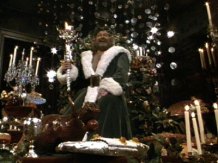


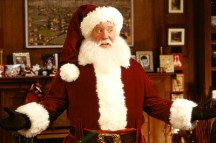
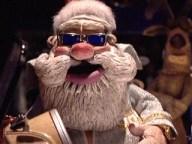

Santa on screen: Edward Woodward’s Ghost of Christmas Present in 1984’s A Christmas Carol (top l); Rankin-Bass’s version in 1970’s Santa Claus Is Comin’ To Town (top m); David Huddleston in 1985’s Santa Claus: The Movie (top r); Tom Allen in 1994’s The Santa Clause (btm l); ‘Weirdy Beardy’ in 1999’s Hooves Of Fire (btm m); and James Cosmo in 2005’s The Lion, The Witch And The Wardrobe (btm r)
Arguably as much as Coca-Cola did earlier (and, yes, later) in the 20th Century, in the second-half of that century, television and film have immortalised old Santa for millions around the globe; although he first appeared on screen in, yes, 1898 (see top video clip above). Essentially, the Rankin-Bass animators (1970’s Santa Claus Is Comin’ To Town), the people behind the cinematic Superman (1985’s Santa Claus: The Movie), Disney (1994’s The Santa Clause and its sequels) and oh-so many more have presented us with same figure.
More recent screen interpretations have tried different things – turning him into a grumpy bloke of British suburbia (1991’s Father Christmas), making him tackily but lovably trendy (1999’s Hooves Of Fire) or presenting him in the guise of Narnia author CS Lewis’s supposedly Anglo-centric ‘Father Christmas’, whom doesn’t wear scarlet but still gives gifts (2005’s The Lion, The With And The Wardrobe) – yet they’ve still mined the familiar and popular version of Claus, if turned it up at the corners for variety’s sake.
To this day, the most original, interesting and enduring screen take on Santa (see middle video clip above) is one that dates back as far as 1947. The presentation of the character as the playfully ambiguous is-he-or-isn’t-he-really-Santa? Kris Kringle in the Hollywood classic Miracle On 34th Street mixed the reality of Claus as a commercial commodity for cosmopolitan department stores with him as something altogether more innocent, truer and purer. A kindly old man do-gooder who offers a little peace and goodwill for peeps at a particularly stressful time of year.
And, when you come down to it at amid all the soot at the bottom of the chimney, it’s for this reason that, despite him being year-on-year, ever increasingly associated with (for a better way of putting it) capitalist greed, the white bearded one always appeals, delights and fills joy in the hearts of children of all ages this time of year.
As US Santa performer from Cambridge, Massachusetts, Jonathan Meath put it in a November 2011 interview with Yankee Magazine: “Santa is really the only cultural icon we have who’s male, doesn’t carry a gun, and is all about peace, joy, giving, and caring for other people. That’s part of the magic for me, especially in a culture where we’ve become so commercialised and hooked into manufactured icons. Santa is much more organic, integral, connected to the past, and therefore connected to the future. I like that representation of Santa because I’m not a Coca-Cola Santa. I’m much more of a Santa of the woods, a Santa of the snow, a Santa of the solstice.” Quite so. And if that doesn’t fill your tummy, nay, your heart with a deep, rumbling ‘ho ho ho!’ then nothing will. Happy Christmas to all – and to all a good-night…!
.
.

Retro Crimbo 2012: Yule love the look of this ~ a pictorial tribute to the yuletide
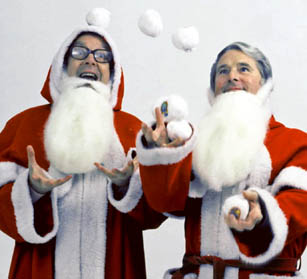
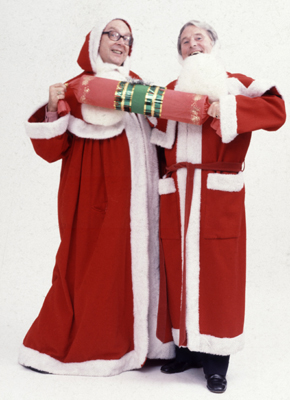
Festive favourites: with their classic Christmas TV offerings, comedy legends Eric Morecambe and Ernie Wise were real-life Santa Clauses in the 1970s and early 1980s for households up and down Britain
A picture can speak a thousand words, so they say. That’s a Christmas cracker of an old cliché, I know – but then the images below are clichés too, containing as they do Christmas trees, Santa suits, gift-wrapped presents, mock – and real – snow, stockings, tinsel, fixed smiles, awkward group poses and some very dubious ’70s fashions (as well as several other clichéd words).
What they also contain though are the great and the good, the famous and the talented, the whimsically recalled and the sadly nearly forgotten in some sensational and so-bad-they’re-good seasonal settings, few of which, I suspect, you’ll have ever seen before.
So crack out the mulled wine, folks, as down George’s Journal‘s chimney of yuletide imagery we go…
.


Bing-Dong-Merrily: Bing Crosby in Santa get-up in promotion of 1954 festive film favourite White Christmas (left) and with co-stars Rosemary Clooney, Vera-Ellen and Danny Kaye (right)
.
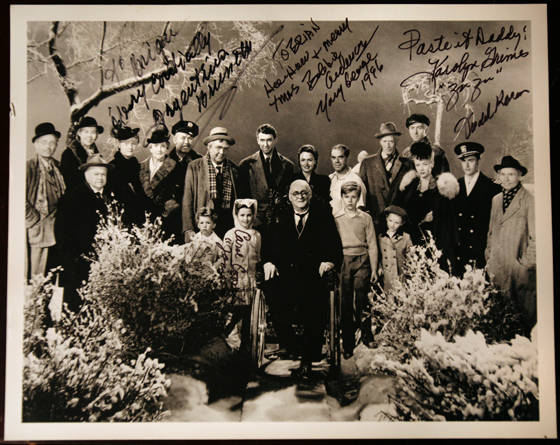
Family (and friends) album: the cast of classic Christmas movie It’s A Wonderful Life (1946)
.

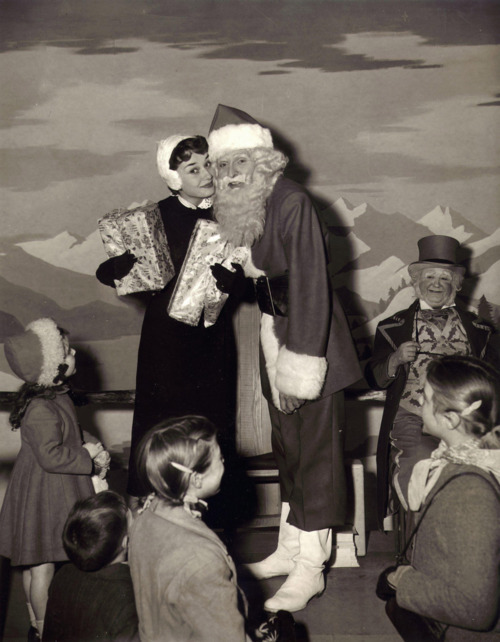
Santa’s little helper: Angelic Audrey Hepburn helps Old Saint Nick dish out presents to children
.

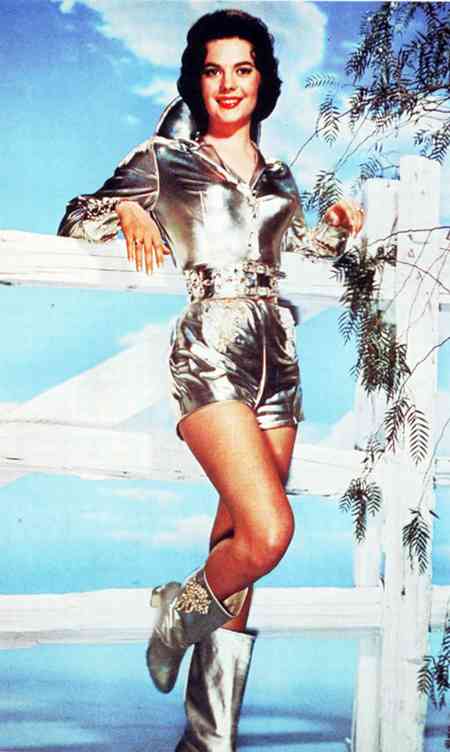
Silver belles: Debbie Reynolds (left) and Natalie Wood (right) make festive cheesecake poses
.


A family Christmas: John F and Jackie Kennedy pass The White House’s Blue Room Christmas tree in 1961 (left); Humphrey Bogart, Lauren Bacall and their son Stephen in front of theirs (right)
.


Rat Pack and Bat Girl: Dean Martin, Sammy Davis Jr. and Frank Sinatra on the set of Robin And The Seven Hoods (1964) (left) and ’60s TV’s Catwoman Yvonne Craig on a Christmas sleigh (right)
.
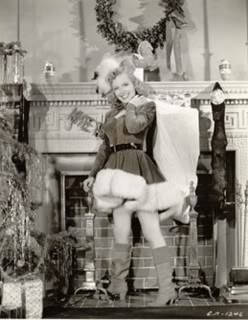

Filling stockings: Marilyn Monroe in a pair of particularly appealing yuletide images
.

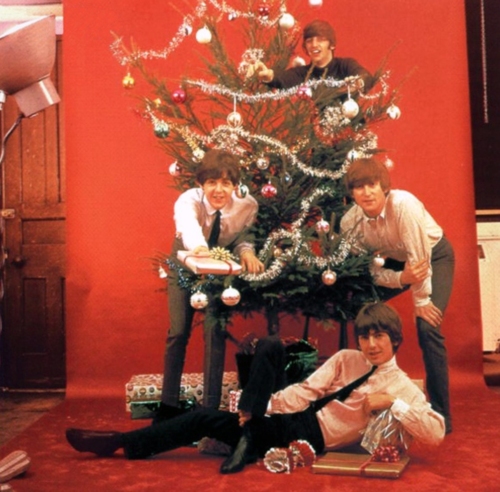


Fab-tastic festivity: The Beatles with their presents from the tree (above left and right) and in Dickensian clobber (bottom left) and pantomime costumes from the 1963 Christmas shows tour (bottom right)
.
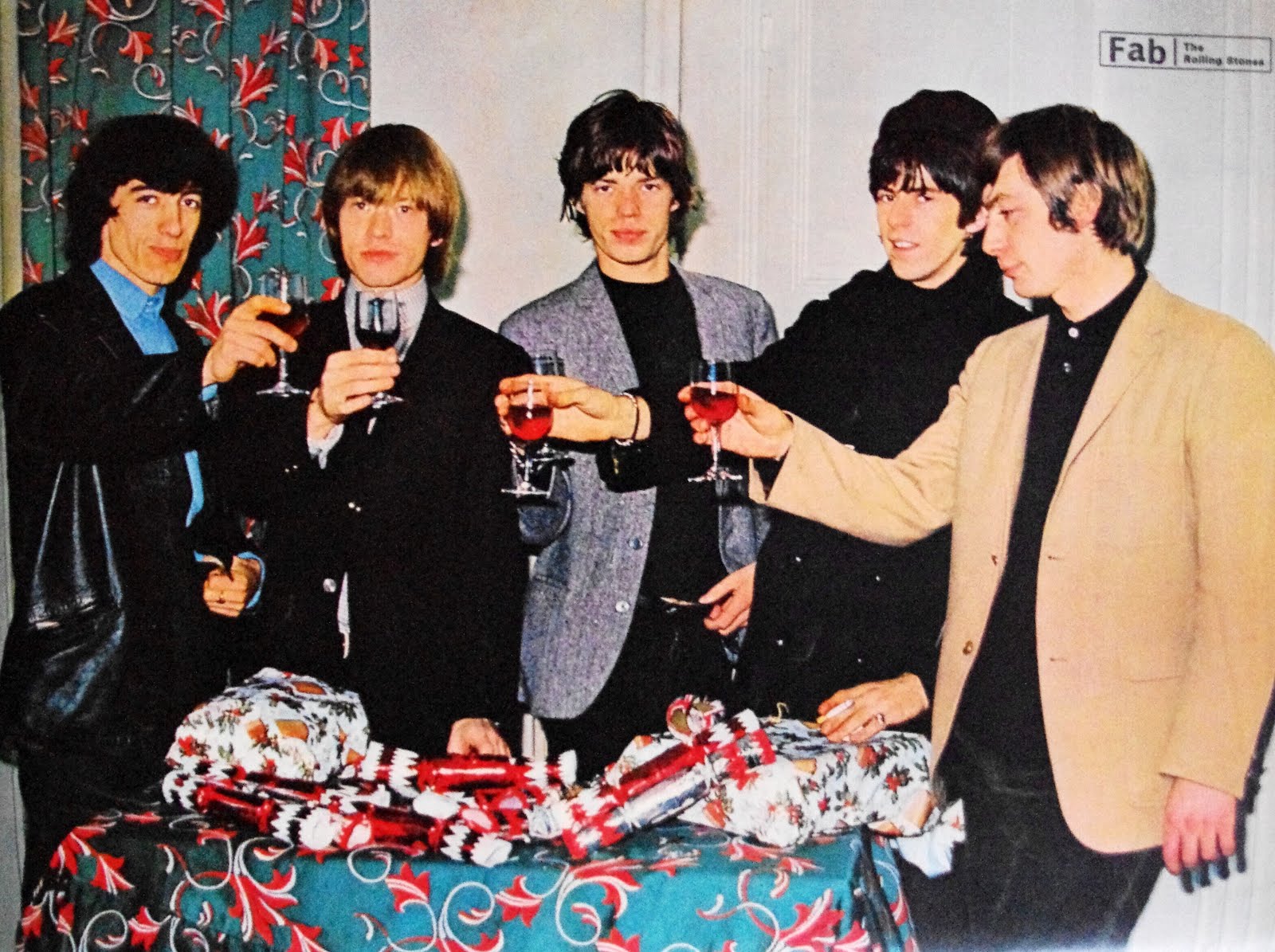
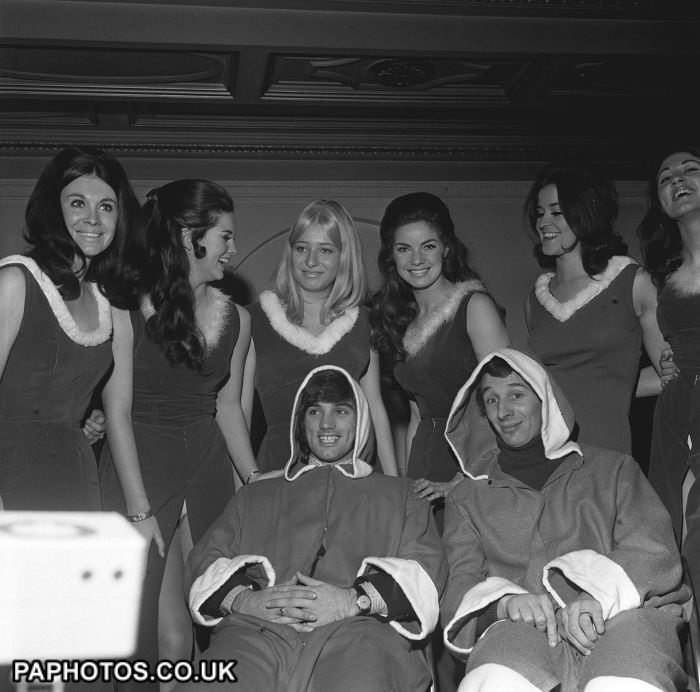
Likely lads: A very 1960s Rolling Stones toast the best of the season (left) and outfitted-as-Santa footballers George Best and Mike Sumberbee are surrounded by very tasty totty (right)
.
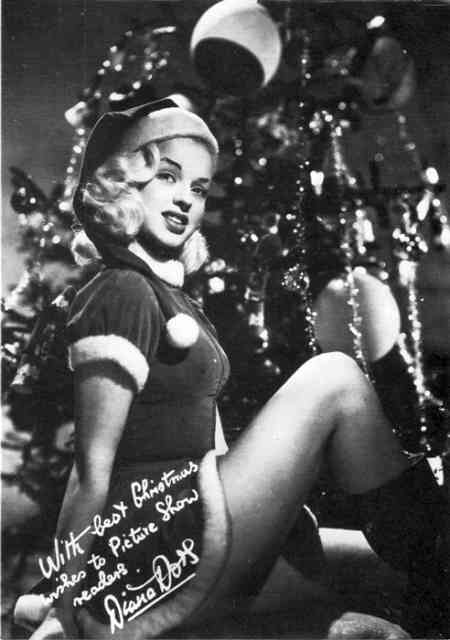

Brits of all right: UK stars Diana Dors (l) and Julie Christie (r) in cheesecake yuletide poses
.

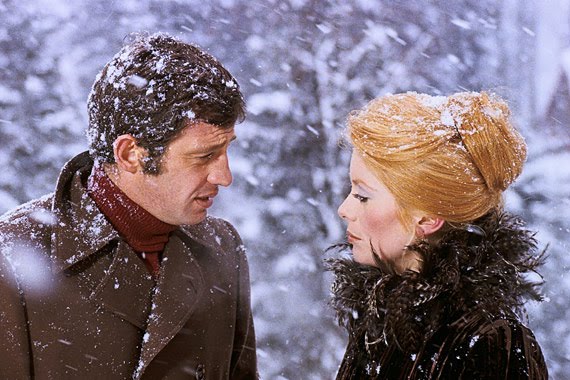
Family affair and French fancy: Dean Martin and Frank Sinatra perform with their daughters Gail and Nancy on a 1967 Christmas edition of The Dean Martin Show (left); Jean-Paul Belmondo and Catherine Deneuve in a snowy scene from the legendary François Truffaut’s film Mississippi Mermaid (1971) (right)
.

Dizzying and fizzing: the head-twisting beauty of a leopard-print-clad Ann-Margaret surrounded by Christmas presents (left) and Sammy Davis Jr. advertising Alka-Seltzer for the festive season (right)
.
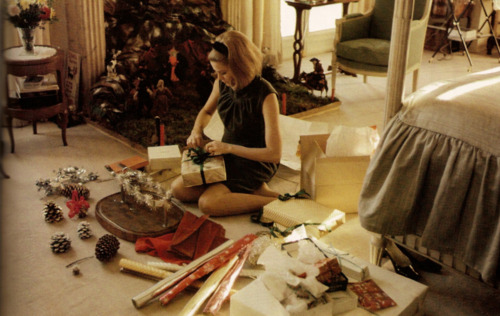
The princess’s presents: Grace Kelly wrapping Christmas gifts most likely in the 1960s
.


Double-O-Crimbo: Poster art of George Lazenby as James Bond with Santa hat (left) and Telly Savalas as Ernst Stavro Blofeld delivering seasons greetings in On Her Majesty’s Secret Service (1969) (right)
.

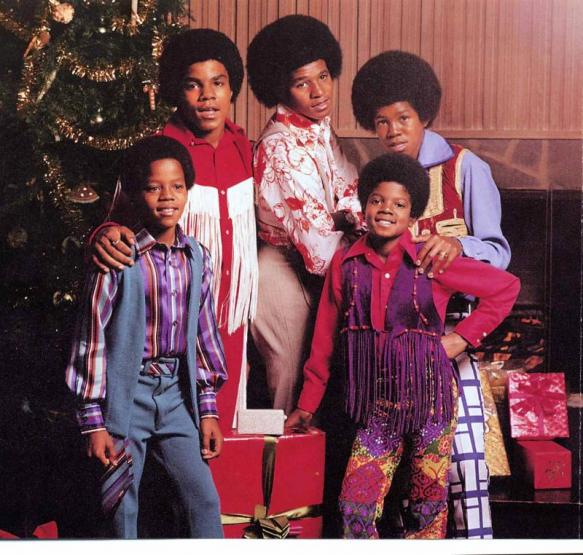
Merry Motown: Diana Ross and The Supremes on a sleigh (left) and The Jackson Five (right)
.

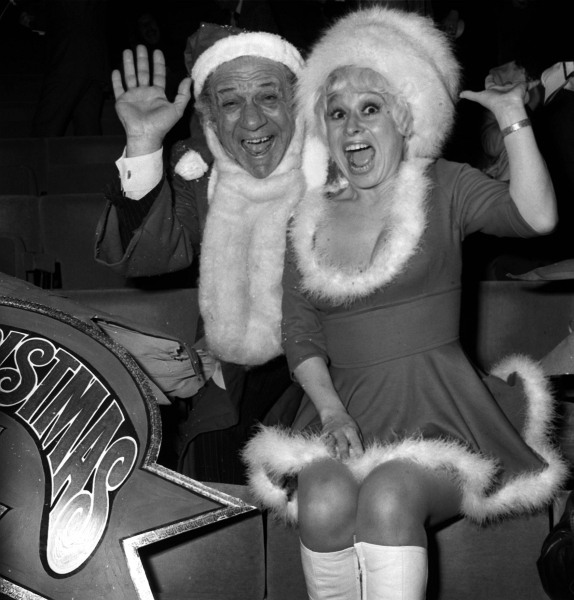
Carry on Christmas: Sid James and Barbara Windsor in Santa outfits for the cover of the Christmas 1973 edition of TV Times magazine (left) and greeting guests at a ’70s ITV yuletide party (right)
.


Rudolfs and Forsyth: Morecambe and Wise and Brucie in a sketch from their 1975 Christmas Show
.

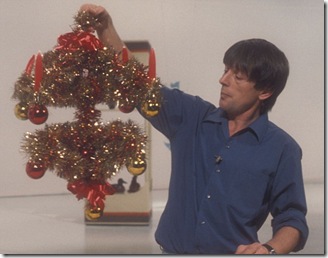
Tinsel-tastic: Julie Andrews guest-starring in a 1977 festive edition of The Muppets Show (left) and presenter John Noakes with the legendary Blue Peter advent crown from the ’70s (right)
.
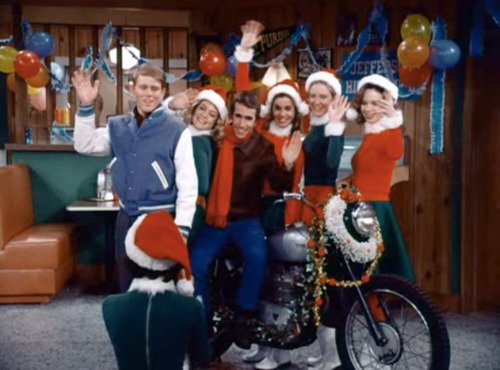
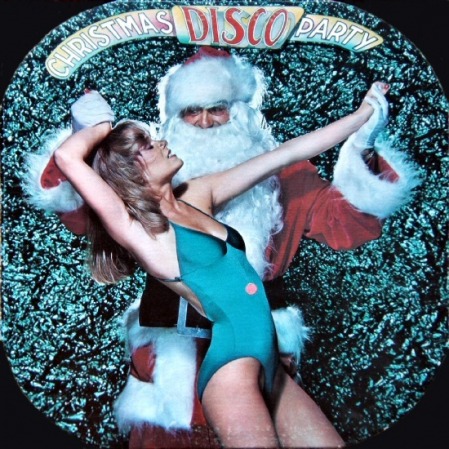
Festive Fonzie and yuletide disco: a scene from the 1974 Happy Days episode Guess Who’s Coming To Christmas? (left) and an unmistakably ’70s Christmas disco party image (right)
.


It’s Chriiiiiiiiiiiiiiiistmas!: Noddy Holder’s Slade (l) and Roy Wood’s (with white hair) Wizzard (r) performing respectively 1973’s Merry Xmas Everybody and I Wish It Could Be Christmas Everyday
.


Robot turkey: the infamously ill-received Star Wars Holiday Special broadcast in the States on the CBS TV network in November 1978 (left) and an antlered R2D2 and C3P0 dressed in festive garb (right)
.
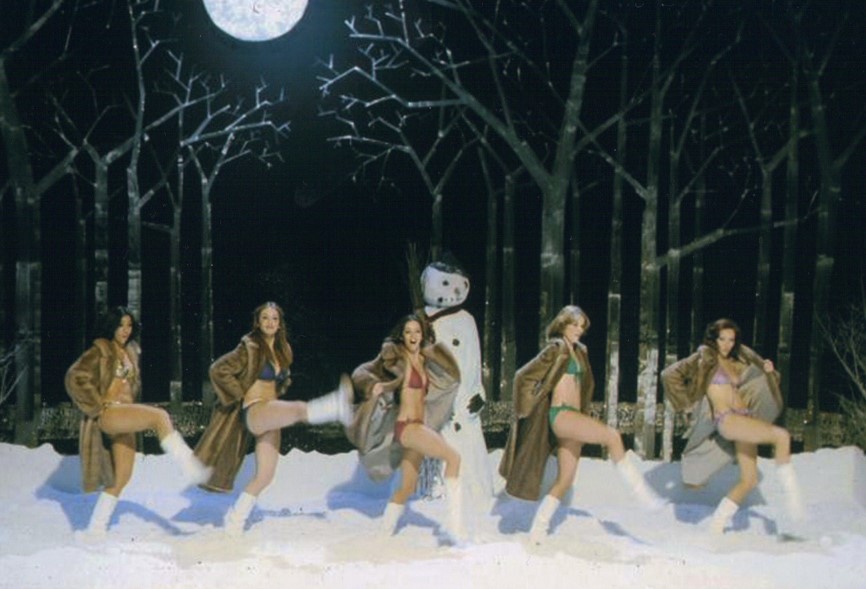
Winter wonderland: Top Of The Pops’ in-house ’70s dancers Pan’s People hoof it up in the snow
.
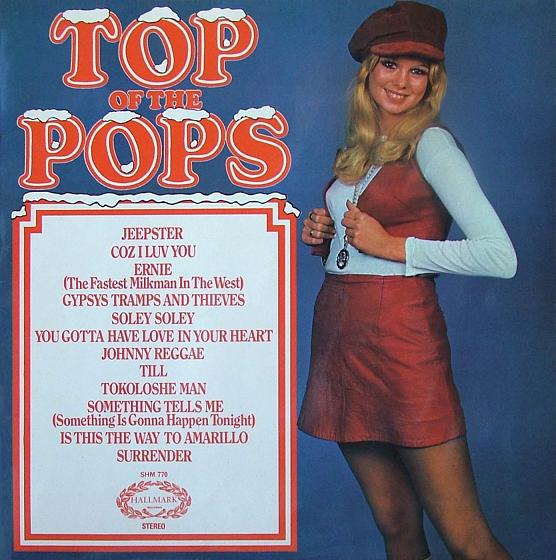
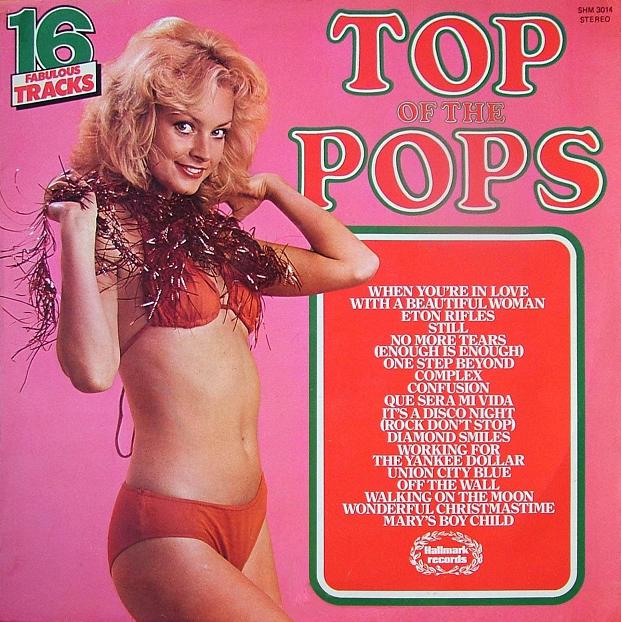
Advent albums: Top Of The Pops discs of chart hits from December 1971 (left) and December 1979 (right)
.


Having a scarf laugh: David Bowie introduces the classic animation The Snowman (1982)
.

Sitting on San-T’s knee: Nancy Reagan and Mr T merrily pose for the cameras in the 1980s
.
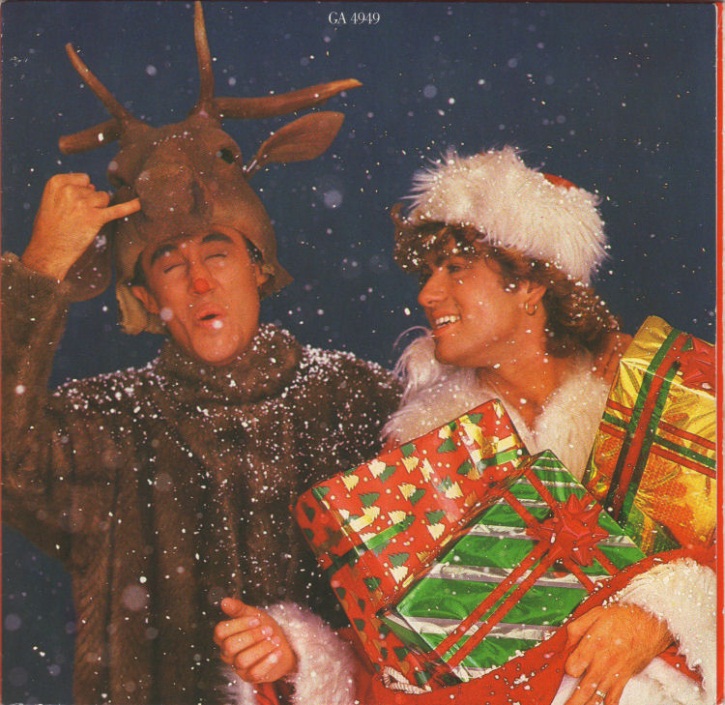
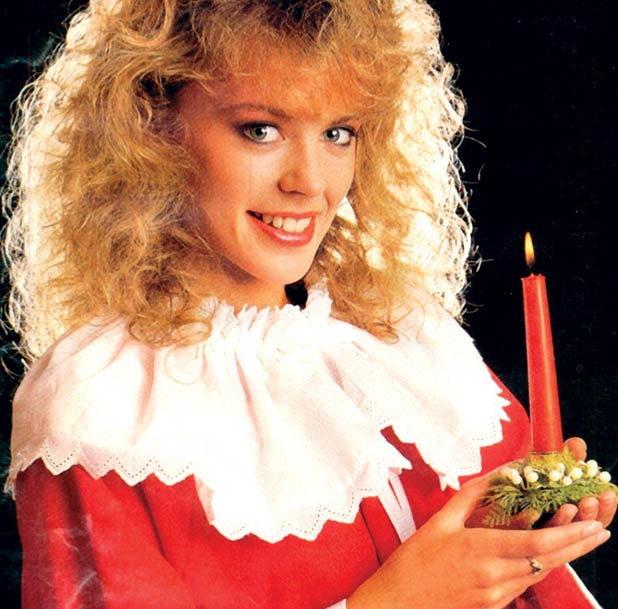
Merry musicians: Andrew Ridgely and George Michael in artwork from Wham!’s 1984 seasonal single Last Christmas (left) and Kylie Minogue in yuletide get-up from the late ’80s (right)
.

Hitting the right note: Gizmo dons a Santa hat in the seasonally-set comedy hit Gremlins (1984)
.
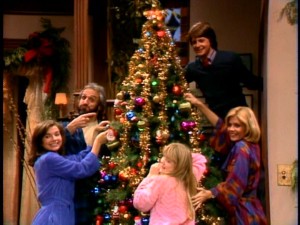
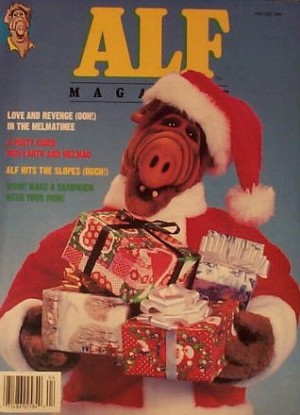
Sitcom Christmas: Michael J Fox and cast in the 1983 Family Ties episode A Keaton Christmas Carol (left) and loveable, iconic alien Alf on the cover of a Christmas issue of the Alf magazine (right)
.

Christmas in New York: Santa’s sleigh flies over Manhattan in Santa Claus: The Movie (1985)
.
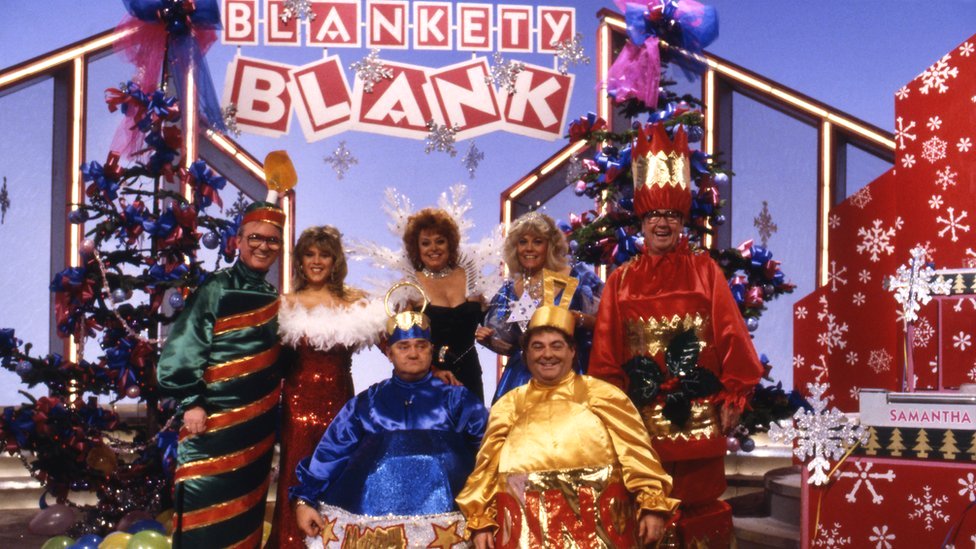
Game for a laugh: Blankety Blank host Les Dawson with (clockwise from left) Syd Little, Samantha Fox, Lynda Barron, Wendy Richard, Frank Carson and Eddie Large on the 1986 Christmas show
.

Alice dalliance: The Two Ronnies starring in their ’85 Christmas special’s Alice In Wonderland sketch
.

Seasonal spirits: the ghoul hunters get festive and spread goodwill in Ghostbusters II (1989)
.
.
.
.


Blizzard wizards: The Snowman and his human friend James have delighted TV viewers for three full decades’ worth of Christmases – but just how did they soar to the seasonal heights they now enjoy?
Half-an-hour isn’t very long – just 30 sixty-second-long capsules packed together. But this Christmas I challenge you to try and fill a whole half-an-hour with a resolutely unabashed, unquestionably perfect activity. Honestly, it’ll be more difficult than you think.
Rip open your presents from under the tree? Let’s be honest, that’s unlikely to take you an entire 30 minutes. Stuff your face with rum truffles and a Terry’s Chocolate Orange? Great idea, until about 30 minutes later when you’ll want to throw up. Overdose on sherry and eggnog and get truly merry? Again top stuff, until the following morning when you’ll – again – want to blow-chunks. One way, though, in which you could spend a full, perfect half-an-hour (with no unpleasant comeback whatsoever) is to watch The Snowman. I promise you, it truly is a perfect 30-minutes of seasonal entertainment delight; one that’s so perfect it’s almost without parallel come the yuletide – or any time of year, in fact.
And, if anything, sampling (or re-sampling) the genius of The Snowman is more perfect this Christmas than maybe any other – if that’s possible – because this season of goodwill will celebrate it’s 30th anniversary. Yes, believe it or not, The Snowman has hit the big ‘three-o’ – its very first broadcast on British terrestrial TV network Channel 4 taking place on Boxing Day (December 26) 1982.
Indeed, to mark this most merry of anniversaries, not only are the charitable bods at Channel 4 re-showing it for us all at Christmas (as they, well, do every year), but they’re also screening a brand-spanking new animation – an ‘equal’ rather than a sequel to the original, it seems – named The Snowman And The Snow Dog. Am I giddy with excitement at the prospect of this Crimbo cartoon double-whammy? Peeps, I’m positively walking in the air like it’s 1982 all over again.
.
.
And yet, the story of The Snowman really began four years before then. For it was in 1978 that illustrator Raymond Briggs saw a comic-strip-like children’s book he’d newly created published in the UK by Hamish Hamilton. Far from being the trailblazer its short film adaptation would be, though, The Snowman was the latest in a line of children books from Briggs. Born in Wimbledon Park, London, in January 1934, he studied at the Wimbledon School of Art from the age of 15 and, following two years of military service, completed his artistic education at London’s Slade School. He then paid his dues in advertising before settling in Sussex and embarking on a career as a children’s book illustrator-cum-author.
His first effort out of the blocks was a collection of illustrated nursery rhymes Ring-A-Ring O’ Roses (1962). Continuing to mine folklore and especially fairy-tales, he followed this with Fee Fi Fo Fum (1964), The Mother Goose Treasury (1966), Jim And The Beanstalk (1970) and The Fairy Tale Treasury (1972). Although the third of those books had already won the prestigious Kate Greenaway Medal for book illustration, it was his next effort with which he genuinely hit the big-time, Father Christmas (1973).
Bringing him his second Kate Greenway Medal, Father Christmas was an instant hit with kids up and down the UK with its irreverent take on the red coat-sporting gift-giver as an old, grumpy, very British bloke who lives in suburban England with his cat, dog and, of course, reindeer in the garage. Really, it’s no surprise it was so popular what with its hero calling everything under the sun ‘bloomin’!’ and struggling to work out how to get inside chimney-less caravans. Stylistically speaking, Father Christmas was a also milestone for Briggs being his first book to deploy a comic-strip narrative style by framing several illustrations on each page and having the characters speak in speech bubbles. The book was so popular it was followed by a sequel, the equally popular and equally entertaining Father Christmas Goes On Holiday (1975).
His next project proved Father Christmas wasn’t a fluke as he pulled off a hit one-two of (somewhat) anti-heroes with Fungus The Bogeyman (1977), an endearing tale about a monster from a grimy, humdrum monster world who wonders whether there’s more to life. A sort of British version of Shrek (2001) or Monsters Inc. (2002) – although, of course, it predates both of these by at least 20 years.
.
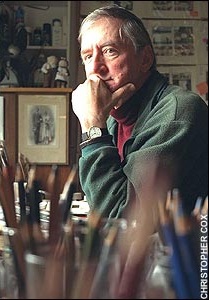
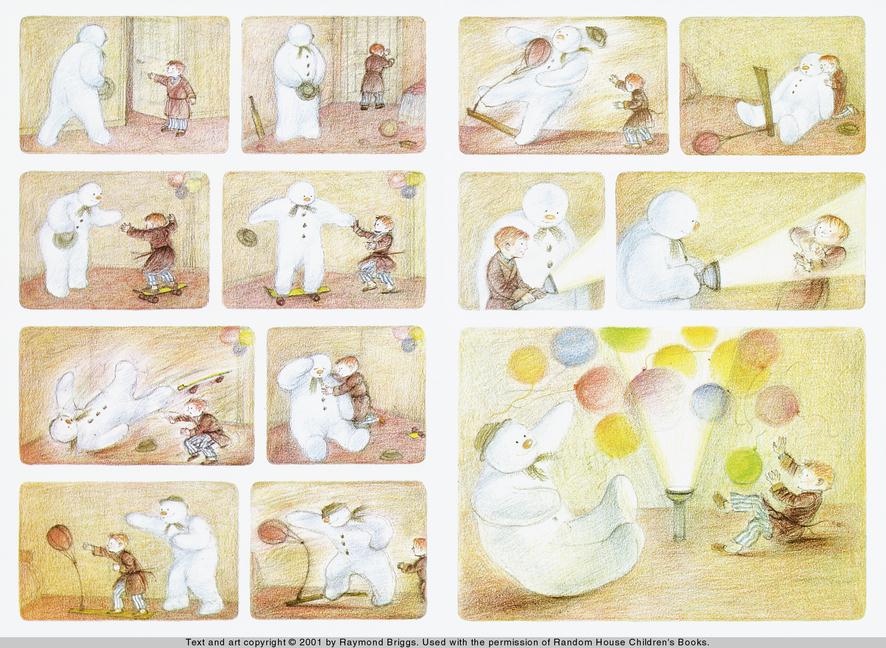
Raymond and his crayon creation: Briggs looking ponderous at home in his studio (left) and a double-page spread from the 1978 children’s book that would be adapted into the animated classic (right)
And, ironically given its subject matter, Fungus more than any of his previous books influenced Briggs’ next. In an interview with the website of children’s publisher Puffin, Briggs himself explains: “For two years I worked on Fungus, buried amongst muck, slime and words, so I wanted to do something which was clean, pleasant, fresh and wordless and quick”. That something was The Snowman.
Employing the comic strip-style of both Father Christmas and Fungus, but (as the author notes above), without words, The Snowman is a dynamite combination of two things: simplicity and beauty. With its dedication to crayon-only illustration – there’s no ink, pencil or watercolour at all – it offers a pastel-soft and, thus, truly timeless look that perfectly complements its similarly simple tale. A young boy wakes up one morning to a heavy snowfall, leading him delightedly to make a snowman, whom magically comes to life when at night-time when everybody else is asleep and is shown around the boy’s alien (to a snowman, at least) home and, in return, takes the boy on a Superman-esque flight through the night’s sky. Upon waking in the morning, the boy runs out to play with his snowman once more, only to discover much of the snow has thawed and his wintry friend has melted away. It’s a brilliant blend of the ebullient and the tragic.
Like Briggs’ last two efforts, The Snowman was an immediate success. It was a runner-up for 1978’s Kate Greenaway Medal and selected for the US Lewis Carroll Shelf Award in ’79, following its publishing there by Random House. But its critical success was really a reflection of its commercial success – its story, magic and, yes, melancholic ending utterly enchanted its young readers.
Indeed, in a recent interview with Briggs in The Observer newspaper, he claims its popularity was down to ‘a simple thought’. He said: “We all have favourite people we become fond of and then they pass away, it [The Snowman] touches a chord of loss – even for young people, someone dies.”
.
.
However, come 1982 The Snowman’s tale would touch an even bigger chord, of course, thanks to its animated adaptation showcasing that Christmas on the exceedingly new Channel 4. The latter came about after one of the channel’s original big-wigs Paul Madden (whom was in charge of commissioning animated projects) got talking to a chap who’s office was next door to his own, John Coates of TVC. Adapting The Snowman for the small screen was Coates’ idea; actually, more than that, it seems it was something of a passion with him.
Madden explained in the aforementioned Observer interview: “He brought a proposal, it was really a cut-and-paste job of pages of the book, with snowflakes falling over them, that was the special bit. It was by far the best proposal of all of the ones which came in. I said to Jeremy Isaacs [Channel 4’s founding Chief Executive]: ‘This is going to be classic, like Disney. We have to do it.'”
The result was a 26-minute-long film directed by animator Dianne Jackson and crafted by applying pastels and crayons to celluloid. Just like the book, it featured no words – or rather dialogue – but an outstanding orchestral score by composer Howard Blake. And it was a faithful adaptation of Briggs’ original plot, save for one inserted section in which the Snowman and the boy (named James in the film; at least a present under the family tree addressed to ‘James’ makes clear that’s his name) enjoy a destination for their flight through the night. Yes, the North Pole for a midnight party with other snowmen, snow-women and Father Christmas. Indeed, it’s from the latter that James receives, as a gift, the scarf that he withdraws from his dressing gown pocket and holds in the film’s very final shot; his sole physical memory of his time with his magical friend.
Madden, suggesting the moment when they truly knew they were on to a good thing, says that prior to broadcast it was previewed to children at a Channel 4 staff Christmas party – some of the children were so moved they cried at the end. Yet surely neither he nor any of the other bods responsible for it could have dreamed of the phenomenon it would become. A modest success on its first broadcast (after all, Channel 4 had been on the air less than two months), it was nonetheless a success, enough for it to be repeated the next Christmas… and the next one after that… and the next one after that. As the mid-’80s dawned, The Snowman had become something of a permanent fixture in the channel’s seasonal schedule, often going out on Christmas Day and seemingly becoming more popular each year it was broadcast.
.


Bloomin’ marvellous, hoofing glorious and soaring skywards (again): Father Christmas was, like The Snowman, adapted into a popular short film (r); the latter became a successful – and often revived – stage show (m) and this Christmas’s Channel 4 follow-up, The Snowman And The Snow Dog (l)
However, the Christmas when it really crossed over into the mainstream was 1985, when – not at all as a tie-in with its broadcast that yuletide – a 14-year-old Welsh choirboy by the name of Aled Jones released a single of Walking In The Air, the song that features in the film and the only ‘words’ to be heard in it, which scaled the dizzy heights of the UK charts all the way up to #5. (Contrary to popular belief, Jones hadn’t sung the song on the film’s soundtrack; that honour had fallen to an uncredited 13-year-old chorister named Peter Auty – see bottom video clip). In any case, this was the catalyst-and-a-half that launched Jones’ two-year pop star-esque chart-topping career (see above video clip) and, in turn, did The Snowman no harm at all. In fact, it proved a huge boost for both the film and the book. A huge boost. That Christmas in particular everybody knew about The Snowman – and it seemed everybody fell in love with it too.
Following this, not only did the film experience a little tinkering (a version originally for US broadcast features a cold opening in which a live-action James ‘as an adult’, played by David Bowie, finds in an attic the scarf he received as a gift), but it was also adapted again – this time for the stage in a hugely popular, family-friendly ballet. First put on by Manchester’s Contact Theatre in 1986, this theatrical version was then revived by the Birmingham Repertory Theatre in ’93 and again by the Sadlers Wells dance company at the Peacock Theatre in London’s West End, where it’s been performed every Christmas from ’97 onwards.
Indeed, TVC (John Coates’ company that produced the original film) didn’t do too badly out of all the success either. For it ensured they could make further successful small-screen animations, among them more acclaimed Raymond Briggs adaptations – the nuclear war-themed When The Wind Blows (1986), The Bear (1999) and, of course, Father Christmas (1991), the latter now a festive favourite itself, featuring, as it does, Mel Smith’s voice as the ‘bloomin’ marvellous’ title character.
And that brings us to The Snowman And The Snowdog, which although not based on an original Briggs work (he’s said of it: “I’m not grumpy about it, or the introduction of a new character; it’s absolutely super, not sentimental at all”), it promises – not giving too much away – to be very much a follow-up to the original ’82 film; very much set in its universe and very much a 30th celebration of its genius. And what genius The Snowman remains after all these years. It may not have won an Oscar – it was nominated for one, mind – but its popularity today is unquestionable and its place in the festive firmament seemingly assured forever. In the words of Paul Madden: “it’s got that universal appeal, to every age group and every new generation” – and that’s as crisply clear as the perfectly white carpet blanketing his garden that, 30 years ago, enticed James to run outdoors and, well, build a snowman…
.
The Snowman is on Sunday 23 December at 6.25pm and The Snowman And The Snowdog on Christmas Eve at 8pm, both on Channel 4
.
Further reading:
sadlerswells.com/show/The-Snowman-2012
.
.
Retro Crimbo 2012/ Playlist: Listen, my merry friends!


In the words of Moby Grape… listen, my friends! Yes, it’s the (hopefully) monthly playlist presented by George’s Journal just for you good people.
There may be one or two classics to be found here dotted in among different tunes you’re unfamiliar with or never heard before – or, of course, you may’ve heard them all before. All the same, why not sit back, sip a glass of mulled wine, munch on a mince pie and listen away; for in the words of Noddy Holder, ittttttt’s… well, I’m sure you know what comes next…
.
CLICK on the song titles to hear them
.
Bing Crosby, Danny Kaye, Rosemary Clooney and Vera-Ellen ~ Snow¹
The Beatles ~ The Beatles’ 1963 Christmas Record
Booker T. & The M.G.s ~ Jingle Bells
Herb Alpert & The Tijuana Brass ~ Sleigh Ride
Nina ~ Do You Know How Christmas Trees Are Grown?2
Burt Bacharach ~ Turkey Lurkey Time3
Joni Mitchell ~ River
Marvin Gaye ~ I Want To Come Home For Christmas
National Lampoon Radio Hour ~ Kung-Fu Christmas4
Larry Grayson ~ Who’s Stuffing Your Turkey This Christmas?
Kurtis Blow ~ Christmas Rappin’5
The Star Wars Intergalactic Droid Choir & Chorale ~ What Can You Get A Wookie For Christmas (When He Already Owns A Comb)?6
Huey Lewis And The News ~ Winter Wonderland
Madonna ~ Santa Baby
Darlene Love ~ Christmas (Baby Please Come Home)7
John Williams ~ Carol Of The Bells8
Howard Goodall ~ Mr Success/ Mr No Good9
Kate Winslet ~ What If10
Katherine Jenkins ~ Abigail’s Song11
Cary Grant ~ Christmas Lullaby12
.
¹ From the all-time classic movie musical White Christmas (1952)
2 A performance by noble-cum-pop star Nina, Baroness van Palladt of John Barry’s seasonal ditty from the James Bond film On Her Majesty’s Secret Service on the 1969 Morecambe And Wise Christmas Show
3 From the 1968 Broadway musical Promises, Promises (music by Burt Bacharach, lyrics by Hal David and book by Neil Simon – and based on Billy Wilder’s 1960 classic film The Apartment) and performed on a February 1970 edition of The Ed Sullivan Show
4 As featured on The National Lampoon Radio Hour LP ‘Goodbye Pop’ and written by Bill Murray, Christopher Guest, Brian Shaffer and Brian Doyle-Murray
5 Kurtis Blow – real name: Kurtis Walker – was the first rapper to be signed by a major record label (Mercury) and Christmas Rappin’ was his first single released by them; it sold 400,000 copies
6 From the 1980 album Christmas In The Stars (narrated by C3P0 actor Anthony Daniels and featuring songs and stories about a droid factory making toys for Santa), produced by Meco (Domenico Monardo) the man behind the chart hit that was the disco-ified version of the Star Wars Main Theme
7 A compilation of performances by Darlene Love of the classic Christmas hit on The Late Show With David Letterman – her first festive appearance on the show was in 1986
8 From the soundtrack of the film Home Alone (1990)
9 As featured in the BBC Christmas special Bernard And The Genie (1991)
10 Performed by Winslet – in the role of Belle – in the animated film Christmas Carol: The Movie (2001) and released as a single that reached #6 in the UK charts
11 As featured in 2010’s seasonal Doctor Who episode ‘A Christmas Carol’, in which Jenkins played the character of, yes, Abigail
12 The recent birth of his daughter Jennifer – with wife Dyan Cannon – was the inspiration for this 1967 festive effort from Grant, the only single he ever recorded
.
Retro Crimbo 2012: O come all ye faithful…
.
… joyful and retro-umphant! For, yes, if wallowing whimsically and nostalgically in the best (or, at times, in the so-bad-it’s-good) culture of decades past is your bag, then this merry month, one of true whimsy and nostalgia, of course, should be right up your gaudily neon-lit-up street, peeps.
Why? Because in the lead up to this year’s Crimbo, George’s Journal can offer you, my ‘Net-friendly friends, a festive-themed playlist of genuinely rare and intriguing recordings (from Marvin Gaye to Booker T and the M.G.s and from Star Wars to Kate Winslet, they’re all there); an article focusing on a yuletide favourite of the small screen that’s celebrating an esteemed milestone this yuletide; an addition to this blog’s ‘Legends‘ corner that can surely only be described as this season’s, well, legend; and a gallery of pics of the famous and the fictional and the great and the good celebrating and posing in all manner of Christmas-related guises.
Yes, so this advent do check in to the snow lodge that’s this blog, merry mates, for a proper retro Christmas experience. But what’s that I hear you cry? It’s only December 1; it’s not Christmas yet! Well, you’re absolutely right. After all, for back in the day it only ever truly felt like Christmas for me when on the Beeb’s Blue Peter the last candle of the advent crown had been lit and the school kids and the Salvation Army marching band had been let into the studio from the gloomy, chilly London night to sing out the show with a classic carol.
Ah, but wait a tick, what’s this…?
.
.












 George's Journal