Playlist: Listen, my friends! ~ June 2013



.
In the words of Moby Grape… listen, my friends! Yes, it’s the (hopefully) monthly playlist presented by George’s Journal just for you good people.
There may be one or two classics to be found here dotted in among different tunes you’re unfamiliar with or have never heard before – or, of course, you may’ve heard them all before. All the same, why not sit back, listen away and enjoy…
.
CLICK on the song titles to hear them
.
The Left Banke ~ Walk Away Renee (1966)1
Marvin Gaye and Tammi Terrell ~ Ain’t No Mountain High Enough (1967)2
The Doors ~ Summertime (1967)3
Mama Cass, Mary Tyler and Joni Mitchell ~ I Shall Be Released (1969)4
Miles Davis ~ Bitches Brew (1970)
Bette Midler ~ Superstar (1972)
Cast of Bugsy Malone ~ So You Wanna Be A Boxer (1976)
ABBA ~ Rock Me (1977)5
CJ & Co ~ Devil’s Gun (1977)6
Tina Turner ~ We Don’t Need Another Hero (Thunderdome) (1985)7
Denis King ~ Theme from Lovejoy (1986-93)
Peter Gabriel ~ In Your Eyes (1986)8
The Divinyls ~ I Touch Myself (1991)9
.
1 This original version of the tune that would become a huge hit for the Motown giants The Four Tops just months later was written by Left Banke member Michael Brown of his bandmate’s (bassist Tom Finn) then girlfriend Renee Fladen-Kamm. The song’s muse was actually in attendance when it was recorded, which was such an uncomfortable experience for Brown he had to return to the studio to finish off the record hours later
2 A promotional film-version (seemingly filmed in front of a funky, urban ‘6os telephone booth) of Gaye and Terrell’s original crossover Motown hit. Terrell would tragically die three years later from brain cancer, aged just 24 years-old. It’s said Gaye never properly recovered from her passing and his downbeat, introspective classic 1971 album What’s Going On was a reaction to her loss
3 An idiosyncratic Doors take on the George Gershwin classic, captured during a performance at San Francisco’s Matrix Club on March 7 1967; founding band member and keyboardist Ray Manzarek died last month aged 74
4 Performed on a Mama Cass TV special broadcast in 1969
5 This, well, truly rocking version of the ABBA hit was recorded live in Australia and is taken from ABBA: The Movie (1977)
6 This was the first track ever to be played at the legendary Manhattan disco venue Studio 54 (1977-81)
7 As featured in the Antipodean post-apocalyptic adventure sequel Mad Max Beyond Thunderdome (1985), starring Mel Gibson and, of course, La Turner as Aunty Entity. The song hit #3 in the UK, #2 in the States and #1 in Canada; it was also nominated for Golden Globe and Grammy awards. Curiously, English World Cup winning rugby player Lawrence Dallaglio provided his voice for the song – as a member of King’s House School choir, to be heard towards its end
8 The tune that blares out of John Cusack’s lovelorn hero’s boombox he holds above his head to win back his sweetheart Ione Skye in the iconic scene from Cameron Crowe’s Say Anything (1989). Peter Gabriel stipulated he’d only agree to his song’s use if he was sent a cut of the movie to view first; his response was that the flick was fine, but he didn’t go on the protagonist’s drug overdose at the end – bizarrely, the film studio had sent him a cut of 1989’s Wired (a biopic of John Belushi) by mistake
9 The deliciously risqué Australian #1, US #4 and UK #10 hit that featured in the fembots-face-off scene from Austin Powers: International Man Of Mystery (1997); its co-writer and The Divinyls’ lead singer Christina Amphlett sadly passed away in April this year, aged just 53
.


With a little help from our friends: The Fab Four play dress-up and pose with two-dimensional incarnations of personal heroes and fond fancies for the ultimate musical mise-en-scène
Ah, music… it’s great, isn’t it? What separates it from practically every other art form – and gives us its syringe-like hit right into the centre of the brain – is surely because it’s singularly, uniquely aural. Yet, my blog-friendly friends, this actually isn’t so. See, since its inception, pop-cum-rock music has always been a visual as well as an audio art form; lumière et son, if you will. How so? Well, consider the humble album cover. At its best, it’s a once-seen-never-forgotten square of eye-attracting dynamite, often complementing the themes and feel of the music contained on the disc contained in its sleeve – or sometimes, in clever, arty counterpoint, seems to have bugger all to do with the tunes it’s supposed to illustrate, instead operating as a nifty, highly successful form of ‘anti-marketing’. Either way, in the hurly-burly universe of hard-selling pop/ rock, the album cover and its art are far from humble things; indeed, sometimes gloriously they’ve been quite brilliant and beautiful.
And, to celebrate this fact, peeps, this very post (and another to come in the near future) features a – more or less – chronologically arranged collection of truly outstanding album covers, explanations of why they’re so and the stories behind their creation. So without further ado then, go on, reach up and dust off the old record shelf in the corner, because we’re breaking out (the cardboard that contains) the vinyls. Oh yes…
.
CLICK on the images for full-size and CLICK on the album titles for audio samples
.
.
Sgt. Pepper’s Lonely Hearts Club Band (1967) ~ The Beatles
(Above)
Artists: Peter Blake and Jann Haworth (designers), Michael Cooper (photographer) and Robert Fraser (art director)
So this list’s opening gambit is an obvious gimme – but an absolutely, indefatigably, unquestionably, indubitably essential one too. Sgt. Pepper is a 100-metre-long hail-mary-pass game-changer of a mid- to late ’60s album that changed all the rules, both for The Beatles’ pop/ rock contemporaries and the record buying public; it blew the minds of both. Music artists (by happenstance as well as design) had been producing albums as works of art rather than a collection of tunes for a while, among them Bob Dylan, The Beach Boys and The Fabs, but Sgt. Pepper took the whole thing a quantum leap forward. A concept album in as much as the band themselves ostensibly take on the guise of the make-believe ‘Sgt. Pepper’s Lonely Hearts Club Band’ (presumably as a nifty gag that they’d like to escape the scrutiny and pressure that being The Beatles had foisted on them so many years), there’s actually little of this – apart from the title tune and its reprise – in the songs themselves, which together are a cacophony of psychedelic rock, balladry, symphonic, music-hall-style and Indian and epic studio experimentation produced with their ally, the genius Parlophone producer George Martin.
To fit with the ‘fake band’ theme, the album artwork, of course, features the foursome in their psychedelic-esque military band guise, surrounded by a collage of around 60 cardboard cut-outs of culturally significant people. A venture so grand (and expensive – the final cost amounted to £3,000, 60 times the cost of the average album cover back then) it had to be realised by an entire team of designers and snappers including the legendary Sir Peter Blake and art dealer Robert Fraser, whom represented the former. The back cover of the sleeve featured all the album’s song lyrics printed out – the first time ever for a rock record – and the inside a panorama portrait of John, Paul, George and Ringo in their day-glo suits. The record, to much fanfare and (utterly deserved) hype, was released on August 1 1967 and went on to top the UK charts for 27 weeks and its US equivalent for 15. To date, it’s sold 32 million copies and is frequently cited as the greatest album ever made. Band leader Sgt. Pepper’d be so proud.
Accompanying The Fabs in the centre, dressed in their boldly couloured Sgt. Pepper garb, are figures of movie stars Marlon Brando, Marilyn Monroe, Tony Curtis, Marlene Dietrich, Johnny Weissmuller, Fred Astaire, Mae West, Laurel and Hardy, Tyrone Power, W C Fields and Diana Dors; writers Lewis Carroll, Oscar Wilde, H G Wells, Dylan Thomas, Edgar Allan Poe, Aldous Huxley, William S Burroughs and Terry Southern; politicians and historical figures Karl Marx, Albert Einstein, Robert Peel, David Livingstone and T E Lawrence; legendary experimental composer Karlheinz Stockhausen; psychiatrist Carl Jung; boxer Sonny Liston and footballer Albert Stubbins; Hindi gurus Sri Yukteswar Giri, Sri Mahavatar Babaji and Sri Paramahansa Yogananda and occultist Aleister Crowley; comedians Lenny Bruce, Tommy Handley and Max Miller; waxwork models of The Beatles themselves; and, of course, the Fabs’ rock-crush Bob Dylan; as well as props including a Macca-owned telly, a Lennon-owned statue, a doll of Hindu goddess Lakshmi and a fukusuke (Japanese china figure), a euphonium, a drum skin, a garden gnome and hookah pipe, and a cloth doll of Shirley Temple wearing a sweater bearing the peace-and-love-themed legend ‘Welcome The Rolling Stones’. Figures that were removed included Adolf Hitler and, utterly conversely, Mahatma Ghandi and Jesus Christ. Go figure.
~~~
.
Calendar Girl (1956) ~ Julie London
Artist: Unknown

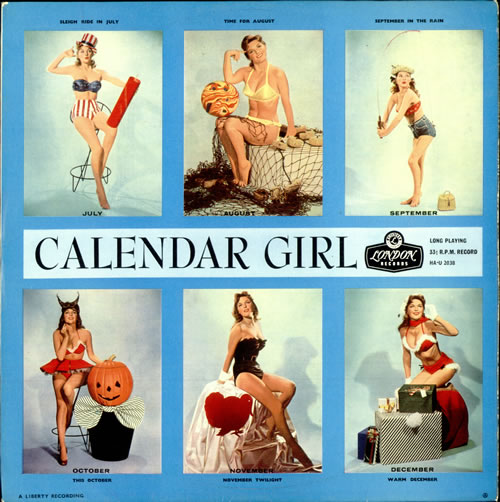
For many, before hitting its groove in the ’70s with the prog rockers, the ‘concept album’ started with Sgt. Pepper. Not so, folks, for here’s a glorious example of the concept album – and accompanying artwork – from the mid-’50s courtesy of the husky-voiced sex kitten that was the lovely Julie London. Calendar Girl, an on-form, orchestrally backed offering from the chanteuse, cleverly features 12 tunes (six on one side of the record; the other six on the other) that, one after the next, reflect the 12 months of the year and most of which are jazz standards (June In January; February Brings The Rain; Melancholy March; I’ll Remember April; People Who Are Born In May; Memphis In June; Sleigh Ride In July; Time For August; September In The Rain; This October; November Twilight and Warm December). Even more cleverly, the record is complemented by a wraparound sleeve sporting 12 finely fetching painted portraits of Ms London in cheesecake poses also representing the months of the year (i.e. ‘Miss January’, ‘Miss February’ etc). But not content with just that already classic concept-ness, the album additionally offers a 13th month track, er, The Thirteenth Month, which is visually represented by an awesomely appealing, pull-out and keep image that comes inside the sleeve. Original LP versions of the album are, understandably, nowadays major collectors’ items.
~~~
.
50,000,000 Elvis Fans Can’t Be Wrong (1959) ~ Elvis Presley
Artist: Bob Jones

Reminiscent of a ’60s pop art effort Andy Warhol would be proud of (more on him below) and foreshadowing the irresistible campy kitsch that would characterise the later Vegas-associated Presley of the ’70s, the artwork for this early best-of album (it’s subtitled ‘Elvis’ Gold Records – Volume 2′) gets the nod from me over the more familiar and earlier, Clash-imitated Elvis Presley (1956) album. Why? Because it’s, well, just so wonderfully unlikely. A central image of a gold lamé-suited Elvis surrounded by 15 other offerings of the same image (only of different sizes and randomly arranged); what’s not to love? Its audacious yet tongue-in-cheek (almost) tastelessness instantly catches the eye – it is, after all, a greatest hits album (a second volume of one, at that), thus when originally released would have had to jump out at adolescents in a hugely crowded rock ‘n’ roll vinyl market. And in generating a cool $1 million in sales, there’s no question it did. Overseen by the marketing maestro that was Presley’s infamous manager Colonel Tom Parker and created by artist Bob Jones (who’d come up with all of the star’s previous album artwork), this sleeve’s design was a departure for sure, but had the usually stoic Parker had his way would actually have featured even more ‘nudie suit’ sporting Elvises – at least two dozen, according to Jones. “The Colonel loved that gold lamé suit,” the artist later admitted. “He kept it in one of his closets for years; Presley hated the damned suit from the first time he put it on.” Just like Sgt. Pepper, it’s been ‘celebrated’ by many a parody down through the years too; here’s an amusing slew of them.
~~~
.
Whipped Cream & Other Delights (1965) ~ Herb Alpert’s Tijuana Brass
Artist: Peter Whorf

The record it promoted was, of course, a landmark album, the six-million-disc-shifting effort from Herb Alpert’s own A&M Records company that launched the trumpeter and his Tijuana Brass backers into the cross-many-a-demographic mid- to late ’60s stratosphere, but what of the album sleeve itself? Once seen it’s surely never forgotten; indeed, at concerts Herb would call out to the audience “sorry we can’t play the cover for you!”. A pleasing green background with the artist’s and the album’s names spelt out in large Western-style letters (as well as, boastfully bold as brass, the album’s ingredients, including the Grammy award winning US #7 hit A Taste Of Honey) are joined by a very playful, arguably erotic image of an attractive girl knowingly looking at us as she holds a pink rose and is covered in, yes, whipped cream. Most of the cream wasn’t of the whipped variety, mind; it was actually shaving cream (the only whipped cream was that on her head and on her fingers). She’s the, back in the day, Vogue and Seventeen featuring fashion model Delores Erickson, whom was a veteran of other album covers before being hired by photographer friend Peter Whorf for the image, which was captured during a shoot in his home studio converted from a garage. And if you really want to know, she wore a bikini and chiffon and was three months pregnant under all the cream and, apparently, many of the couture garments she’d previously worn were more revealing. Bang goes that near 50-year fantasy then.
~~~
.
Blonde On Blonde (1966) ~ Bob Dylan
Artist: Jerry Schatzberg

Blonde On Blonde is one of the all-time – all-time – classic rock albums. It’s Dylan at the peak of his early just-moved-on-from-folk powers. Back when he was the ultimate Noo Yawk hipster, who’d incongrously disappeared to Nashville for a while and come back with an unexpected, sensational record of both elegant bouncy hits (Just Like A Woman; I Want You) and bluesy yet genre-bending, lyrically beautiful complexities (Visions Of Johanna; Stuck Inside Of Mobile With The Memphis Blues Again; Obviously 5 Believers). And as if he instinctively knew this sort of an album couldn’t make do with any old, unoriginal cover art, Dylan (thanks to photographer and later filmmaker Jerry Schatzberg) slapped a blurred, out of focus image of himself on the sleeve, in which he appears so cool he looks like a cross between Ziggy Stardust and Tom Baker’s Fourth Doctor, and then burdens it with no words at all – the artist and album names only appear on the spine. The reality, though, is somewhat different. For the creation of this now utterly iconic image came about – as do some of the greatest works of art – by sheer accident. Schatzberg explained a few years ago: “of course everyone was trying to interpret the meaning [of the image, taken in Manhattan’s Meat Packing District], saying it must represent getting high on an LSD trip. It was none of the above; we were just cold and the two of us were shivering. There were other images that were sharp and in focus but, to his credit, Dylan liked that photograph”. The inner sleeve featured nine more, this time black-and-white, Schatzberg-shot photos of Dylan, as well as one of Italian cinema star Claudia Cardinale that had to be removed from US versions of the album from ’68 onwards owing to copyright infringement.
~~~
Between The Buttons (1967) ~ The Rolling Stones
Artist: Gered Mankowitz

Apparently, this quality collection of psychedelic and baroque rock gained its name from the answer Stones manager Andrew Loog Oldham gave drummer Charlie Watts when the latter asked him what the album would be called – in saying ‘between the buttons’ Oldham actually meant it wasn’t decided. But Watts liked the term – or thought he actually meant it – so he named a poem-cum-cartoon, which he came up with for the reverse of the album’s sleeve, ‘Between The Buttons’ and the name stuck; the record itself took the moniker. The much more familiar image that adorns the sleeve’s front was captured by legendary rock photographer Gered Mankowitz on a chilly morning on London’s Primrose Hill following the band pulling an all-nighter in the recording studio. Using a camera filter constructed from card, glass and vaseline, Mankowitz wilfully suggested the psychedelic, druggy feel of the music, but perhaps also of the band themselves, whom having been recording all night could well have been stoned, let’s be honest. Commentators have suggested one of them, namely the not-long-to-tragically-pass-on Brian Jones, certainly could have been – or at least his appearance here was prescient; critic David Dalton writing he looks ‘like a doomed albino raccoon’. Nice. Mankowitz merely observed: “I was frustrated because it felt like we were on the verge of something really special and he was messing it up. But the way Brian appeared to not give a sh*t is exactly what the band was about”. Indeed, all told, it’s an awesome image with its cool composition and ethereal, blurry blue goodness. One further thing; curiously, the original UK version of the album featured no single releases, but the US boasted the cast-iron classic efforts (and major hits) Let’s Spend The Night Together and Ruby Tuesday. Can’t help but think the Yanks got the better deal there.
~~~
.
The Velvet Underground & Nico (1967) ~ The Velvet Underground and Nico
Artist: Andy Warhol

Don’t doubt it, this eponymous album changed rock music forever. Never before had pop and/ or rock artists quite so blatantly written tunes about drug-taking, sexual deviance and The Oldest Profession In The World™. Yup, the New York rockers that were Lou Reed, John Cale, Sterling Morrison and, a little incongruously, the pretty German chanteuse Christa ‘Nico’ Päffgen didn’t bother with any of that psychedelic allusory nonsense on their debut album; it’s patently obvious what I’m Waiting For The Man, Venus In Furs, Run Run Run and, lest we forget, Heroin are about. And it doesn’t hurt that they and the then-far-radio-friendlier Sunday Morning, Femme Fatale and There She Goes Again are also all-time great tracks. Indeed, it may be the album became such a trend-setter because the band’s then producer Andy Warhol (yup, the Pop Art God himself) was a very hands-off producer, apparently inviting them to get on and do whatever they wanted. He took a far more active role in the design of the front of the album’s cover, mind, so much so that, well, he slapped one of his own efforts on it – as well as his signature, which led many an uninitiated to assume he’d actually made the album (not least because ‘The Velvet Underground & Nico’ didn’t appear on it at all). The image that Warhol’s signature accompanied is of course that unforgettable, diagonally slanting bright yellow banana, at the top of which an arrow pointed with the legend ‘Peel slowly and see’. And what happened when the buyer eagerly pulled the top of the banana and – yes, actually – peeled it off? That’s right, a not-at-all-suggestive flesh-coloured banana was revealed underneath. Sadly, only very early editions were to feature the yellow banana sticker and the ‘flesh banana’ underneath because of prohibitive costs – indeed, the specialist work necessary to produce the gimmicky cover art helped delay the album’s release for months on end. Entirely worth it, though.
~~~
.
Ogdens’ Nut Gone Flake (1968) ~ The Small Faces
Artist: Mick Swan
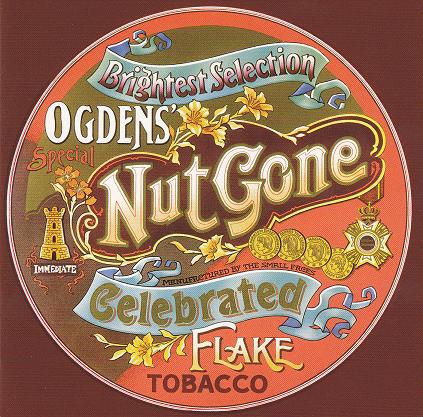
‘Small Faces/ Which were in the studios/ Hallowed by thy name/ Thy music come/ Thy songs be sung/ On this album as they came from your heads/ We give you this day our daily bread/ Give us thy album in a round cover as we give thee 37/9d/ Lead us into the record stores/ And deliver us Ogdens’ Nut Gone Flake/ For nice is the music/ The sleeve and the story/ For ever and ever, Immediate‘. Ah, how the British tabloid press got its knickers in a twist over this really rather neat parody of The Lord’s Prayer put out by record company Immediate to advertise top Mod band The Small Faces’ new album back in ’68. But it was certainly a smart, eccentric effort deserving a smart, eccentric form of advertising. An arguable psychedelic masterpiece that not only boasts the swooping, sweeping, druggily outstanding instrumental title track, but also the era-defining hits Lazy Sunday and Afterglow (Of Your Love) – among many others, several of which Sgt. Pepper-like are fine music hall p*ss takes – this cereal-esque monikered album more importantly came in extremely memorable packaging (more importantly for this post, at least), given its vinyl original was sold in a mocked-up circular tobacco tin. Yup, you read that right. For lead singer Steve Marriott and co., cardboard cut-out-featuring photos, models in whipped cream and banana stickers weren’t enough; no, they went the whole hog and pretended their masterpiece was a clump of ground-up leaves fit for Uncle Albert’s old navy pipe. Unsurprisingly, no doubt due to cost again, this genius packaging didn’t last long in stores and was replaced by a (at least still circular) card-and-paper replica. And what of Mick Swan, whom as noted designed the whole thing? Well, after winning an award for his efforts, he swiftly disappeared from view only to resurface as a fine arts tutor at a Lowestoft college in the mid-’70s. Still, at least he didn’t totally go up in smoke like Steve Marriott (I’ll get my parka)…
.
.
Cheap Thrills (1968) ~ Big Brother and the Holding Company
Artist: Robert Crumb

Nowadays, of course, arty (or should that be nerdy?) comic books and graphic novels are ten-a-penny. They’re as much a part of the modern day art tableaux as Banksy’s street offerings and Tracy Emin’s bed. But back in the day it was very different. All that eventually changed thanks to underground comic innovators like Robert Crumb, responsible for the counterculture cartoon icons Fritz the Cat and Mr Natural. And it was exactly this work that brought him to the attention of legendary, raspy rock-meets-blues vocalist Janis Joplin, then lead singer of the San Francisco rock band Big Brother and the Holding Company. The group, who’d enjoyed modest success with their debut album, were looking for something for the front of their next record Cheap Thrills, an image of them all in bed together naked having been vetoed by the straitlaced Columbia Records. The latter liked the idea of a single shot of the soon-to-be-counterculture-megastar Joplin; she did not – as soon as she’d contacted Crumb and seen what he’d produced she pushed the record company to put in on the sleeve’s front instead of the back. But fair dues to Columbia, when it comes to record packaging, acquiescing to this wish of Janis’s has to be one of the best moves a record company made in the ’60s. For, while Crumb’s cartoon is simple (scenes illustrating the album’s tracks and more detailing the band members), the explosion of its bold colours, energy and sheer cartoon-ness offers childlike fun the like of which record art (even that for the über-experimental psychedelic rock scene) had never before got close to. And it worked a treat too; the album topped the US charts for eight (non-consecutive) weeks in ’68, becoming the year’s biggest seller. Offering three essential Joplin recordings (Piece Of My Heart, Summertime and Ball And Chain), its an all-time classic too, showcasing Janis – backed by a talented band – at the peak of her powers. Tragically, she’d be dead just over two years after its release.
~~~
.
Abbey Road (1969) ~ The Beatles
Artists: John Kosh (designer) and Iain Macmillan (photographer)
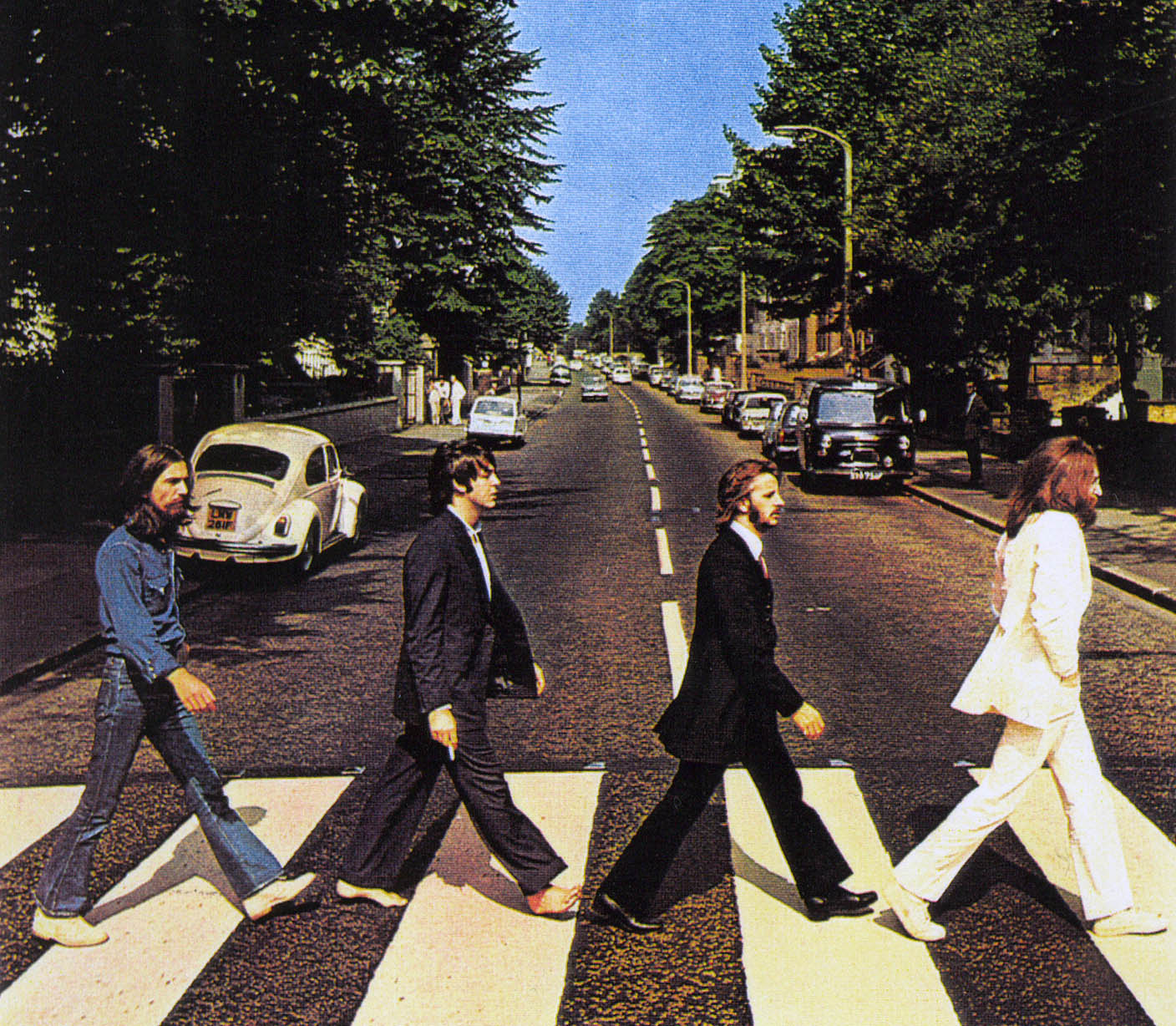
Although Let It Be (1970) has the distinction of being the last original Beatles album to be released, Abbey Road was actually the last to be recorded, but there’s positively no fin de siècle feel about it; indeed, you may argue it’s The Fab Four at the summit of their brilliantly creative, staggeringly versatile, sonically glorious powers. Comprising a clutch of classics from John Lennon (Come Together), George Harrison (Something and Here Comes The Sun) and Ringo Starr (Octopus’s Garden), a breathtaking Macca-fuelled Lennon-McCartney second-half medley (Because/ You Never Give Me Your Money/ Sun King/ Mean Mr Mustard/ Polythene Pam/ She Came In Through The Bathroom Window/ Golden Slumbers/ Carry That Weight) and finally the awesome collaborative jam-fest that’s (fittingly) The End, it also possesses one of the greatest front sleeves to bless any album ever recorded. Based on an initial sketch by McCartney (perhaps not surprisingly, as by this highly fractious stage in the band’s history he was the driving force behind the entire album), it’s an image captured by snapper Iain Macmillan in the late morning of August 8 ’69 of the foursome, (apart from Harrison) wearing fetching suits by tailor Tommy Nutter, marching across the zebra (pedestrian) crossing outside the Abbey Road music studios where the record (and much of all the previous Fabs’ records) was recorded. Given how magnificent an image it is – and would be whom/ whatever it featured and illustrated – it almost instantly become iconic, its notoriety being boosted early on by Fabs fanatics famously claiming it contains bizarre clues that Macca was apparently dead; them being his barefoot appearance and the licence plate on the white VW Beetle to the left behind the crossing, which reads ‘LMW 281F’ – were he ‘still alive’ he’d have been 28 years-old, hence ’28 IF’ (sic). Rather marvellously, the licence plate kept on getting stolen from the car, which belonged to the inhabitant of a house across the road from the studios. And, of course, as everyone knows, not a year goes by when many a media launch/ charity/ joke (delete as appropriate) recreation of the crossing of the crossing takes place – and not a moment goes by when tourists do exactly the same. Well, all right, maybe not at night. In fact, you can check for yourself here. Yes, really…
.
Further reading:
retronaut.com/2012/11/sgt-pepper-cover-shoot/
performingsongwriter.com/herb-alpert-whipped-cream-cover-girl
crumbproducts.com/larger_views/historyofcheapthrills.htm
fstoppers.com/theshotbeforeabbeyroad
.
Don’t fret, folks, for ‘Side B’ of this awesome album art-toting blog-post-double will be along faster than you can flip over a ’78’…
.

Rose poseur: only Pierce Brosnan could pull off this flower-tastic pose. Well, you know, sort of…
The Emerald Isle has given God’s green Earth many marvellous things: James Joyce and Jonathan Swift; Peter O’ Toole and Richard Harris; Bob Geldof and George Best; Father Ted and Terry Wogan. But none of them are quite – actually, anything like – the man, the legend that is Pierce Brosnan. I love Brosnan (or ‘Brozzman’, as a friend of mine likes to call him), and hopefully this post may go some way to explaining why.
The Brozzer (as he is known to none of his friends, but that’s what I like to call him) was born in Drogheda, County Louth on May 16 1953. At the age of 11 he joined his mum in Putney, London, perhaps critically seeing his first flick at the cinema just weeks later – it was the Bond film Goldfinger (1964). Growing up to become a very good looking lad, the artistic Pierce fancied carving out a career as an actor and graduated from The Smoke’s Drama Centre in the late ’70s.
Around this time he met, fell in love with and married stunning Australian thesp Cassandra Harris (whom played Countess Lisl in 1981’s For Your Eyes Only – ensuring a meeting between the still young Broz and the almighty Bond producer Albert R ‘Cubby’ Broccoli). He made his cinematic debut in classic Brit gangster flick The Long Good Friday (1980) and he was picked by legendary playwright Tennessee Williams for originating a role in the latter’s West End effort The Red Devil Battery Sign (1976). Yep, there was talent there, all right.
Soon, though, Pierce and his wife made the gamble of taking his ‘interesting’ accent across the pond and trying his and its luck in Hollywood. The gamble paid off as, almost immediately, he landed the lead in NBC’s hit detective drama Remington Steele (1982-87), as the smooth, louche and not a little Roger Moore-esque title character. When Sir Rog himself finally hung up 007’s shoulder holster in the mid-’80s, Broccoli came calling, but our man missed out to Welsh scenery chewer Timothy Dalton. Kismet-like, Bondage came calling again; thanks to GoldenEye (1995) then, Pierce Brosnan finally became a global household name.
Between losing the Bond role and recapturing of it, he’d tragically lost his wife to cancer. Happily, though, he remarried (to US broadcaster Keeley Shaye-Smith, with whom he added more children to his growing Brosnan brood). And, thanks to his fame, landed roles in several enviable projects – Mars Attacks! (1996), Dante’s Peak (1997), The Thomas Crown Affair (1999) and The Tailor Of Panama (2001). After three further outings as 007, he left the role rather acrimoniously in 2004, but this now freed him up to do whatever the hell he wanted – like indulging his ecological interests (saving whales and the entire planet). His film roles now too became quirkier; everything from impersonating Tony Blair in a Roman Polanksi prestige project (2010’s The Ghost Writer) to doing a Ringo Starr and narrating Thomas The Tank Engine on the big-screen (2008’s Thomas & Friends: The Great Discovery).
Yes, there’s never been one quite like The Brozzer. Magnificently ’80s-male-model-handsome, terrifically transalantic of twang, utterly unpredictable when it comes to acting choices (both in roles and just acting in scenes), he’s the international institution that made Bond relevant and popular again in the ’90s and the world a better place for saving whales and selling L’Oreal products. Probably. He’s Pierce Brosnan and he’s 60 years young today. And so, to mark this great event, here’s a (not exactly serious, but unquestionably glorious) top 10 of his greatest screen moments. Slide into shot, pose and gun-barrel away, folks…
.
.
10. Pierce Brosnan sings
Mamma Mia! (2008)
.
.
A list like this deserves a real kick-off. And this is a real kick – I’ll leave it up to you as to exactly where, though. In this logic-defyingly popular, pop-tune-littered blockbuster musical, our man essays a former lover of Meryl Streep’s lead, whom returns to a Greek island in the wake of her daughter’s nuptials and the pair realise unrequited feelings. How do they express these feelings? In song, of course (the classic that’s ABBA’s S.O.S.). One of these two was trained in and hoofed the boards in musical theatre early in their career and, to be fair, it’s easy to spot which. But, while The Streepster is excellent here (as she, well, always is), she doesn’t manage to create an entirely new form of singing – snarling™. Note: for those wishing to replicate and even (at your own risk) hone Brosnan’s snarling™ technique, tying empty honey jars in trees with extras from Captain Corelli’s Mandolin (2001) is entirely optional.
.
.
9. Pierce Brosnan breathes fire
Muppets Tonight (1997)
.
.
Piercey Boy learnt to breathe fire during a workshop given by a fire-eater at London’s Central St. Martins College of Art and Design back in ’69. He probably did so to impress the ladies in the workshop. Understandable. What’s less predictable was that this talent gained him a circus agent and, on and off, fire-breathing gigs for the next three years. True story. The only footage of him demonstrating his capacity for flame-throwing, as far as I know, is this – the conclusion to an episode of the felt favourites-featuring Muppets Tonight. Let’s be truly fair, as soon as he’s pulled off his feat he looks like the coolest man alive, taking deserved plaudits from Gonzo and co. And then he delivers the ‘hot, hot, hot’ gag and starts dancing… and the spell is broken. Forever.
.
.
8. Pierce Brosnan winks at the folks at home (4:35)
Behind-the-scenes of The World Is Not Enough (1999)
.
.
He’s just completed a dramatic (all right, one melodramatic of many a melodramatic) scene in this Brosnan-as-Bond-defining Bond film and what does he do? That’s right, instantly breaks character and winks at the camera that’s shooting a gushing behind-the-scenes special for TV viewers eager for more Brozzer action. What does that wink say? “It’s not real this Bond thing, you know” or “I’m really Pierce Brosnan, not James Bond” or “Look how goofily I can screw up my face when I wink”? Your guess is as good as mine. And just how can he break from the reality of 007 to the reality of the real world so easily? Again, your guess is as good as mine.
.
.
7. Pierce Brosnan touches his face (0:32)
The World Is Not Enough (1999)
.
.
Of all his Bond films, this one contains arguably the greatest cacophony of ‘Brosnan’ moments. Chief among them is the bit in the above fan trailer (which impressively makes TWINE look like a masterpiece) when our man touches his face. Reading Brosnan body language isn’t, well, the hardest thing in the world: when he touches his face while furrowing his brow, he’s thinking; when, as here, he touches his face while lifting his eyebrows and opening his mouth slightly, he’s emoting. In fact, this bit of Brosnan emoting’s so good, it’s a double whammy. For not only does he touch his face, he then immediately touches someone else’s face (the face of Sophie Marceau’s Elektra King on a computer screen). Yup, The Brozzer pulls out the stops in TWINE. For there’s also the moments he saunters about with one hand in a trouser pocket and the other hand dangling rakishly free; the moments he delivers awful puns with awfully clear enunciation (e.g. “Maybe you haven’t taken into account my hidd-en ass-ettts“); the moment he wears bright blue (x-ray) sunglasses and the moments he crumples in pain whenever a villain touches his ‘broken collar bone’ (which oddly never seems to affect him at other times; see Pierce Brosnan’s ‘pain face’ below). Brosnan simply lives the Brosnan Bond in this movie. It’s a sight to behold, nay, one to touch your face and furrow your brow over.
.
.
Bonus Brozzer moment: Pierce Brosnan drinks Guinness
.


.
.
6. Pierce Brosnan rides a horse
L’Oreal Men Expert advert (2008)
.
.
This has to be one of the greatest TV commercials ever made. It opens with a statement of cool conviction: “There’s more to life than making movies,” coos our man in his idiosyncratic burr, “like fighting for the causes I believe in” (i.e. saving the whales and the world etc.). It also appears it’s just as important for him to apply a skin product to his face (more touching). And to play pool with friendly people who clearly aren’t his friends (I doubt Broz’s mates look like advert extras). And best of all to ride a horse along a beach and point out an unseen yet clearly important milestone on the horizon. Nobody rides a horse in slow-motion quite like Pierce. Nobody points out a spot on the horizon in slow-motion while riding a horse in slow-motion quite like Pierce. There’s more to life than making movies – never a truer word spoken.
.
.
5. Pierce Brosnan jumps out of a horse
Seraphim Falls (2006)
.
.
This one is deliriously out of left-field. Well, actually, it’s out of a horse. Literally. To say you don’t see it coming is an understatement as big as Pierce’s outstanding pointy beard that he sports in this well received chase-themed western, in which his Yankee-soldier-cum-KFC’s-The-Colonel is pursued by Liam Neeson’s Confederate bounty hunter. Basically what happens is… Brosnan jumps out of a horse. That’s it. It’s like the exact opposite of what Han Solo does to his tauntaun in The Empire Strikes Back (1980). Indeed, Han Solo doesn’t even have a beard in that. He doesn’t even have any stubble, come to think of it.
.
.
4. Pierce Brosnan plays a horse
Percy Jackson & The Olympians: The Lightning Thief (2010)
.
.
Clearly not content with merely riding a horse in unforgettable fashion and leaping out of one, The Brozzer managed to pull off his horsey hat-trick by finally actually playing one. The Brosnan CV is nothing if not eclectic – equinely eclectic, if you will. Technically speaking, the character of Chiron in this flick is a centaur, the ancient Greek mythlogical creature that boasts a horse’s lower half and a human’s – or a Brosnan’s – upper half. In the Percy Jackson universe, he’s the tutor of the great heroes and, thus, of course of adenoidal American adolescent Percy Jackson himself – a Mr Miyagi on four legs then. The great thing about The Brozzer’s performance here is its grizzledness. This time there’s as much hair on top as there is in the beard. Indeed, he’s even more grizzled as Chiron’s human ‘cover’, the Brosnan-intense Latin teacher Mr Brunner, with an inscrutable accent (lending him additional exoticism, if that’s the word for it). One question, though: why does Chiron have a stick he needs to lean on? He has four whole legs and is practically immortal. What the hell? As ever with Pierce, he leaves the audience wanting answers – always leave them wanting more, Brozzer; always leave them wanting more.
.
.
Bonus Brozzer moment: Pierce Brosnan plays the bongos
.

.
.
3. Pierce Brosnan offers an opinion
Taffin (1988)
.
.
As noted, the delight of watching The Brozzer at work is you never know quite what acting choices he’s going to make. This rollercoaster ride of screen thesping from Piercey-picture to Piercey-picture has never been better – nay, never been more sensationally – demonstrated by a scene in the little known Irish should-be-harder-nosed-than-it-actually-is thriller Taffin. Said scene occurs about three-quarters through the flick, just as the titular character (our man Broz), a hard yet particularly handsome, sunglasses-wearing, hair-model-bouffoned debt collector, is hungover and had enough lip from would-be-girlfriend-cum-investigative-journalist Alison Doody (curiously these two are the only at all attractive people in Taffin’s town, and they’re staggeringly attractive; weird). The shocking and quite deliriously brilliant moment has to be seen – and mostly heard – to be believed as Pierce agrees with Dooders that she should no longer take up residence in the place. Quite how he manages both to extraordinarily stress and elongate the last two words of his utterance in the manner he does while as hungover as he is, is anyone’s guess. But then Taffin isn’t any old film character, he’s a Brosnan film character. The normal rules don’t apply. Indeed, so magnificent is this moment that it’s become something of a cause célèbre in Internet circles – leading to these quite brilliant bastardisations (read: possible improvements): click here, here and here if you dare.
.
.
2. Pierce Brosnan’s pain face
All his Bond films (1995-2002)
.
.
A constant amazement and delight to Bond fan forums, Pierce Brosnan’s ‘pain face’ is a cinematic phenomenon up there with Brando and De Niro’s method acting, Godard’s jump-cuts and Welles’ deep-focuses. By deploying the maximum stretching of his already wide mouth, The Brozzer manages to achieve a unique ‘letterbox’ effect, while seemingly pumping all the blood in his body to his face and straining ever muscle and sinew of that usually gorgeous mug, transforming it into some sort of demonic mask from a medieval satanic ritual. Pierce, as I think we’ve already established never does his thesping by half though, thus his pain faces are never without audio additions. The profligacy and verbosity of his grunts, groans, ‘arrrghs!’ and general ‘nnnnghs!’ are quite stunning. And, again, it’s The World Is Not Enough that offers us the epitome of this particular Brosnan offering – his pain face as he’s slowly throttled in Elektra King’s torture chair is quite extraordinary. Never has a man’s mouth opened quite so far while its owner has sported quite such perfect hair. Awesome work, Brosnan.
.
.
1. Pierce Brosnan is The Matador
(2005)
Warning: language in the following clips may offend
.
All right, this list has thus far enjoyed itself a great deal at our man’s expense (while being thoroughly affectionate to him, it’s only fair to say), but now it’s time for it to give The Brozzer his genuine dues; indeed, for it to get down on its knees and, Wayne’s World-like, worship its hero while exclaiming it’s not worthy. For this list’s numero uno pick is everything – that’s right, everything – that Pierce Brosnan does in The Matador. There is one word to describe him in this flick: outstanding. Genuinely, he’s outstanding. The Matador is a clever-clever, witty art-house comedy drama about an ostensibly smooth, sophisticated assassin facing the fag-end of his career and the breakdown this brings. And so good is Brosnan as this assassin Julian Noble, he elevates this otherwise likeable if modest movie into something really rather wonderful. His performance was deservedly nominated for a Golden Globe award.
Exhibit A: in the clip below, witness the wilful wonkiness of Noble’s accent – transatlantic-Brozzer one moment, oddly mockney the next, plus his infantile and utterly thunder- (and cool-) stealing argument with the boy and marvellously sleazy treatment of his mum, before (somewhat) regaining his cool come the conclusion…
.
.
Exhibit B: here we see Julian’s unravelling as he describes it to married friends Danny and Bean (Greg Kinnear and Hope Davis). If his behaviour in the clip above is sleazy, here it’s magnificently so – the charisma of that ’70s porn star moustache utterly failing to mask the Tequila-drowning, oriental whorehouse carousing but very funny exploits candidly revealed to us…
.
.
Exhibit C: its player having recently left Bondage, this scene was at the time referred to as The Brozzer’s ‘anti-Bond’ scene. In a way, that no doubt was the intention – Julian Noble’s supposed to be a smoothy, a 007-like professional, but here, hungover as hell, he’s letting it all hang out for the world to see just how washed up he is as he strolls to the pool – and then struggles to get his boots off before dropping in, still holding his can of beer. If actors ever do ‘brave’ things in their thesping, then instantly post-Bond this was a brave move from The Brozzer. And, like everything he does in this movie, it’s bloody funny and pitch-perfectly spot-on. If you’ve never seen The Matador, you have to put that right immediately. It is Broz-day, after all…
.
.
.

.
Talent…
.
… These are the lovely ladies and gorgeous girls of eras gone by whose beauty, ability, electricity and all-round x-appeal deserve celebration and – ahem – salivation here at George’s Journal…
.
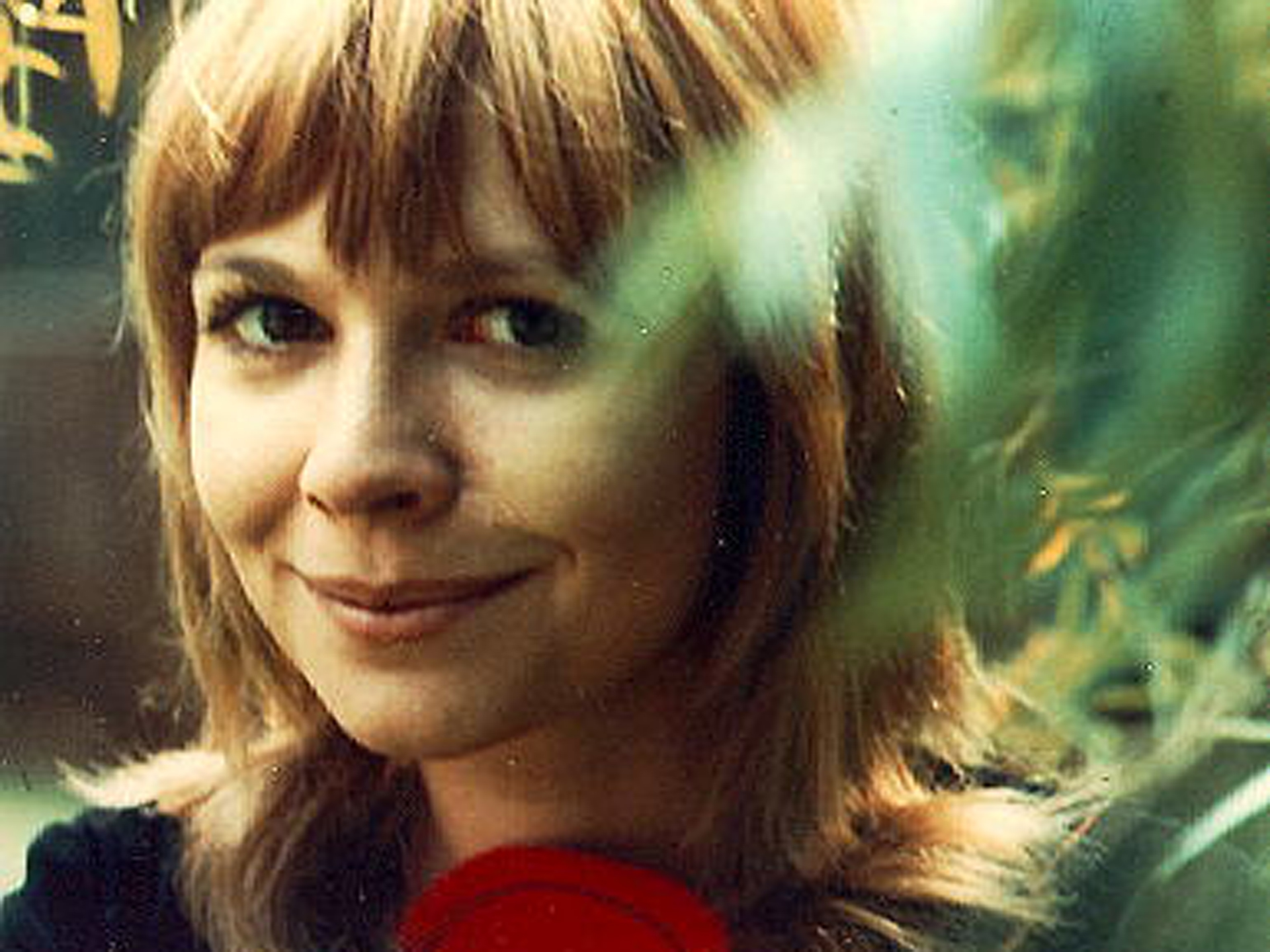
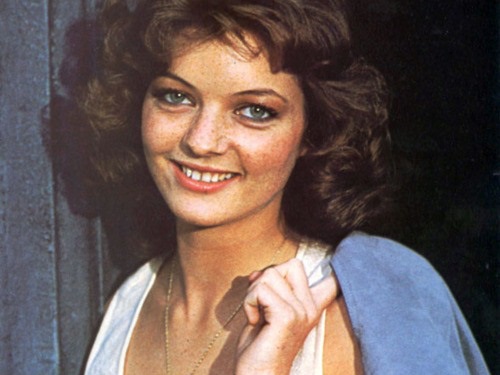
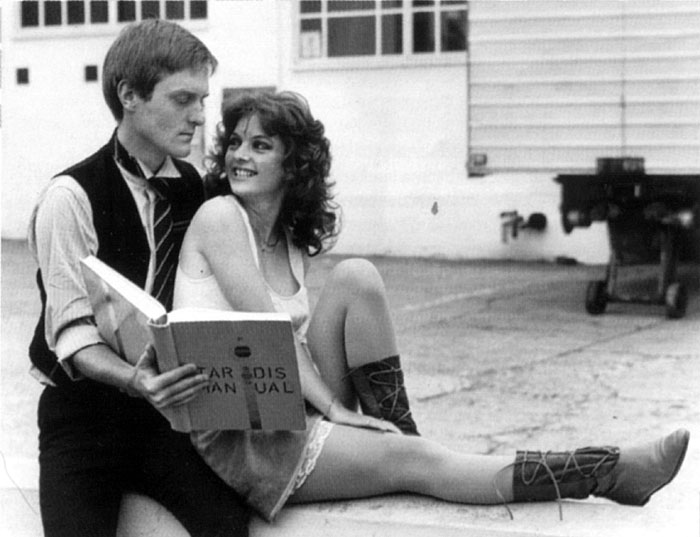
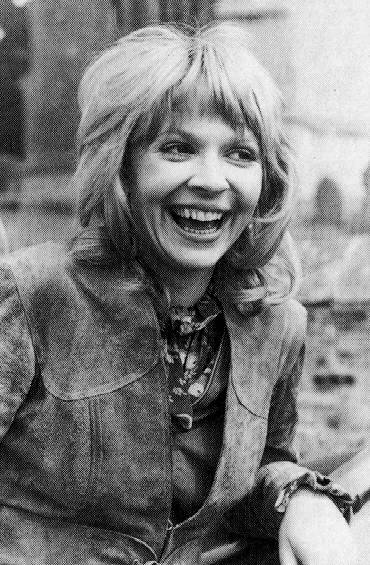
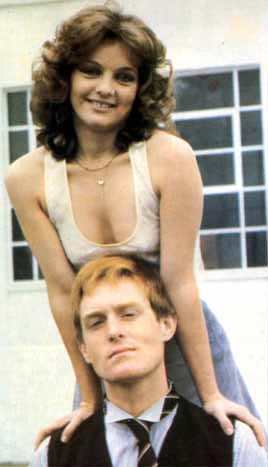
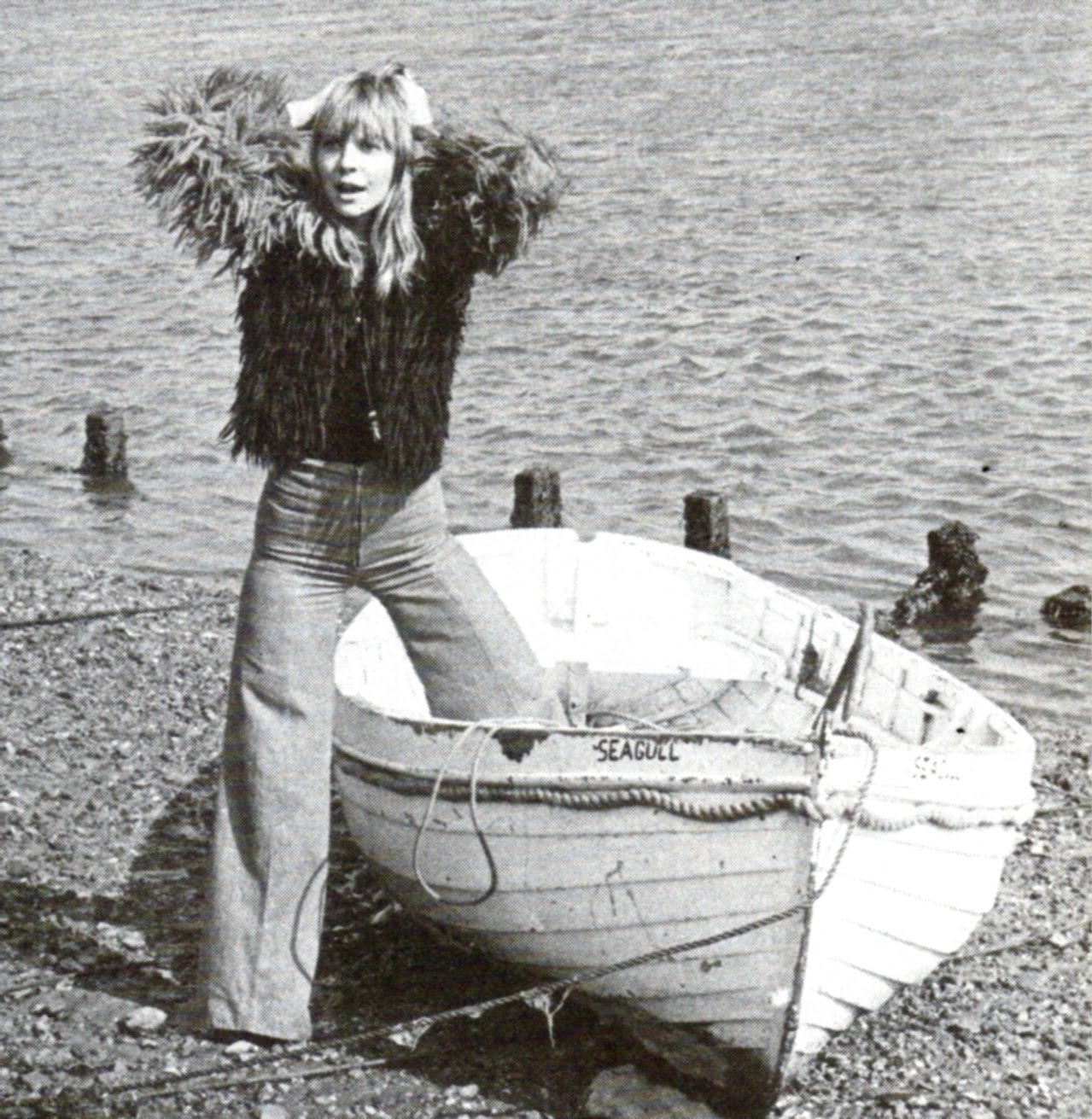
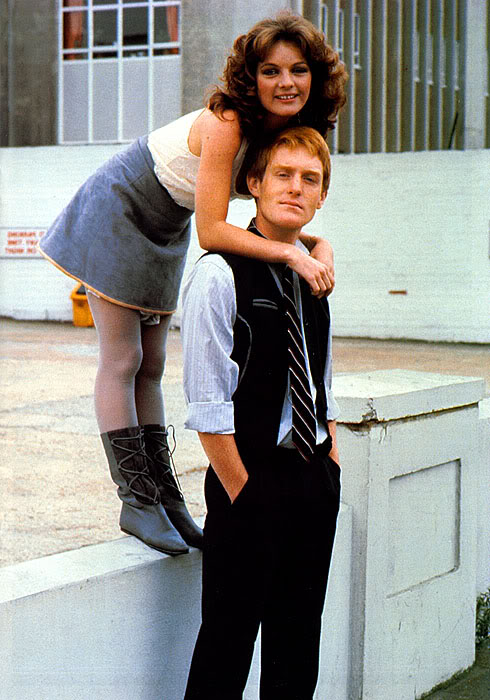
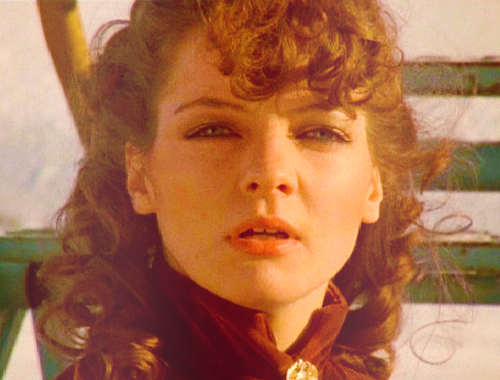
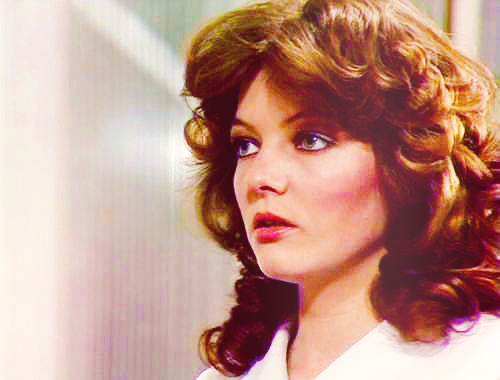
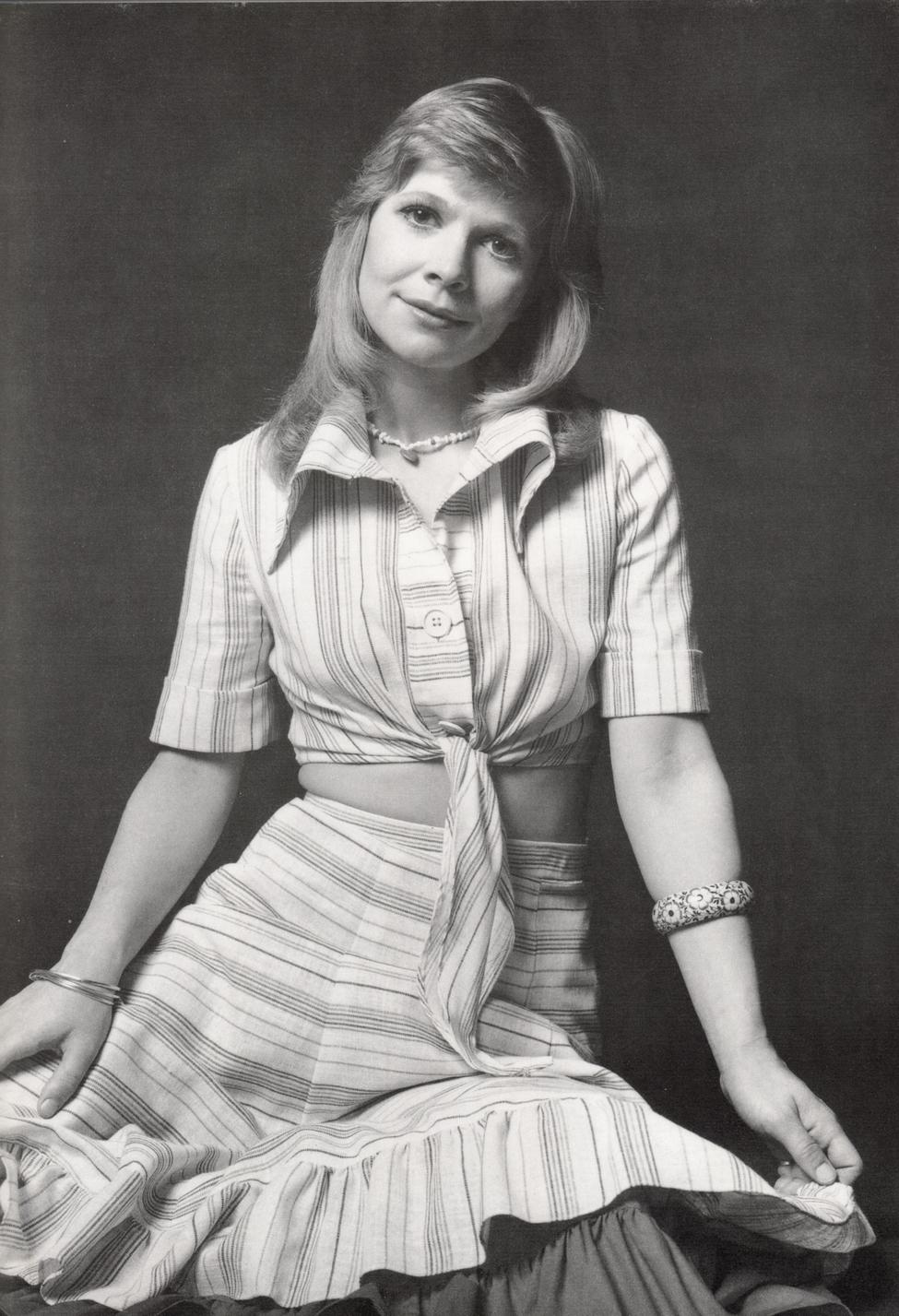
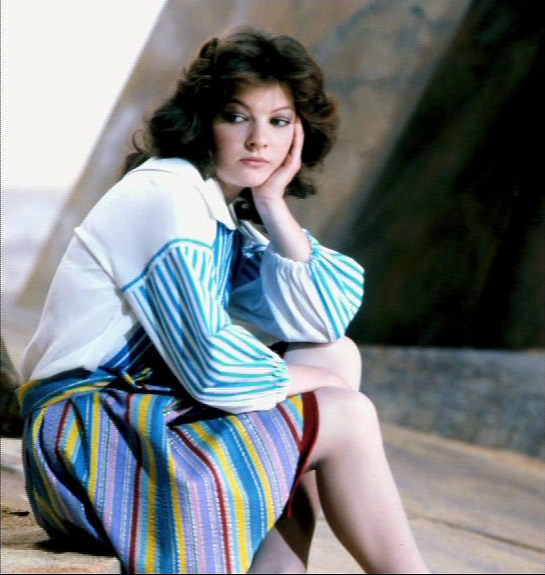
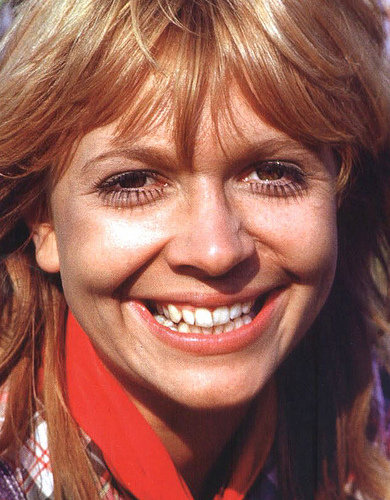
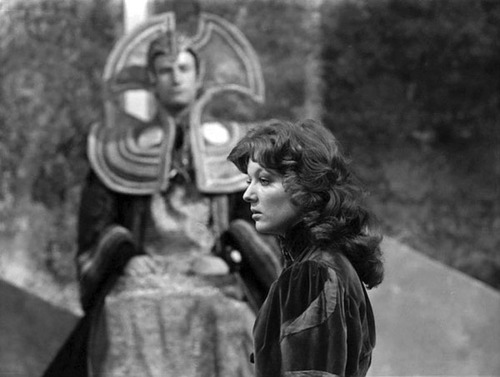
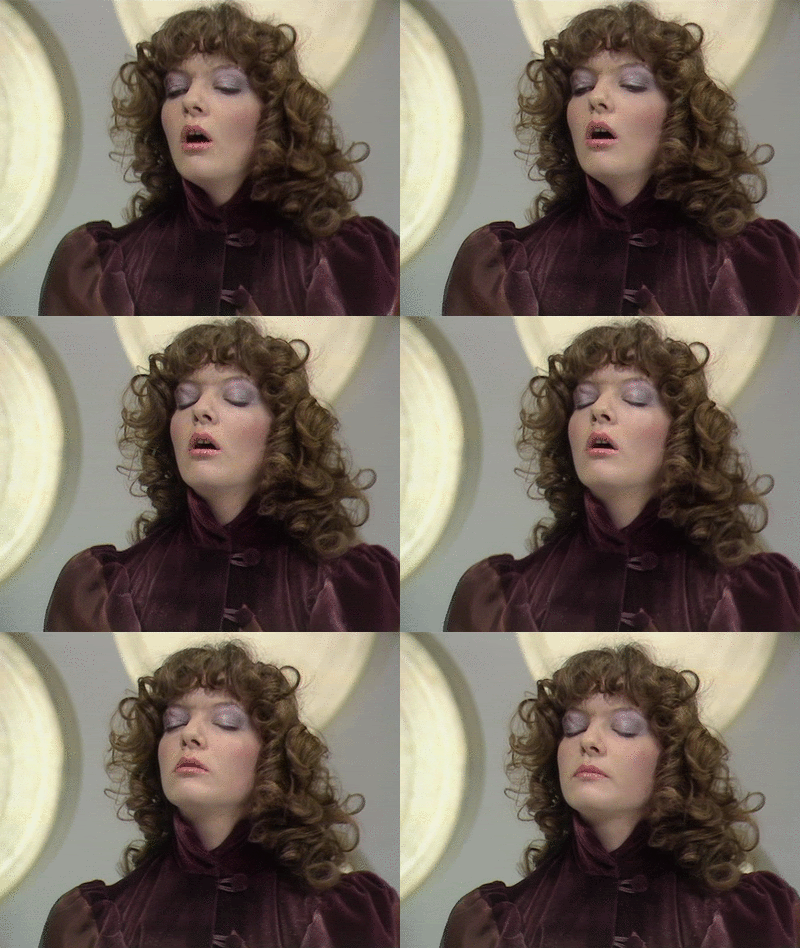
Yes, this blog’s celebration of Doctor Who in its 50th anniversary year continues apace, peeps, but just before the regular reviews of the show’s superb serials past move on to the stellar Tom Baker era, it’s time to pause and take a moment to reflect (nay, literally look back) on the cast-iron classic companion of the Jon Pertwee era, the sexy and, yes, saucy Katy Manning. And she’s not alone – let’s not forget the equally lovely ’80s Who co-star Sarah Sutton either. For, no question, this delectable duo deserves to be inducted into this blog’s Talent hall of fame…
.
Profiles
Names: Catherine (Katy) Ann Manning/ Sarah Sutton
Nationalities: English
Professions: Actress and director/ Actress
Born: October 14 1946, Guildford, Surrey/ December 12 1961, Basingstoke, Hampshire
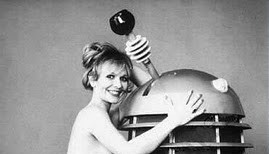
Known for: Katy – playing the popular and always decked-out-in-early-’70s-garb Jo Grant opposite Third Doctor Jon Pertwee, beginning with the serial Terror Of The Autons (1971) and culminating in The Green Death (1973) – although she returned as the character in the 2010 Death Of The Doctor episode of Doctor Who spin-off The Sarah Jane Adventures (2007-11). Six years after departing the show, she achieved notoriety when she posed nude draped on a Dalek for Girl Illustrated magazine. Yet her post-Who career is notable for more than merely this; she’s successfully trod the boards for many years, not least in Australia where she and her young children moved in the late ’70s/ early ’80s and where she also wrote and staged the play Private Wives. In 2007, she appeared in a stage version of sitcom ‘Allo ‘Allo (1982-92) and returned to the UK in 2009 to tour her well received, Bette Davis-themed, one-woman-show Me and Jezebel.
Sarah – portraying the aristocratic, eccentrically dressed Trakenite Nyssa opposite (very briefly) Tom Baker’s Fourth Doctor and then Peter Davison’s Fifth Doctor and fellow companions Janet Fielding (Tegan Jovanka) and Matthew Waterhouse (Adric). Her tenure in the show began with the story The Keeper Of Traken (1981) and concluded with the fittingly named Terminus (1983). Although her acting career’s been sporadic since her stint in Who, she also appeared in the BBC serial Unnatural Pursuits (1991), a 1989 episode of Casualty (1986-present) and resurrected Nyssa in the Children In Need-night-broadcast, 30th anniversary-celebrating Who special Dimensions In Time (1993).
Strange but true: Ever a free-spirit, Katy lived with Aussie household name Barry Crocker for nearly 30 years, then on returning to the UK recently she seemingly drifted away from him (it’s repeatedly reported he’s now with Priscilla Presley), claiming she’s not interested in the ‘neediness’ of relationships/ Although, aged 19 when she began in 1967, Deborah Watling (Victoria Waterfield) may be the youngest actress to have portrayed a companion, Sarah holds the distinction of being the second youngest (20 years-old) and the youngest British actress ever to have played Lewis Carroll‘s heroine, when she played the lead in Alice Through The Looking Glass (1974) at just 13.
Peak of fitness: Katy – yep, it’s got to be those Dalek photos really, hasn’t it?/ Sarah – the taking off of her skirt in her final serial Terminus and effectively playing the rest of the story in her underwear; in her words ‘a parting gesture to the fans’
.
.
CLICK on images for full-size
.


.

.

.

.

.

.


.
.

.

.

.

.


.
.

.

.

.

.

.


Better the devil you know: they may not believe it, but The Doctor and companion Jo Grant are far better off facing brought-to-life-gargoyle Bok than his master, the gargantuan Dæmon Azal
Yup, it’s the May Day bank holiday weekend, peeps (and it’s warm and sunny too – who’da thunk it?), so what better post to let loose on The Internets today than this very one – a focus on the may pole- and morris dancing-toting, pleasant-Home-Counties-village-pulverising, Pertwee-in-his-UNIT-supporting prime Doctor Who serial that is The Dæmons – the latest in the series of single-serial-themed posts here for the sci-fi TV giant.
An undisputed highlight of the show’s high spring, this classic story pitted not just Perts’ Doc against both Roger Delgado’s The Master and a behemoth of a horned beast, but also pitted religion and myths versus science and, well, what passes for reality in the world of Who. Bmal elttila dah yram, indeed, eh…?
.
.

.
Doctor: Jon Pertwee (The Third Doctor)
Companions: ‘The UNIT Family’ – specifically Katy Manning (Jo Grant); Nicholas Courtney (Brigadier Sir Alistair Lethbridge-Stewart); Richard Franklin (Captain Mike Yates); John Levene (Sergeant Benton)
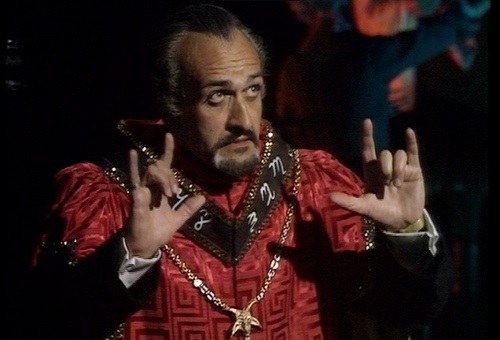
Villains: Roger Delgado (The Master); Stephen Thorne (Azal); Stanley Mason (Bok)
Allies: Damaris Hayman (Miss Hawthorne)
Writers: Barry Letts and Robert Sloman (under the pseudonym ‘Guy Leopold’)
Producer: Barry Letts
Script editor: Terrance Dicks
Director: Christopher Barry
.

.
.
.

.
Season: Eight (fifth and last serial – comprising five 25-minute-long episodes)
Original broadcast dates: May 22-June 19 1971 (weekly)
Total average viewers: 8.3 million
Previous serial: Colony In Space
Next serial: Day Of The Daleks (Season 9)
.
.
.
.

.
An ill wind is blowing through the ominously monikered Devil’s End, a sleepy village in the Wiltshire countryside – it forces an owner to follow his goosed dog out into the night whence he is found dead. The village doctor claims the man died of a heart attack, but a local white witch, Miss Hawthorne, is adamant it’s the work of the occult. She visits the new vicar, a Mr Magister, whom claims there’s nothing to worry about. This bestpectacled chap seems a wrong ‘un, though – indeed, for some reason he tries to hypnotise Miss Hawthorne, but she unwittingly resists. Now just where is it we all recognise him from…?
Meanwhile, up the road is the equally-as-ominously-monikered Devil’s Hump, a Bronze Age burial site, where an archaeological dig is taking place and being broadcast live on national TV (on BBC Three, no less; no, not that BBC Three, a fictional one – this is 1971, remember). The bods at the UK arm of the United Nations Intelligence Taskforce (UNIT) seem to have a casual interest in the dig, so tuning in are the off-duty trio of Mike Yates, Benton and Jo Grant (current assistant to The Doctor, who’s still in his guise as UNIT’s ‘scientific adviser’). For his part, The Doctor shows little interest until he hears the name Devil’s End – for some reason that flicks a switch in his bonce and he instantly becomes concerned.
As he watches, he needs little convincing of his fears and soon tells Jo they must get to the dig as soon as possible and stop it in its tracks, so they set off at speed in his vintage motor ‘Bessie’. Alas, owing to highly windy weather interfering with signposts and blowing a tree across the fast road to Devil’s End, they arrive too late to prevent the dig reaching its objective – to break through a wall into the underground chamber. Unknown to them, however, just as the dig’s archaeologist breaks through the wall, a ritual reaches its crescendo in the village church’s crypt, led by a bright-red robed Magister (whom, now without his glasses, we recognise unmistakeably as The Master – a renegade, villainous Time Lord and nemesis of The Doctor). This ensures an almighty release of energy escapes from behind the ancient wall, killing the archaelogist and seemingly doing the same to the just arriving Doctor.
The latter is found to be still alive, though (both hearts still beating), and Time Lord-like soon recovers. In fact, just in time for Yates and Benton’s arrival in a cool, dinky UNIT helicopter. Setting up shop in the village inn, The Doc and his cohorts, including Miss Hawthorne, discover an invisible ‘heat shield’ (due also to The Master’s ceremony) has now encircled Devil’s End, ensuring it’s cut off and the rest of UNIT’s troops – led by Lethbridge-Stewart – can’t get through in their vehicles.
.
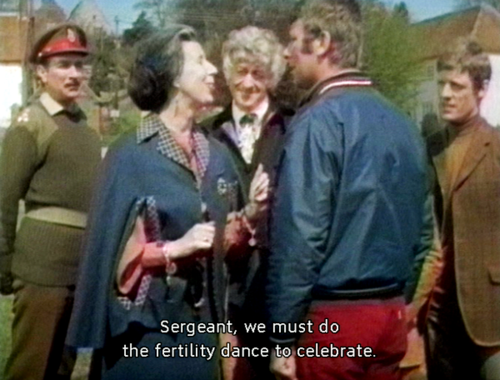
.
Before setting off in Bessie to inform the Brig how to bring down the heat shield, our hero explains to his allies what he thinks is going on: the underground space is not a now-opened ancient burial chamber but most likely a now-opened ancient spaceship, while the site’s and village’s connotation with the word ‘devil’ leads him to believe the spaceship contains an eras-old alien whose appearance (horned, cruel-faced and with goat-like legs) gave rise to the original notion of the Devil; the alien actually being a Dæmon (from, yes, the planet Dæmos), whom like others of his race has visited Earth at different points in the past and helped in/ interfered in shaping civilisation as some sort of intergallactic experiment. And his release – or ‘summoning’ – from his spaceship this time is very bad news. (The Doctor’s also figured out The Master’s behind the Dæmon’s reawakening, as ‘magister’ is the Latin for ‘master’).
Now, arriving at the heat shield, following a motorbike chase involving a village goon hypnotised by The Master and during which the UNIT chopper is destroyed, The Doc explains to Lethbridge-Stewart how to disable it. But the situation in the village is fast developing. Having convinced the village locals of his un-Earthly powers (mostly through science tricks and hypnosis), the dastardly Master manages to turn them all against The Doc and co. Then he summons the Dæmon through ritual a second time and, revealing his purpose, appeals to the being to aid him in becoming Earth’s overlord; the latter goes away to think about it. Like before, the summoning releases an awesome amount of energy throughout the village and, according to The Doctor, a third and final summoning will result in the Dæmon sticking around because, by then, the creature will have grown in enormous strength.
What’s sticking around right now, though, is an indestructible, dangeorus gargoyle-turned-real (Bok), animated by the Dæmon’s first summoning. On The Doc’s return from the heat shield, Bok and especially the villagers manage to prevent him from interceding The Master in the church crypt by carrying out a May Day celebration (eccentrically via morris dancers and a may pole); a ruse to capture our man, Miss Hawthorne and Benton. Although, Jo and Yates have managed to sneak their way into the crypt – just in time, in fact, to witness the third summoning, at which the Dæmon finally appears, instantly growing to a gigantic height and claiming he’s named Azal. Eventually, following a failed attempt by Miss Hawthorne to convince the über-gullible villagers that he’s a wizard (‘The Great Wizard Qui, Quae, Quod’), The Doctor succeeds in showing them The Master’s been tricking them through science by doing the same himself; he simply drives Bessie by remote-control. Turning the villagers then, and Bok being disabled by a general energy drain thanks to the Brig and co. finally breaking through the heat barrier, The Doctor gets to the crypt just as The Master is about to sacrifice Jo as an offering to Azal.
Preventing this, The Doctor tries to reason with Azal that he should leave Earth and humanity in peace, even if civilisation hasn’t turned out as a utopia and his and other Dæmons’ ‘experiment’ on Earth has failed (thus meaning he must destroy Earth according to the experiment’s rules). Azal is swayed and offers The Doc the chance to be Earth overlord instead of the ‘unworthy’ Master; this our hero rejects, forcing Azal to attack him with lightning. In desperation, Jo flings herself in front of The Doctor, pleading for Azal to kill her instead and, surprisingly, this sends the awesome alien into a great tiz, as her self-sacrifice is entirely irrational to him. The Dæmon then undergoes an energy overload, forcing everyone to flee from the church before he explodes, taking the building up with it. Trying to escape, The Master is apprehended and Miss Hawthorne cheerily convinces Benton, Jo and The Doc to join in the may pole-dancing, while Yates and the Brig opt for a well deserved pint.
.
.

.
For many, The Dæmons is the ultimate Pertwee serial – and, once watched, it’s not hard to see why. It’s arguably the encapsulation of that era of Who at its greatest. At its heart is a rollicking, intriguing, sophisticated, well plotted and excellently paced story; indeed, something of a daring one for early ’70s family drama with all its Christian and occult references – and eventual undermining of them all by science. And then hanging off this, of course, are all those favourite Third Doctor acoutrements – and at their Saturday-teatime crowd-pleasing best, at that.
Yup, there’s dynamic, dapper old Perts gallivanting about the Home Counties on motorbikes and in his vintage yellow roadster, with pseudo-naïve sexpot Jo Grant at his side, learning like a hippie-esque sixth-former about the world of science from the most brilliant (and most brilliantly turned out) man in the universe. And around them is ‘the UNIT family’; here on particularly good, jolly form. The Brig may’ve disappeared for the evening when all the sh*t goes down at Devil’s Hump, but he’s soon on the case, trying to break through the heat barrier with a young Bill Maynard lookalike masquerading as a clueless engineer. Mike Yates and Benton are even sooner on the case; officially off-duty when they arrive, they’re decked out casually – Yates in a garish orange wind-beater and orange motorbike goggles combo and Benton in a ’70s footballer tracksuit top. And they arrive in their oh-so cool toy chopper, of course (see image below).
The Master’s back again too – not that in his opening season, played by the incomparable Roger Delgado, he was ever actually away, but this time his plan is particularly cunning and twisted. And he gets his just desserts come the end when, Lex-Luthor-to-General-Zod-like in Superman II (1980) he appeals to Azal, the mighty brute chooses The Doc over him. Azal himself is a great monster: the-Devil-made-an alien in a way, extra-terrestrial super-intelligence in gigantic form interfering with Earth for wrong (the apotheosis of The Doctor) in another; sort of like the Genie from Disney’s Aladdin (1992) gone very, very wrong. By contrast, his ‘henchman’ Bok – despite his natty knack for shooting sparks from his fingers – is a bit crap, but fun and rather cute along with it. There’s always room for charming, off-kilter naffness in Doctor Who. Well, you know, in moderation.
Special mention too should go to Christopher Barry. His direction ensures the action snaps along, but the science-versus-theological theme isn’t squashed either; the climax in the crypt is particularly satisfying. Indeed, the pace, efficiency and, well, at times cool on display is nicely summed up by the Brig’s best ever (and much loved) line when during the finale he orders an underling to take target at Bok: “Chap with wings there; five rounds rapid!”. Cracking stuff.
.


.
.
.

.
Oddly for one of the great Doctor Who serials, The Dæmons started out as an audition piece for Katy Manning as new companion Jo Grant (she made her debut in this season’s opening story Terror Of The Autons, which also marked The Master’s first appearance). At the discretion of producer Barry Letts, the piece grew into a full serial thanks to him working it up into a script with Robert Sloman (their combined pseudnonym being ‘Guy Leopold’ – Guy the name of Sloman’s son, Leopold Letts’ middle name) in the evenings after the former had finished work each day. Script editor Terrance Dicks made tweaks to the script, though, by ensuring it contained a strong scientific element; before his changes he felt it could be labelled as ‘satanist’ at worse, not ideal then for Saturday-early-evening TV, so any references to God were avoided.
Mind you, unquestionably a big inspiration for the story was the Beeb’s classic sci-fi drama Quatermass And The Pit (1958-59), in which, like The Dæmons, awesomely powerful aliens are discovered on Earth and mistaken for devil-like demons, having played a role in shaping civilisation. Another likely influence was an occurrence in February 1885 when enormous hoof prints were supposedly found in villages (including on rooftops) and across several miles of snow in Devon, reminiscent clearly of the moment when Yates and Benton discover Azal’s giant footsteps outside Devil’s End.
Devil’s End itself was actually the Wiltshire village of Aldbourne, where a comparatively long and leisurely two-week long shoot in February ’71 allowed for much location shooting with villagers as extras; in fact, alterations were made to the script to facilitate this. Other production points worth noting are that the footage of the UNIT helicopter exploding was ‘borrowed’ from the Bond film From Russia With Love (1963) and the trio of Latin words in Miss Hawthorne’s impromptu fake moniker for The Doctor (‘The Great Wizard Qui, Quae, Quod’) are the masculine, feminine and neuter nominative forms of ‘who’ – a deliberate mirroring maybe of The Master choosing for himself the name ‘Magister’,which as mentioned is the Latin translation of his name.
Speaking of Miss Hawthorne, the well respected comedy actress whom portrayed her, Damaris Hayman, maintained an interest in the occult herself, ensuring she acted as something of an occultist consultant to the production. Meanwhile, in a small role in the serial’s climax as a doubting, young hooded acolyte of The Master was one Matthew Corbett – yes, the same Matthew Corbett whom just five years later would take over from his father Harry the puppeteering duties of Sooty (he was suggested for the role by his friend Katy Manning). And with that, in the words of Corbett himself at the end of every Sooty show, bye bye everybody; bye bye…
.
.
.
Next time: The Ark In Space (Season 12/ 1975)
.
Previous close-ups/ reviews:
Inferno (Season 7/ 1970/ Doctor: Jon Pertwee)
The War Games (Season 6/ 1969/ Doctor: Patrick Troughton)
An Unearthly Child (Season 1/ 1963/ Doctor: William Hartnell)
.
Playlist: Listen, my friends! ~ May 2013
.
In the words of Moby Grape… listen, my friends! Yes, it’s the (hopefully) monthly playlist presented by George’s Journal just for you good people.
There may be one or two classics to be found here dotted in among different tunes you’re unfamiliar with or have never heard before – or, of course, you may’ve heard them all before. All the same, why not sit back, listen away and enjoy…
.
CLICK on the song titles to hear them
.
Charles Trenet ~ Boum!1
The Animals ~ Boom Boom1
Ron Moody and Jack Wild ~ Reviewing The Situation (Reprise)2
Richie Havens ~ Freedom3
The Turtles ~ You Showed Me4
The Mash ~ Suicide Is Painless5
Mott The Hoople ~ Roll Away The Stone
Chairmen Of The Board ~ Give Me Just A Little More Time
Brian Eno ~ Another Green World6
Vangelis ~ L’Enfant7
Danny Wilson ~ Mary’s Prayer
Prefab Sprout ~ Goodbye Lucille #1 (Johnny Johnny)
World Party ~ Put The Message In The Box
.
1 As featured in the record-breaking, 23rd and latest James Bond film Skyfall (2012)
2 From the multi-Oscar-winning movie version of Lionel Bart’s Dickens musical adaptation Oliver! (1968)
3 The notorious improvised performance of the spiritual song Motherless Child that became known as Freedom, with which Havens concluded his set that opened the Woodstock Festival on August 15 1969 (the set was three hours-long owing to a delay in many acts arriving at the venue); the great Richie Havens died on April 23 this year, aged 72
4 The original US #6 hit version of this coolly haunting tune originally written in ’64 by Jim McGuinn and Gene Clark of The Byrds, whose cover version by The Lightning Seeds reached the UK Top 10 in ’97
5 Eventually a UK #1 hit in 1980, this song was performed by session singers John and Tom Bahler, Ron Hicklin and Ian Freebairn-Smith (as ‘The Mash’) first for Robert Altman’s military satire blockbuster M*A*S*H (1970) and then for the hugely popular TV comedy of the same name (1972-83); its lyrics were written by Altman’s son Mike when just 14-years-old – Altman later maintained his son received a great deal more in royalties for the song than he did himself for directing the film
6 The memorable opening theme (over the image of a bottle with an illuminated ‘Arena’ inside floating on water towards the viewer) of the BBC2 arts documentary strand Arena (1975-present)
7 As featured in the Mel Gibson/ Sigourney Weaver-starring film The Year Of Living Dangerously (1982)
.
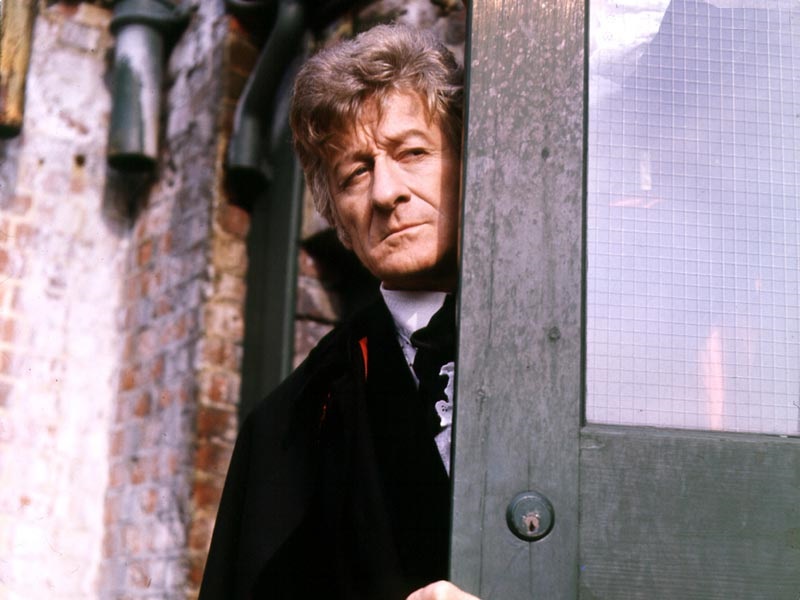
Crossing over to the dark side: in the last serial of third incarnation Jon Pertwee’s opening season, The Doctor endured one his darkest and most disturbing but most thrilling adventures
That shock of grey hair; that crow-like nose; that distinguished, tall frame; that aristocratic air and that awesome, if rather preposterous Edwardian get-up with all the frills… yes, it could only be Jon Pertwee’s take on the practically-perfect-in-every-way protagonist of Doctor Who.
For in this blog post, peeps, (the latest not only to celebrate that show’s 50th anniversary year, but also the third to focus on one sole, classic story from years past – check out the first two here and here), we’re taking a look at Inferno, arguably the serial in which Pertwee’s Doc era really first found its mojo and, thus, unarguably one of his and the show’s very best…
.
.

.
Doctor: Jon Pertwee (The Third Doctor)
Companions: ‘The UNIT Family’ – specifically Caroline John (Dr Liz Shaw); Nicholas Courtney (Brigadier Sir Alistair Lethbridge-Stewart); John Levene (Sergeant Benton)
Villains: British Republican Security Forces (RSF) – specifically Nicholas Courtney (Brigade Leader Lethbridge-Stewart); John Levene (Platoon Under Leader Benton); Olaf Pooley (Professor/ Director Stahlman); Primords (Dave Carter, Pat Gorman, Walter Henry, Philip Ryan and Peter Thompson)
Allies: Caroline John (RSF Section Leader Elizabeth Shaw); Derek Newark (Greg Sutton); Sheila Dunn (Petra Williams); Christopher Benjamin (Sir Keith Gold)
Writer: Don Houghton
Producer: Barry Letts
Script editor: Terrance Dicks
Director: Douglas Camfield and (uncredited for episodes 3-7) Barry Letts
.
.
.
.

.
Season: Seven (fourth and last serial – comprising seven 25-minute-long episodes)
Original broadcast dates: May 9-June 20 1970 (weekly)
Total average viewers: 5.7 million
Previous serial: The Ambassadors Of Death
Next serial: Terror Of The Autons (Season 8)
.
.
.
.

.
When we first see him this serial, The Doctor, now in his third guise (that of slightly lisping, patrician-dandy-action-man Jon Pertwee), is operatically ‘tra-lah-lahing’ as he drives along his natty pseudo-vintage motor vehicle ‘Bessie’. That’s because, although like a naughty schoolboy he’s recently been banished to Earth and the ‘secrets’ of the TARDIS taken from his mind by the masters of his Time Lord race (see previous season concluder The War Games), he’s not only found a suitable Earth-bound role for himself as scientific advisor to the UK arm of the United Nations Intelligence Taskforce (UNIT – an army-esque enterprise dealing with all manners of things strange; read: aliens), but he’s also managed to second himself to a project whereby he can work on the all-important console of his TARDIS so, defying the Time Lords, it may once more transport him through time and space as he wishes.
The project in question is a dynamic if unlikely Home Counties-based operation to drill down to the Earth’s core, where its director (the eccentric, short-tempered Professor Stahlman) believes pockets of great energy-boasting gas can be unlocked and brought to the surface. Trailing off power from the operation’s nuclear reactor then, The Doctor aims to boot up his TARDIS console and carry out several experiments with latest companion (his UNIT assistant) Dr Liz Shaw. That’s the plan anyway, but of course things soon go seriously awry.
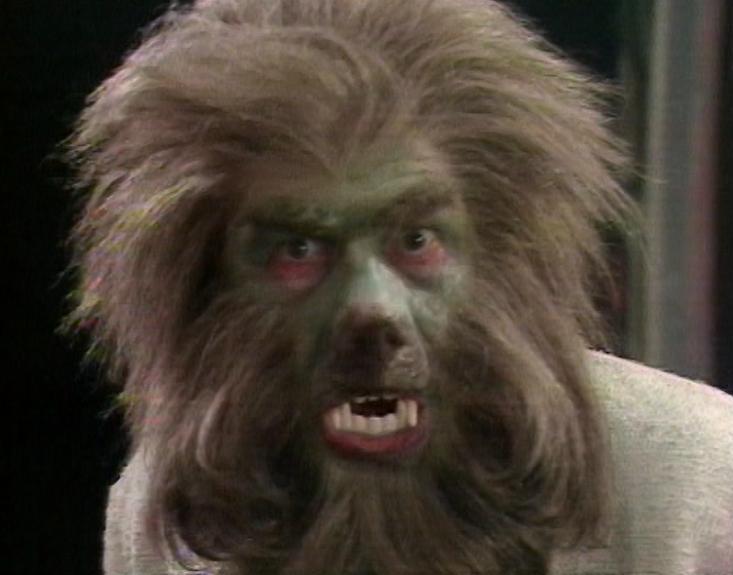
For, as Stahlman stubbornly ramps up the speed of the drilling, a gloopy green goo spills over at the surface, infecting a worker and transforming him into a primordial-like creature (a ‘primord’), whom, obsessed with heat, powers up the nuclear generator further so things may become hotter faster. This he achieves, but just as The Doctor has fiddled with his TARDIS and begun his first experiment; the result being the huge power surge sends him and his console not into the past or future, but sideways through time – into an alternate universe.
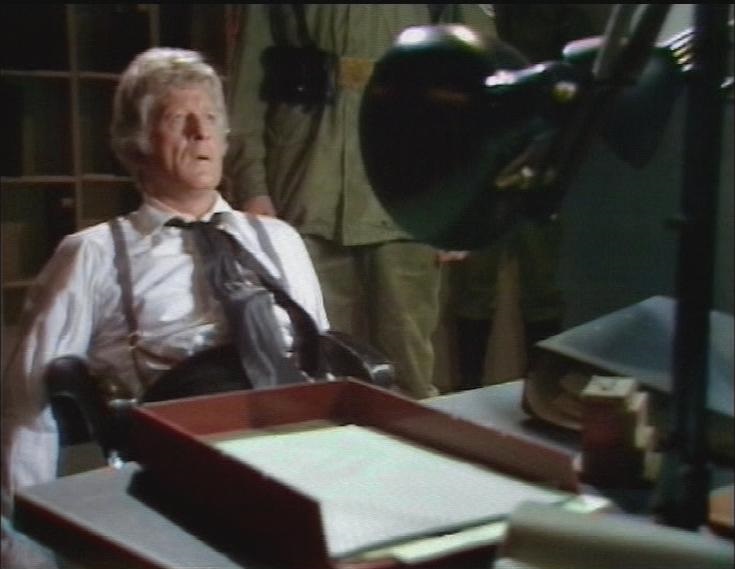
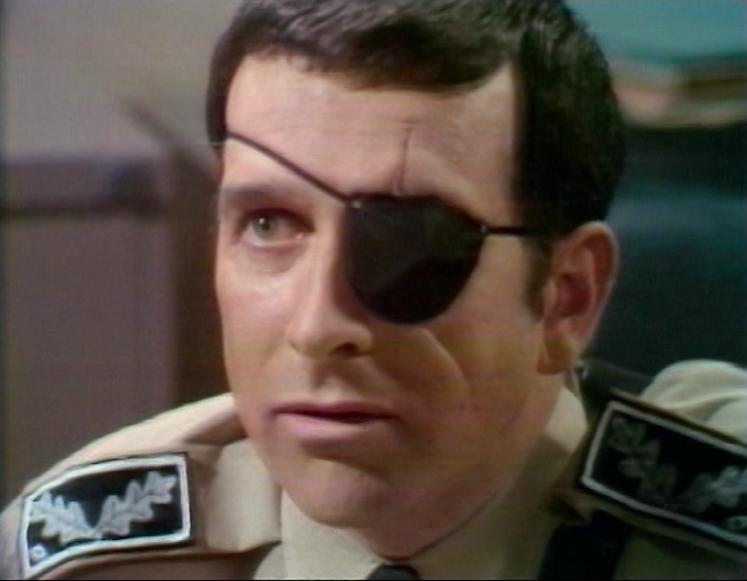
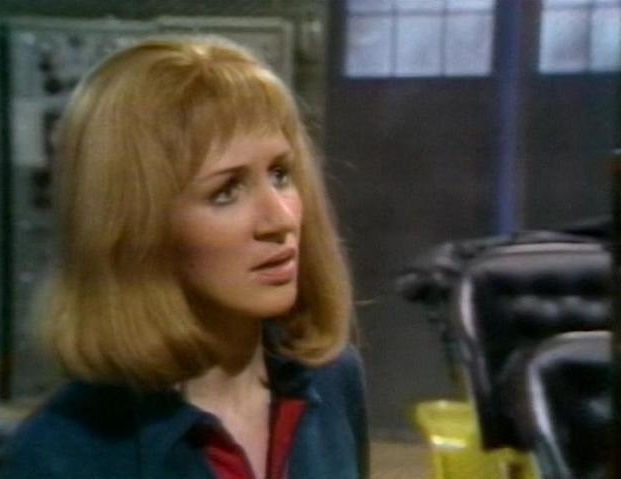
To say this is bad news is putting it mildly. For, in this universe, the UNIT peeps instead belong to the British Republican Security Forces, a militia that maintains control through an iron fist for a non-monarchical, fascist Blighty. Immediately then, The Doc’s discovered and interrogated by a facially scarred and eye-patch-sporting Lethbridge-Stewart, with a stern Liz Shaw his right-hand woman. Our man explains himself and unsurprisingly isn’t believed, but also discovers that Stahlman and co. are further on with their drilling than in his universe. As the drama unfolds, during which (as in the reality we’re used to) Stahlman too becomes infected and slowly transforms into a primord, it becomes apparent to The Doc that when the awesome drill strikes the Earth’s core it won’t release handy gases, but instead unleash an almighty volcanic eruption, earthqukes and a general lava-driven destruction of the entire planet. Whoops!
Again, with a pistol-toting Lethbridge-Stewart, he’s unable to prevent the inevitable, but when it comes he seeks other cohorts – a gradually turning Liz and the attracted-to-one-another Petra Williams (Stahlman’s assistant) and oil-man advisor Greg Sutton – to help him travel back to his universe (via power from the nuclear reactor) to prevent its destruction. Eventually, with a doomsday-facing Lethbridge-Stewart cowed and beaten, they pull it off, ensuring that once back in his universe The Doctor can pull together his versions of the Brig, Liz, Petra and Sutton to stop the drilling and put an end to the whole project.
.
.

.
The rumour that Doctor Who was being lined up for cancellation after Second Doc Patrick Troughton’s final season (the sixth) is apparently all wrong – it was at the end of this season that the show could have been dust, had its colourised, Earth-bound reinvention with lead man Pertwee not been a success. But, frankly, how could it not have been when it climaxed with this serial?
Make no mistake, Inferno is a stonker of a Who story. It’s as pacy, shouty, thrilling and – in its way – as bleak and forbidding as the show’s ever got. After all, not only does the frock coat-wearer (and it’s a totally black frock-coat-and-tie-combo he sports here, by the way) face the potential imminent destruction of the entire world, but with the aid of the ‘alternate universe’ gambit the entire world actually is destroyed. You can’t get much bleaker than that.
And, despite the ever sprightly pacing and ominously growing threat throughout, it’s really the alternate universe aspect of Inferno that sets it apart from all other Who stories – well, aside maybe from the similarly alternate universe-featuring Tennant era The Rise Of The Cybermen/ The Age Of Steel double-header (2006), but then Inferno sets itself apart from these episodes too by being so good and executing the whole thing so damn well.
The dystopian miasma of this universe is so emotionally resonant for The Doctor – and us – because its underpinned and driven by nightmarish versions of the oh-so likable UNIT bods; chief among them a horrid alternative Lethbridge-Stewart. And much credit must go to Nicholas Courtney here; while the light-comedian Pertwee’s enjoying getting his teeth into some serious thesping for once, Courtney resists turning this Brig into a pantomime villain, instead conjuring up a cruel, crude bully whom becomes increasingly febrile as his world and, thus, his control unravels.
Credit too, of course, should go to directors Camfield (episodes 1 and 2) and Letts (episodes 3-7), whose skill ensures the thrilling pace and intensity rarely relent, especially as they didn’t actually collaborate on helming duties (see why below).
.
.
.
.

.
Lumped with the decision of previous Who producers that the show should be made up of long serials (three of this season’s four stories are seven episodes long, including this one), producer Barry Letts and script editor Terrance Dicks – the pair that could be said to have masterminded the highly successful Pertwee years – received a script for Inferno that was simply too short for all the episodes they needed. Inspired by real-life, ‘classified’ US and Soviet drilling-to-the-Earth’s-core projects, Don Houghton’s script required filling out, so Dicks came up with a now familiar sci-fi show concept – throw the protagonist into an alternate universe.
Directing-wise, the reason why Camfield only helmed the serial’s first two episodes and Letts had to replace him for the final four was because the former suffered a heart attack and had to be rushed to hospital. Letts, however, has claimed the other’s preparatory notes were so comprehensive he merely had to follow them in order successfully to direct the rest of the story (all interior shooting, as the exterior work had already been completed). Camfield received a full credit for direction, though, as Letts didn’t want anybody outside the production catching wind of the former’s illness and hampering his career (Camfield would be diagnosed with a heart condition and, in fact, died at the young age of 52). BBC rules of the time, too, insisted that only one person could receive credit for directing or writing a drama serial.
Disruption to the filming then was surprisingly minor, but it must have been tough for actress Sheila Dunn (Petra Williams), whom was Camfield’s wife; future Howard’s Way (1985-90) star Kate O’Mara had initially been lined up for that role but proved unavailable – eventually she would essay The Rani, the villainess Time Lord character, in The Mark Of The Rani (1985) and Time And The Rani (1987). Other cast notes worth mentioning are the fact Christopher Benjamin would memorably return to the series as Henry Gordon Jago in the classic story The Talons Of Weng-Chiang (1977), while Derek Newark (Greg Sutton) had previously played Stone Age tribe chieftain Za in the very first Who serial An Unearthly Child (1963) and, lest we forget, Inferno marked the final appearance of Caroline John and her character Liz Shaw. Fitting then that the serial’s final shot, following the climax of all the mayhem, is her smiling and laughing face. A nice way to go out for the popular Who alumnus whom sadly died last year.
.
.
.
Next time: The Dæmons (Season 8/ 1971)
.
Previous close-ups/ reviews:
The War Games (Season 6/ 1969/ Doctor: Patrick Troughton)
An Unearthly Child (Season 1/ 1963/ Doctor: William Hartnell)
.

.
Talent…
.
… These are the lovely ladies and gorgeous girls of eras gone by whose beauty, ability, electricity and all-round x-appeal deserve celebration and – ahem – salivation here at George’s Journal…
.
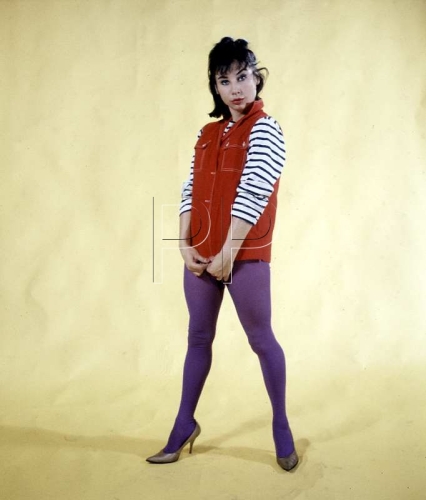
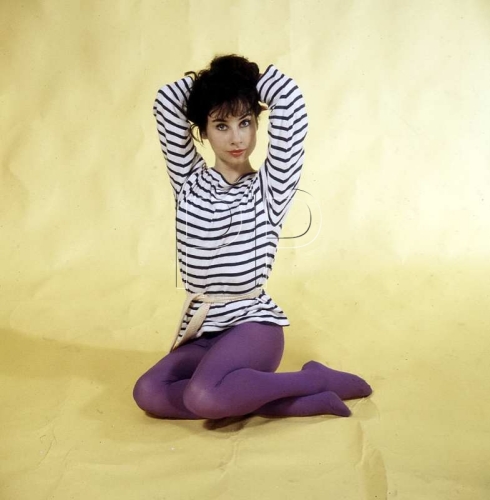
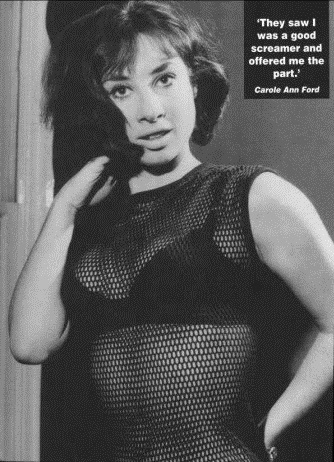
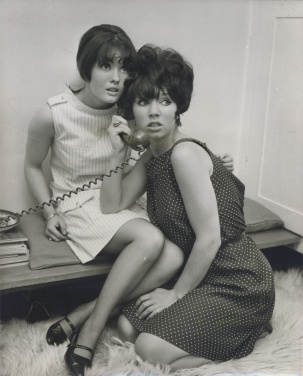
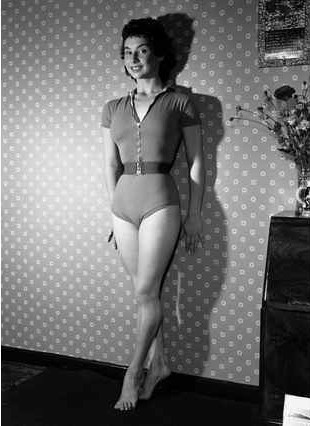
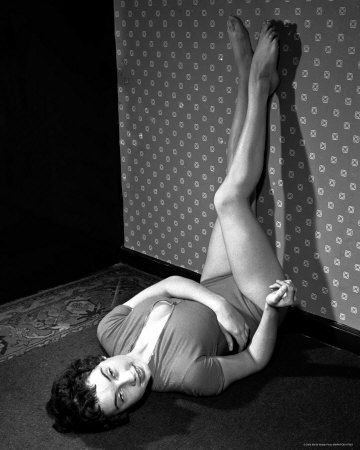
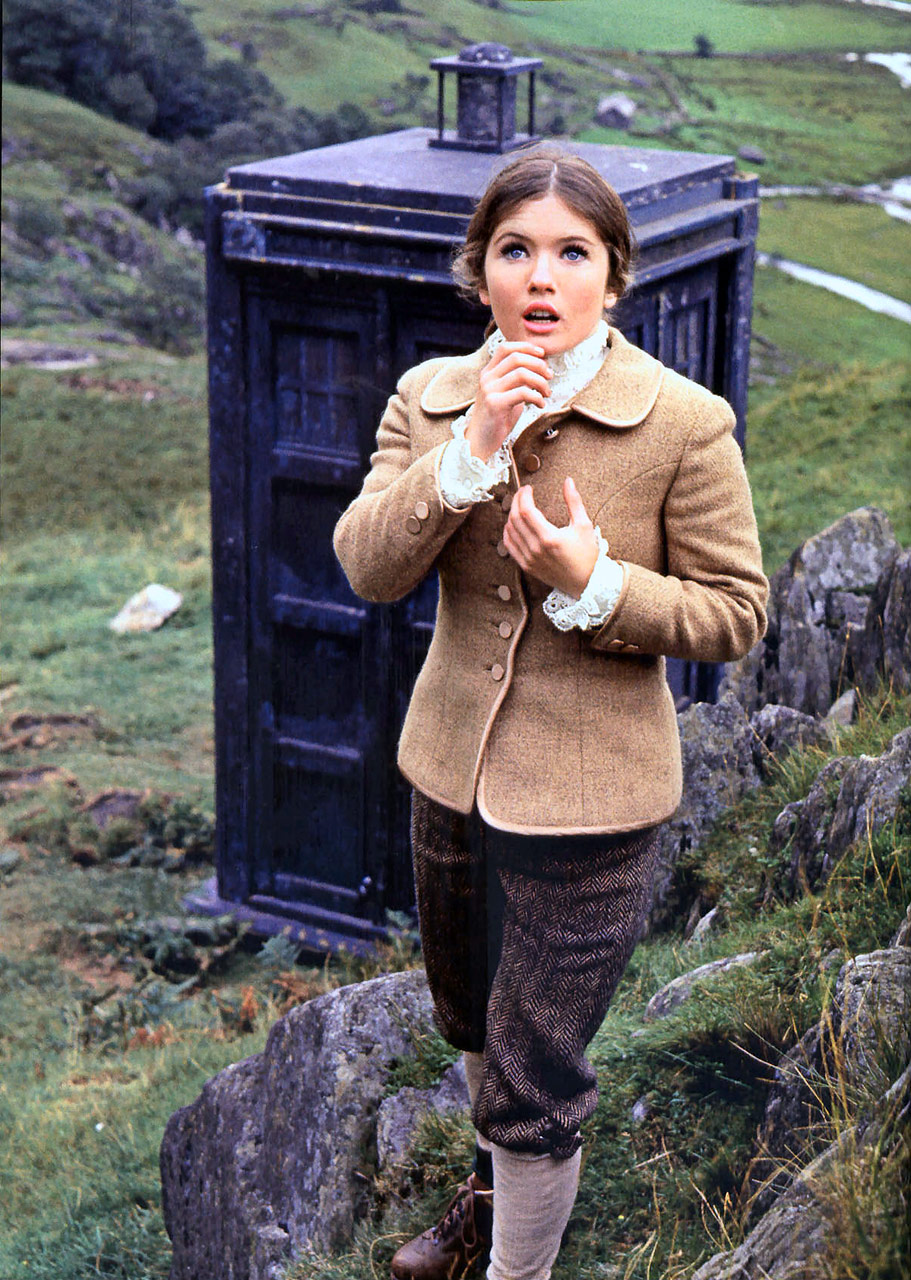
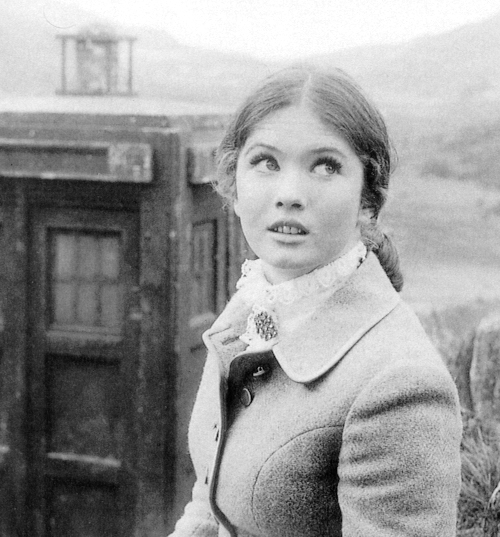
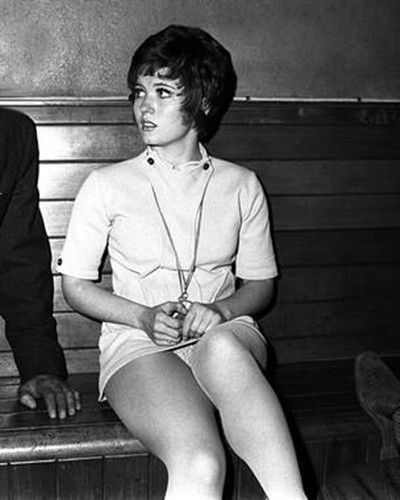
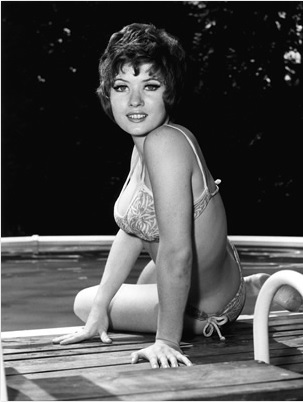
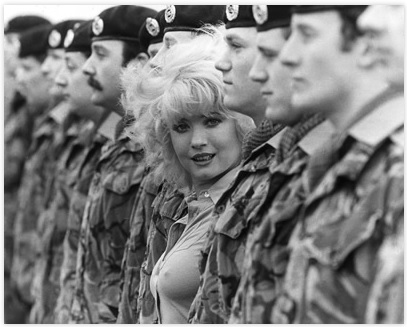
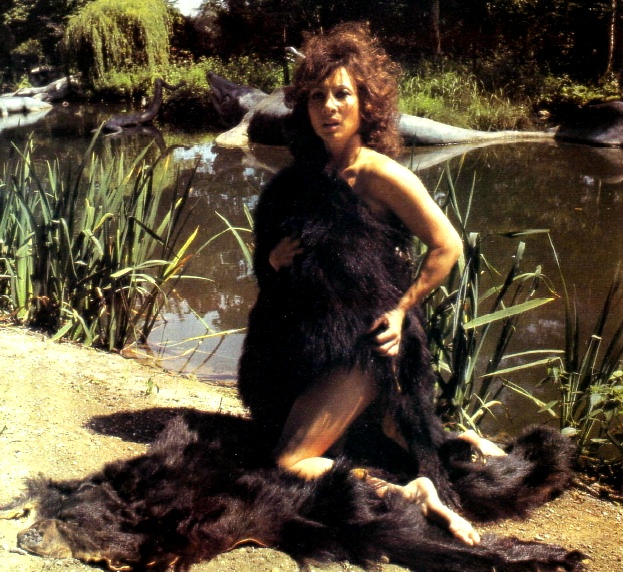
So even the most causal of visitors to this blog would surely realise that, at present, celebrating a wee little sci-fi show that’s been running for a full five decades is something of a must with it. And the latest post committed to this cause is surely itself a cause for celebration as it celebrates one of Doctor Who‘s most well observed aspects – yup, its protagonist’s penchant for picking rather attractive members of the opposite sex with whom to travel in his TARDIS. And the two such female sidekicks focused on here are classic lookers all right, Carole Ann Ford (The Doc’s own grand-daughter Susan) and Deborah Watling (the fair Victorian maiden Victoria). Time then, indeed, for these two time-travellers to be inducted into this blog’s Talent hall of fame…
.
Profiles
Names: Carole Ann Ford/ Deborah Watling
Nationalities: English
Professions: Actress and voice coach/ Actress and author
Born: June 16 1940/ January 2 1948, Fulmer, Buckinghamshire
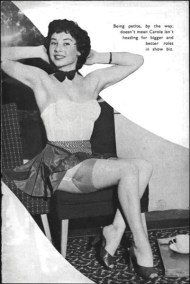
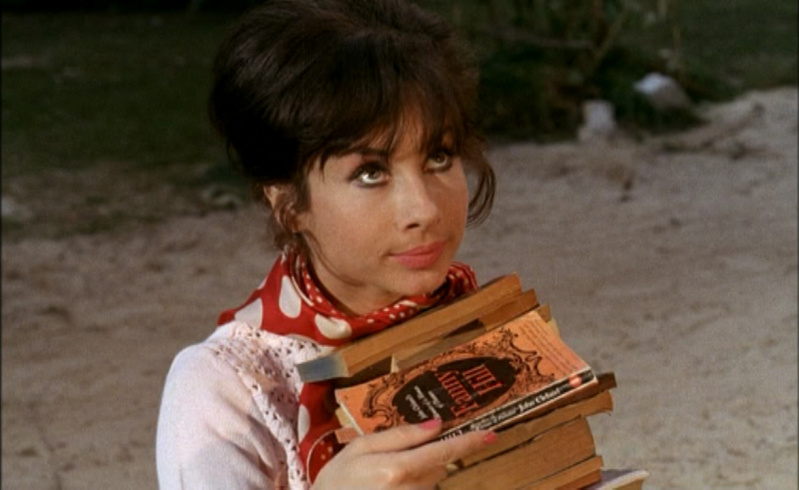
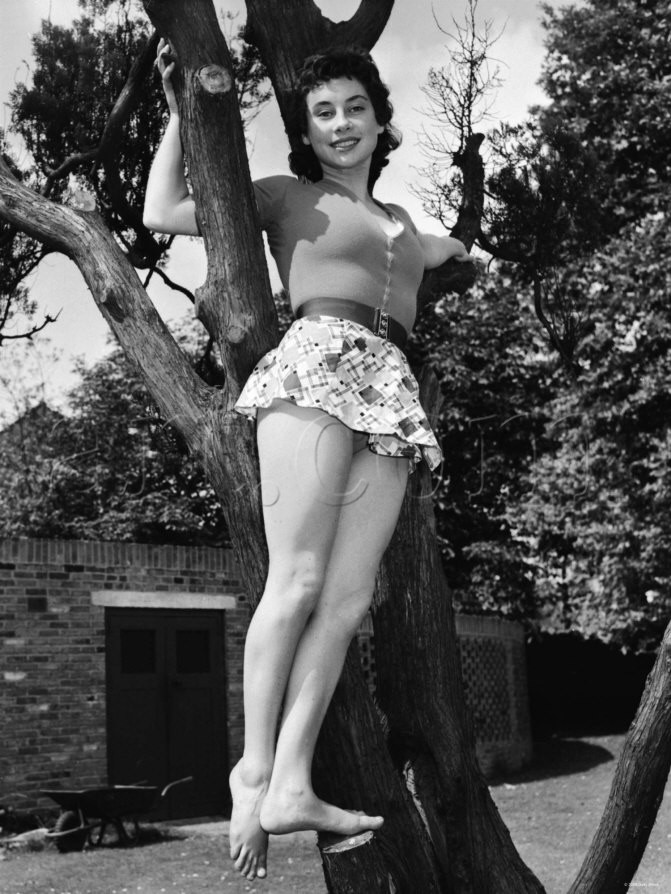
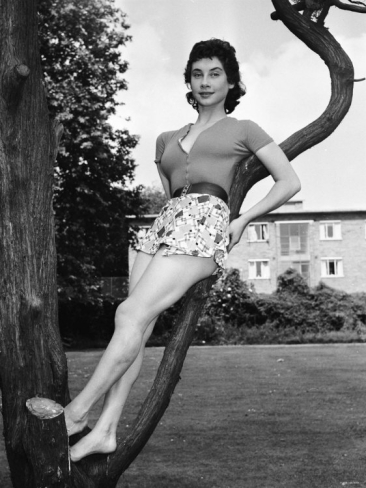
Known for: Carole – playing the original companion in Doctor Who, namely The Doctor’s grand-daughter Susan (Foreman). She came to the attention of the director of the show’s first serial An Unearthly Child (1963) after appearing in an episode of the BBC’s long-running police procedural drama Z-Cars (1962-78) and left at the end of 1964’s The Dalek Invasion Of Earth, before returning for the anniversary specials The Five Doctors (1983) and Dimensions In Time (1993). Following her stint on Who, she cropped up in Whatever Happened To The Likely Lads? (1973-74) and on the panel of classic Saturday night pop music showcase Juke Box Jury (1959-67) a week before Doctor Who began. She has appeared numerous times on stage and her film credits include The Day Of The Triffids (1962) and The Great St. Trinian’s Train Robbery (1966). She will play a minor role in this year’s BBC drama An Adventure In Time And Space (about the making of An Unearthly Child), in which she herself will be portrayed by newcomer Claudia Grant.
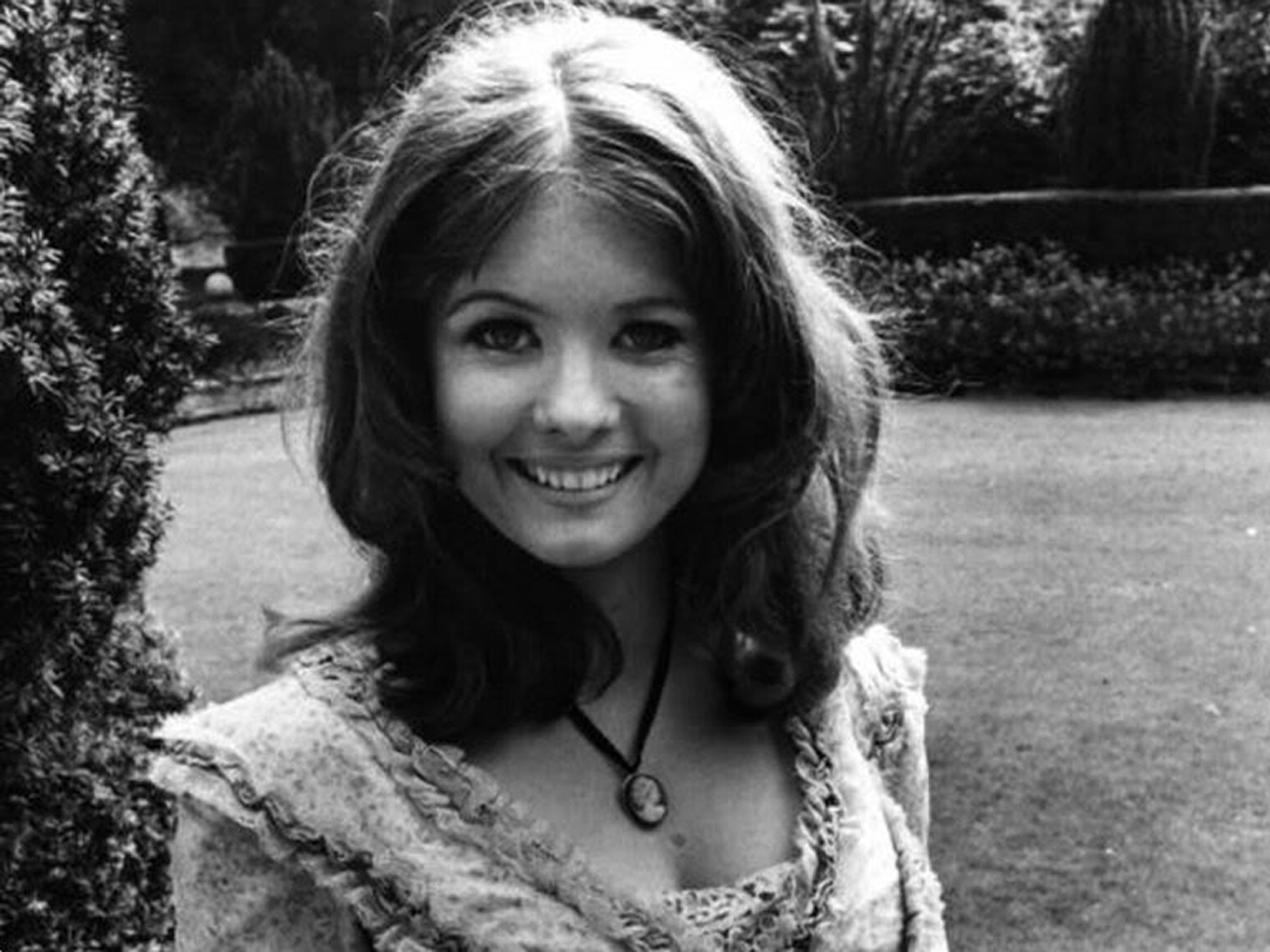
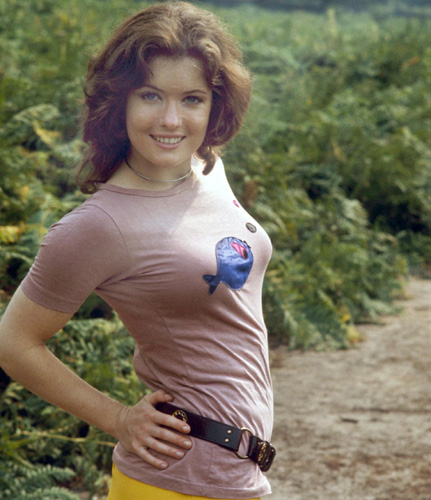
Deborah – daughter of respected actor Jack Watling and older sister of fellow sex symbol and actress Dilys Watling, Deborah essayed the role of Second Doctor companion Victoria Waterfield, beginning with the serial The Evil Of The Daleks (1967) and culminating in Fury From The Deep (1968) – she also appeared in Dimensions In Time, though. A former child actress in the series The Invisible Man (1958) and as Lewis Carroll‘s heroine in Dennis Potter’s BBC version of Alice In Wonderland (1965), she followed up her stint in Who with a supporting role in the David Essex headlined rock ‘n’ roll flick That’ll Be The Day (1973) and as the promiscuous Norma Baker in ITV’s London Blitz drama Danger UXB (1978).
Strange but true: In the 1970s, Carole had a bizarre brush with near death when severe back pain on holiday in Spain resulted in a doctor prescribing her medication that made her allergic to a vast array of different things, including aspirin, the use of backfired and required a shot of adrenalin literally to save her life/ Despite appearing in seven serials across Seasons 4 and 5, the only Doctor Who serial in which Deborah appears to exist in its entirety is The Tomb Of The Cybermen (1967), owing to the Beeb’s 1970s policy of wiping tapes of its old shows.
Peak of fitness: Carole – although cute as a button when playing the somewhat otherworldly Susan, she was never really allowed to showcase her charms, unlike in the pre-Who ‘cheesecake’ images she posed for (see below)/ Deborah – again, lovely as the delicate Victoria was, it was as ‘naughty’ Norma in Danger UXB that Watling was allowed to be at her most sexiful; on-screen that is, for surely in promotional images for a 1978 theatre production of the farce Two And Two Make Sex she most blatantly proved what a hot property she was (see below)
.
.
CLICK on images for full-size
.

.

.
.
.

.
.

.
.
.

.
.
.


.


.
.

.
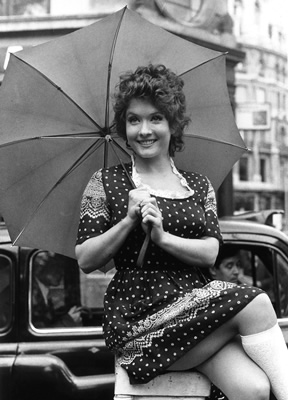

.
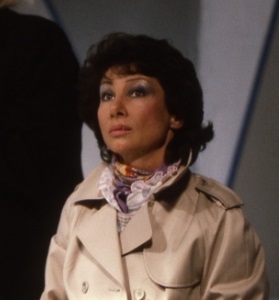
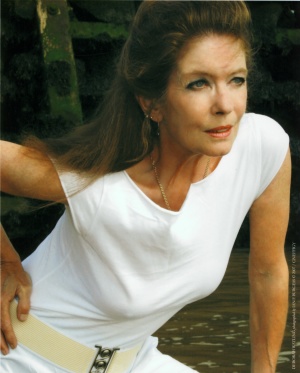
.
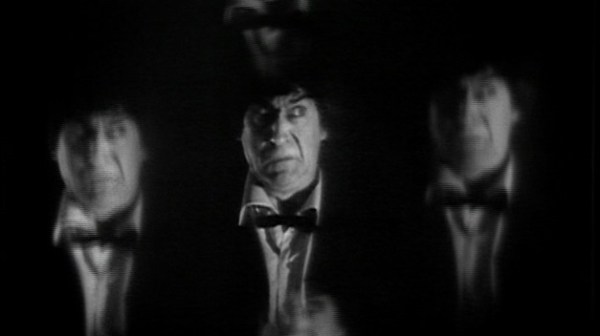
Dizzy! My head is spinning: The War Games brought to a close the black and white, 1960s Doctor Who, as well as Patrick Troughton’s era as he underwent a forced regeneration…
Despite it being, by the tail-end of second lead Patrick Troughton’s era, not quite the essential viewing it was at its mid-’60s ‘Dalekmania’ high, Doctor Who came up with one of its most essential ever serials to close out Troughton’s tenure in the shape of The War Games.
That’s right, following up this blog’s opening close-up look at classic Who serials comes its second (the latest post in celebration of the sci-fi show’s 50th anniversary year), focusing as it does on the serial that boasts a truly epic length, more Time Lords than you can shake a stick at, villains in John Lennon glasses and, oh yes, that regeneration…
.
.

.
Doctor: Patrick Troughton (The Second Doctor)
Companions: Frazer Hines (Jamie McCrimmon); Wendy Padbury (Zoe Heriot)
Villains: Philip Madoc (War Lord); Edward Brayshaw (War Chief); James Bree (Security Chief)
Allies: David Savile (Lt. Carstairs); Jane Sherwin (Lady Jennifer Buckingham); Michael Napier-Brown (Arturo Villar)
Writers: Malcolm Hulke and Terrance Dicks
Producer: Derek Sherwin
Director: David Maloney
.


.
.
.

.
Season: Six (seventh and last serial – comprising 10 25-minute-long episodes)
Original broadcast dates: 19 April-21 June 1969 (weekly)
Total average viewers: 4.9 million
Previous serial: The Space Pirates
Next serial: Spearhead From Space (Season 7)
.
.
.
.

.
After many adventures in his second incarnation, The Doctor and his latest companions, 18th Century Scots soldier Jamie McCrimmon and 21st Century astrophysicist Zoe Heriot, step out of the TARDIS into what appears to be a World War One battlefield. Their appearance inexplicable, they’re taken prisoner by British forces, specifically a Lt. Carstairs and an army nurse Lady Jennifer Buckingham. However, things don’t add up for The Doctor. His suspicions eventually prove founded when he and his companions discover this theatre of war is actually a ‘war zone’ encircled by a mysterious mist that separates it from another zone in which a Roman army is in battle. With Carstairs and Buckingham similarly convinced, the group realise that their ‘war zone’ – and all its players – are being manipulated via hypnosis by the British and (supposedly) opposing German generals, whom receive their orders from a ‘Central Control’ zone that they visit via wardrobe-like space-shifting machines named SIDRATs (pronounced ‘side-rats’).
The similarity of the word SIDRAT to TARDIS (the former being the latter spelt backwards) is not a coincidence, as The Doctor discovers when using the former to transport himself surreptitiously to Central Control, for the former is a TARDIS-like time- and space-machine created by the War Chief, whom is a member of The Doctor’s race, the Time Lords, and second-in-command of the widespread operation that oversees thousands of warring peeps who’ve been unwittingly kidnapped from Earth and plonked down on this planet’s several different war zones.
Learning that others across the war zones have, over time, also deduced something of what’s going on and created a resistance movement, The Doctor and his allies join forces with this band (effectively led by Mexican fighter Artruro Villar) and take on Central Control. During their raid, the War Chief outlines his own plan to The Doctor – to use the scores upon scores of fighting humans to gain control of the galaxy himself – and, working out the former’s a fellow Time Lord, tries to convince him to join in his efforts. The Doctor refuses, of course, and realises he has no alternative once the raid succeeds than to call reluctantly on the help of the Time Lords themselves to return the thousands of fighters to Earth, something he won’t be capable of himself.
Before the Time Lords use their power to steer him, Jamie and Zoe in the TARDIS to their – and his – home planet of Gallifrey, the War Chief (his alterior plan revealed and the war zones’ overall war called to a halt) is killed by his master the War Lord. The latter then is put on trial by the Time Lords and, for his crimes, receives the ultimate sentence – he’s erased from history as if he never existed. The Time Lords then turn on The Doctor, accusing him of breaking the code of their people by interfering in the affairs of others throughout the universe via a TARDIS he stole from Gallifrey centuries before to gallivant around in. He defends himself by saying he’s done much good, which only relents the Time Lords to the extent that they allow him, once they’ve returned Jamie and Zoe to their own times and places, to be free on planet Earth but unable to fly the TARDIS away. And they ensure his appearance changes via a forced regeneration…
.
.
.

.
Unlike the modern Who (for instance, Journey’s End, A Good Man Goes To War and The Wedding Of River Song of the Tennant and Smith eras), the ‘Classic Series’ could rarely be said to get epic; too little money ensured a very Beeb approach to production values. Yet, in another sense, The War Games is as epic as the show gets. At a bladder-inducing 10 episodes in length (that’s a total 250 minutes), its narrative scope and depth is impressive to say the least. The setting out of the different dramas in the different ‘war zones’ (especially the opening WWI section) are engaging and characterised by believable figures, while the the gradual, trickle-down introduction of Central Control and the zones’ resistance movement is nicely done.
Moreover, the generally slow-burn nature of the story-telling allows for the plot’s twists to rear their heads with wonderfully effective abruptness (The Doc, Jamie and Zoe discover they’re not stuck in the middle of WWI but on a planet of ‘war games’; The Doc having to call on his people to sort things out in the last two episodes). But, at the same time, there’s no getting away from it – The War Games is damned long, too long really; quite frankly, all that takes place could be condensed into five or six or even the usual four episodes.
And yet, sitting through it all is certainly worthwhile for that rather terrific climax – one too that was crucial for the future of the show to come. Not only does the serial’s last two episodes culminate brilliantly in the Second Doctor’s final moments (his tear-inducing goodbye to Jamie and Zoe – they won’t even remember their adventures? Sniff!) and the beginnings of his very painful looking, bad trip-like regeneration, but it also marks the first time he – and we – travel (back) to Gallifrey and (properly) meet his people, the Time Lords.
And how sombre and uppity they are; no wonder our hero wanted away from this über-powerful, overly proud bunch with their long black robes and stoically hard rule-making. They bring a jolt of adult sobriety to these journeyings of an ages-old yet rather childish hermit; indeed, one that ensures his adventures will never be quite the same again – not least as their forced transformation and exiling him to Earth leads directly into Jon Pertwee’s Third Doctor era of the early ’70s, of course.
.


.
.
.

.
As mentioned above, The War Games was not only the last serial to feature Patrick Troughton, Frazer Hines and Wendy Padbury in their original run on the show (making it still the only one to do away with both a Doctor and one or more of his companions), it was also the last of the 1960s, bringing down the curtain on the combined Hartnell and Troughton era of black and white Who, which had been guided first by TV legend Verity Lambert as producer, then John Wiles, Innes Lloyd, Peter Bryant and finally Derrick Sherwin in that role (Barry Letts would take over as producer for the next four seasons’ Pertwee era).
Speaking of Sherwin, an unusual cast note concerns him, as he cast his own wife Jane as ally Jennifer Buckingham (although this producer/ cast member combo would actually be something of a precedent for the show), while Philip Madoc – whose smooth, psychedelic round-lensed glasses-wearing War Lord is such a fine villain – would go on to appear again in the serials The Brain Of Morbius (1976) – as villain Mehendri Solon – and in The Power Of Kroll (1978-79) – as spaceship crew member Fenner – and he also had a part in the non-canonical film Daleks’ Invasion Earth 2150 AD (1966). Plus, Bernard Horsfall and James Bree both appeared just months after The War Games‘ broadcast in the Bond film On Her Majesty’s Secret Service (1969).
Meanwhile, Frazer Hines moved on from Who to carve out a successful soap opera career in Emmerdale (Farm), at one time appearing opposite Padbury in it. And, for her part, Padbury later became an actors’ agent; one of her discoveries reputedly being a certain Matt Smith…
.
.
.
Next time: Inferno (Season 7/ 1970)
.
Previous close-ups/ reviews:
An Unearthly Child (Season 1/ 1963/ Doctor: William Hartnell)
.
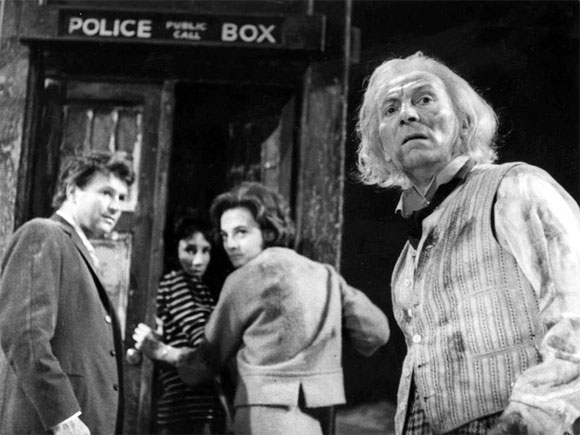
They are the fire-starters: Ian (William Russell), Susan (Carole Ann Ford), Barbara (Jacqueline Hill) and The Doctor (William Hartnell) arrive back at the TARDIS safe and sound – sort of…
Whuuu-rooom, whuuu-rooom, whuuu-room… Pray tell, could that be the familiar groaning of the TARDIS re-materalising in this blog? Well, yes, it very much could be because it is. Yup, just as the brand new series is getting its mojo going – or its second half, if you’re keeping count – and following on from last month’s third-anniversary-of-the-blog-acknowledging posts that treated you lucky peeps to rare Doctor Who images from throughout its five decades (check them out here: 1, 2, 3 and 4), this post is the next of this very blog’s to celebrate the Who Doctor’s 50 years this, er, year. Oh yes.
And it’s also the first of several to take a close-up look back at serials and/ or episodes of the sci-fi TV giant’s past that have been either heralded as classics by fans or, in retrospect, have proved critical, pivotal touchstones in its history. Or, in most instances, both.
And where better – or when better – to start than with the show’s very first serial, An Unearthly Child. The one that introduced us to William Hartnell’s First Doctor, his original trio of companions, the show’s original theme music and title sequence and, yes, that original TARDIS sound. Whuuu-rooom, whuuu-rooom, whuuu-rooom…
.
.

.
Doctor: William Hartnell (The First Doctor)
Companions: Carole Ann Ford (Susan Foreman); Jacqueline Hill (Barbara Wright); William Russell (Ian Chesterton)
Villain: To varying degrees, the Tribe of Gum – including Derek Newark (Za), Alethea Charlton (Hur) and Jeremy Young (Kal)
Writer: Anthony Coburn and (Episode 1; uncredited) C E Webber
Producer: Verity Lambert
Director: Waris Hussein
.


.
.
.

.
Season: One (first serial – four 25-minute-long episodes officially titled An Unearthly Child, The Cave Of Skulls, The Forest Of Fear and The Firemaker)
Original broadcast dates: 23 November-14 December 1963 (weekly)
Total average viewers: 5.9 million
Next serial: The Daleks
.
.
.
.

.
Everything has to have a beginning and Doctor Who‘s (its opening shot, no less) takes place in a Shoreditch scrapyard containing ramshackle, random items, which include an old fashioned police telephone box that’s surprisingly ignored by a ‘bobby’ as he does his rounds. It won’t be ignored for much longer, though, as a history and a science teacher from the nearby Coal Hill School, Barbara Wright (Jacqueline Hill) and Ian Chesterton (William Russell), out of curiosity visit the the scrapyard, being its the given address – 76 Totters Lane – of a girl who’s been behaving oddly in both their lessons, Susan Foreman (Carole Ann Ford). It seems Susan’s a teenager of highly developed historical and scientific knowledge, but underdeveloped knowledge of 1960s Britain.
On reaching the scrapyard, Barbara and Ian spy an elderly gentlemen in Edwardian clothes attempting to enter the police box. Hearing Susan’s voice from inside (addressing the old man as ‘grandfather’), they barge in, only to discover they’re standing in a light, futuristic-looking room with a central console, all of which is far larger than the exterior of the police box would suggest possible. The elderly man (whom declares himself a ‘doctor’) and Susan find themselves explaining the police box is actually a bigger-on-the-inside machine that can travel through time and space. To prove the fact, ‘The Doctor’ sends the machine – and its occupants – back 100,000 years to the Stone Age, whereupon a disbelieving Barbara and Ian join their companions in investigating their surroundings.
Soon, however, the foursome are kidnapped by a tribe of savages concerned with rediscovering the knack of creating fire (which has been lost with a previous generation). An attempted escape foiled, the disparate quartet realise their only means of avoiding death is to create fire and pass on its ‘secret’ to the tribe. This they eventually manage and scarper back to the police box, whose co-ordinates are re-set to another time and place by The Doctor, hurriedly so, though; it’s obvious they won’t be returning to London in 1963…
.
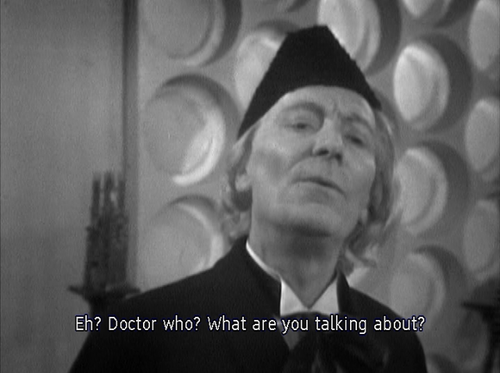
.
.
.

.
An undisputed classic serial, An Unearthly Child (to use that moniker for the entire four episodes as many fans do) gets Who off to a cracking start – and, in doing so, also gets off and going several significant elements of the show’s formula.
Much of its appeal undeniably lies in the setting up of those show-defining elements (an other-worldly, old, genius time-and-space-traveller; his quirky transport in the shape of a bigger-on-the-inside blue police telephone box; leaping into an adventure with one human companion or more; and that gang, both together and individually, getting into scrapes, escaping from them, getting into more scrapes and then escaping from them etc.).
Yet, arguably its greatest strength as very watchable TV drama, is its characterisation and the chemistry of its players – Hartnell’s very irascible old feller spending much of his time being frustrated and irritated by his ‘simple’ human teacher companions (and, in turn, frustrating and irritating them) sets him up in this opening serial as far more an anti- (almost accidental) hero rather than the out-and-out hero future Doctors would be.
Overall, An Unearthly Child may be stripped back, very expository fare – with simple storytelling – compared to much that was to come (even in the Hartnell era), but it’s clearly conceived with care and intelligence and executed with aplomb.
.
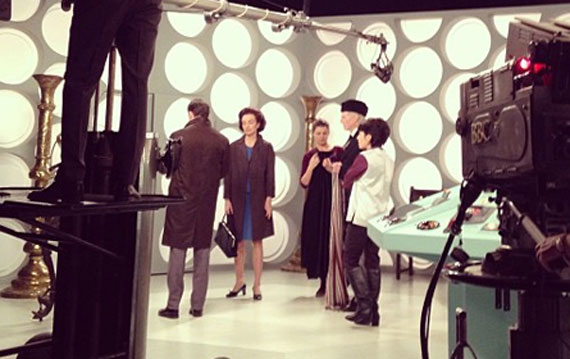
.
.
.

.
Envisaged as an early-evening-Saturday sci-fi adventure drama for all the family with historical reasonance (hence its inclusion of a history and science teacher each as two main characters), Doctor Who was originally dreamt up up the Beeb’s Head of Drama, the Canadian Sydney Norman, whom put up-and-coming producer Verity Lambert in charge of the project. The show had come into being following brainstorming sessions involving writer C E Webber, whom had been charged with scripting the first serial, which would have been called The Giants. When she came on to the show, though, Lambert was far from crazy about Webber’s effort and opted for a script from Australian Anthony Coburn as the season opener – this would eventually become An Unearthly Child (originally intended for later in the season), when combined with some suitable exposition storytelling scoured from Webber’s The Giants.
An Unearthly Child (the first of the serial’s four episodes, that is; not the entire serial) originally went before the cameras on September 27 1963 at London’s Lime Grove Studios, helmed by young director Waris Hussein. Yet this ‘pilot’ episode was beset by technical problems and actors fluffing their lines, thus Newman ordered it to be filmed again (October 18). And, happily, this decision allowed for Hussein and co. to make further tweaks, namely the clothing of both Susan (whom changed from alien-seeming futuristic garb to more ’60s Mod-ish fashions) and The Doctor himself (from a modern suit and tie to the Edwardian-like togs we’re familiar with as the Hartnell Doc’s appearance – indeed, no question, his costume set the crucial trend of the ‘old fashioned’, certainly non-present-day clothing of every subsequent Doctor). Another critical change was made to the script – a line suggesting The Doctor and Susan were from (presumably Earth’s) 49th Century was altered to say they were from ‘another time, another world’ (i.e. they’re aliens).
Infamously, owing to a week’s broadcast delay due to the pilot’s re-filming, An Unearthly Child hit screens the day after US President John F Kennedy was tragically shot dead. This ensured that, because of the Beeb’s constant news bulletins on the unprecedented event, the show’s very first episode actually started late; beginning more than a minute later than its scheduled 5.15pm start-time – ironic for a drama focused around a time machine!
.
.
.
Next time: The War Games (Season 6/ 1969)
.











 George's Journal