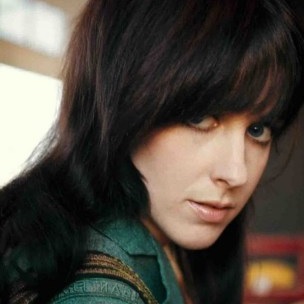
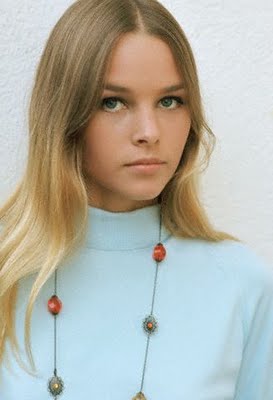
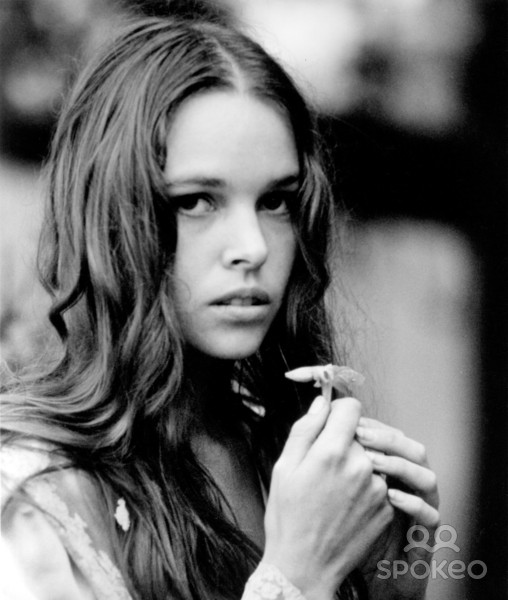
Grace Slick/ Michelle Phillips: Sixties Survivors

.
Talent…
.
… These are the lovely ladies and gorgeous girls of eras gone by whose beauty, ability, electricity and all-round x-appeal deserve celebration and – ahem – salivation here at George’s Journal…
.
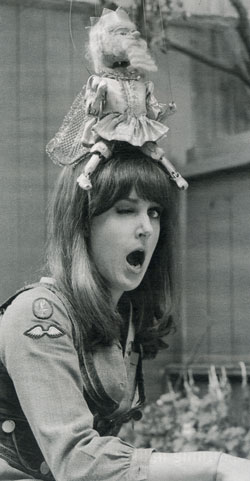
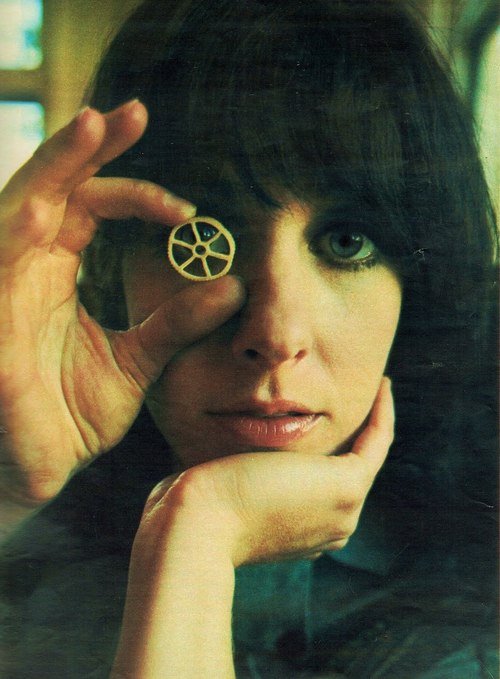
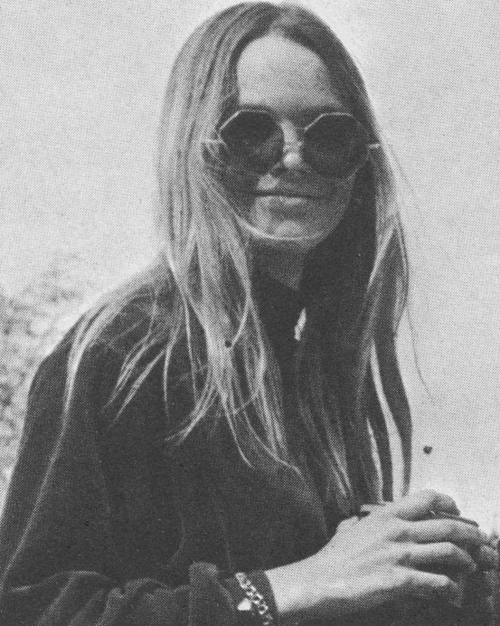
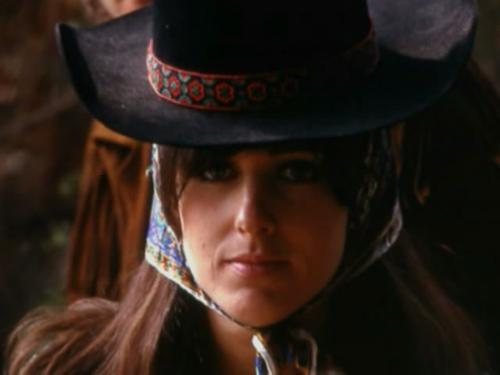
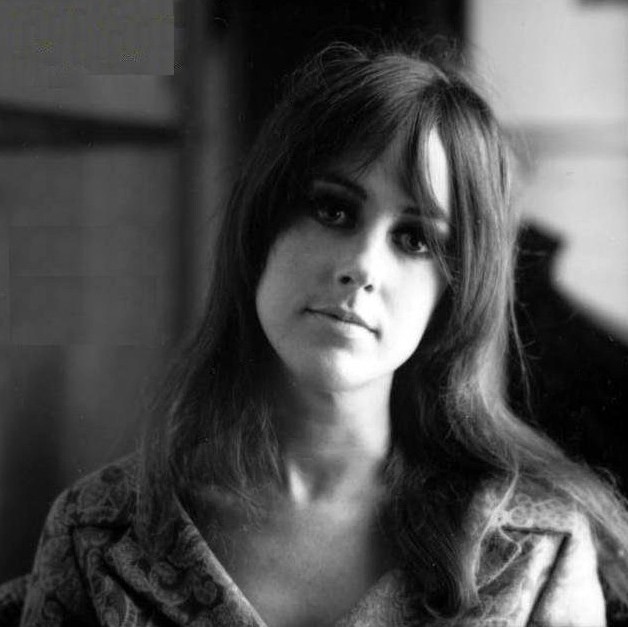
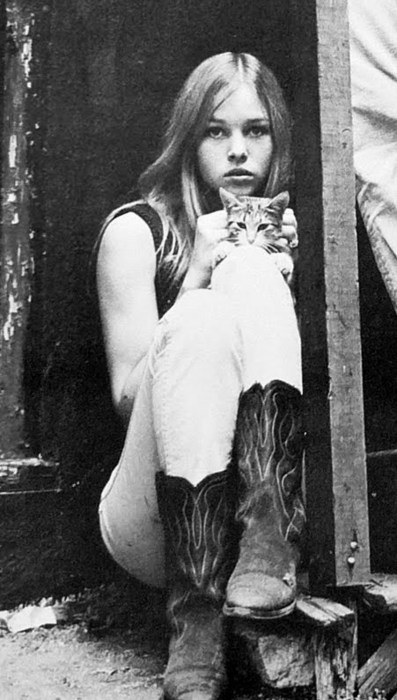
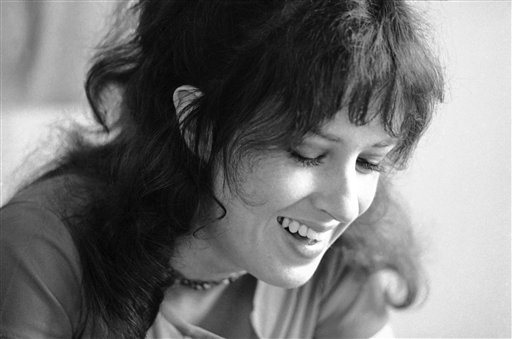
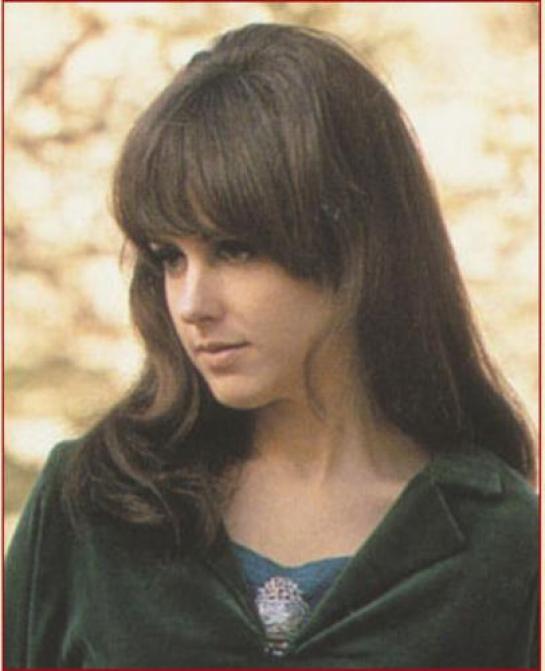
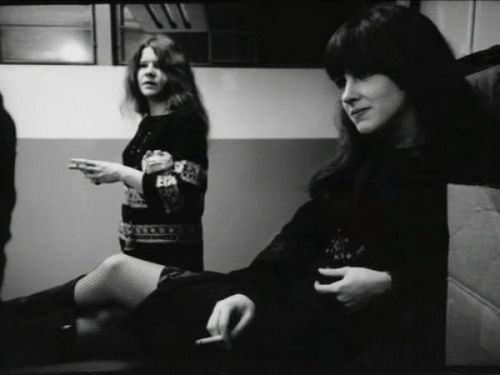
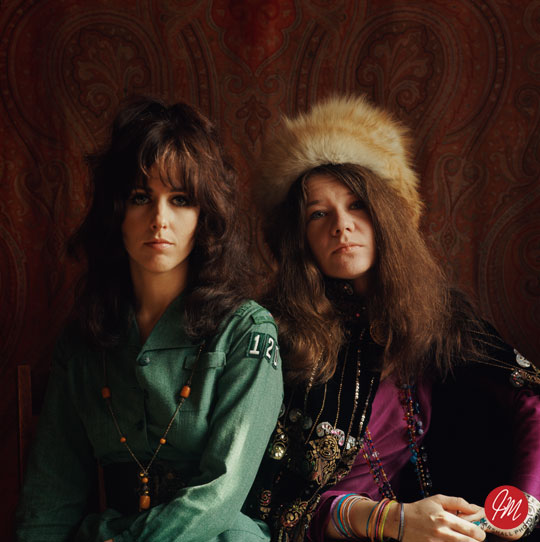
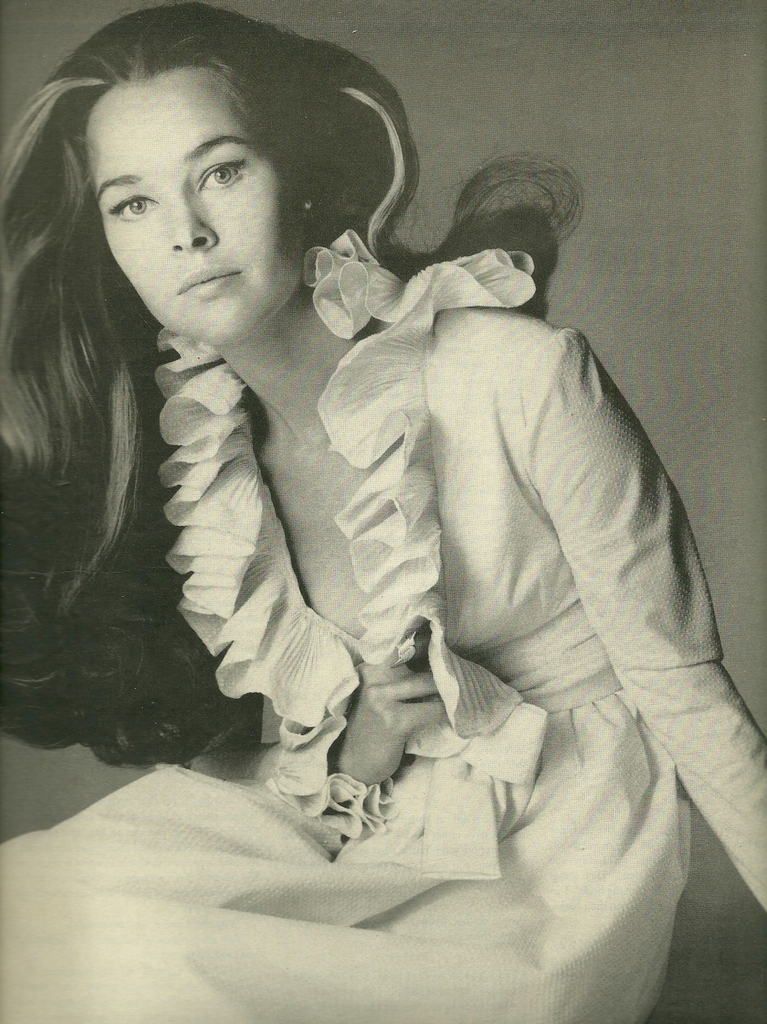
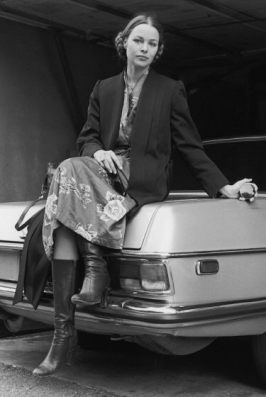
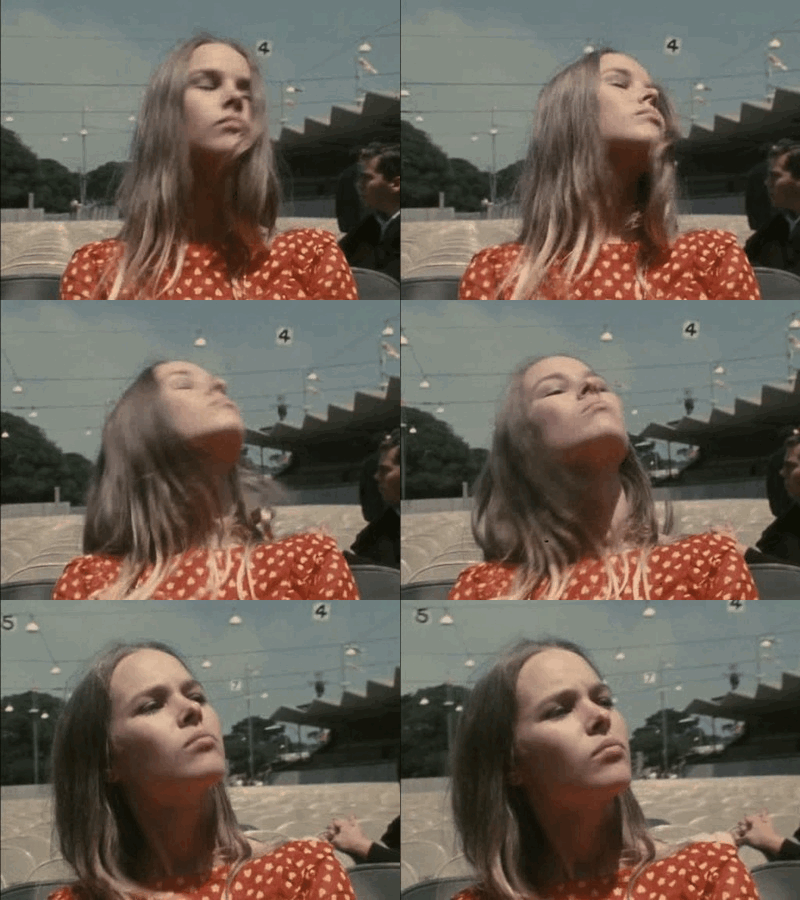
‘Flower power’ has had its detractors over the years, but surely even they must drop to their knees in adulation to the movement for opening its petals and allowing, Bottecelli-like, two rock goddesses to step forth and dazzle us for ever after. Yes, they’re the always high-soaring Grace Slick of Jefferson Airplane and the more-than-just sexy-momma of The Mamas & The Papas, Michelle Phillips. And they’re the latest far-out pair to enter this blog’s Talent corner, peeps…
.
Profiles
Names: Grace Barnett Slick (née Wing)/ Holly Michelle Phillips (née Gilliam)
Nationality: American
Professions: Singer, songwriter, musician and artist/ Singer, songwriter and actress
Born: October 30 1939, Evanston, Illinois/ June 14 1944, Long Beach, California
Height: Both 5ft 7in
Known for: Grace – the oh-so idiosyncratic front-woman of and major songwriter for the seminal mid- to late ’60s San Francisco rock band Jefferson Airplane and, later, its ’70s and ’80s evolution as pop-rock outfit Jefferson Starship, especially for her performances of Somebody To Love and White Rabbit (the latter of which was penned by Grace and memorably references Alice In Wonderland), which originally appeared on The Airplane’s classic Surrealist Pillow album (1967) and were the centrepiece of their legendary set at August 1969’s Woodstock Festival. Revered at this time – and subsequently – as a major, and thus rare female, mover-and-shaker in the US counter-culture scene and good friends with Janis Joplin and David Crosby, she had been a fashion model before moving with her first husband to Calfornia and founding with him and his brother the lesser known band The Great Society. A notorious alcoholic, Grace has been sober for several years and is now a successful artist, her paintings (often inspired by the ’60s rock scene) fetching eye-watering prices.
Michelle – easily the fairest and far from the least significant member (along with husband John Phillips, ‘Mama’ Cass Elliott and Denny Doherty) of the iconic four-part-harmony, folk-rock band of the mid- to late ’60s The Mamas & The Papas and, with John Phillips, writer of two of their biggest hits California Dreamin’ (1965) and Creeque Alley (1967). Following the band’s break-up in ’68, she’s focused mainly on acting, making her debut alongside Warren Oates in Dillinger (1973), then starred in the Martin Sheen TV movie The California Kid (1974) and as the second wife of Rudolph Valentino (Rudolf Nureyev) in Ken Russell’s Valentino (1977). She also appeared in several seasons of US TV soap Knots Landing (1979-93) and in episodes of Star Trek: The Next-Generation (1987-94), Beverly Hills, 90210 (1990-2000) and Spin City (1996-2002). Over the years, she’s had relationships with high-profile Hollywood figures Warren Beatty, Jack Nicholson and Dennis Hooper (to whom she was married for eight days in 1970), while she’s the mother of Wilson Phillips singer Chynna Phillips.
Strange but true: Grace – an alumnus of Manhattan’s prestigious Finch women’s college, she was invited along to a 1969 tea party at the White House, as she was in the same year there as Richard Nixon’s daughter; taking along left-wing political activist Abbie Hoffman as her ‘plus one’, she planned on using the occasion to drop LSD into Nixon’s tea, but was thwarted when security guards recognised her and refused her entry – she’d been apparently put on a FBI blacklist. Although almost always most identified with the ’60s rock of Jefferson Airplane, Grace in fact sang lead vocals on the nowadays ‘pure pop’-derided Jefferson Starship hits We Built This City (1985) and Nothing’s Gonna Stop Us Now (1987) – the latter, Oscar-nominated thanks to its featuring on the soundtrack of comedy Mannequin (1987), also ensured she was the oldest female artist to secure a US #1 single until Cher with the auto-tune-tastic Believe (1998)/ Michelle – in The Mamas & The Papas’ early days, she won 17 straight shoots in a Bahamas crap game that ensured the broke band could return to the US; years later, she sang backing vocals on Belinda Carlisle’s US and UK #1 single Heaven Is A Place On Earth (1987).
Peak of fitness: Grace – performing with The Airship at Woodstock, wearing her skimpy, cowboy-style white top and white trousers and looking like the icon-for-all-times she is for their awesome Sunday-morning-defying gig/ Michelle – cosying up in the nuddy with Rudolf Nureyev’s Valentino in the ’77 movie of the same name.
.
limelightagency.com/Grace-Slick/news/news.html
.
CLICK on images for full-size
.


.

.


.

.
.

.

.

.

.

.
.


.


.

.
.

.
.

.

.

.

.

.

.

.

.


.

.

.
…………………….
.


.


.

.

.


.


.


.


.


.

.


.
.

Playlist: Listen, my friends! ~ August 2013


 .
.
In the words of Moby Grape… listen, my friends! Yes, it’s the (hopefully) monthly playlist presented by George’s Journal just for you good people.
There may be one or two classics to be found here dotted in among different tunes you’re unfamiliar with or have never heard before – or, of course, you may’ve heard them all before. All the same, why not sit back, listen away and enjoy…
.
CLICK on the song titles to hear them
.
Nina Simone ~ Sinnerman (1965)1
Whistling Jack Smith ~ I Was Kaiser Bill’s Batman (1967)
The Jimi Hendrix Experience ~ Third Stone From The Sun (1967)2
Herb Alpert & The Tijuana Brass ~ With A Little Help From My Friends (1967)
Peter Wyngarde ~ Neville Thumbcatch (1970)3
Odetta ~ Hit Or Miss (1970)4
David Tomlinson and Angela Lansbury ~ The Beautiful Briny (1971)5
Carly Simon ~ You’re So Vain (1972)
Elton John ~ Are You Ready For Love (1977)6
Wilfred Josephs ~ Theme from I, Claudius (1978)
Bananarama ~ Robert De Niro’s Waiting… (1984)
Whitney Houston ~ I Wanna Dance With Somebody (Who Loves Me) (1987)
Carter Burwell ~ Back To The Interstate, Ben Stone from Doc Hollywood (1991)
.
1 Nina Simone’s definintive 10-minute-plus version of the classic spiritual tune from her Pastel Blues album, which has been featured in movies including Cellular (2004), Miami Vice, Inland Empire (both 2006) and most memorably The Thomas Crown Affair (1999)
2 From the classic album Are You Experienced and as featured over the opening titles of the once-seen-never-forgotten film The Dreamers (2003)
3 From Department S (1969-70) and Jason King (1971-72) star Peter Wyngarde’s notoriously racy and controversial album When Sex Leers Its Ugly Head
4 The blues, soul and folk singer, actress and civil rights activist’s self-penned tune from her Odetta Sings (1970) album that this year soundtracked a memorable Southern Comfort UK TV commercial
5 Originally intended to appear in the monster musical hit Mary Poppins (1964), this Sherman Brothers-penned tune finally made it to the big screen seven years later in the similar live action/ animated effort Bedknobs And Broomsticks. A lesser success than Poppins it may have been, but at least it also featured the terrific Tomlinson. The song also soundtracked a UK commercial for Rice Krispies earlier this year
6 Featuring John Edwards of The (Detroit) Spinners on backing vocals; this classic of Elton’s back catalogue finally received the success it deserved in summer 2003 when a remixed version hit #1 in the UK charts after receiving heavy airplay in a Sky Sports TV commercial
.
.
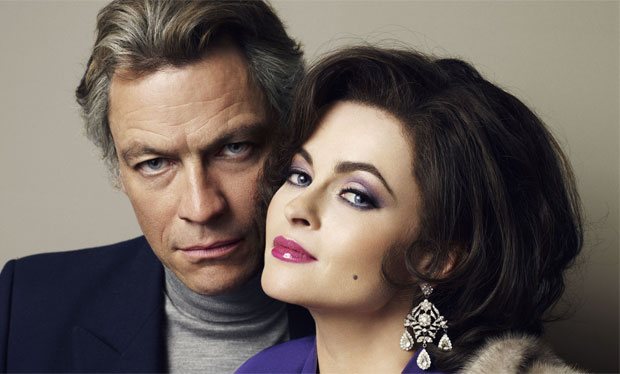
Directed by: Richard Laxton; Starring: Helena Bonham Carter, Dominic West, Lenora Crichlow and Michael Jibson; Written by: William Ivory; UK; 82 minutes; Colour
.
Perhaps (or perhaps not) marking this year’s 50th anniversary of the notoriously ill-fated ‘sword and sandal’ epic Cleopatra (1963) and definitely marking The Best Channel On British Television™’s last home-made drama for some time (thanks, BBC cut-backs), Burton And Taylor, you might say, had one or two things riding on it. Happily enough then, this one-off, feature-length, mostly imagined delve into the mostly dark final coming together of Richard Burton and Elizabeth Taylor is both a fitting commemoration of the half-century-old movie on whose set the pair met and a fitting finale for BBC4’s acclaimed strand of biopics of yesteryear’s legends (see here for my reviews of 2010’s Lennon Naked and 2011’s Hattie).
Dick and Liz, of course, were the ‘celebrity couple of the 20th Century’; the paramorous pair the public were absorbed by for nigh-on two decades (their two marriages, the flouting of their combined wealth thanks to ostentatious outfitting and injudicious jewelry purchases and their relationship seemingly mirrored in their on-screen collaborations, most obviously 1966’s Who’s Afraid Of Virginia Woolfe?). For those with memories that stretch back that far and younger ones like me who are turned on by the zeitgeist of lore, their oh-so public, über-passionate relationship still holds a hell of a cachet. And, while Burton And Taylor plays on that, for sure (hey, it was made because the subject’s the stuff of legend, right?), for the most part it wisely ignores the gaudy spectacle, excess and frippery that ‘The Dick and Liz Show’ was for so many who followed it.
Instead, by focusing on their last meaningful face-to-face interactions as they performed together in an ill-judged, ill-received 1983 Broadway revival of Noël Coward’s classic play Private Lives, it shows the pair as middle-aged has-beens, both in terms of their careers and their relationship – they’ve moved on from each other; or have they? It thus aims to hit the audience with a heady vodka-cocktail-esque concoction of pathos, melancholia, regret, (faux) maturity and nostalgia. And, like the protagonist of the remorse-filled, retrospective King Lear that Burton frets about tackling throughout and would surely have nailed (had he not been taken from us just months later in 1984), Richard Laxton’s drama nails its aspirations splendidly.
Helena Bonham Carter (apparently flying in the face of her mother’s assertion she was crazy to take on playing ‘a legend’ such as Taylor) claimed she was attracted to the project because it’s essentially a love story about two people; and that’s why Burton And Taylor works. It’s stripped-back and tight fare and, for the most part, a two-hander between her Liz and Dominic West’s Dick. The just-turned-50-years-old former wants to rekindle her love-affair (for a second time) with the latter; the latter doesn’t and merely needs the pay-day that the former’s proposed Broadway project will provide. And that’s pretty much it. But, pleasingly, it’s a slow-burner; fittingly so, given the ages and fading star-status of its jaded subjects. Neither the old-school spirit-fuelled Burton (all bass-booming ‘you all right, loves?’) and Gloria Swanson-like diva-ish Taylor fit the ’80s – an early scene of the former waiting for a ’70s disco tune he recognises (and, admittedly, by which time he’s pissed enough) to hit a disco’s dancefloor is a delight – but do they fit each other anymore? Can they kick-start their bandwagon or should they stay off the wagon for good?
And that’s another theme that’s at work – and cannily so. Addiction. Burton is trying (way too late, as we sadly all know it turned out) to kick the booze and, at his half-hearted instigation, Taylor is trying to stop drinking and popping the sleeping pills (on which the world was to learn later she’d been hooked for much of her adult life). But there’s another dependence for them both, of course – each other. ‘We’re addicts, Elizabeth’, Burton tells her at one point, adding ‘you can have too much love’. Electric chemistry, an intellectual and amused meeting of minds, desire, sex, in short, love can bind, sustain and define two souls… but it can also destroy them.
No question then, William Ivory (2010’s Made In Dagenham and 2012’s Bert & Dickie) deserves much credit for his smart, witty, insightful scripting, but so too does helmer Laxton for his conjuring up of pitch-perfect melancholic atmos and ensuring the two leads’ playing delivers just the right level of poignancy and pathos, without descending too far into sentimentality. Speaking of which, Bonham Carter (as so often) is outstanding as Taylor; playful, prickly, wily, wide-eyed and adoring. West (despite his valleys-meets-RSC interpretation of Burton’s brogue wandering in the final few scenes) is just as good; his Dick a battered, drink-battling tiger who’s looking for something other than the past to hold on to and give him direction. Ultimately, as Nazareth serenaded us in 1976 (the year the couple divorced for the second time), love hurts truly, madly, deeply – and perhaps even more so than most – for Richard Burton and Elizabeth Taylor.
.
For a short time, you can watch Burton And Taylor on the BBC’s iPlayer here (UK and Northern Ireland only)
.
.
Purrfectly pink: Clouseau, karate and cartoons ~ 50 things you always wanted to know about The Pink Panther

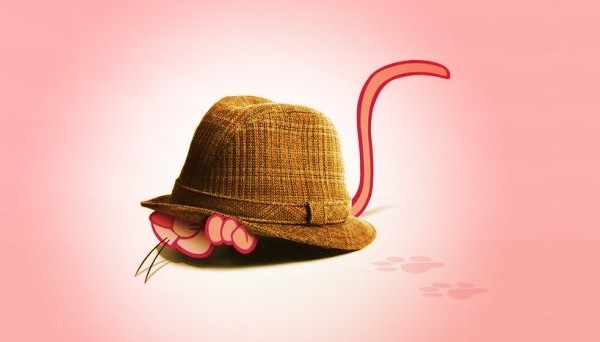
Cat in the hat: DePatie-Freleng’s Pink Panther under the hat of Peter Sellers’ Inspector Clouseau
And so it came to pass that in the final few weeks of 1963 a phenomenon – or, if you will, a pink-nomenon – was born. Not that anyone knew it at the time, of course. No, because Hollywood’s latest glamorous comedy crime caper was just that – but, oh, what The Pink Panther would go on to spawn: an utterly hilarious, unarguably iconic cinematic hero; one of the most enduring animated characters of all-time; an instantly recognisable Henry Mancini tune that conjures up lazy, jazzy cool from its very first few bars and, of course, the international film career of the one, the only Peter Sellers.
Yes, in the final few weeks of 1963, the Pink Panther phenomenon was verily born and, in marking its 50th anniversary, as this blog is at present, its latest post takes the cool cat by his whiskers and presents you with, yes, the 50 facts that (once read) you won’t believe you didn’t previously know about Sellers and co’s classic creation – because have you ever seen a panther that’s pink? Think! (Or, better, just read on…)
.
1. There were nine original Pink Panther films overseen by director, producer and writer Blake Edwards – The Pink Panther (1963), A Shot In The Dark (1964), The Return Of The Pink Panther (1975), The Pink Panther Strikes Again (1976), Revenge Of The Pink Panther (1978), Trail Of The Pink Panther (1982), Curse Of The Pink Panther (1983) and Son Of The Pink Panther (1993).
2. The series was revived – or rather rebooted – in the ’00s with another The Pink Panther (2006), which was followed by a sequel The Pink Panther 2 (2009).
3. British comedy genius Peter Sellers, of course, graced most of Edwards’ Pink Panther flicks as the irrepressibly clumsy and hilariously ridiculous Inspector Jacques Clouseau of the French Sûreté.
4. However, following Sellers’ death in 1980, his contributions to both Trail and Curse were made up of unused material shot for Strikes Again and Revenge.
5. Curse featured American comic actor Ted Wass as a Clouseau-like character and Oscar-winning-to-be Italian thesp Roberto Benigni essayed his son in, yes, Son. Steve Martin portrayed the iconic character in the ’00s efforts.
6. The original late-’63-released Pink Panther film set up the series’ trademark, nay somewhat Bond-esque, facets of beautiful female co-stars; luxurious, exotic locations; lustrous, laid back jazzy music from the legendary Henry Mancini and brilliant animated opening titles – in addition, of course, to the long sequences comprising Clouseau-driven slapstick humour.
7. However, the movie was actually intended to be a vehicle for smooth, urbane British Hollywood heavyweight David Niven.
8. Niven played the aristocratic playboy Sir Charles Lytton aka jewel thief extraordinaire The Phantom, whom steals the eponymous ‘Pink Panther’, a Darya-ye Noor-inspired giant pink diamond (whose discoloration resembles a panther) owned by Princess Dala (Claudia Cardinale) ruler of the fictitious Arabian kingdom of Lugash.
9. As you’d expect then, Niven was top of The Pink Panther‘s star wishlist, while Russian-cum-Brit Peter Ustinov was sought for Clouseau and Ava Gardner for his unfaithful, crime conspiring wife Simone. However, when Gardner backed out, Ustinov too dropped out, ensuring second choice Sellers was cast as Clouseau. Psycho (1960) star Janet Leigh also turned down the female lead, leading to Capucine winning the role.
10. Both the personality and appearance of Clouseau was suggested by the figure on a matchbox Sellers spied on his flight to Rome to begin filming The Pink Panther; he felt the oversized moustache and the unfaltering self-importance and dignity (possibly at all costs) of the figure was perfect for Clouseau.
.
.
11. Unquestionably, Clouseau proved to be the role that made Sellers a genuine Hollywood star. Several improvised moments saw his scenes in the film enlarged, overshadowing Niven’s role.
12. This was true to such an extent that when Niven appeared (as was usual for him) at the Oscars the following year, he requested Mancini’s iconic-for-all-time Pink Panther Theme not to be his ‘walk-on music’ – despite the film grossing almost $11m in the US alone, ensuring it was the States’ 13th biggest hit of ’64 – as he apparently stated it ‘wasn’t really his film’, implying it was Sellers’ instead.
13. Rushed into production immediately following The Pink Panther‘s release, A Shot In The Dark was a deliberate vehicle for Sellers’ Clouseau, whom was undoubtedly the sequel’s protagonist and Sellers its lead player – his first Hollywood starring role. It was released less than seven months after the original film.
14. Edwards had, in fact, been working on Shot‘s script while filming the previous movie. Although rightly classed in the Pink Panther series, it noticeably doesn’t feature either the Pink Panther diamond or The Phantom antagonist, being a cinematic adaptation of Harry Kurnitz’s stage farce (which itself was an English-language adaptation of Marcel Archard’s play L’Idiote).
15. The protagonist of the stage play, a bumbling lawyer, was replaced in the film by the character of Clouseau, its plot seeing the latter investigate several murders in the manor house of a French aristocrat while falling in love with the house maid (Elke Sommer), the chief suspect.
16. Producer-director Edwards wrote Shot‘s screenplay with William Peter Blatty, whom would later achieve fame as author of horror novel The Exorcist (1971) and for winning an Oscar for adapting his book into 1973’s huge hit movie of the same name.
17. Although the series’ second flick, Shot introduced further crucial Pink Panther elements; first, Clouseau’s superior officer Chief Inspector Dreyfus (Herbert Lom) and his hatred of the former and, owing to this, his descent into murderous insanity and, second, Clouseau’s Chinese manservant Cato (Burt Kwouk) and the pair’s destructive karate training undertaken at every given opportunity.
18. Grossing $12.4 million in the US alone, A Shot In The Dark not only made more money than its predecessor, but also became the eighth biggest hit ‘domestically’ of 1964; a year which saw stiff competition from the likes of My Fair Lady, Mary Poppins, Goldfinger, A Hard Day’s Night, A Fistful Of Dollars and Dr Strangelove Or: How I Learned To Stop Worrying And Love The Bomb, for which – rounding out an amazing year – Sellers was Oscar-nominated for his triple-lead role.
19. Following the release of The Pink Panther and A Shot In The Dark, the cartoon company that produced both films’ animated opening title sequences, DePatie-Freleng Enterprises, capitalised on their huge success by featuring the cartoon ‘Pink Panther’ character (whom appeared in the first movie’s titles, but not the second’s) in a series of shorts, a smart, often laid-back, other times mischievous, almost feline version of Warner Bros’ icon Bugs Bunny.
20. The first of these shorts, the brilliant The Pink Phink (in which The Pink Panther competes with his nemesis-to-be ‘The Little Man’ over painting a house), won the ’64 Academy Award for Best Animated Short.
.


Laughing all the way to the bank; music man to thank: Edwards and Sellers joke around on The Return Of The Pink Panther set (l); Mancini poses with the cartoon cat on an album cover (r)
21. Originally, the first 92 Pink Panther animated shorts were all released theatrically (in cinemas), stretching across 13 years from 1964 to ’77.
22. Other memorable shorts include 1966’s Pink, Plunk, Plink (in which Henry Mancini made a cameo; his Pink Panther Theme becoming as synonymous with the cartoons as the films) and 1969’s Pink-A-Rella (in which the female Pink Panther first appears and a girl attempts to win a date with rock musician ‘Pelvis Parsley’).
23. From September 1969 onwards, the Pink Panther shorts also featured on TV thanks to two of them at a time book-ending a short built around ‘The Inspector’ character (Clouseau) in The Pink Panther Show, broadcast on Saturday mornings on the NBC network.
24. ‘The Inspector’ shorts were actually all produced between ’65 and ’69 and theatrically released before they appeared on TV in The Pink Panther Show.
25. All of ‘The Inspector’s shorts included Mancini’s unforgettable theme that originally featured in A Shot In The Dark‘s title sequence, which itself technically marked the first time ‘The Inspector’ character appeared on-screen.
26. The Pink Panther Show actually went through several name changes in its run: 1970-71’s The Pink Panther Meets the Ant And The Aardvark (referencing ‘The Ant and The Aardvark’ characters whom from then on also featured in their own shorts in the show); The New Pink Panther Show (1971–74); The Pink Panther And Friends (1974–76); The Pink Panther Laugh And A Half Hour And A Half Show (1976–77) and Think Pink Panther (1977–78).
27. It was 1968 when a live-action Clouseau next returned to the screen, but this time played by American actor Alan Arkin. The movie Inspector Clouseau was intended to involve both Sellers and Edwards, but after falling out on the set of Shot (which would happen constantly throughout their further collaborations), neither had much interest in this flick.
28. Ironically, the director and star ended up filming comedy classic The Party (1968) together at the same time as Inspector Clouseau (an inevitable flop) went before cameras.
29. Just years later, though, in the early ’70s, Edwards came up with a 15-20-page outline for a new Pink Panther film.
30. Walter Mirisch (head of The Mirisch Corporation) who’d been an important backer of the original two films as well as The Party, was keen on the project, but the first two movies’ major financier, the United Artists studio, was not – for neither Edwards nor Sellers had enjoyed a hit in years.
.
.
31. Edwards therefore approached giant British film producer Lew Grade (whom had backed, among other projects, TV’s The Muppet Show). Grade took on the gamble, as did Sellers (whom, his star now seemingly in decline since his mid-’60s heyday, reneged on his claim back then he’d never return to Clouseau); The Return Of The Pink Panther, a pretty much UK-financed film then, was released in May 1975.
32. Return echoed the plot of The Pink Panther by seeing Clouseau investigating the theft from Lugash of the Pink Panther diamond once more. He immediately suspects The Phantom (this time played by the young, energetic Christopher Plummer), but he’s adamant in the face of his wife Lady Claudine Lytton (Catherine Schell) that he’s not the thief, thus himself searches for the real culprit in order to prevent himself being banged up competent law enforcers – or even Clouseau.
33. Of all the Pink Panther films, Return is perhaps most fondly recalled for the ‘corpsing’ (breaking into laughter and forcing a take to be re-shot) by Catherine Schell. Two such occasions were kept in the finished movie; when Clouseau gains entry into the Lytton household under the guise of a supposed telephone repairman and, most obviously and delightfully, when he makes contact with Lady Lytton as the ridiculous womaniser ‘Guy Gadbois’ and pronounces in Sellers’ demented French accent ‘Here’s looking at you, kid’ – a reference to Humphrey Bogart’s Rick Blaine in Casablanca (1942), of course.
34. Indeed, it was in Return that Clouseau’s ridiculous French accent began to be exploited to its maximum effect, with other characters – many of them French – being unable to understand his pronunciation of the words ‘room’ (‘rheum’), ‘law’ (‘lew’), ‘lord’ (‘leurd’) and, of course, ‘monkey’ (‘minkey’).
35. Return also saw the Richard Williams Studio create its animated opening title sequence (as did the series’ next two entries), owing to DePatie-Freleng being too busy on its own projects, including The Pink Panther Show. Nonetheless, Richard Williams and his cohorts surely produced the best of the series’ opening titles for Return, featuring, as it did, Pink Panther-featuring pastiches of figures of Hollywood legend, namely Charlie Chaplin, Groucho Marx, John Wayne, George Raft, Carmen Miranda, Frankenstein and Mickey Mouse (see video clip above).
36. Arguably Return‘s most glamorous location is the Italian Alpine resort Cortina d’Ampezzo (which also, admittedly, featured in The Pink Panther), trumping its appearance in the James Bond film series by six years – it would go on to feature in 1981’s For Your Eyes Only.
37. Owing to Return‘s enormous box-office success ($42 million in the US alone; making it the sixth biggest hit of ’75 domestically), the next film in the series was rushed before cameras – The Pink Panther Strikes Again was shot between December ’75 and September ’76.
38. In fact, Strikes Again‘s plot is the only one of the series to follow directly on from its predecessor; this is because both Return and Strikes Again‘s scripts were based on treatments (from that early ’70s outline) that Edwards had been working up not just for possible Pink Panther movies, but as an alternative a Pink Panther TV series.
39. Strikes Again‘s story takes the series into the realms of Bond-esque super fantasy. It begins with (now) Chief Inspector Clouseau visiting a asylum from which he is to pick up the apparently cured Dreyfus (who’s been there since the conclusion of Return). It quickly becomes obvious Dreyfus is just as nuts and intent on bumping off Clouseau as ever, though, and when he escapes the asylum himself, kidnaps the inventor of a weapon that could destroy the world and blackmails the world’s leaders to assassinate Clouseau or he’ll, yes, destroy the world; the ace assassins sent after Clouseau include the Soviet Olga Barisova (Lesley-Anne Down) and an unnamed Egyptian assailant (an uncredited Omar Sharif in a cameo).
40. This fifth entry in the series is probably most memorable for its slapstick scene in an English manor house’s gym, in which Clouseau unsuccessfully demonstrates his mastering of ‘zee parallel bars’ to the butler, played by Michael Robbins of On The Buses (1969-72) fame.
.

Car-toon characters: The Pink Panther and ‘The Inspector’ with the iconic Panthermobile
41. Robbins’ butler character actually appears as a female impersonator in a bar scene, whom Clouseau mistakes for a real woman. His singing voice was that of Edwards’ wife Julie Andrews no less, whom would later appear as a woman pretending to be a man who’s a female impersonator in her husband’s comedy Victor Victoria (1982).
42. Despite falling out truly spectacularly on the set of Strikes Again and the star now being in unquestionable bad health, Sellers and Edwards came together once more for a sixth and final collaboration in the shape of Revenge Of The Pink Panther (1978), which sees Clouseau, Cato and mobster moll Simone LeGree (Dyan Cannon) tangle with both the American mafia and the ‘French Connection’ criminal underground. Despite its daftness and nowadays very dated embrace of ]disco music, it actually out-grossed Strikes Again at the US box-office (Revenge making $49.6 million; Strikes Again $33.8 million).
43. In 1978, the animated Pink Panther show took on another new name, The All New Pink Panther Show, which it was known as for its final two seasons of original broadcast and for which it switched to the US ABC network. It’s fondly recalled for the much-loved ‘Panthermobile‘-featuring, live-action/ animated opening and closing title sequences (see video clip below).
44. Following Revenge, Sellers attempted to get another Pink Panther movie off the ground – but without Edwards’ involvement at all. Romance Of The Pink Panther would have seen Clouseau pursuing female cat burglar ‘The Frog’ (Pamela Stephenson) and the return of Dreyfus and Cato. However, film studio United Artists was neither happy with the first draft of Sellers’ script (co-written with Jim Moloney), nor the with idea of Sellers directing the movie as well; it attached first Sidney Poitier and then Clive Donner as helmers to the project. Eventually, the film fell through when Sellers passed away in July 1980.
45. Surprisingly, the Pink Panther film series didn’t die with Sellers. Building around previously unused footage shot for both Strikes Again and Revenge, Edwards crafted two further flicks – Trail Of The Pink Panther (1982) and Curse Of The Pink Panther (1983). New footage for them both was filmed at the same time.
46. The plot of Trail sees investigative reporter Marie Jouvet (Joanna Lumley) attempting to track down the now missing Clouseau and, in doing so, coming across Dreyfus, Cato and, reprising their roles from The Pink Panther, David Niven and Capucine (the latter now by now become Lady Lytton; maybe/ maybe not the same character as Catherine Schell’s in Return). Curse sees a Clouseau-like inept American police detective attempting to track down the again Pink Panther diamond, Dreyfus, Cato and Niven’s Charles Lytton are back again too (although owing to poor health, Niven was dubbed by voice artist Rich Little in both these two movies), while Joanna Lumley plays a supporting role again, but bizarrely a different one to her Trail character.
47. Both Trail and Curse were critically panned and box-office flops (making only $13 million in the US between them), but at least the finale of the latter rewards viewers with the sight of one Roger Moore – in a break in filming the Bond film Octopussy (1983) – appear as, thanks to plastic surgery, a facially altered Clouseau. Sir Rog appeared in the credits under the moniker ‘Turk Thrust II’; his friend Bryan Forbes, the recently deceased Brit director, had appeared in a cameo in Shot under the name ‘Turk Thrust’.
48. Inexplicably, Edwards gave the Pink Panther dice one more roll, when 10 years later he filmed Son Of The Pink Panther. Casting then unknown Italian comic actor Roberto Benigni (whom would become an international star after winning a Best Actor Oscar for his self-helmed Life Is Beautiful in ’98) as Clouseau’s illegitimate and equally bumbling son, it was universally reviled – both by critics and audiences; it made less than $3 million at the box-office. It did, though, feature yet again Lom as Dreyfus, Kwouk as Cato and, confusingly, Claudia Cardinelle not as Princess Dala as in the very first film, but as Maria Gambrelli, Elke Sommer’s amorous maid character in Shot.
49. Son proved to be both Edwards’ and composer Mancini’s final film; the former reputedly considered Kevin Kline, Rowan Atkinson, Gérard Depardieu and Tim Curry for the lead role ahead of Benigni. The movie is the only Pink Panther effort (including the woeful Steve Martin ‘updates’ of the ’00s) to hold the dubious distinction of being released straight to video/ DVD in the UK.
And finally…
50. In their time (and for some years afterwards), the Edwards/ Sellers Pink Panther movies, despite the mis-steps of their later instalments, were unquestionably the most successful comedy series filmed – pulling in a total box-office haul of around $165 million in the US alone (inflation unadjusted). That’s a fact, if ever there was one, that’d surely have Cato karate chopping, Dreyfus wink-wink-winking and Clouseau himself buffooning about in a nudist camp.
.
.
Voodoo kudos: 40 years of Live And Let Die

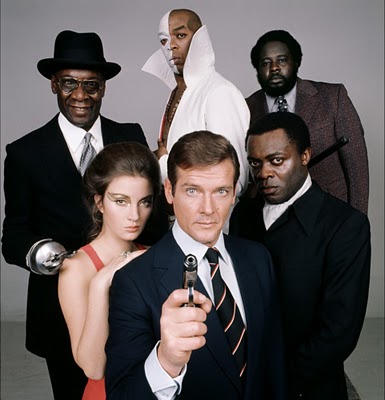
Harlem shufflers: Roger Moore with tarot-card-dependent dastardlies – l to r – Julius W Harris (Tee Hee), Geoffrey Holder (Baron Samedi), Yaphet Kotto (Dr Kananga) and Earl Jolly Brown (Whisper), plus Jane Seymour (Solitaire), of course, in a rare cast-group publicity shot
A few days ago on this blog it was Octopussy‘s (1983) turn, of course, but, on the occasion of its 40th birthday, what do you get the movie that really has everything (Sir Rog making his Bondian bow; speedboat chases on the bayou; London buses losing their roofs; claw-armed hoodlums; supernatural foes rising from their sepulchres; a classic rocking theme tune; and, yes, Jane Seymour)? What, indeed. But how about this – a musical, behind-the-scenes picture- and clip-toting, fact- and dialogue-quoting tribute of a blog post? Well, that sounds just the (San Moniquian bus) ticket to me.
In which case, here it is, peeps, George’s Journal‘s nod (while wearing the hat belonging to a short man of limited means who lost a fight with a chicken, er, yes) to the one, the only Live And Let Die – or ‘The ‘Die’, as this most unique, enduringly popular and eternally terrific of Eon efforts tends to be called around these parts. For, yes, it was 40 years ago this month when the funk-tastic eighth Bond flick hit British cinema screens and brought all things 007 crashing into the ’70s. Cue Macca and his Wings then…
.
CLICK on the images for full-size/ description
.

.


.


.


.
.
Did you know?
The owner of the Louisiana crocodile farm that was used as a location in the film was one Ross Kananga, whom with great disregard for his own safety, attempted take-after-take of Bond’s crocodile-jump stunt (see clip below) before the perfect effort – involving the crocs being tied down beneath the water – was captured. For his efforts, producers Albert R ‘Cubby’ Broccoli and Harry Saltzman named the villain after him (Dr Kananga)
.
.
.
.
Cab Driver: “You know where you’re going?”
Bond: “Uptown, I believe”
Cab Driver: “Uptown? You headed into Harlem, man!”
Bond: “Well, you just keep on the tail of that jukebox and there’s an extra twenty in it for you”
Cab Driver: “Hey, man, for twenty bucks, I’ll take you to a Ku Klux Klan cook-out!”
.
.


.


.


.


.
.
Did you know?
On first hearing it, producer Harry Saltzman assumed the final cut of Paul McCartney and Wings’ rocking title theme was a rough demo; unsurprisingly then, he hated it. His intuitions were all wrong though, as the tune went on to hit #2 in the US charts and earned both Oscar and Grammy nominations
.
.
.
.
Solitaire: “Is there any time before we go, for [lovers’] lesson number three?”
Bond: “Absolutely. There’s no sense in going off half-cocked”
.
.

.


.


.

.

.
.
Did you know?
Broccoli and Saltzman originally toyed with the idea of casting Diana Ross as tarot-card-reading totty Solitaire, before they reverted back to the character’s model in the book, an elegant white English beauty, in casting Jane Seymour in the role. Also, owing to M actor Bernard Lee suffering from ill-health, Reach For The Sky (1956) screen-star Kenneth More was being lined-up as a stand-in; since he made his debut in From Russia With Love (1963) this is the only Bond film in which Desmond Llewellyn (Q) didn’t appear until his death in early 2000
.
.
.
.
Further reading:
See George’s Journal’s further behind-the-scenes and other images from Live And Let Die here
Read George’s Journal’s review of Live And Let Die here
Read George’s Journal’s take on why Live And Let Die is one of the ultimate movies of the ’70s here
.

Lost in La-la-land? a mid-’70s Rod Stewart poses with then squeeze and movie star Britt Ekland (plus an obligatory football) on the diving board of his Los Angeles home’s swimming pool
The trouble with Rod Stewart, and has been for decades now, is that he comes with baggage. All right, all major pop/ rock artists come with baggage, but Rod’s is so large it’d fill the baggage hold of a Boeing 747 all on its own. For more than 30 years now, he has in too many critical circles and with too many music listeners been a byword for ill-judged on- and off-stage excess; seemingly a bloated parody of himself, whose dating of and marriages to a string of beautiful, leggy blondes and siring a brood of sprogs (a veritable transatlantic Stewart clan of his own) has overshadowed the talent he possesses. But, as Rod Stewart: Can’t Stop Me Now (the latest in the Alan Yentob-fronted imagine… strand of arts films for BBC1) highlights, and reminded me, that obfuscates the truth about old Rod.
Indeed, it’s very easy to dislike and dismiss Stewart. An almost Cliff Richard-like ‘Peter Pan of rock’ he’s played up to a laddish persona ever since he properly established it in the early ’70s as the Faces frontman, alongside several-year partner-in-crime guitarist Ronnie Wood, having alienated too many casual fans when he jet-set off to Los Angeles in the mid-’70s after the Faces’ demise and set up house with one of the most glamorous girls on the planet Britt Ekland, losing his cheeky, charming wag tag overnight as he became rock’s enfant terrible releasing MOR-tastic mediocre pop tat.
It wasn’t always that way, of course. Sensibly, Can’t Stop Me Now starts at the beginning, detailing at first Rod’s rise from the youngest sibling of a shopkeeper in post-war North London to a member of jazz/ blues scene pioneer Long John Baldry’s band. Before this early breakthrough, though, the green Rod dabbled with football (a mainstay past-time for life, much like his highly unfashionable love of model railways and much more fashionable love of appealing fillies), then being a Beatnik – he attended CND marches, but that seems to be where any active interest in politics ended – before he made the move to Mod-dom and was discovered by Baldry while busking on a Tube train; the latter almost mistaking him for a tramp.
Although, thanks to impressively copious archive Beeb footage, presumably gleaned from a mid-’60s docu of which he was the subject, Rod ploughed all his modest earnings of this period in to a post office savings account, because he mum told him to. And, like a good boy, he always did what his mum told him to – Yentob happily returns time and again to the theme of family’s perpetual importance to Rod, despite his subject’s departure for LA pretty early on in the story, where he still lives for nine months of the year today.
.
.
Yentob’s film’s unquestionably at its best when interesting itself in Stewart’s actual talent. It first does so when addressing his time with Baldry’s evolving jazz/ blues outfit, with whom he achieved small-time notoriety as a red-hot singer obsessed with late ’50s/ early ’60s black soul as he impressively belted out the blues for Baldry’s band (and cutting 1964’s non-charting Good Morning Little Schoolgirl). Here it focuses on the excitement first generated by Rod’s genuine gift – that voice. To listen to a young Rod is to be instantly reminded of contemporary late ’60s talent Joe Cocker; both their blues-applied vocals being full of power, passion and brilliance.
This is most obvious, of course, on the acclaimed Truth (1968), the debut LP of Stewart’s next band, the legendary Jeff Beck Group; Beck’s immediate post-Yardbirds project that saw Rod team up with mate Ronnie Wood for the first time. Truth is an awesome album, Beck’s and Wood’s guitar work at times innovative genius and Rod’s voice absolutely never better than on tracks such as You Shook Me, Morning Dew, Blues Deluxe and Shapes Of Things (listen to the latter in the clip above).
However, Stewart and Wood – the latter joining the former for a combo-interview with Yentob – reveal that the group, despite acknowledging they cut a swathe across the US on a Stateside tour (of which their opening gig was a daunting date at New York’s notorious Filmore East hippie stronghold) and pre-empted heavy metal by massively inspiring the soon-to-be-formed Led Zeppelin, was undermined by poor management. A foreshadow of the band’s demise surely being that they half-inched food from London greasy spoons as they were only occasionally paid.
Wood was the first to leave the band and Stewart soon followed his pal – to the entity that grew out of the embers of Mod leaders The Small Faces (following singer Steve Marriott’s tragic death from a house fire owing to smoking in bed), namely the Faces. By Rod’s own admission, this band was a bunch of yobs, suiting him down to the ground. But while their forever affectionate place in rock fans’ hearts is deserved for their off-stage antics mirroring those on-stage (audiences were invited both on to the stage during gigs and back to their hotel rooms afterwards), their legendary status is deserved for their taking the early ’70s rock scene by the scruff of the neck and, in an era of singer-songwriter and prog-rock navel-gazing, ensuring it rocked again in garish outfits and with marvellous tunes such as Cindy Incidentally (1973) and their anthem Stay With Me (1971) – the latter supposedly written by Wood (music) and Stewart (lyrics) backstage one night.
.
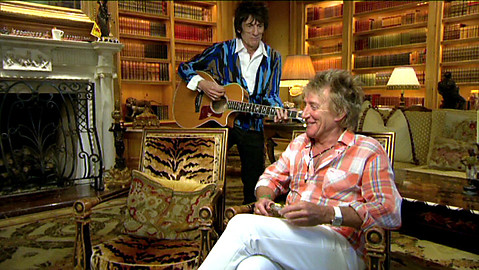
Forever Faces: Ronnie Wood strums and Stewart plays along before a Chez Rod interview
Despite what may have been said and written over the years, here (from the horse’s mouth himself) we learn it was Wood once again who jumped first, replacing Mick Taylor at short notice in The Rolling Stones and leading every Face (including Rod himself, reluctantly apparently; he’d have remained in the Faces ‘forever’) to conclude that Stewart’s trajectory was ultimately as a solo artist. After all, by ’75 he’d released three hugely successful albums, which had spawned all-time classics Maggie May (1971’s chart-topping sensation on both sides of the pond) and You Wear It Well and Handbags And Gladrags (both 1972).
From here, of course, it arguably went tits-up – at least quality-wise. Rod may now have been on his way to becoming the richest Celtic fan in the world, but his LA-based alienation from his Faces-fed adoring Brit fans and pairing off with Britt not only saw him take on the guise he’s stubbornly, nay self-satisfyingly, filled for 30-odd years, but also release some truly crap music. The two surely can’t be a coincidence. He may have learnt a great deal from the switched-on, experienced Ekland (as he thoughtfully admits in the film), but output such as the rightly derided Sailing (1975) and Tonight’s The Night (Gonna Be Alright) (1976) really shouldn’t be allowed to be excused by a cheeky grin or a cheap mug at the documentary’s camera.
While this period of his career could be said to be saved by the rare quality of the self-penned likes of The Killing Of Georgie (Part I and II) (1976) – revealed to be about the sad early death of a Faces-era friend – and I Don’t Wanna Talk About It (1976), it did lead for better or worse into Rod’s truly-don’t-give-a-sh*t late ’70s/ early ’80s period that spewed out the admittedly far from serious, but irritatingly half-arsed Hot Legs (1977) and Da Ya Think I’m Sexy (1978) (see video clip below).
The latter hit, as Yentob points out, proved to be the effort that broke the camel’s back, or to be more precise pushed the camp self-parody too far, its video’s over-featuring of Rod’s leather-trousered-posterior being unforgettably lampooned, as it was, by Kenny Everett on primetime TV. As Stewart fan ‘Whispering’ Bob Harris (oddly then) delightfully recalls, Stewart’s reputation would never be the same again.
.
.
Much of the rest of the film focuses on Rod’s post-millennial career – a resurgence sales-wise certainly, with his ‘American Songbook’ series of albums pulling in the moolah big-time, of course, even if they’ve received a (rightly) lukewarm response from the critics, while his latest album Time, his first self-penned record in decades and from one of whose songs the film takes its title, is his first chart-topper since the ’70s. Rod’s a very happy bunny nowadays, it seems; selling music, having kids again with current leggy blonde wife, the smart, beautiful photographer Penny Lancaster, and holding soccer matches for extended family and friends whenever he returns to his Essex pile with its full-sized football pitch.
One must surely ask then, why does Yentob not probe a little more into Rod’s darker or less revered moments? It’s interesting to learn his separation and eventual divorce from New Zealand model Rachel Hunter in the early ’00s after several years of marriage sent him into a genuine depression; out of discretion the host doesn’t go further on the subject. Fair enough. But then, this time out of courtesy to his interviewee, he doesn’t ask more about the mutually agreed ‘lost period’ of Stewart’s career – the ’80s.
Adrift with banal pop tunes and videos of models in bikinis around swimming pools, this was clearly his creative nadir (even though it did produce 1981’s marvellous Young Turks), but why? What was the deal? Was he simply focusing too much on marrying, dating and cheating on women? Or was anything else going on? We don’t find out. Instead, we learn everything recovered nicely by ’89 in the shape of the covering of Tom Waites’ Downtown Train – the hits and, thus, Rod was back for good.
Criticisms aside, though, this film works because it gives us two significant reasons why Rod Stewart still matters; why anyone should still give two hoots about him. First, he once had an amazing voice amazingly applied with Long John Baldry, The Jeff Beck Group and the Faces, playing a pivotal role then in rock music’s development at a critical time, and second, like it or not, after 50-ish years he’s still here, properly doing his thing. Da ya still think he’s sexy? Probably not , but like The Stones, he’s still hanging around and is thus hard to ignore – and surely shouldn’t be.
.
For a short time, you can watch imagine… Rod Stewart: Can’t Stop Me Now on the BBC iPlayer here (UK and Northern Ireland only)
.
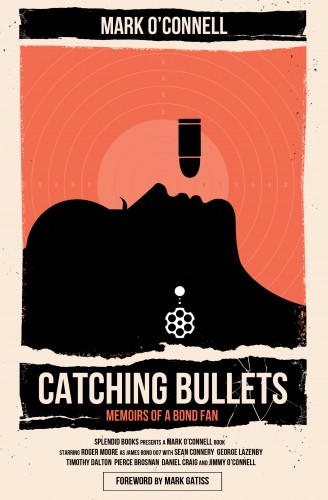
From Surrey with love ~ Catching Bullets: Memoirs Of A Bond Fan/ Mark O’Connell (Review)
.
Author: Mark O’Connell
Year: 2012
Publisher: Splendid Books
ISBN-10: 0956950574/ ISBN-13: 978-0956950574
.
Ah yes, those Bond fans of you out there (of which I know there’s one or two), will be only too aware that a certain 007 opus, 1983’s Octopussy, no less – the India-cum-circus-cum-Cold-War-cornucopia – has just celebrated it’s 30th anniversary. In which case, George’s Journal is marking the occasion by putting up yours truly’s review of this most excellent book, which this scribe first had published on foremost 007 website mi6-hq.com last year. Why post it on one’s own blog right now in the name of Octopussy, though? Well, that flick is undoubtedly the Bond movie that started it all for the book’s author Mark O’Connell, as if you read his terrific tome, you’d only too happily discover…
.
.
Many James Bond fans like to make claims about genuine connections they have with their cinematic idol – for instance, I got enormously excited around the age of 10 when rumour had it Roger Moore was moving into a house in the posh country lane down the road from me. As it goes, this claim of mine is rather rubbish, as Sir Rog never moved in. Mark O’Connell’s, however, is much better; in fact, it’s a king of such claims, as his grandfather Jimmy was for several decades chauffer to the man behind the cinematic Bond himself, Albert R ‘Cubby’ Broccoli.
It’s this happy coincidence for O’Connell the enormous Bond fan that’s the spur to his writing Catching Bullets: Memoirs of a Bond Fan (in addition to him being an enormous Bond fan, of course). Principally a memoir of his first encounters with each of the official 22 Bond films – each of them being a ‘bullet’ he originally ‘caught’ at different ages either at the cinema, on video or on TV – this book ends up being much more. It’s almost a pseudo-autobiography filtered through different aspects of his life, as an ‘80s Surrey schoolboy through to becoming a successful TV comedy writer, that coincided with and are related to those important Bond experiences (every Bond fan knows their interest/ obsession tends to affect almost every other aspect of their life at some point, whether they like it or not).
Extremely witty, nicely dry but also very warm when it comes to the world of Bond (especially that of Roger Moore and, in particular, 1985’s A View To A Kill and 1983’s Octopussy), this is a nostalgia-fest of a fess-up to 007 fandom. It’s chock-full of anecdotes of Bond-esque-themed children’s parties, visits to the local petrol station to get a Bond fix on VHS when that Bank Holiday’s just too far away to wait for telly’s next Moore or Connery offering, and the despair of not being able to purchase the latest TV Times magazine while on Cubs camp just to marvel at its coverage of ITV’s next Bond film.
It’s a tale then of a life as a Bond fan lived, with all its glorious highs and (semi-)disastrous lows, with which any and every 007 enthusiast will surely identify – from making a childhood pilgrimage to an abandoned Sussex mine just because it was a Bond location for five minutes to delicate negotiations with a partner to mount a framed Bond film poster in pride of place in the lounge; from naughtily getting in to see the ‘15’-rated Licence To Kill as a mere 13-year-old to ripping an adored, ruined-forever A View To A Kill t-shirt passed along by a kindly grandfather employed by Eon Productions themselves.
Indeed, the presence of grandfather Jimmy throughout makes for an intriguing link between O’Connell’s fanboy existence and the fantasy factory that was the Pinewood Studios-ensconced Cubby and his fellow filmmakers. Something that at times has afforded the lucky but very humble O’Connell more than just passed-on Bond memorabilia. But what exactly? Well, why not let Mark O’Connell tell you himself by catching Catching Bullets – the tale of being a Bond fan by a Bond fan that surely no Bond fan should be without.
.
You can purchase Catching Bullets: Memoirs Of A Bond Fan here
.
Further reading:
Read George’s Journal‘s review of Octopussy here
See George’s Journal‘s Octopussy image collection (including behind-the-scenes pictures) here
.
.
Playlist: Listen, my friends! ~ July 2013
.
In the words of Moby Grape… listen, my friends! Yes, it’s the (hopefully) monthly playlist presented by George’s Journal just for you good people.
There may be one or two classics to be found here dotted in among different tunes you’re unfamiliar with or have never heard before – or, of course, you may’ve heard them all before. All the same, why not sit back, listen away and enjoy…
.
CLICK on the song titles to hear them
.
Kathy Kirby ~ Secret Love (1963)
Strawberry Alarm Clock ~ Incense And Peppermints (1967)1
The Byrds ~ Jesus Is Just Alright (1970)2
Seals & Croft ~ Summer Breeze (1972)
Eumir Deodato ~ Also Sprach Zarathustra (1972)3
Lou Reed ~ Satellite Of Love (1972)4
Alfred Bradley ~ Theme from Paddington (1975)5
The Bellamy Brothers ~ Let Your Love Flow (1976)
Clare Torry ~ Love Is Like A Butterfly (1978)6
Ed Welch ~ Quiz Wizzard – theme from Blockbusters (1983-93)
Glenn & Chris (aka Glenn Hoddle and Chris Waddle) ~ Diamond Lights (1987)7
Go West ~ The King Of Wishful Thinking (1990)8
Enya ~ Book Of Days (1992)9
.
1 A US #1 back in the day and featuring (along with two other songs from the album with which it shares its name) in the film Psych-Out (1968), it was also performed by the band themselves in the cult classic flick Beyond The Valley Of The Dolls (1970) and more recently featured in Austin Powers: International Man Of Mystery (1997)
2 As performed live at Manhattan’s legendary Fillmore East venue on September 23 1970
3 Legendary Brazilian jazz crossover artist Deodata’s take on Richard Strauss’s 1896 symphonic poem which is, of course, synonymous with Stanley Kubrick’s sci-fi epic 2001: A Space Odyssey (1968)
4 As memorably referenced by characters in the film Adventureland (2007); David Bowie, whom along with his regular ’70s collaborator Mick Ronson, produced the album Transformer on which this tune appeared, performed backing vocals
5 This is actually the first episode (featuring the intro theme) of Ivor Wood’s much loved stop-motion animated series adapted from Michael Bond’s Paddington Bear books and narrated by Michael Hordern
6 The opening and closing theme (originally a hit written and performed by Dolly Parton) from the classic middle-class existential angst-ridden BBC sitcom Butterflies (1978-83) starring Wendy Craig, Geoffrey Palmer and Nicholas Lyndhurst; a few years before she recorded this effort, Torry provided soaring (wordless) backing vocals on The Great Gig In The Sky, track five on Pink Floyd’s seminal album The Dark Side Of The Moon (1973)
7 The infamous Top Of The Pops performance by then England and Tottenham Hotspur midfield maestros Hoddle and Waddle of their highly improbable UK #12 charter
8 As featured on the soundtrack of the Julia Roberts-starmaking blockbuster romcom Pretty Woman (1990)
9 The song that plays over the end credits of the Tom Cruise/ Nicole Kidman-headlined Far And Away (1992), clips from which appear in this rather impressive video
.

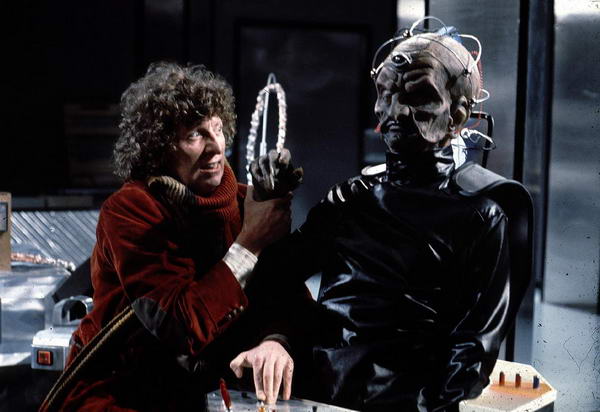
A switch in time: The Doctor desperately attempts to change history by destroying genius scientist Davros’s horrific creation the Daleks before they’ve been unleashed on the universe
There are few things more synonymous with Doctor Who than Daleks and in early spring ’75 the show gave its avid fans what would become its – and their – ultimate Dalek serial. Many reasons explain why Genesis Of The Daleks is one of the essential stories in the show’s thus far 50-year-run (they’re detailed below), but as far as Dalek stories go, it’s got to be, and thus is, the one to be selected here as the latest in this blog’s selection of posts that peer at, closely examine, poke at and find any weaknesses (if any) in single great Who serials of old. Davros would be so proud…
.
.

.
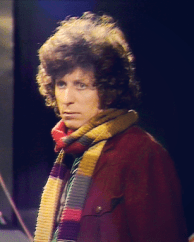
Doctor: Tom Baker (The Fourth Doctor)
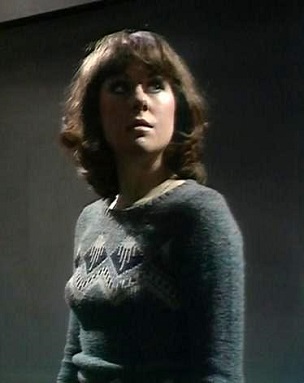
Companions: Elisabeth Sladen (Sarah Jane Smith); Ian Marter (Dr Harry Sullivan)
Villains: Michael Wisher (Davros); Peter Miles (Nyder); John Scott Martin, Cy Town and Keith Ashley (Daleks – voices: Roy Skelton and Michael Wisher)
Allies: Harriet Philpin (Bettan); Stephen Yardley (Sevrin); James Garbutt (Ronson); Dennis Chinnery (Gharman)
Writer: Terry Nation
Producer: Philip Hinchcliffe
Script Editor: Robert Holmes
Director: David Maloney
.

.
.
.

.
Season: 12 (fourth of five serials – six 25-minute-long episodes)
Total average viewers: 9.6 million
Original broadcast dates: March 8-April 12 1975 (weekly)
Previous serial: The Sontaran Experiment
Next serial: Revenge Of The Cybermen
.
.
.
.

.
Following a confrontation with a scouting Sontaran on a thousands-of-years-in-the-future Earth, The Doctor and his companions Sarah Jane Smith and Dr Harry Sullivan attempt to return to Nerva Beacon, the spacestation from whence they’ve come, but soon discover they’re mysteriously on an alien planet. In fact, before he vanishes from view, a senior Time Lord informs The Doctor that his people have effectively kidnapped the trio so they might put an end to the Daleks once and for all by preventing the giant pepper-pots’ creation in the first place. For, diverted by the Time Lords, The Doc, Sarah and Harry are actually on the war-ravaged, desolate planet Skaro – the home-world-to-be of the Daleks; presently the scene of a centuries-long conflict between its two humanoid races, the Kaleds and the Thals.
Swiftly, after just about preventing the setting-off of a land-mine, the three take refuge from the wasteland in a bunker, where they endure a gas attack that leaves Sarah unconscious and sees The Doc and Harry dragged by black-uniformed soldiers down into an underground hideout. Brought before a General Ravon, the duo learn they are in the subterranean military HQ of the Kaleds and they themselves are mistaken by Ravon (an easily excitable polemicist) for ‘Mutos’, semi-humans whom are descendants of Kaleds mutated by chemical weapons early on in the war and cast out by the Kaleds to preserve their racial purity. The Time Lord and the human attempt to escape, despite the confiscation of the Time Ring (the time-travelling device afforded The Doctor so he and his companions can leave Skaro and return to the TARDIS), but are quickly recaptured by Nyder, the Kaleds’ security commander (whom seems even more unyielding than Ravon); the latter taking them away for interrogation.
Meanwhile, on regaining consciousness, Sarah wanders through the wasteland and into ruins where she spies a grotesquely mutated-looking humanoid, whose bottom half is encased in a mobile-chair that resembles the unmistakable encasing of a Dalek – this is Davros, the genius but utterly fanatical Kaled scientist, inventor of the Daleks. Presently, one of his creations appears and, on Davros’s orders, fires (we assume for the first time) its death-ray at a marked target. Davros is satisfied; Sarah looks on in horror.
As Davros and his Dalek depart, Sarah is kidnapped by a group of further mutated-looking humans; these appear to be Mutos. They argue over whether to kill Sarah as she is a ‘Norm’ humanoid not a Muto, but one of their number named Sevrin reasons ‘a thing of beauty’ like her should be allowed to live; why does everything that’s different have to be rejected or killed? Sevrin’s patronage of Sarah leads them both to being captured by Thal soldiers and taken away to the domed Thal civilisation as slave labour. Here they are forced to load radioactive ammunition into a rocket to be launched at the Kaled domed HQ, in order to wipe out the latter race and bring an end to the war. Sarah and Sevrin try to escape by climbing the rocket’s silo and out through the dome’s roof, but are ultimately unsuccessful.
Time Lord: You, Doctor, are a special case. You enjoy the freedom we allow you. In return, occasionally, not continually, we ask you to do something for us
The Doctor: I won’t do it. Whatever it is, I refuse
Time Lord: Daleks
The Doctor: Daleks? Tell me more
Beneath the Kaled HQ, a scientist named Ronson is tasked with questioning The Doctor and Harry and, after tests, is surprised to discover they’re aliens. As such, when Davros enters the scientific division with a ‘Mark III travel machine’ (his euphemism at present for ‘Dalek’), the latter iinstantly attempts to kill the duo when given independent control, having identified they’re non-Kaleds and must be ‘exterminated’. Ronson prevents this by switching off the Dalek, though, and away from the others asks The Doctor how he knew the Dalek would be named as such before Davros monikered the thing exactly that just moments before, confiding in him he and others believes Davros’s experiments in mutation have gone too far – Davros’s ‘ultimate creature’, the Dalek, is surely immoral and evil.
With Ronson’s help, The Doc and Harry escape the bunker and make for the Kaled dome and, specifically, for its command to turn them against Davros and his plans. The Doctor informs them of how Daleks will terrorise the universe for centuries to come. The leadership assure him then that an investigation will take place into Davros’s activities and all his work will be ordered suspended until its end (this, thanks to Nyder’s spies, Davros learns about and decides to deal with Ronson for his treachery). Ravon adds that reports suggest a girl has led an attempted breakout of prisoners in the Thal dome, whence The Doc and Harry now head, knowing only too well the girl will be Sarah.
Once there, they spy Davros and Nyder meeting with a group that must be the Thal command; Davros informing the latter that unless they add a chemical formula to the ammunition being loading into the rocket, it will be incapable of penetrating the Kaled dome. When asked why on earth he would betray his own race, Davros claims he wishes only to end the conflict and play a role in reconstructing a peaceful Skaro. The Doc and Harry hurry to the rocket and, overpowering guards and dressing in their radiation suits, manage to free Sarah, Sevrin and the other slave labour, whom set off to warn the Kaleds of their destruction unless they stage an all-out offensive on the Thals.
Meanwhile, The Doctor alone attempts to prevent the rocket from launching, only to be almost electrocuted to death by a guard regaining consciousness. His efforts in vain, he watches along with the Thal command a video-link of the rocket striking the Kaled dome and wiping out all its race apart from those in the bunker below. Believing Sarah and Harry must have been killed too, he despondently accepts the Thal command’s assurance – via a young female soldier named Bettan – that as a sign of grace all the Thals’ prisoners are now free as peace has at last has befallen Skaro.
The Doctor: Do I have the right? Simply touch one wire against the other and that’s it. The Daleks cease to exist. Hundreds of millions of people, thousands of generations can live without fear, in peace, and never even know the word Dalek
Sarah Jane: Then why wait? If it was a disease or some sort of bacteria you were destroying, you wouldn’t hesitate
The Doctor: But if I kill, wipe out a whole intelligent lifeform, then I become like them. I’d be no better than the Daleks
Unexpectedly, but not to The Doctor’s surprise, Daleks suddenly enter the Thal dome (clearly on Davros’s orders – he obviously intended the Thals to destroy much of the Kaleds’ home to prevent his Dalek project being halted) and murder the Thal population. The Doc and Bettan manage to escape and, having made it back to the bunker and finding Sarah, Harry and Sevrin have survived the rocket strike, he suggests Bettan joins Sevrin to bring the survivors together in a concerted effort against Davros and the Daleks. He, Sarah and Harry are swiftly captured by Davros and Nyder, however, and the humans tortured until he spills the beans on all the Daleks’ failures to come, so Davros might address these weaknesses and ensure they’re invincible.
Afterwards, Harry and Sarah are taken away to the bunker’s cells and The Doctor ordered to remain so Davros might speak with him – scientist-to-scientist. The former pleads with the latter to halt his experiments, especially a change to the Daleks’ genetics he’s instigated that will remove their capacity for conscience; the latter replies he won’t and the latest ‘improvements’ he’s made will ensure his creations become the universe’s ‘dominant species’ and suppress all others, bringing peace everywhere. Trying a different tact, The Doc offers a scenario; if Davros had created a virus that could wipe out all other life, would he proceed to develop it? Considering this would effectively ‘elevate’ him to a god, Davros works himself up into a tumult and hysterically cries that, yes, he would. Realising now that Davros is insane, The Doc takes his opportunity and catches hold of the former’s one free hand and demands him order his acolytes to destroy the Daleks or he’ll flick a switch on his travel-chair and stop his life-support systems. Davros does as demanded, but reverses his order as Nyder appears, sneaks up on The Doctor and knocks him out.
Taken to the cells, The Doctor recovers and there meets Sarah and Harry, as well as a chief scientist named Gharman whom, among others, has turned against Davros. Escaping, Gharman and his supporters go off to organise Kaled resistance against the mad genius, as The Doc and the two humans set out to recover the Time Ring and the audio tapes containing his recorded revelations about the Daleks’ future failures. Gharman builds support and confronts Davros; the latter curiously concedes he will cease his work as long as a meeting is held so he can make his case and then the Kaled elite can vote on the issue. Believing Davros will inevitably lose such a vote, Gharman agrees. Recovering the tapes and the Time Ring, the Doc, Sarah and Harry also discover explosives and set out to prime them so the Dalek experiments will be destroyed once and for all, yet The Doctor struggles with the morality of what he’s about to do (see above quote) and ultimately can’t bring himself to wipe out an entire species.
As the meeting is in progress, the encased Daleks, which have completed the killing of the Thals, return from the Thal dome and enter the science division of the Kaled bunker and kill Gharman and his associates – clearly Davros had only called for the meeting and vote as a stalling tactic to give his creations the time to return to the bunker. Bettan, Sevrin and the other rebels also reach the bunker and set up their own explosives to seal it off forever with Davros and the Daleks inside. The TARDIS trio escape before the bombs go off and watch on a video monitor as, to Davros’s great surprise, the chief Dalek itself re-starts the bunker’s assembly line. The Dalek proclaims they are programmed not to recognise any other species as superior to themselves, so any being attempting to control them must be killed – thus it exterminates both the remaining Kaled leaders and, as it claims not to recognise the word ‘pity’ that its creator calls for, seemingly exterminates Davros himself. Outside, The Doctor shrugs that they’ve only managed to slow down the Daleks’ development and reign of terror, before he wishes Bettan and the survivors luck and he, Sarah and Harry activate the Time Ring to return to Nerva Beacon. Yet, finally, he brightens and exclaims that at least out of such evil he knows some good must come…
.
.

.
Once watched, it’s pretty obvious why Genesis is one of the most significant and well regarded serials of Who – it both crucially and brilliantly gives back-story to The Doctor’s ultimate foes and weaves the hero himself into that back-story, ensuring it’s not just an essential serial, but also one of the show’s best.
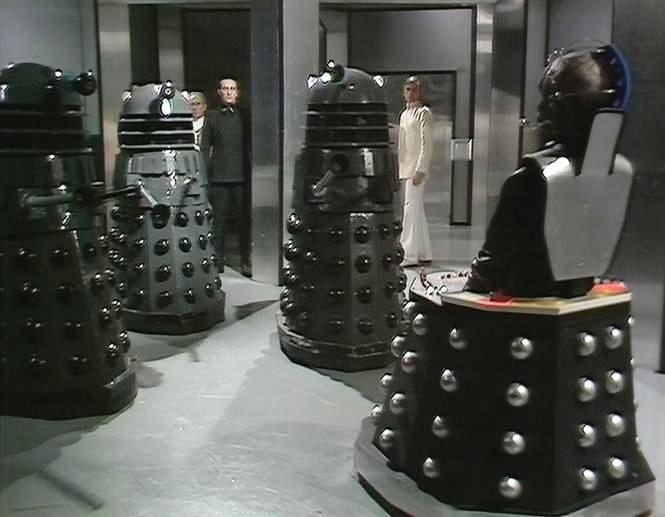
However, owing to it all being about the creation of the Daleks, the roundel-coated trundlers actually feature less than in many other ‘Dalek stories’, the chief baddie this time out being their creator Davros. And what a creation he himself is. A mutilated, semi-paralysed, Dalek-esque-voiced being of fantastic intellect but fanatical evil, Michael Wisher’s villain is unquestionably one of the all-time great Doctor Who villains. Proof of this beyond his definitive Genesis appearance being his cropping up again in 1979’s Destiny Of The Daleks (David Gooderson), 1984’s Resurrection Of The Daleks, 1985’s Revelation Of The Daleks and 1988’s Remembrance Of The Daleks (Terry Molloy), as well as 2008’s The Stolen Earth/ Journey’s End (Julian Bleach).
And yet, although Davros is Genesis‘s main menace, the race to which he belongs (and ultimately is responsible for wiping out/ ‘upgrading’ to Daleks – delete as appropriate) are also undeniably villainous. Now, the idea of presenting fascism in science-fiction was nothing new by the time of the mid-’70s (George Orwell’s 1948-published 1984, anyone?), but far-right totalitarianism, nay Nazism, had surely never quite been translated to the screen as patently as it is in Genesis. It’s all there – the dogma, the fanaticism, the salutes, the black uniforms, the jackboots, the dynamic logo and, yes, the preoccupation with racial purity.
Indeed, it’s easy perhaps to throw fascism into a fantasy drama as a villainous presence that will engage the audience because they’ll understand what it’s all about, but thanks to the intelligence of serial writer Terry Nation’s script and the quality of the production (much credit thus must go to director David Maloney), the fascism here allows for questions of morality to come up; not just whether one race (the Kaleds) becoming utterly ruthless to defeat another in the name of peace is right, but also whether that other race (the Thals) obliterating the first out of sheer desperation can be justified either. There’s a complexity at work here; Genesis certainly doesn’t present the Thals as blameless victims – at times they’re just as ruthless as the Kaleds, at times it’s hard to tell them apart. Who are the good guys? The Doctor himself, of course, struggles with that question when he has the chance to wipe out the Daleks for good – and is hugely relieved when events ensure he doesn’t have to make that decision.
With its unremittingly bleak tone, stark, grey production design and locations, clutch of irredeemable and/ or flawed characters and positive ending with a caveat, Genesis is (at least, as Doctor Who goes) far from always an easy watch; it could be argued, sometimes it’s not exactly that enjoyable. But it’s always absorbing, essential viewing for any enthusiast of Who – and unquestionably the show at the peak of its powers.
.
.
.
.

.
The genesis of Genesis goes back to before the Hinchcliffe/ Holmes axis gained the reins of the thoroughbred that is Who, but it had the makings of a stallion of a story itself as soon as it got out of the stables. Originally, the Daleks’ real-world creator Terry Nation was tasked with coming up with another Dalek serial for the show (to follow up his six previous pepper-pot-toting efforts) by previous producer Barry Letts and script editor Terrance Dicks, whom both stepped down at the end of the previous Jon Pertwee-bowing-out season; this new Dalek story inevitably then would be likely to feature in Tom Baker’s introductory season. To start off with, though, Letts and Dicks observed the script Nation came up with bore a striking resemblance to one or two (if not more) previous Dalek-featuring ones he’d written, so suggested a different storyline hook – how about building the serial around the Daleks’ genesis? Inspired, Nation got to work and, pretty much, came up with the serial’s script as filmed.
And yet, going before the cameras in the new Hinchcliffe/ Holmes era, as it did, Genesis surely ended up a darker beast than it would have been in the old Letts/ Dicks days. Hinchcliffe specifically called for more radical techniques in filming the Daleks than the show had experienced before, including low camera angles and use of close-ups, to bring back a genuine menace and fright-factor to what were (and surely forever will be) The Doctor’s greatest foes. He also encouraged lighting designer Duncan Brown to, well, turn down the studio lights to create a darker, more disturbing and arguably more claustrophobic tone (this was rather a revolutionary move for studio filming of Who, given the tight schedules every serial had and, thus, often compromises in filming artistry foisted on them).
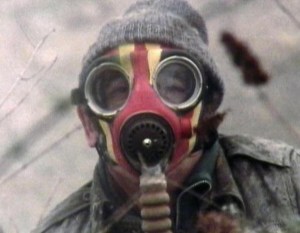
Moreover, to set up (and fit with) the darker tone than had been envisaged for the story, its opening scene of the Time Lord outlining The Doc’s mission – originally set in a serene garden – was rewritten by David Maloney and deliberately drew on the work of legendary Swedish filmmaker Ingmar Bergman (most likely 1955’s The Seventh Seal; the mists over a wasteland and the Time Lord’s outfit’s resemblance to Death’s in said film are uncanny). Yet Nation and, less surprisingly, tub-thumping ‘TV standards’ campaigner (and long-time loather of Doctor Who) Mary Whitehouse both claimed this scene’s violence – gas mask-sporting Thals and Kaleds being ‘mowed down’ by machine guns – were too heavy for Saturday teatime viewing. Ah well.
As to those in front of the camera, Davros actor Michael Wisher (whom had appeared in the show several times before, often contributing Dalek voices, as he also did in Genesis) had an unusual approach to thesping during rehearsals. Reasoning that when he was wearing Davros’s mask on set his performance would be constricted unless he prepared effectively (i.e. he wouldn’t be able to act with his face or eyes at all; pretty much only with his voice and his right hand), he took to rehearsing sat in a wheelchair with a brown paper bag over his head. As he was a chain-smoker, tobacco smoke would often billow out of the top of the bag, amusing his fellow actors immensely, but unbeknownst to him, of course, as he couldn’t see their reactions.
Elsewhere, Guy Siner (Ravon), and Hilary Minster, whom played a Thal soldier, would go on to achieve fame as Lieutenant Gruber and Major-General von Klinkerhoffen respectively in the much-loved WWII-set sitcom ‘Allo ‘Allo (1982-92), while Harriet Philpin (Bettan) achieved similar, if uncredited, immortality as the wife of the ‘Secret Lemonade Drinker’ in the unforgettable R. White’s Lemonade commercial (1973) – the lemonade drinker himself, incidentally, was played by Ross McManus, father of one Elvis Costello.
Finally, given its excellence and popularity, Genesis holds the record for the most repeated serial of Who on the Beeb’s analogue service, having enjoyed re-runs in ’75, ’82, ’93 and 2000. A perennial top-10-hitter in polls for the show’s best ever stories, it topped the lot in a prestigious one held by Doctor Who Magazine in 1998 and is apparently Tenth Doc (and Who fan extraordinaire) David Tennant’s favourite of the ‘classic series’. Seems The Doctor was right, some good did come out of Davros’s evil efforts, after all..
.
Further reading:
.
.
.
Next time: Pyramids Of Mars (Season 13/ 1975)
.
Previous close-ups/ reviews:
The Ark In Space (Season 12/ 1975/ Doctor: Tom Baker)
The Dæmons (Season 8/ 1971/ Doctor: Jon Pertwee)
Inferno (Season 7/ 1970/ Doctor: Jon Pertwee)
The War Games (Season 6/ 1969/ Doctor: Patrick Troughton)
An Unearthly Child (Season 1/ 1963/ Doctor: William Hartnell)
.
‘Ich bin ein Berliner’: 50 years on from that JFK speech

It’s only words? Glamorous US President John F Kennedy took a hard-line on the Soviet Union and its building the Berlin Wall, but with outstanding eloquence, in his unforgettable speech
All right, peeps, here’s a scenario for you. Imagine a beautiful, bustling village, famous and popular for miles around. Now imagine two factions of that village falling out with each other and, under the auspices of two separate councils, that spat leading to the village splitting in two. And now imagine that split intensifying to such a degree that a concrete wall is erected by one half of the village so its people won’t – because they won’t be able to – move freely into the other half; splitting up friends and families in the process. And, finally, imagine the situation getting so out of control that those who try to go over the wall are shot on sight by the village’s half that built it. Now, meine freunde, expand that little scenario to an entire city; indeed a fascinating, brilliant, major capital city of around 3.5 million people. For this was exactly the reality faced by Berlin for 28 long years from when the infamous Berlin Wall was erected on August 13 1961 until it finally started to ‘fall’ on November 9 1989.
The Berlin Wall is undoubtedly one of the most obvious and potent icons of the Cold War – after all, it was effectively a physical manifestation of that espionage- and nuclear arms race-fueled four-and-a-bit-decades of tension between the Soviet Union and the West (led by the United States). Built by the USSR-overseen East German authorities to prevent the mass exodus that was threatening to deplete not just East Berlin’s but East Germany’s population (especially intelligent, well educated young people; i.e. the ‘Brain Drain’), it ensured that the West and East halves of the city were properly cut off. Berlin – already loosely split into four sectors controlled by the four major allied victors of World War Two, the US, UK, France (West) and the USSR (East), following the surrender of the Nazis at the war’s end in 1945 – was itself already cut off from the rest of the ‘Western allies-controlled’ West Germany, lying as it did in the heart of the ‘USSR-controlled’ East Germany.
This then is the background to the one of the greatest speeches of the 20th Century, nay, of all time, delivered 50 years ago today by US President of the day, the King Arthur of the Camelot that was his White House, John F Kennedy. Kennedy was a Democrat; a genuine progressive, reforming Democrat at that, at least when it came to domestic policy. And when it came to foreign policy, he had his detractors (mostly on the Right), whom believed after the ‘reds under the beds’ era of the Eisenhower/ McCarthyism ’50s, he was soft on Communism; soft on the Soviet Union. Just two weeks before this speech he’d suggested that ‘improving relations with the Soviet Union’ ought to be made, so the strong, steadfast, if you will, intellectually combative content and tone of the speech he made on June 26 1963 was something of a surprise. He was manning-up when it came to the Soviets and the Communism; he was making a stand and showing where he stood – where the vast majority of Americans and peeps across the Western world stood – when it came to the ever worsening Cold War.
.

The right to (hear) free speech: Kennedy delivering the speech as shot from behind, an angle that ably displays the thousands of West Berliners whom turned out to hear his words
What made the speech so significant is arguably two-fold. First, its quality. Unequivocably, but utterly eloquently, it outlined how as unofficial ‘leader of the free world’ he and his administration were committed not just to opposing the values and actions of the Communist regime of the USSR, but also were committed to supporting, defending and standing by the isolated West Berliners (owing to its unique situation, Berlin was obviously the ‘frontline’ of the Cold War). Its theme of the inexorable desire for and necessity to defend liberty can simply never be dismissed and, not least because of the quality of the speech, is utterly laudable; it’s not twee, because history teaches us of freedom’s fragility. Its phraseology, though, is what makes it unforgettable and brilliant. The utterance of ‘Ich bin ein Berliner‘ coming from the mouth of the US President is an impossible-to-misunderstand exclamation of solidarity (not to be misconceived as Kennedy claiming he’s a jelly doughnut; although admittedly that’s always been amusing) and it’s four-times repeated suggestion that those who doubt the threat of Communism ought to ‘come to Berlin’ (Lass’ sic nach Berlin kommen) to observe the stark reality are the stuff of genius speech-writing from the great Ted Sorenson, author (in part) of the thing and chief scribe of most of Kennedy’s speeches.
The second point of the speech that made it so significant was where it was delivered – West Berlin itself. In fact, in front of the Rathaus Schöneberg, the de facto city hall of West Berlin. Making such utterances in the speech as he did and delivering them in the heart of the city itself had a profound effect, don’t doubt it; not least because a staggering 45,000 citizens turned out to witness the visit of this megastar of world politics and hear what he might say in support of them and their city.
As you may well know, to mark the speech’s 50th anniversary, present US President Barack Obama travelled to Berlin and made another well attended speech (if one with quite a different theme) and the historians among you will be only too aware then American Prez Ronald Reagan almost repeated Kennedy’s feat when he delivered a powerful message in a speech outside the Brandenburg Gate on June 12 1987 (‘Mr Gorbachev, tear down this wall‘). Yet, for its geo-political, historical context, its brilliance and the fact it got there first, Kennedy’s speech of June 26 1953 is the daddy. Curiously, his National Security Adviser George McBundy actually felt he’d gone too far, been too provocative, so the speech’s language was slightly toned down when Kennedy repeated it at Berlin’s Free University the same day. Certainly few others in the Western world felt that way – and surely very few around the world today do either.
Here it is then, peeps, the speech’s transcript, followed by a video clip of it in all its glory…
.
I am proud to come to this city as the guest of your distinguished Mayor, who has symbolised throughout the world the fighting spirit of West Berlin. And I am proud to visit the Federal Republic with your distinguished Chancellor who for so many years has committed Germany to democracy and freedom and progress, and to come here in the company of my fellow American, General Clay, who has been in this city during its great moments of crisis and will come again if ever needed.
Two thousand years ago the proudest boast was ‘civis Romanus sum’. Today, in the world of freedom, the proudest boast is ‘Ich bin ein Berliner’.
I appreciate my interpreter translating my German!
There are many people in the world who really don’t understand – or say they don’t – want is the great issue between the free world and the Communist world. Let them come to Berlin. There are some who say that communism is the wave of the future. Let them come to Berlin. And there are some who say in Europe and elsewhere we can work with the Communists. Let them come to Berlin. And there are even a few who say that it is true that communism is an evil system, but it permits us to make economic progress. Lass’ sic nach Berlin kommen. Let them come to Berlin.
Freedom has many difficulties and democracy is not perfect, but we have never had to put a wall up to keep our people in, to prevent them from leaving us. I want to say, on behalf of my countrymen, who live many miles away on the other side of the Atlantic, who are far distant from you, that they take the greatest pride that they have been able to share with you, even from a distance, the story of the last 18 years. I know of no town, no city, that has been besieged for 18 years that still lives with the vitality and the force, and the hope and the determination of the city of West Berlin. While the wall is the most obvious and vivid demonstration of the failures of the Communist system, for all the world to see, we take no satisfaction in it, for it is, as your Mayor has said, an offense not only against history but an offence against humanity, separating families, dividing husbands and wives and brothers and sisters, and dividing a people who wish to be joined together.
What is true of this city is true of Germany—real, lasting peace in Europe can never be assured as long as one German out of four is denied the elementary right of free men, and that is to make a free choice. In 18 years of peace and good faith, this generation of Germans has earned the right to be free, including the right to unite their families and their nation in lasting peace, with good will to all people. You live in a defended island of freedom, but your life is part of the main. So let me ask you, as I close, to lift your eyes beyond the dangers of today, to the hopes of tomorrow, beyond the freedom merely of this city of Berlin, or your country of Germany, to the advance of freedom everywhere, beyond the wall to the day of peace with justice, beyond yourselves and ourselves to all mankind.
Freedom is indivisible, and when one man is enslaved, all are not free. When all are free, then we can look forward to that day when this city will be joined as one and this country and this great continent of Europe in a peaceful and hopeful globe. When that day finally comes, as it will, the people of West Berlin can take sober satisfaction in the fact that they were in the front lines for almost two decades.
All free men, wherever they may live, are citizens of Berlin, and, therefore, as a free man, I take pride in the words ‘Ich bin ein Berliner!’.
.
.
.