Playlist: Listen, my friends! ~ June 2015



.
In the words of Moby Grape… listen, my friends! Yes, it’s the (hopefully) monthly playlist presented by George’s Journal just for you good people.
There may be one or two classics to be found here dotted in among different tunes you’re unfamiliar with or have never heard before – or, of course, you may’ve heard them all before. All the same, why not sit back, listen away and enjoy…
.
CLICK on the song titles to hear them
.
The Brian Fahey Orchestra ~ At The Sign Of The Swingin’ Cymbal (1960)¹
The Shangri-Las ~ Out In The Streets (1965)
Crispian St. Peters ~ The Pied Piper (1966)
Vanilla Fudge ~ You Keep Me Hangin’ On (1968)
Frankie Howerd and June Whitfield ~ Up Je T’Aime (1969)²
Gianni Morandi ~ Parla Più Piano (1972)³
Blue Swede ~ A Song For You (1973)
Frank Zappa ~ Don’t Eat The Yellow Snow (1974)
Nina Simone ~ Funkier Than A Mosquito’s Tweeter (1974)
Tom Scott ~ Gotcha! (Theme from Starsky & Hutch) (1976)
A Flock Of Seagulls ~ Space Age Love Song (1982)
Cast of Bread ~ Theme from Bread (1986)
David Foster ~ Water Fountain (1987)4
.
¹ The original instrumental that owes its iconoclasm to becoming the unmistakeable theme of disc jockey Alan ‘Fluff’ Freeman’s Pick Of The Pops radio show, which has run on various stations since 1955 (Freeman taking the reins from 1961 onwards)
² The British comic pair’s delicious spoof of Serge Gainsbourg and Jane Birkin’s classic naughty pop hit Je T’Aime… Moi Non Plus, which was released earlier the same year
³ An Italian-language version of the hit song Speak Softly, Love, which – written by the film’s composer Nino Rota (and whose melody fittingly bears resemblance to those from at least two operas) – appeared in the Mafia movie epic The Godfather (1972)
4 From the soundtrack of the über-’80s romcom classic The Secret Of My Success (1987)
.

.


.
.
Sid James:
the bloke with the most?
.
One of my favourite ever tweets is the work of a chap named @davelee1968, whom back in March 2012 shared with the world that he was “Watching Sid James riding a GoKart on a pier being chased by an angry mob and women in bikinis. It’s what makes Britain Great.” For anyone particularly au fait with the Carry On series, this Tweeter was quite clearly (if a little ironically) referring to the final scene in Carry On Girls (1973), in which Sid’s beauty pageant in the fictitious seaside resort of Fircombe-on-Sea has gone disastrously, er, tits up, thus he’s scarpering from the scene – as well as chasing after a similarly escaping Barbara Windsor (of course).
To be honest, however familiar you are with the Carry Ons, it’s an enduring and fitting image. It’s perfectly representative of the Sid James of the public consciousness – the middle-aged; sex-driven; Babs Windsor-pursuing; unavoidably rather ugly; absurdly, nay inexplicably lucky; cheeky Cockney bloke. But is it actually fitting? Who was the real Sid James? In this first of four articles to look at the quartet of fantastic, fascinating Carry On cast greats (which will see each of them enter this blog’s ‘Legends’ lounge) we look at the series’ leading man – and answer the question: was Sid James the bloke with the most? The bloke who got the most? The bloke who, like his persona, enjoyed it all most?
Before we start, it may be only fair to warn you that, if you have always assumed the Sid of the Carry Ons was more or less the Sid of real life, you’ll be in for a few surprises. Indeed, let’s get surely the biggest surprise out of the way first. Sid James wasn’t a Londoner. He wasn’t even an Englishman. Or a Brit. In fact, he didn’t set foot on UK soil until he was 33-years-old. Yes, really.
He was born in May 1913 under the name Soloman Joel Cohen to (yes, you got it) Jewish parents and was mostly brought up by relatives in the deprived Hillbrow neighbourhood of South Africa’s Johannesburg, while his parents toured a vaudeville act. Probably unsurprisingly, given the rough nature of his early surroundings, he liked to talk in later life of having tried out different masculine professions, such as a boxer and a diamond cutter, but possibly suggesting he developed an eye for the ladies from the very beginning, he also tried his hand as a dance tutor at a studio he ran himself, but was most successful at training and then working as a hairdresser at a salon his mother set up on her return to town.
Indeed, it was at a salon in the town of Kroonstad that he met his first wife, Berthe Sadie ‘Toots’ Delmont; they married in 1936, had a daughter (Elizabeth) the following year and Toots’ father bought a hairdresser’s salon for his son-in-law. Yet, Sollie (who, partly thanks to a teacher clearing up a confusion over nicknames involving his elder brother Maurice, had decided thereafter he’d be called ‘Sidney James’) wanted a different future. Ironically, one not unlike that of his parents, whose absence had caused resentment in the young Sid. So, not only did he turn his back on hairdressing, he also turned his back on his wife; his first marriage lasted just four years. It’s been suggested that, even then, the reason for this relationship’s breakdown was Sid’s womanising (he sired two children with other women), but one wonders whether there was more to it than that. Having given up the salon for the theatre – he joined the Johannesburg Repertory Players, which led to radio acting gigs with the South African Broadcasting Corporation and a stage lead in Of Mice And Men – it’s clear that not just Sid’s amorous desires, but his dreams and ambitions lay elsewhere.
All the same, Sid’s abandonment of his young bride and child was the last straw for her wealthy father (whom apparently ‘put a price’ on our man’s head), so he decided to cut his losses and join the army. And, coinciding as this did with the outbreak of World War Two, it actually aided his performing career – as it did for later British comic contemporaries such as The Goons, Tommy Cooper and fellow Carry On-ers Kenneth Williams and Kenneth Connor. For, after a stationing with the South African Tank Corps in Abysinnia, Sid was ordered (yes, really) to join the Entertainment Unit, made a corporal and proceeded to put on shows for his fellow troops. During this time, he was caught under heavy fire at the notorious Siege of Tobruk and was eventually promoted to the rank of staff sergeant. (Note: he would go on to portray many a working-class, sergeant-like, mid-level authority figure in years to come)
.

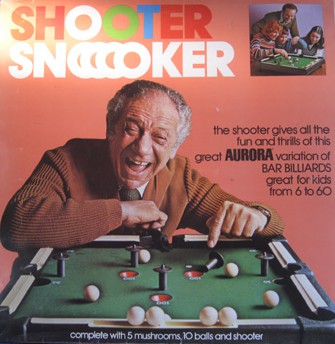
Fun and games: Sid speeds away from the scene of the crime in Carry On Girls (left); living up to his working class hero brand by lending his identity to a pub game flogged as a ’70s family toy (right)
Around this time he acquired himself a second wife, dancer Meg Sergei, and come the war’s end and his decommission, the couple’s showbiz ambitions saw them leave their homeland for the glamour of London. In fact, so the legend goes, it was on hearing that an acting acquaintance of theirs named Larry Skikne had landed himself a grant for the Royal Academy of Dramatic Arts (RADA) that they decided to relocate to the Smoke – Larry Skikne would eventually carve out more than a decent thesping career under a stage name that may (or may not) have been dreamt up by Sid… Laurence Harvey.
Sid and Meg arrived in the UK on Christmas Day 1946 and, amazingly enough, within days he’d landed himself not just an agent but a small role as a gangster in the crime flick Black Memory (1947). Indeed, by the end of the year he’d appeared in five films as well as in a radio drama; the following January he starred in his first play, Burlesque, which arrived at Her Majesty’s Theatre in the West End with an extra scene explicitly written to expand Sid’s role. The work was starting to flow and in the summer he made his debut on the relatively new medium that was television; days later he appeared on the box again as the lead in drama two-parter The Front Page.
By the time Sid featured in a major supporting role in the classic Ealing comedy hit The Lavender Hill Mob (1951), he’d already starred in 14 movies and was becoming a familiar face on TV and a recognisable voice on the radio. Specialising in playing tough guy-esque, Cockney-ish small-time crooks (and often in comedy), he was carving out a fine niche for himself; not bad for a Saffer who’d only been out of the army and in the country for five years. If only his private life could have gone so well. Despite having a daughter together in 1947 (named Reina, whom would go on to become an author and actress), Sid and Meg’s marriage had fallen apart and, this time, it appears his affairs can really only be blamed for the break-up. Not least because they seemed to have driven Meg to the bottle. The couple divorced and in 1952 he married 19-year-old actress Valerie Assan (whom used ‘Ashton’ as her stage-surname) and with whom he’d been characteristically, er, carrying on.
Work-wise, though, Sid’s life continued to go from strength to strength. So much so that the next stepping stone he took could be said to be the greatest of his entire his career, for it was the one that made him a household name. Ironically, it was also one he was far from comfortable with, at least initially. As has been noted, Sid had certainly done and thus was used to radio work, but he’d never done comedy on the radio – certainly not for a big-time project. And filling out a supporting berth in a BBC sitcom built around established comic star of the airwaves Tony Hancock was the big-time, all right.
Hancock’s Half Hour debuted in May 1954 and went on to run for six series, coming to an end in November 1961. One of the very first examples of a British sitcom, it offered listeners a 30-minute-long sketch, a willfully stripped-down step away from the variety-style sketch-and-song-filled comedy shows radio had previously delivered, such as Educating Archie (1950-58) – whose huge success had won Hancock his own show – and later, of course, Beyond Our Ken (1958-64) and Round The Horne (1965-68). Written by Ray Galton and Alan Simpson (whom would later achieve just as much success with TV’s Steptoe And Son), the show focused around the observations and diatribes of a misanthropic comedian (a down-on-his-luck version of the real Hancock), supported by several characters (some of whom were played by future Carry On legends Kenneth Williams and Hattie Jacques) and included one Sidney Balmoral James, a petty criminal type whom often succeeded in implicating Hancock’s anti-hero in schemes, and in so doing usually conned him.
A warped take on Sid’s roguish persona, this character’s popularity in the runaway success that was Hancock’s Half Hour saw his star soar. Not least because he was the only cast member to make the transition with Hancock from the radio show to the just as well received TV adaptation (1956-60). Indeed, the lack of much of a supporting cast in this version saw Hancock and Sid come to be seen as a double act in the public’s mind. According to Moira Lister, a co-star on the radio show: “from the start he [Hancock] was very neurotic and worried about everything. It was never a relaxed and happy show. Sid, on the other hand, was relaxed and easy going … Because Sid was un-neurotic, he was able to cope with Tony’s neurosis and was probably a very good balance for him, both in and out of the studio”.
.
“He never resorted to any tricks at all and he never upstaged anyone. He was a kid at heart. In Carry On Cowboy I’d find him behind the scenery twirling a six-gun and trying to practice a fast draw. And he always liked to gamble. He would run a sweepstake every day based on how many minutes of film we’d shoot”
~ Carry On director Gerald Thomas on Sid James
.
Nonetheless, it didn’t last – and maybe couldn’t. Hancock hadn’t earned his neurotic persona for nothing; like so many comedians before and since, he was a depressive, sadly fuelled by drink and, one has to suspect, his decision to cut Sid out of the TV show and go it alone for one final (albeit no less successful) series – renamed simply Hancock (1961) – had more than a little to do with the inner demons he constantly battled. Apparently he didn’t tell his colleague and pal of so many years himself; he left it to the BBC brass to do so. Still, Sid clearly put the experience and Hancock behind him by moving on with other projects – most of which boasted him as lead player.
In truth, he had actually been poached away from the Beeb in 1958 to headline ITV’s comedy series East End, West End, in which he played a Cockney ducker-and-diver. The series hadn’t been a great success and with no second series in the offing Sid had been free to continue on Half Hour. When he was dropped from that show, though, Aunty was determined its TV rival wouldn’t step in again, so had Galton and Simpson dream up a new sitcom for its star. Citizen James (1960-62) cast Sid as an inveterate gambler named, er, Sidney Balmoral James. By the writers’ own admission, James was indeed simply playing his Half Hour role in a different TV show. Yet, co-starring future co-Carry On-er Liz Fraser as his girlfriend, Sid enjoyed popular success with Citizen James; it ran for three series and from the second series on even saw his character become something of a people’s champion.
Burned as he had been with East End, West End, however, Sid had been far from sure his future lay with TV, so before Citizen James he’d tried something new, namely singing and dancing in his supporting turn in the Tommy Steele-headlined movie musical Tommy The Toreador (1959). Given the film appears to be all but forgotten now, it’s fair to say it wasn’t a stonking success, but it shows that Sid was willing to stretch himself and do something different. In fact, throughout the ’50s he’d combined radio and TV work with appearances on the big screen, having played supporting roles in another Ealing classic The Titfield Thunderbolt (1953), Hammer horror sequel Quatermass 2 (1955), classic thriller Hell Drivers (1957) and even the Burt Lancaster/ Tony Curtis Hollywood blockbuster Trapeze (1956).
However, the most notable film from this era in which Sid was cast – and this time in the lead – was the one that turned out to be arguably the most important of his career. Now a reliable, dependable, versatile screen lead, he was called on to replace radio comedy star Ted Ray, whom (owing to a dispute between rival film studios) wasn’t available to return for the latest movie in a line of comedy smash hits. The movie was Carry On Constable (1960) and Sid’s casting in it shifted him in a new irresistible direction – an upward curve towards utter iconoclasm. An audio interview recorded in 1972 (listen to it at the bottom of the page) reveals that Sid never expected to become a lead actor, let alone a film star, but once he appeared in Constable there was no way back.
Like the three Carry Ons that had preceded it, this police-pastiching flick was huge at the UK box-office and made the series’ producer Peter Rogers and director Gerald Thomas realise they now had on their hands a de facto lead for their talented and hugely popular troupe of comic thesps (Kenneth Williams, Charles Hawtrey, Hattie Jacques, Joan Sims and Kenneth Connor). Vying variously with Williams, Sid became arguably the series’ star attraction for the rest of its run. In total, he’d go on to appear in 19 of the silly, bawdy but often very funny Carry Ons; receiving top billing in every one. However, despite what anyone may say, he didn’t always play the same character. Make no mistake about it, over the course of the movies (and as befitting the needs of the series through the tumultuous social changes of the ’60s and ’70s), Sid’s Carry On persona certainly evolved. Well, if that’s the right word for it.
And it’s here that we collide with the Sid James legend or, to be more precise, the is-it-or-isn’t-it? obfuscation of the real Sid thanks to the big screen Sid occurs. In his early Carry Ons (Constable, Regardless, Cruising and, to some extent, Cabby), he’s the put-upon authority figure, pulling his hair out at the ineptitude of those he’s lumbered with overseeing. Come the burgeoning sexual revolution of the mid-’60s, though, and definitely from Carry On Cleo (1964) onwards, he’s the randy, canny, inexplicably irresistible bloke with the unmistakeable ‘yak-yak-yak’ laugh who’s always chasing skirt – and, thanks to being variously successful at it, something of a peculiar fantasy figure for working class middle-aged men up and down the land. So, ensconced in the ’60s and drifting into the ’70s as we now are, was there a genuine blurring between the real Sid and this Sid we love so much? Well, possibly.
.
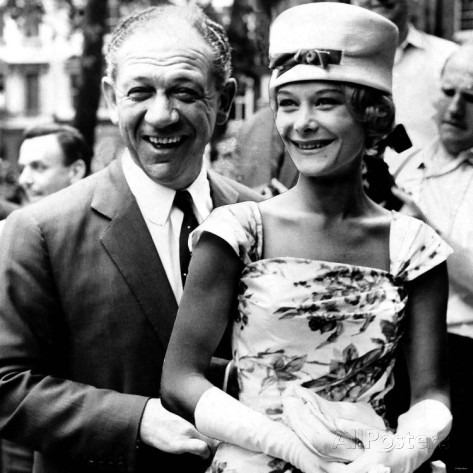

Trouble and strife: a happy (?) Sid and wife Valerie at Tommy Steele’s wedding in 1960 (left); detail from the 1973 Christmas TV Times cover – Sid was carrying on with Babs in real-life at the time too
The Sid of this era, having to earn a living for himself and his family (especially considering how badly the Carry Ons paid, even though it seems he was paid far better than most of the other regulars), was also a permanent star of the small screen, seamlessly moving between hugely popular and softly socially conscious domestic sitcoms in which he usually played a fairly straight, booze, football and gambling-friendly dad character – appearing opposite Peggy Mount in ITV’s George And The Dragon (1966-68), alongside Victor Spinetti in the BBC’s Two In Clover (1969-70) and, of course, in ITV’s fondly recalled Bless This House (1971-76), the latter of which was so successful it even spawned a 1972 feature film. Yet, the real Sid wasn’t a beacon for dull domesticity; by all accounts he was just as much the charming lothario he’d always been; only his third and final wife decided to put up with his bed-hopping.
Judging by her her memoirs, though, it seems there was one particular conquest that almost broke the camel’s back and, eventually and rather tragically, broke Sid himself. And, fueling the legend and aiding the blurring, it was the one he oh-so memorably chased in so many of his Carry Ons – just like in those movies, Barbara Windsor was a real-life obsession with Sid James. After they first appeared together in Carry On Doctor (1967) – the one in which Sid remains in his hospital bed for almost the entire duration; actually the result of him suffering from a recent heart attack, which was also the reason why he smoked a pipe in character thereafter – Sid simply couldn’t get the effervescent Ms Windsor (forever typecast as ‘Babs’, the chesty, perky Cockney bird as much up for how’s your father as a mere laugh) out of his mind and pursued her for years.
Was his pursuit of her as blatant, pathetic and cack-handed as it is in the marvellous Carry On Camping (1969)? Who knows, but its seductive to think so. Eventually, she relented and they had an affair in the early to mid-70s – around the time of the filming of the aforementioned Carry On Girls (1973) and Carry On Dick (1974); indeed, the chemistry between them in those two flicks seems pretty palpable, it must be said. Windsor has since said that she hoped if she slept with him once that would be an end to it, but it seems his infatuation was too strong, leading to him after some time being warned off by her then gangster husband Ronnie Knight. Which, contemporary sources suggest, was the beginning of the end for the brokenhearted Sid – he more or less ‘gave up’.
Carry On Dick, coming as it did just as the series entered its irrevocable decline, was Sid’s final, timely foray in the series and really his final professional foray (although between 1969 and ’75 there would be a few Carry On specials and a couple of series broadcast by ITV). He lived for another two years, finally succumbing to another heart attack that saw him actually die on stage during a performance in Sunderland; the smoking, boozing, gambling and, well, shagging having finally caught up with him it seems at the young age of 63.
Sid’s was undoubtedly a life of pursuing and getting what he wanted – a sort of successful version of all the aspirational but thwarted everyday men he played – yet his popular persona that’s been burned on to the public’s collective retina for so long belies the will to succeed he called on, the hard work he put in and the sheer talent he demonstrated throughout his long and varied career. Far too easy to overlook or even dismiss, Sid James is in fact a complex nest of thorny contradictions as well as Carry On delights; a bloke who so often we feel like we see when we look in a mirror – and even if that’s not who he really was, it’s who he’ll always be, ‘yak-yak-yakking’ back at us forever more.
.
.
.
.
Playlist: Listen, my friends! ~ May 2015
.
In the words of Moby Grape… listen, my friends! Yes, it’s the (hopefully) monthly playlist presented by George’s Journal just for you good people.
There may be one or two classics to be found here dotted in among different tunes you’re unfamiliar with or have never heard before – or, of course, you may’ve heard them all before. All the same, why not sit back, listen away and enjoy…
.
CLICK on the song titles to hear them
.
The Cowsills ~ The Rain, The Park & Other Things (1967)
Nancy Sinatra ~ Up, Up And Away (1967)¹
Otis Redding and Booker T & The MGs ~ Day Tripper (1967)
Carnaby Street Pop Orchestra and Choir ~ Dr Jekyll And Hide Park/ Hyde Park (1969)²
Chicago ~ 25 Or 6 To 4 (1970)
Sohail Rana ~ Soul Sitar (1970)
Roberta Flack ~ Sweet Bitter Love (1971)
John Barry ~ Theme from The Persuaders! (1971)³
Ben E King ~ Supernatural Thing Part 1 (1975)4
Planet Earth ~ Theme from Doctor Who (1978)
Kate Bush ~ And Dream Of Sleep (1985)
Billy Ocean ~ When The Going Gets Tough, The Tough Get Going (1986)5
Labi Siffre ~ Something Inside So Strong (1987)
.
¹ An irresistible performance of the pop classic performed by the ’60s chanteuse on her NBC TV special Movin’ With Nancy, which was broadcast on December 11 1967 and was produced by her own company, Boots Enterprises Inc.
² This track from the musical collective’s marvellous LP The London Theme/ A Taste Of Excitement (the project of composer and conductor Keith Mansfield, whom in the ’60s worked as arranger for artists such as Tom Jones and Dusty Springfield and is now maybe most renowned for his ‘music library’ work), is very familiar in Brazil thanks to weekend TV show Sports Spectacular, for which it’s featured as the opening theme since the programme’s first broadcast in 1972
³ A promotional film of John Barry’s terrific theme for the Roger Moore– and Tony Curtis-starring TV adventure drama classic The Persuaders! (1971) for Top Of The Pops and featuring the umistakeable dance troupe Pan’s People
4 This ’70s soul classic from the singing legend, best recalled for his sensational solo hits Spanish Harlem and Stand By Me (both 1961) and his previous work as a principal lead singer with The Drifters, saw him hit top spot on the US R&B chart for the first time in 14 years and reach #5 on the main Billboard Hot 100 chart; Ben E. King died aged 76 on April 30
5 The awesome official video to the tremendous tune (which topped the charts in seven countries including the UK and hit #2 in the States) from the soundtrack of adventure movie The Jewel Of The Nile (1985), sequel to Romancing The Stone (1984), featuring the flick’s stars Michael Douglas, Kathleen Turner and Danny DeVito on ‘backing vocals’
.
.
What a Carry On: Carry On Regardless (1961)/ Carry On Cruising (1962)/ Carry On Cabby (1963)/ Carry On Jack (1963) ~ Reviews

.
A week ago this blog took a step forward or (judging on your view) a step back by kicking-off its celebration of the UK’s greatest ever comedy movie series, a possibly ill-advised marathon viewing, reviewing, rating and ranking of every one of the films contained therein – a Carry On-athon, if you will. And this post, like it or not, sees its continuation.
Yes, with the four flicks under the microscope here, we’ve entered the ’60s, folks, and not only does it see the Carry Ons entering the age of colour, but there’s something of a nautical theme too, with two of the four films set at sea. But will the movies ride the rough waves of film criticism (or at least that of George’s Journal)? Well, you’ll just have to read on and find out, won’t you…?
.
How it works:
- The ‘Carry On-athon’ takes in all 29 cinematically released Carry On films, chronologically from Carry On Sergeant (1958) right through to Carry On Emmannuelle (1978), excluding the compilation-clip-comprising That’s Carry On! (1977) and Carry On Columbus (1992), whose inclusion in the original series might be said to be a bit tenuous
- The reviews consist of 10 categories or movie facets, the inclusion of which tend to define a Carry On film as a Carry On film (‘the regulars’; ‘the crumpet’; ‘the setting’; ‘the plot’; ‘sauciness’; ‘cross-dressing’; ‘catchphrases’; ‘character names’; ‘music’ and ‘overall amusement’), each of which are rated out of 10, thus giving the film in question a rating out of 100, which ensures all 29 films can be properly ranked – the ratings are made up of ‘Boggles’, after Sid Boggle, Sid James’s utterly iconic character from Carry On Camping (1969)
- There’s also an ‘Adjuster’ for each film’s rating (up to plus or minus 10 ‘Boggles’) to give as fair as possible a score according to its overall quality as a film.
.
.
.
.
.

.
.
“Do you provide substitutes?”/
“No, this is a respectable firm!”
.
Directed by: Gerald Thomas; Screenplay by: Norman Hudis; Composer: Bruce Montgomery;
Country: UK; Certificate: PG; Running time: 87 minutes; Released: March 1961; Black & White
.
.
The regulars
Sid James; Kenneth Williams; Charles Hawtrey; Hattie Jacques; Joan Sims; Kenneth Connor/
semi-regulars: Liz Fraser (first film); Esma Cannon; Bill Owen;
Terence Longdon (final film); Joan Hickson


.
.
The crumpet
Liz Fraser; Fenella Fielding

.
.
The setting
Contemporary (early ’60s) London
.
.
The plot
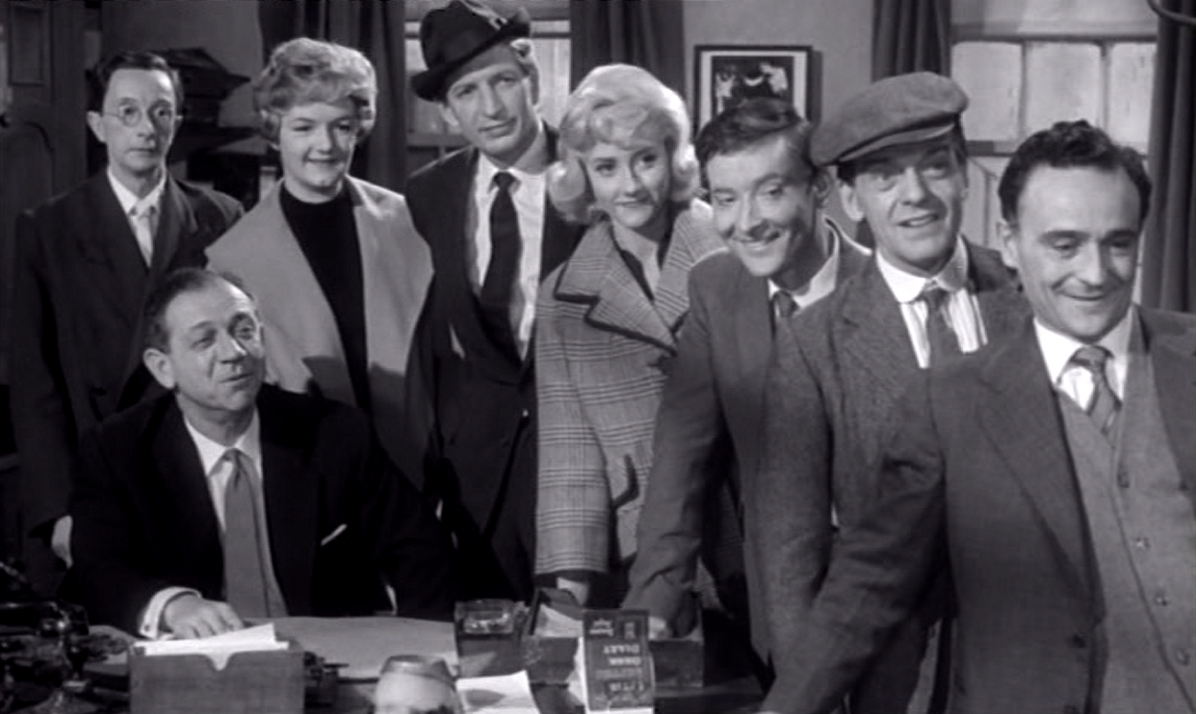
A bunch of jobseekers – Williams, Hawtrey, Sims, Fraser, Owen and Longdon – meet at the Employment Exchange (read: Job Centre) and, catching wind that new business ‘Helping Hands’ is hiring, race off to fill out its staff; the opportunity’s so enticing even the Exchange’s fed up jobsworth Connor joins them. Run by James, the mantra behind the ‘Helping Hands’ agency is to provide what’s required, however unusual the job – trying on underwear bought for an absent wife, acting as seconds for a boxer, giving a pet chimpanzee a walk, and so on. All seems to progress more or less all right, until the secretary’s (Cannon) filing system is disturbed and each staff member’s sent to the wrong job…
.
.
Would you like sauce with that?
Regardless undoubtedly, er, keeps up the tradition of the bawdiness becoming more overt in each new Carry On. We’re hardly in the freewheeling ’60s here, but with Fraser making her debut the filmmakers take advantage of her looks, assets and comic talent – the first job anyone undertakes is her trying on expensive lingerie in a married man’s bedroom. And later Williams manages to fall into a bath at an ‘Ideal Home’ exhibition in which Sims is taking a dip, while James – and we – get to ogle a gaggle of under-dressed girls. I wonder whether that’ll ever happen again…?
.
.
Cross-dressing to impress?
Fraser, by way of disguise, dons a heavy men’s overcoat and chapeau to exit the aforementioned married man’s wardrobe, in which she’d hidden when his wife unexpectedly returns home (yes, that old chestnut). She also puts on a blokey voice. To be fair, it’s more sexy than funny.
.
.
Catchphrase count
‘Yak-yak-yak!’ (James): 3; ‘Corrr!’ (Connor): 1
.
.
Marvellous monikers
Bert Handy (James); Francis Courtenay (Williams); Gabriel Dimple (Hawtrey); Lily Duveen (Sims);
Sam Twist (Connor); Delia King (Fraser); Montgomery Infeld-Hopping (Longdon);
Miss Cooling (Cannon); Penny Panting (Fielding)
.
.
Plum notes or bum notes?
A rather unremarkable offering from Montgomery this time really, although the lack of an overarching theme to the film doesn’t aid his score in terms of identity. He clearly has fun with the cues during the train sequence, though, providing a very mock-film noir vibe.
.
.
Do carry on or titter ye not?
This one has its moments – among them the home exhibition sequence, Sims getting plastered at a wine tasting do, Connor going all Bogart-cum-spy on a train and the finale when the gang titivate/ destroy an old house – but not really enough of them. Other sequences including a boxing bout, Connor caught in a honey trap with a horny Fielding and Williams at a chimps’ tea party (which, while memorable, nowadays feels a bit wrong) just keep things ticking along.
.
.
.
Adjuster: 0
The weakest of the series’ early entries, Regardless suffers from its more-sketch-than-plot narrative – the sum of its parts definitely being less than its parts. The story’s far from incoherent or too absurd, yet you can’t help but wonder how ‘Helping Hands’ remains in business when the majority of its jobs are foul-ups. However, the addition of Liz Fraser to the Carry On company is an inspired move and Kenneth Connor’s dominance among the ensemble this time out is well deserved – he’s employee of the month.
Total Boggles:
55/ 100
.
.
.
The best bit
Sid’s standing-in for an eminent doctor at a hospital, a sequence that concludes with the former inspecting the, er, health of a line of nurses in their underwear – note: just one film on from his debut and the lascivious side of Sid has reared its walnut-like head
.
The best line
Cannon: “Don’t go – think of brain-washing!”/ Connor: “How can they wash what isn’t there?”
.
Trivia
Regardless’s lack of a solid theme – in contrast with predecessors Sergeant (army), Nurse (hospital), Teacher (school) and Constable (police) – and a creditable plot is indeed down to the fact Hudis threw together sketches he’d previously written to form a script
Jacques only appears in a cameo as a hospital sister because illness prevented her taking a larger role
The film’s title memorably appears as a repetitive line in The Beautiful South song Good As Gold (Stupid As Mud) (1994) – itself, no doubt, a forerunner for the title of the band’s hugely popular best-of-album Carry On Up The Charts (1994).
.
.
.
.
.
.
.

.

.
“Shut your port-hole”/ “Begging your pardon, sir,
one must have fresh…”/ “… and your cake-hole!”
.
.
Directed by: Gerald Thomas; Screenplay by: Norman Hudis; Composer: Bruce Montgomery;
Country: UK; Certificate: PG; Running time: 85 minutes; Released: April 1962
.
.
The regulars
Sid James; Kenneth Williams; Kenneth Connor/
semi-regulars: Liz Fraser; Dilys Laye (first film); Esma Cannon; Cyril Chamberlain
.
.
The crumpet
Liz Fraser; Dilys Laye
.
.
The setting
Contemporary times (the early ’60s) aboard a ship in the Mediterranean Sea; sending up holiday cruises
.
.
The plot
The S. S. Happy Wanderer is setting sail on its latest cruise around the Mediterranean, but it looks to be a unhappy wander for the captain (James), concerned by the new faces in his crew – a gauche first officer (Williams), a blundering doctor (Connor) and an eccentric cook who’s never sailed before and is immediately struck with seasickness (Lance Percival). In addition to his ongoing quest with his colleagues to prove they’re not inept, Connor’s troubles are compounded by falling in love with a single-girl passenger (Laye), whom has been talked into the cruise by her similarly attractive best friend (Fraser), but seems to be looking for a man everywhere on the ship apart from in the doctor’s surgery.
.
.
Would you like sauce with that?
You’d think a Carry On on a cruise ship (with all those rooms and cubbyholes in which goings-on might, well, go on) would be just the setting to send the sauce-o-meter up several notches compared to its predecessors, but that doesn’t really happen. There are moments of sauciness, sure, and they are more overt and knowing than those of the earliest in the series (such as Laye coming on to James, Fraser pretending to do so with Connor and the latter hopelessly trying to bring Laye round from a faint only to land on top of her on the floor), but the most suggestive stuff tends to be found in the wit of the script (to, er, wit: “You’re overwrought”/ “I’m underprivileged”).
.
.
Cross dressing to impress?
Following its strong establishment in Carry On Constable (1960) and featuring again in immediately preceding movie Carry On Regardless (see above), it’s a little disappointing nobody dresses as the opposite sex here. That’s not to say there isn’t a good deal of costuming going on, though – after all, we are on a cruise ship. Indeed, Connor decks himself out as a matador to deliver a choice gag (see ‘the best line below’) to Williams, who’s a little curiously dressed as Zorro, while alone in his cabin with a hookah pipe, Percival goes full Lawrence Of Arabia (1962) in cream robes and a headscarf.
.
.
Catchphrase count
‘Yak-yak-yak!’ (James): 5
.
.
Marvellous monikers
Captain Wellington Crowther (James); First Officer Leonard Marjoribanks (Williams);
Dr Arthur Binn (Connor); Glad Trimble (Fraser); Flo Castle (Laye);
Bridget Madderley (Cannon); Tom Tree (Chamberlain)
.
.
Plum notes or bum notes?
Montgomery’s final score for the series isn’t exactly his most memorable. It does the job perfectly admirably, but aside from flamenco-flavoured and oriental-tinged touches at choice moments, when the ship drops anchor at its various Mediterranean stop-offs, nothing really lingers in the bonce. The song with which Connor attempts to serenade Laye (Bella Marie, actually performed by Roberto Carinali) raises a few chuckles, mind you.
.
.
Do carry on or titter ye not?
Despite its drawbacks, Cruising is arguably the series’ funniest effort thus far. It’s big on the belly laughs – Laye and Cannon’s drunken encounter in the bar, the impromptu injections in Percival’s posterior and that memorable slapstick-tastic table tennis toss-up between Cannon and Williams. Not to be outdone, though, Hudis’s script is particularly witty too (“That’s why I drink, to forget her”/ “Forget who?”/ “Blessed if I can remember”; “Gentlemen, have I your agreement for a policy of unremitting quasi-teutonic organisational protectionism?”; “Flo! Ebb a bit”). Plus, Percival’s casting is inspired; it’s a shame his unique brand of unpredictable comedy would grace the series only this once – his blowing instead of sucking on a hookah pipe while dressed as a sheik is randomly marvellous.
.
.
.
Adjuster: +5
Leagues of ocean away from being all at sea, Cruising nonetheless treads water. Mostly because the oft-seen-before narrative of a band of misfits (as ever, including Williams and Connor) messing up in the face of a superior only to put things right come the final reel is starting to feel a little tired. All the same, (more or less) newcomers Percival, Fraser, Laye and Cannon are all on top form and this flick marks an evolution point in the series – Williams’ persona is shifting here from an intellectual to a camp (somewhat) bureaucratic buffoon and, yes, colour has to come to Carry On. And it looks glorious.
Total Boggles:
60/ 100
.
.
.
The best bit
Laye and Cannon’s bonding by getting spontaneously sozzled in the ship’s bar – much to Fraser’s chagrin, the barman’s dismay and the habitual drunk’s awe
.
The best line
Connor: “Well, my father, he breeds the famous fighting bulls, you know. Every year, 50,000 bulls he sends off by ship to South America”/ Williams: “50,000 bulls?”/
Connor: “Si, si. Also every year, 20,000 more he ships off to France”/ Williams: “That’s 70,000 bulls”/
Connor: “Si, si. One of the biggest bullshippers in the business”
.
Trivia
Cruising’s script was based on an idea by early Carry On acting regular Eric Barker
Charles Hawtrey was dropped from the cast for apparently demanding top billing and a star on his dressing room door (he would have played Percival’s role); Joan Sims was also nixed, and wouldn’t reappear until Carry On Cleo (1964), owing to a dalliance with a Pinewood Studios carpenter (yes, really), which allowed Dilys Laye to make her debut in the series – the latter joining the shoot after just four days’ notice
This was Hudis’s last Carry On, after which he left the UK to take up job offers Stateside following the US success of Carry On Nurse (1959); his subsequent work included writing for TV shows The Man From U.N.C.L.E. (1964-68), The Wild Wild West (1965-69) and Hawaii Five-0 (1968-80)
At one point in the film, Percival’s chef character Haynes tasks a subordinate with breaking eggs, but when the underling complains it’ll take too long, Haynes demonstrates that he can place all the eggs in a large container, drop it on the ground and strain out the egg shells – this scene inspired a methodology (the ‘Haynes Technique’) used in modern-day data processing and systems design that describes any simple low-tech solution or method which would normally be overlooked because it appears to be counter-intuitive.
.
.
.
.
.
.
.

.

.
“The men haven’t got your advantages, dear –
just flash your headlamps at them”
.
.
Directed by: Gerald Thomas; Screenplay by: Talbot Rothwell; Composer: Eric Rogers;
Country: UK; Certificate: PG; Running time: 85 minutes; Released: June 1963; Black & White
.
.
The regulars
Sid James; Charles Hawtrey; Hattie Jacques; Kenneth Connor; Jim Dale (first film)/
semi-regulars: Liz Fraser; Esma Cannon (final film); Amanda Barrie (first film);
Bill Owen (final film); Cyril Chamberlain (final film); Judith Furse (first film);
Renée Houston (first film); Valerie Van Ost (first film); Peter Gilmore (first film)
.
.
The crumpet
Liz Fraser; Amanda Barrie; Carole Shelley; Valerie Van Ost; Marian Horton
.
.
The setting
Contemporary (early ’60s) Britain; sending up the taxicab industry and ‘the war of the sexes’
.
.
The plot
Charlie (James) runs the only taxicab company in town. Things are going so well that he and his manager Ted (Connor) have to recruit new drivers, including the enthusiastic but inept Hawtrey. Yet, all’s not well in paradise, as Ted’s at loggerheads with his on-off girlfriend, the cabbies’ café girl Sally (Fraser), and, worse, Charlie’s wife Peggy (Jacques) feels neglected. The final straw comes when Charlie misses their anniversary because he’s carting a man (Dale) and his expectant wife to and from hospital, so with her friend Flo (Cannon), Peggy secretly sets up a rival taxicab company to make him notice her and strike a blow for womankind. Soon ‘Glamcabs’ – featuring a bevy of leggy beauties in a fleet of Ford Cortinas – is not only stealing Charlie’s custom, but threatening to put him out of business.
.
.
Would you like sauce with that?
With the first half of the film’s emphasis on marital strife, the opportunity for bawdiness properly comes in the second half when things shift to chauvinism and proto-women’s lib in the workplace – and, even then, the titillation amounts to shots of the ‘Glamcabs’ girls’ legs, close-ups of a clothed breast or two, the girls briefly stripping to their underwear and (mostly) Amanda Barrie’s coy sexual suggestion (on picking up a ‘fare’: “I know what to do – I’ve been picking up men since I was 17”). But, like with other strong early Carry Ons, it would be to Cabby’s definite detriment were the sauce stronger.
.
.
Cross-dressing to impress?
Poor old Kenneth Connor, for it’s his turn to get the transvestite treatment this time, but you’ve got to hand it to him, he does his duty with bells on. Forced by his boss to impersonate a ‘Glamcab’ cabby to infiltrate their garage so his cronies can sabotage their vehicles, he goes the whole hog of not just donning the uniform, a wig and lipstick, but also the lingerie underneath. And, even better, he does make for a truly ugly woman. Of course, he gets his comeuppance – being faced with having to undress in front of all the other girls and, in his escape, ending up in what appears to be a drum full of oil.
.
.
Catchphrase count
‘Yak-yak-yak!’ (James): 7; ‘Corrr!’ (Connor): 1
.
.
Marvellous monikers
Charlie Hawkins (James); Terry ‘Pintpot’ Tankard (Hawtrey); Peggy Hawkins (Jacques);
Flo Sims (Cannon); Smiley Sims (Bill Owen); Punchy (Darryl Kavann); Tubby (Don McCorkindale)
.
.
Plum notes or bum notes?
Promoted from producer Peter Rogers’ wife’s/ director Gerald Thomas’s brother’s Doctor movie series to the Carry Ons, composer Eric Rogers makes a masterful debut. His main theme is irresistible – a breezy but smooth melody with a harmonica solo (in fact, the film’s original title Call Me A Cab can be easily sung to its tune). Elsewhere, all the hallmarks of his scores to come can also be delightfully heard: a full-out brassy theme that oozes glamour for the ‘Glamcabs’ girls and the humorous wheezing touches used to wonderfully underscore, nay highlight, bawdy moments for eager punters everywhere.
.
.
Do carry on or titter ye not?
Arguably one of the series’ most consistently funny flicks, Cabby is a thorough success when it comes to amusement. The first third’s ‘kitchen sink’ set-up pays dividends with Sid and Hattie (so used to such stuff from years of sitcom work) relishing all the brilliant domestic (non)bliss of Rothwell’s cracking script – see video clip below. And the move then to cab firm versus cab firm/ gender war of the movie’s second third is marvellous farce, while the cabby chase of the last third (orchestrated by Sid like a general marshalling ex-squaddies, which his drivers are all supposed to be, of course) is equally terrific.
.
.
.
Adjuster: +10
A cast-iron Carry On classic, thanks not least to new scribe Rothwell’s pacy, social comment-rich script, Cabby’s a delight from its first fare to its closing kiss-off line. Cruising may have brought colour to the series, but the real sea-change occurred here – look at all the ‘regulars’ either debuting or departing (see above), while Rothwell’s writing points to his future plots’ similar flexiblility, daring and bawdiness. No question, everyone’s at the top of their game here, especially Sid and Hattie. Come the closing credits, who wouldn’t want to see a sitcom featuring the further adventures of Charlie and Peggy and co.?
Total Boggles:
85/ 100
.
.
.
The best bit
There’s so many brilliant bits in this one, but for me it may just be the opening scene (incorporating, over the titles, Rogers’ terrifically buoyant theme), in which we see the birth of Sid’s cheeky Cockney Carry On persona (‘yak-yak-yakking’ in his cab and enjoying himself immensely as he insults a chauffeur) – it ebulliently announces the arrival of the Rothwell/ Rogers-era… and how
.
The best line
Sid: “In no time at all, you find that you’re about as popular as a wickerwork seat in a nudist camp –
and you know what sort of impression that makes on people”
.
Trivia
The first Carry On to be written by Talbot ‘Tolly’ Rothwell (whom would go on write every subsequent one except the last three), Cabby was actually based on a play by early Morecambe and Wise scribes Dick Hills and Sid Green named, as noted above, Call Me A Cab – indeed, the film went by that title until halfway through production, at which point the decision was made to include it in the Carry On series
Initially, Charles Hawtrey couldn’t drive so had to learn within a week (having three one-hour lessons a day), passing his test the day before shooting commenced
This was the first film in the series that Kenneth Williams missed; out of all 29, he would only miss a further three – the first of which came all of seven years later in the shape of Carry On Up The Jungle
The filming of this specific Carry On is recreated in the TV movie biopic Hattie (2011), in which Ruth Jones plays Jacques; apparently, her role in this movie was Jacques’ favourite of all her Carry Ons
As Cabby was released in cinemas, Sid James was appearing on the small screen in a BBC comedy drama called Taxi! (1963-64) – in which his character, yes, ran a taxicab firm.
.
.
.
.
.
.
.

.
.
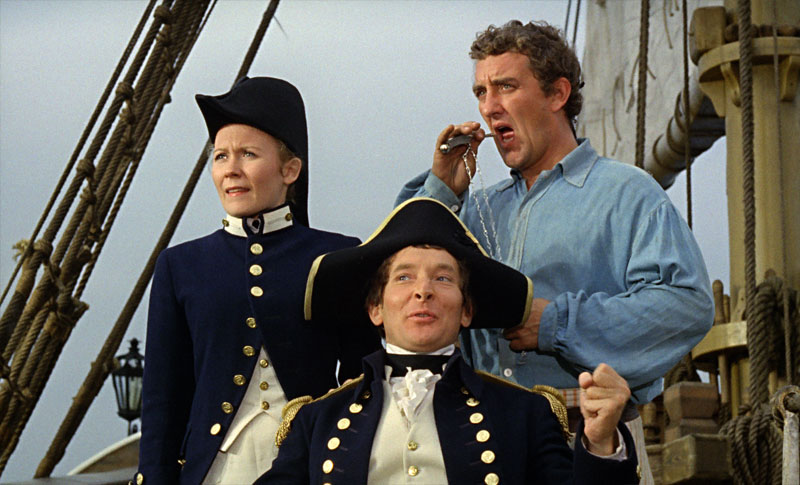
“What’s all this jigging in the rigging?”
.
.
Directed by: Gerald Thomas; Screenplay by: Talbot Rothwell; Composer: Eric Rogers;
Country: UK; Certificate: PG; Running time: 87 minutes; Released: November 1963
.
.
The regulars
Kenneth Williams; Charles Hawtrey; Jim Dale/ semi-regulars: Bernard Cribbins (first film);
Percy Herbert (first film); Peter Gilmore; Sally Douglas (first film)
.
.
The crumpet
Juliet Mills; Vivian Ventura
.
.
The setting
Early 19th Century England and at sea; sending up seafaring Napoleonic War adventures
.
.
The plot
Following the death of Admiral Nelson, the British Navy realises it needs more men pronto. This urges the promotion of the incompetent Albert Poop-Decker (Cribbins) to a midshipman. Assigned to the ship HMS Venus, Albert – advised by a porter (Dale) – visits an inn to sow his wild oats before setting sail. There, however, serving wench Sally (Mills) steals his clothes and stowaways aboard the Venus with the aim of finding her seafaring childhood sweetheart who’s presumed lost in Spain. Press-ganged into the crew along with the similarly useless Walter (Hawtrey), Albert struggles to convince Williams’ captain – named Fearless, yet who’s anything but – and the officers (Herbert and Donald Houston) of his true identity and that the ‘lad’ (Sally) claiming to be Midshipman Poop-Decker is an impostor.
.
.
Would you like sauce with that?
Taking a back-step here, if you want to look at it that way, compared to the immediately preceding entry, Jack is, well, a little coy in its treatment of the sexy stuff. The most risqué section of the movie – the scenes in the inn – sees the characters sheepishly refer to intercourse as ‘what’ (rather than with a nudge-nudge-wink-wink code-word that’s actually funny). At least later on, Williams’ utter shock at witnessing Cribbins and Mills (the latter still dressed as a young lad) snogging is amusing, given he’s so surprised he doesn’t even have the capacity to be appalled. But, frankly, it’s all pretty innocuous.
.
.
Cross-dressing to impress?
Although the only man-dressed-as-woman action we get is Cribbins wearing an inn wench’s frilly dress (admittedly for an extended period), Jack scores particularly well in this category because – extremely rarely in this series – we get some woman-dressed-as-man action. It’s a doozy as well, given it’s Mills impersonating poor Cribbins’ personage for the majority of the movie (and mighty fetching she looks in a naval uniform too). Unusually for a Carry On, there’s something almost Shakespearean about the cross-dressing here – bringing to mind Twelfth Night. Or maybe more accurately ‘Bob’ from Blackadder II.
.
.
Catchphrase count
Perhaps due to the lack of so many regular cast members or because this was the first historical effort in the series, Jack features no Carry On catchphrases at all.
.
.
Marvellous monikers
Captain Fearless (Williams); Walter Sweetley (Hawtrey); Midshipman Albert Poop-Decker (Cribbins); Mr Angel (Percy Herbert); Captain Roger/ Patch (Peter Gilmore); Hook (Ed Devereaux)
.
.
Plum notes or bum notes?
In his second effort for the series, Eric Rogers certainly does an admirable job in aping the self-satisfied, grandiose feel of so many adventure yarn scores, but it must be said there isn’t an abundance of his terrific trademark flaring flourishes (often the musical equivalent of a wink at the audience), but then that may be a reflection of the relatively low bawdiness on offer – see above. Indeed, the onscreen less-is-more approach doesn’t exactly get the most out of Rogers’ scoring, let’s be honest.
.
.
Do carry on or titter ye not?
With more than an eye on its historical setting (and so a little over-faithfully following the beats of the Napoleonic-era naval romp?), Jack may be be a tad underwhelming when it comes to humour – it ought to be noted, though, that this was also Rothwell’s ‘first’ script of the series (see ‘Trivia’ below) so he was yet to hit his groove. All the same, the leads are all very good value, the plot’s turnarounds always comedic and Williams’ captain’s insistence on a cow being aboard to provide the men with milk instead of rum (which ends up sharing an ‘escape boat’ with the leads) is classic Carry On absurdity.
.
.
.
Adjuster: +8
Truth be told, before this viewing, I wasn’t overly familiar with Jack, but it pleasantly surprised me. Taking a risk by going historical, the Carry On team nail their colours to the main-brace and go for the new direction whole heartedly. Although it could do with a few more zingers and too often the bits with the strait-laced Houston and Herbert lag, once we hit the second half and the plot twists and turns about mimicking a good old pirate story, there’s certainly fun to be had. Meanwhile, Cribbins is a winning comic hero, Williams relishes his authority idiot and Juliet Mills makes for a lovely leading lady.
Total Boggles:
61/ 100
.
.
.
The best bit
The sight of at least a dozen Spanish guards filing, one after the other, into the Cadiz prison cell holding the captured Venus crew, followed by the sounds of a skirmish, then, straight after, the sight of the British crew filing out, one after the other, dressed in the guards’ uniforms
.
The best line
Jimmy Thompson (as Nelson): “Kiss me, Hardy”/ Anton Rodgers (as Hardy): “I beg your pardon, sir?”/ Thompson: “Kiss me, Hardy”/ Rodgers: “Are you mad? What will they say at The Admiralty, sir?”/ Thompson: “They’ll only be jealous”
.
Trivia
Jack’s was the first of Talbot Rothwell’s screenplays to be read by producer Peter Rogers and gain his approval, even though the script that would turn out to be Carry On Cabby (see above) was filmed first
Before becoming Carry On Jack, the first historical entry in the series went through several titles, including Carry On Sailor!, Carry On Mate and the decidedly non-Carry On alternatives Admiral Poop-Decker R.N. (possibly the title of Rothwell’s original script) and Up The Armada – which, rumour has it, may have fallen foul of the British censors
Juliet Mills had previously appeared in Rogers and Thomas’s comedies Twice Round The Daffodils (1962) and Nurse On Wheels (1963), both of which are similar in style to the early Carry Ons and the former of which is based on the same play (Ring For Catty) as was Carry On Nurse (1959)
Extensive use was made of a period-ship set built for the British adventure movie H.M.S. Defiant (1962)
Apparently, the reason why established regulars Sid James, Hattie Jacques and Joan Sims didn’t appear in Jack is because there simply weren’t suitable roles for them, while, at the urging of her agent, Liz Fraser had decided to move on from the series and Kenneth Connor’s absence was due to him appearing alongside future Carry On-er Frankie Howerd in the original West End run of musical A Funny Thing Happened On The Way To The Forum.
.
.
.
.
.
.
Carry On Ranking
(All out of 100; new entries in blue)
1. Carry On Cabby (1963) ~ 85
2. Carry On Nurse (1959) ~ 65
3. Carry On Constable (1960) ~ 63
4. Carry On Jack (1963) ~ 61
5. Carry On Cruising (1962) ~ 60
6. Carry On Sergeant (1958) ~ 58
7. Carry On Teacher (1959) ~ 56
8. Carry On Regardless (1961) ~ 55
.
.
.
Keep calm,
the Carry On reviews
will, yes, carry on…
.
.
.
What a Carry On: Carry On Sergeant (1958)/ Carry On Nurse (1959)/ Carry On Teacher (1959)/ Carry On Constable (1960) ~ Reviews
.
Right then, let’s get down to it (oo-er, missus!). Yes, as promised in my last post – which introduced this blog’s Summer Season of Carry On-ness – it’s time for us, each and every one of us, to collectively gird our loins as George’s Journal throws itself, like a randy Sid James into a harem of buxom beauties, into an arguably incongruous, maybe inexplicable, almost certainly inglorious Carry On-athon.
Yes, that’s right, it’s the opening salvo of a dedicated viewing, reviewing, rating and ranking of each and every entry in the all-time most popular British comedy movie series, which focuses on its first four flicks – Carry On Sergeant, Carry On Nurse, Carry On Teacher and Carry On Constable. And with that then, folks, it’s chocks away! (As they may well have said in Carry On Flying, had they ever made a film taking the p*ss out of Ryanair)…
.
How it works:
- The ‘Carry On-athon’ takes in all 29 cinematically released Carry On films, chronologically from Carry On Sergeant (1958) right through to Carry On Emmannuelle (1978), excluding the compilation-clip-comprising That’s Carry On! (1977) and Carry On Columbus (1992), whose inclusion in the original series might be said to be a bit tenuous
- The reviews consist of 10 categories or movie facets, the inclusion of which tend to define a Carry On film as a Carry On film (‘the regulars’; ‘the crumpet’; ‘the setting’; ‘the plot’; ‘sauciness’; ‘cross-dressing’; ‘catchphrases’; ‘character names’; ‘music’ and ‘overall amusement’), each of which are rated out of 10, thus giving the film in question a rating out of 100, which ensures all 29 films can be properly ranked – the ratings are made up of ‘Boggles’, after Sid Boggle, Sid James’s utterly iconic character from Carry On Camping (1969)
- There’s also an ‘Adjuster’ for each film’s rating (up to plus or minus 10 ‘Boggles’) to give as fair as possible a score according to its overall quality as a film.
.
.
.
.
.

.

.
“Your rank?”/ “Well, that’s a matter of opinion”
.
.
Directed by: Gerald Thomas; Screenplay by: Norman Hudis; Composer: Bruce Montgomery;
Country: UK; Certificate: PG; Running time: 81 minutes; Released: August 1958; Black & White
.
.
The regulars
Kenneth Williams; Charles Hawtrey; Hattie Jacques; Kenneth Connor/ semi-regulars:
Shirley Eaton; Eric Barker; Terry Longdon; Bill Owen; Norman Rossington; Terry Scott
.
.
The crumpet
Shirley Eaton
.
.
The setting
Contemporary (late ’50s) Britain; sending up British National Service
.
.
The plot
Being just one bunch of new recruits away from retirement, platoon trainer Sergeant Grimshaw (William Hartnell) makes a bet with his army pals his final group will be the one that earns him the single thing that’s eluded him his entire career – the ‘champion’ platoon plaudit come the barracks’ turn-out parade. His wager and peace of mind look doomed, though, immediately he meets his recruits, which include an educated snob (Williams), an effeminate waste-of-space (Hawtrey), a smoothie womaniser (Longdon), a hapless hypochondriac (Connor) – whom visits the barracks’ doctor (Jacques) daily – and a lovelorn unfortunate (Bob Monkhouse – yep, that Bob Monkhouse) whose primary concern is to consummate his marriage with his sweetheart (Eaton), having been somehow called up on the day of his wedding.
.
.
Would you like sauce with that?
The very first Carry On isn’t really about sex at all (excusing Monkhouse and Eaton’s clumsy clandestine attempts at becoming lovers as well as man and wife in the film’s first third – and even that’s subtlely handled), thus bawdy humour is barely present at all. Which, in its way, is actually somewhat refreshing for a comedy featuring several Carry On legends. Indeed, for right or wrong, it’s not even hinted at that Hawtrey’s character may actually be gay, while we only have Longdon’s word for it he’s a ladies’ man. Connor does deliver a good old ‘Corrr!’ at one point, mind.
.
.
Cross-dressing to impress?
The closest Sergeant gets to cross-dressing is the moment in the flick when the new recruits are supplied with their drab khaki-dominated kit and forced to dress-up as soldiers for the first time; almost symbolically suggesting, and smartly so, that from this point on there’s no way back – they’re definitely, as Status Quo would put it, in the army now.
.
.
Catchphrase count
‘Ohhh, hello’ (Hawtrey): 1; ‘Corrr!’ (Connor): 1
.
.
Marvellous monikers
Sergeant Grimshaw (Hartnell); Horace Strong (Connor); Charlie Sage (Monkhouse);
Peter Golightly (Hawtrey); Captain Potts (Eric Barker); Corporal Copping (Bill Owen)
.
.
Plum notes or bum notes?
Suitably marching-band-based, the score from Bruce Montgomery (whom, incidentally, was also a successful crime novelist) was performed by the Coldstream Guards. Its light martial-mocking style fits the setting and content perfectly and, it must be said, the main theme itself is amiable and memorable – even adding an effective slice of sentiment to the proceedings (not least the final scene).
.
.
Do carry on or titter ye not?
Compared to (or, rather, contrasted with) the vast majority of Carry On entries, Sergeant’s humour is particularly mild and understated; if one were being cruel they might say it’s subdued. That’s not to say it’s either subtle or high-brow, but it’s light-years away from the loveably bawdy, broad-brushstroke stuff for which the series would become notable in years to come. It’s also very inoffensive – definitely by today’s standards – lightly sending up, as it does, British Army culture and traditions rather than out-right mocking or trying to satirise them. All the same, Barker’s easily distracted, plummy captain is good value, as are undoubtedly the quartet who’d go on to become Carry On regulars.
.
.
.
Adjuster: +8
Arguably not even the Carry On film in its genesis, Sergeant is nonetheless a perfectly likeable comedy, nicely and sparsely telling its tale of a a rag-tag band of martial misfits whom, come the climax, might just be able to pull off the impossible and do their superiors – and themselves – proud. As you’d expect, Williams, Hawtrey, Connor and Jacques pass-out with highest honours, but there’s also an effective, nay pleasantly surprising, light emotional punch come the very end.
Total Boggles:
58/100
.
.
.
The best bit
Connor being put through a conveyor belt of medical examinations by Jacques to discover that he is, indeed, absolutely fit as a fiddle; possibly a perfect physical specimen
.
The best line
Barker: “What’s the first thing that comes into your head?”/ Longdon: “Women, sir”/
Barker: “You’re a soldier by tradition and instinct”
.
Trivia
Originally based on the novel The Bull Boys by R. F. Delderfield, Sergeant was never at all intended as the opener to a film series – indeed, its title derives from a common army saying
Hartnell was familiar to audiences for playing a sergeant major in the popular ITV sitcom The Army Game (1957-61), which co-starred Hawtrey and future Carry On regular Bernard Bresslaw; the former would, of course, go on to achieve immortality as the original TARDIS dweller in Doctor Who
Although Sergeant was the first Carry On film, by coincidence a movie named Carry On Admiral had been released just one year earlier (starring Mary Poppins’ David Tomlinson and James Bond’s Eunice Gayson, as well as future Carry On-er Joan Sims) and in 1937 a film called Carry On London, whose cast had featured Eric Barker
Sergeant hit a high of #3 at the UK box-office, ensuring it would be followed by…
.
.
.
.
.
.
.

.
.
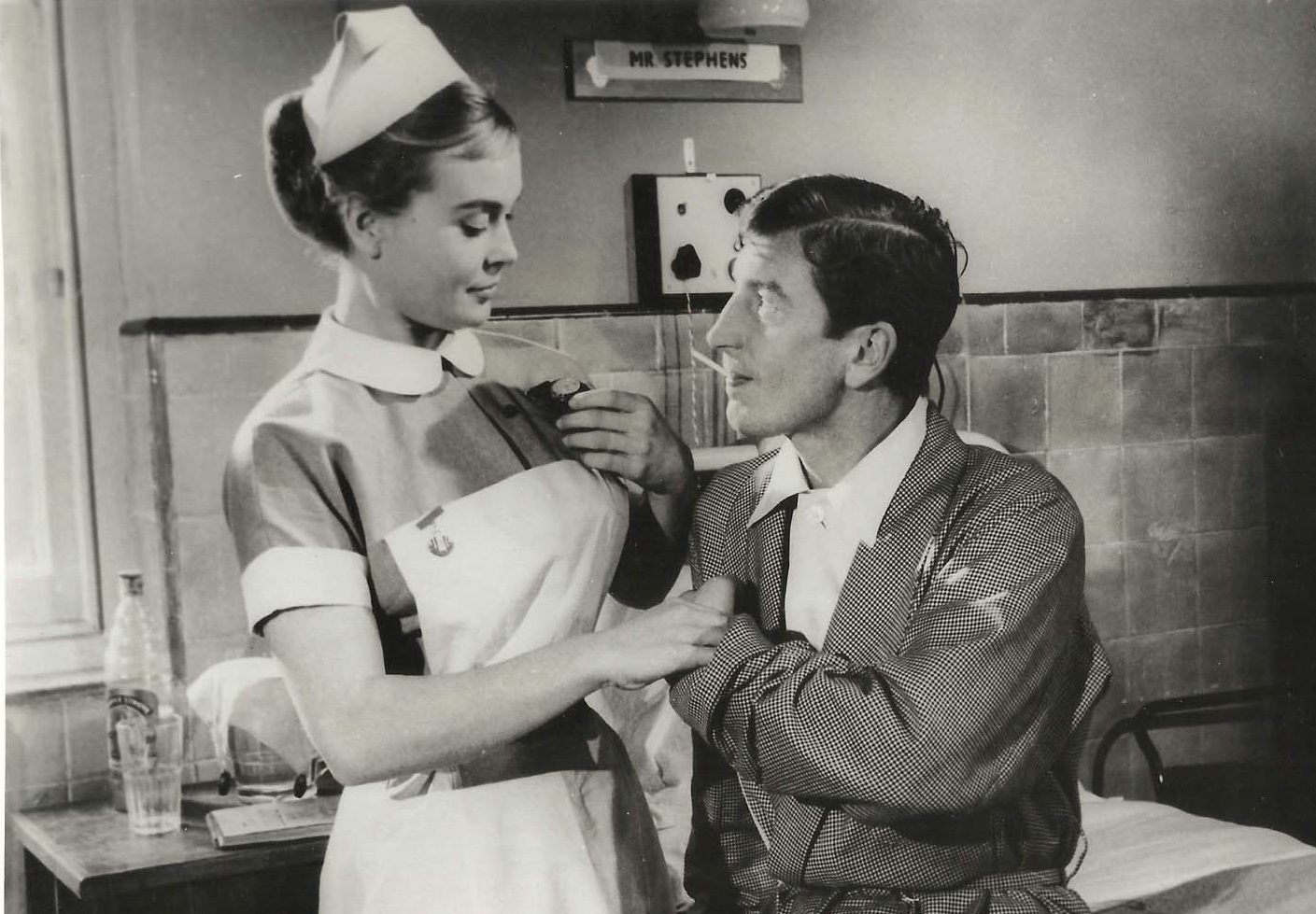
“It’s Matron’s round”/ “Mine’s a pint!”
.
.
Directed by: Gerald Thomas; Screenplay by: Norman Hudis; Composer: Bruce Montgomery;
Country: UK; Certificate: PG; Running time: 83 minutes; Released: March 1959; Black & White
.
.
The regulars
Kenneth Williams; Charles Hawtrey; Hattie Jacques; Joan Sims (first film); Kenneth Connor/
semi-regulars: Shirley Eaton; Terence Longdon; Bill Owen; Leslie Phillips; (first film); Joan Hickson (first film); Cyril Chamberlain; Rosalind Knight (first film); June Whitfield (first film)
.
.
The crumpet
Shirley Eaton; Jill Ireland; Susan Stephen; Susan Beaumont; Ann Firbank
.
.
The setting
Contemporary (late ’50s) Britain; specifically a men’s hospital ward, sending up the NHS
.
.
The plot
Newspaperman Longdon checks himself into an NHS hospital to have his appendix out, in doing so being immediately struck by his ward’s beautiful Staff Nurse (Eaton) and getting to know those occupying the other beds – a high-minded intellectual (Williams), a boxer who’s broken his hand (Connor), a fey radio obsessive (Hawtrey), a labourer with a broken leg (Owen), a City banker (Chamberlain) and a gambling old Colonel in his own room (Wilfred Hyde White). In time, they’re joined by a lothario (Phillips), whom is desperate to have his operation as soon as possible to make a rendezvous with his latest paramour (Whitfield). All the while, the gang are looked after by the ward’s nurses (Sims, Stephen, Hickson, Beaumont and Firbank), whom live in fear of the formidable Matron’s (Jacques) daily round.
.
.
Would you like sauce with that?
Contrasted with its forerunner Carry On Sergeant, there’s noticeably franker fruity moments in Nurse. For instance, there’s no question what Sims is talking about when she comments that Longdon’s ‘a big boy’ as she helps him into the bath and we get a shot of his feet. And, of course, there’s that famous final scene in which the nursing staff get their own back on Hyde White’s pestiferous Colonel by ‘taking his temperature’ via the insertion of a daffodil into his you know what. This is a family film and it’s the late ’50s, so we don’t see anything, of course, but back then it certainly wouldn’t have been a joke for prudes.
.
.
Cross-dressing to impress?
Just two films into the series and we get our first man-dressed-as-a-woman and, don’t doubt it, it’s a memorable one, coming as it does during the sequence when the boys surreptiously attempt to perform Phillips’ operation during the night and, as part of the scheme, Hawtrey dons the night nurse’s uniform, sitting in her place on the ward as a lookout. Indeed, he appears to be in his element, even happily stepping forward when the plan’s foiled and a superior calls ‘Nurse!’, momentarily forgetting who he is.
.
.
Catchphrase count
‘Stop messin’/ muckin’ about!’ (Williams): 1/ ‘Corrr!’ (Connor): 3/ ‘Ding, dong!’ (Phillips): 2
.
.
Marvellous monikers
Oliver Reckitt (Williams); Humphrey Hinton (Hawtrey); Bernie Bishop (Connor); Dorothy Denton (Eaton); Percy Hickson (Owen); Student Nurse Nightingale (Knight)
.
.
Plum notes or bum notes?
As it would be for practically the entire series to come, the Carry On scoring goes full orchestral here – and Montgomery suitably injects a playfulness to proceedings; rightly so too, especially for the farcical moments. Also, the sentimental theme from Sergeant makes a welcome reappearance in the more romantic scenes (basically those between Longdon and Eaton).
.
.
Do carry on or titter ye not?
If Sergeant maybe doesn’t properly feel like the first Carry On, then Nurse is closer to the mark. Why? Well, for one thing, there’s more malarkey. The humour’s far from dominated by farce, but there’s more physical farce (often at the centre of which Sims is terrific in her debut as a put-upon, clownish nurse), while as mentioned above there’s bawdier gags too. The wit isn’t bad either, thanks in no small part to the sheer class of Hyde White and Jacques in her first Matron role – in short, she’s brilliant. Of course.
.
.
Adjuster: +3
Upping the innuendo ante, the slapstick and the totty quotient compared to Sergeant, Nurse is a highlight of the early Carry Ons. Like its predecessor, a genuine affection and respect for its subject matter (the nursing profession) underlines all the humour and admirably so, yet it doesn’t quite pull off its scatter-gun approach to storytelling – the lack of a satisfying resolution for all in the character ensemble does grate a little in a movie more rigid and less absurd than, save Sergeant, any other in the series. All the same, Nurse is eminently entertaining and ably comes up smelling of, yes, daffodils.
Total Boggles:
65/100
.
.
.
The best bit
Jacques’ Matron brushing off being put in her place by Williams’ reasoning over her pernickety ward rules by ordering Hickson’s sister to carry out a pointless task, which – irritating each nurse – gets passed down the chain of command to Sims, whom can only take out her grievance by having a go at the lowest of the low, Mick the orderly
.
The best line
Eaton: “Mr Bell?”/ Phillips: “Ding dong, you’re not wrong!”
.
Trivia
Nurse was based on a play entitled Ring For Catty written by Jack Beale and Patrick Cargill, the latter would later play the lead in the ITV sitcom Father, Dear Father (1968-73)
It’s believed Nurse is the most successful – or, at least, on its release, the most popular – Carry On effort, thanks to achieving in excess of 10 million cinema admissions, which ensured it was 1959’s #1 film at the UK box-office; it made $1.5 million on release in the US
The movie actually features Bernard Bresslaw’s debut in the series – uncredited, his feet double as Longdon’s when the latter’s character stands in a bath
She may make her first Carry On appearance here, but June Whitfield wouldn’t make another in the series until Carry On Abroad – a full 14 years later.
.
.
.
.
.
.
.

.

.
“Are you satisfied with your equipment, Miss Allcock?”/
“Well, I’ve had no complaints so far”
.
Directed by: Gerald Thomas; Screenplay by: Norman Hudis; Composer: Bruce Montgomery;
Country: UK; Certificate: PG; Running time: 83 minutes; Released: August 1959; Black & White
.
.
The regulars
Kenneth Williams; Charles Hawtrey; Hattie Jacques; Joan Sims; Kenneth Connor/
semi-regulars: Leslie Phillips; Rosalind Knight (final film); Cyril Chamberlain
.
.
The crumpet
Joan Sims
.
.
The setting
Contemporary (late ’50s) Britain; sending up the teaching profession and schools in general
.
.
The plot
William ‘Wakey’ Wakefield (Ted Ray) is acting headmaster of Maudlin Street Secondary Modern and, nearing the end of the year, has his sights set on moving to the countryside to become head of a new school. To achieve his aim, he requires his teachers to demonstrate they can ably handle the student body during an end-of-term, week-long visit by school inspectors (Phillips and Knight). Wakefield’s staff – numbering a literary snob of an English teacher (Williams), a self-composing music teacher (Hawtrey), a hard-discipline advocate of a Maths teacher (Jacques), a word-muddling but resourceful science teacher (Connor) and a rather nubile, enthusiastic PE teacher (Sims) – assure him there’ll be no hiccups, yet reckon without the inexplicable act of sabotage the pupils enact as soon as the inspectors arrive.
.
.
Would you like sauce with that?
Despite its setting (thus ensuring more than half of the cast are adolescents), Teacher manages to push the sauciness a notch higher than the series’ first two entries. This most memorably concerns Sims’ flirting with Phillips via (at least for the early Carry Ons) pretty overt innuendos – see video clip below. However, Williams’ English Lit class deliberately goading him by demanding to know why the potentially sexy bits in Romeo And Juliet have been removed from school study (imagine that happening today!) is also arguably franker stuff – albeit in a wordy, smart way – than we’ve so far encountered.
.
.
Cross-dressing to impress?
Zilch. Although there is decent clothing-related humour with Sims ripping her over-tight gym shorts – again see the video clip below. And the younger members of the cast all get dressed up in Shakespearean-esque garb to perform their disastrous play in the film’s final third, but, yes, to say that’s, like those gym shorts, stretching it in this category is putting it mildly.
.
.
Catchphrase count
‘Ding dong!’ (Phillips): 1
.
.
Marvellous monikers
Edwin Milton (Williams); Michael Bean (Hawtrey); Grace Short (Jacques); Sarah Allcock (Sims); Alistair Grigg (Phillips)
.
.
Plum notes or bum notes?
A big score here because, three films in, we finally get the classic Carry On theme, which would become synonymous with pretty much the whole of the rest of the series, making its debut over this movie’s opening titles. Elsewhere, Montgomery does a decent job, for sure – the outbreak of a rumba-inspired melody during the major characters’ ‘itching dance’ is inspired.
.
.
Do carry on or titter ye not?
I’ll be honest, in watching all the Carry Ons in chronological order as I am (or at least having started to), it wasn’t until I reached Teacher that I had my first genuine guffaw. Contrasted with its two predecessors, this one then certainly has laugh-out-loud bits – in addition to the fine smirk-worthy moments that generally characterise this series in its genesis. To wit, the five regulars inadvertently getting nissed as pewts and the itching outbreak in the headmaster’s office are slapstick of the highest order.
.
.
.
Adjuster: +10
Far from ridiculous, Teacher nonetheless escalates the level of absurdity in the Carry On comedy brand (the lack of despair, let alone discipline in response to the school kids’ ever more destructive and disrputive pranks is a bit incongurous), but, hey, this is Carry On and the leads are clearly becoming more relaxed and, thus, truly starting to bring out the best in each other. Moreover, throwing into the plot a pair of school inspectors (whom have differing views on child psychology and teaching philosophy) adds a level of sophistication to proceedings that helps ensure this isn’t just Carry On St. Trinian’s.
Total Boggles:
56/100
.
.
.
The best bit
Connor’s pet project, a scale-sized rocket, unexpectedly blasting off up through the school lab’s ceiling
.
The best line
Jacques: “There’s only one thing to do – whack!”/
Williams: “Extraordinary theory – you bend a child double in order to get an upright character”
.
Trivia
Teacher’s setting, Maudlin Street Secondary Modern School (which was really Drayton Green Primary School in Ealing), is alluded to in former Smiths frontman Morrisey’s song Late Night, Maudlin Steet (1988) – Morrisey is a self-confessed lifelong fan of Charles Hawtrey
Star-to-be of ITV sitcom Man About The House (1973-76) Richard O’Sullivan appears as one of the school’s pupils, Robin Stevens, the leader of the ‘Saboteurs’, while Carol White – whom would achieve iconoclasm a few years later as the lead in Ken Loach’s classic TV film Cathy Come Home (1966) – plays his cohort Sheila Gale
Future actress Francesca Annis, who would become a fixture with the RSC and memorably appear on the big screen in Dune (1984), apparently appears as an extra in the climactic crowd scene.
.
.
.
.
.
.
.

.
.
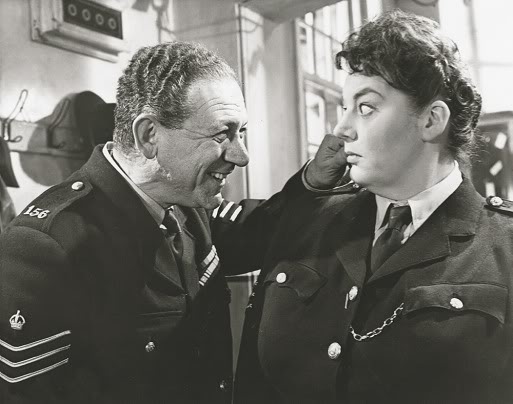
“Look in on Mrs Bottomley at No 24. She’s complaining of suspicious activities in the rear of her premises”
.
.
Directed by: Gerald Thomas; Screenplay by: Norman Hudis; Composer: Bruce Montgomery;
Country: UK; Certificate: PG; Running time: 86 minutes; Released: February 1960; B&W
.
.
The regulars
Sid James (first film); Kenneth Williams; Charles Hawtrey; Hattie Jacques; Joan Sims;
Kenneth Connor/ semi-regulars: Shirley Eaton (final film); Leslie Phillips; Eric Barker;
Joan Hickson; Terence Longdon; Cyril Chamberlain; Esma Cannon (first film)
.
.
The crumpet
Shirley Eaton; Jill Adams; Diane Aubrey
.
.
The setting
Contemporary (early ’60s) Britain; sending up the UK police force
.
.
The plot
Short-staffed owing to a flu outbreak, a police station is forced to call on the services of five brand new constables – a would-be-intellectual with delusions of grandeur (Williams), a posh former playboy (Phillips), a superstitious paranoiac (Connor), an effeminate special constable (Hawtrey) and an efficient female PC (Sims). Threatened by the station’s bumbling chief (Barker) with transferral unless performance improves, the new recruits’ sergeant (James) fears for his future and his worries are soon realised as the useless newbies predictably muck things up – unwittingly asking burglars the way to the station, losing control of the police dog and walking in on and acting as counsellor to a bombshell (Eaton) over her marriage fears. Can the plucky quartet put things right before they get the boot?
.
.
Would you like sauce with that?
Constable doesn’t necessarily offer more in the way of innuendos than immediate predecessor Carry On Teacher, but does push up the sauce-o-meter reading thanks to Shirley Eaton’s introduction being merely her bare back as she stands up in a bath and most famously, the sight of Williams, Hawtrey, Connor and Phillip’s posteriors as they run screaming from an unexpectedly cold shower – note: this is the very first instance of nudity in the series. And, actually, coming back to the innuendos, there are one or two top ones (read ‘the best line’ below; Sims’ response to Hickson viewing the parade of bare behinds).
.
.
Cross-dressing to impress?
One may argue the great Carry On tradition of cross-dressing really begins here, as an entire sequence seems to have been conceived and executed to raise transvestic laughs – Williams and Hawtrey going undercover as women to catch department store thieves red-handed, resulting in them accidentally shoplifting and having to make a run for it. In fact, so at ease do they seem playing dress-up, it feels like the filmmakers are indulging the pair. No question, after this there was no going back – any future Carry On in which all men were dressed as men at all times would be a cause for disappointment.
.
.
Catchphrase count
‘Corrr!’ (Connor): 1
.
.
Marvellous monikers
Special Constable Timothy Gorse (Hawtrey); Sergeant Laura Moon (Jacques); Constable Charlie Constable (Connor); WPC Gloria Passworthy (Sims); PC Tom Potter (Phillips); Herbert Hall (Longdon)
.
.
Plum notes or bum notes?
Montgomery’s work is perfunctory this time really; maybe the only really memorable bit being the fun ‘plodding’ cue as the constables march in line, starting their rounds of the neighbourhood under the watchful eye of James’s sergeant. Although, another Carry On tradition is arguably set thanks to this score, with the welcome reuse of the main theme established in Teacher – again, it would rightly reappear over and again throughout the rest of the series.
.
.
Do carry on or titter ye not?
Increasingly unbelievable though the new recruits’ attempts at being proper policemen may be, there’s no question they usually hit the funny bone – even if the idea of Hawtrey finding the urge to have a go on a scooter just too much to resist is ridiculous. And, yes, Connor’s astrological anxieties may become a little one-note, but James’s exacerbation at his hapless inferiors and crap superior is finely judged and very smirk-worthy, while Hickson’s regularly incarcerated, well-to-do intoxicator is great value.
.
.
.
Adjuster: +3
Arguably the most memorable opening era Carry On for two reasons – its bare-faced cheek of showing bare cheeks in an early ’60s family comedy and its featuring a totally solid-debuting Sid James as its lead – Constable’s also a success because it ups the funnies and the bawdiness and delivers a satisfying conclusion. It’s a fair cop, guv – as it entered the ’60s, the Carry On brand was developing nicely.
Total Boggles:
63/100
.
.
.
The best bit
Sims arrives on her first day having already arrested Hickson’s local alcoholic, whom requests her favourite cell in the basement – only to witness the station’s staff scarpering starkers from the shower
.
The best line
Sims: “Well you did ask for a cell with a southern exposure”
.
Trivia
The lead role of Sergeant Wilkins was intended for Ted Ray, whom had played the main character in directly preceding film Carry On Teacher, yet Ray was under contract to ABC – a rival UK studio to Anglo-Amalgamated, maker of the the Carry Ons – and, as ABC wouldn’t release Ray a second time, Sid James was cast, thus beginning his long, iconic association with the series
Screenwriter Hudis drew inspiration for his script from a real flu outbreak at Slough police station, which had occurred during a visit he’d made there for inspiration.
.
.
.
.
.
.
Carry On Ranking
(All out of 100)
1. Carry On Nurse (1959) ~ 65
2. Carry On Constable (1960) ~ 63
3. Carry On Sergeant (1958) ~ 58
4. Carry On Teacher (1959) ~ 56
.
.
.
Keep calm,
the Carry On reviews
will, yes, carry on…
.
.
.
What a Carry On: Carry On Summer Season
.
Cor, blimey! … Ooh, Matron! … Stop messin’ about! … Ohhh, hello! … And, of course, Yak-Yak-Yak!
We all know the Carry Ons, don’t we? Or, at least, if you’re from the UK and of a certain age, you’re highly likely to know the Carry Ons. As British as fish and chips, wet holidays in Skegness, old blokes in flat caps walking whippet dogs and Bond films on the telly on Bank Holidays, the Carry On comedy movie series hailing (mostly) from the ’60s and ’70s has been pretty much ever since it began an indelible, undeniable part of the texture of UK culture.
To know your Carry On is as much to be from these islands as it is to complain about the weather, bet on the Grand National and wonder why we bother not only to enter but also watch Eurovision every year. And, don’t doubt it, it’s much more British than it ever would be to vote for bloody UKIP (up yours, Farage! – cue Sid James laugh).
In which case, as we approach (what could well be, let’s be honest, another wiped-out-by-rain ‘comedy’) summer, what better time of the year and reason to celebrate the Carry On series? Yes, following on the heels of its previous celebrations of the cinematic James Bond and the golden anniversary year of Doctor Who, here’s notice then that George’s Journal from here on until its end (no, not that sort of end) will be – like an underwhelming village fête featuring drooping sandwiches and sozzled uncles – celebrating Sid, Kenny and co.’s contribution to the comedy and cinema firmament.
But, you may ask, do the Carry Ons really deserve celebration? Aren’t they the poor relation in cinematic terms to the classic Ealing comedies of the ’40s and ’50s? You could say that perhaps, if you were being über-critical. And, in comedic terms, aren’t they – filled, as they are, with leching old men, gay stereotypes, mother-in-law jokes and dolly birds with big bazoomas – really only a notch higher on the bed post (if you will) than the naughty seaside postcards of Donald McGill? Well, the fact is, and has always been, that with the Carry Ons it’s all about taste. They’re not for everyone; they never have been. And those without an appreciation of post- (and even pre-) WWII British culture will find it difficult to catch what they tap into – let alone find them funny. But, I guess, the point is, millions do. And millions have and will always find them funny.
.
The Carry Ons
The regulars: Sid James, Kenneth Williams, Charles Hawtrey, Hattie Jacques, Barbara Windsor, Joan Sims, Kenneth Connor, Bernard Bresslaw, Jim Dale and Peter Butterworth (variously)
Directed by: Gerald Thomas
Produced by: Peter Rogers
Written by: Talbot Rothwell, Norman Hudis and Dave Freeman (variously)
Scored by: Eric Rogers and Bruce Montgomery (variously)
The original series: Sergeant (1958); Nurse; Teacher (1959); Constable (1960); Regardless (1961); Cruising (1962); Cabby; Jack (1963); Spying; Cleo (1964); Cowboy (1965); Screaming!; Don’t Lose Your Head (1966); Follow That Camel; Doctor (1967); Up The Khyber (1968); Camping; Again Doctor (1969); Up The Jungle; Loving (1970); Henry; At Your Convenience (1971); Matron; Abroad (1972);
Girls (1973); Dick (1974); Behind (1975); England (1976); Emmannuelle (1978)
.
.
Indeed, a handful of the Carry Ons may actually be wittier, smarter and more intriguing than you recall – with their historical settings, pastiching tones and sharp, nay near satirical commentary on contemporary times. Plus, let’s not forget, conceived, as they were, by burgeoning film producer Peter Rogers (whose wife Betty Box, incidentally, produced the somewhat similar Dork Bogarde-starring Doctor film comedies) and directed – yes, every one of them – by helmer Gerald Thomas (whose elder brother Ralph Thomas directed those Doctor comedies), they boasted the cream of British comic talent in the shape of Sid James, Kenneth Williams, Charles Hawtrey, Hattie Jacques and Barbara Windsor. As well as many a legendary guest star – the likes of Frankie Howerd, Terry Scott, Leslie Phillips, Bernard Cribbins, June Whitfield, Patsy Rowlands, Harry H Corbett, Shirley Eaton, Liz Fraser, Elke Sommer and even Phil Silvers. And, although made on an extreme shoestring (Williams once claimed he made more from filming a British Gas advert than a Carry On film), their financing and filming – yes, all 29 of them – was 100 percent British.
But anyway, enough of all this Williams-like nostril-flaring nattering… on to the matter, er, in hand. For this post is merely an introduction. Yes, an introduction to a whole season of bawdiness, er, cheapness and general silliness. What’ll be coming your way? Well, like Babs’ bra springing off and into Kenny’s face, you’ll very soon be enduring… er, sorry, I mean enjoying the start of a marathon viewing, reviewing and ranking of the movies themselves – yes, in chronological order; that is, an (ahem) Carry On-a-thon – as well as articles on the ‘Legends’ that are the five main cast members (and what fascinating life stories will you find therein), plus, well, maybe one or two, er, titillating pictorial celebrations of the series’ ‘Talent’.
And with that then, folks, let’s fire the gun… er, I mean, let’s blow up the balloon… er, I mean let’s erect that tent-pole… er, I mean… well, you know what I mean – let’s bloomin’ well Carry On, shall we…?
.
.
.
Playlist: Listen, my friends! ~ April 2015
.
In the words of Moby Grape… listen, my friends! Yes, it’s the (hopefully) monthly playlist presented by George’s Journal just for you good people.
There may be one or two classics to be found here dotted in among different tunes you’re unfamiliar with or have never heard before – or, of course, you may’ve heard them all before. All the same, why not sit back, listen away and enjoy…
.
CLICK on the song titles to hear them
.N
Carmen McRae and the Dave Brubek Quartet ~ Take Five (1961)¹
The Moody Blues ~ Tuesday Afternoon (1968)
Alan Hawkshaw and Keith Mansfield ~ She (1968)
Cat Stevens ~ Lady D’Arbanville (1970)
Hot Butter ~ Pop Corn (1972)
Harry Nilsson ~ Spaceman (1972)
The London String Chorale ~ Galloping Home
(Theme from The Adventures of Black Beauty) (1972)
Tom Rush ~ No Regrets (1974)²
Sutherland Brothers and Quiver ~ Arms Of Mary (1976)
John Barry ~ Downtown Walker (1976)
Jimmy Bo Horne ~ Spank (1979)
Francis Monkman ~ Theme from The Long Good Friday (1980)
Sting ~ Someone To Watch Over Me (1987)³
.
¹ A rare version of the jazz standard featuring vocals – from legendary chanteuse Carmen McRae
² The original country version of the tune, which would become a huge hit for The Walker Brothers a year later, performed here by its writer and featuring one Carly Simon on backing vocals
³ From the soundtrack of 1987’s cop-as-bodyguard-of-Manhattan-socialite thriller of the same name
.








You and I have memories, longer than the road that stretches out ahead: John Lennon
and Paul McCartney famously snapped by David Bailey at The Beatles’ height in 1965
So, time to ’fess up. Yesterday I declared this very blog you’re (hopefully) reading was celebrating its fifth anniversary. Well, my friends, I told a fibber. Only a wee one, though, don’t worry; a little white lie. For, yes, that’s right, today is in fact George’s Journal’s birthday. The greatness that is the Internet has been, er, graced by this blog’s presence for a full five years from now on.
Why is that significant, you may ask? Because it means that, like it or not, this little winkle of the World Wide Web, this simple stop on the electronic super-highway, this craggy nook of the ’Net is extending its commemorative celebrations by one more blog post. Yup, this one. And similar to yesterday (and, um, very similar to last year’s additional anniversary-marking post), it’s a pictorial honouring of great faces from 50 years past – to be exact, one from each of the years 1950-99. What? Fifty people? In 50 separate images? Yes, afraid so. But, fear not, for these individuals are undeniably illustrious legends – all of them more than deserving of taking their place in this blog’s rollicking roster of ‘Legends’.
In which case, let’s crack on and crack open that bottle of Bollinger, I espy in the corner (if it’s a ’69, you were expecting me) as, together, we mark Day 1,827 of George’s Journal…
.
.
.
CLICK
on the images for full-size
.
.
.
1950 ~ Charles M Schulz
Making this year his by: gifting Charlie Brown, Snoopy and co. to the world at large by publishing his comic strip creation Peanuts for the very first time
.

.
.
.
.
.1951 ~ Humphrey Bogart
Making this year his by: delivering one of the performances of his career – certainly his funniest and his only Oscar-winning one – in the shape of comic adventure The African Queen’s lead
.
.
.
.
.
1952 ~ Gene Kelly
Making this year his by: hoofing up a storm as a silent movie heart-throb facing crisis but also finding love (hello, The Artist) in surely the ultimate Hollywood musical Singin’ In The Rain
.

.
.
.
.
1953 ~ Ian Fleming
Making this year his by: publishing, to paraphrase him, the spy novel to top them all, James Bond’s debut Casino Royale – and cheekily claiming it was intended as a wedding gift to his soon-to-be wife
.
.
.
.
.
1954 ~ Alfred Hitchcock
Making this year his by: delivering one hell of a movie one-two in the shape of classic thrillers Rear Window and Dial M For Murder – both of which star the incomparable Grace Kelly
.

.
.
.
.
1955 ~ Bill Haley
Making this year his by: irresistibly inviting the whole of the Western world to rock around the clock – and, in the process, offering up an unofficial anthem for the hot-to-trot rock ‘n’ roll movement
.

.
.
.
.
1956 ~ Laurence Olivier
Making this year his by: donning that schnoz, that haircut, that limp, that hunchback and that accent, and so ensuring up to 40 million Americans watching on their TVs (and millions more in cinemas) experience his take on Richard III – Shakespeare at its absolute finest
.

.
.
.
.
1957 ~ Buddy Holly
Making this year his by: going stratospheric as rock ‘n’ roll’s genius tunesmith thanks to the awesome hit quintet Peggy Sue, Everyday, Not Fade Away, Oh Boy! and That’ll Be The Day
.

.
.
.
.
1958 ~ Alec Guinness
Making this year his by: basking in Oscar glory as he takes home the Best Actor award for his magnificently nuanced character portrait of martial madness in The Bridge On The River Kwai
.

.
.
.
.
1959 ~ Miles Davis
Making this year his by: recording and releasing his seminal epic Kind Of Blue (the world’s biggest ever selling jazz album), featuring the utterly essential track So What
.

.
.
.
.
1960 ~ Frank Sinatra, Dean Martin
and Sammy Davis, Jr.
Making this year theirs by: gathering together the Rat Pack for ‘The Summit’ in Las Vegas – oh, and in their spare time making the movie Ocean’s Eleven
.

.
.
.
.
1961 ~ Yuri Gagarin
Making this year his by: that’s right, becoming the first man in space
.

.
.
.
.
1962 ~ Andy Warhol
Making this year his by: powering to become pop art’s leader by creating and displaying his now ubiquitous Campbell’s Soup Cans and Marilyn Diptych, thereby changing modern art forever
.

.
.
.
.
1963 ~ Marcello Mastroianni
Making this year his by: following up his lead turn in Fellini’s timeless La Dolce Vita by providing a cypher for the director in his masterpiece 8½ – and still looking like the coolest chap on the planet
.

.
.
.
.
1964 ~ Donald Campbell
Making this year his by: breaking the world land-speed record and the world water-speed record within months of each other – thus becoming the only man to hold both records in the same year
.

.
.
.
.
1965 ~ Paul McCartney
Making this year his by: starring with his fellow Fabs in Help!, beginning to experiment on album Rubber Soul, romancing the adorable Jane Asher, owning Martha the Old English Sheepdog and remaining the most fanciable Beatle
.
.
.
.
.
1966 ~ Bobby Moore
Making this year his by: captaining England’s football team to World Cup glory against old foe West Germany at Wembley
.

.
.
.
.
1967 ~ Jimi Hendrix
Making this year his by: breaking through and quickly proving he’s the world’s greatest ever guitarist via albums Are You Experienced and Axis: Bold Of Love, and tunes Purple Haze, Hey Joe, The Wind Cries Mary, Foxy Lady, Fire, Little Wing and Third Stone From The Sun
.

.
.
.
.
1968 ~ Louis Armstrong
Making this year his by: recording the song that will define his singing career, the wonder that’s What A Wonderful World – the year’s biggest selling single in the UK
.
.
.
.
.
1969 ~ Sid James
Making this year his by: becoming Blighty’s top comedy figure thanks to big-screen leads in Carry On Again Doctor and Carry On Camping – the year’s #1 movie at the UK box-office
.

.
.
.
.
1970 ~ Paul Simon and Art Garfunkel
Making this year theirs by: calling it a day as a duo but going out on a high with easily their greatest album, which contains extraordinary, epic title tune Bridge Over Troubled Water
.

.
.
.
.
1971 ~ John Lennon
Making this year his by: confirming himself as the most musically adored post-Beatle thanks to instantly adopted (and for all-time) peace movement anthem Imagine
.
.
.
.
.
1972 ~ Mark Spitz
Making this year his by: giving the Munich Olympics a much needed silver lining by winning a sensational seven swimming gold medals – and setting seven world records in the process
.

.
.
.
.
1973 ~ Noddy Holder
Making this year his by: enjoying an annus mirabilis with glam rockers Slade – thanks to UK #1’s Cum On Feel The Noize, Skweeze Me, Pleeze Me and Merry Xmas Everybody
.
.
.
.
.
1974 ~ Al Pacino and Robert De Niro
Making this year theirs by: exciting and delighting audiences around the world as the leaders of Hollywood’s dynamic new acting pack with astonishing performances in The Godfather Part II
.
.
.
.
.
1975 ~ Arthur Ashe
Making this year his by: making it look like Wimbledon has finally entered the second half of the 20th Century (if that’s actually possible) by becoming the first black man to win the men’s singles title
.

.
.
.
.
1976 ~ Benny Andersson and Björn Ulvaeus
Making this year theirs by: rivalling Volvo as Sweden’s biggest export (honestly) by consolidating ABBA’s conquest of global pop with album Arrival and iconic hits Dancing Queen, Fernando and Money, Money, Money
.

.
.
.
.
1977 ~ George Lucas
Making this year his by: gifting the world Star Wars – and redefining cinema forever
.

.
.
.
.
1978 ~ Ronnie Barker
Making this year his by: winning a BAFTA for both sitcom extraordinaire Porridge (1974-77) and sketch show supreme The Two Ronnies (1971-87), as well as picking up an OBE from Her Maj
.

.
.
.
.
1979 ~ Dustin Hoffman
Making this year his by: winning the (first of his two) Best Actor Oscars for portraying – with acute naturalism and honesty – a man adjusting to single-fatherhood in Kramer Vs. Kramer
.
.
.
.
.
1980 ~ Sebastian Coe and Steve Ovett
Making this year theirs by: transforming the men’s 800m and 1500m at the Moscow Olympics into a two-man-only scrap – Britain’s never had it so good (in middle-distance running)
.
.
.
.
.
1981 ~ John Williams
Making this year his by: after Jaws (1975), Star Wars (1977), Superman: The Movie (1978) and The Empire Strikes Back (1980), giving an unmistakeable musical identity to cinema’s greatest ‘modern’ hero Indiana Jones in Raiders Of The Lost Ark – next up will be E.T.: The Extra-Terrestrial (1982)
.

.
.
.
.
1982 ~ Roald Dahl
Making this year his by: writing and publishing the bodaciously brilliant The BFG, arguably the greatest – and among the very best-selling – of his novels
.
.
.
.
.
1983 ~ Eddie Murphy
Making this year his by: emerging as Hollywood’s most bankable funnyman, by following-up 48 Hrs. (1982) with Trading Places – and next year will bring Beverly Hills Cop
.

.
.
.
.
1984 ~ Jane Torvill and Christopher Dean
Making this year theirs by: becoming Britain’s brand new sweethearts (even if they weren’t to each other) by ice-skating to Olympic gold with all those ‘perfect sixes’
.

.
.
.
.
1985 ~ Bob Geldof
Making this year his by: outdoing Band Aid by arm-twisting stars to collaborate on the extraordinary raise-dosh-by-the-vatload concert of the century Live Aid
.

.
.
.
.
1986 ~ Gary Lineker
Making this year his by: establishing himself as the greatest English footballer of his generation by scoring six goals in five matches at the Mexico ’86 World Cup – Diego, who?
.

.
.
.
.
1987 ~ Sean Connery
Making this year his by: at last putting Bond behind him, for right or wrong, as he gives an electric performance in gangster thriller par excellence The Untouchables – for which he’ll wonderfully become one of Oscar’s most popular ever winners
.

.
.
.
.
1988 ~ Seve Ballesteros
Making this year his by: winning his fifth and final ‘Major’ golf tournament, The British Open (for the second time), describing his last round thereof as ‘perhaps the best … of my entire career’
.

.
.
.
.
1989 ~ Tim Berners-Lee
Making this year his by: implementing, via the Internet, the first successful communication between an HTTP ‘client’ and a server – that is, basically inventing and setting up the World Wide Web
.

.
.
.
.
1990 ~ John Barry
Making this year his by: scoring navel-gazing Western hit Dances With Wolves, for which he’ll win the fourth and final – and, like all the others, hugely deserved – Oscar of his career
.

.
.
.
.
1991 ~ Roger Moore
Making this year his by: persuaded by the angelic Audrey Hepburn, following in her footsteps and becoming a highly visible UNICEF Goodwill Ambassador – a role to which he’s been hugely dedicated for every one of his autumnal years
.
.
.
.
.
1992 ~ Robin Williams
Making this year his by: starring in the role of his career, the voice of the incorrigible Genie in Disney’s Aladdin – he’ll then go on to play maybe the other great role of his career Mrs Doubtfire
.
.
.
.
.
1993 ~ Steven Spielberg
Making this year his by: pulling off the greatest one-two in cinema history by filming back-to-back Jurassic Park and Schindler’s List – the former’ll become the (then) biggest moneymaker of all-time, the latter his most awarded movie
.
.
.
.
.
1994 ~ Nelson Mandela
Making this year his by: being elected the first President of the newly democratic South Africa
.

.
.
.
.
1995 ~ Pierce Brosnan
Making this year his by: debuting as a smoothly cool new 007 in GoldenEye, the irresistible adventure that brilliantly brings Bond back from the dead
.
.
.
.
.
1996 ~ Paul Gascoigne
Making this year his by: mercurially driving his team to near trophy-grasping glory as England gloriously ‘bring football home’ at Euro ’96
.
.
.
.
.
1997 ~ Elton John
Making this year his by: taking centre-stage at Diana’s funeral by retooling one of his top tunes as a tribute to his friend and, in so doing, scoring the second biggest selling single of all-time
.
.
.
.
.
1998 ~ Burt Bacharach
Making this year his by: returning to his marvellously melancholic best form since the ’60s with Elvis Costello-collaborated album Painted By Memory, including the song God Give Me Strength
.

.
.
.
.
1999 ~ Martin Sheen
Making this year his by: finally emerging from the shadow of Brando in Apocalypse Now (1979) by absolutely nailing the role of Josiah Edward ‘Jed’ Bartlet, the ultimate US President, in the first season of TV’s sublime The West Wing (1999-2006)
 .
.
.
.
.
.
.

Purr-fect pals: Audrey Hepburn’s greatest animal chum in real-life may have been her Yorkshire Terrier Mr Famous, but in her guise as Holly Golightly, there was only ever one feline friend for her
Can you believe it? Frankly, I can’t – the thought of it only reminds yours truly how time flies; how the present becomes the past (mind you, that whimsical, somewhat memorialistic thinking of what’s been is arguably what this blog’s all about). Anyway, yes, can you believe it? George’s Journal is celebrating its fifth anniversary. That’s right, it’s been around these parts for five years – a whole half-decade; a full semi-dectet. And such an occurrence requires suitably marking, doesn’t it? Well, forgive me, peeps, for this post is verily it.
Yes, following on from previous anniversary-acknowledging efforts (see here, here and here), this year offers up a pictorial saluting to oh-so ‘talented’ and lovely looking ladies of years past – across 50 years past, in fact: 1950-99, no less. Indeed, one for each of those 50 years. Now, the eagle-eyed among you (that is, those who are more than casual visitors to this blog) may notice this is a suspiciously similar idea to last year’s birthday blog post. My answer? Well, let’s be honest, this nook of the Internet’s never really been about reinventing the wheel, so why spoil the habit of a blog’s lifetime (so far)?
So, here we go then, let us, each and every one of us, welcome each and every one of the following new entrants into the ‘Talent’ corner of George’s Journal…
.
.
.
CLICK
on the images for full-size
.
.
.
1950 ~ Anita Ekberg
Making waves this year for: taking the Miss Sweden crown and, via the Miss Universe competition, gaining international exposure that will see her swiftly become a global film star and eventually lead to an unforgettable appearance in La Dolce Vita (1960)
.

.
.
.
.
1951 ~ Vivien Leigh
Making waves this year for: taking on the second great screen role of her career – Blanche du Bois in A Streetcar Named Desire, which will see her cruise to Oscar victory the following year
.

.
.
.
.
1952 ~ Cyd Charisse
Making waves this year for: becoming an overnight sensation thanks to her break-out role as the once-seen-never-ever-forgotten dancer opposite Gene Kelly in Singin’ In The Rain’s fantasy sequence
.

.
.
.
.
1953 ~ Maria Callas
Making waves this year for: hitting her career high as she drops several pounds to take on the svelter figure that – by her own admission – improves her performances as the ultimate opera diva
.

.
.
.
.
1954 ~ Judy Garland
Making waves this year for: fifteen years on from Dorothy, becoming a musical cinema icon all over again in A Star Is Born, featuring her indelibly memorable torch song The Man That Got Away
.

.
.
.
.
1955 ~ Shirley Jones
Making waves this year for: bewitching audiences in her film debut as the female lead in the classic movie adaptation of Rodgers and Hammerstein’s Oklahoma!
.

.
.
.
.
1956 ~ Ingrid Bergman
Making waves this year for: marking her return from the Hollywood wilderness by winning a Best Actress Oscar as the supposed Russian royal survivor Anastasia (1955)
.

.
.
.
.
1957 ~ Suzy Parker
Making waves this year for: on top of becoming the first fashion model to earn $100,000 for a single gig, starring in Cary Grant comedy Kiss Them For Me and alongside Audrey Hepburn and Fred Astaire in hit musical Funny Face
.
.
.
.
.
1958 ~ Mitzi Gaynor
Making waves this year for: hitting the Hollywood ‘A’-List by taking lead duties as Nellie Forbush in the big-screen adaptation of musical South Pacific, the year’s #1 movie at the box-office
.

.
.
.
.
1959 ~ Marilyn Monroe
Making waves this year for: proving utterly iridescent in the role of her career – the ditsy but adorable jazz band songstress Sugar Kane in classic cross-dressing caper Some Like It Hot
.

.
.
.
.
1960 ~ Jean Seberg
Making waves this year for: beguiling Jean Paul Belmondo and hipster film fans everywhere as his drop-dead gorgeous, bob-haired accomplice in Godard’s New Wave classic À Bout de Souffle
.

.
.
.
.
1961 ~ Audrey Hepburn
Making waves this year for: besting the rats and super rats and beating the ‘Mean Reds’ by breakfasting at Tiffany’s, thereby creating the big-screen Holly Golightly, the role for which she’ll become synonymous for the rest of (and beyond) her life
.

.
.
.
1962 ~ Ursula Andress
Making waves this year for: quite simply becoming a sex symbol icon for all-time by emerging from the sea Botteceli’s Venus-like in the first ever Bond film Dr No
.

.
.
.
.
1963 ~ Jackie Kennedy
Making waves this year for: enduring the tragic assassination of her US President husband with elegant dignity and grace, thus passing into legend as the ultimate glamorously aspirational First Lady (these carefree images were captured mere days before her fateful ordeal)
.

.
.
.
.
1964 ~ Diana Ross,
Mary Wilson and Florence Ballard
Making waves this year for: going stratospheric as The Supremes, surely the greatest girl group of all-time, thanks in no small part to sensational US and UK #1 hit Baby Love
.

.
.
.
.
1965 ~ Marianne Faithfull
Making waves this year for: taking up with Rolling Stones frontman Mick Jagger and releasing on the same day both a folk album (Come My Way) and an eponymous album of covers
.
.
.
.
.
1966 ~ Twiggy
Making waves this year for: becoming an icon of the Swinging Sixties as she’s named the ‘Face of 1966’ and the ‘Woman of the Year’ – not bad for a former Woolworths till girl from Neasden
.

.
.
.
.
1967 ~ Diana Rigg
Making waves this year for: proving beyond any doubt she’ll be a feminist icon for all-times thanks to her second and final series as The Avengers’ heroine du jour Mrs Emma Peel
.

.
.
.
.
1968 ~ Mia Farrow
Making waves this year for: divorcing Sinatra, schlepping with The Beatles to Rishikesh and getting a snip from Vidal Sassoon for a megastar-making turn in Rosemary’s Baby
.

.
.
.
.
1969 ~ Janis Joplin
Making waves this year for: becoming an essential figure of late ’60s counterculture and an undeniable rock legend by pretty much headlining Woodstock
.

.
.
.
.
1970 ~ Tina Moore
Making waves this year for: underlining her status as the ultimate WAG as the glamorous focal point in the lead-up to the Mexican World Cup defence by husband Bobby’s England
.

.
.
.
.
1971 ~ Britt Ekland
Making waves this year for: finally emerging as the movie star she’s threatened she’d become for years by providing the looks to Michael Caine’s Michael-Caineness in Get Carter
.

.
.
.
.
1972 ~ Roberta Flack
Making waves for: coming out of nowhere to kill us all with the biggest chart hit of the year Killing Me Softly With His Song
.

.
.
.
.
1973 ~ Jane Seymour
Making waves this year for: hypnotising new 007 Roger Moore and red-blooded males everywhere with her gracious plummy tones and aristocratic beauty as Bond Girl extraordinaire Solitaire in Live And Let Die
.

.
.
.
.
1974 ~ Sylvia Kristel
Making waves this year for: providing a centre-piece to mid-’70s porn chic as the, er, titular lead in the sexily exploitative Emmanuelle
.

.
.
.
.
1975 ~ Donna Summer
Making waves this year for: simultaneously becoming a disco diva and sex siren for her irresistible vocals on the incredibly hot (in more ways than one) hit Love To Love You Baby
.
.
.
.
.
1976 ~ Chris Evert
Making waves this year for: winning the Wimbledon and US Singles titles, serving as the Women’s Tennis Association’s President and continuing her (eventual) unbroken five-year reign as World #1
.

.
.
.
.
1977 ~ Carrie Fisher
Making waves this year for: stepping out of mother Debbie Reynolds and dad Eddie Fisher’s collective shadow by debuting as Star Wars’ bagel-bun-haired but adorably sassy Princess Leia
.

.
.
.
.
1978 ~ Kate Bush
Making waves this year for: establishing her curious, nay vaguely bizarre brand of art-pop as an instant mainstream success, not least in the shape of the wonderful Wuthering Heights
.

.
.
.
.
1979 ~ Persis Khambatta
Making waves this year for: going bald to conquer sci-fi sirendom and give Captain Kirk the horn in Star Trek: The Motion Picture – she’ll become the first Indian to present an Oscar a year later
.


.
.
.
.
1980 ~ Sharron Davies
Making waves this year for: literally making waves, if you will, by wining a silver medal at the Moscow Olympics in the 400m Individual Medley behind a self-admitted East German drug cheat
.

.
.
.
.
1981 ~ Sheena Easton
Making waves this year for: following up her major chart hit of the previous year – 9 To 5 (Morning Train) – with the opening titles theme to 007 movie For Your Eyes Only – and becoming the only Bond singer to actually appear in the titles
.

.
.
.
.
1982 ~ Meryl Streep
Making waves this year for: delivering perhaps the performance of her career as a haunted Auschwitz survivor in Sophie’s Choice, which will win her the first of her (so far) two Best Actress Oscars
.

.
.
.
.
1983 ~ Sara Dallin, Siobhan Fahey
and Keren Woodward
Making waves this year for: solidifying their status as the truly irresistible tom-boyish sexy-pop-trio-next-door by hitting the UK’s top 10 with debut album Deep Sea Skiving, featuring the hits Really Saying Something and Cruel Summer
.

.
.
.
.
1984 ~ Sade Adu
Making waves this year for: as the velvet-voiced lead of neo-soul-cum-smooth-jazz outfit Sade, playing a pivotal role in shifting millions of units of Smooth Operator and Your Love Is King
.

.
.
.
.
1985 ~ Cybill Shepherd
Making waves this year for: rapidly rising to small screen superstardom by generating sparks of crackling chemistry with Bruce Willis in comedy drama par excellence Moonlighting (1985-89)
.

.
.
.
.
1986 ~ Mia Sara
Making waves this year for: playing the hottest girl in high school any of us can remember (real or not) as she skives off for the day with Ferris Bueller
.

.
.
.
.
1987 ~ Whitney Houston
Making waves this year for: hitting the album chart top spot in 13 countries with sophomore long-player Whitney, which spawns the world-conquering singles I Wanna Dance With Somebody (Who Loves Me), Didn’t We Almost Have It All and Where Do Broken Hearts Go
.
.
.
.
.
1988 ~ Carly Simon
Making waves this year for: bestowing yuppie-endorsing romcom Working Girl with the awesomely epic tune Let The River Run, which will go on to win her an Oscar for Best Original Song
.

.
.
.
.
1989 ~ Michaela Strachan
Making waves this year for: proving a perfect Saturday morning hangover cure for male students up and down the land as the chirpy, lovely co-host of TV-am’s Wide Awake Club (1984-89)
.

.
.
.
.
1990 ~ Julie Delpy
Making waves this year for: earning the tag of Euro cinema’s latest overnight sensation thanks to a scintillating supporting role in her debut movie Europa Europa
.

.
.
.
.
1991 ~ Jennifer Connelly
Making waves this year for: leaving adolescence and Labyrinth (1986) behind by taking grown-up, glamorous love interest duties in Hollywood-based comic book adventure hokum The Rocketeer
.

.
.
.
.
1992 ~ Joanna Lumley
Making waves this year for: showing ingenues how it’s done by, in her mid-40s, daringly going totally against type, nay trashing her own persona in portraying solipsistic lush Patsy Stone in sitcom Absolutely Fabulous (1992-2012)
.

.
.
.
.
1993 ~ Milla Jovovich
Making waves this year for: taking the leap from international catwalk model to globally admired cinema icon by appearing in Richard Linklater’s classic flick of ’70s US teendom Dazed And Confused
.

.
.
.
.
1994 ~ Jennifer Aniston
Making waves this year for: becoming the hottest sitcom star since Michael J Fox and a small-screen sex symbol thanks to out-of-nowhere TV ratings blockbuster Friends (1994-2004)
.

.
.
.
.
1995 ~ Izabella Scorupco
Making waves this year for: contributing sizzling sex appeal to glorious renaissance Bond movie GoldenEye – every bit as appealing as Pierce Brosnan and far better looking in a bikini
.

.
.
.
.
1996 ~ Sheryl Crow
Making waves this year for: conquering charts everywhere with her eponymous second album, from which comes the singles Everyday Is A Winding Road, A Change Would Do You Good and the awesome If It Makes You Happy
.

.
.
.
.
1997 ~ Geri Halliwell
Making waves this year for: encapsulating ‘Cool Britannia’ (for good or bad) by appearing at the BRIT Awards wearing a Union Jack miniskirt – and not looking half bad doing so
.

.
.
.
.
1998 ~ Kate Winslet
Making waves this year for: being seen at the cinema surely at least three times by most of the world’s population in Titanic, in which she does far more than just getting, er, ‘painted like a French girl’
.

.
.
.
.
1999 ~ Gwyneth Paltrow
Making waves this year for: providing the adorable heart of quirkily sunny Elizabethan romcom Shakespeare In Love, a role for which she’ll tearfully and oh-so memorably capture an Oscar
.

.
.
.
.
.

.
.

















 George's Journal