Worth the trip?: High Society exhibition ~ Wellcome Collection, London (until Feb 27)

Heroin heroics or caught out and cuffed?: Artist Richard Hamilton’s famous work Swingeing London, featuring Mick Jagger and art dealer Robert Fraser during arrest for heroin possession in 1967, currently on display as part of Wellcome Collection’s High Society exhibition
According to the official blurb for the latest exhibition at London’s Wellcome Collection, every society on Earth is a ‘high society’; an interesting point and one that this free exhibit does its utmost to make.
Indeed, if you’ve any interest in the drug-related counter-culture of the ’60s and ’70s or the history and realities of hallucinogenic drugs in general and have the means to visit this venue, then High Society could be something of a must for you. It sets itself a tough act in trying to reveal to peeps both the background and historical/ present use of mind-altering drugs, as well as the paraphenalia and controversies associated with them, but mostly through presenting a large and diverse collection of objects, images and artworks, it’s fair to say it succeeds.
Heroin, hashish, cocaine, ectasy, tobacco, alcohol and caffeine; they’re all covered here. And in a way that, while likely to reinforce some generally accepted opinions (drugs and their international trade are bad), may also make one think a little differently about one or two things (coffee was once illegal and Coca Cola originally contained cocaine). Smartly, the latter point is maybe most ensured by the exhibition’s dedication to displaying where the major drugs of today came from and how they got started with us.
Take, for example, heroin. An impressively comprehensive gathering of documents and images are on hand detailing 19th Century China’s growth in production of opium (the basis of heroin), the spread of opium addiction from there as Chinese immigrants moved to the US and Europe and, of course, the British Imperialist ambition of creating an opium-dependent population among the part of China it once controlled and the so-called Opium Wars with China this policy created (not exactly the UK’s finest hour). Yet, so much for a history lesson because in the same room a glass cabinet can be found containing objects that look like they were looted from a Victorian pharmacy, including heroin in a jar. Here’s a collision then of well documented, wide-sweeping history and lesser known, eyebrow-raising, far more domestic history.

Just (don’t) do it: a jar that once contained heroin and would have been available over the counter in Victorian Britain (l); a poster advocating the US alcohol prohibition in the 1920s (r)
And this unapologetically frank combination of objects, art and literature is to be found throughout High Society, as early copies of Lewis Carroll’s Alice in Wonderland (as well as footage of Jonathan Miller’s deliberately trippy 1966 film adaptation for the BBC), mingle with cocaine eye-drops, images of modern-day crack addicts, hashish and marijuana pipes of all shapes and sizes, photos of Native Americans consuming peyote (a mescaline-containing cactus), posters for and against alcohol temperance in the UK and US, essays on drug experimentation from 19th Century scholars and, thanks to a NASA project, prints of web patterns created by spiders while on benzedrine, caffeine and marijuana. You’ll be surprised by which of those three substances most intereferes with the arachnid web-spinners.
Maybe most interesting to readers of this blog, though, is the exhibition’s treatment of Western counter-culture drug usage. While photos and one or two drug-related artworks of the period (such as Richard Hamilton’s Swingeing Sixties above) are worthwhile, they’re most likely exactly the sort of thing you’ve seen before – probably on google, let’s be honest. What is far rarer and far more impressive is what’s maybe High Society‘s centrepiece, namely The Joshua Light Show.
Created by ‘visual musician’ Joshua White, it featured as a late ’60s and early ’70s backdrop at the Fillmore East venue in New York’s East Village while artists like The Doors, The Who, Grateful Dead, The Allman Brothers Band, Jimi Hendrix and Jefferson Airplane played. Sitting in front of it, as you can here, this psychedelic lumiere to those bands’ son gives you something of an idea of the trippy, hip atmosphere of such a place, with splattering and bubble-like vibrant colours and pop art-esque shapes crossing the screen before you. Behind the screen, you get to see how the thing works – whirring cameras create the continuously locomotive images with help from bottles of ink and plates containing film, magazine and photo shots. Mind you, this contribution to the exhibit was, in fact, recently created by White with Seth Kirby; it was intended, in the former’s words, as a ‘sculptural interpretation of a real 1960s psychedelic laboratory.’
Perhaps High Society‘s greatest success, however, is that it doesn’t make any judgments itself; it shows the visitor the origins of the drugs we’re familiar with, how they’ve been indulged in both illegally for a high and traditionally in communities for spiritual, medicinal and diplomatic purposes and how, in relatively modern society, they’ve become fetishised, demonised, regulated and the source of a $200bn a year business. In short, it makes you think – surely a perfectly acceptable and healthy addiction for us all.
~~~
Further reading:
http://www.wellcomecollection.org/whats-on/exhibitions/high-society.aspx
Thanks to Wellcome Collection for the images.

Kiss & tell: George’s top 14 movie romances

Lovers in a cold climate: Omar Sharif and Julie Christie positively sizzled against the icy backdrop of revolutionary Russia as Doctor Zhivago’s all-time classic, star-crossed pair
So, next Monday is good old Valentine’s Day – the one day of the year when loved ones stress themselves out in finding and booking a table-for-two at a restaurant not already full to the brim with other couples doing exactly the same thing and then desperately try to finish work early so they can actually make it in time, while lonely hearts, well, wish the whole thing would just go away as soon as it starts. Still, like Crimbo, with each passing year the Valentine palaver seems no less popular when it swings around. Especially with card vendors and flower sellers, no doubt.
In which case then, there can surely be no better reason – nor a better time of year – for me to regale this very blog with my countdown of the greatest romances to have graced the silver screen. Admittedly, you’ll no doubt feel there’s one or two discrepencies here (no Brief Encounter?), but, may I stress, this is a list according to merely my tastes and take on quality amorous cinema.
So, without further ado, let’s let Cupid fire that fateful arrow of his and get this rundown of the 14 – for, yes, February 14 – greatest film romances underway (do click on each of the character/ film titles for something a little extra, won’t you?)…
~~~
14. Oliver Barret IV and Jennifer Cavilleri (Ryan O’Neal and Ali McGraw) ~
Love Story (1970)

According to the tagline of the monster box-office hit that was Love Story, ‘love means never having to say you’re sorry’; well, folks, I’m not sorry for kicking-off the list with this shamelessly sentimental, as-mainstream-as-The-X-Factor tearjerker. Nopes, I’m not. And the reason why? Because, although I’d rather not admit it in civilised society, this tale of a beautiful little rich boy falling for a beautiful little poor girl only to lose her at the inevitable doomed denouement is, in fact, not the stuff of utter cliché one may expect or recall. O’Neal and McGraw were perfectly cast opposite one another and make for effective (for the time) thoroughly modern lovers, trading as many barbs as smooches. Francis Lai’s haunting theme (later put to lyrics to become the song Where Do I Begin?) helps too, of course. What can I say, every time I come across this one on the telly, I seem to end up watching it to the end.
~~~
13. Benjamin Braddock and Elaine Robinson (Dustin Hoffman & Katharine Ross) ~
The Graduate (1967)
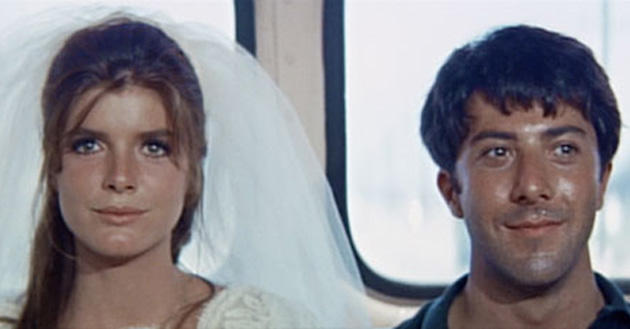
On the surface, this romance from the cast-iron classic The Graduate appears something of a retread of Oliver and Jenny’s from Love Story – its participants are both young, WASP-ish, recently graduated students of the late-’60s looking to make their way in the world. Yet, what I love about Benjamin and Elaine’s tale is its sheer, well, perversity. Growing out of the burning embers of the former’s affair with the latter’s mother – and, inevitably, crippled by it – this one was never going to be normal from the start. Like everything in this film, it’s a bit f*cked up. Indeed, the couple’s first date is in the company of a stripper whose jiggling bosoms Benjamin exclaims is ‘a great effect’. In spite of this mis-start and many highly amusing mis-steps, the two find a simple unspoken commonality in the face of the whirling confusion of the adult world they’re hurtling towards – and, with any amount of luck, they may just end up in it together…
~~~
12. Cyrano de Bergerac and Roxane (Gérard Depardieu and Anne Brochet) ~
Cyrano de Bergerac (1990)

If you’re being pedantic, then it’s probably not exactly right to describe as a romance what happens between the two main protagonists of Jean-Paul Rappeneau’s adaptation of Edmond Rostand’s play about the real-life 17th Century French hero. For really this is a story of unrequited love – big time. Such a huge heart does the eponymous Cyrano with his enormous honker have that he hides his love for the delicate Roxane (in fear she would reject him for his appearance) and instead helps dashing new recruit to the regiment he captains, Christian de Neuvillette, to woo her using his words of poetry and impromptu genius. The sumptuous production and deliciously rich writing, directing and acting (especially from Depardieu) ensure this is an utterly entertaining, unforgettable romantic drama – and the ending is … well, if you don’t know the story or have never seen the film, let’s just say you’ll find out.
~~~
11. Carl and Ellie Fredricksen ~ Up (2009)

The true genius of the romance featured in Pixar’s outstanding Up is underlined by how much of the film’s running-time it takes up – just the first 10 of its total 90 minutes. Yes, it’s small, but most perfectly formed. As the starter to the balloon-flight-fuelled feast that is Up, it’s the tale of old, crusty curmudgeon-to-be Carl and his wife Ellie’s lives together. Warm, witty, colourful, poignant and overfilling with charming and brilliant detail, this 10-minute sequence may just be the best Pixar’s ever come up with. And not least because it’s profoundly moving – genuinely so. Oh, and its wordless too. Yes, neither character speaks. Hats off indeed then to composer Michael Giacchino, whose music exquisitely fits with the animators’ oh-so impressive visuals. In short, romantic cinema rarely reaches these giddy heights.
~~~
10. E.T. and Elliot (Henry Thomas) ~ E.T.: The Extra-Terrestrial (1982)

Strictly speaking, of course, E.T. doesn’t feature a romance; more a ‘bromance’ – and an intergalatic one at that. Yet, it would take a hard heart to deny that the relationship between 10-year-old Elliot and his podgy pal with the Stretch Armstrong-like neck is as – if not more – moving than any other you care to mention. Here’s an ordinary young boy from a ‘broken home’ in suburban America who finds a simple, unquestioned connection with a super-intelligent lifeform whose home is light-years away from Earth, but who also, critically, is lost, vulnerable and in need of a chum. The friendship – nay, near brotherhood – between little Elliot and this ugly-cute alien is innocent, sweet, delightful and rather beautiful. And that’s why it’s captivated and touched fellow lonely – and fulfilled – hearts across the globe for nigh-on three decades.
~~~
9. Scarlett O’Hara and Rhett Butler (Vivian Leigh and Clark Gable) ~
Gone With The Wind (1939)

Ah, Scarlett and Rhett; one of Hollywood’s best loved couples. So why aren’t they higher on this list? After all, their romance had it all – caustic, terrific lines, tempestuous rows and passionate smooching? Yes, but there’s something that, given its status as one of the ‘great romances’, has always rankled with me when it comes to the O’Hara/ Butler hook-up. Namely, that it’s not the only romance in its film and, in fact, because of that it’s arguably not even a romance for the majority of the movie. Yes, it’s not until Scarlett gets the rather dippy Ashley out of her head that, for the flick’s last third, she realises she can’t live with(out) the blaggard Butler. Still, it is then, of course, that Gone With The Wind truly turns into The Scarlett and Rhett Show and the sparks between the awesome Vivien Leigh and perfectly cast Clark Gable turn to fireworks. And, for sure, they’re fireworks that’d grace any Bonfire Night – or the burning of Atlanta.
~~~
8. Alvy Singer and Annie Hall (Woody Allen and Diane Keaton) ~
Annie Hall (1977)
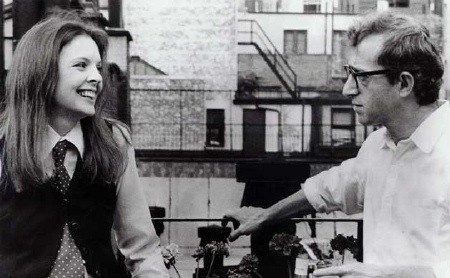
Make no mistake, the relationship at the heart of Woody Allen’s signature picture is pretty much the standard for modern movie romances. Unlike those that graced many a Hollywood effort before the studio system’s break-up, its emphasis was much more on naturalism rather than, say, the empathetic drama or, if you prefer, melodrama of theirs. Sure, the story of nebbish paranoiac Alvy Singer and the titular Annie Hall features a lot of comedy, but much of it is rooted in the natural realities faced by two people coming together, living together and trying to stay together. Indeed, owing to Diane Keaton going stratospheric after winning the Best Actress Oscar for her wonderfully charming performance as the unfashionably chipper and, yes, unfashionably dressed title characer, she often finds herself the focus of acclaim for this flick nowadays, rather than its romance (or Allen’s writing, directing and own acting). Ah well, la-di-da, eh?
~~~
7. Salvatore Di Vita and Elena Mendola (Marco Leonardi and Agnese Nano) ~
Nuovo cinema Paradiso (1988)

To my mind, Cinema Paradiso has to be one of the most romantic films ever made. Sure, one could say that much of its romance concerns filmmaking itself, as its plot focuses on the makeshift upbringing of young Salvatore/ Toto in an isolated but somewhat idyllic Sicilian town by father figure Alfredo, a gruff but loving cinema owner. As the boy grows up he falls in love with cinema, as so many of us do, and eventually becomes a big-time movie director. Yet, and importantly so for the plot, this isn’t the only love affair of the flick; just as captivating and moving is the teenage Salvatore’s discovery, incredibly patient but agonising pursuit and wonderful capture of the beautiful Elena. Throw in the picture’s off-the-scale nostalgia factor and Ennio Morricone’s extraodinarily romantic score and you’ve got a heart-melting love story here as moving as Romeo and Juliet and as Italian as, well, Romeo and Juliet.
~~~
6. Harry Burns and Sally Albright (Billy Crystal and Meg Ryan) ~
When Harry Met Sally… (1989)

There’s no doubt there’s a lot of Woody Allen channelled in Rob Reiner’s (director) and Nora Ephron’s (screenwriter) When Harry Met Sally… Yet, I’d argue, so good does it do it that this iconic late-’80s rom-com actually manages to out-Annie Hall Annie Hall. Why? Because I find myself caring more for the plight of its two protagonists, the over-thinking, over-witty, over-motor-mouthed Harry Burns (a brilliant Billy Crystal) and the modern, charmy and a wee bit ditzy Sally Allbright (a delightful Meg Ryan), than I do for Alvy and Annie. Yes, perhaps they’re simply a more accessible and likeable couple; everybody loved When Harry Met Sally…, it seemed to be the floodgates for the saccharine-scented ocean that is the modern Hollywood rom-com genre. But as well as being an amusing and entertaining relationship, theirs is also honest and frank – friends first and (less successfully?) lovers later. Perhaps, in the end, Annie Hall is funny and very smart, but When Harry Met Sally… is smart and very funny.
~~~
5. David Lean and The Desert ~ Lawrence Of Arabia (1962)
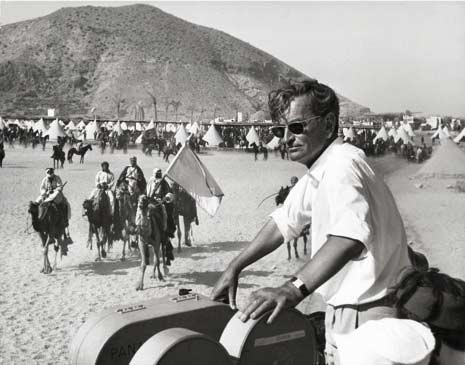
Ah, the love that dare not speak it’s name… man and, er, sand. Yes, this entry may not be what you expected to find on a run-down of the greatest film romances, let alone in its top five, but surely cinema knows few greater love affairs than that legendary Brit director David Lean enjoyed with the desert while making one of the great films, Lawrence Of Arabia. Although very much a one-way love affair (given that sand, well, is inanimate and not capable of emotions), it was big stuff for Big Dave. Yes, so obsessed with filming in the deserts of Jordan, Morocco and Spain was the usually reserved Lean that he spent nearly two years creating shots of dawns and sunsets, painstakingly combing back the sand so it looked pristine for re-take after re-take and, most obviously of all, capturing Omar Sharif’s movie entrance from what looks like a mile away. It’s said had he been able to stay out there and film forever he would have. Maybe that’s true; after all, he never seemed to find balance in his home life – he was married six times.
~~~
4. Holly Golightly and Paul Varjak (Audrey Hepburn and George Peppard) ~
Breakfast At Tiffany’s (1961)
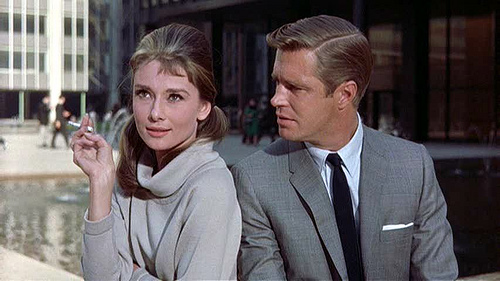
Surely no list of top cinematic romances would be complete without that of arguably the most adored rom-com of them all. The angelic Audrey Hepurn’s Holly Golightly is a dream of a creation – an awfully adventurous, ultimately lonely and utterly irresistble kook. She’s the unquestioned template for the modern rom-com heroine; so much so that that type of character is nowadays close to cliché. But this one’s the original and unequivocably the best. By contrast, although cool, caring and very handsome, Peppard’s Varjak is rather bland, but nonetheless an effective point of identification for the audience. When examining it closely, one may come to the conclusion that their romance – if not their attraction – is rather unlikely (surely Holly would inevitably dump Paul/ ‘Fred’ for one of her ‘rats’; indeed, in Truman Capote’s original novella he was a gay observer like Cabaret‘s Brian Roberts), yet if any film is the stuff of Tinseltown fairytale then it’s Breakfast At Tiffany’s. And like Holly Golightly, it does it with so much style, beauty, humour and humanity it could fill the whole of Fifth Avenue.
~~~
3. Yuri Zhivago and Lara Antipova (Omar Sharif and Julie Christie) ~
Doctor Zhivago (1965)

Yes, it’s Lean again, but this time one of the most enduringly popular fictions of his films. And when you’re talking about Yuri and Lara in Doctor Zhivago you’re talking epic romance. Spanning several years and thousands of miles of the often snowy landscape of Russia and enduring the interferences and contrivances of revolution, war, other loved ones and powerful political brokers, their romance is undeniably difficult, arguably tortured. It’s probably fair to say both would be better off had they never met, but you can’t choose the one you fall in love with. Indeed, for all the obstacles like giant Soviet ice sculptures thrown in their way, their time together is actually – and rather wonderfully – brief, understated and melancholic. It’s doomed love then told intimately with tiny brushstrokes set against a gigantic backdrop, therefore terrifically illustrating how huge, radical, society-changing events toss about innocent, beautiful individuals who find themselves at the heart of them. And to think The Sound Of Music won the Best Picture Oscar that year – that’s certainly something to write a balalaika lament about.
~~~
2. Rick Blaine and Ilsa Lund (Humphrey Bogart and Ingrid Bergman) ~
Casablanca (1942)
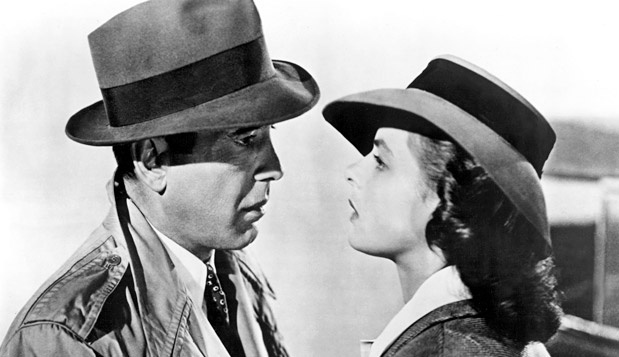
What on earth’s left to impart to a reader about Bogie and Bergman and Casablanca? They’ve been written about for years and years – and rightly so. Film fans must by now know all they’ll ever need to know about its production, reception and effect on wider filmmaking (its romance is surely the one by which all Hollywood – and maybe worldwide – cinema romances are measured). Even the fact that good old Humph had to wear platform shoes to appear taller than the oh-so lovely Ingrid in their shots together onscreen, like the one above, is pretty common knowledge. Yet, what’s perhaps less considered is that the love affair itself between hard-as-flint-on-the-outside/ soft-as-sponge-on-the-inside Rick and the delectable Ilsa actually doesn’t feature much in the film. Aside from the flashback scenes (‘We’ll always have Paris’), the romance is all about suppression; the protagonists’ feelings for each other being expressed through misty looks into the mid-distance, glaring stares and snappety sniping. Except, that is, for the ending. Ah, yes, it’s all about that ending really, isn’t it? Everything comes out and is resolved between our hero and his gal at the airport. And, although the sacrifice made is by now an enormous cliché, it’s still a sacrifice – a beautiful friendship is something, but it’s no substitute for true love.
~~~
1. Joanna and Mark Wallace (Audrey Hepburn and Albert Finney) ~
Two For The Road (1967)

So, a surprise Number One? Well, to my mind, it shouldn’t be. That is to say, for me, many, many more film fans out there should be familiar with these two outstanding characters and Stanley Donen’s evergreen Swinging ’60s rom-com in which they appear. Never heard of it? Not that familiar with it? Haven’t seen it in yonks? Well, you should put that right as soon as possible. Seriously. Because this is a marvellous movie with a terrific romance at its heart. Indeed, a romance that’s so bittersweet it could be filed in a dictionary under the term ‘bittersweet’. It tells the tale of two young British lovers in the ’60s through the device of looking back and forth at their holidays together – and with others and eventually with their daugher – in the south of France. Tiffs, trifles, tribulations and turbulations come their way as young ‘uns meeting and falling in love, then as newlyweds and finally as young parents with wandering eyes. But, throughout, they’re a charming, beautiful, witty and winning couple that are as stylish, fun and funny as many of us would no doubt like to be and as foolish, natural and human as we all are. Rumours abound that stars Hepburn and Finney had an affair while filming this flick and, watching it, it’s easy to believe that’s true, for their chemistry is utterly electric. And the movie romance they created, thanks to Donen’s fine direction and Frederick ‘Darling‘ Raphael’s brilliant script, is one to treasure for all-time.
~~~
So, there you go, peeps, that’s my pick of cinema’s top amorous associations. Hope it’s put you in the right mood for February 14, or at least made you consider giving one of those above movies a watch again. Either way, trust you all have a good Valentine’s Day – whatever you do and with whomever you spend it. 
Playlist: Listen, my Valentine friends! ~ February



In the words of Moby Grape… listen, my friends! Yes, it’s the (hopefully) monthly playlist presented by George’s Journal just for you good people.
There may be one or two classics to be found here dotted in among different tunes you’re unfamiliar with or never heard before – or, of course, you may’ve heard them all before. All the same, why not sit back, listen away and enjoy with your loved one this collection of ditties that’s ideal (well, probably ideal) for February 14th…
CLICK on the song titles to hear them
~~~
Audrey Hepburn ~ Moon River
Doris Day ~ Move Over, Darling
The Mamas And The Papas ~ Dedicated To The One I Love
Delaney & Bonnie ~ Groupie (Superstar)
Bread ~ Everything I Own
The Rolling Stones ~ Angie
Ringo Starr ~ You’re Sixteen (video featuring Carrie Fisher!)*
Joy Division ~ Love Will Tear Us Apart
Dire Straits ~ Romeo And Juliet
ABC ~ Valentine’s Day
The Style Council ~ You’re The Best Thing
Kate Bush ~ Hounds Of Love
David Foster ~ Gazebo (The Secret Of My Success)
* And Paul McCartney on backing vocals and, yes, the gazoo…

The man with the midas touch: John Barry (1933-2011)

At the wheel: John Barry in the Swinging ’60s with his wife of the time, sex symbol Jane Birkin – a giant leader of film composing, his career spanned more than four decades and several genres
If you’re a regular reader of this blog, you may be familiar with the fact I’m rather a Bond fan. As such, must admit, I’ve been lucky enough to meet a few Bond alumni – among them Sir Roger Moore and George Lazenby – and one member of that esteemed company I’ve always wanted to shake the hand of has been John Barry. Sadly, however, that’s no longer possible. John Barry, legendary composer to the escapades of 007 and so many more films has died, aged 77.
He was born John Barry Prendergast in 1933 and grew up in York, England. The son of a cinema chain owner, Barry spent hour on hour of his youth immersing himself in the world of the movies and soon became hooked on the music they featured – early favourites were the scores from The Adventures Of Robin Hood (1933) and The Treasure Of The Sierra Madre (1949). His mother had harboured ambitions as a concert pianist, but not John; he gave up the piano and picked up the trumpet at the age of 15 and, having been turned on to jazz by his older brother, set up a dance band called The Modernaires after leaving school. Following a stint in the army, during which he played with military bands in Cyprus and Egypt, he returned to the UK and formed The John Barry Seven, a jazz combo of, yes, seven members.
With this new band, he produced hit tunes such as Hit And Miss and Walk Don’t Run, the latter performed by The Ventures and chosen as the theme for the BBC’s top light-entertainment show Juke Box Jury. He also composed songs for British rock ‘n’ roll star Adam Faith, both for the latter’s chart career and his films, as well as orchestral accompaniment for EMI’s recording artists. The combination of this work brought him to the attention of two anglo-American film producers, Albert R Broccoli and Harry Saltzman, who were making the film Dr No (1962), based on one of Ian Fleming’s popular novels featuring superspy James Bond. The two felt that the work composer Monty Norman had produced for said film required some extra oomph. What Barry came up with was a re-arrangement of a Norman composition, fusing jazz, rock and orchestra together in a two-minute sensation of excitement – it was the James Bond Theme.
Barry’s time in Bond-age truly made his name. Unsurprisingly, he was asked back by Broccoli and Saltzman to score the next 007 flick, and the next, and the next, and the next and so on (overall he would score 11 of the first 14 movies). He didn’t just play a critical creative role in the film series’ incredible success, but also by forging such a dynamically new musical style he arguably transformed film composing. Like the movies themselves, Barry’s Bond scores of the ’60s were thrilling, pacy, outlandish, tight and utter dynamite (the soundtracks themselves rightly sold like hot-cakes – Goldfinger‘s score knocked The Beatles’ A Hard Day’s Night LP off #1 in the States).
Mixing jazz sensibilities and rock ‘n’ roll rhythms together with show-style orchestral strings and brass, the ‘Bond sound’ was not quite like anything heard before or since, influencing scores of musicians to come – for instance, Quincy Jones would have been quite different if not for Barry; Mark Ronson simply wouldn’t exist (admittedly, you may see that as a good thing). Plus, let’s not forget that the Bond tunes of the ’60s, all of their music written by Barry, weren’t just among the most popular songs of the decade, but also helped push the careers of Shirley Bassey, Tom Jones and Nancy Sinatra into the stratosphere.
John Barry’s innovations didn’t stop there, however, nor did they with Bond. By the end of the ’60s, he was introducing Japanese influences into his scores (You Only Live Twice), synth-sounds (On Her Majesty’s Secret Service – perhaps his best 007 score) and pop (the beautifully, liltingly melancholic Midnight Cowboy). Indeed, melodic melancholia could be said to be a stong signature of Barry’s post-’60s work. His later Bond scores (Moonraker, Octopussy and The Living Daylights among them) featured slower, more sensuous orchestral movements compared to the spunky, funky stuff of From Russia With Love and Goldfinger. Moreover, his Oscar-winning scores for Out Of Africa (1985) and Dances With Wolves (1990) took melancholic melody to a new level. In 1998, he took this further still, at least to my mind, when his non-film score orchestral project The Beyondness Of Things was released. A collection of 12 exquisite compositions (each of them could have been the main theme from a movie – listen to two of them, The Fictionist and Dawn Chorus, in the video at the end of this post), it was followed up by another collection two years later entitled Eternal Echoes.
“He didn’t discuss or ask your opinion or anything [about his compositions]. He didn’t have to. He knew it was great.” ~ Michael Caine on his friend John Barry
Indeed, on the Out Of Africa score Barry himself said in a 2009 interview with Vanity Fair magazine: “I mean, if you [use the music to] just follow the action—that’s what you do with a Bond movie: you follow the action. That’s the glory of it. You go for the jugular on everything—you know, as I once remarked, subtlety is not a virtue on a Bond movie. But with other movies you break your ass trying to find out: What can I do that’s still going to really work for this, but add another dimension to it? It’s not about going with the action; it’s going with what the people in the movie are feeling. If you can capture the love story, like in Out of Africa—the feeling between those two people—that’s what I write about. And when they [Meryl Streep and Robert Redford] go in that plane and she puts her hand back, to me it was a golden moment, when it was just the communication between them. I mean, that broke my heart. That is what the whole movie is about.”
Across his career, Barry scored more than 80 movies and produced unforgettable TV themes such as for the Roger Moore-Tony Curtis adventure series The Persuaders! (1971-72) and the telly spin-off of the movie Born Free (1966), the latter possessing another terrific film score and song for which he won an Oscar. Actually, in total, he was nominated for seven Oscars, winning five, and won a clutch of Grammys, Emmys and BAFTAs. He was also awarded a BAFTA Fellowship in 2005.
Less known about him, perhaps, is that he was good friends with film stars and Swinging ’60s icons Michael Caine and Terence Stamp. In fact, according to Caine, back in the day the three of them were compadres about town, hitting London’s hippest night spots and trying to score with the ladies – which, apparently, the cool, smooth and always well tailored Barry did. Maybe proof of this can be found in the fact that in 1965 he married another icon of the age, the oh-so sexy Jane Birkin. He was married four times in total, had as many children children and finally settled in Long Island, New York, with his fourth wife Laurie.
John Barry’s last project was to provide a song for Shirley Bassey’s latest album released in 2009; co-written with former lyricist Don Black, a former Bond colleague, it was entitled Our Time Is Now. It’s a cliché to call a great artist a genius – indeed it’s a cliché itself to trot out that statement – but to my mind, as far as film scoring goes, Barry was a genius; they simply come no better than him. He’s passed and indeed the world is a lesser place for it, but owing to the great work he’s left us, John Barry’s time is forever; simply forever.
~~~
John Barry ~ selected film scores
Dr No (1962)
From Russia With Love (1963)
Goldfinger (1964)
Zulu (1964)
The Knack… And How To Get It (1965)
Thunderball (1965)
Born Free (1966)
The Ipcress File (1966)
The Quiller Memorandum (1966)
You Only Live Twice (1967)
Petulia (1968)
Midnight Cowboy (1969)
On Her Majesty’s Secret Service (1969)
Diamonds Are Forever (1971)
Mary, Queen Of Scots (1971)
Walkabout (1971)
Alice’s Adventures In Wonderland (1972)
The Man With The Golden Gun (1974)
The Day Of The Locust (1975)
King Kong (1976)
Robin And Marian (1976)
The Deep (1977)
Moonraker (1979)
Somewhere In Time (1980)
Raise The Titanic (1980)
Body Heat (1981)
Octopussy (1983)
The Cotton Club (1984)
Jagged Edge (1985)
Out Of Africa (1985)
A View To A Kill (1985)
Peggy Sue Got Married (1986)
The Living Daylights (1987)
Dances With Wolves (1990)
Chaplin (1992)
Indecent Proposal (1993)
Enigma (2001)
~~~
Further reading
http://www.vanityfair.com/culture/features/2009/02/john-barry200902?currentPage=1
http://doubleonothing.wordpress.com/2011/01/31/john-barry-films-greatest-composer-passes-away/
~~~
He had a dream: Martin Luther King and that speech

Freedom of speech: Martin Luther King Jr. hails attendees of the March on Washington for Jobs and Freedom on August 28 1963, at which he delivered his extraordinary, unforgettable speech
Had he lived, three days ago, January 15 2011 would have been US civil rights leader Martin Luther King Jr.’s 82nd birthday – and, thus, in America today is Martin Luther King Jr. Day. Over the years since his death in 1968 at the hands of a gunman, King has become one of the most respected figures of the Twentieth Century – if not of all-time. And rightly so. And rightly, too, he’s specifically as well recalled for his ‘I have a dream speech’ as he is for his tragic assassination.
King was a baptist preacher from Atlanta, Georgia, who rose to become a prominent leader of his country’s civil rights movement in the 1950s and 1960s. He led a bus boycott in Montgomery, Alabama, in 1955, opposing the city’s public transport policy of racial segregation and later, in March 1963, led a march of non-violent protest (in part inspired by the protest methods employed by Mahatma Ghandi) in Birmingham, Alabama.
Arrested and imprisoned for his efforts here, he gained national recognition and on August 28 that year, a similar march on the nation’s capital, Washington D.C., took place. The march started at the Washington Memorial, went down the Washington Mall and concluded at the Lincoln Memorial, where the thousands of attendees congregated to hear songs performed by Bob Dylan and Joan Baez and to listen to civil rights leaders, including King. The latter’s speech came last and was brodcast live on television across the United States.
Eloquent, beautiful, powerful and iconic, the speech he made that day – now known simply as the ‘I have a dream’ speech – is surely the world’s most famous and perhaps its best loved. Excerpts of it are etched on the memories of people throughout the world, whether they were alive when it was delivered or were yet to be born. Unquestionably, its words and delivery had an enormous, immediate effect throughout America and – to an extent that is probably impossible to measure, but is undeniable – helped pave the way to the civil rights bill that was passed by the US Congress just two months later and the rolling snowball this set in motion for improved racial tolerance, freedoms and relations in that country and throughout – at least – the Western world.
Here then, folks, to mark Martin Luther King Jr.’s birthday is the speech’s text in full and, below that, a video of him delivering it. Do read and view away… 
~~~
I am happy to join with you today in what will go down in history as the greatest demonstration for freedom in the history of our nation.
Five score years ago, a great American, in whose symbolic shadow we stand today, signed the Emancipation Proclamation. This momentous decree came as a great beacon light of hope to millions of Negro slaves who had been seared in the flames of withering injustice. It came as a joyous daybreak to end the long night of their captivity.
But one hundred years later, the Negro still is not free. One hundred years later, the life of the Negro is still sadly crippled by the manacles of segregation and the chains of discrimination. One hundred years later, the Negro lives on a lonely island of poverty in the midst of a vast ocean of material prosperity. One hundred years later, the Negro is still languishing in the corners of American society and finds himself an exile in his own land. So we have come here today to dramatize a shameful condition.
In a sense we have come to our nation’s capital to cash a check. When the architects of our republic wrote the magnificent words of the Constitution and the Declaration of Independence, they were signing a promissory note to which every American was to fall heir. This note was a promise that all men, yes, black men as well as white men, would be guaranteed the unalienable rights of life, liberty, and the pursuit of happiness.
It is obvious today that America has defaulted on this promissory note insofar as her citizens of color are concerned. Instead of honoring this sacred obligation, America has given the Negro people a bad check, a check which has come back marked “insufficient funds.” But we refuse to believe that the bank of justice is bankrupt. We refuse to believe that there are insufficient funds in the great vaults of opportunity of this nation. So we have come to cash this check — a check that will give us upon demand the riches of freedom and the security of justice. We have also come to this hallowed spot to remind America of the fierce urgency of now. This is no time to engage in the luxury of cooling off or to take the tranquilizing drug of gradualism. Now is the time to make real the promises of democracy. Now is the time to rise from the dark and desolate valley of segregation to the sunlit path of racial justice. Now is the time to lift our nation from the quick sands of racial injustice to the solid rock of brotherhood. Now is the time to make justice a reality for all of God’s children.
It would be fatal for the nation to overlook the urgency of the moment. This sweltering summer of the Negro’s legitimate discontent will not pass until there is an invigorating autumn of freedom and equality. Nineteen sixty-three is not an end, but a beginning. Those who hope that the Negro needed to blow off steam and will now be content will have a rude awakening if the nation returns to business as usual. There will be neither rest nor tranquility in America until the Negro is granted his citizenship rights. The whirlwinds of revolt will continue to shake the foundations of our nation until the bright day of justice emerges.
But there is something that I must say to my people who stand on the warm threshold which leads into the palace of justice. In the process of gaining our rightful place we must not be guilty of wrongful deeds. Let us not seek to satisfy our thirst for freedom by drinking from the cup of bitterness and hatred.
We must forever conduct our struggle on the high plane of dignity and discipline. We must not allow our creative protest to degenerate into physical violence. Again and again we must rise to the majestic heights of meeting physical force with soul force. The marvelous new militancy which has engulfed the Negro community must not lead us to a distrust of all white people, for many of our white brothers, as evidenced by their presence here today, have come to realize that their destiny is tied up with our destiny. They have come to realize that their freedom is inextricably bound to our freedom. We cannot walk alone.
As we walk, we must make the pledge that we shall always march ahead. We cannot turn back. There are those who are asking the devotees of civil rights, “When will you be satisfied?” We can never be satisfied as long as the Negro is the victim of the unspeakable horrors of police brutality. We can never be satisfied, as long as our bodies, heavy with the fatigue of travel, cannot gain lodging in the motels of the highways and the hotels of the cities. We cannot be satisfied as long as the Negro’s basic mobility is from a smaller ghetto to a larger one. We can never be satisfied as long as our children are stripped of their selfhood and robbed of their dignity by signs stating “For Whites Only”. We cannot be satisfied as long as a Negro in Mississippi cannot vote and a Negro in New York believes he has nothing for which to vote. No, no, we are not satisfied, and we will not be satisfied until justice rolls down like waters and righteousness like a mighty stream.
I am not unmindful that some of you have come here out of great trials and tribulations. Some of you have come fresh from narrow jail cells. Some of you have come from areas where your quest for freedom left you battered by the storms of persecution and staggered by the winds of police brutality. You have been the veterans of creative suffering. Continue to work with the faith that unearned suffering is redemptive.
Go back to Mississippi, go back to Alabama, go back to South Carolina, go back to Georgia, go back to Louisiana, go back to the slums and ghettos of our northern cities, knowing that somehow this situation can and will be changed. Let us not wallow in the valley of despair.
I say to you today, my friends, so even though we face the difficulties of today and tomorrow, I still have a dream. It is a dream deeply rooted in the American dream.
I have a dream that one day this nation will rise up and live out the true meaning of its creed: “We hold these truths to be self-evident: that all men are created equal.”
I have a dream that one day on the red hills of Georgia the sons of former slaves and the sons of former slave owners will be able to sit down together at the table of brotherhood.
I have a dream that one day even the state of Mississippi, a state sweltering with the heat of injustice, sweltering with the heat of oppression, will be transformed into an oasis of freedom and justice.
I have a dream that my four little children will one day live in a nation where they will not be judged by the color of their skin but by the content of their character.
I have a dream today.
I have a dream that one day, down in Alabama, with its vicious racists, with its governor having his lips dripping with the words of interposition and nullification; one day right there in Alabama, little black boys and black girls will be able to join hands with little white boys and white girls as sisters and brothers.
I have a dream today.
I have a dream that one day every valley shall be exalted, every hill and mountain shall be made low, the rough places will be made plain, and the crooked places will be made straight, and the glory of the Lord shall be revealed, and all flesh shall see it together.
This is our hope. This is the faith that I go back to the South with. With this faith we will be able to hew out of the mountain of despair a stone of hope. With this faith we will be able to transform the jangling discords of our nation into a beautiful symphony of brotherhood. With this faith we will be able to work together, to pray together, to struggle together, to go to jail together, to stand up for freedom together, knowing that we will be free one day.
This will be the day when all of God’s children will be able to sing with a new meaning, “My country, ’tis of thee, sweet land of liberty, of thee I sing. Land where my fathers died, land of the pilgrim’s pride, from every mountainside, let freedom ring.”
And if America is to be a great nation this must become true. So let freedom ring from the prodigious hilltops of New Hampshire. Let freedom ring from the mighty mountains of New York. Let freedom ring from the heightening Alleghenies of Pennsylvania!
Let freedom ring from the snowcapped Rockies of Colorado!
Let freedom ring from the curvaceous slopes of California!
But not only that; let freedom ring from Stone Mountain of Georgia!
Let freedom ring from Lookout Mountain of Tennessee!
Let freedom ring from every hill and molehill of Mississippi. From every mountainside, let freedom ring.
And when this happens, when we allow freedom to ring, when we let it ring from every village and every hamlet, from every state and every city, we will be able to speed up that day when all of God’s children, black men and white men, Jews and Gentiles, Protestants and Catholics, will be able to join hands and sing in the words of the old Negro spiritual, “Free at last! free at last! thank God Almighty, we are free at last!”
~~~
So much more than just an (un)pretty face: Pete Postlethwaite (1946-2011)/ Susannah York (1939-2011)


The craggy one and the classy one: Pete Postlethwaite, a peerless actor loved by his peers and the people (l); Susannah York, a Swinging Sixties beauty blessed too with beautiful talent (r)
He was one of the greatest actors of his generation; she was a seriously underrated actress and one of the faces of the Swinging Sixties. As widely reported across the world media, the great Pete Postlethwaite died on January 2 aged just 64. Now tributes too will doubtless pour in for the unforgettable Susannah York, who died yesterday, also too young, at the age of 72.
Both were instantly recognisable – Postlethwaite for his extraordinary looks (skull-like head and piercing eyes); York for her glorious looks (almost aristocratic beauty, big blue expressive eyes and delectably wide mouth) – and they both started out in UK theatre (the former regionally; the latter at RADA), but then their careers went in diametrically different directions. Postlethwaite was a slow-burner, building up a brilliant reputation before hitting it big in later life; York became a household name almost immediately, moving into intriguing theatre-based roles in later years.
Pete Postlethwaite earned his stripes in the early 1970s at Liverpool’s experimental and exciting Everyman Theatre – in fact, at the same time, impressively but importantly, as major talents such as Bill Nighy, Anthony Sher, Jonathan Pryce and Julie Walters (with whom, as a young man, he had a relationship).
He was born into a Roman Catholic family in Warrington (then in Lancashire, now part of Greater Manchester) and worked as a teacher before training as an actor at Bristol’s Old Vic theatre. The radical atmosphere at the Everyman Theatre, however, proved critical in his development, as he quickly established himself as a star turn among the exciting talent around him, which often found itself getting stuck into brand new work from the then young (now legendary) Liverpool dramatists Willy Russell and Alan Bleasdale.
In 1981, he was cast in the BBC TV ‘Play for the Day’ The Muscle Market, a black comedy written by Bleasdale, playing the hapless protagonist getting caught up in Liverpool’s criminal underworld. Despite attracting rave reviews for his performance, it didn’t prove his major screen breakthrough. Regardless, Postlethwaite focused on theatre work again for much of the ’80s, joining the Royal Shakespeare Company (RSC) at Stratford-upon-Avon, where he took on supporting – yet universally praised – roles opposite the likes of old friend Anthony Sher and the young Kenneth Branagh.

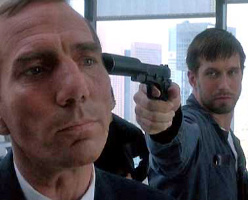
A master at work: a young Pete Postlethwaite in a version of Coriolanus at the Liverpool Everyman Theatre (l) and, an older but no less passionate, powerful, exciting and risk-taking actor, in The Usual Suspects (r) – as an enigma with a Japanese name and a Pakistani accent
Then, come 1988 – admittedly following one or two other bits on TV including an appearance on soap Coronation Street and a well received role in the British comedy film A Private Function (1984) – he finally achieved serious on-screen notice for his performance as a domineering, sometimes brutal working-class father in Terence Davis’s 1940s-set working class family drama Distant Voices, Sill Lives (1988). From then on his face became instantly recognisable to British TV audiences in a truly wide variety of character roles, most notably including an army sergeant in the Sean Bean-starring Napoleonic drama Sharpe and as Montague Tigg in a 1994 BBC dramatisation of Dickens’ Martin Chuzzlewit, for which he received a BAFTA nomination. And his talents soon went global as he was cast in Jim Sheridan’s mesmering film based on the wrongly imprisoned ‘Guildford Four’, In The Name Of The Father (1993) – see video below (warning: the clip features gratuitous swearing).
As Guiseppe Conlon, father of the film’s central character Gerry Conlon played by Daniel Day-Lewis, Postlethwaite delivered perhaps the best performance of his screen career and was rightly awarded an Oscar nomination for his troubles. Subtle, disciplined, dignified and highly affecting, his take on the character has since been claimed by the real Gerry Conlon to be so close to his father that it brought tears to his eyes and, for the same reason, that Guiseppe Conlon’s widow simply embraced Postlethwaite on meeting him at the movie’s premiere.
Now the floodgates opened, as Postlethwaite finally found himself under seige with major offers from Hollywood. He excelled in roles in everything from The Usual Suspects (1995) and Spielberg’s Jurassic Park: The Lost World (1997) to Romeo + Juliet (1996) and Brassed Off (1996), in which he delivered a much-loved turn as a 1980s Yorkshire colliery band conductor. At the turn of the millennium he was considered one of the globe’s pre-eminent character actors, both by his peers and – it’s pretty safe to say – by the public too (Spielberg referred to him as the ‘greatest actor in the world’). And, having finally reached this stage, he decided to, well, go back to the stage, being wonderfully received (now as a middle-aged, mature actor) as Prospero in The Tempest and as King Lear, the latter being a production put on both for him and the 40th anniversary of Liverpool’s Everyman Theatre.
In 2009 he nailed his colours to the mast, quite literally, by starring in The Age Of Stupid, a ‘drama-documentary-animation hybrid’ promoting wider awareness of climate change issues, and stating at its release to the UK Government’s then Environment Secretary Ed Milliband that he would return his OBE, awarded in 2004, if the plan to open a new coal-powered power station in Kent saw fruition. A Labour Party supporter all his life, and deeply political, he threw into the mix a threat to leave the party too. The result? Just a month later the plan was scrapped.
No doubt the UK Government’s U-Turn on the power station had more behind it than Postlethwaite’s very public standing, yet to think it had nothing to do with it too is surely to underestimate just how big a name and how deeply regarded and loved an actor Pete Postlethwaite had become in Britain and across the globe.
By contrast, Susannah York’s life and career – especially its beginnings – have always seemed glamorous. She was born into a middle-class background in Chelsea, London, in 1939 – real name: Susannah Yolande Fletcher. Her father was a stockbroker and, following her parents’ divorce, she was predominantly brought up in Scotland. Returning to England and, looking to launch a career as an actress, she studied at RADA in the late ’50s, winning its Ronson award for most promising student.
She didn’t have to wait long for her first film role, coming as it did in the 1960 movie Tunes Of Glory, opposite Alec Guinness and John Mills. The following year she landed her first leading role as a teenage girl on the verge of womanhood in the coming-of-age drama The Greengage Summer, co-starring Kenneth More, Danielle Darrieux and Jane Asher. In spite of the film’s dark tone, in his 1978 autobiography, More referred to it as one of the happiest he had ever made and that the 21-year-old Susannah York was ‘a delightful creature’.
Soon cinema audiences across the globe were in agreement with him, thanks to her appearing as Albert Finney’s love interest in Tom Jones (1963), the multi-Oscar-winning period comedy based on the classic novel by Henry Fielding. York’s film career was now off and away and as the decade progressed she starred in such varied fare as the – again multi-Oscar-winning – A Man For All Seasons (1966) about Henry VIII’s legendary relationship with his Archbishop of Canterbury Thomas More, lesbian-themed offbeat drama The Killing Of Sister George (1968), World War One musical satire Oh! What A Lovely War (1969) and the ever popular, starry wartime adventure Battle Of Britain (1969).
It was with an American film, though the Depression-era comedy drama They Shoot Horses, Don’t They? (1969), co-starring Jane Fonda, that she scored her biggest critical success. For her role as a delusional ‘platinum blonde’, she won a BAFTA Award for Best Supporting Actress and was nominated for both an Oscar and Golden Globe in the same category. At the time, she strangely cited anger at being nominated for the Oscar without first being asked; stranger still, she then attended the ceremony.
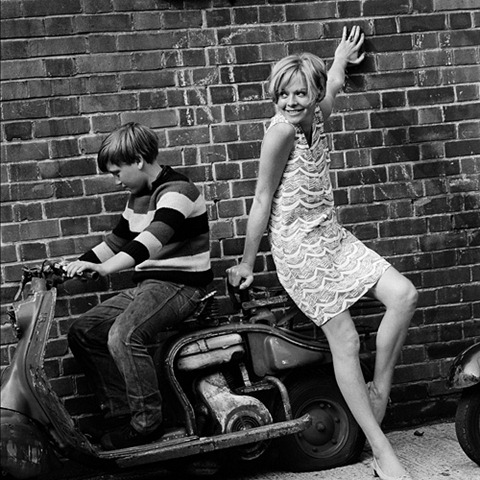
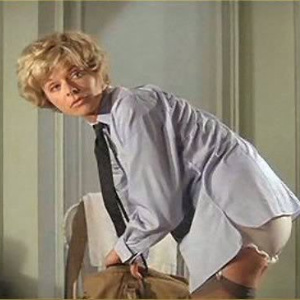
All mod cons: Susannah York, star of the Swinging Sixties, caught out looking cheeky both by photographer Philip Townshend (left) and in a scene from Battle Of Britain (right)
Susannah York, however, will perhaps be most fondly recalled as an undeniable figure of London’s Swinging Sixties period in the mid-’60s, when film, theatre, art and the zeitgeist of the time seemed literally to revolve around the centre of Britain’s capital, with both the upper- and middle-class movers and shakers of the cultural firmament (The Queen’s cousin, photographer Lord Lichfield, say) rubbing shoulders with working-class upstarts (for example, Michael Caine and The Beatles). Into this mix whirled the young, attractive, talented girls of the moment, such as Twiggy, Jean Shrimpton, Marianne Faithful and Julie Christie (whom York somewhat resembled). York herself too then, was undeniably one of these girls – seemingly photographed by trendy phtographers like Philip Townshend, and thus being part of the moment, as much as she was starring in the movies of the time.
That sort of profile can only last so long, mind, and come the ’70s, hers began to fade. There were one or two high-profile films, though – the South Africa-set mine adventure Gold (1974) co-starring James Bond himself Roger Moore, as well as a cameo opposite Marlon Brando in Superman (1978) as the comic book hero’s mother (and, yes, she certainly did still look good in ’78). In fact, she also won the 1972 Best Actress award at Cannes Film Festival for her role in Robert Altman’s psychological thriller Images, in which a children’s fantasy novel she’d written In Search Of Unicorns (1973) was actually excerpted – she would go on to write another, Lark’s Castle (1976).
From the end of the ’70s onwards, York really focused on theatre. Her work in ’60s cinema had seen her in a collection of high-quality, interesting roles and her forays on-stage would be no different. In 1978 she starred on the London stage in The Singular Life of Alfred Nobbs, then the following year she appeared in Paris, acting in French in the Henry James-penned Appearances. In the ’90s she made headlines by starring in RSC productions of Hamlet and The Merry Wives Of Windsor. Earlier, in the ’80s, she revealed the rebellious spirit of the ’60s hadn’t left her when she became an anti-nuclear campaigner in dramatic fashion, calling for the release of Israeli dissident Mordechai Vanunu, who had been jailed for revealing to the world his country’s nuclear weapons programme.
In recent years her face has remained in the public eye thanks to a role in the high-profile TV drama series Holby City and Casualty, while in 2007 she appeared in a UK national tour of Wuthering Heights and just last year received critical acclaim for her acting all over again in a triple bill of Tennessee Williams plays in London.
In the end, though, despite being an icon of the Swinging Sixties and to some extent representative of its feminine freedoms (she divorced her husband of 16 years in 1976 and took a number of acting jobs merely to pay the bills as she brought up her children), she liked to describe herself as rather a home-body and lover of family. She was survived by her two children and her two grandchildren, whom by all accounts – like the world did her, especially its male half – she loved dearly. 
Jenny Agutter: English Rose

Talent…
… These are the lovely ladies and gorgeous girls of eras gone by whose beauty, ability, electricity and all-round x-appeal deserve celebration and – ahem – salivation here at George’s Journal…
~~~
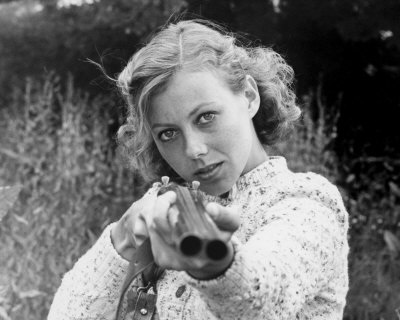
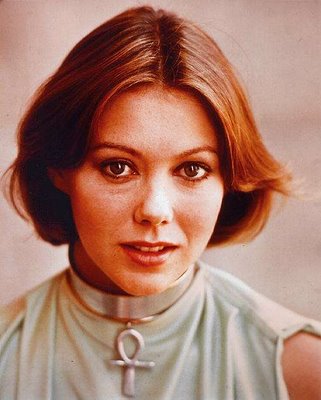
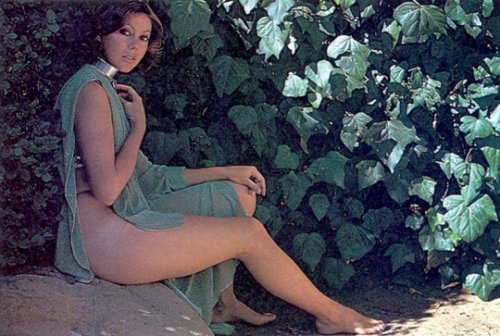
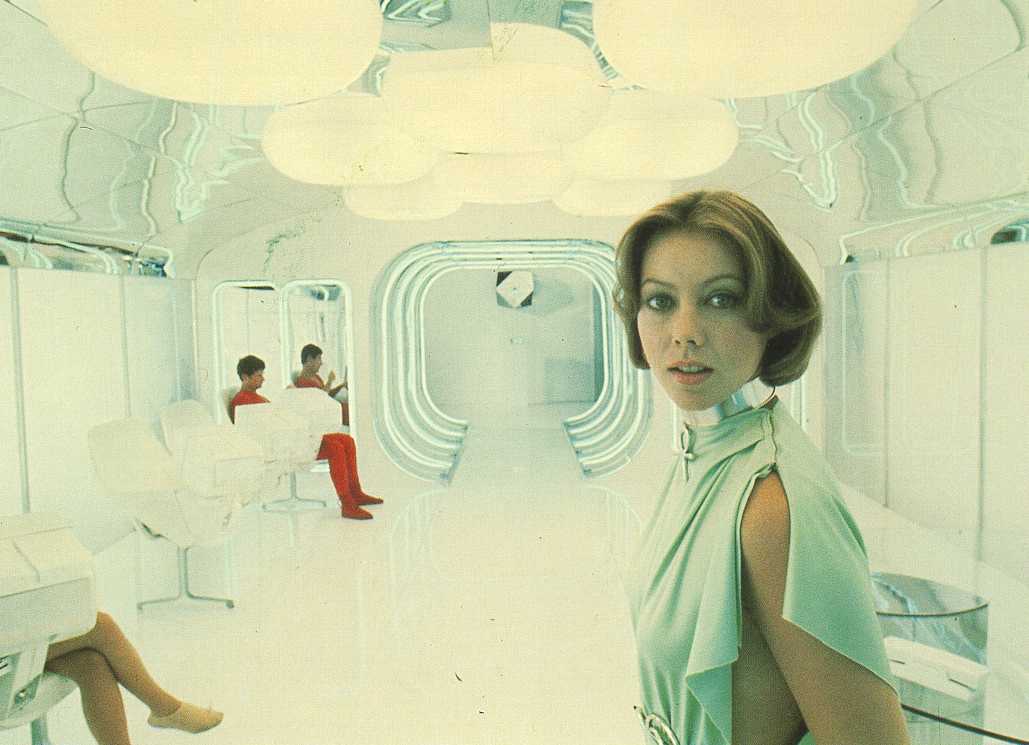
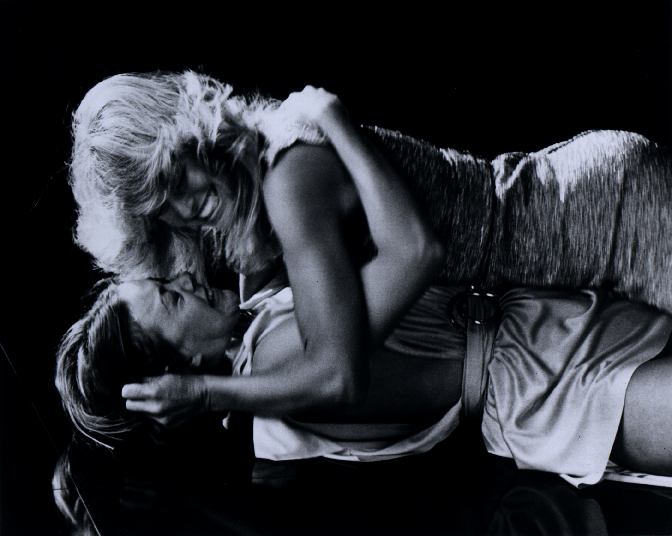
Ah, January… a cold, dark and forbidding month, yes? Well, let’s warm things up a tad by adding to the delectable and esteemed collection of Talent the lovely actress Jenny Agutter. Yes, a sex symbol ever since she first appeared on the big screen, she’s the epitome of upper-crust English sexiness; slightly demure, always well-mannered, low and measured of voice and utterly gorgeous (as well as over the years, er, rather liberal in disrobing in her different roles). Why, she’s even described herself as ‘perfect fantasy fodder’ – and there’s simply no arguing with that.
~~~
Profile
Name: Jennifer Ann Agutter
Nationality: English
Profession: Actress
Born: December 20 1952 in Taunton, Somerset, England
Height: 5ft 7in
Known for: Roles in the films The Railway Children (1970), Walkabout (1971), Logan’s Run (1976), The Eagle Has Landed (1976), Equus (1977), An American Werewolf In London (1981) and Glorious 39 (2009), as well appearing on TV in the 2000 version of The Railway Children and the spy drama Spooks (2002-03).
Strange but true: In spite of her dulcet, oh-so-English tones she moved about in her childhood owing to her father’s – a former British army officer – job as an entertainment organiser; indeed, for a time she lived in both Dhekelia, Cyprus, and Kuala Lumpur, Malaysia.
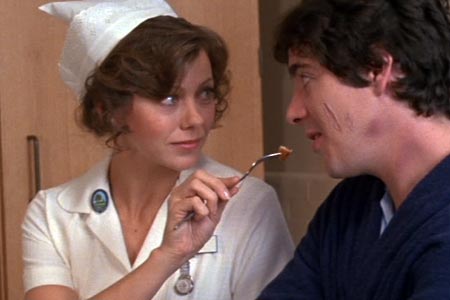
Peak of fitness: Opinions will vary greatly here, of course, but for me it has to be as über-sexy and yet wonderfully down-to-earth nurse Alex Price in An American Werewolf In London – she’d make a lovely bandage for any patient.
~~~
CLICK on images for full-size






Giant-killers!: a quartet of classic FA Cup Third Round shocks

Giddy heights: Ronnie Radford and friends feel as high as a steeple as the Hereford United midfielder (wearing number 11) scores against Newcastle and triggers a pitch invasion
Ah, the FA Cup Third Round. That post-Crimbo-and-New-Year slither of glimmering golden light that offers footall fans something different, nay something a little exotic, amid the early January blues. For this is the round of the ‘greatest Cup competition in football’ when the top division’s big boys join the party and, thus, on occasions meet genuinely lowly opposition. And, sometimes of course, the big boys don’t manage to crash the party, instead the little guys crash them. Sometimes? All right, very rarely, but it certainly has happened.
So, with the Third Round upon us tomorrow, here’s George’s Journal tribute to the great David-and-Goliath meetings of years past, four FA Cup fixtures that have most assuredly helped secure the contest’s place in history – and in our hearts. Is that the ref’s whistle? Here we go then, folks…
~~~
Hereford United 2 -1 Newcastle United (replay), 1972
So, let’s kick-off at the, well, obvious starting point, with the most iconic FA Cup Third Round shock ever. And rightly so too. This one really did have everything. Non-league no-hopers up against First Division stalwarts. A quagmire of a muddy pitch. Two pitch invasions of parka-clad supporters. Other fans watching the action in trees and on pylons. Three momentous goals. And, of course, an outcome that’s forever etched in the memory. Quite frankly, this match is surely one of the greatest moments in ’70s football.
What happened is quite simple. The tie was, yes, tied at 0-0 until eight minutes from ordinary time when Newcastle’s superstar forward Malcolm ‘Super Mac’ MacDonald headed in a cross and put the heavy favourites one-up. Yet, just a minute later, Hereford somehow managed to come up with a sensational equaliser. The home team’s right-back had been playing the majority of the match with a broken leg – yes, honestly he had been (don’t forget this match did have it all) – and was replaced with Ricky George. Having been seemingly sparked into life by this, Hereford now conjured up a smart midfield move, as Ronnie Radford executed a cute one-two and, with the mud fatefully holding the ball up in front of him, then unleashed a 30-yard rasper into the top corner. And so one of the FA Cup’s most wonderful goals was scored. Into extra-time the tie went and now it was anybody’s – Hereford were just as stong and inventive as Newcastle, if not more so. Then, with one minute of the first period left, Ricky George pounced on a loose ball in the penalty area and coolly slotted it home. With their opponents not being able to find a way back, no-hopers Hereford had done it – they’d knocked out the mighty Newcastle.
Mind you, what’s often forgotten about this tie is what preceded it. It was a replay and, in actual fact, the first match up at St. James’s Park had seen an already near-remarkable effort on Hereford’s part. Amazingly, the latter club had taken the lead after just 17 seconds, only for the Magpies to equalise and then go 2 -1 up. Yet, a long-range strike from player-manager Colin Addison wonderfully set up the now far more well remembered reply.
And, let’s not forget too, that the iconic replay was also the making of an undeniable football legend. It was the very first time John Motson – then just 26 years old – had seen the match he’d commentated on played first on Saturday night’s Match Of The Day. The rest then, as they indeed say, is history…
~~~

Bournemouth 2 – 0 Manchester United, 1984
In recalling this particular Cup upset, it’s only fair to bear in mind that the ’80s version of Manchester United was nothing like the über-football force it is today, yet it was still one of the best and most glamorous of clubs in English football. And, perhaps most importantly of all, in 1984 Man United were the Cup holders. Bournemouth, by contrast, were nowhere – a Third Division outfit managed by a young upstart, former West Ham midfielder Harry Redknapp (yes, indeed, that Harry Redknapp – if only the Red Devils had known then what they know about him now).
Mind you, the first half of this match was utterly forgettable; Bournemouth were useless and Man United were little better. But then, come the second half, and something rather wonderful happened, the home team took the tie by the scruff of the neck and gave their grand opponents hell. Their forwards were proving an absolute handful – Man U’s defence seemingly couldn’t handle them – and at the other end, the fantastically named Everald La Ronde was having the game of his life for Bournemouth, defending like a horde of Mexican bandits all on his own. Then, on the hour, a fumble by United keeper Gary Bailey allowed Milton Graham to pounce and he hooked in a goal – 1-0 to the Cherries. And it got better. Following an uncharacteristic mistake from ‘Captain Fantastic’ Bryan Robson, Bournemouth striker Ian Thompson added a second.
Unsportingly, there then followed a pitch invasion – not from the home fans, mind, from their visitors’, desperately hoping somehow to help out their team. It was to no avail though, the police restored order, Man United couldn’t manage a comeback and the South Coast outfit had done it. Alas, there’s been few days to rival that one’s glory and greatness for Bournemouth, but, of course, for Old ‘Arry much more was to come – and then some.
~~~

Sutton United 2 – 1 Coventry City, 1989
Tragically, 1989’s FA Cup will always be remembered for the Hillsborough disaster when Liverpool met Nottingham Forest in the April semi-final, yet back in January one of English football’s loveliest moments certainly gave that year’s competition more than a sheen of positivity. In fact, lowly South London’s Sutton from the Vauxhall Conference pulling off the upset-and-a-half of defeating Coventry was the last time a non-league side has managed to beat a First Division (or now Premier League) club.
Moreover, like Manchester United back in ’84, Coventry were far from a bad side. Featuring the legends that were striker Cyrille Regis and goalkeeper Steve Orizovic, at the time they were lying resplendent in sixth place in the league and had won the Cup itself just 18 months before – memorably pulling off an upset of their own in defeating Tottenham in the ’87 final. Yet, when they met Sutton, that magically was all for nought. In truth, the team from the Midlands were dire and their lowly opponents inspired – full of energy, enterprise and danger throughout. And, just before half-time, they broke the deadlock as captain and left-back Tony Rains headed in a flick-on from a corner. The Sky Blues, rather expectedly, hit back in the 52nd minute though, when Welsh international David Phillips completed a good move to make it 1-1. All square then.
Just seven minutes later, however, came the match’s defining moment. From another Sutton corner, this time a short, decoy one, the ball was delivered right into the heart of the penalty area and, the Coventry defence all at sea, midfielder Matthew Hanlan tapped in from yards out to put the home team deservedly back in front. Now followed a couple of efforts on goal from the First Division side, which saw a shot from Regis fly just inches wide following a glance off the keeper’s legs and Steve Sedgley hitting both post and bar from point-blank range instead of putting it between the sticks. Yet, aside from that, Sutton were well worth their win and at full-time a memorable pitch invasion saw hero Hanlan mix in with the crowd chanting and celebrating the terrific victory.
There was a sour note, though. In the next round Sutton went to Norwich City – and were stuffed 8-0. Ah well, at least they had one ‘Sky Blue day’, eh?
~~~

Wrexham 2 – 1 Arsenal, 1992
As if to remind us all that English football is open to Welsh clubs too, in 1992 Clwb Pêl-droed Wrecsam delivered one of the greatest – and for this list, at least, the last – of FA Cup upsets. The visitors to the Racecourse Ground that dark, drab and cold winter’s Saturday were Arsenal. Now, so long has the Franco-robo-professor that is Arsene Wenger presided over the latter club, it’s perhaps worth pointing out that this was a Gunners side from the George Graham era, boasting the likes of Tony Adams, Nigel Winterburn and Lee Dixon in defence, Paul Merson and Anders Limpar (whatever happened to him?) in midfield and Alan Smith and Ian Wright in attack. A good side then, nonetheless? Oh yes, they’d won the First Division the season before and were lying second in it at the time. And what of Wrexham? Ah, they’d finished bottom of the Football League the previous year and had only avoided dropping down to the Conference because the ground of its winner wasn’t big enough to go up.
However, in the marvellous tradition of the ‘magic of the Cup’ none of that mattered, of course. Unsurprisingly, it was the Gunners who struck first, with Alan Smith scoring, and at half-time looked very good for their lead. Wrexham were spirited though and didn’t fall further behind, getting better as the second half progressed, as they did. Then, eight minutes from time, the pivotal moment came. Arsenal defender David O’Leary brought down a Wrexham player just outside his penalty area (apparently, to this day O’Leary claims it wasn’t a foul) and up popped veteran midfielder Mickey Thomas to take the resultant free-kick. With a strike reminiscent of Ronnie Radford’s rocket all of 20 years before, Thomas slammed the ball into the top corner and, gloriously, Wrexham were level. And the Red Dragons, of course, were to breathe fire again, as just two minutes later Steve Watkin placed an almost slo-mo shot past David Seaman and amazingly put them 2-1 up.
There still was time for Arsenal to grab an equaliser, not much of it admittedly, but enough, yet on 90 minutes the high-flying Londoners were brought crashing down to earth – they’d been dumped out of the Cup by perhaps the lowliest opponents possible. A Cup shock-and-a-half all right. Arsenal, as they always seem to, recovered though; they would go on to win both the FA and League Cups two years later with much the same team. And, happily, although in the next round that season they narrowly went in a replay out to West Ham, over the years to come Wrexham would develop a reputation as giant-killer experts, knocking out Middlesbrough, Ipswich and – eventually – West Ham.
In his wisdom, defender for Wrexham that day Brian Carey recently opined that “it will never happen again, which is sad – I cannot see any of the elite teams losing to sides in the bottom division. Not any more.” Well, he may well be right. And yet, this is the FA Cup we’re talking about, a more magical, inclusive and extreme football competition than any other the world has ever known. If giant-killing of the nature of those achieved by Hereford, Bournemouth, Sutton and Wrexham is to happen again, it will, unquestionably, come in the FA Cup. It’s a tournament of dreams – and surely the vast majority of us dream every first (or second) weekend in January a wonderful upset will occur. Who knows maybe it’ll happen again tomorrow? Well, yes, we can dream, at least, can’t we…?
Playlist: Listen, my friends! ~ January
In the words of Moby Grape… listen, my friends! Yes, it’s the (hopefully) monthly playlist presented by George’s Journal just for you good people.
There may be one or two classics to be found here dotted in among different tunes you’re unfamiliar with or never heard before – or, of course, you may’ve heard them all before. All the same, why not sit back, listen away and welcome in 2011 – happy New Year, peeps…!
CLICK on the song titles to hear them
~~~
Elvis Presley ~ Auld Langs Syne
Love ~ Alone Again Or
Richard Harris and Vanessa Redgrave ~ What Do The Simple Folk Do?
Billy Joe Royal ~ Hush
Zager And Evans ~ In The Year 2525
The Scaffold ~ Lily The Pink
The New Seekers ~ You Won’t Find Another Fool Like Me
Humble Pie ~ I Can’t Stand The Rain
10cc ~ I’m Not In Love
Bob Seger And The Silver Bullet Band ~ Hollywood Nights
Fleetwood Mac ~ Tusk
Mark Knopfler ~ Going Home
U2 ~ New Year’s Day