Princess Margaret: Royal Crush

Talent…
… These are the lovely ladies and gorgeous girls of eras gone by whose beauty, ability, electricity and all-round x-appeal deserve celebration and – ahem – salivation here at George’s Journal…
~~~
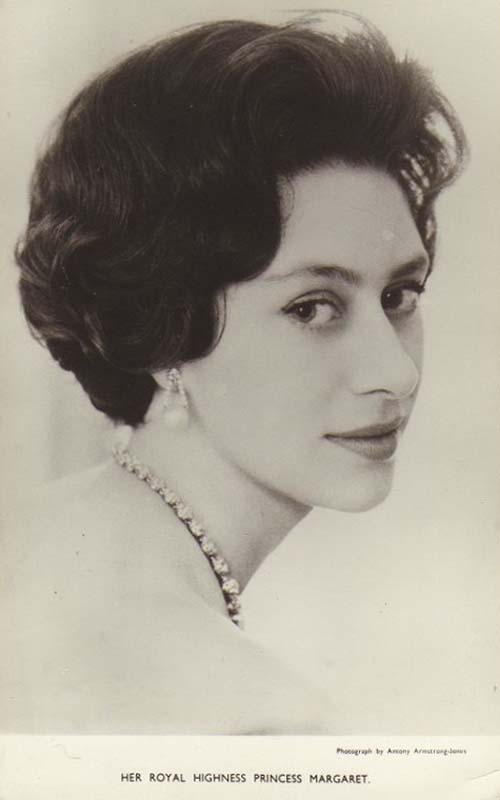
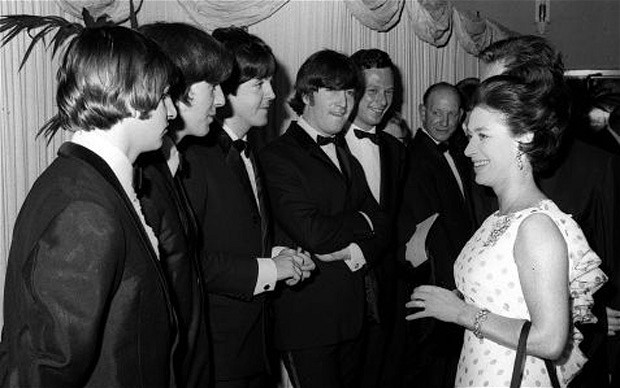
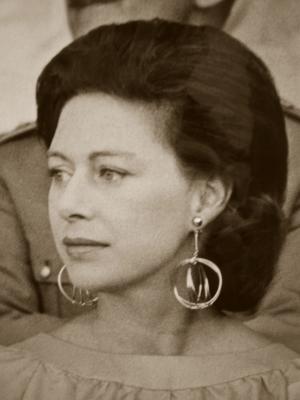
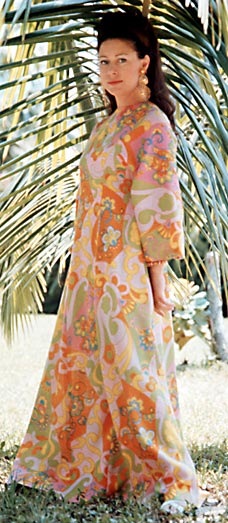
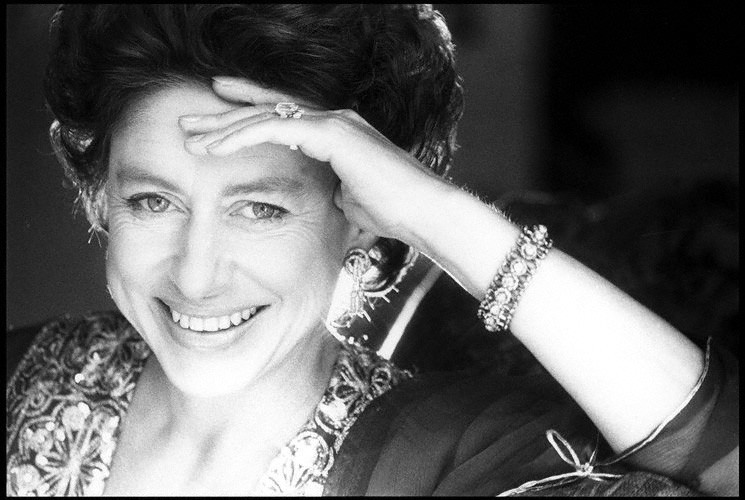
You know, I can’t say I’m particularly a royalist (but then neither am I really a republicanist), yet with a ‘Royal Wedding’ on the way, the telly, papers, magazines et al are all likely to go crazy and, let’s be honest, rather annoyingly mushy over the young Windsors. But we know better, don’t we? For before them there was a beautiful, sophisticated, cool, very controversial and irresitible royal who, in her time, easily out Diana-ed Diana. She was Princess Margaret – the royal of the ’50s and ’60s – and she’s the latest oh-so worthy addition to the ‘Talent’ corner here at this blog.
~~~
Profile
Name: Princess Margaret Rose Windsor (official title: Her Royal Highness The Princess Margaret, Countess of Snowdon)
Nickname: Margot
Nationality: British
Born: August 21 1930 at Glamis Castle, Angus, Scotland
Died: February 9 2002 in London, England
Height: 5ft 1in
Known for: The sister of Queen Elizabeth II and daughter of King George VI, Margaret was a renowned beauty and fashionable figure of the society circuit in the ’50s, ’60s and ’70s. In the mid-’50s she broke off her first engagement (to a divorvée) and, in 1960, married photographer Anthony Armstrong-Jones. Rumours abound of wild parties and drug-taking by her ‘set’, as well as affairs with baronet-cum-hippie Roddy Llewellyn and even East End tearaway John Binden. Her friends included Noël Coward, Cecil Beaton, Peter Sellers and David Niven (with whom she may too have had a dalliance).
Strange but true: Her good friend US thinker and writer Gore Vidal said of her, “she was far too intelligent for her station in life… [her public notoriety] was inevitable: when there are two sisters and one is The Queen, who must be the source of honour and all that is good, while the other must be the focus of the most creative malice, the evil sister”.
Peak of fitness: Hmm, this one’s a toss up for me. While she was an unquestioned young beauty in the ’50s, must say, I’ve always much liked the ’60s Margaret too, when she was older, with longer hair and, it shows, with a little more knowing, as she mixed it with The Beatles and others of the Swinging Sixties period.
~~~
CLICK on images for full-size








Playlist: Listen, my friends! ~ April 2011



In the words of Moby Grape… listen, my friends! Yes, it’s the (hopefully) monthly playlist presented by George’s Journal just for you good people.
There may be one or two classics to be found here dotted in among different tunes you’re unfamiliar with or never heard before – or, of course, you may’ve heard them all before. All the same, why not sit back, listen away and enjoy…
CLICK on the song titles to hear them
~~~
Simon & Garfunkel ~ April Come She Will
The Foundations ~ Baby, Now That I’ve Found You*
Serge Gainsbourg ~ Initials B.B.
Mary Hopkin ~ Goodbye
Creedance Clearwater Revival ~ Proud Mary
Billy Preston ~ Outa-Space
Roy Buchanan ~ Sweet Dreams
Genesis ~ Watcher Of The Skies
KC And The Sunshine Band ~ Get Down Tonight
Rage ~ Make It Last All Night
Toto ~ Rosanna**
Thompson Twins ~ Hold Me Now
Lisa Lougheed ~ Run With Us
* Strange but true: part of this song was written in the same pub in London’s Soho where Karl Marx wrote his legendary treatise Das Kapital
** Did you know… songwriter David Paich gave this tune its title following his break-up with actress Rosanna Arquette – as to it actually about her though, well, that’s probably unlikely
Mapping the stars: The Great Bear (1992) ~ Simon Patterson
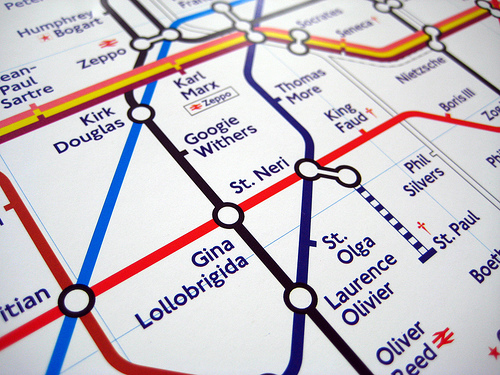
Going underground: detail of artist Simon Patterson’s wryly playful take on the iconic London Underground map featuring lines of film stars, comedians and philosophers instead of stations
You may not know it, but this blog has just celebrated its first birthday, so what more fitting moment than right now to better address one of its aims? That is, to provide you, dear readers, not merely with my musings and general scribblings on all things retro, but also on art that I like (I’ll have to come back to history and politics another day). In which case, today I’m taking a look at one of my all-time favourite artworks, namely The Great Bear.
Produced by the UK’s Turner Prize-shortlisted artist Simon Patterson in 1992 and to be found in London’s Tate Modern Gallery, it’s an amusing, off-kilter reworking of that design icon, the London Underground route map. Now, must admit, the London Underground, or the Tube as it’s affectionately known to, well, everyone, is something of a must with me. I’m not a railway or transport nut at all, don’t get the wrong idea, but something – or perhaps many things – about the Tube have always fascinated me.
Engineering-wise, given its size and the fact it was the world’s first underground railway, it’s mighty impressive (just check out Bank station – a subterranean labyrinth on an amazing scale beneath the City of London). Plus, unless you suffer from claustrophobia or it’s rush-hour, the Tube’s often fun to travel on – you get all demographics down there; the commuter, the tourist, the rich, the poor, the dullard, the eccentric etc. And, surely its most popular facet, its signage, logos and age-old art are works of art deco beauty.
The chief exponent of the Tube’s bold-coloured, smooth-edged and all-round pleasing-on-the-eye art is, of course, the Tube map itself. Designed by London Underground draftsman Harry Beck in 1931, the map is surely one of the world’s best known (see video clip at bottom). Its genius lies in the fact that unlike, say, the also world famous London A-Z map, it doesn’t realistically portray distances, but is a schematic diagram; for travellers on the underground network the topography is what’s immediately important, not necessarily the actual physical locations of the stations (travellers can check that out when they’ve got to where they want to and are above ground). The map is clean, simple, colourful, easy-to-use and unforgettable.

Constellation of connections: Simon Patterson’s The Great Bear – its title punningly riffs on the English translation of astronomy’s Ursa Major; click the image to see the full-size version
So this is, yes, where The Great Bear comes in. What’s so great about it? Well, it doesn’t just rework the already brilliant Tube map, but manages to transform it dramatically – in a most entertaining way. In this artwork, Patterson importantly doesn’t change any of the map’s design features at all (the Tube lines’ colours all remain the same, the circle icons representing the stations are all intact and the fonts are all unchanged); what he does is simply change the stations’ names. He does it Tube line-by-Tube line, throwing in a great deal of wit as he goes.
So, for example, the notorious north-to-south-running Northern line becomes ‘Film Actors’, the east-to-west-running Central line becomes ‘Louis’ (or French kings and other leaders/ players on the world stage) and the overground line becomes ‘Thirty Comedians’. This ensures that the iconic Tube station Tottenham Court Road becomes ‘Gina Lollobrigida’; Camden Town becomes ‘Peter Fonda’; Bank becomes ‘Zog I’ (of Albania); Stratford becomes ‘Napoleon’ and Brondesbury Park becomes ‘Spike Milligan’. But what about when different Tube lines intersect at different stations? Well, Patterson doesn’t let up – take West Hampstead, where the Jubilee line (‘Footballers’) and the overground line (‘Comedians’) meet; it becomes ‘Paul Gascoigne’. Neat, eh?
As with any artwork, though, there’s something more profound at work with The Great Bear than just giving the viewer a decent chuckle. By not just retaining the look and iconography but the exact detail of the Tube map, yet substituting the expected and often familiar station names for names of well-known figures from completely different realms of our experience, it creates a slightly jarring, even confusing effect. Although this effect may only be there for a few seconds until we figure out what’s going on and it becomes funny, it’s long enough to lodge in the brain and, thus, cleverly demonstrate how the everyday and the expected can be subverted – how peculiar it is when the entirely disparate (film actors, philosophers, engineers etc) are brought together in one setting where they shouldn’t be (the Tube map). It’s all about knocking us sideways and looking at the familiar through different eyes. It’s a smarty-pants artwork to the say the least, methinks.
Patterson hasn’t been alone in using the Tube map as a model for artistic expression – or, perhaps more correctly, others have been inspired by him and produced their own efforts. Most impressive among them may be Mark Ovenden’s World Metro Map (see below). Commissioned in 2005 by the London Transport Museum, where I believe it can still be bought, for the launch of his book Transit Maps of the World , the artwork imagines the Tube network connecting up not London but the entire world, with its major cities standing in for the stations.

It’s a small world: 2005’s World Metro Map; click the image to see the full-size version
A smiliar idea is artist Chris Gray’s Underground. This piece doesn’t use the exact typography of the Tube map, it’s more inspired by it, mapping the world in a Tube-like manner with major cities, again, picked out as stops on its different lines that roughly trace the globe’s continents. Gray has described Underground as such: “Humans have always made connections. This ability is one of the cornerstones of our success as a species. Underground explores various aspects of our world and how we associate with it.”
Taking a perhaps less expansive but no less lofty theme – that is, the works of the Bard and the connections between the different characters of his plays – is the Greater Shakespeare map. A recent publicity tool produced by Stratford-on-Avon’s world famous Royal Shakespeare Company (RSC), it’s a fun and very accessible PR exercise for their theatrical efforts and the genius of the great man himself; the contours and colours of its lines and the font of its stations/ character names unquestionably Tube map-esque.
At the end of the day, I’ll admit The Great Bear may not genuinely be as impressive as its namesake, the constellation Ursa Major (another collection of ‘stars’), but I do hope I’ve managed to impress on you its marvellous merits. Who knows, one or two of you out there may even now decide, like I did several years ago, to hang a copy of it on your wall so you can gaze at it at your pleasure. After all, thanks to cloud-cover, you can’t gaze at the real ‘Great Bear’ any time you want – and you certainly can’t do it in the warmth of your own home either. So hooray for freely available art, eh? 
International violet: Elizabeth Taylor (1932-2011)

The eyes have it: Elizabeth Taylor, arguably the last of the great stars of Hollywood’s Golden Age, who was more famous for her melodramatic love-life than her on-screen acting talent
It’s unlikely to have escaped your notice that Elizabeth Taylor, one of Hollywood’s all-time greatest stars has died, aged 79. Incredibly famous, unquestionably beautiful and impossible to ignore, in her own – and very much her own – way she was a Tinseltown icon arguably as great as either John Wayne or Marlon Brando. And she possessed surely the most famous and captivating pair of violet eyes in history.
Her life, as with all ludicrously famous people, is so widely known that frankly it seems almost a bore to chart it here – born in London and taken to Los Angeles by her parents at seven-years-old; child-star in the flick National Velvet (1944); adult-star and bombshell thanks to her breakthrough in A Place In The Sun (1951); married eight times, including twice to the love of her life, the brilliant classical actor Richard Burton, whom she met on the set of and co-starred with in 1963’s notorious epic Cleopatra; champion of awareness of and fundraising for AIDS; lover of jewels and perfumier businesswoman; friend of Michael Jackson and made a Dame in 1999.
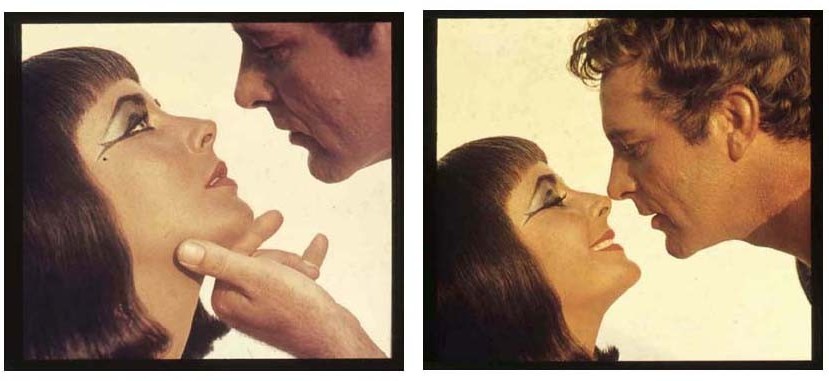
Love Story: Elizabeth Taylor and Richard Burton in publicity stills for the infamous movie Cleopatra – from the set of which the couple’s sizzling scenes together tumbled over into reality
Indeed, her story is so larger than life that it genuinely does overshadow her career in front of the camera, which is a bit of a shame as, at her best, she was a damn good actress. And that’s really what I want to focus on in this post. In her Hollywood prime, she was nominated five times for the Best Actress Oscar, winning it twice. Indeed, her first three noms came for back-to-back films, the American Civil War drama Raintree County (1957) co-starring Montgomery Clift (with whom she shared a much recalled screen kiss in the earlier A Place In The Sun), the Tennessee Williams adaptation Cat On A Hot Tin Roof (1958) opposite Paul Newman, and another Williams effort Suddenly, Last Summer (1959) alongside Katharine Hepburn.
Of course, Taylor usually got the men she wanted, and she finally got her hands on the gold little chap thanks to the role of the promiscuous Gloria Wanderous in the drama Butterfield 8 (1960). Despite the success it brought her though, ironically Taylor disliked the film as the character she played (often chastised in the flick as a ‘slut’ and a ‘homewrecker’) reflected how she was being cast in public at the time owing to her relationship with film producer Eddie Fisher, whom was still married to Debbie Reynolds, star of Singin’ In The Rain (1954) – Fisher and Reynolds’ daugher is Princess Leia herself, Carrie Fisher. Anyway, it can’t be denied, Taylor’s performance in Butterfield 8 was very good indeed; see for yourself in this video clip (warning: the content could be deemed somewhat adult)…
Six years later and, right in the midst of her tempestuous relationship with the Welsh firebrand that was Richard Burton, came her performance opposite the latter in Mike Nichols’ film adaptation of the play Who’s Afraid Of Virginia Woolf? (1966). Here the Burtons played an unhappy couple in the shape of history professor George and his wife Martha, who very much don’t enjoy a warring relationship that one night is buoyed on by booze and the temptations of an attractive young couple they get to know.
Although controversial on release for its level of profanity, the movie was a roaring critical and public success, ending up nominated for every category in which it was eligible at the Academy Awards. Burton and Taylor, in particular, were singled out for praise for their barnstorming performances as the lugubrious and angry marrieds. Indeed, it was for this role (probably her best) Liz won her second Oscar; see the video clip below…
So, in the end, what to make of Elizabeth Taylor? Is it a pity she’ll be remembered far better for her you-couldn’t-make-it-up real-life than for the captivating acting ability she only sometimes showcased? Well, in truth, probably not. No question, Hollywood has generated a slew of great screen actresses down through the ages (Katharine Hepburn, Bette Davis, Meryl Streep and Julianne Moore to name but just four), but although it’s certainly also produced its share of great female stars, it maybe has never produced one quite so dazzling, dramatic, undiluted and famous as the unsinkable Ms Taylor. Movie stars are important to Hollywood (they’re pretty much its gold standard) and to the masses too – and they come no grander than her.
Apparently, she once told American broadcaster Barbara Walters that she couldn’t remember a time she wasn’t famous. Of all the epitaphs one could assign to her, that one, methinks, may well be the most fitting for Tinseltown’s queen Liz.
~~~
Selective filmography
Lassie Come Home (1943)
National Velvet (1944)
Father Of The Bride (1950)
A Place In The Sun (1951)
Giant (1956)
Raintree County (1957)
Cat On A Hot Tin Roof (1958)
Suddenly, Last Summer (1959)
Butterfield 8 (1960)
Cleopatra (1963)
The V.I.P.s (1963)
Who’s Afraid Of Virginia Woolf? (1966)
The Taming Of The Shrew (1967)
The Flintstones (1994)

Fabtastic cause: Comic Relief 2011 (Mar 18)

Help!: imagery of The Beatles was used to publicise Red Nose Day in 2009, the appeal that year raising the enormously impressive sum of £80 million for good causes in both Africa and the UK
Contrary to, well, some people’s opinion, doctors swear by it – yes, laughter is apparently a fine form of medicine. All right, it may not, as the saying goes, be the best, but for many projects of goodwill – and, ultimately, for people – throughout Africa and in the UK, laughter has been very important since way back in 1988, when the first Comic Relief appeal televised on the BBC turned the currency of humour and laughter into hard cash.
And tonight, the biennial event is back once more. Nowadays, of course, it’s huge. Already in the name of this year’s effort, David Walliams has experienced the ‘ardour’ of participating in 24 hours of panel shows, Blue Peter presenter Helen Skelton has walked a high-wire between the towers of London’s Battersea Power Station and a group of – let’s be honest – mostly annoying celebrities have trekked across a Kenyan desert. But it’s tonight when the real hard-sell happens and the several-hours-long marathon of televisual funnybone-exercising takes place and the raising of the real reddies is realised.
Just like the BBC’s other charity-athon Children In Need, Comic Relief manages to make the Great British public part with a staggering amount of dosh – so far, the charity has raised around £650 million. All in all then, given so many dig deep and, of course, given the importance of the different causes it helps out, methinks Comic Relief is a most worthy and significant event to support. So, yes, this post is me doing my bit – and, inevitably, it has a retro slant to it too in the form of a quartet of classic clips I’ve included to tickle your collective sense of humour.
The first is from (probably) the first Comic Relief event held at the Shaftesbury Theatre, London, on April 4 1986 and features Rowan Atkinson and, yes, Kate Bush performing a duet of the – once heard, never forgotten – song Do Bears…?
The second is from the same event and features Stephen Fry as a merchant banker struggling to get to grips with a couple of Comic Relief money-raisers – Band/ Live Aid organisers Bob Geldof and Midge Ure no less – asking him for a charity contribution (oh, how topical)…
The third is no doubt from the same night and features Atkinson again as an Elizabethan literary editor and Hugh Laurie as William Shakespeare with the two discussing what to keep in and – mostly – out of his new play entitled Hamlet…
And, finally, the fourth comes from Red Nose Night 1989 as the brilliant Atkinson (yet again) pastiches a fast-talking Peter Snow-like figure asking memorable politicians of the day questions in a Newsnight-cum-panel show sketch…
And if you enjoyed all of that then do give tonight’s TV event a view and give some money, or at least just give some money, won’t you? I guarantee you’ll feel better for it – after all, laughter’s good for you.
Comic Relief is on BBC1 tonight from 7pm (UK and Northern Ireland only)
Further reading
Birthday bonanza: rare images of Hollywood’s greatest stars
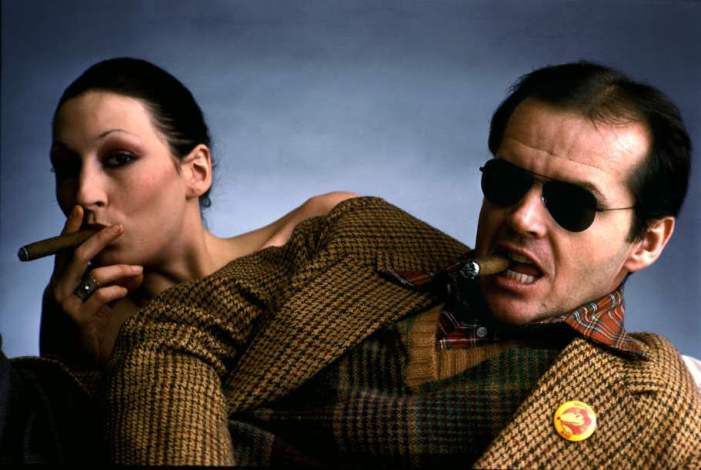
The playboy (and girl) of the western world: legendary lovers and Hollywood stars Anjelica Huston and Jack Nicholson captured by photographer Klaus Lucka von Zelberschwecht
A birthday? Whose birthday? Whose do you think, my dear readers – why, this very blog’s! Yes, that’s right, a full year ago today, the often fun-loving and insightful, other times rather goofy and eccentric, but always retro George’s Journal traversed out into the blogosphere and began its journey down through the decades with this, it’s very first post.
And so, to celebrate, this latest post offers up you, my (hopefully) loyal and pleased followers, something of a present, or even – if you prefer – a ‘thank you’… yes, it’s a post featuring rarely seen piccies of some of Hollywood’s best loved stars. A mixture of images in which their subjects are on-set, off-guard, funny or, in some cases, downright cool, this is a collection I hope you all enjoy as we blow out the, well, single candle on this blog’s birthday cup-cake – for here at George’s Journal now, indeed, we are one…
CLICK on the images to see them full-size
~~~

Heaven’s missing two angels: it isn’t, of course, as Audrey Hepburn and Grace Kelly are no longer with us, but here they both are checking on their radiance backstage at the 1956 Oscars
~~~

Close-up: Sammy Davis Jr. goofing around with James Dean, most likely, in the mid-’50s
~~~

Hoop dream: Marilyn Monroe toasts us in the pool, most likely from the late ’50s or early ’60s
~~~

Poker faces: Frank Sinatra with a faithful friend during the filming of 1955’s The Tender Trap
~~~
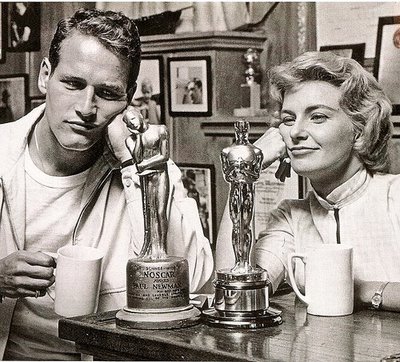
Man and wife: happily married for decades until his recent death, Paul Newman and Joanne Woodward shortly after her Academy Award win in 1958 – with her Oscar and his ‘Noscar’
~~~
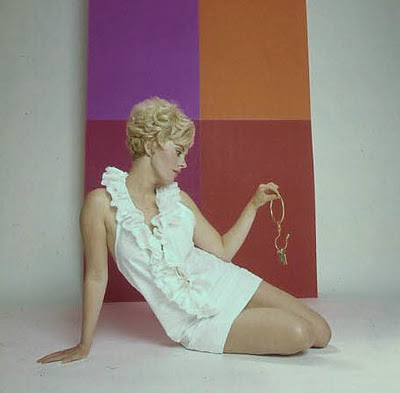
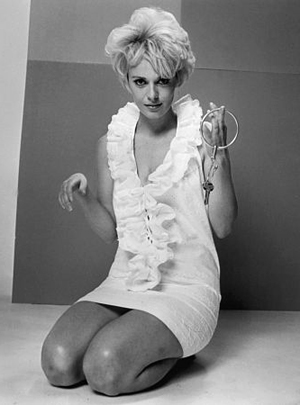
Holding the key: À Bout de Souffle’s Jean Seberg posing oh-so sexily in these snaps most likely from the mid- or late ’60s, looking so blissfully unaware of the tragic future that awaited her
~~~

So close to me: Steve McQueen and Natalie Wood in 1963’s Love With The Proper Stranger
~~~

The three stooges: Woody Allen, Peter O’Toole and Peter Sellers on the set of 1965’s madcap What’s New Pussycat?, all three at the beginning of what would be stellar cinematic careers
~~~

Double exposure: Charlie’s daughter Geraldine Chaplin and Swinging Sixties ‘It’ girl Julie Christie artily caught in costume and on-set of 1965’s blockbuster epic Doctor Zhivago
~~~

From stage to screen: director Fred Zinneman (with pipe) adjusts the costume of star Paul Schofield during the filming of 1966’s multi Oscar-winning A Man For All Seasons
~~~

Paris when it sizzles: co-stars Audrey Hepburn and Peter O’Toole between takes during filming at the Parisian location of 1966 heist-cum-romantic comedy How To Steal A Million
~~~

That face: Italian screen goddess Sophia Loren photographed most likely in the 1960s
~~~
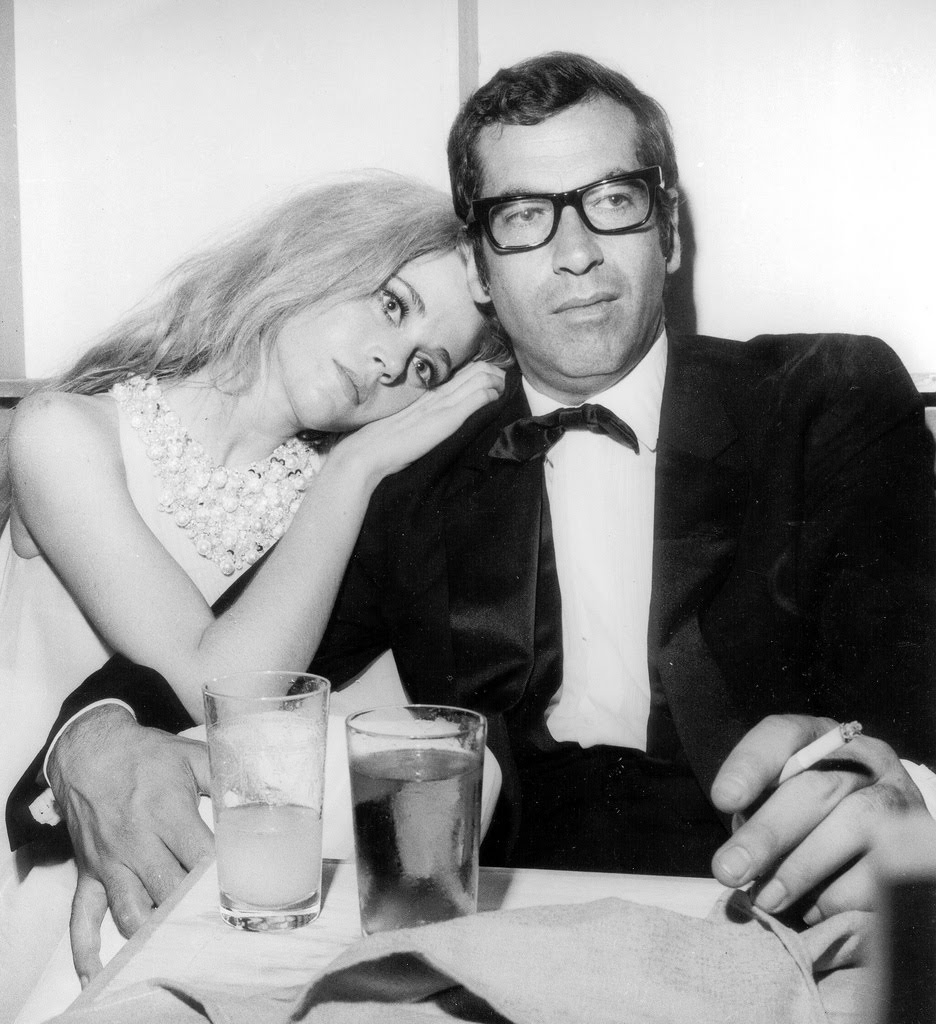
Francophilia: Jane Fonda with saucy cult director Roger Vadim, most probably in the mid-’60s
~~~

Winter wonderland: Alfred Hitchcock on a sleigh-ride with his grandchildren
~~~

Three’s a crowd?: siblings Shirley Maclaine and Warren Beatty in deep conversation, while the latter’s girlfriend at the time Joan Collins looks on, seemingly happy to sit this one out
~~~

Hardy boy and his girl: iconic lovers Terence Stamp and Julie Christie in a promotional shot for John Schlesinger’s 1967 cinematic adaptation of Thomas Hardy’s Far From The Madding Crowd
~~~

Hippie chic: Natalie Wood defining late-’60s beauty on-set of 1969’s Bob & Carol & Ted & Alice
~~~
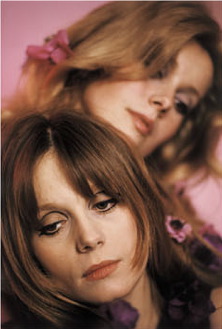
À ma sœur!: Catherine Deneuve and her fellow actress sister Francoise Dorleac photographed together most likely in the mid- or late ’60s, shortly before the latter’s untimely death
~~~

Getting ahead: Sean Connery has Brigitte Bardot right where he wants her during a break in filming of 1968 western Shalako – the latter was almost a Bond Girl a few years before
~~~
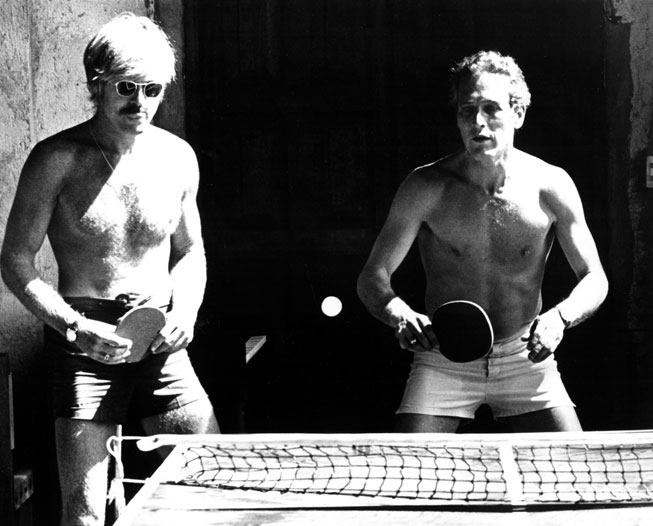
Naked ambition?: Robert Redford and Paul Newman look like they mean business as they play a game of table tennis during a break in filming of 1969’s Butch Cassidy And The Sundance Kid
~~~
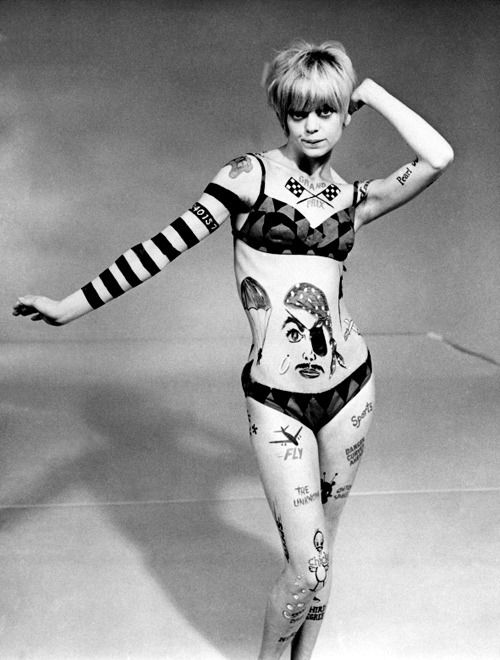
Tattoo you: Goldie Hawn sporting psychedelic bodypaint in the late ’60s
~~~

Unhappy ending: Roman Polanski and Sharon Tate in 1969, the year of her murder
~~~

Alpine schnaps break?: Clint Eastwood, Ingrid Pitt and Richard Burton are joined by the latter’s then wife Elizabeth Taylor in a break during filming of 1969 WWII actioner Where Eagles Dare
~~~

Famous faces: megastars Michael Caine, Roger Moore and Burt Reynolds on a 1973 TV show
~~~
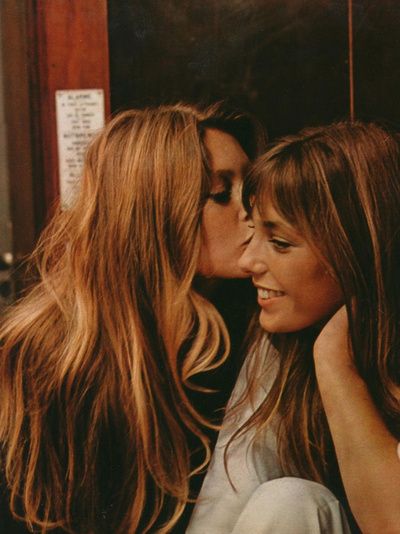
Kiss and tell: golden girls Brigitte Bardot and Jane Birkin on-set of the Roger Vadim 1973 film Don Juan ou Si Don Juan était une femme… (Don Juan, or If Don Juan Were A Woman…)
~~~

Golden boy: Robert Redford captured candidly and defining cool in the early 1970s
~~~

Stepping out: Steve McQueen, Robert Wagner, Faye Dunaway, William Holden, Jennifer Jones, Fred Astaire, Paul Newman, Richard Chamberlain, Robert Vaughn and, er, OJ Simpson – aka the stars of 1974’s blockbusting disaster movie extraordinaire The Towering Inferno
~~~

Jeet Kune Do-ing it: Bruce Lee in the early ’70s looking every bit an icon for all times
~~~
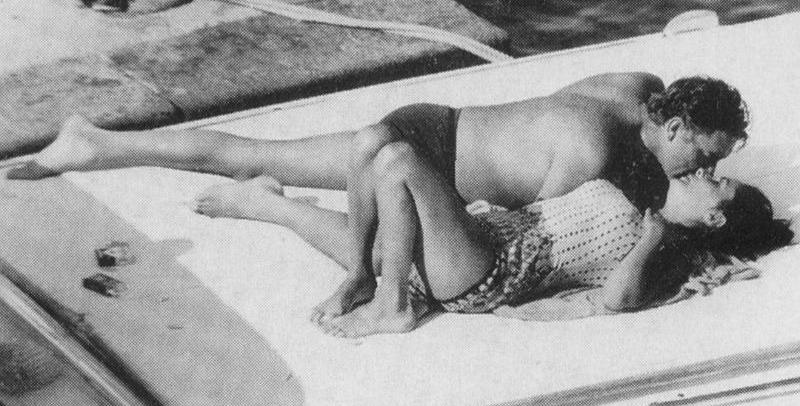
Hot stuff: Richard Burton and Elizabeth Taylor in a personal and passionate moment
~~~

Friends in high places: Jill St. John, then girlfriend of US Secretary of State Henry Kissinger, snapped in the presence of Russian premier Leonid Brezhnev and US President Richard Nixon
~~~

Clowning around: Dustin Hoffman creeps up on his co-star Lord Olivier on the set of 1976’s Marathon Man and plays up for the camera – the latter doesn’t exactly look happy as Larry
~~~

Saturday sly fever: John Travolta and Sylvester Stallone snapped together in the late ’70s
~~~

Three’s company: on the verge of superstardom, Star Wars’ young leads Harrison Ford, Carrie Fisher and Mark Hamill looking fresh-faced, light and relaxed at the movie’s 1977 premiere
~~~

Football crazy: Michael Caine and England’s 1966 World Cup winning captain Bobby Moore promote John Huston’s unlikely but delightful 1981 football caper Escape To Victory
~~~
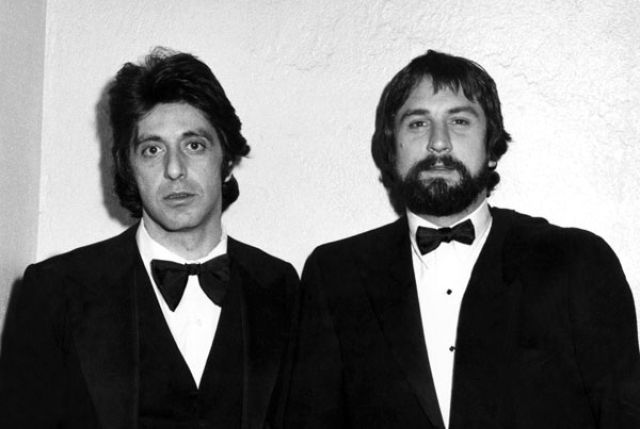
Two of a kind: Al Pacino and Robert De Niro pose as if caught in headlights in this 1982 shot
~~~
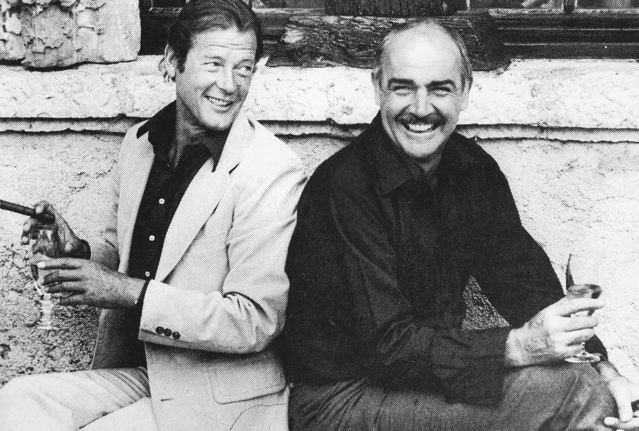
Bon-d viveurs: former 007 stars (and good friends in real life) Roger Moore and Sean Connery enjoy a drink, a smoke and a laugh for the camera, most likely in the late ’70s or early ’80s
~~~

Double take: another shot of Huston and Nicholson by Klaus Lucka von Zelberschwecht
~~~
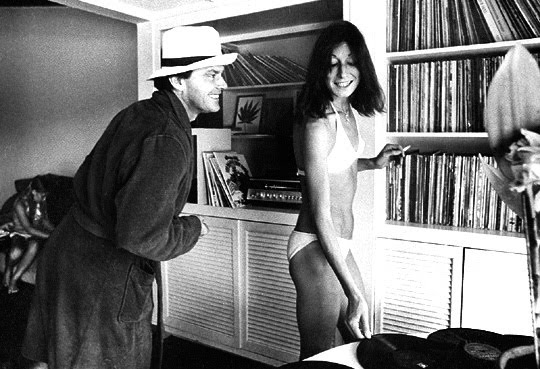
Record artists: Nicholson and Huston again – is a change of record all Jack’s requesting here…?
~~~
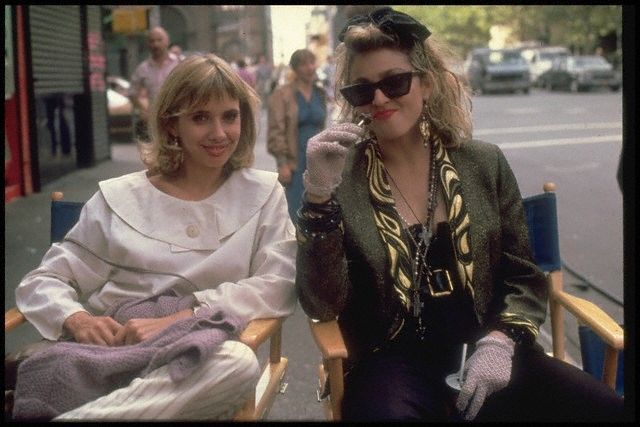
Into the groove: Rosanna Arquette and Madonna on-set of 1985’s Desperately Seeking Susan
~~~

Who ya gonna call (for a sequel)?: Bill Murray, Sigourney Weaver and Dan Aykroyd looking all smiles as they team up again to star in (and publicise) 1989 megabucks comedy Ghostbusters II
~~~

Take off: or is it? The Thunderbirds films should have been the icing on Gerry Anderson’s 1960s, but like others of his projects they helped forge a creative career of as many downs as ups
5… First there was Thunderbirds… 4… Then we had Captain Scarlet… 3… Next it was Joe 90… 2… After that came Space 1999… 1… And finally we got Terrahawks. Back in the day, Gerry Anderson was go!
Yes, from the mid-’60s through to the mid-’80s, that man ruled puppetry-driven family adventure drama on the gogglebox like no other. In fact, so unique and impressive a genre was it that nobody else really attempted it. In their day, Anderson’s amply entertaining and enormously inventive TV efforts were undeniably popular and nowadays have become utterly iconic and thus the stuff of warm, wonderful nostalgia. So much so, in fact, that this winter Royal Mail launched a special series of stamps to commemorate the fiftieth anniversary of Anderson’s first, top, truly popular show, Supercar.
Mind you, if you’re being pedantic, it actually all started long before Lady Penelope was even a pretty little twinkle in old Gerry’s eye. Unlikely it may seem (given the ‘Boy’s Own’ nature and titles of most of his TV escapades), but Anderson’s first foray on telly came in 1957 with a series named The Adventures Of Twizzle for former ITV company, Granada. Dreamt up by romance author Roberta Leigh, its title character was a pixie hat-wearing doll with extending (or ‘twizzling’) limbs. Its episodes mostly directed by Anderson, the series was the first venture of his brand new TV production company, AP Films. Boasting 52 episodes, Twizzle was a success and Gerry was on his way.
At first, puppetry had never been on Anderson’s radar, though. Born in London in 1929, he was of Russian-Jewish ancestry (his original family name was ‘Bieloglovski’, which was altered to ‘Abrahams’ by an immigration official upon his grandfather’s entrance to the UK in 1895 and then this was changed to ‘Anderson’ by his mother in 1939). When World War Two broke out that same year, Gerry’s older brother was conscripted into the RAF and stationed in the US at an airbase named Thunderbird Field – a moniker that Gerry remembered and, yes, would later make good use of.


Toy story and cover stars: Torchy The Battery Boy (left); Four Feather Falls on the cover of TV Times magazine from late February 1960 (middle) and its puppets in performance (right)
Before entering the RAF himself for national service, the young Anderson kick-started a planned career in photography by joining the British Colonial Film Unit on a traineeship, which led to a job with film studio Gainsborough Pictures. Following his time in the military, he returned to Gainsborough Pictures, where he stayed until its closure in 1950. Next, after freelancing as a director, he joined Polytechnic Studios, only for the latter, unfortunately, to fold quickly after his move there too. However, it was while with Polytechnic that Anderson made an important acquaintance, namely with cameraman Arthur Provis.
Tired of freelance work, Anderson – together with Provis and fellow film/TV professionals Reg Hill and John Read, founded Pentagon Films. Pentagon wound up quickly, but the four men’s next venture certainly didn’t – it was now that AP Films was founded (whose full title thus was Anderson-Provis Films). With its success with Twizzle, AP Films was off and running and, eager to collaborate futher with new creative colleagues puppeter Christine Glanville, special effects whizz Derek Meddings and composer Barry Gray, Anderson was looking to his next TV project.
This came in the shape of Torchy The Battery Boy (1958-59), which itself was swiftly followed by western adventure series Four Feather Falls (1959-60). Both were popular with UK children, but – as would be the case throughout his career – Anderson was ambitious and immediately wanted to move on to the next thing: something bigger and better that would strive to be more popular, memorable and successful. The result was the first of his genuinely well-recalled puppetry efforts, Supercar (1960-61).

Those magnificent men (and woman) and their flying machine: Gerry and Sylvia Anderson and cohorts at work during the production of Supercar, the hit that really got them off and running
The progression to this new series hadn’t been easy, however. Not only was there a break between AP Films and Granada, as Lord Lew Grade (one of British television’s most powerful figures of the day) ensured his company ATV became AP’s new partner, but also Anderson’s personal life had become a mite complicated. Around 1950, he had married, only to begin an affair during the production of Twizzle with AP Films’ attractive secretary Sylvia Thamm; by which time he also had two children. Inevitably, he and his wife divorced, freeing him to marry Thamm in 1960.
As planned, though, Supercar was a bigger success than anything Anderson had tried before, so much so that it became the first of his series to break America, being shown in syndication in the States. It featured, yes, a ‘supercar’, a vehicle that – thanks to its rockets – both hovered when travelling on the ground and flew like a jet through the air. Boasting a total of 39 episodes, Supercar also featured two elements that were to become Anderson staples – a ‘launch sequence’ of the series’ eponymous vehicle over the opening titles and, perhaps more importantly, the ever so clever puppetry-performing technique that he loftily entitled ‘Supermarionation’ (the use of which would be boasted in the credits of all the shows in which it featured).
Make no mistake, though, Supermarionation was groundbreaking – and was critical to the effectiveness and success of all of Anderson’s puppet-based series from Supercar onwards. The technique worked by means of a puppet’s movements being controlled via thin metal wires connected to its head and limbs. These wires, however, doubled as conductors for an electric current, which on reaching a puppet’s head would activate a device contained therein that synchronised the puppet’s lip movements with its pre-recorded voice as the latter was played live on-set. Simple glove-puppet ventriloquism this most definitely was not.
Anderson followed up the success of Supercar with the spaceship-featuring Fireball XL5 (1962). Still very fondly recalled, XL5 excelled specifically in two respects; it was the first Anderson show to feature a hummable and chart-entering theme tune and was the first – and only – to have been shown properly on a network in the US, rather than in syndication. NBC broadcast it during its Saturday morning block of children’s shows between 1963 and ’65.
Hot on the heels of this latest success came Stingray (1964). With this combat-submarine fuelled adventure, AP Films upped the ante further. Not only was it the first children’s show in British TV history to be filmed in colour, it also saw notable improvements over the last two Anderson efforts in terms of special effects (explosions and, in particular, underwater sequences) and puppet acting – each major puppet now had interchangeable heads so a variety of facial expressions could be achieved. Much of this was facilitated by the buy-out of AP Films by Grade’s ATV, ensuring the team moved to larger studios in Slough, Berkshire.
Stingray, though, is perhaps best remembered for its truly stonking opening theme tune, which featured the unforgettable line ‘Anything can happen in the next half-hour!’. Indeed, Anderson’s 25-minute-long marionette capers had now become unmissable slices of weekly TV for masses of kids on both sides of the pond. And this was never more true than with his next show – the big one. With Thunderbirds (1964-66), Anderson truly hit the jackpot. How big was Thunderbirds? Well, it may not be exaggerating it to say that with the kids of the day it was bigger than both Doctor Who – an unquestioned family TV triumph – and James Bond – an unquestioned king of cinema.

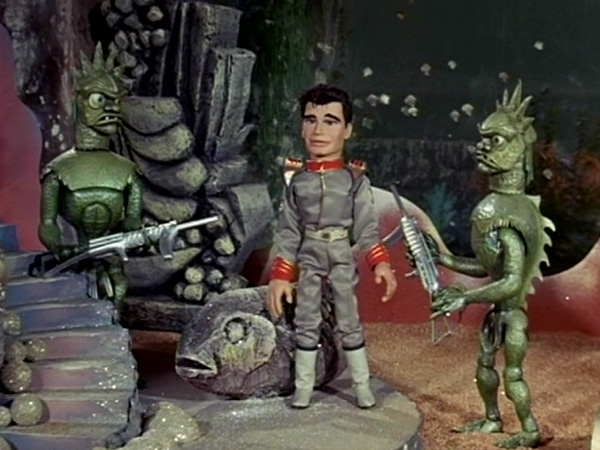
Flying high and diving for treasure: both Colonel Steve Zodiac of Fireball XL5 (left) and James Garner look-alike Troy Tempest of Stingray (right) were big hits with kids everywhere
In fact, it’s maybe impossible to imagine retro culture without it. It featured, of course, the exploits of the tropical island-based Tracy family, which, under the banner of ‘International Rescue’, used spectacular vehicles to save people around the world from terrible disasters. Headed up by former astronaut dad Jeff, there was Scott (Thunderbird 1 – rocket), Virgil (Thunderbird 2 – big green plane), Alan (Thunderbird 3 – space rocket), Gordon (Thunderbird 4 – miniature submarine despached from Thunderbird 2) and John (Thunderbird 5 – spacestation); all of whom were actually named after astronauts from NASA’s ’50s Mercury program.
Joining them, of course, were engineer extraordinaire ‘Brains’, evil saboteur The Hood and ‘London agent’ the oddly (for a puppet) sexy Lady Penelope Creighton-Ward with her Cockney butler Aloysius ‘Nosey’ Parker, whom also chauffered his employer around in her futuristic-looking, James Bond-like gadget laden, pink Rolls Royce that bore the number plate ‘FAB 1’. Ah yes, and then was ‘F.A.B.’ – who could forget the Tracys’ inimitable radio call-sign? In actual fact, it wasn’t supposed to be an acronym for anything; it merely was an attempt to be down with the kids by referencing that oh-so ’60s word ‘fab’.
But, as said, Thunderbirds was definitely down with the kids. In fact, it’s one of those children’s shows that thanks to hours and hours of repeats always seems to have been. Perhaps surprisingly, just 32 one-hour (or, without adverts, 50-minute) episodes were made. This was because, although a huge hit in the UK, the series wasn’t taken on by any of the three major US networks owing to Lew Grade playing each off against the other to get the highest possible price; his gamble didn’t work and the show was instead shown in syndication, resulting in Grade calling time on the costly programme before its time. Yet it was obviously costly; compared to Anderson’s previous efforts, the improved models, sets and special effects (in addition to the increased running time) ensured that each episode felt like a feature film.
Much credit for this must go to effects supervisor and chief model-builder Derek Meddings. Not only did Meddings master much improved explosions (filmed at double-speed so when slowed to normal-speed the look was even more impressive), vehicle take-offs and landings and road- and air-travel shots, he also created fantastic but credible-looking models that would imprint themselves on the masses’ minds for decades to come. Proof of his achievements lies in the fact his team was poached by Stanley Kubrick to work on the forthcoming sci-fi spectacular 2001: A Space Odyssey (1968). Meddings himself would go on to a highly successful career in Hollywood, contributing to many a Bond film and winning an Oscar for making audiences ‘believe a man can fly’ in Superman (1978).

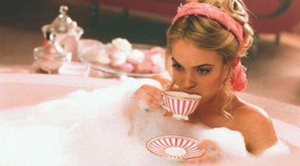
Living doll: the original Lady Penelope in the Thunderbirds TV series (left) and the updated m’lady as played by the very much live-action Sophia Myles in the 2004 movie version (right)
Indeed, Meddings’ model work on Thunderbirds so captured the public’s imagination that Dinky- and Matchbox-produced replica toys and other paraphernalia based on the show sold like hotcakes during the ’60s. Nowadays Thunderbirds-related merchandise of the period is among the most collectable toys in existence. And, as he did for both XL5 and Stingray, Meddings’ fellow mainstay at AP Films (or Century 21 Productions, as it was now renamed) Barry Gray composed another classic theme for Thunderbirds.
In fact, it’s surely fair to say the Thunderbirds March is the classic Gerry Anderson theme. Instantly recognisable, especially when heard over the opening credits of each episode with the melodramatically marvellous ‘5-4-3-2-1’ countdown (see video above), it’s a favourite with brass bands the world over and became a staple ingredient of the live shows for both British band Level 42 and New York rappers The Beastie Boys.
Mind you, perhaps the most famous pop culture reference – or, to be precise, parody – of Thunderbirds came at the height of its popularity when, in a 1966 episode of their popular BBC show Not Only… But Also, legendary comedians Peter Cook and Dudley Moore delivered a thinly veiled parody of all-things-Anderson in the shape of the sketch Superthunderstingcar. A marvellous and utterly classic TV comedy moment, Pete and Dud hammed it up as wobbling puppets with wonky accents assisted by wonkier special effects (see video below). Hey, they say imitation is the sincerest form of flattery, right?
For the highly ambitious Gerry and his wife Sylvia (now an important member of the creative team), the natural progression for Thunderbirds was into cinemas – if its future didn’t lie on TV surely it must lie in the movies? But, for the first time, the gods weren’t on Anderson’s side; in fact, this time they seemed to find him guilty of hubris. Perhaps he’d forgotten that the reason Thunderbirds had to move on from TV was because moneyman Lew Grade had decided it wasn’t financially viable anymore, not because it had become too big for the small screen – as it turned out, Thunderbirds definitely wasn’t big enough for the big screen.
There were two films; the first Thunderbirds Are Go was released at Christmas 1966. Running at 93 minutes, it featured all the usual impressive hardware and pyrotechnics, but was hampered by a frankly daft plot involving Martians and a psychedelic dream sequence that featured ‘Cliff Richard Jr and The Shadows’ (yes, Cliff and co. all had their own puppets). Still, the movie studio that financed it, United Artists, were expectant and delighted with the preview they saw. Indeed, according to Anderson, at the premiere the head of UA apparently said: “I don’t know whether it’s going to make more money than Bond or not, I can’t decide”. It didn’t; it bombed.
As Anderson puts it: “the next day, The Dominion at Tottenham Court Road had about ten people in it [watching the film].” Ultimately, both he and Sylvia put the movie’s lack of success down to the fact that punters looked upon Thunderbirds as a television phenomenon – they watched it on TV, why would they go and watch the same thing in a cinema? Seemingly confused by Thunderbirds Are Go‘s failure, UA commisioned a sequel that was duly produced and released, but the oddly Tiger Moth byplane-featuring Thunderbird 6 (1968) fared no better than its predecessor – although, fair do’s, like the latter it did boast a spiffing poster.
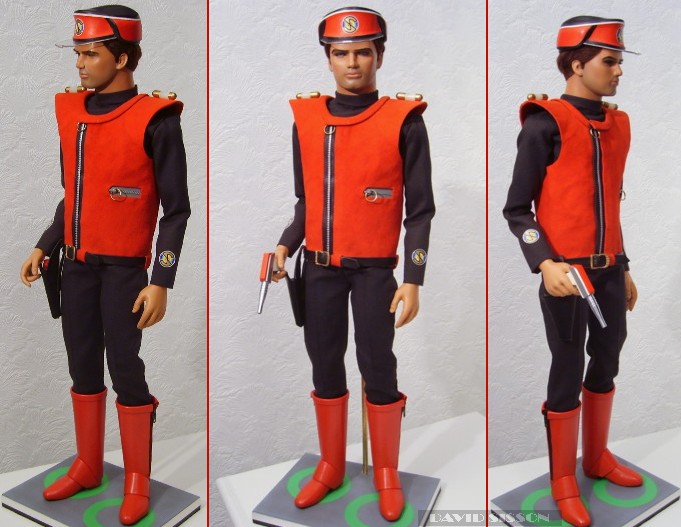
The puppet master: Captain Scarlet – a lean, admittedly not green but red fighting machine
Somewhat chastened by their cinematic experiences, Gerry, Sylvia and their team returned to the terra firma of TV for their next project – but not entirely to earth. Captain Scarlet And The Mysterons (1967-68) went back to the idea of Martians as tried out in Thunderbirds Are Go. This time, though, they got it right. Set a hundred years into the future, as Thunderbirds more or less had been, this show centred around the eponymous Captain Scarlet, a freakishly unkillable agent of Spectrum, the international organisation that countered the moves of the evil Mysterons from Mars who had started a war with Earth.
Now, I have to admit, Captain Scarlet is definitely my favourite Anderson venture. Compared to Thunderbirds and many of his other efforts, it was more serious, sombre, eerie and simply cooler. With the enigmatic but heroic Scarlet, the faux glamorous female Angel jet pilots and a genuinely threatening villain, you could describe it as Intergalactic James Bond stuff. It’s as if Thunderbirds had grown up. Sort of. It was also more naturalistic, as the model makers painstakingly – and successfully – populated the adventures with less cartoonish, more human-looking puppets, both in terms of head and facial features and body dimensions. Plus, of all the Anderson shows, this one surely contained the greatest Barry Gray theme, replete with its irresistible staccato drum motif, of course.
Sadly, in some respects, but far from surprisingly, Captain Scarlet couldn’t match Thunderbirds‘ ginormous popularity and success (could anything?) and lasted one series. Plus, it was admittedly somewhat criticised for its darker tone, ‘violence’ and increased action and explosions. Gerry and Sylvia responded by grounding their next venture in far more character-driven stories. Joe 90 (1968) featured a nine-year-old hero, who when hooked up to his inventor dad’s clever-clever apparatus could take on the knowledge and capacities’ of others’ minds, ensuring him a career as an international spy (as it obviously would). As cult-friendly and wonderfully whimsically ’60s-silly as any of Anderson’s efforts, Joe 90 had definitely more ‘kid-appeal’ than Captain Scarlet, but with its emphasis on characters and plotting maybe went too far the other way – audiences and critics weren’t that crazy on its less-is-more style.
The final Anderson puppet-driven series of this period was The Secret Service (1969), a series that nowadays is almost forgotten. Like Joe 90, it too was strongly plot-driven, slightly bizarrely focusing on the espionage adventures of a countryside Church minister and his assistant. With its emphasis on increased naturalism – as with Joe 90, it contained puppets like those introduced in Captain Scarlet, while it also used human actors in long shots – it was a long way from the carefree fantasy of Stingray and Thunderbirds.

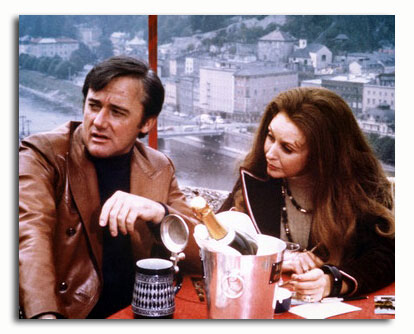
No strings attached: Ed Bishop in UFO (left); Vaughn and Porter in The Protectors (right)
As the ’60s slid into the ’70s, the Andersons were at a crossroads. Sensing that TV puppet action adventures may have had their time, they didn’t blink and went in totally the opposite direction. Century 21’s first project of its new era was a live-action, entirely human actor-populated feature film, Doppelgänger (1969). Known as Journey To The Far Side Of The Sun outside Europe, it was pretty typical-for-the-time sci-fi fare and didn’t exactly pull up trees at the box-office. More successful was the next venture, which re-used several actors and props from the movie. UFO (1970-71) was a return to the small-screen for the Andersons, but a continuation of live-action filming and, although only moderately popular back in the day, is nowadays very fondly recalled.
It memorably featured minor James Bond actor Ed Bishop (who had also voiced a major character in Captain Scarlet) sporting a peroxide mop as Commander Ed Straker, star member of the near-future SHADO organisation, whose aim was to thwart aliens looking to extract humans’ organs. As the premise suggests, despite featuring the usual Anderson-friendly sci-fi hardware, UFO was much more adult than previous Century 21 efforts; in fact, it explored themes such as adultery, divorce and drug use.
Talking of grown-up things, by this time the Anderson’s marriage was in trouble; so much so, that Sylvia wasn’t involved in Gerry’s next series at all. She may have kicked herself, she may not, for The Protectors (1972-74) was easily her husband’s most successful project since Thunderbirds (ironically, he didn’t come up with the concept, though). Live-action again, it was an adventure drama boasting Man From U.N.C.L.E. Robert Vaughn and The Forsyte Saga star Nyree Dawn Porter as a pair of intenational trouble-shooters. Featuring the ever popular Tony Christie tune Avenues And Alleyways over its end credits, it ran for two series and was widely watched on both sides of the Atlantic; rumours persist the reason there wasn’t a third was because the ‘difficult’ Vaughn couldn’t get on with either his fellow actors or Anderson and Grade.
By now it was the mid-’70s and you’d be forgiven for thinking Gerry Anderson may have slowed down, but nothing like it – in his latest project, he really went for the jugular. Why? He’d taken up an offer from legendary film producer Harry Saltzman to write the next Bond film, that’s why. As it turned out, though, it was one of the characters of the next 007 epic, Jaws, who went for the jugular; Gerry was left barely leaving a tooth-mark – although he claimed otherwise. Shortly after accepting Saltzman’s offer, the latter parted company with fellow Bond producer Albert R ‘Cubby’ Broccoli owing to financial problems and Anderson’s involvement in the writing process was no longer wanted. When the movie itself, The Spy Who Loved Me (1977), came out though, rightly or wrongly, Anderson was apoplectic, claiming Broccoli’s Eon Productions had used ideas from his script in the flick without his consent. He started legal proceedings against them, but realising the considerably larger legal clout Broccoli had mustered up, dropped the case and accepted a mere £3,000 in compensation.
His brush with Bond no doubt leaving a sour taste in the mouth, Gerry went back to the familiar, namely TV and his wife. Working elements intended for the abandoned second series of UFO into a new show, the Andersons’ next offering then was Space: 1999 (1975-78). Nowadays looked upon as an iconic ’70s sci-fi series – everything from its music to its characters’ togs ache of that decade’s love-it-or-hate-it style (see video above) – this drama about a space base on a knocked-out-of-orbit Moon starring Mission: Impossible‘s husband-and-wife team Martin Landau and Barbara Bain didn’t fare quite so brilliantly as it might have when originally broadcast.
Indeed, owing to the first series’ disappointing viewing figures on American syndicated TV, Lew Grade needed convincing a second series was worthwhile. Oddly, despite the presence of delectable former Bond Girl and Return Of The Pink Panther (1975) co-star Catherine Schell, series two originally did better in Canada than anywhere else. Still, geeks the world over quietly lapped up each episode and, as mentioned, even more of them do so today.
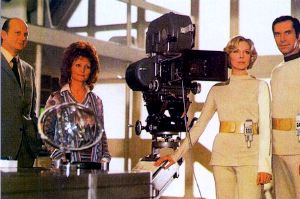

Space – ’70s style: The Andersons and the Landaus on set – wonder if they ever had a key party? (l); the cast of Space: 1999 pose for Kay’s catalogue’s casual Moonbase-wear section (r)
Space: 1999, though, was the last straw for Gerry and Sylvia Anderson’s professional and personal relationships. Halfway through the show’s run they split; indeed, another producer had to be found to replace Sylvia’s role for its second series. Newly divorced, Gerry now found the going tough – not only was he estranged from his son with Sylvia (and would remain so for another 20 years), but he had also run into financial trouble, what with Grade pulling the plug on a third series of Space: 1999 because, it seemed, the latter wanted instead to finance a return to TV of classic hero The Saint (in what turned out to be the risible The Return Of The Saint) and a big screen adaptation of bestselling novel Raise The Titanic (the resultant movie, released in 1980, would actually go down in history as one of cinema’s greatest ever flops).
It was now the 1980s and, like it or not, Anderson found himself going back to the future. Forming a new production company with businessman Christopher Burr (Anderson Burr Pictures), he decided to return to Thunderbirds territory by coming up with a new series populated by cartoonish-like puppet characters reminiscent of his most popular show. Indeed, the smart recognised Terrahawks (1983-86) as something of a ‘black comedy’ version of Thunderbirds, rather than simply the re-hash of the heroic-human-combat-force-protect-Earth-from-aliens ground Anderson had trod more than once before. Having been a child of the ’80s, I must confess Terrahawks was my introduction to all things Anderson and, at the time, I thought it great fun – and many still do, it’s garnered quite the cult following over the years. As Barry Norman had a wont to ask, and why not?
Anderson spent much of the rest of the decade trying to get new puppet-themed shows off the ground, but to little avail – yet he did find success in providing special effects direction for the popular ’50s sci-fi-themed rock ‘n’ roll stage musical Return To The Forbidden Planet. Mind you, if he’d pulled off a moderate return to form in the ’80s with Terrahawks, it was in the ’90s (the decade that wallowed in such warm nostalgia for the better aspects of the ’60s) that he enjoyed a genuine renaissance.

Fifty not out: Royal Mail’s limited edition collection of stamps featuring Gerry Anderson’s classic marionette action adventures to celebrate the fiftieth anniversary of Supercar
Sure, his Supermarionation-fuelled shows had been popular ever since they were first shown, but never were they more popular since then than in the ’90s, when Thunderbirds, especially, and the others enjoyed weekday teatime showings once more and new toys were produced to feed kids’ hunger for Scott, Virgil, Brains et al. Indeed, in 1993, beacon of children’s TV Blue Peter even demonstrated to its young viewers how they might construct their own version of Tracy Island in case the shops sold out of the proper toy – and many did.
The truth, I suppose, is that Gerry Anderson and the majority of his TV projects have always been popular. And, excepting their huge following when originally conceived and broadcast in the ’60s and the somewhat mirroring of that fanaticism in the ’90s, they’re still undeniably popular now. There’s something about the likes of Captain Scarlet, Joe 90 and Stingray that does and no doubt always will appeal to kids little and old. Is it the cool hardware, the comfy sci-fi fantasy, the funkily brilliant music or the puppets themselves? Perhaps it’s all of them that mix together into concocting an Anderson ‘x-factor’ that for so many is simply irresistible.
Indeed, the Gerry Anderson story goes on. Take the 2004 live-action Hollywood movie version of Thunderbirds – it was terrible, sure, but it was made and turned something of a profit. A CGI-re-invention of Captain Scarlet (Gerry Anderson’s New Captain Scarlet) emerged on TVs in 2005 too. And now, with the release this January of Royal Mail’s sleek looking ‘The Genius Of Gerry Anderson’ stamp collection, came the news from the man himself that he’s finally negotiated the rights to bring back Thunderbirds on his own terms. Parker, I’m sure, would be delighted at that news – and Penelope? Yes, m’lady, indeed. In fact, perhaps we all can toast a cup of her favourite tipple (tea, of course) to that.
~~~
Further reading
Royal Mail ~ Gerry Anderson stamps
~~~
Playlist: Listen, my friends! ~ March 2011
In the words of Moby Grape… listen, my friends! Yes, it’s the (hopefully) monthly playlist presented by George’s Journal just for you good people.
There may be one or two classics to be found here dotted in among different tunes you’re unfamiliar with or never heard before – or, of course, you may’ve heard them all before. All the same, why not sit back, listen away and enjoy…
CLICK on the song titles to hear them
~~~
Bob Asklöf ~ Bons Baisers de Russie (From Russia With Love)
Nico ~ I’m Not Sayin’
Randy Newman ~ I Think It’s Going To Rain Today
The Doors ~ Touch Me
Quincy Jones ~ Walking In Space
Mike Oldfield ~ Tubular Bells Part 1 (Opening)
Peters and Lee ~ Welcome Home
Lynyrd Skynyrd ~ Tuesday’s Gone
Nicky Hopkins ~ Edward
Electric Light Orchestra ~ Livin’ Thing
Thin Lizzy ~ Sarah
Stephanie Mills ~ Bit By Bit (Theme From Fletch)
The Dream Academy ~ Please Please Let Me Get What I Want
‘And the winner is…?’: Oscar’s top 10 shocks
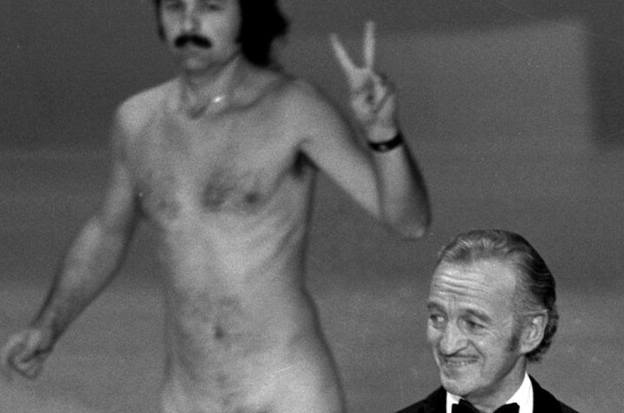
Bare-faced cheek: Niv sees the funny side as a chap in his birthday suit joins 74’s Oscar party
Love it or loathe it, it’s the Academy Awards again on Sunday night. Will The King’s Speech reign supreme or will The Social Network connect most with voters? Who knows and – you may ask – who cares? Indeed, when it comes down to it, aside from observing the silver screen’s glitterati all in one place at once and checking out what they’re all wearing, why do we actually watch the Oscars? I’ll tell you why, for exactly the same reason we watch any major sporting or news event – in case anything exciting, nay surprising, happens.
Yes, folks, we’re talking Oscar shocks. But what do I mean by that? Small-scale family drama Ordinary People beating Raging ‘the greatest movie of the ’80s’ Bull to Best Picture in ’81? No, the Academy always goes for the emotionally satisfying over the emotionally challenging. Halle Berry and Denzel Washington being named Best Actor and Actress on the same night in ’02? Nah, it was simply ‘their’ time. Crash, well, crashing Brokeback Mountain‘s party back in ’05? Definitely not – I mean, be fair, were the conservative-with-a-small-‘c’ Academy ever going to give Best Picture to a flick about gay cowboys?
Nopes, you see, I’m talking the big, proper – sometimes surreal, often downright weird – surprises the Oscars have given us down through the decades that truly make the whole farago worthwhile. So, if you’ll take your seats, my very welcome VIP guests, this is my top 10 run-down…
(Oh, and do CLICK on the entry titles for video clips of the moments themselves – they’re well worth it)
~~~
10. The Oscars that almost weren’t (1967)

So, where better to start a countdown of Oscar shocks than with the one that very nearly trumped all the others? Yes, but for a last-minute intervention, the 39th Academy Awards may have proved the most memorable Oscars of all – by not actually happening. Just like anywhere else, Hollywood in the late ’60s and ’70s was a politically energised place, with its annual big night out far from immune (see the next entry on the list) – and thanks to the attempts of the American Federation of Television and Radio Artists (AFTRA), 1967’s show is a prime example. AFTRA – a union of performers and broadcasters – aimed to hold a strike that would smartly/ cynically (delete as appropriate) coincide with the ceremony, ensuring its members couldn’t broadcast it. In the end, just three hours before the thing was due to air, whatever dispute the organisation had with the Academy was settled. Perhaps fittingly, one of the big winners on the night was Who’s Afraid Of Virginia Woolf? (1966) – a movie most memorable for its characters arguing with and shouting at each other throughout.
~~~
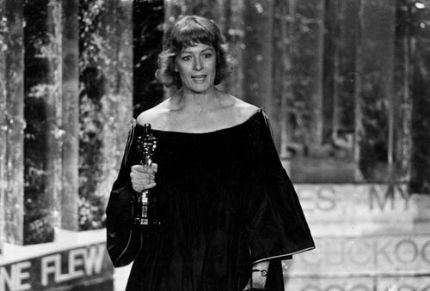
As referred to above, Oscar has certainly known its fair share of protest speeches – award winners taking the opportunity to sprinkle those that have rewarded them with the ultimate honour in their profession not just (or even not all) with thanks, but with a harangue on their favourite political bête noire. Take for instance the wonderfully talented British actress Vanessa Redgrave, who when picking up her Best Supporting Actress stauette for Julia in 1978 (and in perhaps the most memorable Oscar ‘rant’) applauded the Academy for not being intimidated by “a small bunch of Zionist hoodlums, whose behavior is an insult to the stature of Jews all over the world, and to their great and heroic record of struggle against facism and oppression.” Why did she say this? Well, that year’s Oscars had been picketed by members of the Jewish Defence League, burning effigies of Redgrave, in protest to her backing Palestine’s cause and, in turn, to the Academy for nominating her for an award (she’d narrated a pro-Palestine documentary the same year). So did Vanessa get the last laugh? Well, she got cheers but boos too – and a ticking off for her behaviour from Julia‘s writer later on in the night. Hollywood rebels, eh?
~~~
8. WTF? (1986)

Ah, Oscar frocks. It’s fair to say there’s definitely been some howlers down through the years. Who could forget Bjork’s totally surreal swan-dress in ’01 0r Gwyneth Paltrow’s revealing grey goth get-up in ’02? One year Diane Keaton came dressed in a Charlie Chaplin-inspired suit with tails. No, really. But the one that takes the biscuit for me is the, well… thing that the inimitable Cher wore in ’86 when she presented the Best Supporting Actor Oscar to Don Ameche. Quite frankly, the moment in which she sweeps on-stage looking like some sort of crow-dominatrix channelling Tina Turner in Mad Max Beyond Thunderdome (1985) and gives the award to the old-school, amiably conservative Ameche for his role in the gentle geriatric sci-fi drama Cocoon (1985) is simply the Oscars at its ill-fitting, awkwardly brilliant best (or worst, depending on your opinion). Sonny’s (once) other half actually won the Best Actress statuette two years later for Moonstruck (1987), but don’t worry she looked less ridiculous then. Well, slightly. She merely wore a highly slinky number that was way more naughty nightee than glammed-up night-out.
~~~

1969. It was the end of the ’60s, the end of a dream really; the innocence of hippiedom had arguably collapsed and been replaced by… what? The Doors were right, the times were ‘strange days’, indeed. And strange, it’s probably fair to say, sum up the Oscars held that year. Oddly, the Academy hadn’t nominated 2001: A Space Odyssey, Rosemary’s Baby, Bullit, Planet Of The Apes or The Odd Couple for ’68’s Best Picture, instead preferring the likes of Franco Zeffirelli’s Romeo And Juliet and Paul Newman’s directorial debut Rachel, Rachel. And winning that prize on the night was not the outstanding historical drama The Lion In Winter, but stomping, escapist musical from another age Oliver! (admittedly, I love it). But things get stranger still, for there wasn’t a Best Actress award dished out that year – there were two. To the surprise of presenter Ingrid Bergman – and, frankly, everyone else – the result was a tie. Perhaps predictably, the imperious Katharine Hepburn won for her role in The Lion In Winter, but so too did newcomer Barbra Streisand for musical Funny Girl. And still it gets better. Like for all four of her Oscar wins, Hepburn didn’t actually turn up and, on the way to the stage, Barb managed to slip on the flared leg of her sheer, tuxedo-style trouser-suit. Classic stuff, indeed.
~~~
6. An X-rated film wins Best Picture (1970)
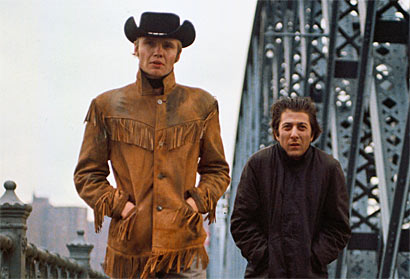
So one year later at the Oscars and, well, the whole thing still very much mirrored the randomness, confusion, anger and chaos of the time. Take, for example, the five nominees for that year’s – or 1969’s – Best Picture: traditional historical epic Anne Of The Thousand Days; hugely popular comic, but revisionist western Butch Cassidy And The Sundance Kid; Barbra Streisand’s follow-up to Funny Girl (1968), the old-fashioned, rather out-of-date Hello, Dolly!; French-language, Algerian-made, Greek political thriller Z; and the X-rated gritty, brilliant New York-set drama Midnight Cowboy. Now, clearly the safe choice for the Academy would have been to give the award to either Anne Of The Thousand Days or – probably the public’s choice – Butch Cassidy And The Sundance Kid. Did they, though? Did they hell… they gave it to the X-rated flick. Yes, not only did the unfalteringly frank, homosexual- and homeless-themed Midnight Cowboy become the first film to be nominated for an Oscar with the least universal – and, arguably, most damning – film certificate possible, it also became the only one with that rating to land the big one (in actual fact, the X-rating no longer exists; its equivalent in the US today is the equally reviled NC-17). Not just that, but this upset ensured that the only ever X-rated movie to win Best Picture came just one year after the only ever G- (or U-) rated movie, Oliver!, achieved the same thing. Now that’s what you call an Oscar one-two.
~~~
5. The ‘greatest film ever made’ doesn’t win Best Picture (1942)
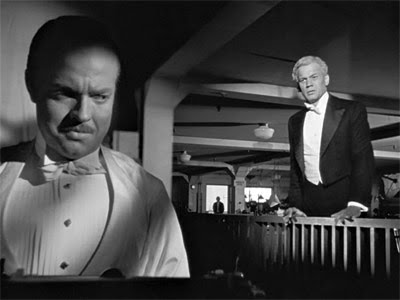
Since 1962, Orson Welles’ awesome Citizen Kane (1941) has topped highbrow film magazine Sight & Sound‘s decennial Top 10 best movies list every single time. It topped the 1998 poll of the 100 greatest flicks published by the American Film Institute (AFI), as well as polls held by eight other notable movie organisations and magazines around the world. Of any film you care to name then, Citizen Kane may have the most legitimate claim as the ‘greatest ever made’. And yet, at the 1942 Oscars How Green Was My Valley, a film about Welsh coalminers (yes, seriously), won Best Picture. Ah, you may say, like 2001: A Space Odyssey (1968), Kane for some bizarre reason wasn’t nominated? But it was. And when truly outstanding flicks have been, they’ve usually gone on to win – Gone With The Wind (1939); Casablanca (1942); The Godfather Parts I (1972) and II (1974); One Flew Over The Cuckoo’s Nest (1975); Schindler’s List (1993) etc. So why didn’t Kane? Well, the flick is actually a dark parody of pre-war US tycoon and press baron William Randolph Hearst, who was so dismayed at the film he effectively killed its chances of making a profit and threatened Academy members if they gave it any awards – it was nominated for nine (including for Director and Actor) and won only for its screenplay. Apparently, even the ceremony’s audience booed every time its name was mentioned. How Green Was My Valley? Pah, how lucky was that movie, more like.
~~~
4. ‘A goddamn meat parade’ (1971)

In 1971 there was only one guy who was ever going to win the Best Actor Oscar. He was was the barnstorming thespian George C Scott, who in Patton (1970), the biopic of the infamous WWII US general, delivered arguably the best performance nominated for that award for several years. But he wasn’t a happy bunny – and, even if the world probably wouldn’t have, the Academy should have guessed what would happen. Nine years before, Scott had been nominated in the Supporting category for his role in The Hustler (1961), a move that hadn’t impressed him much – he’d sent a note to the Academy that said ‘No thanks’. Perhaps thankfully, he didn’t win that time. But, inevitably, he did for Patton. And not only didn’t he turn up, he also became the first person ever to reject an Oscar (the film’s producer Frank J McCarthy accepted it on the night; Scott had said he didn’t attend because he was watching an ice hockey game). But there are two accounts from Scott explaining his decision. The first quotes him as saying: “The whole thing is a goddamn meat parade. I don’t want any part of it”. In the second, from a 1986 interview, he states: “The [Oscar] ceremonies are a two-hour meat parade, a public display with contrived suspense for economic reasons. There is no question you get pumped up by the recognition. Then a self-loathing sets in when you realize you’re enjoying it.” You must admit, he may have a point there.
~~~
3. Chariots beats Raiders (1982)
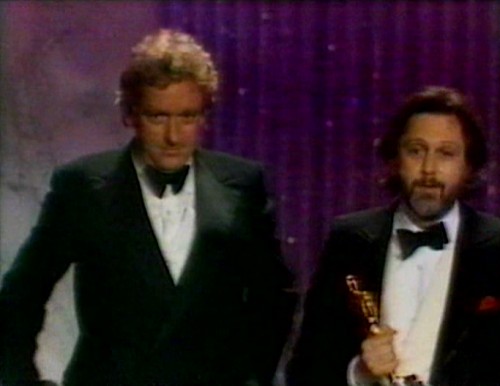
Now, in choosing an outrageous David-beats-Goliath win at the Academy Awards, the Oscar-versed among you may have suggested Driving Miss Daisy‘s ‘out-of-nowhere’ Best Picture win in 1990 over Born On The Fourth Of July, Dead Poets Society, Field Of Dreams and My Left Foot. After all, that quartet were all critically-acclaimed, big hits. Yet, Daisy actually was too – it ended up the eighth biggest flick at the US box-office in its year and, before the Oscars, won every award in sight. So, instead I’m going with Chariots Of Fire’s denial of Indy’s first escapade, Raiders Of The Lost Ark – the latter being Spielberg’s ginormously popular blockbuster, of course, the former being a tiny Brit drama about two runners at the 1924 Olympics. Erm, right. Chariots had no awards momentum (it hadn’t won at the Golden Globes or anything else). Moreover, it’s rather amazing the Academy had even heard of – let alone seen – it to choose it over Raiders and the other Best Picture nominees that year (including Katharine Hepburn and the Fondas in On Golden Pond and Warren Beatty’s epic Reds, which denied Chariots the usual double-whammy of Best Director too). You see, before the noms were announced Chariots had made $8m in the US; Raiders $188m. As the Yanks like to say, you do the math.
~~~

This moment, quite wonderfully, was voted Oscar’s best ever in 2001. It’s not hard to understand why. The first ever recorded ‘streak’ was in London as far back as 1799, but it only really came to prominence, it seems, thanks to Californian students in the early 1970s disrobing and showing their all in public for the hell of it. By the time of the ’74 Oscars, the fad had spread to major public events on both sides of the pond, especially sports matches. At its height, even Snoopy streaked in a Peanuts, er, strip. However, the Oscars streak wasn’t quite the surprise many understandably assumed it was – it was actually pre-arranged in conjunction with the ceremony’s TV producer. Talk about embracing the flesh. The moment was magic, though. Just as urbane host David Niven was about to introduce Best Picture presenter Elizabeth Taylor, appearing in-shot behind him was the moustachioed photographer Robert Opel flashing a V-sign for ‘Peace’ (as well as his bits). Quite magnificently – and although not impromptu, as he knew what was going to happen – Niven quipped: “Isn’t it fascinating to think that probably the only laugh that man will ever get in his life is by stripping off and showing his shortcomings?”. Trust Niv not to make a big deal about such a little thing.
~~~
1. Huh, that’s not Marlon Brando…? (1973)
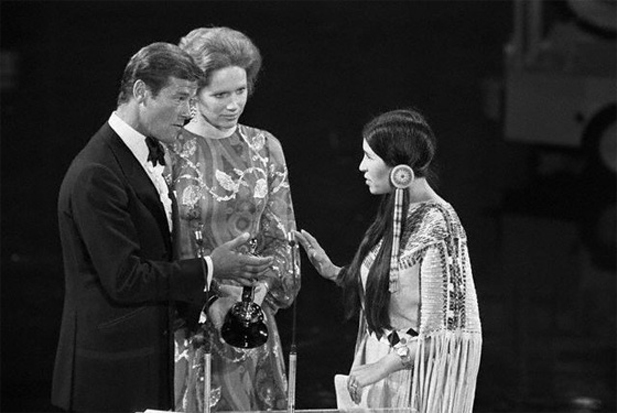
So, this is Oscar’s biggest shock, eh – the one that leaves all the others behind mouthing an obscenity like Samuel L Jackson for missing out on the top prize? Yes, and it’s one as golden as the little feller on his plinth himself. As – I think it’s fair to say – I’ve pointed out, the years from the mid-’60s through to the mid-’70s were among the craziest and most entertaining at the Academy Awards (they rewarded some damn good films back then too, of course) and this moment in particular brilliantly sums up that period for the Oscars. The epic masterpiece that was The Godfather (1972) was adored by the public, lauded by the critics and awarded three Oscars by the Academy. Two of them were for Picture and Screenplay; the other for its lead, the legendary Marlon Brando in his iconic performance as Don Vito Corleone. But Brando decided to do ‘a George C Scott’ and didn’t accept his award. And what happened, following the funky pairing of Roger Moore and Liv Ullman announcing he’d won, was a diminutive young woman in Native American dress walked up to the stage and gestured to Moore she wouldn’t take the Oscar.
She went on to explain the absent Brando’s reasons for his no-show and non-acceptance: apparently it was a protest against Hollywood and US TV’s depiction of Native Americans and, especially, against the recent incident in South Dakota town Wounded Knee, which had been cordoned off by the FBI after being occupied by the American Indian Movement (AIM). To say the ceremony’s attendees were stunned by what was happening in front of them is an understatement – boos and applause both rang out – and that’s to say nothing for the reaction around the world. Unquestionably, the event did much to secure Brando a bizarre reputation in the public consciousness – later incidents, not least those on the set of the film Apocalypse Now (1979) would only fuel it further. Always a great talent, but without a doubt an eccentric individual. Shortly afterwards, it also emerged that the woman who had turned up on the night in his stead, named Sacheen Littlefeather, although a committed Native American activist, was also an actress and the winner of the ‘Miss American Vampire’ contest in 1970.
But, you may ask, given she hadn’t taken it, what happened to the Oscar? Well, the truth is that Roger Moore hung to it. According to his autobiography, the former 007 smoothly exited the venue still holding it and, arriving back at his hotel, mused on whether to give it to his pal Michael Caine, owing to the latter being nominated for it that year and, presumably unlike Marlon, only too happy to receive it. Eventually some charlies turned up the following morning and took it away in an armoured car – but not before Rog’s young daughter (as well as the crowds outside the venue) had assumed he’d won it himself. Yes, it’s just so unlikely and wonderful a tale, it must be true – and, like all the other great Oscar shocks listed here, I can assure you, peeps, it most definitely is.
Carry on loving: Hattie (2011) ~ Review
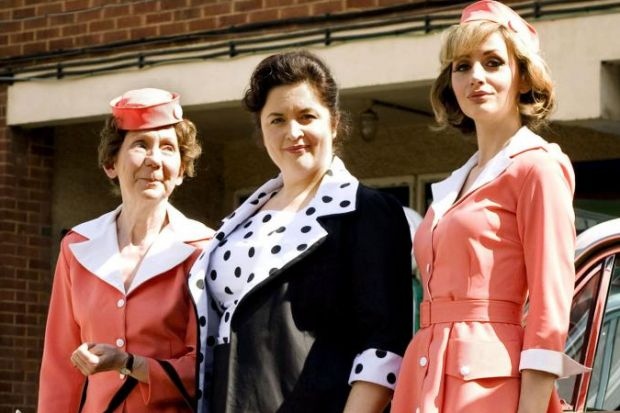
Directed by: Dan Zeff
Starring: Ruth Jones, Robert Bathurst, Aidan Turner, Jeany Spark, Marcia Warren
Written by: Stephen Russell
UK; 85 minutes; Colour; Certificate: 12
~~~
Hattie Jacques will be forever fixed in the British conciousness as the always loveably rotund, often stern and officious, sometimes warm and motherly star of 14 Carry On films. As she should be; she was a comedy actress par excellence and one of the finest artists to work on that much loved, so-long-running UK movie series.
Yet, thanks to a relatively recent biography of her, an episode in her life has come to light that – for the few who have read or heard about it – has cast her in an entirely different light. Namely that, shock horror, the matronly Hattie left and divorced her husband (Dad’s Army legend John Le Mesurier) over a passionate affair she had with another man – at the time, the media were made to believe Le Mesurier was the philanderer and therefore the guilty party, but this was a ruse concocted to save Jacques’ face and career.
Quite the revelation and, as the subject matter for the recent BBC4 film simply entitled Hattie, quite the story around which to create a drama. But does Hattie fulfil its potential and do the thing justice or just turn it into something of a smutty, nudge-nudge, wink-wink slapstick?
Well, thankfully, I’d say by and large it achieves the former. Fair dos, it’s neither breathtaking nor groundbreaking filmmaking, but as a TV movie that dramatises the real lives of two peeps who were once very much in the public eye (and are pretty much still a constant on our telly screens today), it certainly hits the spot. Indeed, it seems small-screen viewers agree – the first showing of Hattie, broadcast last month, pulled in the highest ever ratings for anything on the excellent, young BBC4 channel.
The story kicks-off in 1963 and all is as normal in the Le Mesurier/ Jacques household. Hattie’s in her prime, a household name about to start filming the latest Carry On film (Carry On Cabby – the seventh of the series), John’s career seems to be permanently stalled and he’s low on confidence; but both are colourful and charismatic characters in their middle class, actorly social circle and doting parents to their two young children.
It’s now that a complication arises in the shape of a driver Hattie meets named John Schofield. Immediately attracted to each other, the pair embark on an affair that, rather bizarrely, sees the latter move into Jacques’ home as the family’s new lodger. Even more bizarre is Le Mesurier’s reaction when he obviously becomes aware that something is afoot…
What primarily makes Hattie tick is its writing and the acting. Stephen Russell’s script may not necessarily contain the most sparkling dialogue imaginable, but smartly and believably recreates the well-to-do bohemian environment in the London suburbs that Hattie and the two Johns make for themselves – where their unusual ménage à trois takes place. At no point do any of the situations seem unconvincing; unlikely perhaps, unconvincing no.
Like the set and costume design too, he recreates the time and place of early ’60s Britain wonderfully. For instance, artsy John Le Mesurier not knowing what an ‘entrepreneur’ is when he enquires the occupation of his love rival makes for a nice moment. Plus, when the action switches to the filming of Cabby, one genuinely feels they’re catching a glimpse behind-the-scenes of a Carry On – the swearing-like-a-trooper of Marcia Warren’s Esma Cannon (so unlike the coy spinsters the character actress memorably portrayed) is a particular delight.
Acting-wise, the talented Ruth Jones (who, after the success of Gavin & Stacey, one may argue is on the way to becoming a household name herself) does a very good job as the unforgettable Ms Jacques. Her Hattie is fun, urbane, sexy and unquestionably sexual. And, in the face of her terribly put-upon husband, surprisingly empathethic too. Speaking of Le Mesurier, well, must admit, I’ve never been crazy about Robert Bathurst (the posh one from Cold Feet), but here he delivers a finely judged, balanced portrayal of the TV sitcom star as a thoroughly decent, but dandyish and effete chap – the script works to make him not come across as just a pathetic figure, but it’s Bathurst who really makes sure he doesn’t. Closing out the trio of leads is Aidan Turner (of Being Human and Desperate Romantics fame) as Hattie’s head-turner. While this character may not possess the richness or depth of the other two, its actor definitely does a decent job, hiding his Irish burr under an impressive Cockney accent, as he does.
So, while Hattie may not deliver its audience with anything truly great – unlike, say, Michael Sheen’s performance as Kenneth Williams in BBC4’s Fantabulosa! a few years back – it does deliver dashes of quality, doses of entertainment and definitely a more likely reality of Hattie Jacques’ life than that presented in the This Is Your Life episode devoted to her that it nicely recreates at one point. If only that programme’s loyal audience had known what their heroine Hattie was really getting up to – they’d have thought it a right carry on and no mistake.
You can purchase Hattie on DVD (Region 2 Format) here
~~~