Laughter-track crackerjacks (Part 2): George’s 20 greatest British sitcoms #10-1
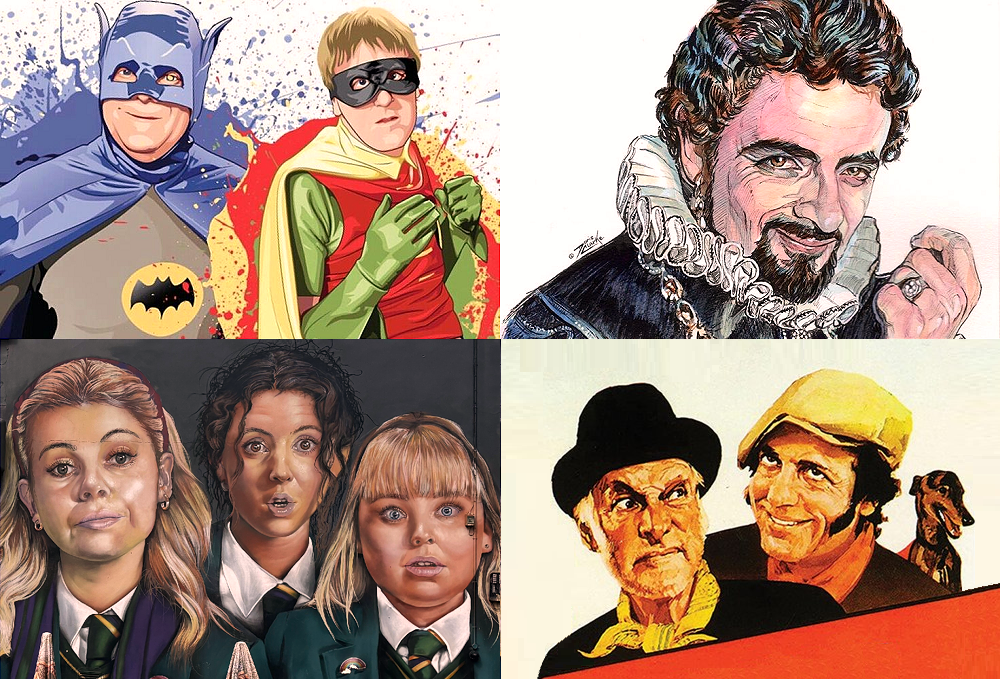
Quality quartet: you may well have laughed at and loved each of these four British sitcoms but where do they come on the all-time countdown and just which classic series is the number one rib-tickler?
Two or three decades ago, you couldn’t go an hour or two watching TV in the UK without a sitcom popping up. Nowadays, because the nature of television, cultural tastes and how we consume both have changed, not so much.
Despite this blog being committed to looking back at things past, though, I’ll never subscribe to the cliché that ‘everything was better back in the day’; it simply isn’t true. Yet, in the case of modern TV versus past telly and the demise of (especially the British) sitcom, surely you’d be a plonker not to recognise we never had so good as we did in the ’70s, ’80s and ’90. Reggie Perrin and Rigsby, and Del Boy and Rodney versus Amandaland and – gah! – Mrs Brown’s Boys? The realisation of a brilliant Baldrick-like cunning plan, this surely isn’t.
So, to put a more positive spin on things and enacting that age-old political ploy of turning a setback into an opportunity (just as Jim Hacker would try to, with or without Sir Humphrey’s help), I’ve decided to come up with a couple of (apologies, marathon-long) posts to celebrate Blighty’s situation comedy tradition at its finest by offering up, to all and sundry, a rundown of the 2o greatest sitcoms this little island has ever produced, in my humble opinion, of course.
Was this a painstaking effort? Did it take forever to put together? Feck me, yes. Will it raise a (likely unintentional) laugh or two and result in a heckle, here and there (sorry, there’s no Dad’s Army, Fawlty Towers or The Office; none have ever truly clicked with me)? Quite possibly. But I… or, er, this blog didn’t get where it did today by always being lovely jublee about everything. Or without mixing its metaphors and its sitcom puns.
Anyway, settle down in that armchair, put down that remote and dunk that custard cream in your cuppa because, yes, here we go! Cue that cosily familiar theme tune…
.
.
.
.
Original channel: Channel 4
Seasons: 3 (1995-98)/ 25 episodes
Christmas specials: 1 (extended episode; 1996)
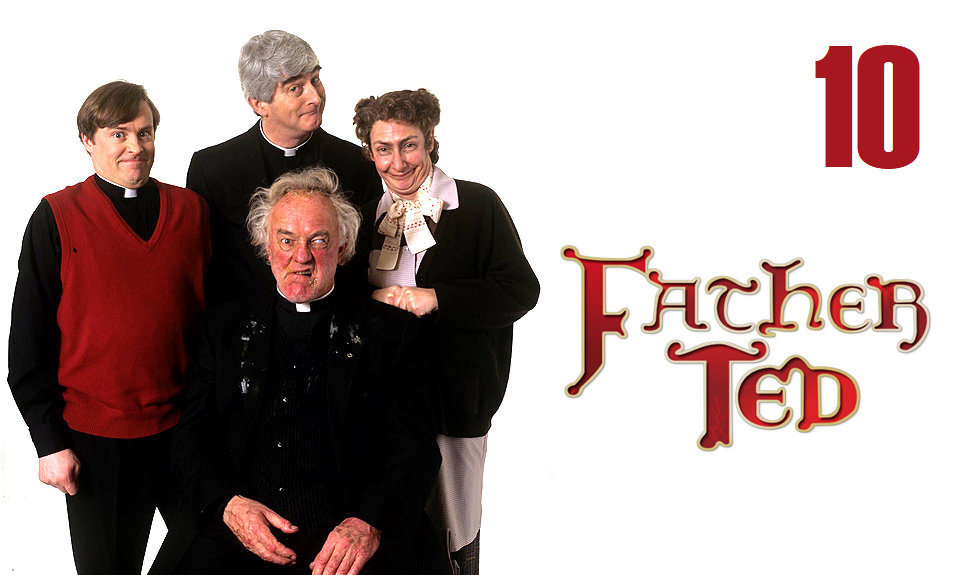
Regular cast: Dermot Morgan (Father Ted Crilly), Ardal O’Hanlon (Father Dougal McGuire), Frank Kelly (Father Jack Hackett) and Pauline McLynn (Mrs Doyle)
Regular crew: Graham Linehan (creator/ writer/ director); Arthur Matthews (creator/ only other writer); Declan Downey (director); Andy de Emmony (director); Geoffrey Perkins (producer)
The situation: Father Ted is a selfish, conniving but largely sensible priest who, for an indiscretion alluded to but never explained, has been banished by the Irish Catholic Church to the desolate Craggy Island with its backward inhabitants. With Ted live the also discarded Father Dougal, whom seems to be a child in a man’s body (and yet somehow at some point qualified as a priest), and Father Jack, a wildly unkempt, monosyllabic, offensive and permanent drunk. Their housekeeper is the ludicrously patient Mrs Doyle (obsessed with serving tea) and their greatest grievance visits from other oddball, corrupt priests or – especially – nuns.
The greatness: Before Graham Linehan lost the plot as a Twitter transphobe, he deservedly made his name as the creator and writer of Channel 4 sitcoms (2000-04’s Black Books and 2006-13’s The IT Crowd), full of desperate characters and lashings of absurdity, surrealism and wonderfully jolting hand-break turns – and the best of of them was undoubtedly the first, Father Ted. So much so, it’s easily one of Britain’s and – as an Anglo-Irish TV effort – probably Ireland’s best sitcom, too.
In truth, Father Ted seemed to come, fully formed and fantastic, out of nowhere. An instant Gen-X sensation, it became beloved by its wide but young-ish audience, which revelled in its ever-so-slightly unnerving and occasionally vulgar laughs, its anti-establishment stance (the Catholic Church comes in for a constant kicking), its unexpected cleverness (the iconic ‘small or far away cows’ joke and the Speed homage on a milk-float) and, well, its wonderful (very Irish) weirdness.
As ever with seriously good sitcomming, the success lay in the writing and the characterisation. Father Ted may have been tonally unlike quite anything on television but the strength and consistency of its irresistible tone was bolted to solid plotting with sometimes unforgettable set-pieces (but which cannily knew its limits) and driven by gloriously good characters.
Morgan’s Ted was the perfect put-upon, common-sense straight-man to the deliriously silly Jack (played by, yes, classical actor Kelly) and break-out character-and-a-half Dougal, whom was so loveable he gave the show its necessary heart (and made O’Hanlon a TV star). Meanwhile, McLynn’s Mrs Doyle and, frankly, every guest character added further layers of absurdity and incredulity, terrifically stirring the (tea) pot as much as possible.
Greatest episode: A Song For Europe (Season 2)
Title theme: Theme by Neil Hannon
Spin-offs: 0 (tragically, Morgan died in 1998 aged just 45, ruling out any more Father Ted or, it seems, further visits to its universe)
Did you know? Neil Hannon, writer of the show’s theme, is the driving force behind The Divine Comedy, and the tune appears as Songs Of Love (with added lyrics) on the band’s sophomore and seminal 1996 album Casanova.
In 2014, Hannon’s ditty My Lovely Horse (Ted and Dougal’s effort for Ireland’s entry in a very obvious take-off of the Eurovision Song Contest; see video below) was the subject of a petition-to-government looking to elevate it as Ireland’s actual entry for the following year’s Eurovision; sadly, the tongue-in-cheek move was turned down.
.
.
.
.
.
.
.
Original channel: BBC1
Seasons: 2 (1973-74)/ 27 episodes
Christmas specials: 1 (extended final episode)
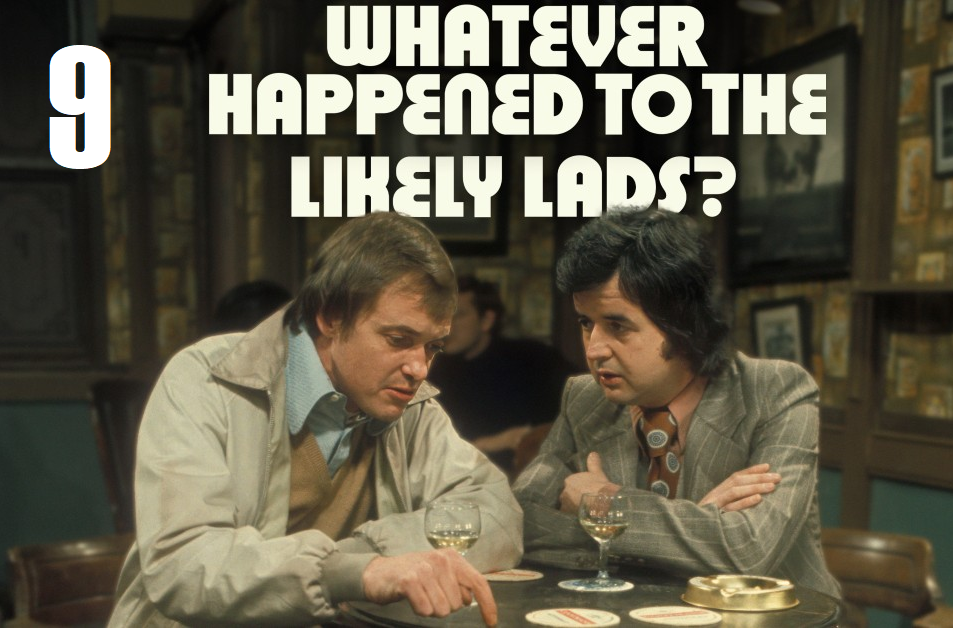
Regular cast: James Bolam (Terry Collier), Rodney Bewes (Bob Ferris), Bridgit Forsyth (Thelma Chambers/ Ferris) and Sheila Fearn (Audrey)
Regular crew: Dick Clement and Ian La Frenais (creators/ only writers); James Gilbert (producer)
The situation: Terry, having served in the British Army in the Middle East for a few years and recently divorced from a young German wife, returns home to his native Newcastle-upon-Tyne but discovers much has changed in the traditionally working-class city he once knew so well.
Not only have landmarks from his youth gone and tenement houses been replaced by ghastly high-rise flats but, worst of all, his best friend Bob is now engaged to the no-nonsense and sharp-as-a-tack Thelma, works as a manager in her father’s construction firm and wants to join the middle class, having bought a house on a new suburban housing estate.
Yet, has Bob actually changed that much? Can he still get up to no good and into Thelma-disapproving scrapes with the left-behind, now fish-out-of-water-esque Terry…?
The greatness: The one entry on this list that instead of spawning a spin-off or two was itself a spin-off, Whatever Happened To The Likely Lads? exceeded the popularity and acclaim of its predecessor sitcom (1964-66’s The Likely Lads) by picking up the lives of the latter’s protagonists as thirtysomethings in the early ’70s and running with that concept to dizzying heights.
Indeed, its exploration of the themes thrown up by its set-up (see above) and its setting (the evolving North-East) was top-notch. Every episode found a way to look at the passage of time, nostalgia, social-class blurring, working-class patriarchal demise, urban redevelopment, sexism and (to an extent) feminism. And, never overplaying its hand, it did so with a cannily light touch; social truths were always conveyed in good humour via knowing wit.
Its success lay in the fact TV writers extraordinaire Clement and La Frenais’ outstanding scripts were perfectly complemented by the brilliant, believable characters that were Terry and Bob. As a bit of an odd-couple double-act, Bolam and Bewes were second-to-none; fully fleshing-out rather than reviving their ’60s ‘likely lads’ and relishing every word of every line the delightful dialogue gave them.
In which case, everything about Whatever Happened To The Likely Lads? felt authentic, while it also admirably delivered a far more upbeat version of the North-East than many a news report or, say, Get Carter (1971) ever did. It’s grim up north? Howay, man! With Terry and Bob, it was anything but.
Greatest episode: Boys Night In (Season 1)
Title theme: Whatever Happened To You? (Highly Likely)
Spin-offs: The Likely Lads (1976; cinematic feature film)
Did you know? In 2002, nearly three decades after its original broadcast, No Hiding Place (the classic episode from the first season in which the lads spend a whole day trying to avoid finding out a football result) was reshot in its entirety with ITV’s self-appointed Geordie ambassadors Ant and Dec as Bob and Terry, respectively; reaction to this one-off tribute was mixed but, in a decidedly nice touch, it did feature Bewes in a blink-and-you’ll-miss-it cameo as a newspaper seller.
.
.
.
.
.
.
.
Original channel: BBC/ BBC1
Seasons: 8 (1962-74)/ 57 episodes
Christmas specials: 2 (extended episodes, including final episode; two short specials also featured, respectively, in the 1962 and ’67 editions of the BBC’s Christmas Night With The Stars)
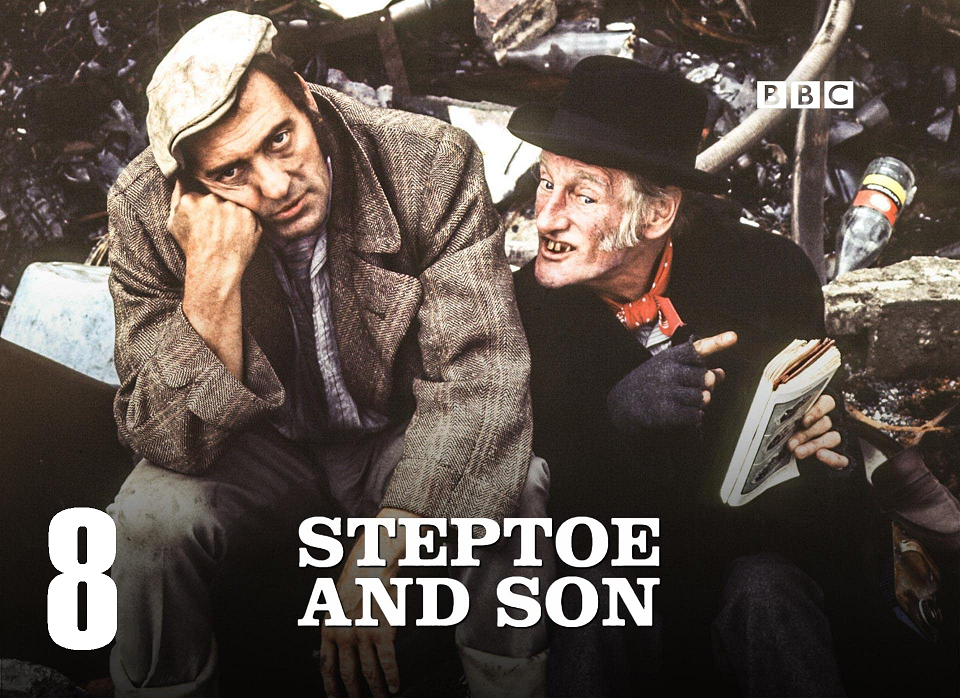
Regular cast: Harry H. Corbett (Harold Steptoe) and Wilfred Brambell (Albert Steptoe)
Regular crew: Ray Galton and Alan Simpson (creators/ only writers); Duncan Wood (producer/ director); John Howard Davies (producer/ director); Douglas Argent (producer/ director)
The situation: Harold is a bedraggled rag-and-bone-man in West London’s Shepherd Bush, in whose ‘Oil Drum Lane’ he lives in a run-down property with his elderly father Albert, from whom he effectively inherited their junkmen business.
Harold and Albert are polar opposites and endure a deeply dysfunctional, volatile relationship. The former is a dreamer; he longs to escape his father, tries to better himself and, although of limited education, is relatively well-read.
The latter is lazy, wily, dresses poorly and maintains even poorer hygiene, yet is content with his lot and worldlier than his son, and so manages to outdo him at any and every opportunity and activity.
The greatness: The OG giant British sitcom, Steptoe And Son enjoys a mythic status. It’s the one that, now in the 2020s, many modern Britons may not have actually seen but, thanks to cultural osmosis, know its set-up, its music and its characters. Indeed, once it was as big and resonant as Only Fools And Horses; in terms of TV (and definitely sitcom) history, it’s just as important and often as good.
Conceived by iconic writers Galton and Simpson (their first major project after the equally seminal sitcom that was 1956-61’s Hancock’s Half Hour), Steptoe and Son’s set-up was sublimely simple and, therefore, the situations, complications and action of each episode blithely straight-forward. So much so, there was a wonderful purity to it all.
Almost entirely a two-hander, the show lacked witty dialogue and bore as much resemblance to a Tom and Jerry or Looney Tunes cartoon as it did to the sophisticated near-TV drama of, say, Ever Decreasing Circles (although not physically violent, it overflowed with verbal and psychological violence and, for its era, was also stridently gritty and edgy). Yet, where it delivered in absolute spades was its unbridled, almost painful tragicomedy. In that regard, few British sitcoms have got close to its magic.
Each episode wouldn’t just wind up to 11 Harold and Albert’s sparring but would wring as much as possible out of the desperation and pathetic nature of Harold’s situation (only enhanced, of course, but how pathetic a character he was). Obviously, this owed much to the the perfection of Corbett’s performance and, in turn, to the corking comic creation that was Brambell’s Albert.
The pathos Steptoe And Son managed to generate, then, was off the charts; the human pain softened by the laughs something true and universal. Just like the show itself, it was twisted but beautiful.
Greatest episode: Divided We Stand (Season 7)
Title theme: Old Ned by Ron Grainer
Spin-offs: 1972’s Steptoe And Son and 1973’s Steptoe And Son Ride Again (cinematic feature films)
Did you know? As, a young actor, Corbett added the middle ‘H’ initial to his name (which he would later joke stood for ‘hennyfink’; Cockney for ‘anything’) to avoid confusion with puppeteer Harry Corbett, whom was then enjoying enormous success on TV as the creator and original performer of iconic kids’ favourites Sooty, Sweep and Soo; rather quirkily, both Harry Corbetts featured in 1976’s New Year Honours list.
An Irishman who settled in the UK as a middle-aged actor, Wilfred Brambell was actually only 13 years older than his Steptoe co-star and is fondly recalled, too, for playing Paul McCartney’s ‘grandfather’ in A Hard Day’s Night (1964).
.
.
.
.
.
.
.
Original channel: Channel 4
Seasons: 3 (2018-22)/ 19 episodes
Christmas specials: 0
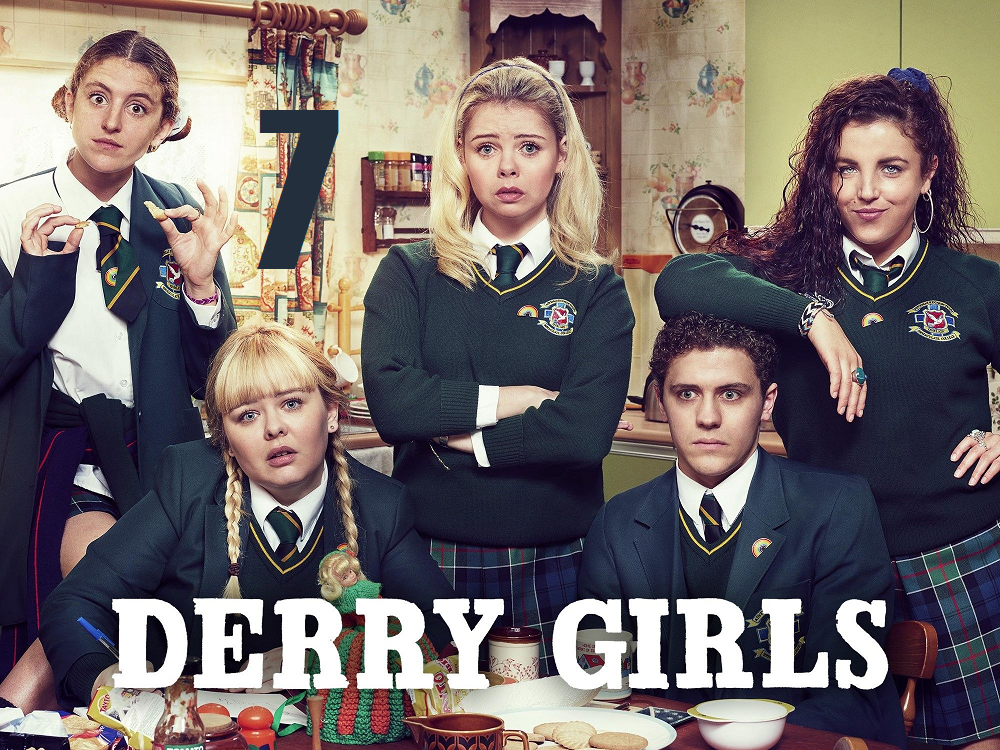
Regular cast: Saoirse-Monica Jackson (Erin Quinn); Nicola McCoughlan (Clare Devlin); Jamie-Lee O’Donnell (Michelle Mallon); Dylan Llewelyn (James Maguire); Louisa Harland (Orla McCool); Tara Lynne O’Neill (Mary Quinn); Tommy Tiernan (Gerry Quinn); Kathy Kiera Clarke (Sarah McCool); Ian McElhinney (Joe McCool); Leah O’Rourke (Jenny Joyce) and Siobhán McSweeney (Sister George Michael)
Regular crew: Lisa McGee (creator/ only writer); Michael Lennox (director)
The situation: Erin is an aspirational teenager, growing up in the Catholic suburbs of ’90s Derry, towards the end of Northern Ireland’s ‘Troubles’. She lives with her ‘Ma’ Mary (the de facto leader of the household), her dad Gerry (Ireland-born and easy-going), her maternal grandfather Joe (sarcastic and always picking on Gerry), her aunt Sarah (hopelessly dreamy) and her cousin Orla (whom seems to live in her own universe).
Together with Orla, Erin knocks about with two schoolfriends she’s known all her life: the academic but anxiety-plagued Clare and the boy-obsessed tearaway Michelle, the latter of whose English cousin (the fish-out-of-water James) has been dumped in her household and, therefore, forced to attend the quartet’s girls-only school. Hopelessly maladroit and even less mature, the gang try to negotiate the vagaries of adolescent life in their intricate, sectarian hometown, usually with disastrous results.
The greatness: In the everything-up-for-grabs era of modern TV, in which network channels battle for any market share in a vain fight against world-conquering streaming giants, British sitcoms now struggle to get made, let alone strive, so Channel 4’s glorious Derry Girls (and the phenomenon it became) was a glorious surprise nobody saw coming in the late 2010s – least of all sceptical old me – and so, methinks, should be celebrated to the skies.
Like Extras (see last post), in that its set-pieces (the girls’ side-splitting hijinks and disasters) were actually only its headline act, the show’s secret sauce was the detail-rich, fully three-dimensional character-driven world it absorbed viewers into each episode. Its sense of time, place and delightfully quirky and earthy people was wonderfully immersive. There wasn’t just a constant hilarity to Derry Girls but a cosiness, a warm-heartedness and a knowingness; it was this unbeatable combination that made it such a binge-worthy little-show-that-could-and-did in an age of binge-seeking TV behemoths.
Terrifically well-written and cast (it made breakout stars of the now-ubiquitous Nicola Coughlan and Siobhán McSweeney), Derry Girls offered, too, something unique that narrative TV has rarely tried, let alone pulled off – a setting in an era of instability and violence but with a subtle, light touch. That’s to say, ‘The Troubles’ may have been the show’s backdrop but because its action was nostalgic, light-hearted adolescence and tightly-knit family life, that backdrop was mostly kept at arm’s length.
As far as the teenagers were concerned, then, the province’s problems weren’t their problem and so barely ever concerned their daily lives. As such, reference to ‘The Troubles’ was often left to the likes of the girls walking past an armed barricade as if it were the most normal thing in the world – a nuanced, refreshing comment of defiance that spoke a thousand words. In short, like everything in Derry Girls, it was treated, more often than not, with a breezily smart insouciance that was impossible to resist.
Greatest episode: ‘Episode 1’ (Season 1)
Title theme: Dreams (The Cranberries)
Spin-offs: 0 (but the five main cast members sort of resurrected their characters for a pandemic-era ‘zoom call’ sketch for the BBC’s 2020 Comic Relief appeal)
Did you know? While there’s a sense that, like Peaky Blinders did for Birmingham, Derry Girls helped put modern Northern Ireland on the map, the show is also adored in the province itself; statistically speaking, it’s the most watched TV programme there in 20-odd years (since reliable records began in 2002), its average 519,000 viewers a – fittingly – titanic 64 per cent audience share.
.
.
.
.
.
.
.
Original channel: BBC2
Seasons: 5 (1980-88)/ 38 episodes
Christmas specials: 1 (plus, a short festive special featured in The Funny Side Of Christmas, broadcast on BBC1 in 1982)
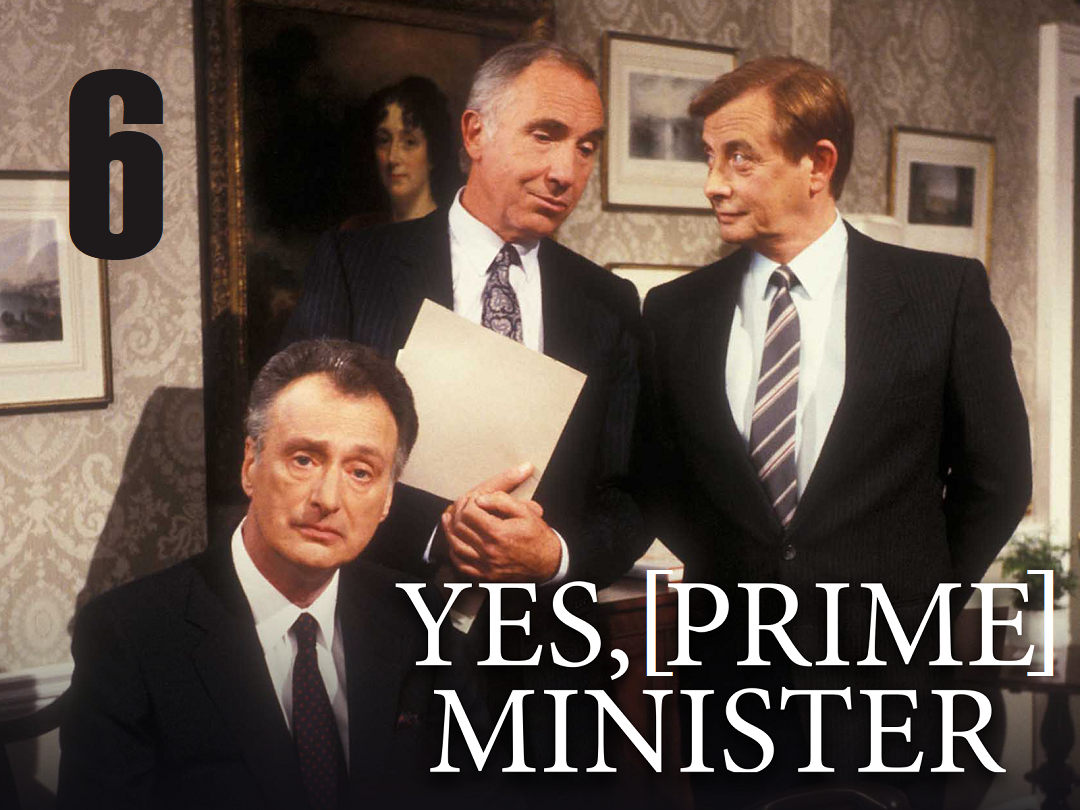
Regular cast: Paul Eddington (Jim Hacker), Nigel Hawthorne (Sir Humphrey Appleby), Derek Fowlds (Bernard Woolley) and Diana Hoddinot (Annie Hacker)
Regular crew: Anthony Jay and Jonathan Lynn (creators/ only writers); Sydney Lotterby (producer)
The situation: Jim Hacker is a Cabinet Secretary in a soft-right (presumably) Conservative Government. He’s mostly well-intentioned and likeable but just as ambitious as the next MP and, therefore, malleable in the eyes of the more intelligent and better informed playing the Westminster political game alongside him.
One of whom is the artful, smooth and loquacious Sir Humphrey, the Permanent Secretary – senior civil servant – in the department Hacker leads (Administrative Affairs), whom spends most of his time trying to guide and/ or manipulate Hacker to thwart the latter’s more progressive, radical or reforming policy proposals. Sir Humphrey is aided and abetted in these efforts by another, albeit less experienced civil servant, Hacker’s Permanent Private Secretary (PPS), the slightly slow-on-the-uptake Bernard.
About halfway through his time in Government, Hacker is – against all odds – elevated to Prime Minister, which sees Sir Humphrey become the most powerful civil servant in the land and Bernard remain as PPS, but now to the PM. (At this point, accordingly, the show’s name changed from Yes, Minister to Yes, Prime Minister.)
The greatness: It may have been Margaret Thatcher’s favourite thing on the box while she was PM (she even performed a sketch with Eddington and Hawthorne, written by its scribes, when giving the show an award) but don’t let that put you off – Yes, Minister/ Yes, Prime Minister, in its day, was also easily one of the best things on the box.
Many would say that was down to how brilliantly reflective of its real-life setting it was; then Labour Shadow Cabinet Secretary Gerald Kaufman described the show as “The Rt. Hon. Faust MP, constantly beset by the wiles of Sir Mephistopheles”. Indeed, many of its scripts were based on actual Westminster/ Whitehall incidents. However, that’s only partly why it worked so well (after all, any satire worth its salt satisfyingly reflects the reality of its target).
The real secret of Yes, Minister/ Yes, Prime Minister’s success, then, was its accessibility; its ability to take stolid yet intricate political issues and necessarily complex plots and interweave them, every episode, into a standard, characterful sitcom format, with all its audience-friendly, familiar beats and laughter-lines. This was its makers’ and performers’ collective stroke of genius. It may have been as smart and sly as Milton Friedman’s economics but it was as populist as Mrs T’s policies (with which it otherwise shared little, I might add).
For, just like Steptoe And Son and Whatever Happened To The Likely Lads?, at the core of Yes, Minister/ Yes, Prime Minister was that tried-and-tested comedy trope: a struggle of wills between the main characters – the dim but well-meaning Hacker and the all-knowing but smugly complacent Sir Humphrey. Perfectly drawn, indulged with delightful dialogue and expertly realised (nobody could do dumfounded like Eddington; nobody could do overly-verbose monologues like Hawthorne), they were simply an all-time great double-act; the lynchpin of an all-time great sitcom.
Greatest episode: Party Games (Christmas special, 1984)
Title theme: Theme by Ronny Hazlehurst
Spin-offs: 0 (but eventually there followed How To Beat Sir Humphrey: Every Citizen’s Guide To Fighting Officialdom, a radio play broadcast on BBC Radio 4 in 1997, and two stage plays: 2010’s Yes, Prime Minister and 2023’s I’m Sorry, Prime Minister, I Can’t Quite Remember)
Did you know? The actors’ deliriously exaggerated caricatures in the show’s opening titles were, fittingly, the work of Gerard Scarfe, legendary political cartoonist and conceptual artist for Pink Floyd – The Wall (1982) and Disney’s Hercules (1997); Scarfe’s wife is the star of Alfie (1966) and one or two sitcoms herself (as well as one-time Paul McCartney squeeze), Jane Asher.
.
.
.
.
.
.
.
Original channel: BBC1
Seasons: 4 (1975-78)/ 30 episodes
Christmas specials: 1 (plus, the final episode was a Royal Command Performance attended by The Queen and Prince Philip in celebration of the former’s 1977 Silver Jubilee, although it was filmed and broadcast the following year)
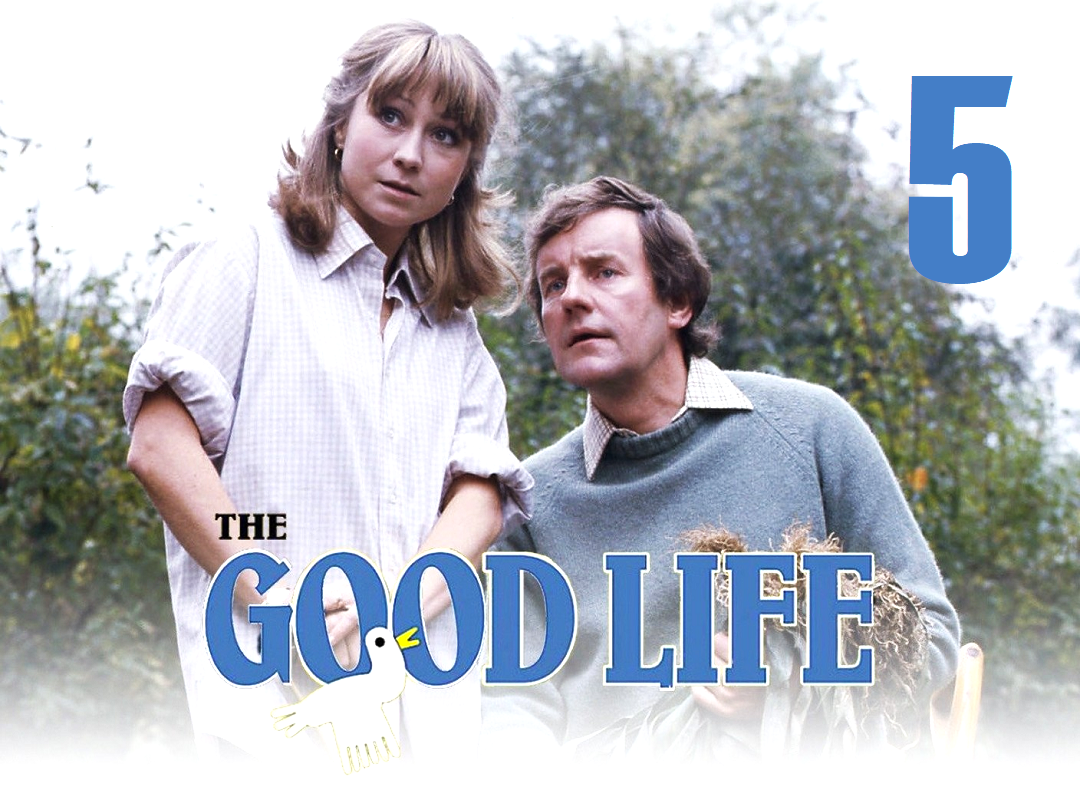
Regular cast: Richard Briers (Tom Good), Felicity Kendal (Barbara Good), Penelope Keith (Margo Leadbetter) and Paul Eddington (Jerry Leadbetter)
Regular crew: John Esmonde and Bob Larbey (creators/ only writers); John Howard Davies (producer)
The situation: Tom is a resolute but optimistic and affable 40-year-old draughtsman who designs ephemeral toys included as freebies in cereal packets. Fed up with his job and life, he persuades his oft heart-over-head but witty, good-humoured wife Barbara to abandon their comfortable middle-class existence in South London’s pleasant Surbiton and become self-sufficient. This sees them turn their front and back gardens into allotments (complete with chickens, pigs and a goat), live off their own produce and get by on an shoestring.
The couple’s transformation bewilders their next-door neighbours and close friends, Jerry and Margo. The former is a high-achiever in the company Tom has left but bemoans his stressful life; the latter an irrepressible cornerstone of polite Surbiton society, domineering yet loving, a stickler for standards and (socially at least) a prude. In spite of their misgivings, though, Jerry and Margo care deeply for Tom and Barbara (and them likewise) and try to support their new lifestyle.
The greatness: Easily the most popular of the many shows turned out by sitcom kings Esmonde and Larbey and the most popular thing any of its stars appeared in (whom all became giants of the small screen because of it), The Good Life was so damned good it was surely the best thing its writers and stars ever did, too. Yet, half a century on from its heyday, the reason why it’s so enduringly watchable and remains so well regarded isn’t quite so easy to put your, er, green finger(s) on.
For, while this so-easy-to-fall-for show appears to be the ultimate cosy sitcom populated by decent characters caught-up in light-as-air plots with low-stakes complications, that’s something of a smokescreen. In actuality, The Good Life was a tad smarter (and sharper) than its many millions of fans realised; under the surface, what it was up to was more intriguing and arguably more satisfying than it’s deceptively pleasing veneer suggested.
In pitting the new-agey Goods up to their necks in ’70s-trendy self-sufficiency in staid Surbiton ‘against’ the Leadbetters, their wealthy, decidedly materialistic neighbours, its makers certainly delivered a never-bettered-on-the-box ‘comedy of manners’ but they also offered up a slyly subtle satire of middle-class mores, conventions and expectations.
The easy assumption to make here is that it was Margo and Jerry, with their ‘acceptable’ conservative prejudices, who were the weekly targets of gentle ridicule and, largely, that would be right. Yet, consider too the fact that Tom and Barbara stubbornly – or maybe comfortably? – chose to opt-out while living in their nice house and keeping their closer-than-kin best friends in leafy suburbia. Were we, then, always supposed to look more fondly on and ‘side’ with the latter couple over the former?
Whatever the answer (as if it matters), The Good Life was a triumph. And, let’s face it, nuanced undercurrents or not, that was because every episode was an utter delight. Indeed, it’s hard to think of a cast that achieved quite such perfect chemistry in British comedy than its four leads: the ever-brilliant Briers, the bright and breezy, impossible to resist Kendal, the always one-step-behind Eddington (again) and, of course, the indefatigable, flawless Keith in the breakout role of all breakout roles.
Thanks to them, the superb scripts with all their delicious dialogue, and a crew who knew how to turn, yes, cosy comedy into TV gold, the wit and wisdom of The Good Life will wonderfully live forever.
Greatest episode: Silly But It’s Fun (Christmas special, 1977)
Title theme: Theme by Burt Rhodes (by the way, check out this incredible cover by What We Do In The Shadows’ Matt Berry)
Spin-offs: Life Beyond the Box: Margo Leadbetter (2003; BBC2 mockumentary)
Did you know? A relative unknown prior to The Good Life (who had quirkily grown up in her parents’ theatre troupe as it travelled around India), Felicity Kendal quickly earned household name status and, in part thanks to her constant appearance on the show in tightish jeans and other boyish clothes, became a sex symbol for many years thereafter; indeed, she ‘won’ the UK’s Rear of the Year award in 1981.
In spite of this, when her young son, right before the live recording of the final episode’s Royal Command Performance, was presented to and handed flowers to The Queen, the latter (on being told whose son the boy was and apparently claiming the sitcom was her favourite BBC programme, hence the performance in her honour) reputedly asked the attendant BBC bods “Who is Felicity Kendal?”.
.
.
.
.
.
.
.
Original channel: BBC2
Seasons: 2 (1997-2002)/ 12 episodes
Christmas specials: 0 (but there was something of a special during the BBC’s 1999 Comic Relief night, which included Alan performing a live Kate Bush medley)
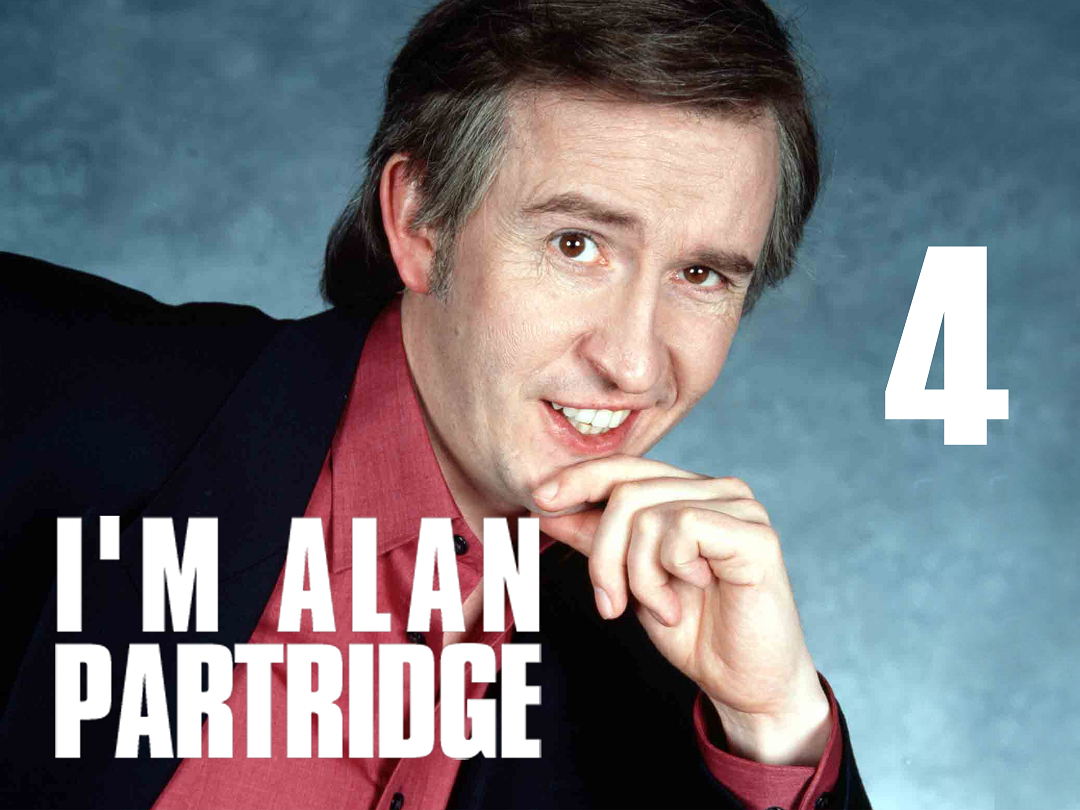
Regular cast: Steve Coogan (Alan Partridge), Felicity Montagu (Lynn Benfield), Simon Greenall (Michael), Amelia Bullmore (Sonja), Barbara Durkin (Susan), Sally Phillips (Sophie), James Lance (Ben) and Phil Cornwell (Dave Clifton)
Regular crew: Armando Iannucci (creator/ writer/ director); Peter Baynham and Steve Coogan (creators/ only other writers); Dominic Brigstocke (director)
The situation: Alan is a TV presenter trying to survive without a TV show to present (the final episode of his recent BBC chat show Knowing Me, Knowing You With Alan Partridge descended into on-air chaos, dooming it to the dreaded axe). Middle-aged, deeply unfashionable, socially unaware and prone to clumsy, inappropriate expressions, Alan is out of place in the late ’90s (and beyond), blithely carrying on with 1970s/ ’80s values and attitudes. Moreover, having lost his job and respected household name status, he’s also lost his wife and house; he now presents the middle-of-the-night slot on Radio North Norfolk and is a long-term guest at the Linton Travel Tavern. Despite all this, he’s determined to ‘bounce back’ and is constantly flanked by Lynn, his prudishly prim, unfeasibly loyal PA of many years.
When we catch up with him five years later (Season 2), Alan’s no longer stuck in his purgatory-like rot. Still ensconced at Radio North Norfolk, he’s bought a new house and lives in an on-site static caravan owing to extensive building work, enjoys a healthy-ish, unconventional relationship with Ukrainian girlfriend Sonja and socialises with a former Linton Travel Tavern employee, the strong Geordie-accented Michael, whom works nights at a local petrol station. Yet, being Alan, of course, our hero still manages to get himself into just as many ridiculous misadventures as before.
The greatness: Starting out as the sports reporter on Armando Iannucci’s news show satire The Day Today (1994) before graduating to the aforementioned actual chat show parody Knowing Me, Knowing You With Alan Partridge (1994-95), the Steve Coogan-performed, deeply flawed media personality that’s Alan Partridge has, over the past three decades, become modern UK comedy’s most enduring character and, frankly, a national institution but, of all his TV shows, podcasts and live appearances, this fully-fledged, Millennium-era sitcom has always been his best – and funniest – showcase.
With Coogan and Iannucci’s incredibly well-drawn creation at its centre, then, I’m Alan Partridge was a sometimes edgy, teensy bit unnerving but always easy-to-consume examination of a tragic hero’s foundering attempts to remain relevant in a world that’s moved on, no longer needs him and doesn’t care what happens to him. As such, the level of desperation in every episode (nay, in basically everything Alan did) was near constant, while the level of pathos was inevitably high, too.
Yet, unlike in a more wholesome sitcom, the empathy was tempered and exquisitely so because of how regressive and selfish Alan was. Indeed, in a stroke of genius on the part of its creators, the character was (and has always remained) the embodiment of British ‘boomer ick’. A sort of more acceptable Alf Garnett equivalent for the less class-oriented, more media-obsessed 21st Century. And it’s this that makes him uniquely irresistible for Gen-X and Gen-Y Brits and beyond.
However, it wasn’t Alan alone that ensured the greatness of I’m Alan Partridge and why viewers always came back for more. For supporting him was a coterie of pretty much just as well-observed characters; from the put-upon but quietly condemning Lynn to the everyday yet slightly unsettling Michael and the confused, transactional Sonja to the bemused, grin-and-bare-it Linton Travel Tavern employees.
Populating brilliantly written, terrifically delivered plots that saw Alan navigate scrapes with TV executives, crazed fans, a swinger couple, an overly erotic fellow divorceé, a new acquaintance to whom he was hopelessly devoted and, of course, his own ‘friends’ – to whom he unforgettably acted out the opening of The Spy Who Loved Me (1977) – these characters, whirling around the man himself, helped I’m Alan Partridge pull off a timely, albeit exaggerated portrait of the modern British man, complete with all his foibles, insecurities, hypocrasies and uncomfortable home truths.
Greatest episode: A Room With An Alan (Season 1)
Title theme: Theme by Jonathan Whitehead
Spin-offs: Mid Morning Matters With Alan Partridge (2010-16; Sky Atlantic), Alan Partridge: Welcome To The Places Of My Life (2012; Sky Atlantic), Alan Partridge: Alpha Papa (2013; cinematic feature film), This Time With Alan Partridge (2019-21; BBC1), From The Oasthouse (2020-25; podcast), Stratagem (2022; UK stage tour featuring Coogan only) and How Are You? It’s Alan (Partridge) (2025; BBC1)
Did you know? In the guise of Partridge, Coogan attended the 1996 Labour Party Conference, at which he interviewed Tony Blair (just months away from the latter becoming Prime Minister); apparently, Blair wasn’t aware Partridge was a fictional creation and not a real interviewer, despite Number 10 Communications Director-to-be Alastair Campbell subsequently spinning the incident as proof of Blair’s “great sense of humour”.
.
.
.
.
.
.
.
Original channel: BBC1
Seasons: 4 (1983-89)/ 25 episodes
Christmas specials: 1 (1988; plus, a short special was broadcast on the BBC’s 1988 Comic Relief night)
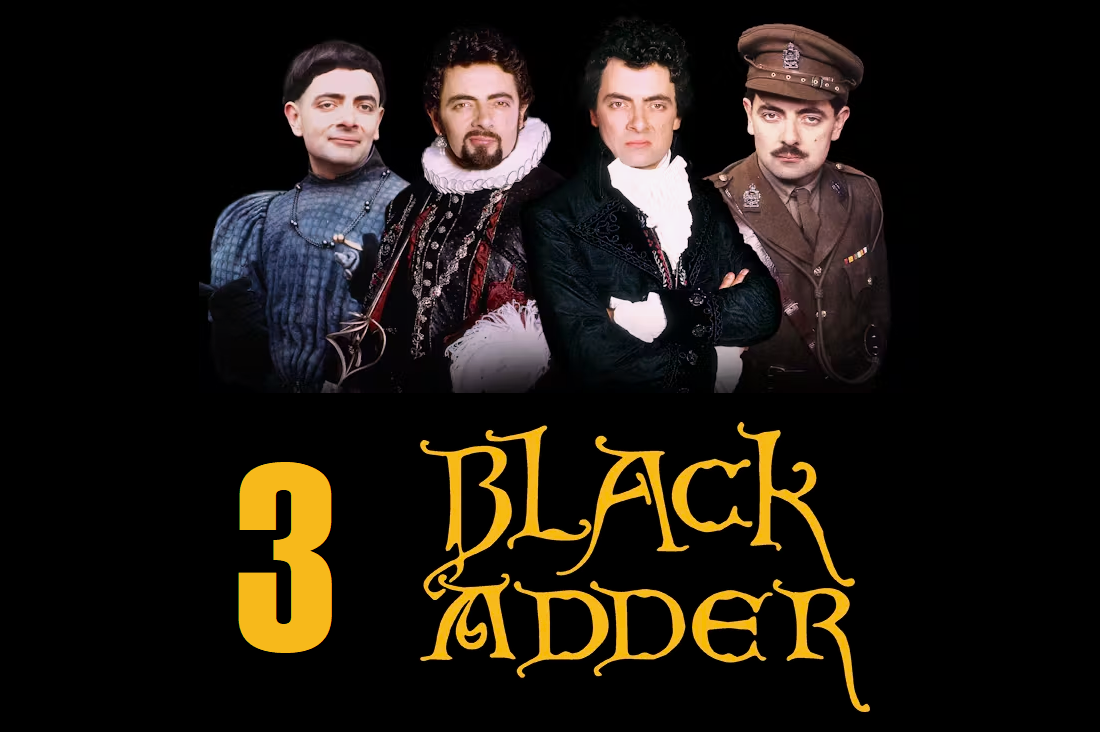
Regular cast: Rowan Atkinson (Edmund Blackadder), Tony Robinson (Baldrick), Hugh Laurie (Simon Partridge/ Prince Ludwig the Indestructible/ George, Prince Regent/ Lieutenant George The Honourable Colthurst St. Barleigh), Stephen Fry (Lord Chamberlain Lord Melchett/ General Melchett), Tim McInnerny (Lord Percy Percy/ The Scarlet Pimpernel/ Captain Kevin Darling), Miranda Richardson (Queen Elizabeth I/ ‘The Shadow’/ Mary Fletcher-Brown), Patsy Byrne (Nursie), Rik Mayall (Mad Gerald/ Lord Flasheart), Gabrielle Glaister (‘Bob’/ Kate) and Brian Blessed (King Richard IV)
Regular crew: Richard Curtis and Rowan Atkinson (creators/ writers); Ben Elton (only other writer); John Lloyd (producer); Martin Shardlow (director); Mandie Fletcher (director); Richard Boden (director)
The situation: Edmund Blackadder is an occasionally influential, usually insignificant figure who keeps popping up in different eras of English/ British history. First, there’s Edmund ‘The Black Adder’ (Season 1; second son of the fictitious medieval King Richard IV), then Lord Blackadder (Season 2; a member of the Tudor court and favourite of Queen Elizabeth I), next Edmund Blackadder Esq. (Season 3; a Georgian gentleman and butler to the Prince of Wales during the latter’s Regency) and, finally, Captain Blackadder (a middle-class army officer stuck in the trenches of the First World War).
Although starting out as something of a snivelling idiot in his medieval guise, the most prominent Blackadder (or, to be precise, this first one’s descendants in subsequent centuries) is sly, witty, charming and rakishly handsome. All versions, however, are selfish, conniving and unquestionable cowards. All of them, too, are aided and unintentionally thwarted by their servant/ underling Baldrick; an utterly gormless, largely unchanging figure also descended from a medieval original.
Together, then, Blackadder and his sidekick bounce from one harebrained scheme to another as they try to survive in the brutal, dangerous-at-every-turn world around them, which always tends to be populated by just as greedy but luckier, more successful chancers and fools.
The greatness: Let’s face it, historical sitcoms tend be more miss than hit (Plebs or Chelmsford 123, anyone?) and that trend wasn’t exactly bucked in the early ’80s when then relative newcomers Richard Curtis and Rowan Atkinson combined on the fictional, costly romp that was the first season of Blackadder. Although it was a moderately success, the BBC had understandable reservations over a second season, so changes were made. And, taken together, they proved a masterstroke.
First, Ben Elton joined Curtis on writing duties; second, Atkinson focused primarily on playing the lead (whose off-putting idiot persona was switched with the more charismatic, smart-alec Baldrick) and, third, production costs were slashed, removing any location shooting but delivering more bang for the Beeb’s buck via a tighter focus on the writing, directing and acting (better plotting, better characters, wittier dialogue, funnier jokes and a cleverer, keener send-up of actual history).
What emerged, then, in the second – and the subsequent third and fourth – season of Blackadder was one of the smartest, most satisfying and most streamlined sitcoms ever made. The restraints applied to its production ensured it was honed to perfection; its creative team poring over every scene, every character, every historical detail and every joke to make sure everything worked. And did it ever.
For Blackadder didn’t just use various English/ British eras as its setting, it chose them to explore and deliberately satirise them and, arguably, to challenge the well-worn notion that great men make and decide history. Instead, according to Blackadder, usually foolish, greedy know-nothings find themselves in charge (mostly through the fortune of birth) and cause a balls-up that all and sundry have to make the best of. Like it or not, there’s a lot of truth in that more cynical, even nihilistic view.
Moreover, this reading of history was complemented by the show’s comedic language and attitude; a punkishly sparse, witty yet anarchic approach to humour with OTT characters that owed a clear debt to the ’80s ‘alternative comedy’ crowd led by the likes of Elton, Robbie Coltrane, Fry and Laurie, and Rik Mayall and Adrian Edmondson (all of whom contributed to the show; most to a significant extent).
Granted, come the WWI-focused, final season, the devastating reality behind its setting was treated with maybe a tiny bit more respect, meaning slightly tempered clownish set-pieces, more loaded irony and a touch more humanity; yet, the Blackadder brand was otherwise entirely intact. Indeed, whatever its season, like the pong of a rotten turnip mislaid by Baldrick, Blackadder’s joyous wit, wisdom and brilliance was all too clear at every twist, turn and finger-insult of its riotous rifle through history.
Greatest episode: Goodbyeee (Season 4)
Title themes: Themes (Season 1, Season 2, Season 3, Christmas special and Season 4) by Howard Goodall
Spin-offs: Blackadder: Back And Forth (originally shown at London’s Millennium Dome exhibit throughout 2000; broadcast on Sky One in autumn that year and on BBC1 in 2002)
Did you know? SPOILER ALERT (in the unlikely event you’re yet to see the ending of Blackadder’s final episode, do not highlight the following): In a jolting tonal shift from everything that’s preceded it, the show’s final episode concludes, of course, with most of the main characters being forced to leave the safety of their WWI trench and finally ‘go over the top’ to their viscerally implied demise.
Yet, this legendarily poignant ending only achieved the pathos-dripping perfection it did because, initially, it all went wrong. With its limited budget, the studio-set filming of the set-piece apparently fell flat when watched back, even looked amateurish and funny, so it had to be salvaged in post-production (it was slowed down, a bare, sombre version of the theme added and the final fade from the battlefield to a poppy field with serene birdsong applied). Not everything has to be a cunning plan, eh?
.
.
.
.
.
.
.
Original channel: BBC1
Seasons: 7 (1981-91)/ 64 episodes
Christmas specials: 19 (1981-83, 1985-90, 1991 x 2, 1992-93, 1996 x 3, 2001-03; plus, a short festive special featured in the BBC’s 1982 sketch compendium The Funny Side Of Christmas, while two short specials were broadcast, respectively, on the BBC’s 1997 Comic Relief and 2014 Sport Relief nights)
Regular cast: David Jason (Derek ‘Del Boy’ Trotter), Nicholas Lyndhurst (Rodney Trotter), Buster Merryfield (‘Uncle’ Albert Trotter), Lennard Pearce (‘Grandad’ Trotter), Tessa Peake-Jones (Raquel Turner), Gwyneth Strong (Cassandra Parry/ Trotter), Roger Lloyd-Pack (‘Trigger’), John Challis (‘Boycie’), Paul Barber (Denzil Tulser), Patrick Murray (Mickey Pearce), Sue Holderness (Marlene Boyce), Kenneth MacDonald (Mike Fisher), Roy Heather (Sid), Dennis Lill (Alan Parry), Wanda Ventham (Pam Parry) and Jim Broadbent (DCI Roy Slater)
Regular crew: John Sullivan (creator/ only writer/ executive producer); Ray Butt (producer/ director); Gareth Gwenlan (producer); Martin Shardlow (director); Susan Belbin (director); Mandie Fletcher (director); Tony Dow (director)
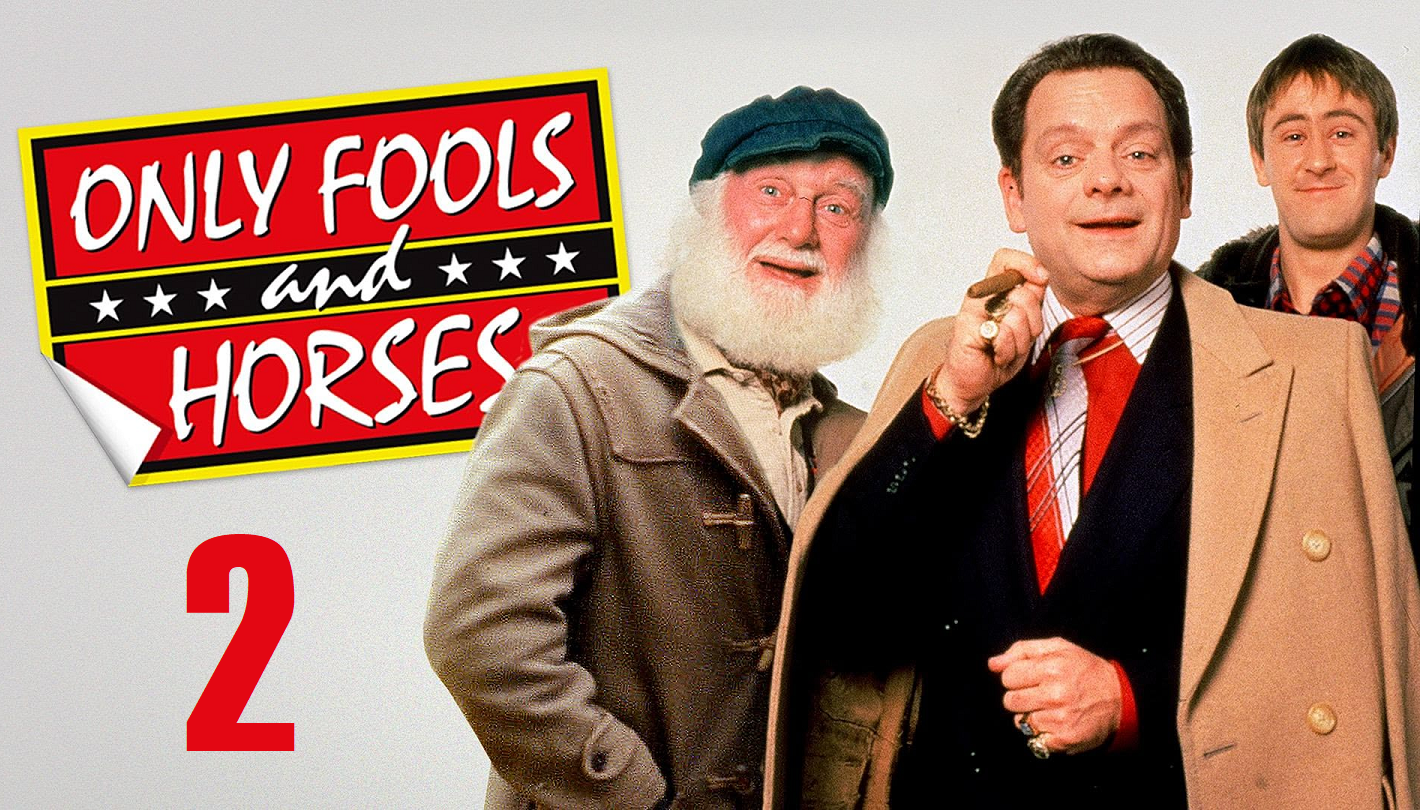
The situation: Del Boy is a wheeler-dealer in South London’s vibrantly multicultural, working-class Peckham. He’s irrepressible, quick-witted, a bit of a ‘wideboy’, operates at the fringes of the law and prone to malapropisms but has a heart of gold. The latter is especially true when it comes to Del’s unfeasibly lanky, somewhat idealistic and naïve kid-brother Rodney (whom he was forced to effectively raise) and their dozy Grandad, all of whom share a council flat in the high-rise Nelson Mandela House.
Often lurching from one doomed money-making deal to the next, Del has aspirations of leaving his market stall behind and hitting the big time, which he never really seems to get close to despite his best/ worst efforts. Sometimes he ropes an old friend or two into his schemes; the likes of the incredibly dim ‘Trigger’, the upwardly mobile used-car salesman ‘Boycie’ or the Liverpool-born Denzil.
Over the years, Del gets older (but no wiser), Rodney matures and Grandad passes on (he’s ‘replaced’ in the flat by the equally slow-on-the-uptake Uncle Albert). Del and Rodney settle down, too, with Raquel and Cassandra, respectively; both well-adjusted and long-suffering. All along, though, the question remains: will the Trotters make it and, against the odds, realise their dream of becoming millionaires?
The greatness: As any Brit knows, Only Fools And Horses isn’t a mere TV show; it isn’t even a critical cultural touchstone; it’s an unqualified national institution. Once upon a time, it was just another perky yet slightly edgy ’80s sitcom with lots of promise; for the past 30 years, it’s enjoyed unparalleled status in Blighty as surely the most popular British TV show ever broadcast – even though no new episodes of it have been broadcast in the last 20 years.
Popularity, though, is a strange beast. So many things are unfathomably popular (the execrable Mrs Brown’s Boys being a moot point for this post). Yet, it would surely take a heartless and tasteless TV viewer to suggest Only Fools… didn’t deserve practically every bit of its unique success.
Season after season, Christmas special after Christmas special, it got better and better, proving irresistible to millions with its loveable, everyday characters, delightful dialogue, superior scenes and sequences, and unexpected tonal shifts from true hilarity to compelling human drama and back again.
Of course, at mention of its greatness, many would point to Only Fools…’ unforgettable moments – from Del falling through the bar (see video below) to the chandelier incident; from Batman and Robin saving the day to the blow-up dolls; and from Damien’s birth to the rocking Reliant Regal.
Yet, maybe more significant is the fact that sitcom scribe supremo John Sullivan always placed his protagonists’ relationship at the heart of things. Indeed, if there was any sort of secret sauce, it was this; ultimately, beneath its double-decade character-saga appeal, the show was a timeless two-hander with the utterly perfectly-cast Jason and Lyndhurst playing polar-opposite, bickering brothers whom, in spite of all their ups, downs, embarrassments and misadventures, stuck together until the very end.
Indeed, come that end in the early ’00s, perhaps we could have done without the final trio of specials; lacking, as they did, the pace, verve, authenticity and adversity, and universal humour of the earlier episodes and specials. Yet, that does feel like nit-picking. Because, while average, good, very good and even great UK sitcoms have come and gone, none have quite resonated like Only Fools… did with quite so many Brits; black or white, rich or poor. And that’s no laughing matter.
Greatest episode: Yuppy Love (Season 6)
Title theme: Themes by Ronnie Hazlehurst and John Sullivan
Spin-offs: The Green Green Grass (2005-09; BBC1), Rock & Chips (2010-11; BBC1 prequel specials) and Only Fools And Horses The Musical (2019; West End stage musical)
Did you know? Amazingly, David Jason wasn’t first choice to play Del Boy; other actors who were considered included Oscar-winner-to-be Jim Broadbent, whom would go on to be cast as Del and co.’s schoolmate-turned-corrupt copper Roy Slater.
Time On Our Hands, the third of 1996’s three specials and the end-point of the show’s original run when the Trotters, yes, became millionaires, drew 24.3 million viewers – one of the most-watched broadcasts on UK television and, to date, the nation’s third most-watched scripted TV programme.
.
.
.
.
.
.
.
Original channel: BBC1
Seasons: 3 (1973-77)/ 21 episodes
Christmas specials: 2 (1975 and ’76)
Regular cast: Ronnie Barker (Norman Stanley Fletcher), Richard Beckinsale (Lennie Godber), Fulton Mackay (Mr Mackay), Brian Wilde (Mr Barraclough), Peter Vaughan (Harry ‘Grouty’ Grout), Sam Kelly (‘Bunny’ Warren), Tony Osoba (‘Jock’ McLaren), Christopher Biggins (‘Lukewarm’), David Jason (Blanco Webb), Ken Jones (‘’Orrible’ Ives), Brian Glover (Cyril Heslop), Ronald Lacey (Harris), Maurice Denham (Mr Justice Stephen Rawley) and Patricia Brake (Ingrid Fletcher)
Regular crew: Dick Clement and Ian La Frenais (creators/ only writers); Sydney Lotterby (producer/ director of all episodes apart from pilot)
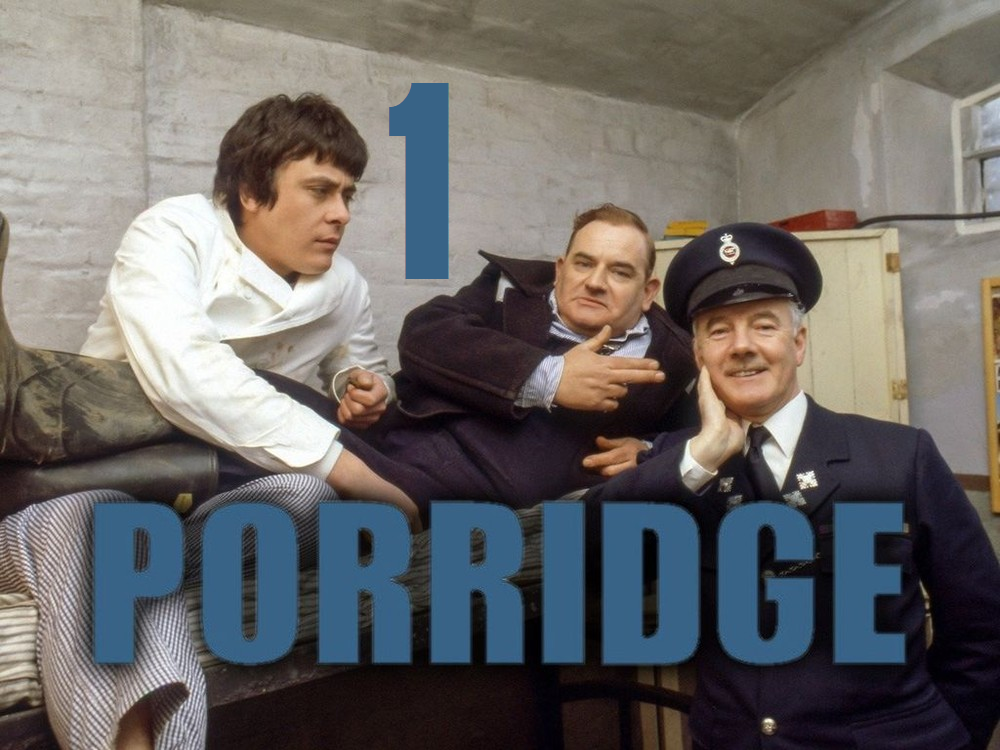
The situation: An affable, charming but wily, middle-aged Londoner, Fletch is an habitual thief who’s spent more of his adult life in prison than not. His latest stint ‘inside’ sees him banged up at HMP Slade, located somewhere in the wilds of North-East England.
There, Fletch is forced to share a cell with Godber, a likeable, callow Brummie with a strong sense of morality but who fell in with a wrong crowd, got caught and is paying the penalty. In which case, the similarly ethical (in his own way) Fletch takes Godber under his wing and tries to guide him through the vagaries of prison life and show him how to get by while ‘doing porridge’.
Outside their cell, Fletch and Godber are surrounded by a coterie of colourful inmate characters (including the shifty ‘Bunny’ Warren, the hard Scot ‘Jock’ McLaren, the gay ‘Lukewarm’ and the near-elderly but sly Blanco Webb), whom they join in reluctantly facilitating banged-up, menacing crime-kingpin Harry Grout and, more often than not, defying the authority of the prison’s guards. These comprise the gentle, rehabilitation-favouring soft-touch Mr Barraclough, whose marriage woes ensure he prefers being in prison than at home, and the ex-army sergeant-major disciplinarian Mr Mackay, with whom Fletch is locked in an endless battle of wills.
The greatness: What?! It’s not Del Boy who sits atop my sitcom pile? No, that’s right, it’s Norman Stanley Fletcher. Why, you might ask? Well, for me, when it comes down to it, simply so many episodes of Porridge are practically perfect – indeed, I think many are probably flawless – that surely, then, Fletch, Godber and Mr Mackay rightly deserve to break out (er, from the pack) and take the top spot.
I’m not exaggerating when I use the word flawless, either. Porridge was so darn good that I struggle to think of a moment when it put a foot wrong; right the way through from the glorious pilot that saw Mr Barraclough transport Fletch to Slade Prison (despite the latter’s fruitless attempt to escape) to the last episode when, having seen Godber right and the latter’s released, we were deceived yet ultimately reassured the experience hadn’t broken our anti-hero’s anti-authority spirit (see video below).
Now, all that’s very well but just what was it that made Porridge such an unrivalled UK comedy showcase? Frankly, the question should be what wasn’t it? Take, for instance, the fact comedy-writing kings Clement and La Frenais (see above) set it in a prison. Was that a stroke of genius? Given Porridge was written and realised as well as it was, it certainly looks like one.
For, while the maxim ‘Don’t sweat the small stuff’ is a fine saying to live by on the outside; if you’re incarcerated that’s surely impossible. Thanks to the suspended liberty, exaggerated enforcement of social hierarchies and lack of privacy in a prison, one’s focus on and irritation by small details and grievances surely become oversized. The trivial becomes vitally important. So, if handled right (as it was in Porridge), this overblown significance of the small and petty, on tiny victories and one-upmanship, is hopelessly funny. How couldn’t it be?
Yet, while the emotional truths of confinement informed so much of the comedy currency of Porridge, they didn’t underpin it; nor did they take the show into dramatically satisfying territory, which like the very finest sitcoms, this show – the jewel in Clement and La Frenais, Barker and Beckinsale’s collective telly crown – liked to do every episode. Instead, it was the quality of its characterisations – and, thus, the wonderful plots they could be thrown into and sparkling dialogue they could deliver – that enabled it to rise to the dizzy, very funny and dramatic heights it did each week.
No question, Fulton Mackay’s oh-so marvellously observed, starched namesake guard was one of TV’s greatest love-to-hate-him comic villains, while Richard Beckinsale’s young Godber so deserved a second chance in life it was impossible not to root for him. Yet, it was, of course, Ronnie Barker’s Fletch who was at the heart of everything and always dominated proceedings.
As flawed as a prison stretch is long he may have been, Fletch was also smarter, worldlier, more accessible and (importantly) more empathetic than any other character in the show – and, frankly, more than the vast majority of characters in any other sitcom, too. So fully-fledged and convincing a creation was he in the hands of Barker, he wouldn’t have been out of place in a rehearsed-to-the-hilt Mike Leigh dramedy or a stage play by, say, Pinter or Plater. To spend half-an-hour in his company was joyous; to watch Barker perform him in scene after scene special, indeed.
Moreover, consider that Barker gave us Fletch at pretty much the same time he and Ronnie Corbett gave us many of The Two Ronnies’ best sketches (a good number of which he also wrote) and you might be excused if you suddenly feel like a ‘nerk’ because your brain’s starting to hurt!
To my mind, then, Porridge is so priceless that, when all’s said and done, it’s the jailbird that soars above the rest of the British sitcom firmament. But that’s only my opinion, of course. How about yours? Go on, leave a comment below and let me know what you think of this rundown and which sitcoms tickle your ribs no matter how many repeat viewings you’ve given them over the years…
Greatest episode: Take your pick from Prisoner And Escort (pilot), A Day Out, Men Without Women, A Night In, (all Season 1), Happy Release, Heartbreak Hotel, Just Desserts (all Season 2), No Way Out (Christmas special, 1975) or The Desperate Hours (Christmas special, 1976)
Title theme: Opening title theme (voice: Ronnie Barker) and end title theme by Max Harris
Spin-offs: Going Straight (1978-79; BBC1), Porridge (1979; cinematic feature film) and Life Beyond the Box: Norman Stanley Fletcher (2003; BBC2 mockumentary)
Did you know? Having made his name in The Lovers (1970-71), then solidifying his comedy thesping credentials in Porridge, its spin-off Going Straight and Rising Damp (1974-78; see directly previous post), Richard Beckinsale enjoyed a unique status as a sort prince of sitcoms come the end of the ’70s; it was shocking then when, in 1979, he died from a heart attack at the age of just 31.
A father to two daughters, Richard sadly didn’t get to see them grow up to both become actresses of note. The elder, Samantha Beckinsale, was a familiar face on British TV in the ’90s, while her younger step-sister is, yes, Hollywood star Kate Beckinsale, whom has said that, given Richard died when she was a young child, the fact that, like us all, she sometimes catches TV repeats of his shows in which he’s a young, handsome actor full of energy and talent, helps her remember and memorialise him in a unique, special way. Which, I must say, I think is really a rather a wonderful, heart-warming thing.
.
.