Laughter-track crackerjacks (Part 1): George’s 20 greatest British sitcoms #20-11
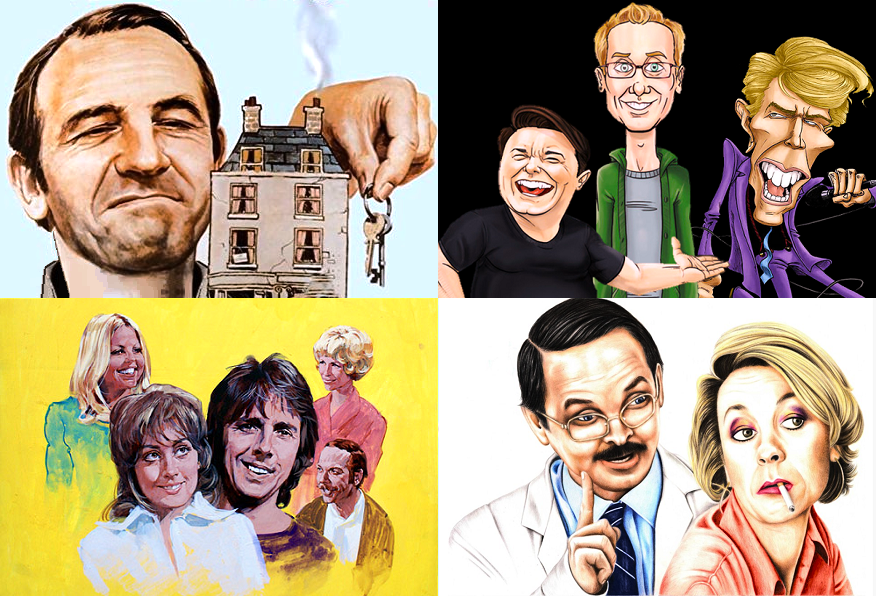
Quality quartet: you may well have laughed at and loved each of these four British sitcoms but where do they come on the all-time countdown and just which classic series is the number one rib-tickler?
Two or three decades ago, you couldn’t go an hour or two watching TV in the UK without a sitcom popping up. Nowadays, because the nature of television, cultural tastes and how we consume both have changed, not so much.
Despite this blog being committed to looking back at things past, though, I’ll never subscribe to the cliché that ‘everything was better back in the day’; it simply isn’t true. Yet, in the case of modern TV versus past telly and especially the demise of the British sitcom, surely you’d be a plonker not to recognise we never had it so good as we did in the ’70s, ’80s and ’90s. Reggie Perrin and Rigsby, and Del Boy and Rodney versus Amandaland and – gah! – Mrs Brown’s Boys? The realisation of a brilliant Baldrick-like cunning plan, this surely isn’t.
So, to put a more positive spin on things and enacting that age-old political ploy of turning a setback into an opportunity (just as Jim Hacker would try to, with or without Sir Humphrey’s help), I’ve decided to come up with a couple of (apologies, marathon-long) posts to celebrate Blighty’s situation comedy tradition at its finest by offering up, to all and sundry, a rundown of the 2o greatest sitcoms this little island has ever produced, in my humble opinion, of course.
Was this a painstaking effort? Did it take forever to put together? Feck me, yes. Will it raise a (likely unintentional) laugh or two and result in a heckle, here and there (sorry, there’s no Dad’s Army, Fawlty Towers or The Office; none have ever truly clicked with me)? Quite possibly. But I… or, er, this blog didn’t get where it did today by always being lovely jublee about everything. Or without mixing its metaphors and its sitcom puns.
Anyway, settle down in that armchair, put down that remote and dunk that custard cream in your cuppa because, yes, here we go! Cue that cosily familiar theme tune…
.
.
.
.
Original channel: ITV
Seasons: 6 (1973-76)/ 39 episodes
Christmas specials: 0 (however, a short festive special featured in All-Star Comedy Carnival, broadcast on ITV at Christmas 1973)
Regular cast: Richard O’Sullivan (Robin Tripp), Paula Wilcox (Chrissy Plummer), Sally Thomsett (Jo), Yootha Joyce (Mildred Roper), Brian Murphy (George Roper) and Doug Fisher (Larry Simmonds)
Regular crew: Johnnie Mortimer and Brian Cooke (creators/ only writers); Peter Frazer-Jones (only producer/ director)
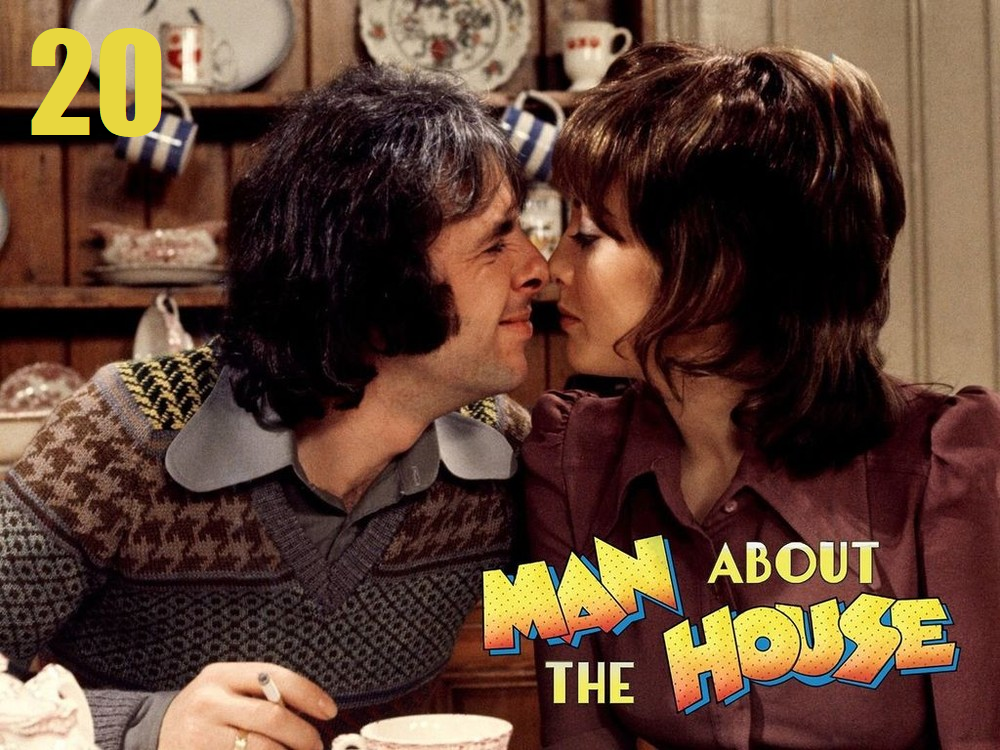
The situation: Chrissy and Jo, two young secretary-types in ’70s London Town, require a new flatmate; their choice is eligible if a wee-bit-hapless cookery student Robin. At first, the downstairs-dwelling, stingy and weedy landlord Roper isn’t keen on the arrangement, while his liberated, undersexed wife Mildred is, being attracted to Robin. The latter’s friend, the cocky and womanising chancer Larry, is also on the scene; he eventually moves into the attic at the top of the house.
The greatness: Owing to its unashamedly populist approach and knockabout, mostly family-friendly tone, it’s easy to overlook Man About The House. In fact, in its day, it was radical. Making a pre-watershed TV comedy about a handsome man and two attractive women sharing a flat, all unattached, complete with overt sexual tension and scripts that never shied away from fairly frank references to the act, was something unimaginable in Britain before the early ’70s, let alone something ever tried before.
Very much a product of the permissive society, then (although admittedly soft on challenging chauvinism and, to a small extent, homophobia), Man About The House was skilfully done. Solidly scripted with an always high gag count, it was perfectly played by a cracking cast; Joyce and Murphy’s sidekicks becoming so beloved they got their own hit spin-off. Indeed, it was so good it was remade over the pond (with, at first, the same scripts) as the just-as-successful Three’s Company.
Greatest episode: One For The Road (Season 4)
Title theme: Up To Date by Johnny Hawksworth
Spin-offs: George And Mildred (1976-79; ITV), Robin’s Nest (1977-81; ITV) and Man About The House (1974; cinematic feature film)
Did you know? When cast as one of the titular Railway Children in the classic 1970 British film, Sally Thomsett was a 20-year-old woman tasked with playing a pre-pubescent girl; as such, she was asked to hide her true age during filming lest there be any controversial publicity, which meant no smoking, drinking or socialising down the pub with cast and crew.
Having quietly struggled with the enormous fame afforded her by Man About The House and George And Mildred, Yootha Joyce tragically took her life in 1980; Brian Murphy was especially bereft for, as work dried up, he discovered he’d lost not only one of his best friends but his acting partner, too.
.
.
.
.
.
.
.
Original channel: Channel 4
Seasons: 6 (1989-94)/ 71 episodes
Christmas specials: 1 (1994; final extended episode)
Regular cast: Norman Beaton (Desmond Ambrose), Carmen Munroe (Shirley Ambrose), Ram John Holder (‘Porkpie’), Gyearbuor Asante (Matthew Joffor), Geff Francis (Michael Ambrose), Kimberly Walker (Gloria Ambrose), Justin Pickett (Sean Ambrose), Robbie Gee (Lee Stanley), Matilda Thorpe (Mandy) and Mona Hammond (Auntie Susu)
Regular crew: Trix Worrall (creator/ regular writer); Humphrey Barclay and Charlie Hanson (producers)
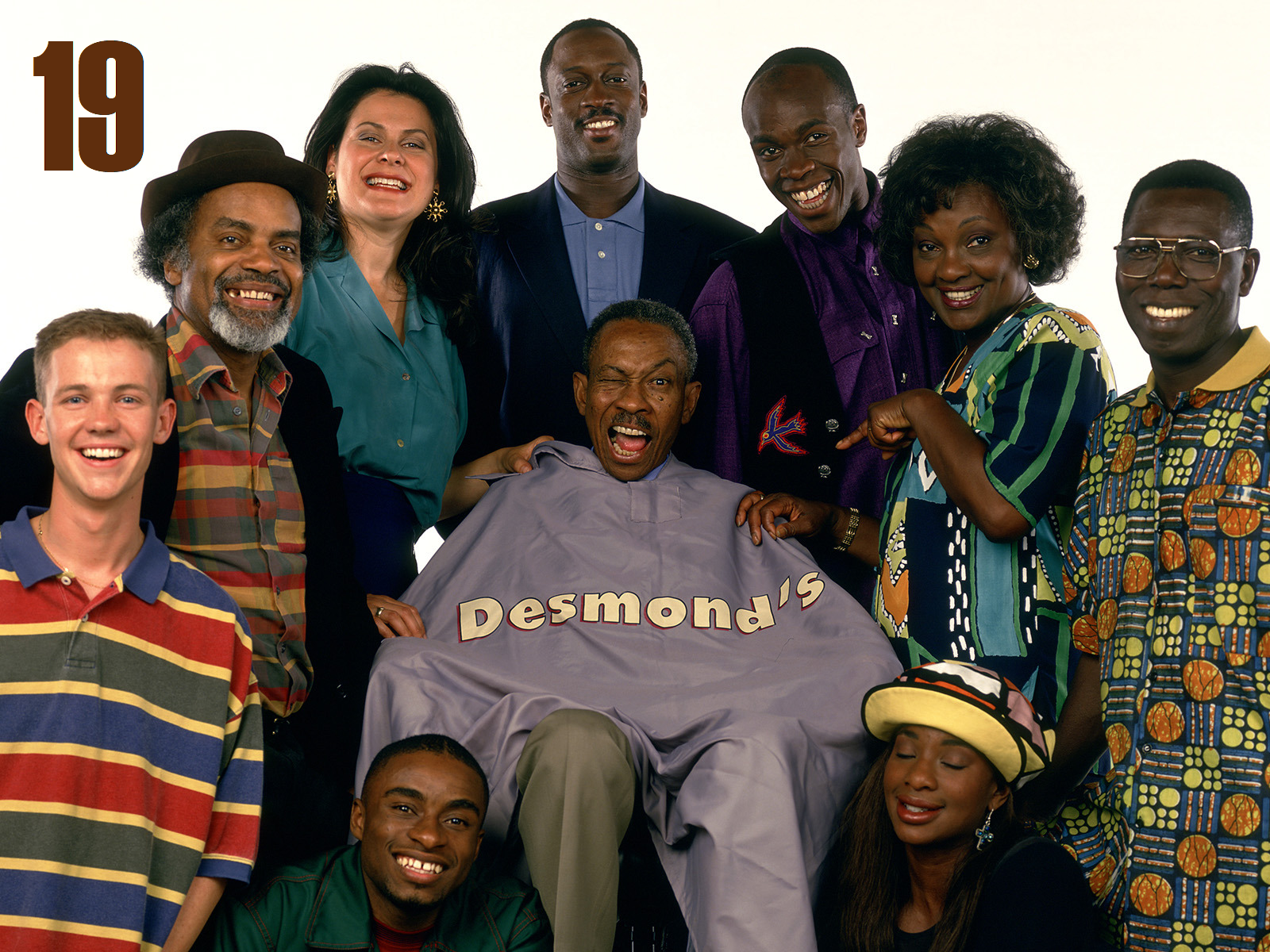
The situation: Desmond is an ageing former calypso singer from Guyana, who co-owns and runs a barbershop bearing his name in London’s Peckham. He shares the flat above the barbershop with his wise, emotionally mature wife Shirley, and their adolescent children, Gloria and Sean. Their eldest son Michael, an upwardly mobile assistant bank manager, is the business’s other co-owner. That said, the barbershop itself seems to operate as less a going concern than a community meeting place; its daily clientele including Matthew, a perpetual student from The Gambia; Lee, the local wideboy; and ‘Porkpie’, the group’s crumpled fall-guy and former guitarist in Desmond’s one-time calypso band.
The greatness: One of the first, easily the best and the longest running of British sitcoms focused on a minority community (its crew, too, was filled by black professionals), Desmond’s was an immediate hit and proved ever-popular with its faithful, young Gen-X audience, ensuring it played an important role in the rise and evolution of multiculturalism on the box.
Yet, as a sitcom, it owed that non-niche success not just to its winning cast and populist writing but also its specific, deliberate foundations – a very definite ethnic set-up (a British Guyanese family in an urban setting; a close-knit Caribbean-meets-West-African-meets-White community) but with universally recognisable character types (the put-upon father; the wise mother; the challenging kids; the ambitious yuppie; the righteous intellectual and, of course, the comedy sidekick).
So, whether it rewrote the sitcom book or not, Desmond’s never felt like it did; its appeal was always too broad and its effect too light-hearted and fun for that. Yet, that was the point. In proving so successful and so enduring, it quietly changed what was possible in British TV comedy (i.e. it could be less white *and* popular) without many people noticing, which was its aim right from the off.
Greatest episode: Calypso (Season 4)
Title theme: Don’t Scratch My Soca (Norman Beaton)
Spin-offs: Porkpie (1995-96; Channel 4)
Did you know? A native of Guyana, Norman Beaton came to Britain as part of the ‘Windrush Generation’ and ended up working as the first black teacher in Liverpool; while there, he became a calypso musician and, on occasion, played guitar for the city’s famed group of beat poets at the Cavern Club, the venue made iconic thanks to its legendary early Beatles gigs.
.
.
.
.
.
.
.
Original channel: BBC1
Seasons: 3 (1976-79)/ 21 episodes
Christmas specials: 0 (however, a short festive special featured in The Funny Side Of Christmas, broadcast on BBC1 in 1982)
Regular cast: Leonard Rossiter (Reggie Perrin), Pauline Yates (Elizabeth Perrin), Geoffrey Palmer (Jimmy Anderson), John Barron (C.J./ F.J.), Sally-Jane Spencer (Linda Patterson), Tim Preece/ Leslie Schofield (Tom Patterson), Sue Nicholls (Joan Greengross), Trevor Adams (Tony Webster), Bruce Bould (David Harris-Jones) and John Horsley (Doc Morrisey)
Regular crew: David Nobbs (creator/ only writer); Gareth Gwenlan (only producer/ director)
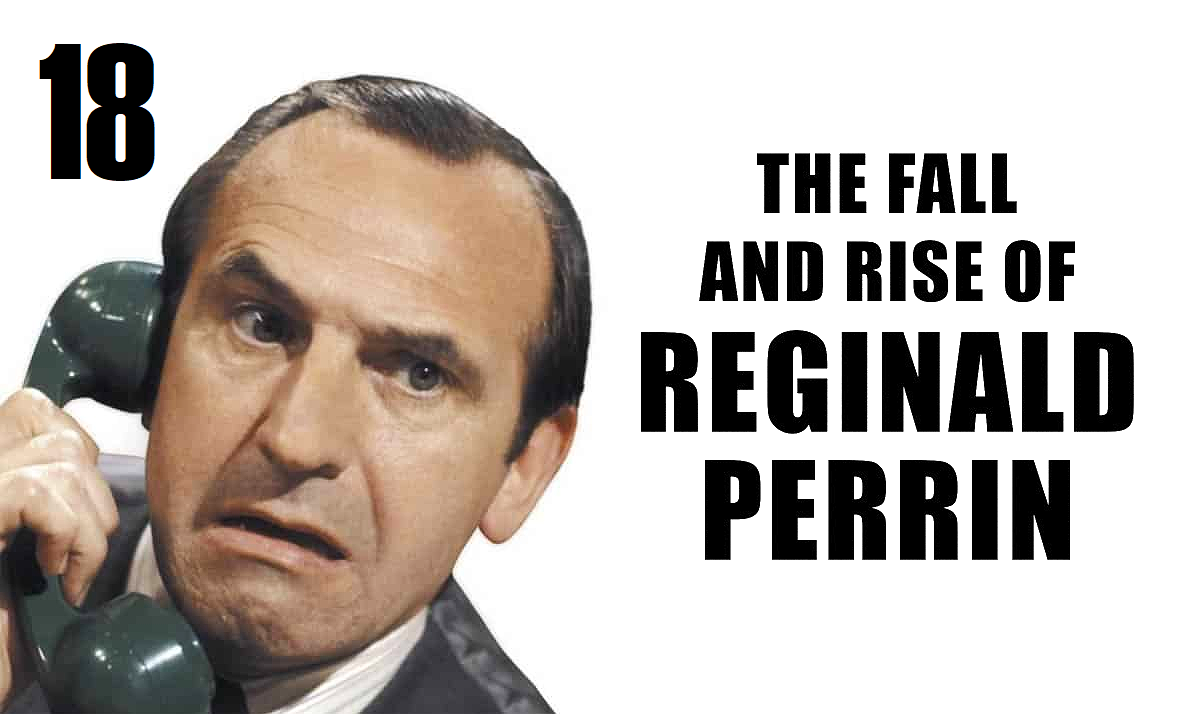
The situation: Suffering from a mid-life crisis, Sunshine Desserts marketing manager Reggie Perrin decides to fake his death, leaving behind his comfortable but suffocating suburban existence and lovely, loving wife Elizabeth. Returning as a thinly-veiled ‘Reggie replacement’, he ends up resuming his life and job as before (complete with wife, daughter Linda, brother-in-law Jimmy, eccentric boss C. J., irritating colleagues and lust-worthy secretary Joan), before jacking it all in again to become an itinerant land worker, and then roping in everyone he knows to launch retail venture Grot – shops that sell utterly useless tat, but which defy Reggie’s plan for glorious failure to become a huge high-street success story.
The greatness: Reginald Perrin was a bit of curio in its more mannered TV era, being a prime-time BBC1 sitcom that revelled in satirical inanity and daydream-derived surrealism. Despite an over-reliance on repetitive gags, it worked because it married the ‘alternative’ absurdity of Monty Python and The Goodies with the mild mocking of the cosy middle-class sitcom, never straying too far into the territory of either and so never overplaying its hand for a mainstream 1970s audience.
The effect was a comedy whose style and tone would seamlessly shift now and again, leaving a lightly unsettling effect; it wasn’t truly comfortable viewing yet neither was it threatening. Smartly written and directed, it was anchored by a pitch-perfect Leonard Rossiter – was he merely struggling with existential angst or going dotty due to all the dotty normies around him? It was never really clear.
Greatest episode: The Unusual Shop (Season 2)
Title theme: Theme by Ronnie Hazlehurst
Spin-offs: The Legacy Of Reginald Perrin (1996; BBC1) and Fairly Secret Army (1984-86; Channel 4); although the latter wasn’t, strictly speaking, a Perrin spin-off, it was written by Nobbs and featured Palmer as a character that was Jimmy in all but name attempting to stage a paramilitary coup of the UK, an idea that Jimmy once posited in a Perrin episode.
Did you know? A stickler for high standards, as well as a wine connoisseur and right-winger (rare for a Liverpudlian successful in the arts), Leonard Rossiter didn’t suffer fools gladly; apparently, on the set of a well-recalled 1983 Cinzano advert, he referred to glamorous co-star Joan Collins as ‘the prop’.
.
.
.
.
.
.
.
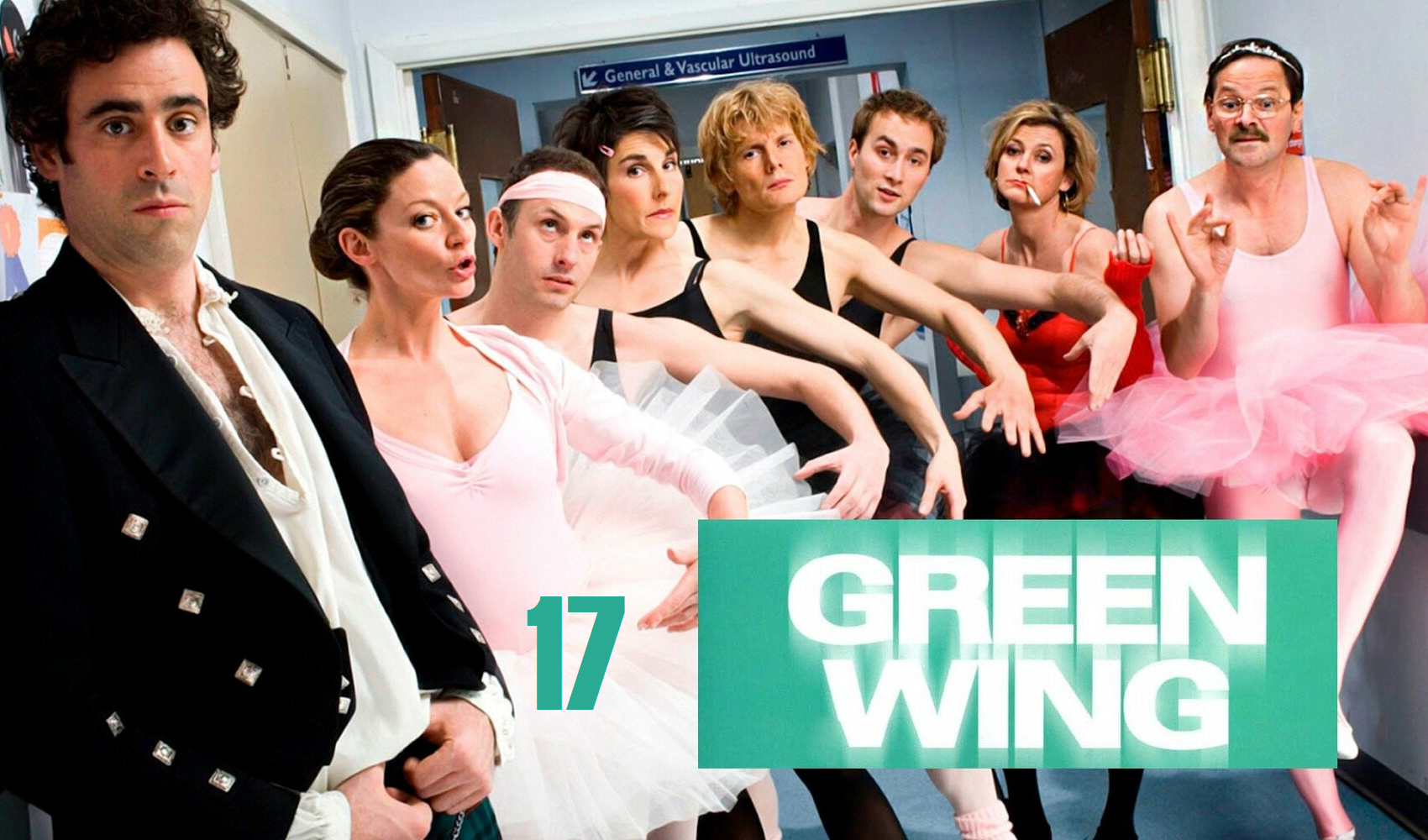
Original channel: Channel 4
Seasons: 2 (2004-07)/ 18 episodes
Christmas specials: 0 (however, two short specials were produced, the first broadcast on BBC1’s Comic Relief night in March 2005 and the second performed live as part of the Amnesty International-benefiting Secret Policeman’s Ball in October 2006)
Regular cast: Tamsin Greig (Dr Caroline Todd), Stephen Mangan (Dr Guy Secretan), Julian Rhind-Tutt (Dr ‘Mac’ Macartney), Michelle Gomez (Sue White), Mark Heap (Dr Alan Statham), Pippa Haywood (Joanna Clore), Karl Theobald (Dr Martin Dear), Oliver Chris (Dr Boyce), Sarah Alexander (Dr Angela Hunter), Olivia Coleman (Harriet Schulenburg), Sally Bretton (Kim Alabaster), Katie Lyons (Naughty Rachel), Lucinda Raikes (Karen Ball) and Paterson Joseph (Lyndon Jones)
Regular crew: Victoria Pile (creator/ writer/ director/ producer/ editor); Tristram Shapeero (director/ editor); Dominic Brigstocke (director/ editor); Peter Fincham (executive producer)
The situation: Capable and level-headed surgeon Caroline starts work at an unnamed hospital’s ‘Green Wing’, sharing accommodation with the attractive, effortlessly popular Angela and working alongside handsome, easy-going lothario Mac (a fellow surgeon) and the mendacious, inferior-complex-plagued Guy (an anaesthetist), whom she lusts after and rebuffs, respectively.
Also on the scene is Martin, a hopelessly naïve and incapable junior doctor; Alan Statham, an increasingly deranged consultant; and Boyce, another junior doctor who can’t function without winding-up Statham. Meanwhile, overly sexually-aggressive admin chief Joanna makes hell the lives of her underlings (Harriet, Kim, Rachel and Karen) and HR officer Sue White exists in a performative fantasy world as she torments everyone but Mac, whom she delusionally pursues.
The greatness: While Reginald Perrin delivered a balanced blend of absurdity and traditional sitcomming, Green Wing was for none of that; it went the whole hog and served up absurdity at every opportunity. Granted, for those who like their TV comedy less experimental, this may’ve been a step too far; using hospital/ work scenarios and doctor/ admin character types as a basis to mine comic opportunities that took logic to the ‘nth’ degree and sometimes tested the bounds of taste. Even so, millions of Noughties viewers found it to their taste and devoured its never-ending surreal scenarios.
For Green Wing, devised and delivered by the same team behind Channel 4’s equally iconic feminist sketch comedy Smack The Pony (1999-2003), seemed a sitcom in only a loose sense. Its sequences often came off as comedy bits rather than scripted scenes. As such, it felt like a sketch comedy in a sitcom’s clothing, pulling on the impeccable improvisation of its ensemble (a clutch of then up-and-comers, now established names; including a top-of-the-class, madcap Michelle Gomez and a marvellously callous Stephen Mangan, as well as Tasmin Greig, Sally Bretton and Oscar-winner-to-be Olivia Colman).
Engaging in non-stop passive-aggressive encounters, infantile misbehaviour and liberated physical comedy (regularly sped up and slowed down for exaggeration), the characters were akin to kids in a playground and their predicaments unashamedly cartoonish.
Yet, for all that, Green Wing *was* a sitcom, thereby delivering enough story continuity and character-driven pathos – especially by the time of its terrific first season finale – that you weren’t just entertained by all the buffoonery but invested. In spite of yourself, you were rooting for these lunatics, too.
Greatest episode: Emergency (Season 1)
Title theme: Last Week by Jonathan Whitehead
Spin-offs: Green Wing: Resurrected (2024; podcast)
Did you know? Using Middlesex’s Northwick Park Hospital and Basingstoke’s North Hampshire Hospital for its interiors and exteriors, Green Wing’s filming took place during actual operational hours when doctors, nurses and patients were mere yards away; at one point, while he was messing about in character, Mangan nearly hit a real-life patient with a tennis ball.
.
.
.
.
.
.
.
Original channel: BBC1
Seasons: 4 (1984-89)/ 27 episodes
Christmas specials: 2 (including extended final episode)
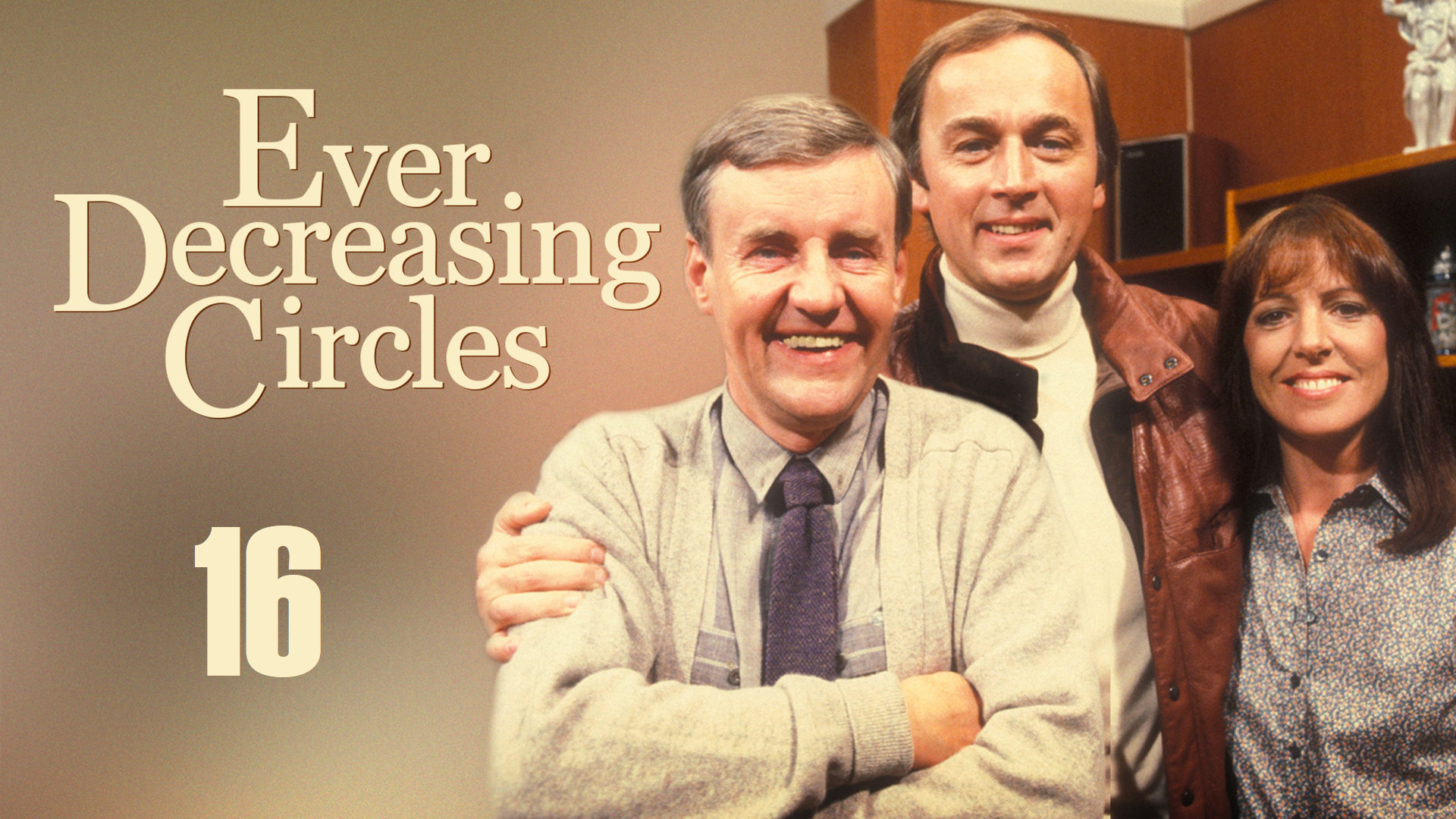
Regular cast: Richard Briers (Martin Bryce), Penelope Wilton (Ann Bryce), Peter Egan (Paul Ryman), Stanley Lebor (Howard Hughes) and Geraldine Newman (Hilda Hughes)
Regular crew: John Esmonde and Bob Larbey (creators/ only writers); Sydney Lotterby (director); Harold Snoad (director)
The situation: Martin is a dysfunctional chap; he only functions if he’s able to organise not just his and loving but long-suffering wife Ann’s extra-curricular activities but those, too, of everyone who lives in their immediate community – a suburban cul-de-sac (referred to as ‘The Close’) in Surrey’s Mole Valley. Included in Martin’s flock are his and Ann’s best friends, the overly pleasant, dreamy couple Howard and Hilda, whose placid natures placate his need to control. Everything is fine, neat and ordered in Martin’s world; until, that is, handsome, charming and fashionable singleton Paul moves in next door. Suddenly, everybody loves easy-going Paul (not least Ann) and, to make matters worse, he seems somehow to be good at everything, too.
The greatness: On the surface, Ever Decreasing Circles was the epitome of the elegant, inoffensive middle-class sitcom (of which the BBC seemed to churn out endless iterations in the ’70s and ’80s) but, dig a little deeper, and you discovered something interesting was going on. For, under the standard laughter lines, recognisable beats and pleasant misunderstandings, a darkness lurked – this was a show using the respectable sitcom as cover to explore a character who seemed far from well and in constant danger of going over the edge and taking everyone with him.
To rewatch Ever Decreasing Circles today, it strikes you Martin probably isn’t suffering from mental illness but that he’s neurodivergent; his blinkered need for order and control suggestive of autism. Were this show made today, the character would doubtless be handled differently (most of all by those around him) – but would he be fundamentally written or played differently? Probably not. And therein lies the greatness of Ever Decreasing Circles.
While the situations Martin gets himself into are funny, it’s not his ‘differentness’ that is; nor does that cause his downfall – his envy, selfishness or vanity does. And when he comes up trumps, it’s because of his innate goodness or love for Ann. Much of this works, of course, because of the late, oh-so great Richard Briers’ perfect performance (always empathetic; never unlikeable) and the rest of the tip-top cast. Yet, it’s also down to the subtlety of the direction and – especially – of the writing, for which nuance is king.
It’s all rather like a sophisticated Pinter/ Ayckbourn stage play with respectable characters in respectable situations but, beneath that finely polished veneer, everything’s all too flawed and potently true.
Greatest episode: The Cricket Match (Season 2)
Title theme: Prelude No. 15 from Twenty-Four Preludes, Op. 34 by Dimitri Shostakovich
Spin-offs: 0 (but Briers and Wilton appeared together in a string of 1990-broadcast Nescafé coffee adverts as alter egos reminiscent of their Ever Decreasing Circles characters)
Did you know? Having evolved into a TV sitcom from Esmonde and Larbey’s early ’80s stage play Hiccups, the show gained its eventual title from a brainstorming session when, in desperation at getting nowhere near finding a suitable title, someone inevitably uttered “We’re going round in ever decreasing circles”.
.
.
.
.
.
.
.
Original channel: BBC/ BBC1
Seasons: 7 (1965-75)/ 54 episodes
Christmas specials: 2 (two short specials also featured, respectively, in the 1967 and ’71 Christmas Day editions of the BBC’s Christmas Night With The Stars)
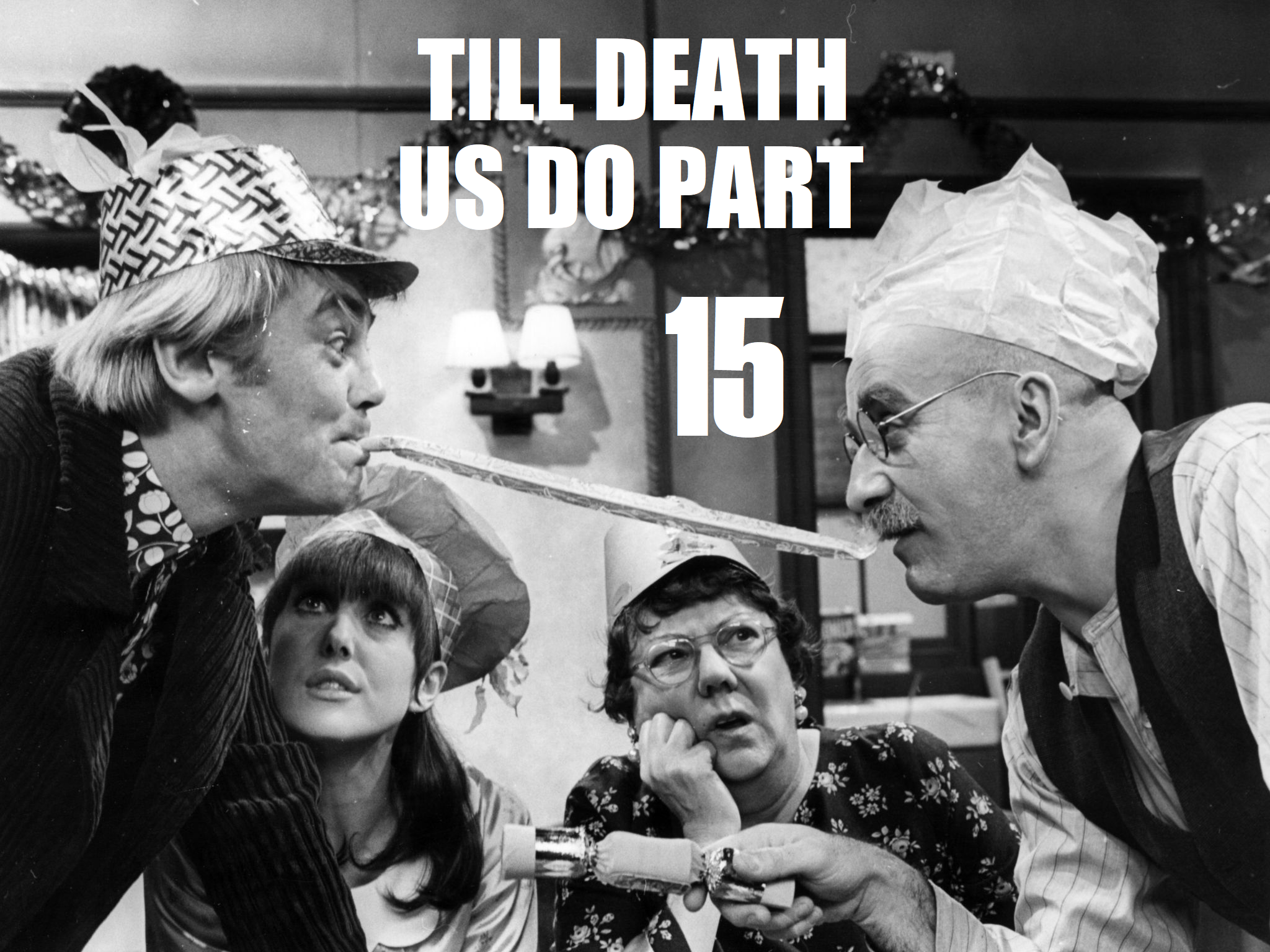
Regular cast: Warren Mitchell (Alf Garnett), Dandy Nichols (Else Garnett), Anthony Booth (Mike Rawlins) and Una Stubbs (Rita Rawlins)
Regular crew: Johnny Speight (creator/ only writer)
The situation: Alf Garnett is a middle-aged, post-war East Londoner; he’s a reactionary right-winger, patriotic bordering on nationalist, ill-informed and cowardly, and supports West Ham. With him in his pre-war tenement flat lives his belittled, dreamy but slyly wise wife Else (‘silly moo’), his fashionable, liberated daughter Rita and the latter’s easy-going, left-wing Liverpudlian husband Mike (‘lazy Scouse git’), with whom Alf never sees eye-to-eye and argues on every topic under the sun.
The greatness: One of the first British sitcoms to lodge itself in the public mindset up and down the land, Till Death Us Do Part enjoyed wild popularity as up to 20 million people viewed in each week to watch Alf Garnett spar with his son-in-law and throw around insults; remarks that were often racist, sexist or offensive in some other way. But was it boldly transformative TV or just the ’60s equivalent of an exploitative reality show with ordinary people in the headlights for our amusement?
Well, certainly in its early seasons, it was the former. Although by the 1980s and beyond, repeats of it had become awkward viewing as society had become more tolerant and tastes had shifted, whenever you may have watched a superior episode of Till Death Us Do Part, it was impossible to deny its uncompromising rawness and its fly-on-the-wall-esque reflection of reality.
This wasn’t a show that held a mirror up to real lives, relationships, opinions and the generation gap through clever-clever fictional distance, it went for the jugular and tackled them head-on via sound writing and pinpoint characterisation (especially from the brilliant Mitchell and Nichols). Indeed, some scenes were so relevant they featured references to extremely recent political/ topical events. This, then, was it’s secret sauce and, for better or worse, why it became so popular.
Now of course, there was always a proportion of Till Death Us Do Part’s audience that didn’t get the uncomfortable satire and would blithely laugh along with Alf and his bigotry instead of at him when he received his deserved downfall at every episode’s end. Yet, maybe that’s the deal with radical, challenging art? You can’t control reaction to it; some will be forced to confront their prejudices, while others’ prejudices will only be confirmed.
Greatest episode: N/A (too few episodes from the series’ 1960s heyday exist, their tapes having been wiped soon after broadcast, to come to a fair conclusion)
Title theme: Theme by Dennis Wilson
Spin-offs: Till Death… (1981; ITV); In Sickness And In Health (1985-92; BBC1), 1969’s Till Death Us Do Part and 1972’s The Saga Of Alf Garnett (cinematic feature films)
Did you know? Anthony Booth was the father of Cherie Blair; barrister, judge and wife of Millennium-era and (fittingly) Labour Prime Minister Tony Blair
.
.
.
.
.
.
.
Original channel: BBC2
Seasons: 2 (2005-07)/ 13 episodes
Christmas specials: 1 (extended final episode, broadcast on BBC1)
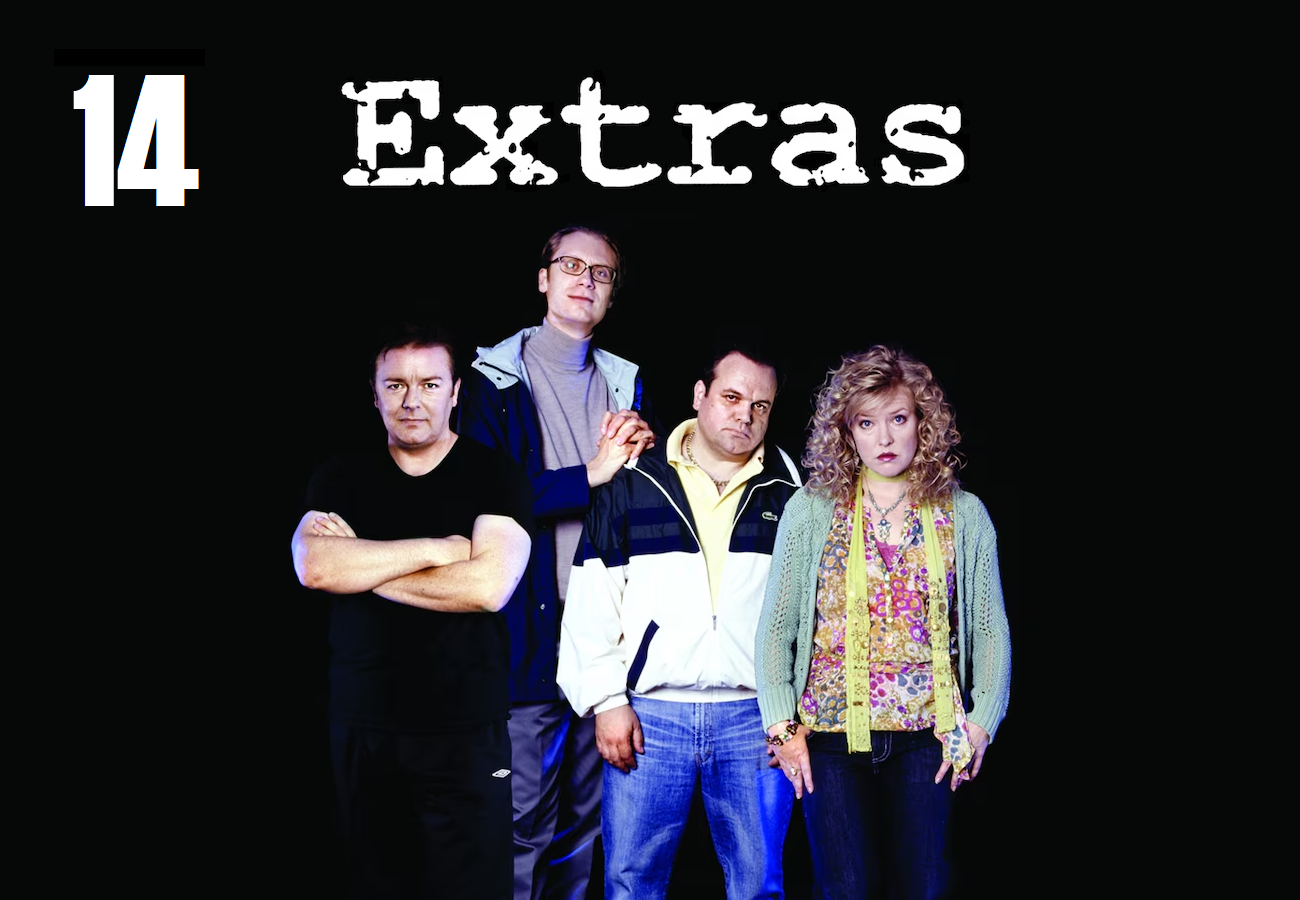
Regular cast: Ricky Gervais (Andy Millman), Ashley Jensen (Maggie Jacobs), Stephen Merchant (Darren Lamb) and Shaun Williamson (himself aka ‘Barry’)
Regular crew: Ricky Gervais and Stephen Merchant (creators/ only writers/ only directors)
The situation: Andy is a thirty-something feller looking to make it in showbiz, vainly hoping that filling his days working as an extra on TV and film sets, thereby rubbing shoulders with Brit thesp royalty and Hollywood heavyweights, might garner him the contacts he needs to get a sitcom he’s written off the ground. Along for the ride is Andy’s best friend and fellow extra Maggie, a vacant and naïve innocent; his agent Darren, a useless, happy-go-lucky sociopath; and the latter’s sidekick Shaun, a fictionalised version of the real-life actor who played Barry on EastEnders (and so always referred to by that name), who’s ostensibly Darren’s only other client but, in reality, his office dogsbody.
The greatness: As Gervais and Merchant’s follow-up to their iconic original UK version of The Office (2001-03), it’s no surprise Extras mined the same knowing, squirm-inducing situational comedy; mostly via ironic complications and/ or vulgar predicaments involving its big-name guest stars, such as Patrick Stewart’s awkward voyeurism fantasy, Daniel Radcliffe’s errant condom, Les Dennis’s existential crisis or David Bowie’s devastating impromptu song (see video clip below).
However, it’s only after you properly sit down and watch Extras you realise its true focus isn’t these clever-clever meta guest-thesp set-pieces; very funny though they are. They’re the headline act. Instead, its the loser lives of its quartet of likeable regulars that’s smartly at its heart and what gives it heart. Being so well drawn and played, it’s these characters that pull us in and, more often than not, keep us watching.
In other words, underneath its playfully meta exterior, Extras offers the stuff of the superior sitcom with bells on – pathos as well as hilarity. We want Andy to achieve success with integrity and for Maggie to get more from life, and we’re strangely pulling for hapless Darren and hopeless ‘Barry’, too. While The Office made our skin crawl, Extras gets under it.
Greatest episode: ‘David Bowie’ (Season 2)
Title theme: Tea For The Tillerman (Cat Stevens/ Yusuf Islam)
Spin-offs: 0 [Life’s Too Short (2011-13)]
Did you know? For a brief moment in the early ’80s, Ricky Gervais was a pop star; sort of. As the vocalist of New Wave duo Seona Dancing, his talents featured on two singles, neither of which troubled the charts in Blighty but one of them (More To Lose) received extensive airplay in the Philippines in 1985, becoming hugely popular there with New Wave-turned-on teens.
.
.
.
.
.
.
.
Original channel: BBC2
Seasons: 4 (1978-83)/ 28 episodes
Christmas specials: 1 (a short festive special also featured in The Funny Side Of Christmas, broadcast on BBC1 in 1982)
Regular cast: Wendy Craig (Ria Parkinson), Geoffrey Palmer (Ben Parkinson), Nicholas Lyndhurst (Adam Parkinson), Adam Hall (Russell Parkinson), Bruce Montague (Leonard Dunn), Michael Ripper (Thomas) and Joyce Windsor (Ruby)
Regular crew: Carla Lane (creator/ only writer); Gareth Gwenlan (producer/ director); Sydney Lotterby (producer/ director); John B Hobbs (director); Mandie Fletcher (director)
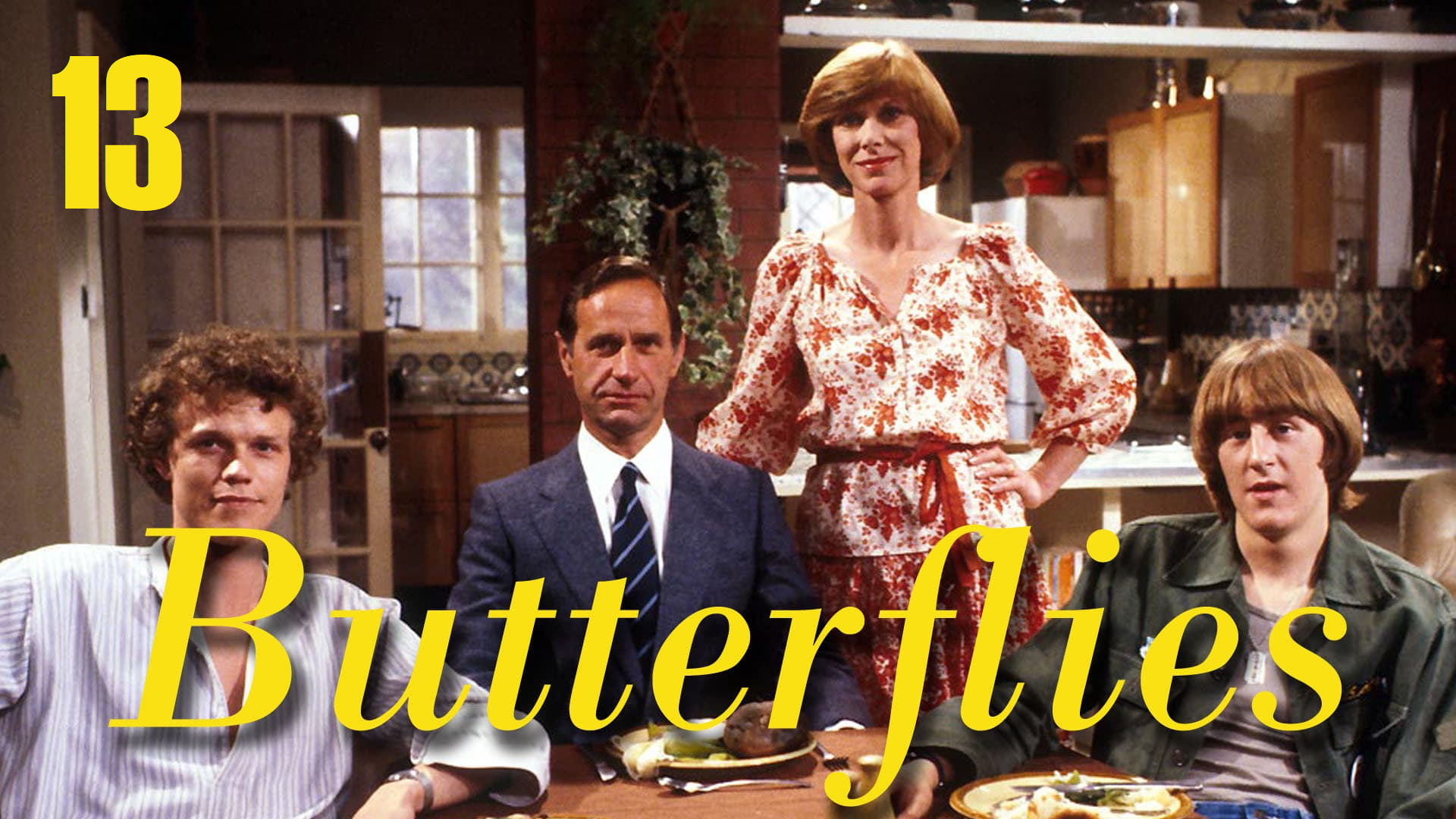
The situation: Middle-aged Ria lives in comfortable suburbia as housewife to misanthropic dentist Ben and sensitive yet tearaway teenage-verging-on-adult sons Adam and Russell. She loves her husband but realises they’ve drifted apart; wanting and needing different things from life. For her part, Ria is deeply unfulfilled but doesn’t know what the answer is – it certainly isn’t spending her days trying to improve her atrocious cooking and popping out for aimless walks in the local park. Then, one day, she meets handsome, charming and willing Leonard – but is she willing…?
The greatness: Famed TV writer Carla Lane had already scored success with a female-perspective sitcom (1969-79’s iconic The Liver Birds) but Butterflies was something new and different.
By making a complex, three-dimensional woman its protagonist, who’s discovered the sexual revolution, the permissive society and second-wave feminism have passed her by, it enabled Lane to explore the specific disillusion of millions of adult women in 1970s Britain. As such, Butterflies wasn’t just a feminist sitcom but a properly feminine one – and arguably Britain’s truly first and, frankly, its finest of that ilk.
Many may point to Wendy Craig’s performance as its lynchpin and they’d be right. She inhabited Ria; lending her not just an aching angst but also passion, tenderness, maturity and, now and again, sparks of youthful joy. Yet, what defined and differentiated Butterflies was, with Ria at its heart, a prevailing a mood: a wispily delicate melancholia.
There was a feeling of wasted opportunity and being trapped that haunted not just Ria but everyone in Butterflies. Ben’s only escape from patriarchal mundanity was watching/ pursuing beautiful butterflies, Leonard was successful but lacked any fulfilment and even Adam and Russell seemed trapped in their infantile adolescent-cum-young adult lives, unsure whether to and how they should grow up.
Of course what lightened things was the humour, the wit, the funny situations and everyone’s innate goodness. Nobody in Butterflies meant to hurt anyone else; they just couldn’t make sense of what they felt and so struggled to connect. All of which made not just for a superior sitcom but a rare existential, sophisticated and, yes, refreshingly feminine one.
Greatest episode: When Ria Met Leonard (Season 1)
Title theme: Love Is Like A Buterfly (Clare Torry)
Spin-offs: 0 (but Butterflies returned for a short special in 2000, broadcast during that year’s BBC Children In Need charity appeal, catching up with the show’s characters two decades on)
Did you know? Title theme Love Is Like A Butterfly was written by Dolly Parton, while its performer Clare Torry is famed for her iconic wailing vocals on Pink Floyd’s legendary The Great Gig In The Sky, from their seminal Dark Side Of The Moon album (1973).
Originally paid a backing singer’s flat-rate £30 for her work on the Floyd track, Torry reached an out-of-court settlement with the band and publisher EMI in 2005, with the agreement her enormous, improvised contribution to it entitled her to official recognition as one of its songwriters and, therefore, royalties.
.
.
.
.
.
.
.
Original channel: ITV
Seasons: 4 (1974-78)/ 28 episodes
Christmas specials: 1 (Season 2)
Regular cast: Leonard Rossiter (Rigsby), Frances de la Tour (Miss Jones), Don Warrington (Philip Smith) and Richard Beckinsale (Alan Moore)
Regular crew: Eric Chappell (creator/ only writer)
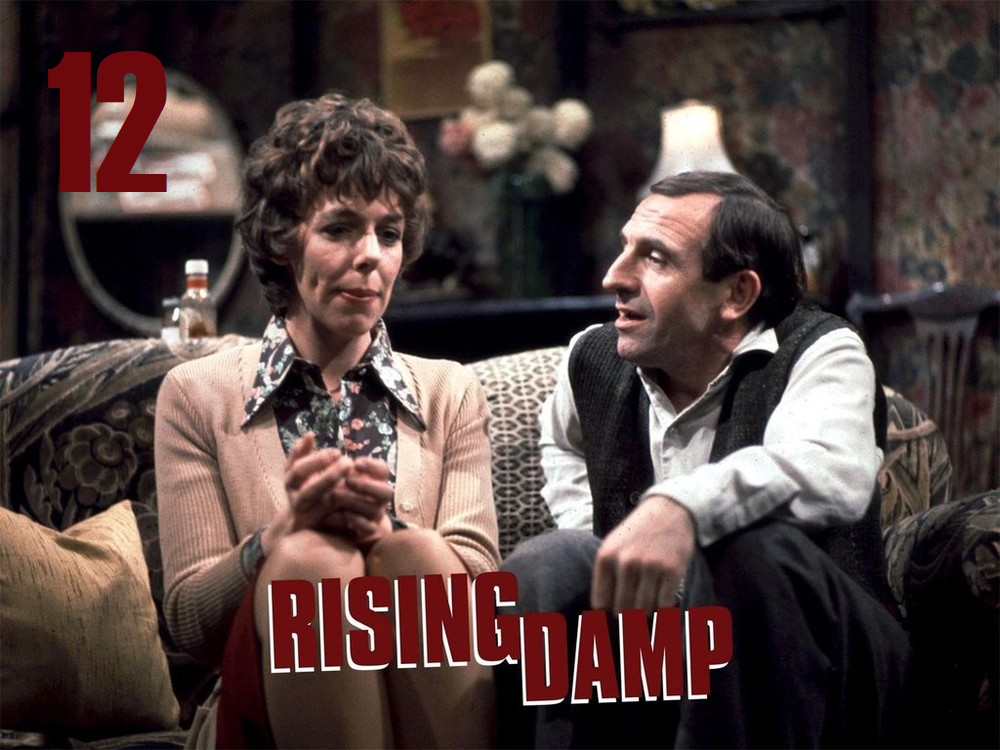
The situation: Rigsby is the landlord of a rickety Victorian townhouse with several tenants; he’s devious, thrifty, bigoted, hypocritical and easy-to-deceive, with aspirations of social-climbing despite having few substantial interactions beyond his own financially-constrained tenants. They number Miss Jones, a middle-aged, unattached romantic who also has aims of social-improvement and is occasionally acquiescent to Rigsby’s constant amorous interest; Alan, a naïve, inexperienced and not-very-good medical student, and Philip, a confident, well-educated, black sophisticate student who has Rigsby believing he’s an affluent African tribal prince – which may well be a wheeze at his landlord’s expense.
The greatness: Long-admired, forever repeated and universally known, Rising Damp isn’t just ITV’s most enduring sitcom but also, as an absolute cast-iron classic, undoubtedly its best. It may not have offered audiences and its genre anything new, trendsetting or transformative but, like all the other remaining entries in this rundown, it did everything it did brilliantly.
The fine writing (perfect plotting and sparkling dialogue; especially from the loquacious Rigsby) and the magnificent cast (with their crackling chemistry) was Rising Damp’s hallmark. To throw yourself into any half-hour of it is joyous; an escape from whatever you’ve got going on. And that’s in spite of its rather depressed, impoverished, very 1970s-Britain setting with its loser characters, especially its barely redeemable protagonist (a racist braggard made maybe oddly adorable by Rossiter’s comic virtuosity).
Perhaps it should but nothing fundamentally bad or tragic happens in Rising Damp’s world, although it maybe has done or yet will to one or more of its characters. Yet, we’re definitely not burdened with considering or worrying about that; the deal is we’re just here for the wind-ups, misunderstandings, one-upmanship, characterisations and laughs – and they make us feel like we’re renting an exclusive penthouse apartment, smoking a cigar and, yes, a loaded African tribal prince.
Greatest episode: Great Expectations (Season 4)
Title theme: Theme by Dennis Wilson
Spin-offs: Rising Damp (1980; cinematic feature film)
Did you know? In hindsight, perhaps the show’s greatness and success weren’t surprising; it started out as writer Eric Chappell’s 1973 stage play The Banana Box, in which – aside from Beckinsale, apparently because of unavailability – all its principals were cast as the play’s corresponding characters.
.
.
.
.
.
.
.
Original channel: Channel 4
Seasons: 2 (1983-85)/ 13 episodes
Christmas specials: 0
Regular cast: Enn Reital (‘The Optimist’)
Regular crew: Robert Sparks (creator/ writer); Robert Sidaway (producer/ writer); Enn Reital (writer/ producer); Peter Ellis (director/ writer); Robert Fuest (director/ writer)
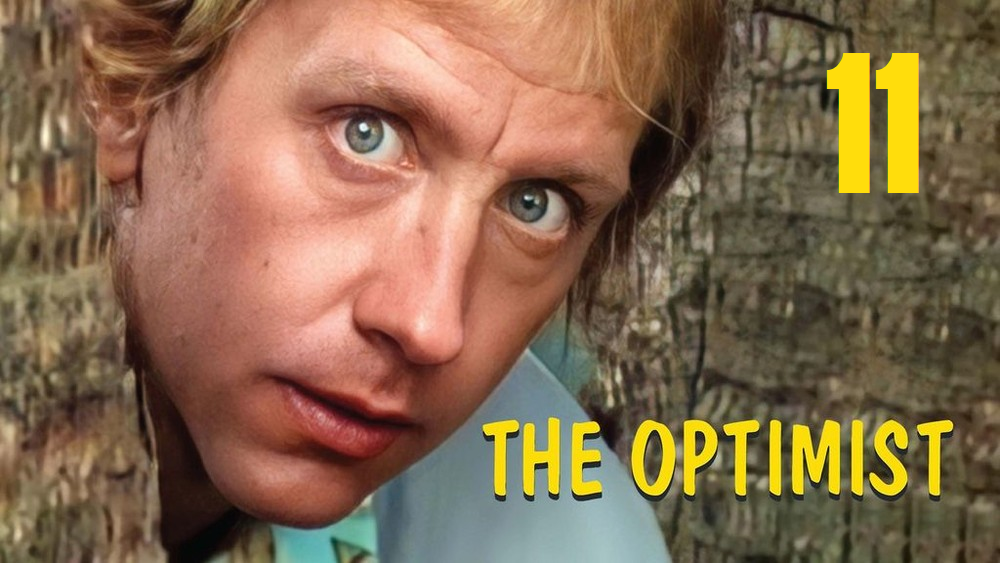
The situation: ‘The Optimist’ is an ordinary chap who somehow constantly finds himself in extraordinary situations. Whether he starts out as a humble odd-job man, babysitter, decorator, cobbler or recreational roller-skater, he quickly winds up becoming a circus acrobat, cowboy, ballet dancer, Cold War spy, racing driver or acclaimed abstract artist – albeit sometimes with a little help from his own Walter Mitty-esque daydreams; but only a little. And, naturally, just as quickly as he goes from zero to hero with the lovely girl on his arm, he goes back to zero again. Such is life, eh?
The greatness: Years before Mr Bean there was The Optimist – doing the same non-verbal everyman-in-comic-scrapes thing but with a glossy, stylish veneer in sunny, glamorous Californian locations and with funky, unlikely guest stars (Dynasty’s Tracy Scoggins, Olympic swimmer Sharron Davies, ’70s Miss Great Britain Dinah May and cult-ish thesps Robert Davi, Ferdy Mayne, Jenny Runacre and Bill Irwin).
With a much more cinematic sensibility than the former show, then, the key inspiration behind The Optimist wasn’t anything as homegrown or humdrum as the UK sitcom tradition; it was Hollywood and, in particular, its golden age of silent comedy and the most legendary icons thereof. To say Eital’s misadventures, his attractive ‘love interests’, his vaguely menacing foes and, most of all, his slapstick antics recalled those of Chaplin and Keaton is to put it mildly.
Much of what made up The Optimist and made it so special was Hollywood homage (and, sure, a touch of Jacques Tati, too); no wonder the showrunners splashed the lion’s share of their budget on actual L.A. locales. As such, it had as much in common with the wit, variety and verve of the similarly cinematic-informed Wallace and Gromit (whose pitch-perfect filming and derring-do constantly reference old school Hollywood) than with Bean or Michael Crawford’s repetitive pratfalls in Some Mothers Do ’Ave Them (1973-78).
However, commissioned and broadcast as one of Channel 4’s earliest trailblazing offerings to British TV, The Optimist fell victim to that channel’s terribly tiny early ’80s audience, ensuring barely anyone’s aware of it, let alone seen it, to this day – save a select few, that is, due to a recent Kickstarter campaign that secured it a DVD release and, at last, a more than deserved slither of publicity.
And yet, thanks to, yes, this very blog post, you can put that right – for yourself, at least – by giving a watch one of its episodes (the Golden Rose of Montreux-nominated The Fool Of The House Of Esher) – see below. Go on, I’m sure it’ll raise more than a (silent) laugh or two!
Title theme: Theme by David Spear
Greatest episode: Burning Rubber (Season 1)
Spin-offs: 0
Did you know? Enn Reital is most noted for the opposite to non-verbal physical comedy, namely providing the voices of the grotesque puppet impersonations of the likes of Neil Kinnock, Prince Philip, Paddy Ashdown and, er, Satan on Spitting Image (1984-96); director of several Optimist episodes, Robert Fuest originally carved out an eclectic big-screen helming career, directing cult classics like
The Abominable Dr Phibes (1971), Dr Phibes Rides Again (1972) and The Final Programme (1973).
.
.













 George's Journal