Playlist: Listen, my friends! ~ June 2016

.
In the words of Moby Grape… listen, my friends! Yes, it’s the (hopefully) monthly playlist presented by George’s Journal just for you good people.
There may be one or two classics to be found here dotted in among different tunes you’re unfamiliar with or have never heard before – or, of course, you may’ve heard them all before. All the same, why not sit back, listen away and enjoy…
.
CLICK on the song titles to hear them
.
Kenny Ball and his Jazz Men ~ Midnight In Moscow (1962)
Los Mustang ~ Submarino Amarillo (1966)¹
Jefferson Handkerchief ~ I’m Allergic To Flowers (1967)
P. P. Arnold ~ To Love Somebody (1968)
Benny Andersson and Björn Ulvaeus ~ Theme from Inga (1968)
Eartha Kitt ~ Hurdy Gurdy Man (1970)
Billy Rosenberg ~ Theme from Columbo (Ransom For A Dead Man) (1971)
Joan Baez ~ The Night They Drove Old Dixie Down (1971)
Okko Bekker ~ East Indian Traffic (1971)
Johnny Wakelin & the Kinshasa Band ~ The Black Superman (Muhammad Ali) (1974)²
Denny Crockett and Ike Egan ~ Theme from Ulysses 31 (1981)
The Icicle Works ~ Whisper To A Dream (Birds Fly) (1983)
The Dream Academy ~ The Edge of Tomorrow (1985)³
.
¹ The Spanish-language version of The Fabs’ much-loved pseudo-throwaway tune that sold a spectacular 130,000 copies in its homeland; in fact, so popular a cover was it that the fans of the Villareal football club took up singing it at matches – owing to the team’s all-yellow kit – thus inevitably establishing the club’s nickname as El Submarino Amarillo (The Yellow Submarine)
² Ironically for a novelty hit that cheerily celebrates black empowerment (released to ride the wave of Ali’s extraordinary comeback when he won back the World Heavyweight boxing crown at the age of 32 via the Zaire-set ‘Rumble in the Jungle’ bout), its writer and performer Johnny Wakelin was a white man from the English seaside city of Brighton; Ali died on June 3, aged 74
³ As featured on the soundtrack of classic ’80s-tastic coming-of-age teen comedy-drama Ferris Buellers Day Off, which was released in cinemas 30 years ago this summer.
.


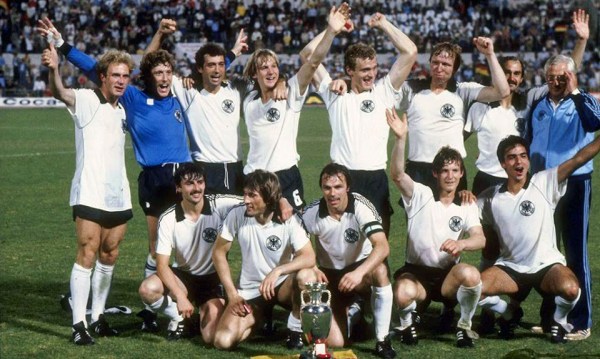

Guten tag, pet: champions of Europe again, Die Mannschaft’s Euro ’80 triumph saw the successful christening of a new generation of West German international football talent for the decade ahead
Europe. It seems to be all about Europe this summer, doesn’t it? While half the UK population looks determined to try and extricate itself from its continental neighbours in 13 days’ time, the other half appears to be, perhaps grudgingly, of the opinion the UK’s better off staying put. And meanwhile, the English, Welsh and Northern Irish football teams are determined to stay ‘in’ for as long as humanly possible (and, as for the Scots, well, they’d just love to be there in the first place, while confusingly – as far as this sentence goes – maybe not part of the UK).
Yes, Euro-fever has verily gripped the zeitgeist, not least too because the continent’s quadrennial summer soccer palooza finally kicks-off tonight with hosts France taking on Romania. What better day then to pick up this blog’s ongoing series casting an affectionate eye back on European Championships past? And this time, specifically, the focus is a tournament seemingly forgotten in the mists of time by many, yet (nice and topically) maybe not by that nation which over the last half-century has found itself at Europe’s very ‘heart’ – for at Euro ’80 it was, yup, the turn of those Red Devil underdogs to flex their muscles from Brussels…
.
.
When, where and who?
June 11-22 1980/ Italy/ Participants were Belgium, Czechoslovakia,
England, Greece, Italy (hosts), Netherlands, Spain and West Germany
.
The champs
West Germany
.
The runners-up
Belgium
.
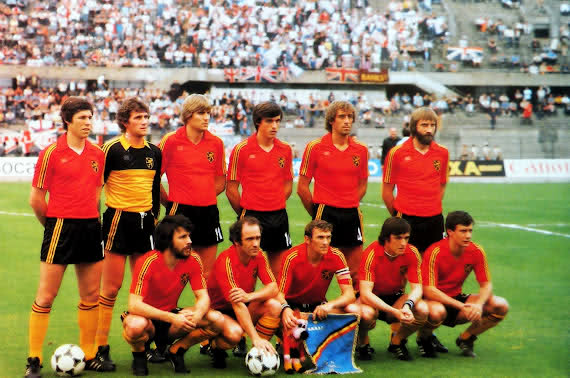
(Red) devilishly good: Euro ’80’s surprise package, Belgium not only topped their group – denying
the hosts a spot in the final – but ran the West Germans damned close in the showpiece title match
.
.
The final
West Germany 2 : 1 Belgium
Goals: Hrubesch 10 mins (1 : 0);
Vandereycken 75 mins (pen) (1 : 1); Hrubesch 88 mins (2 : 1)
.
Third/ fourth place play-off
Czechoslovakia 1 : 1 Italy
(Czechoslovakia won 9 : 8 on penalties)
Goals: Jurkemik 54 mins (1 : 0); Graziani 73 mins (1 : 1)
.
The low-down
The first European Championships to feature eight teams and so more than just a quartet of matches – all the past efforts had been open to only four teams – Euro ’80 should have seen the four-yearly event really kick on, but it seems many across the continent didn’t realise it had even kicked-off. Why was this? Well, too many of the matches those who bothered to to turn up to or tune into on their TV sets proved dull, undeniably defensive affairs; far from a great advert for the great, beautiful game.
Not that that was the case everywhere, though. In the host country, Italy, expectation was understandably high. Having been crowned World Champions twice by this point and being one of the world’s leading soccer nations, surely their team – jam-packed full of stars, as it was – needed only to turn up to their three round-robin group matches to make it to the final, right? Er, wrong. Drawing two of their matches, winning one and managing to score just one goal, the Azzurri only managed to finish runners-up in their group which meant that, with two groups and oddly no semi-finals this time out, they failed to make it through to the last two, no doubt causing then a giant, collective Mediterranean shrug.
Not so for Europe’s other world-leading nation in international soccer. Maybe oddly, as a side remembered for being flushed with success throughout the ’70s and the ’80s, West Germany were far from awesome at this point. Having been defeated by Czechoslovakia in the Euros final four years before, the team that graced this tournament featured a majority of relative youngsters; the celebrated old-guard of the past decade having moved on. And surprisingly – or maybe not, given we’re talking the Germans – the new-look Mannschaft manned-up, making it through their group (defeating a Dutch side containing the last vestiges of the Total Football-friendly players of the Cruyff era) and winning the final with a brace from the big, bulky Hamburger SV striker Horst Hrubesch; a real achievement for him, given he’d only been called up to the team as a late replacement and having been injured himself in the European Cup final just weeks before, which his side lost to Nottingham Forest.
However, maybe the team that achieved just as much glory (for nostalgic types looking back through rose-tinted glasses, at least), were runners-up Belgium. Yes, that’s right; Belgium. A nation boasting then, well, almost zero footballing pedigree and even fewer names than their fellow finalists, they defied the odds to emerge from a depressingly hooligan-hit opening draw against a Kevin Keegan-led England – whom, in their first tournament since 1970, lived up/ down to expectations by underwhelming yet again – to eventually top Italy’s group (albeit on goal difference, although they did score four more goals than the latter). And then, come the final, they only narrowly lost thanks to Hrubesch’s last-minute winner. (Red) devilishly good, you might say.
.
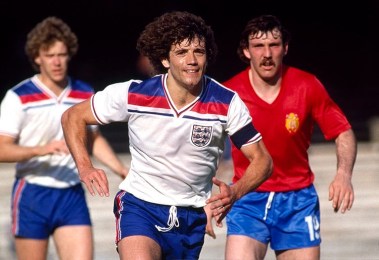

Perms and Pinocchio: England captain Kevin Keegan’s hairdo starred against Spain (l), even if
his and his team’s talent didn’t, while the tournament’s funky mascot charmed all and sundry (r)
.
.
The most valuable player
Horst Hrubesch
Honourable mentions: Klaus Allofs,
Karl-Heinz Rummenigge (both West Germany) and Jan Ceulemans (Belgium)
.
The top scorer
Klaus Allofs ~ 3 goals
.
The turkeys
Italy
.
The unforgettable moment
Horst ‘The Monster’ Hrubesch’s redemptive, winning bullet header late in the final
.
The abiding memory
As I think I’ve made clear by now, this was hardly a tournament to live long in the memory; certainly not for the English, with violence from hooligans purporting to be English fans holding up one the uninspired national team’s matches for at least five minutes. And not for the Italians either, whose first tournament on home soil for 46 years ended in embarrassing failure. However, it undeniably saw a new dawn for the West Germans; key members of its winning team would go on to grace the latter stages of pretty much every Euros and World Cup for the next decade. And, of course, for the Belgians, whose talented group of relative unknowns would cause an even bigger splash at the ’86 World Cup, where they’d reach the last four. And, in fact, it wasn’t all doom and gloom for the Italians in the end. For, just two years later, they’d be crowned World Champions. Yes, Italy’s international football always seems to have flitted between triumph and disaster – just like their governments. Ah, European politics, eh?
.
.
.
.
Playlist: Listen, my friends! ~ May 2016
.
In the words of Moby Grape… listen, my friends! Yes, it’s the (hopefully) monthly playlist presented by George’s Journal just for you good people.
There may be one or two classics to be found here dotted in among different tunes you’re unfamiliar with or have never heard before – or, of course, you may’ve heard them all before. All the same, why not sit back, listen away and enjoy…
.
CLICK on the song titles to hear them
.
Quincy Jones ~ Hallelujah Chorus (1969)¹
Dick Oliver ~ The Chicken (1969)
Andy Williams ~ Here, There And Everywhere (1969)
Ennio Morricone ~ Ritratto d’Autore (1969)²
Kenny Rogers and the First Edition ~ Ruby, Don’t Take Your Love To Town (1969)
Simon Haseley ~ Hammerhead (1972)³
Genesis ~ Fly On A Windshield/ Broadway Melody Of 1974 (1974)
Telly Savalas ~ Who Loves Ya Baby? (1975)
John Barry ~ John Bursts In/ The End from Robin And Marian (1976)
Tantra ~ The Hills of Katmandu (1979)
Kate Bush ~ There Goes a Tenner (1982)
Chaka Khan ~ I Feel For You (1984)
The Psychedelic Furs ~ The Ghost In You (1984)
.
¹ From the soundtrack of the Swinging ’60s-examining blockbuster comedy drama Bob & Carol & Ted & Alice (1969)
² The theme from the 1969 Italian movie La Donna Invisible (The Invisible Woman)
³ The superb library music track that’s become a notorious source for sampling by modern R ‘n’ B artists, not least by Beyoncé on her 2006 hit A Woman Like Me
.
Euro look-backs: Czech-mate at Euro ’76
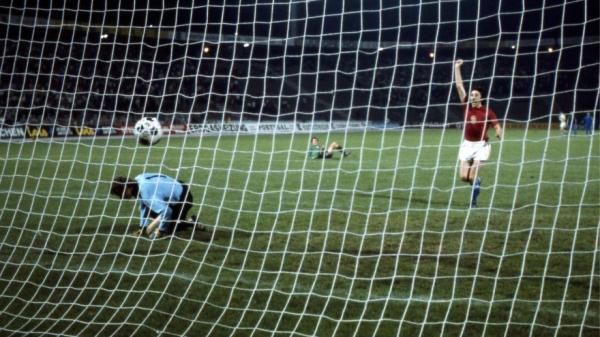
Cheap trick or tricky chip? Antonin Panenka scores his cheeky penalty in the final’s shoot-out against mighty West Germany to crown the Eastern Bloc’s Czechoslovakia unexpected European champions
Regular visitors to this blog (is is too presumptuous to assume there are some out there? Erm…), yes well, anyway… regular visitors to this blog may have noticed there’s been something of a fall-off in posts on its main page this year thanks to the focus on the long-term review effort’s that The Great 2016 007 DVD-athon. Well, that’s going to change this spring/ summer. The main page is going to be staging a fight back. Indeed, out of nowhere – Leicester City-like, if you will – it’s going to shoot up the league table and cannily fox its way back into the spotlight as, in anticipation of next month’s Euro 206 football tournament, it takes a look back one-after-another at the soccer European Championships of yore.
For sure, the Euros, as they’re often affectionately referred to, are traditionally smaller affairs than their big brothers, the World Cups – and are of less import. Yet, that also seems to have ensured they’ve often been quirkier, more surprising and – dare one say – sometimes more entertaining too. So, to kick-off then, let’s begin by looking back at the first of them to probably properly enter the European football followers’ collective consciousness, Euro ’76. Euro ’76? Really? That’s a bit random, isn’t it? Well, actually, yes maybe it was, but if you want to know why we’re starting here, then you need to read on…
.
.
When, where and who?
June 16-20 1976/ Yugoslavia/ Participants were Czechslsovakia,
Netherlands, West Germany and Yugoslavia (hosts)
.
The champs
Czechoslovakia
.
The runners-up
West Germany
.

Umbrella antics: Czech skipper Anton Ondruš meets Dutch captain Johan Cruyff – over whom
is held a brolly by Welsh referee Clive Thomas – ahead of the wet and ill-tempered semi-final
.
.
The final
Czechoslovakia 2 : 2 West Germany
(Czechoslovakia won 5 : 3 on penalties)
Goals: Švehlík 8 mins (1 : 0); D. Müller 28 mins (1 : 1);
Dobiaš 25 mins (2 : 1); Hölzenbein 89 mins (2 : 2)
.
The semi-finals
Czechoslovakia 3 : 1 Netherlands
Goals: Ondruš 19 mins (1 : 0); Ondruš 77 mins (o.g.) (1 : 1);
Nehoda 114 mins (2 : 1); Veselý 118 mins (3 : 1)
.
West Germany 4 : 2 Yugoslavia
Goals: Popivoda 19 mins (0 : 1); Džajić 30 mins (0 : 2); Flohe 64 mins (1 : 2);
D. Müller 82 mins (2 : 2); 115 mins (3: 2); 119 mins (4 : 2)
.
The low-down
This was the last ever European Championships to feature only four teams; it merely comprised two semi-finals, a play-off for third and fourth place and the final. That meant that, following the qualifying group matches, four quarter-finals had taken place, but these were home-and-away two legged affairs that were held during the regular season before the tournament proper took place in the then unified Yugoslavia. Moreover, as this was the last Euros to feature less than eight teams, it was also the last for which the hosts themselves had to qualify. Which today may seem a bizarre notion, but there you go.
Obviously with only four places up for grabs, qualification had been very tough; none of the Home Nations made it through (England being at the height of their hapless qualifying form of the ’70s), yet mighty Wales almost made it through the quarters – only to be denied by the hosts. At the tournament itself, both finalists of the World Cup of two years previous were there then; West Germany – with their captain fantastic Franz Beckenbauer, but without talismanic striker Gerd Müller – and the groovy Netherlands – with arguably the best player in the world at that time, Johan Cruyff. Somewhat disappointingly, though, the Dutch didn’t at all hit their dizzying heights of World Cup ’74, failing to get through their sodden semi against the Czechs, in which two Dutchmen were sent off and – according to (yes) Welsh referee Clive Thomas – Cruyff unsportingly ‘tried to run the game’ in his place.
The final was more up to the mark, though, as the Czechs faced the World Champions, West Germany. And quite stunningly, the undeniable underdogs only went and won it. Leading 2-1 until the 89th minute, the plucky Czechs – then hailing from behind the Iron Curtain, of course – eventually claimed victory via a penalty shoot-out. Nowadays, that may not seem an extraordinary event, but this was the first major tournament match ever decided in such a way and the first – and last! – ever to be lost by a German national team. And yet, the real stunner was the penalty that won the whole thing; a chipped beauty from marvellously moustachioed midfielder Antonin Panenka – pretty much the first penalty anyone had ever seen scored with this technique, hence it becoming christened ‘The Panenka’.
.


Shirt stories: Ondruš goes with a relaxed, hippie look as he shows off the trophy back home (l), while half the triumphant Czech team pose – inexplicably – in exchanged German shirts after the final (r)
.
.
The most valuable player
Antonin Panenka
Honourable mentions: Franz Beckenbauer,
Dieter Müller and Anton Ondruš
.
The top scorer
Dieter Müller ~ 4 goals
.
The turkeys
Netherlands
.
The unforgettable moment
Panenka’s perfectly chipped penalty. Like, obviously.
.
The abiding memory
The poor Dutch performance may be recalled by some (although many from the Netherlands whose memories go back that far probably would like to forget it), yet the thing that practically everyone would remember was undoubtedly the (West) Germans losing it on penalties and the unfancied team from Eastern Europe snatching it from them. In fact, it kicked-off a Euro pedigree for the funky Czechs – as the Czech Republic, they’d go on to be finalists again in 1996 (against the Germans once more) and semi-finalists in 2004. You might say then, something of a Czech-ered history. I thank you.
.
.
.
.
Playlist: Listen, my friends! ~ April 2016
.
In the words of Moby Grape… listen, my friends! Yes, it’s the (hopefully) monthly playlist presented by George’s Journal just for you good people.
There may be one or two classics to be found here dotted in among different tunes you’re unfamiliar with or have never heard before – or, of course, you may’ve heard them all before. All the same, why not sit back, listen away and enjoy…
.
CLICK on the song titles to hear them
.
The New Vaudeville Band ~ Winchester Cathedral (1966)
Murray Head ~ She Was Perfection (1967)
Fairport Convention ~ Si Tu Dois Partir (1969)
Augusto Martelli ~ Beryl’s Tune (1970)¹
The Lettermen ~ I’m Only Sleeping (1972)
Neil Richardson ~ Another Happening (1972)²
Tom Jones ~ The Young New Mexican Puppeteer (1972)
Shirley Bassey ~ Can’t Take My Eyes Off You (1976)
Shawn Phillips ~ Jam for World In Action (1977)³
Orchestral Manoeuvres in the Dark ~ Electricity (1979)
Cozy Powell ~ Theme One (1979)4
Thompson Twins ~ Lay Your Hands On Me (1984)
Prince, Tom Petty, Jeff Lynne, Steve Winwood and Dhani Harrison ~
While My Guitar Gently Weeps (2004)5
.
¹ As featured in the 1970 sexy but dubious Italian fantasy flick Il Dio Serpente (The Snake God)
² Belonging to the marvellously monikered Boosey & Hawkes music library, this piece has in recent years been used to soundtrack the opening of BBC4’s fascinating Britain On Film programme, a compilation of clips from Rank’s Look at Life documentary shorts that were screened in UK cinemas back in the ’60s
³ The strident, even stark, but iconic track that was adopted for (or, depending on which sources you choose to believe, originally written for) the opening and closing to ITV’s ground-breaking investigative journalism-tastic current affairs show World In Action (1968-93)
4 The irresistible synth-drum-tastic version of the tune written by the great, late George Martin as a theme for BBC Radio 1 on its launch in 1967; George Martin passed away aged 90 on March 8
5 A performance of the George Harrison masterpiece from a quite brilliant supergroup that could have been at a US Rock and Roll Hall of Fame ceremony, featuring a quite magnificently showy and stunning guitar solo from the squiggly diddly rock-pop-icon-cum-love-machine whom died yesterday (April 21) at the age of 57
.
Playlist: Listen, my friends! ~ February/ March 2016
.
In the words of Moby Grape… listen, my friends! Yes, it’s the (hopefully) monthly playlist presented by George’s Journal just for you good people.
There may be one or two classics to be found here dotted in among different tunes you’re unfamiliar with or have never heard before – or, of course, you may’ve heard them all before. All the same, why not sit back, listen away and enjoy…
.
CLICK on the song titles to hear them
.
Gillian Hills ~ Zou Bisou Bisou (1961)¹
H. P. Lovecraft ~ The White Ship (1967)
Catherine Deneuve and Françoise Dorléac ~ La Chanson Des Soeurs Jumelles (1967)²
Sarah Vaughan and Billy Eckstine ~ Passing Strangers (1969)
Marty Gold ~ Eleanor Rigby (1969)
Ennio Morricone ~ Amore Come Dolore (1970)³
Ike and Tina Turner ~ Workin’ Together (1971)
Ronnie Hazlehurst and his Orchestra ~ The Two Ronnies Theme (1971)
Led Zeppelin ~ Kashmir (Live) (1975)
Linda Ronstadt ~ Tumbling Dice (1977)
Julio Iglesias ~ Volver A Empezar (Begin The Beguine) (1981)
ABC ~ Theme from Mantrap (1982)
Supertramp ~ Brother Where You Bound (1985)4
.
¹ The original charting version of this über-earworm, as performed by the British singer-cum-actress whom would later go on to appear in Stanley Kubrick’s notorious satire A Clockwork Orange (1971)
² The theme that introduces the irresistible ’60s French film star sisters in Les Demoiselles de Rochefort (The Young Girls Of Rochefort), Jacques Demy’s colourful seaside-town-set follow-up to his 1964 iconic musical Les Parapluies de Cherbourg (The Umbrellas Of Cherbourg)
³ An exquisitely lugubrious theme from the (now) Oscar-winning, legendary film composer for the giallo movie Le Foto Proibite di una Signora Per Bene (The Forbidden Photos of a Lady Above Suspicion/ The Secret Picture of a Respectable Woman)
4 The epic title track from the band’s eighth studio album, a patent and potent critique of the Cold War (in its then early ’80s state) which features a reading from George Orwell’s 1984 (1949) and on release was accompanied by an equally epic short-film of a video; here its lyrics are quite fittingly put to images from the movie Brazil (1985)
.
I’d like to thank the Academy: the Oscars story in pictures
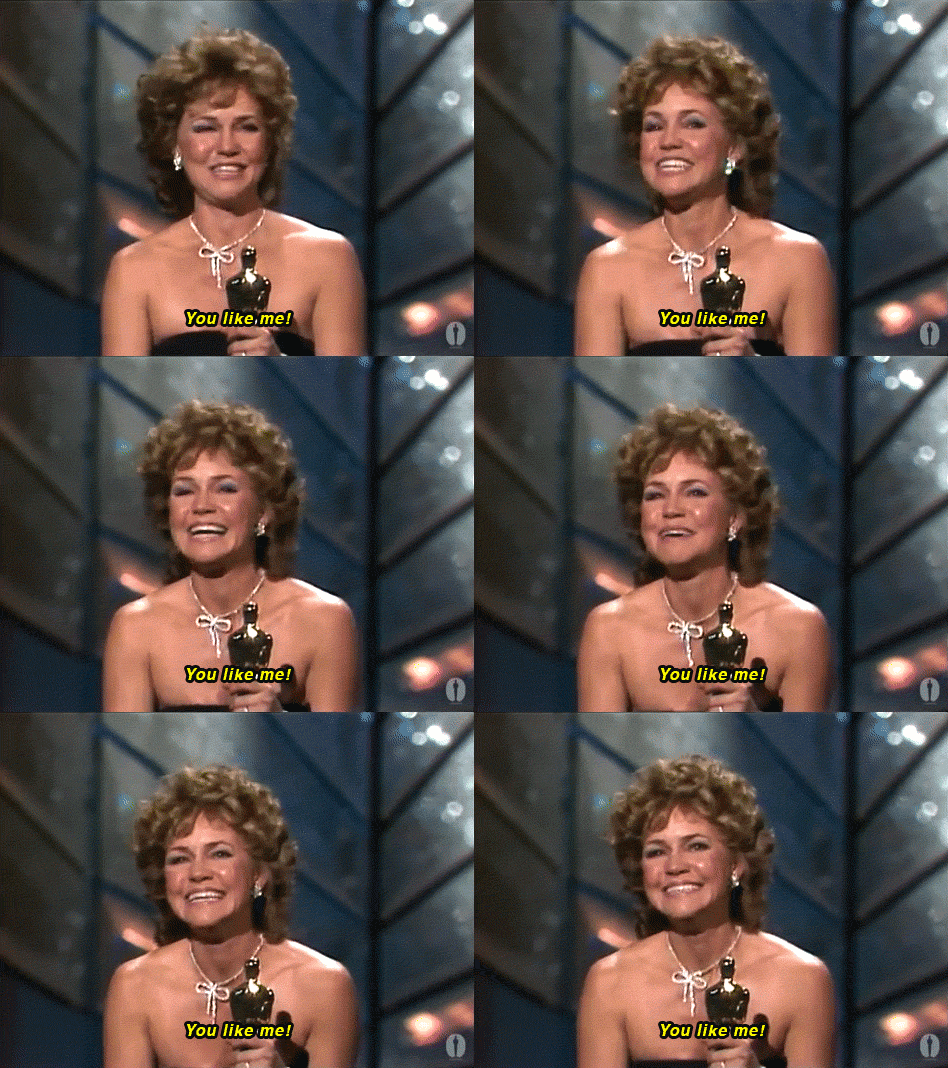
Having a (Sally) Field day: the Texan thesp’s memorably delighted when she discovers
she’s actually ‘popular’ among her peers as she scoops the Oscar for Best Actress in 1985
.
So, are you on Team Leo or in Matt the Martian’s Mob? Do you want a slice of Brie and so have no Room this year for Blanchett? Are you rooting for The Revenant or banking on The Big Short? Yes, like it or not, tonight in the United States the very public and shameless fisticuffs between Messrs Trump, Cruz and Rubio take a back seat (if only for one evening) as the great and the glamorous and the good (and even some of the talented) of Hollywood pound down the red carpet and throw themselves into L.A.’s Dolby Theatre to battle it out for a batch of little gilded figurines, the capture of which will mean those lucky few get to declare, all fuzzy like, they’re this year’s ‘best’ in their respective fields of the movie industry – even if, as in most years, it’s likely the majority of cinemagoers, film critics and even their peers will pretty much disagree with almost every win heralded on the night.
Yes, like The Eurovision Song Contest, the Oscars – or, to give the thing its full title this year, The 88th Academy Awards ceremony – is a strange beast. Part unashamed-US-movie-industry-awards, part TV-variety-showcase and part fashion-horse-parade-for togs way too expensive for any mere mortal to ever aspire to wear. And yet, those of who can, always tend to watch it every time it comes around – or at least take an interest in finding out who’s won what, who’s thanked who and who’s worn ‘who’.
And this year’s ceremony is quite the hotly anticipated one too, given the controversy that’s surrounded its build-up over the lack of black nominees (enabling the media to dub it the ’lily-white’ Oscars – clever, eh?). Controversy then? Surprises? And just plain randomness and weirdness? Don’t doubt it, it’s all happened before down through Oscar’s nine decades – making tonight’s ceremony, in prospect, something of a par-for-the-course show. Not convinced? Well, why not take a perusal of the following pictorial-telling of the Academy Awards story – all the glitz, glamour and glorious mugging of grandiose thesps (and others) grasping golden statuettes and more await, I promise…
.
.

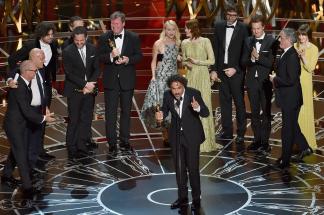
First and last (so far): first ever Oscar winner Emil Jannings (Best Actor for The Last Command in 1929) and alumni of last year’s Best Picture winner Birdman Or (The Unexpected Virtue Of Ignorance)
.
.
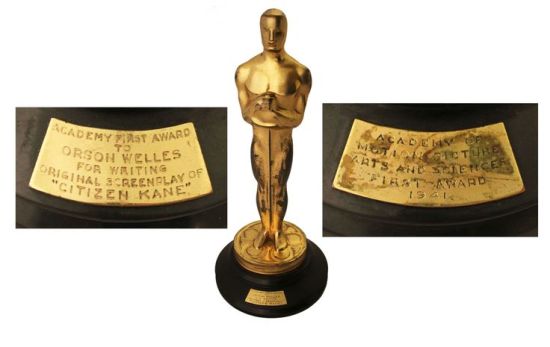
Welles underwhelmed: the only Academy Award won (for Orson Welles’ script) by Citizen Kane in 1942, which was nominated for eight further awards including in every major category and has often been cited as the greatest movie ever made – the statuette sold for around $861,500 in 2011
.
.


Tiny trophies: early Hollywood moppet Shirley Temple presenting Walt Disney with a special Oscar for Snow White And The Seven Dwarfs in 1938 (along with seven little ones for the dwarfs) and in later life with her own diminutive ‘Juvenile Academy Award’, with which she was presented in 1935
.
.


Five times a night: the three – and so far only – flicks to have won every one of the ‘big five’ Oscars (Picture, Director, Actor, Actress and Screenplay) – It Happened One Night in 1936, One Flew Over The Cuckoo’s Nest in 1976 and The Silence Of The Lambs in 1992 – and their various human winners
.
.

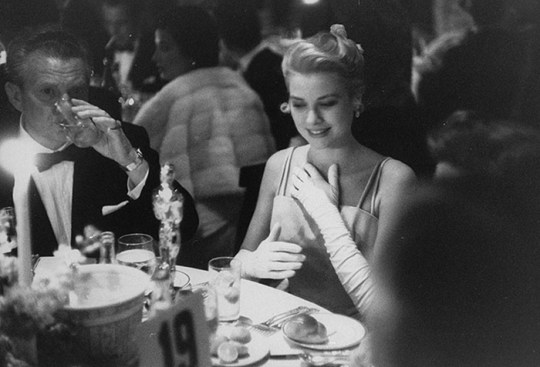
Audrey’s award and Grace and favour: Audrey Hepburn and Grace Kelly winning Best Actress in consecutive years – the former for Roman Holiday in 1954 and the latter for The Country Girl in 1955
.
.


Back-to-back actors: the only men to have won Oscars for Best Actor in consecutive years – Spencer Tracy for Captains Courageous in 1938 and Boys Town in 1939 (pictured with ’39’s Best Actress winner Bette Davis) and Tom Hanks for Philadelphia in 1994 and Forrest Gump in 1995
.
.
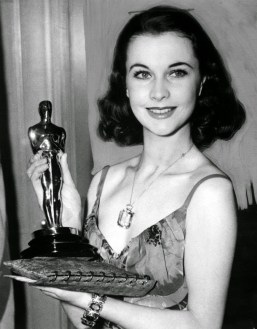
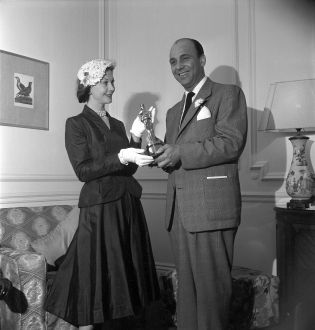
Leigh’s glee: Vivien Leigh wins Best Actress in 1940 for her iconic turn as Scarlett O’Hara in Gone With The Wind and again 12 years later for playing Blanche DuBois in A Streetcar Named Desire
.
.

It was great to be Kate: the quartet of statuettes won by Katharine Hepburn, the most rewarded thespian in Oscar history, for Morning Glory in 1934, Guess Who’s Coming To Dinner in 1968, The Lion In Winter in 1969 and On Golden Pond in 1982 – curiously, she never attended a single ceremony
.
.


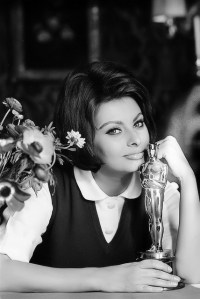
Minority report: the first Asian, African American, thesp in a non-English language role and Hispanic Oscar winners – Yul Brynner for The King And I in 1957, Hattie McDaniel for Gone With The Wind in 1940, Sophia Loren for Two Women in 1962 and Jose Ferrer for Cyrano de Bergerac in 1951
.
.


Starkers at the Oscars: the notorious occasion (once voted Oscar’s greatest) when photographer Robert Opel flashed at the 1975 ceremony – supposedly impromptu, it seems it was actually a staged stunt, perhaps why host David Niven’s riposte was such a classic (‘Probably the only laugh that man will ever get in his life is by stripping off and showing his shortcomings’)
.
.
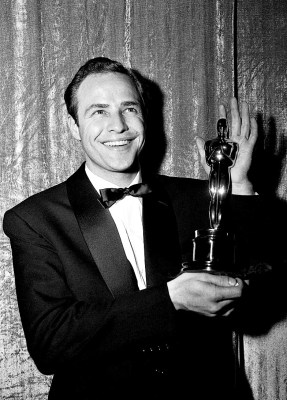

From superstar to soap opera: magnificent Method thesp Marlon Brando looks delighted to have stormed to victory in the Best Actor category for On The Waterfront in 1955, yet when he wins the same award 18 years later for The Godfather not only doesn’t he attend the ceremony, but in his place sends activist Sacheen Littlefeather, whom delivers a speech on pressing Native American issues
.
.
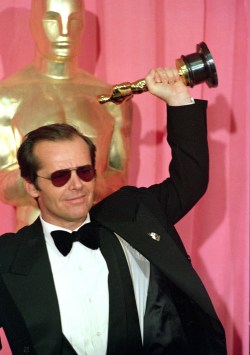
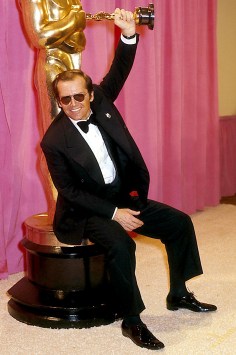

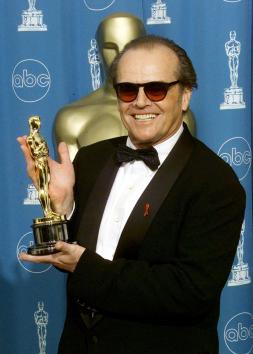
Jack’s hat-trick: counter-culture-icon-turned-unlikely-Academy-Award-darling, Jack Nicholson winning his three Oscars – Best Actor for One Flew Over The Cuckoo’s Nest in 1976 (top) and Best Supporting Actor for Terms Of Endearment in 1984 and Best Actor for As Good As It Gets in 1998
.
.
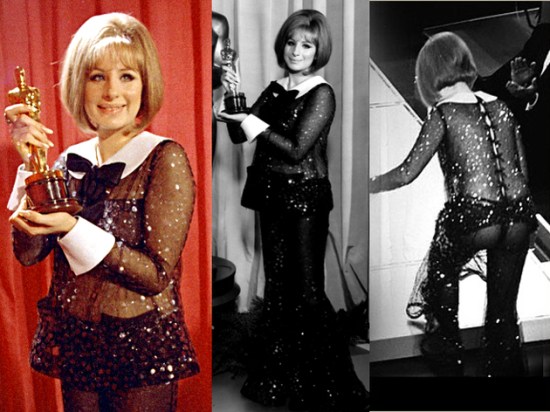
Bananas in pajamas? Barbra Streisand not only won her Best Actress award (for Funny Girl in 1969) in an eerily sheer pantsuit, but also tripped on her way to collecting the award – adding to the sense of pantomime, she had to share her win with Katharine Hepburn (see above) as the result was a rare tie
.
.

When Rocky met Ali: Sylvester Stallone and Muhammad Ali strike suitable poses at the 1977 ceremony, at which Stallone’s Rocky was named Best Picture and also won for its direction and editing
.
.
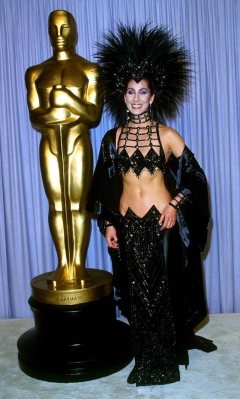
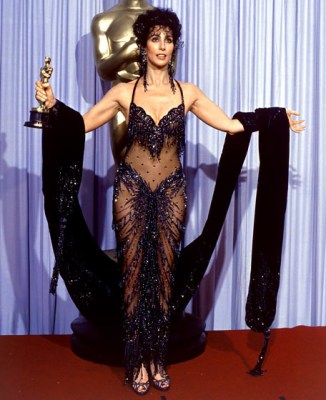
Cher – or sheer? – delight: anything Barb can do Cher can do, er, better – the songstress-turned-thesp in her truly outrageous outfit at the 1986 Oscars and winning her Best Actress statuette for Moonstruck at the 1988 awards in a slightly less odd but no less revealing, slinky lingerie-like get-up
.
.


Nobody remembers the losers? Samuel L. Jackson (nominated for Best Supporting Actor for Pulp Fiction) utters a profanity as Martin Landau wins (for Ed Wood) in 1995, while Bill Murray (for Best Actor for Lost In Translation) looks nonplussed as Sean Penn triumphs (for Mystic River) in 2004
.
.
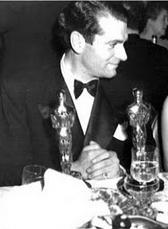


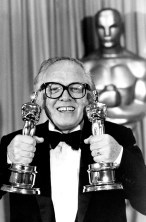
The Brits have, er, come: despite whatever the great Colin Weiland claimed on winning his award for writing Chariots Of Fire in 1982, those from the UK have always been a thunderous force at the Oscars – (clockwise from top left) Laurence Olivier wins Best Picture and Best Actor for Hamlet in 1949, David Putnam wins Best Picture for Chariots Of Fire, Richard Attenborough wins Best Picture and Best Director for Gandhi in 1983 and Colin Firth wins Best Actor for The King’s Speech in 2011
.
.


Youngest and oldest: Tatum O’Neal wins Best Supporting Actress for Paper Moon in 1974 and Christopher Plummer wins the equivalent male category for Beginners in 2012 – at present, she remains the youngest ever winner of a competitive Oscar (aged 10) and he the oldest (aged 82)
.
.

The movie brats – all growed up: the legendary trio of terrific ’70s and ’80s cinema, Francis Ford Coppola, George Lucas and Steven Spielberg, award their friend, the just as legendary Martin Scorsese, with his Best Director Oscar, which he won – finally – in 2007 for helming The Departed
.
.
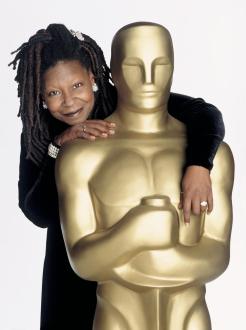
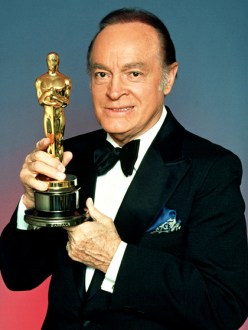
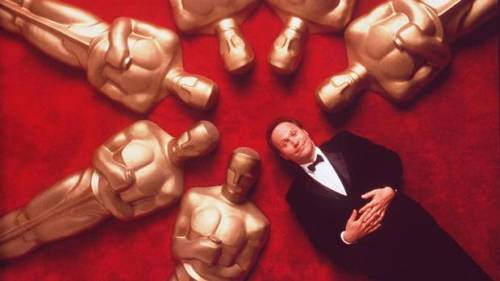
The hosts with the most: surely the greatest ever Oscar masters of ceremonies, Whoopi Goldberg (hosted four times), Bob Hope (hosted a staggering 19 times) and Billy Crystal (hosted nine times) get friendly with various gilded friends – Goldberg also won Best Supporting Actress for Ghost in 1991
.
.
.

.
.
.
Playlist: Listen, you pretty things! 1964-2015

.
.
1947-2016
.
.
.
CLICK on the track titles for video clips
.
David Bowie ~ Liza Jane (1964)
David Bowie ~ Life On Mars (1971)
David Bowie ~ Kooks (1971)
David Bowie ~ Ziggy Stardust (1972)
David Bowie ~ The Jean Genie (1973)
David Bowie ~ Rebel Rebel (1974)
David Bowie ~ Young Americans (1975)
David Bowie ~ Speed Of Life (1977)
David Bowie ~ Heroes (1977)
David Bowie ~ Ashes To Ashes (1980)
David Bowie ~ Modern Love (1983)
David Bowie ~ Slow Burn (2002)
David Bowie ~ Lazarus (2015)
.
.
Goodbye, David Bowie – until your next incarnation…
.
.
Image video courtesy of Helen Green
.
Playlist: Listen, my friends! ~ January 2016
.
In the words of Moby Grape… listen, my friends! Yes, it’s the (hopefully) monthly playlist presented by George’s Journal just for you good people.
There may be one or two classics to be found here dotted in among different tunes you’re unfamiliar with or have never heard before – or, of course, you may’ve heard them all before. All the same, why not sit back, listen away and enjoy…
.
CLICK on the song titles to hear them
.
Bing Crosby ~ Let’s Start The New Year Right (1942)¹
Sonny and Cher ~ Little Man (1966)
Joni Mitchell ~ Little Green (1967)²
Fenwyck ~ Mindrocker (1967)
Spirit ~ Life Has Just Begun (1970)
Junior Parker ~ Taxman (1971)
Stelvio Cipriani ~ La Polizia Chiede Aiuto (1974)³
UFO ~ Let It Roll (1975)
Kansas ~ Dust In The Wind (1978)
Joan Armatrading ~ Flight Of The Wild Geese (1978)4
Musique ~ In The Bush (1978)
Aztec Camera ~ Walk Out To Winter (1983)
Kate Bush ~ Under The Ivy (1985)
.
¹ As featured in the musical movie hit Holiday Inn (1942), which was effectively remade 12 years later as White Christmas; the song of the same name also first appeared in the former film
² Mitchell’s terribly moving song written for the daughter she put up for adoption when a struggling singer in 1965, here performed at New York City’s Café Au Go Go two years later; the tune would later be included on her seminal album Blue (1971)
³ The wonderfully idiosyncratic title track from the score of the 1974 Italian giallo/ poliziottesco movie (English translation: What Have They Done To Your Daughters?), which was also used to unforgettable effect in the pyschological-cum-comic thriller Amer (2009)
4 From the Richard Burton, Roger Moore and Richard Harris-toting, mercenaries-on-a-mission pseudo-classic The Wild Geese (1978)
.
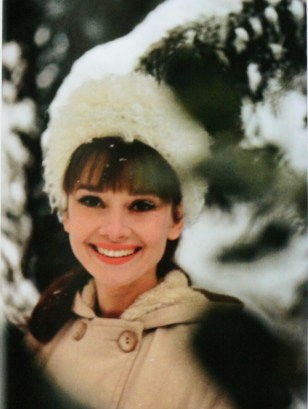
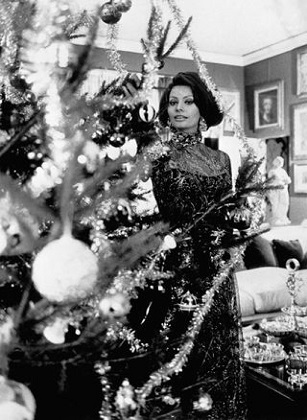
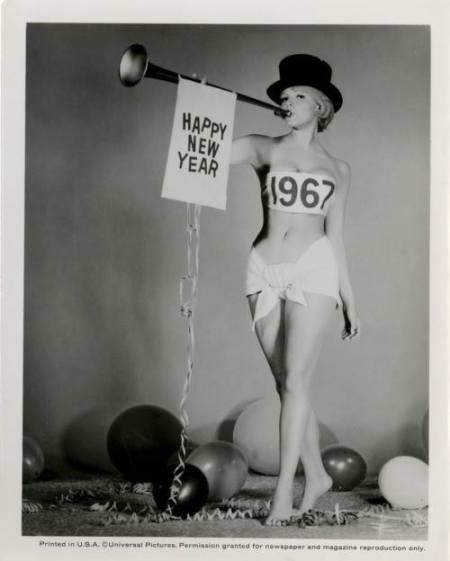
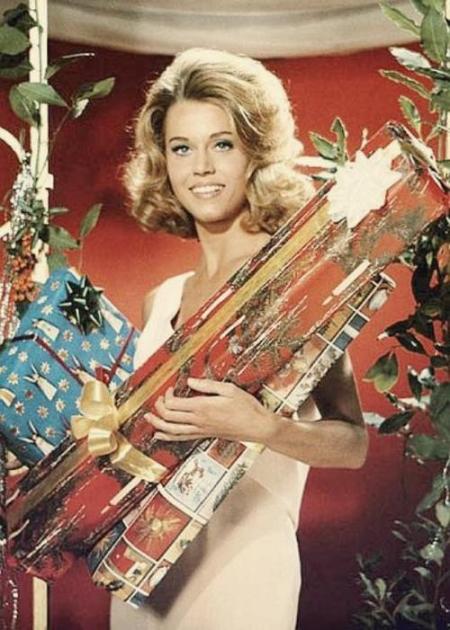
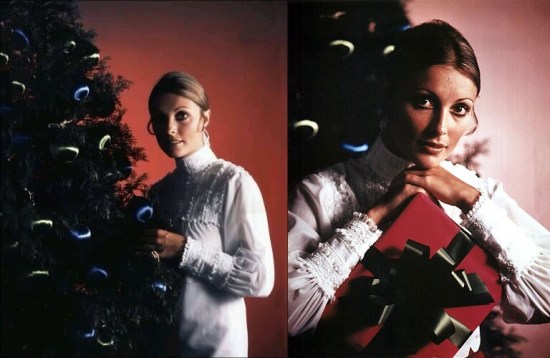
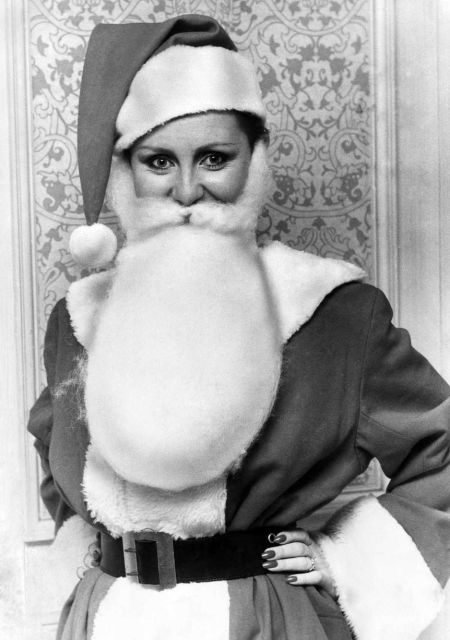
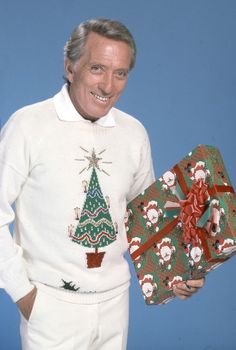
Retro Crimbo 2015: fifty fantastic seasonal snaps


I’ll be (phoning) home for Christmas: E.T. remained hugely popular throughout the second half of 1982, not least at Christmas – racing away to become global cinema’s then all-time box-office champ
.
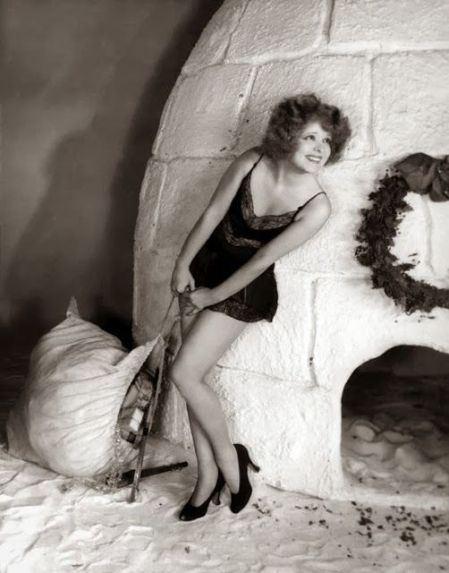
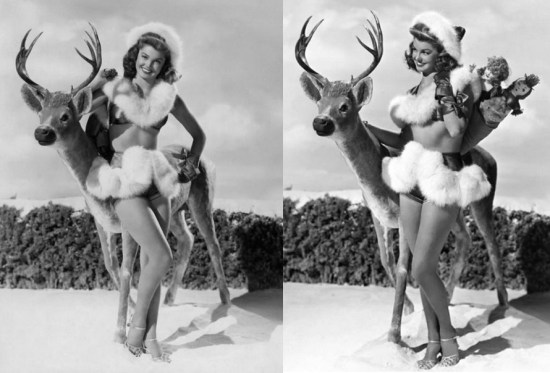
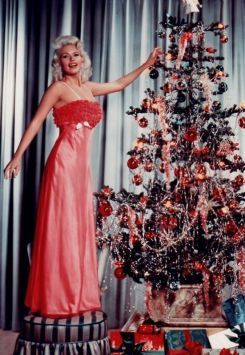
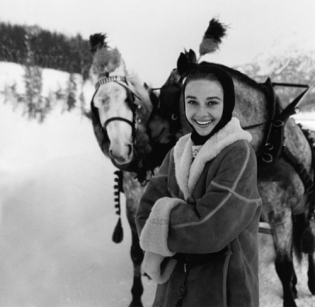
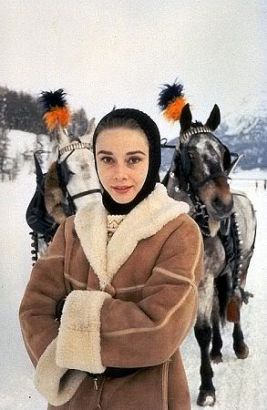
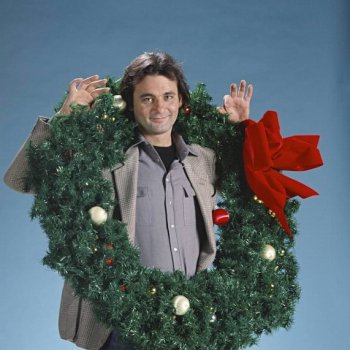
We live in the age of the selfie, peeps – there’s no getting away from it. An era when sometimes marvellous, often personal moments in time are captured at rather odd angles with elongated arms stretching away from the image’s edge towards the body of one of the photographees. Don’t get me wrong, some selfies are inspired, but rarely by design and usually for their hilarity – and celebrity selfies too often seem to smack of smugness and shameless self promotion (especially if posted on social media).
But just what has this Scrooge-like curmudgeonly diatribe got to do with Christmas and this very post, you may ask? Good question. The answer, my friends, is that back in the days of lore snaps captured of celebrities at this most wonderful time of the year tended, by comparison to those of today, to record a fundamentally more appealing, nay can’t-tear-your-eyes-away quality; a starriness, I guess. Not least because a fair number of them were deliberately posed and so nicely designed, containing none of that need for social media-influenced immediacy. In short, they were (and are) timeless. Just like – oh, you lucky merry muckers of mine – the half-century of festive fancies that follow below. Merry Christmas…!
.
.
HOVER OVER, CLICK ON or OPEN IN A NEW WINDOW the images for information
.
.
 .
.

.
 .
.

.
.
.

.


.
.

.

.
. 
.
 .
.

.

.
.


.

.

.

.

.


.

.

.
.

.

.

.
.

.

.

.
.












 George's Journal